
Qualifying Cosmetic Packaging: Specs as Acceptance Criteria
Qualifying Cosmetic Packaging: Specs as Acceptance Criteria
Cosmetic packaging procurement rarely fails because a supplier sent too little marketing material. It fails because the buyer never converted the packaging's documented specifications into acceptance criteria that a purchase order can enforce. A spec sheet tells a buyer what a jar, tube, or bottle is designed to be. Acceptance criteria tell a buyer what will be rejected at goods-in. The distance between those two documents is where most disputes over capacity, wall thickness, and leakage actually live.
This reference is written for buyers in the research and evaluation stage who are building a qualification checklist rather than collecting brochures. It uses three documented models in the COSFINITY catalogue — the CP05-2159B 5 ml leak-proof powder jar, the CP04-1215 10 ml eyeliner tube, and the CP02-2231 3 ml lipgloss/mascara tube — to show how dimensions, capacity, material, and stated function become purchasing terms that let buyers compare cosmetic packaging quotations on equal footing rather than on the strength of adjectives.
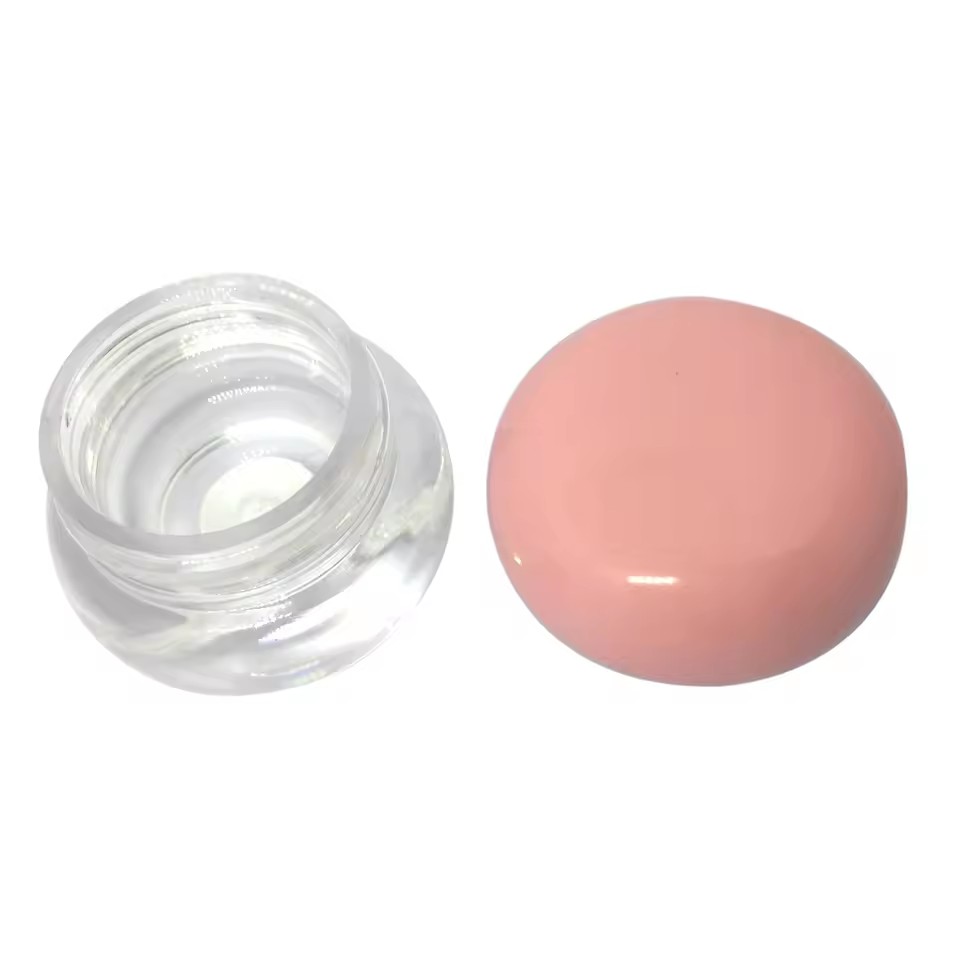
CP05-2159B, a 5 ml leak-proof plastic powder jar. Its recorded dimensions, wall thickness, and capacity become checkable conditions once written into a purchase order. Image: COSFINITY.
Why Generic Certification Language Is Not an Acceptance Criterion
In an RFQ round for professional cosmetic packaging, buyers commonly receive replies such as “we are FDA and ISO certified” or “our factory is SGS certified.” Both sentences can be entirely true and still tell a buyer nothing about which tube wall, jar diameter, or leak condition will be inspected on the shipment that arrives.
COSFINITY is a useful case because the scope of its certificate is stated plainly. The company holds SGS certificate number 485460650_T, issued by SGS, with a scope described as enterprise factory and trade qualification audit, applicable to the Global market. The certificate is valid from 10 January 2026 to 10 January 2027. That scope is meaningful for supplier legitimacy and factory screening. It is not a statement that an individual model has passed dimensional inspection or leakage testing.
For a buyer building a qualification checklist, the distinction matters because it determines the next question. If the certificate covers the company, product-level evidence has to come from somewhere else — a specification sheet, a physical sample, a signed inspection record, or a pre-shipment check agreed in the purchase order. A certificate does not substitute for any of those.
What an Acceptance Criterion Actually Requires
An acceptance criterion is a measurable condition that must be satisfied before a lot is received. It has four components that need to appear together, or the clause is not actionable.
1. The characteristic under test. Wall thickness, overall height, brim capacity, closure retention, colour match, decoration adhesion, or a specific visual defect.
2. The target value or range. A nominal figure with an agreed tolerance band, not a nominal figure alone.
3. The verification method. Who measures, with what instrument, on what sample size, at what point in production.
4. The disposition rule. What happens to a lot that falls outside the band — rejection, rework, concession, or price adjustment.
A catalogue line reading “thickness: 0.3 mm” supplies only the second component in isolated form. Until the buyer adds a measurement location, a sampling plan, and a consequence, that number cannot be enforced at the warehouse door. This is the specific weakness that a specification-driven qualification checklist corrects.
Three Verified Models and the Acceptance Terms Each Generates
CP05-2159B — 5 ml Leak-Proof Plastic Powder Jar
The documented specification for CP05-2159B records a size of W40.7 × H32.6 mm, a thickness of 1 mm, a volume of 5 ml, plastic material, and cosmetic packing as the usage. The product name identifies it as a leak-proof plastic powder jar or pot.
For a qualification file, those values convert into three separate checks. The 40.7 mm width and 32.6 mm height become a fit check against the filling line, the carton cavity, and any secondary packaging already specified by the brand. The 1 mm thickness becomes a structural check on how the pot behaves through repeated opening and closing in daily use — powder pots are compact, but the lid torque and thread engagement still depend on wall consistency. The 5 ml capacity becomes a fill-verification point rather than a design claim.
“Leak-proof” in the product name is a design intent recorded by the supplier. It is not, by itself, a test result. A buyer should convert it into a stated method: test orientation, duration, applied load, temperature, and the party responsible for the test. The COSFINITY application-scenario record describes normal use at 16–25°C in a carried daily-use environment with repeated opening and closing, which gives a reasonable basis for defining the test conditions rather than inventing them.
CP04-1215 — 10 ml Liquid Eyeliner Tube
The documented specification for CP04-1215 records a size of W12.8 × H115.3 mm, a thickness of 0.3 mm, a volume of 10 ml, plastic material, and cosmetic packing as the usage. It is recorded as a liquid empty eyeliner tube.
The combination of 0.3 mm thickness with a 115.3 mm length is where this model is most instructive. A buyer who writes “0.3 mm wall” without qualification has written a clause that a supplier can satisfy in more than one place on the same component. A usable clause specifies where along the length the measurement is taken, how many measurements per unit, how many units per lot, and with what gauge. The 10 ml capacity then becomes a separate fill-verification clause, because for a liquid eyeliner the capacity figure has to be tied to the fill point and the closure method, not treated as delivered net content.
The 115.3 mm height also drives downstream acceptance conditions that are not in the catalogue at all: carton length, pallet configuration, and whether the assembled unit stays upright through transit. Those are commercial consequences of a dimensional specification, and they belong in the purchase order discussion.
CP02-2231 — 3 ml Lipgloss/Mascara Tube
The documented specification for CP02-2231 records a size of W18 × H106.1 mm, a thickness of 0.3 mm, a volume of 3 ml, plastic material, and cosmetic packing as the usage. The product is recorded as a luxury empty plastic lipgloss/mascara tube.
The most important lesson from this model is model identity itself. CP02-2231 and CP04-1215 share a recorded 0.3 mm thickness, but they are different components with different diameters, different lengths, and different capacities. A purchase order that specifies “0.3 mm plastic tube” without a model code has given a supplier room to deliver either one. The mandatory acceptance clause here is the model number plus the full dimensional set, before any discussion of thickness.
The 3 ml capacity and 106.1 mm length together produce an unusual ratio that a buyer should flag explicitly. Small fill volume with long body means fill verification and body-length inspection both need to be defined independently, and the tube's use for lip and mascara products makes the contact-surface material a procurement question rather than an aesthetic one. The COSFINITY scenario record states that the products are used in direct contact with skin cosmetics, which is a supplier description of intended use; the buyer's verification step is to request the material grade and the corresponding contact-safety documentation for the specific model and lot, rather than treating “plastic” as a complete material specification.
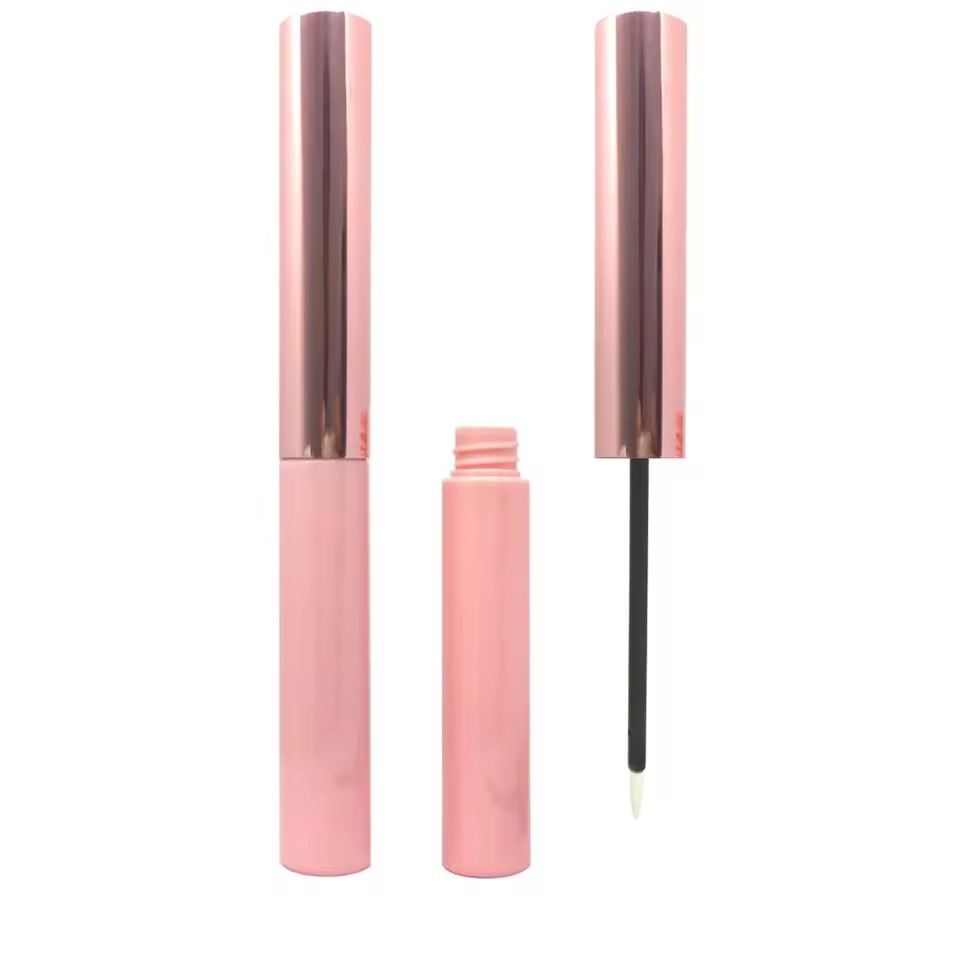
CP04-1215, a 10 ml liquid eyeliner tube with a recorded 0.3 mm thickness. The clause only becomes enforceable when the measurement location and sampling plan are also written in. Image: COSFINITY.
Side-by-Side: Documented Specifications as Comparison Dimensions
The value of a qualification checklist appears most clearly when three models are laid out on the same dimensions. The table below uses only the values recorded in the COSFINITY specification data and adds the acceptance question each value raises. It does not rank the models; it separates them.
| Dimension | CP05-2159B | CP04-1215 | CP02-2231 |
|---|---|---|---|
| Recorded description | Leak-proof plastic powder jar | Liquid empty eyeliner tube | Luxury lipgloss / mascara tube |
| Volume | 5 ml | 10 ml | 3 ml |
| Size | W40.7 × H32.6 mm | W12.8 × H115.3 mm | W18 × H106.1 mm |
| Thickness | 1 mm | 0.3 mm | 0.3 mm |
| Material | Plastic | Plastic | Plastic |
| Acceptance question the value raises | Seal and closure-retention method; fill verification at 5 ml | Thickness measurement location and gauge; applicator fit | Model-code control against other 0.3 mm tubes; fill verification at 3 ml |
The right-hand row is the point of the exercise. Two models share a nominal thickness and neither can be qualified by that number alone, because the thickness is only meaningful in relation to the diameter, the length, the intended applicator, and the fill volume it must protect.
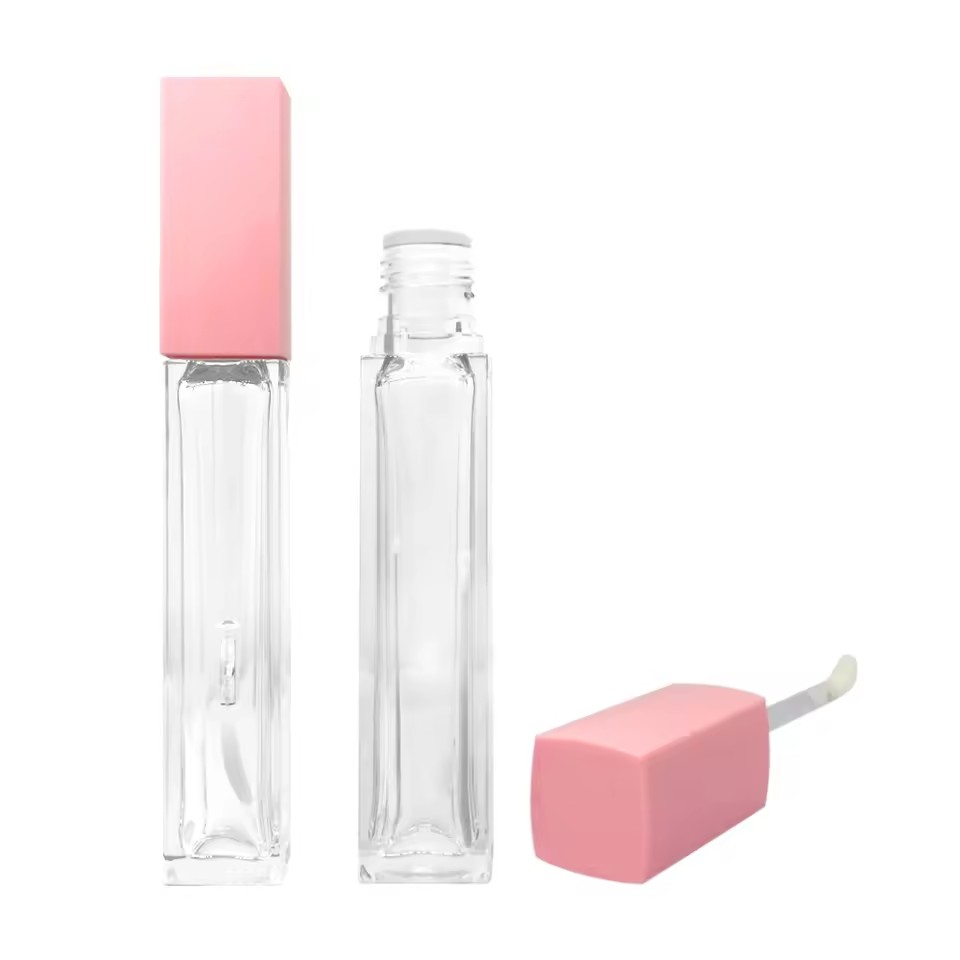
CP02-2231, a 3 ml lipgloss/mascara tube. Because it shares a 0.3 mm thickness figure with CP04-1215, the model code — not the thickness alone — must be the controlling identifier in a purchase order. Image: COSFINITY.
Translating Specs into Purchase Order Language
Once the buyer accepts that the catalogue supplies target values but not enforcement, the practical work is a rewrite exercise. Each specification line is re-expressed as a clause the supplier can sign and the warehouse can check.
Model identity. Use the code, not the description. “CP05-2159B” rather than “5 ml powder jar.” This is the single clause that prevents substitution between components that look similar on a line card.
Dimensions. State which dimensions are critical — for a tube, the overall length and diameter that drive carton fit; for a jar, the body width and height that drive line handling — and state the measuring method.
Capacity. Tie the figure to a verification method. A stated 10 ml or 3 ml is a design volume; the purchase order needs to say how the delivered volume is confirmed.
Thickness. Add the measurement location and sampling plan. A thickness clause without a location is not enforceable on a tapered or decorated component.
Material. “Plastic” describes a category. The clause should name the grade the buyer is approving and the documentation required to demonstrate it.
Stated function. Convert the model name's function into a test: the “leak-proof” descriptor on CP05-2159B, or the liquid-retention expectation on an eyeliner tube, needs an agreed method before it becomes a rejection ground.
Customisation scope. COSFINITY lists LOGO, colour, shape, material, volume, thickness, and packaging among its customisable parameters. Each one the buyer activates becomes an acceptance dimension in its own right and needs its own approval step; customisation recorded in an email thread is not a specification.
Commercial terms sit alongside the technical ones rather than beneath them. COSFINITY publishes a monthly capacity of 10,000,000 pieces, a lead time of 15–25 days, a MOQ of 12,000 pieces, 100% test as its stated quality-control approach, and remote online after-sales service. Those are operational commitments recorded by the supplier. In a quotation comparison, they should be read together with the specification clauses, because a 12,000-piece MOQ against a 0.3 mm tube and a 12,000-piece MOQ against a 1 mm jar are not the same commercial proposition.
Where Certificates Stop and Product Verification Begins
The most common qualification failure in cosmetic packaging is treating a company-scope certificate as a product-scope guarantee. The SGS certificate held by COSFINITY illustrates the boundary precisely: 485460650_T, issued by SGS, covering enterprise factory and trade qualification audit, applicable to the Global market, valid 10 January 2026 to 10 January 2027. The scope statement is about the enterprise and its trade qualification. It is not a statement about wall thickness on CP04-1215 or seal performance on CP05-2159B.
Product-level obligations arrive from a different direction, and they are market-specific. In the United States, cosmetics marketed domestically must comply with the Federal Food, Drug, and Cosmetic Act, the Fair Packaging and Labeling Act, and applicable FDA regulations codified at 21 CFR Parts 700 to 740, with labeling provisions including 21 CFR 701 and 740 (U.S. Food and Drug Administration, 2025). The same regulator's labeling guidance addresses 21 CFR 701.10, under which the principal display panel must be large enough to accommodate required information clearly and conspicuously, and where a package bears more than one principal display panel the required information must appear on all of them. That is a packaging specification question, not a formulation question: it constrains the printable area the buyer must design into the decoration artwork.
Tamper-resistant packaging requirements exist too, but their scope is narrower than general procurement folklore suggests. Under 21 CFR Part 700, specified cosmetic liquid oral hygiene products and vaginal products sold at retail must be packaged in tamper-resistant packaging that provides visible evidence of tampering and bears a prominent statement alerting consumers to the feature. The requirement is real and it should not be generalized to every jar, tube, or compact in a catalogue.
For buyers selling into the European Union, Regulation (EC) No 1223/2009 is the core cosmetic products framework, and it mandates ISO 22716 compliance for Good Manufacturing Practices in cosmetics production. That is a production-system requirement sitting above product testing. A packaging supplier's qualification file should therefore distinguish three layers: the company's audited credentials, the production system's GMP alignment, and the model-level dimensional and functional evidence. Most RFQ responses collapse all three into one sentence, and that is the sentence a buyer should unpack before shortlisting.
Application Fit: What the Daily-Use Scenario Demands
The COSFINITY application-scenario record for these products describes an indoor daily makeup setting, at normal room temperature of 16–25°C, with repeated opening and closing, carried portability, and contact between packaging and skin-applied cosmetics. The record also lists the special requirements of leak resistance, non-irritating material, portability, and light weight.
That description is more useful than it first appears, because it converts a marketing phrase into an operating environment. Repeated opening and closing makes closure retention and thread durability a recurring check rather than a one-off incoming inspection. Carried portability makes transit resistance a requirement that sits on the packaging supplier even though the transit is performed by the brand's logistics chain. Room-temperature use at 16–25°C sets a defined band within which the packaging is expected to perform, which is exactly the kind of boundary a buyer should quote when agreeing a leak-test condition instead of leaving the method open.
Applied to the three models, the scenario maps cleanly. A 5 ml powder jar faces the highest exposure to repeated opening and to powder migration past the closure, so its “leak-proof” descriptor should be the most thoroughly defined test in the file. A 10 ml eyeliner tube faces the combined risk of thin-wall deformation and liquid leakage in a carried bag, so its 0.3 mm thickness and closure integrity are the two clauses that carry most of the risk. A 3 ml lipgloss/mascara tube faces frequent application and direct skin contact, which makes the material grade and surface condition the dominant acceptance questions rather than structural ones.
Market Context and What It Changes for Buyers
Grand View Research estimated the global cosmetic packaging market at USD 32.7 billion in 2023, with a forecast period running to 2030. The same source reported that plastics accounted for the largest revenue share at 60.8% in 2023. Those figures are commercial-research estimates, and the definition of “cosmetic packaging” varies between research houses, so a buyer citing market size in a budget paper should state the boundary being used rather than treating the number as universal.
The procurement consequence of a plastic-dominant market is not that plastic is the right answer. It is that most qualification files in circulation will describe plastic components, which means the differentiators between suppliers are more likely to sit in dimensional precision, wall consistency, closure design, and documented material grade than in the basic choice of material family. A buyer who qualifies suppliers on specification discipline is therefore evaluating the thing that actually separates quotations, not the thing every quotation has in common.
What Comes Next for Specification-Based Qualification
The direction of travel is toward narrower specifications, not broader claims. Where a 2023 market was still described as 60.8% plastic by revenue share, the practical pressure on buyers is to know precisely which plastic, at what thickness, measured where, and documented how. A qualification checklist built on verified model data is already positioned for that shift, because every line in it is either confirmed by a document or flagged as a gap.
The forward-looking move for procurement teams is to treat the specification sheet as the beginning of the purchase order rather than the end of the evaluation. Buyers who want to examine the full model set behind this framework can review COSFINITY's cosmetic packaging range and the company profile. Both are reference material, not a substitute for the model-level checks described above.
Frequently Asked Questions
What is an acceptance criterion in cosmetic packaging procurement?
An acceptance criterion is a measurable condition that must be met before a lot is received. It combines four elements: the characteristic being tested, the target value or tolerance range, the verification method including instrument and sample size, and the disposition rule for a non-conforming lot. A catalogue figure such as the 5 ml capacity of CP05-2159B supplies the target value but does not by itself supply the other three elements, which is why a specification sheet and an acceptance criterion are different documents.
How should wall thickness be written into a purchase order?
Wall thickness should be written with the model code, the measurement location along the component, the instrument used, and the sampling plan. CP04-1215 and CP02-2231 both carry a recorded 0.3 mm thickness, but they are different components with different diameters, lengths, and capacities. A clause that specifies 0.3 mm without the model code and a measurement location does not distinguish between them and cannot be enforced consistently at goods-in.
What does SGS certificate 485460650_T cover for a cosmetic packaging supplier?
The certificate, issued by SGS to COSFINITY, states a scope of enterprise factory and trade qualification audit, applicable to the Global market, with validity from 10 January 2026 to 10 January 2027. The scope describes the company and its trade qualification. It does not state that a specific model has passed dimensional inspection, leakage testing, or batch-level performance checks, so those remain separate evidence requirements for the buyer.
How can buyers compare cosmetic packaging quotations objectively?
Compare identical model codes, identical dimensions, the same capacity basis, the same material grade requirement, and the same functional test method. Then compare the commercial terms on the same basis: COSFINITY publishes a MOQ of 12,000 pieces, a lead time of 15–25 days, 100% test as its stated quality-control approach, and a monthly capacity of 10,000,000 pieces. A quotation that is cheaper per unit but specifies a different model, a different thickness location, or a different inspection scope is not a comparable quotation.
Which customisation options change the acceptance criteria?
Each customisable parameter changes what has to be checked. COSFINITY lists LOGO, colour, shape, material, volume, thickness, and packaging among its customisable options. A colour change introduces a colour-match criterion; a shape change alters the dimensional set; a material change alters the grade documentation requirement; a thickness change alters the structural and weight checks; and a packaging change alters transit and carton-fit criteria. Any customisation activated for a program should be mirrored by a corresponding acceptance line in the purchase order.
The COSFINITY product brochure is available for download at cosfinity profile.pdf.
Have Questions or Need More Details?
Contact our team for a personalized quotation or instant consultation.
Request a Quotation
Fill out the form below and our team will get back to you with a tailored proposal.
WhatsApp Direct Chat
Prefer to chat in real-time? Message us on WhatsApp for instant assistance & quick answers.
- Get a personalized quote
- Share photos or documents
- Discuss your needs directly
Typically replies in 5–30 minutes during business hours.