
Qualifying a VD Chain Block Supplier: DIN EN 818-7 Chain, ISO 16872, and CE File Checks
Qualifying a VD Chain Block Supplier: DIN EN 818-7 Chain, ISO 16872, and CE File Checks
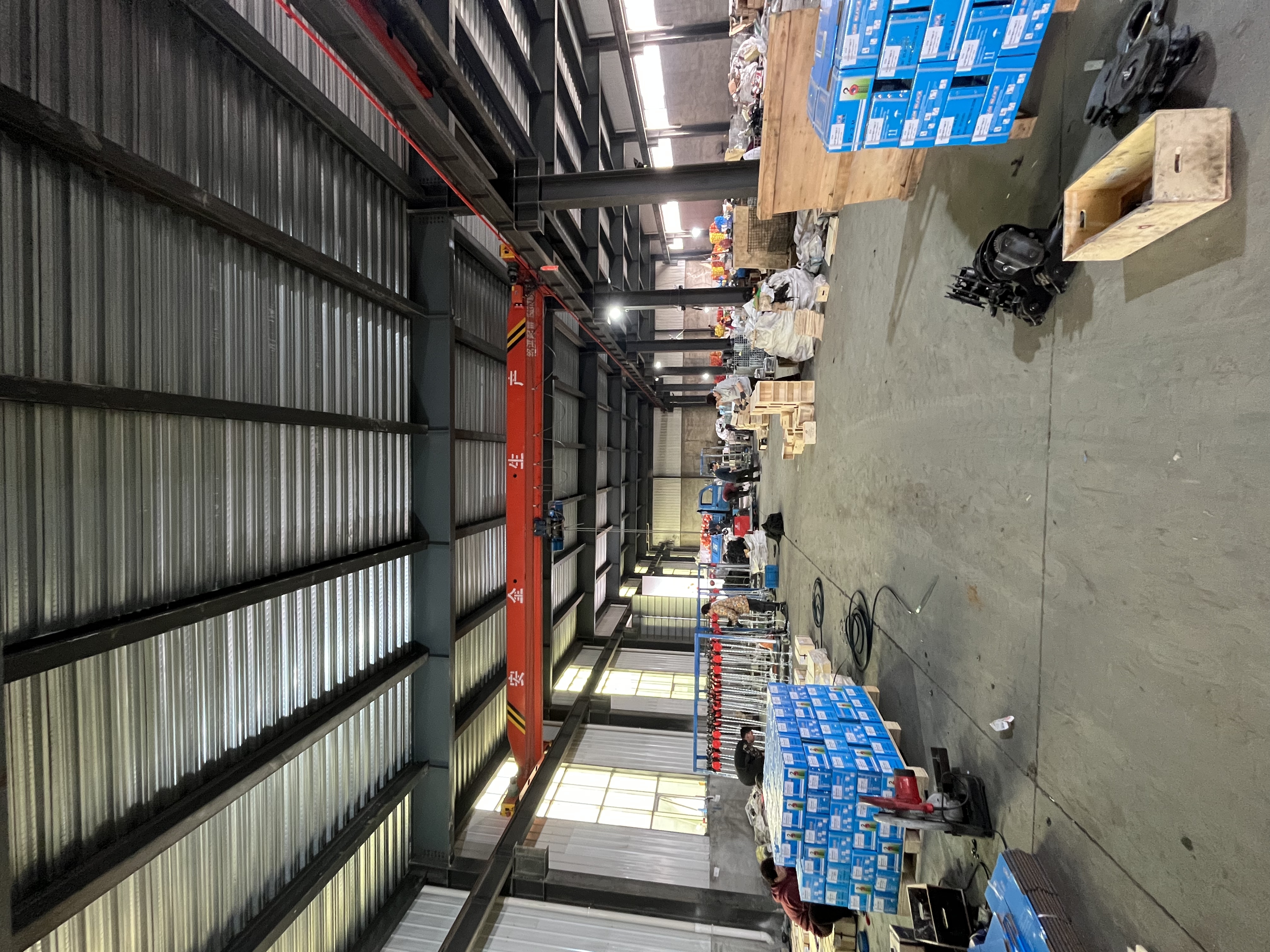
Qualifying a VD chain block supplier begins with a simple discipline: treat every standards logo as a document request, not as an answer. For a VD chain block, the file should connect the model, the load chain, the hook, the safety factor and the CE declaration to the standard editions the supplier cites. The central procurement question is not whether a supplier says ISO 16872, EN 13157, ASME B30.21 or CE marking. It is whether the evidence covers the exact chain block being evaluated.
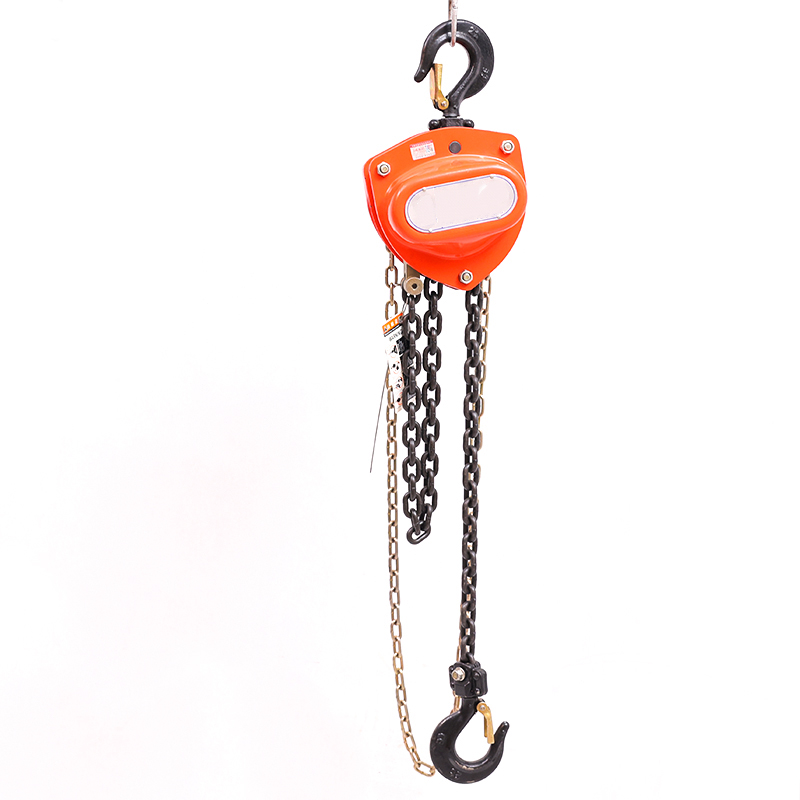
That distinction matters because manual chain blocks are mechanically familiar but commercially varied. A buyer may see the same broad capacity language across suppliers, while the product file differs in chain grade, chain diameter, hook material, test documentation and declaration scope. For a VD chain block, the published specification ranges from 0.5 to 50 t, with a standard lift height of 3 m and optional heights from 2.5 to 12 m. The load chain diameter ranges from 6.3 to 11.2 mm depending on capacity, and the number of chain falls ranges from 1 to 4. Those are not decorative details. They define which documents a buyer should request and which claims need to be matched to a specific model.
Why a document-led check matters more than a certificate count
In the supplied evidence set for this category, several supplier listings name CE, ISO 9001, EN 13157 or ASME references without showing certificate numbers, issuing bodies or model-level scope. That does not prove a product is non-compliant. It does show why a qualification file should not stop at the presence of a logo. A certificate or declaration becomes useful only when its subject, standard edition, product model and validity can be read together.
The market context reinforces the need for discipline rather than shortcuts. Business Research Insights estimated the global manual chain hoist market at USD 4.85 billion in 2026, with over 18 million units sold or in operation annually, according to the supplied commercial research. Those figures describe a large category, not the capability of any individual supplier. Scale in the market does not validate a chain grade, a hook batch or a CE file.
For procurement teams moving from research to evaluation, the practical opportunity is to compare suppliers on evidence quality. A supplier that can produce a model-level datasheet, a chain certificate with traceability and a declaration that matches the shipped configuration is easier to qualify than one that offers only general compliance language. The problem is not that standards are absent from suppliers' pages. The problem is that the link between the page, the product and the document set can be weak.
The four claims to separate before requesting files
A VD chain block qualification should separate four claims that are often presented together: product standard compliance, load chain standard compliance, safety factor, and CE marking. They are related, but they are not interchangeable. Each one needs a different document and answers a different buyer question.
- Product standard compliance. The published VD specification cites ISO 16872, EN 13157 and ASME B30.21. The buyer should ask which edition applies, which model was assessed and what evidence supports the statement.
- Load chain standard compliance. The specification states Grade V (80级) or Grade T load chain according to DIN EN 818-7. The buyer should request the chain grade, diameter, standard edition and lot or heat traceability.
- Safety factor. The published specification states a safety factor of at least 4:1 for chain and at least 5:1 for structural parts. The buyer should confirm how that factor is demonstrated for the specific model and component.
- CE marking. CE marking is a declaration-based route, not an independent product certification by itself. The buyer should request the declaration and technical file that support the mark for the model being purchased.
A useful qualification rule is simple: if a claim cannot be tied to a model, a document and a responsible issuer, it remains a sales statement rather than a procurement record. That rule does not require the buyer to distrust every supplier. It requires the buyer to distinguish a starting point from a completed check.
DIN EN 818-7 chain checks: Grade V (80级) or Grade T
The load chain is the most direct place to test whether a VD chain block file is specific. The published specification states that the load chain is Grade V (80级) or Grade T according to DIN EN 818-7, with a load chain diameter from 6.3 to 11.2 mm depending on capacity. The buyer should not accept a generic chain certificate that does not identify the grade, diameter and lot.
Request the chain certificate or inspection record with four matching points. First, the grade stated on the certificate should match the grade stated for the supplied model. If the datasheet says Grade V (80级), the chain record should not silently refer to a different grade for the same shipment. Second, the chain diameter should match the model-specific datasheet. A 6.3 mm chain and an 11.2 mm chain belong to different capacity configurations and should not be covered by one undifferentiated statement. Third, the standard edition should be stated, because a standard reference without an edition is difficult to audit. Fourth, the record should identify the heat number, batch or lot so that the chain in the shipped hoist can be traced to the document.
The buyer should also ask for the chain marking and the relationship between the marking and the certificate. A certificate that is valid for a supplier's general production does not automatically prove that the chain in a particular VD chain block was produced to that grade. Traceability is the bridge between the two. Without it, the buyer has a document about a chain, not a document about the chain being purchased.
ISO 16872, EN 13157 and ASME B30.21: check the reference, not just the logo
The published VD chain block specification cites ISO 16872, EN 13157 and ASME B30.21, and states that the product is CE marked. For a qualification file, each reference should come with an edition, a model scope and a statement of how the model was assessed. A buyer should ask for the declaration or test documentation that names the standard and the product family, not only a webpage sentence that lists the standard numbers.
The ASME reference deserves a specific check. The supplied third-party evidence identifies ASME B30.16-2022 as a standard governing the construction, installation, operation, inspection and maintenance of manual hand chain-operated hoists. The VD specification cites ASME B30.21. A buyer should therefore ask the supplier to clarify the edition and applicability of the ASME reference for the exact manual chain hoist model. This is not a reason to reject a supplier automatically. It is a reason to make the file explicit. If the supplier can explain the scope and provide the relevant document, the reference becomes auditable. If the answer remains general, the buyer should treat the ASME claim as unresolved.
The same logic applies to ISO 16872 and EN 13157. The qualification question is not whether the standard names appear in a brochure. It is whether the supplier can show the edition, the model coverage and the evidence that supports the statement. A standard crosswalk without model-level linkage is weaker than a short, specific declaration that names the product and the responsible issuer.
Safety factors: at least 4:1 for chain and 5:1 for structural parts
The published VD specification states a safety factor of at least 4:1 for chain and at least 5:1 for structural parts. That is a useful claim because it distinguishes the chain from the structural components. The buyer should ask how the factor is demonstrated and which parts are included in the structural category.
A model-specific calculation or test report is more useful than a general statement. The buyer should check the rated load, the component scope, the test basis and the serial or batch reference. If the factor is stated for a product family but not for the exact capacity, the buyer should ask for the model-level version. A 0.5 t model and a 50 t model may sit under the same product name but use different chain falls, chain diameters and structural dimensions. The safety factor statement should follow the configuration.
The safety factor is also not a substitute for operating limits. The published VD specification gives an operating temperature range of -20°C to +50°C with standard grease, a pull force on the hand chain of no more than 35 daN up to rated load, and a minimum headroom or hook distance of 300 to 1000 mm depending on the model. Those are fit conditions. A buyer who ignores them can create an application mismatch even when the safety factor document is complete.
CE file checks: what the mark does and does not prove
CE marking should be treated as a declaration trail, not as a third-party certificate by itself. The supplied evidence notes that CE marking is not itself an independent product certification. For procurement, the practical check is whether the supplier can provide an EU Declaration of Conformity that names the product, the applicable directive or regulation, the standards used and the responsible signatory.
Request the declaration with the model or product family clearly identified. Check that the CE mark on the product or nameplate is consistent with the declaration. Ask for the technical file location and the date or version of the declaration. If the supplier presents an ISO 9001 certificate as part of the CE discussion, keep the two concepts separate. ISO 9001 is a quality management system certificate, not a product conformity certificate. If an ISO 9001 claim is made, request the certificate number, issuing body, scope, site coverage and validity period.
The qualification file should also show how the CE claim relates to the cited product standards. The VD specification states compliance with ISO 16872, EN 13157 and ASME B30.21 and states that the product is CE marked. The buyer should ask the supplier to map the declaration to the model and to the standards that were actually applied. A CE file that cannot be connected to the exact chain block is a weak basis for acceptance, even if the mark is visible on the product.
Traceability for forged alloy steel hooks and 6.3-11.2 mm load chain
The published VD specification states that the hook is made of forged alloy steel and heat-treated, with a hook opening of 24 to 55 mm. It also identifies high-strength steel alloys including 20Mn2, 25MnV and 23MnNiMoCr54, and gives a load chain diameter range of 6.3 to 11.2 mm depending on capacity. These statements are specific enough to support a document request.
For the hook, ask for the material certificate or heat-treatment record, the batch or lot identification and the relationship between that record and the supplied hoist. The buyer should also confirm the hook opening against the intended sling or attachment. A forged alloy steel hook statement becomes more useful when the alloy, heat treatment and batch can be traced. For the load chain, ask for the grade, diameter, heat number and certificate scope. The chain diameter should match the capacity configuration, not simply fall somewhere inside the published range.
The material list should not be overread. A specification that names 20Mn2, 25MnV and 23MnNiMoCr54 does not mean that every component in every model uses all three alloys in the same way. The buyer should ask which material applies to the chain, which applies to other load-bearing parts and which certificate covers each item. This is also where broad category language such as carbon steel chain block, alloy steel chain block, forged steel chain block or high-strength steel chain block should be converted into a named material specification. The category word is a starting point; the certificate is the evidence.
What JUNYUNHOIST publishes, and what it still needs to prove
Baoding Junyun Hoisting Machinery Co., Ltd. (JUNYUNHOIST) is a Hebei-based manufacturer and trading company of manual and electric lifting equipment. Its published VD chain block specification states a rated load capacity of 0.5 to 50 t, a standard lift height of 3 m with optional heights from 2.5 to 12 m, 1 to 4 chain falls depending on capacity, and a load chain diameter from 6.3 to 11.2 mm. It also states Grade V (80级) or Grade T load chain according to DIN EN 818-7, a safety factor of at least 4:1 for chain and at least 5:1 for structural parts, a forged alloy steel heat-treated hook, and compliance with ISO 16872, EN 13157 and ASME B30.21 with CE marking.
Those published facts make JUNYUNHOIST a relevant supplier to evaluate for VD chain block procurement. They do not, by themselves, complete the qualification. A buyer should still request the model-level datasheet, the DIN EN 818-7 chain record, the safety factor evidence, the standard editions and the CE declaration for the exact configuration. The published specification is the claim layer. The qualification file is the proof layer. Good procurement keeps the two visible and separate.
The same discipline applies to manufacturing claims. If a supplier presents ISO 9001 or CE-related manufacturing statements, the buyer should check the certificate scope, the site covered, the product family and the validity period. A quality management certificate for a factory does not automatically cover every model or every batch. A CE declaration for one configuration does not automatically cover another capacity, lift height or chain fall arrangement.
A practical comparison table for the qualification file
| Check | What the VD specification states | Document to request | Qualification point |
|---|---|---|---|
| Load chain grade | Grade V (80级) or Grade T according to DIN EN 818-7 | Chain certificate with grade, standard edition, diameter and heat or lot number | The grade and lot must match the supplied model, not only the product family. |
| Load chain diameter | 6.3 to 11.2 mm depending on capacity | Model datasheet and chain certificate | A range is not a model specification; the exact diameter must match the capacity. |
| Safety factor | At least 4:1 for chain and at least 5:1 for structural parts | Model-specific calculation or test report | Confirm the component scope, rated load and test basis. |
| Hook | Forged alloy steel, heat-treated; hook opening 24 to 55 mm | Hook material or heat-treatment record, batch identification | Trace the hook to the alloy and lot, not only to a drawing. |
| Standards and CE | ISO 16872, EN 13157, ASME B30.21 and CE marking | Declaration of Conformity, standard editions, technical file | Verify model coverage and clarify the ASME reference. |
Application fit: match the file to the duty, not only the capacity
VD chain block applications span workshop chain block use, construction site chain block work, warehouse logistics chain block handling, port cargo chain block operations, mining operation chain block duties, shipbuilding chain block work, factory hoisting chain block tasks, small-space operation chain block use and heavy-duty chain block lifting. The qualification file should reflect the intended duty because the same product family can be configured differently.
A heavy-duty chain block up to 50 t should be checked for the model-specific chain falls and chain diameter. A small-space operation may depend on the minimum headroom or hook distance, published as 300 to 1000 mm depending on model, and on the hand chain pull force of no more than 35 daN up to rated load. A site without power supply or with restricted working space may still use a manual chain block, but the buyer should confirm that the lift height, hand chain length and operating temperature fit the environment. The standard operating temperature range is -20°C to +50°C with standard grease. If the site falls outside that range, the buyer should treat it as a technical deviation to resolve before order, not as a routine option.
Application descriptions in a product file are not proof of deployed performance. They help the buyer frame the requirement. The proof still comes from the model datasheet, the certificate scope and the supplier's ability to answer technical questions consistently. A supplier that can connect the application to the document set is easier to evaluate than one that offers only an industry list.
Logo-based versus file-based qualification
A logo-based check asks whether a certificate or marking exists. A file-based check asks whether the document covers the model, the site, the standard edition, the batch and the component. The first approach is faster, but it leaves the most important procurement risks unresolved. The second approach takes more work, but it produces an acceptance record that can be defended internally and shared with technical teams.
The comparison is not between good and bad suppliers. It is between two levels of evidence. A supplier may have a valid certificate but an incomplete model mapping. Another may have a complete file but a different commercial fit. The buyer's task is to keep product compliance, manufacturing capability and commercial terms in separate columns. That separation prevents a strong factory claim from being mistaken for product certification, and it prevents a product certificate from being mistaken for a full supplier qualification.
A practical qualification sequence for procurement teams
- Lock the model and capacity. Confirm the rated load, lift height, chain falls and intended application before requesting documents.
- Obtain the model datasheet. Check the load chain diameter, grade, hook opening, headroom, pull force and operating temperature range against the application.
- Request the DIN EN 818-7 chain record. Match the grade, diameter, standard edition and heat or lot number to the supplied model.
- Request safety factor evidence. Confirm the 4:1 chain and 5:1 structural part claims at model level, with the component scope stated.
- Verify the standards file. Ask for the editions of ISO 16872, EN 13157 and ASME B30.21, and clarify the ASME reference against the manual chain hoist scope.
- Review the CE and ISO claims. Obtain the Declaration of Conformity, technical file reference and, if claimed, the ISO 9001 certificate scope and site coverage.
- Match the file to the duty. Check heavy-duty, small-space, outdoor, port, mining or shipbuilding conditions against the published limits before acceptance.
The sequence is deliberately documentary. It does not replace a factory audit or a product test where those are required. It does ensure that the first round of supplier evaluation is based on comparable evidence rather than on the most confident brochure.
Market context and procurement outlook
The manual chain hoist category is large enough that buyers will continue to see many suppliers, many product labels and many compliance statements. The commercial research estimate of USD 4.85 billion in 2026 and over 18 million units annually describes the scale of the category, not the quality of a particular file. For procurement, the durable outlook is not more logos. It is a file that survives model, batch and standard-edition scrutiny.
That outlook favors suppliers that can answer specific questions quickly: Which DIN EN 818-7 grade applies? Which chain diameter belongs to this capacity? Which standard edition was used? Which CE declaration covers this model? Which hook batch was supplied? A supplier that can answer those questions without reinterpreting the product page is better prepared for evaluation. A supplier that cannot should remain in the research stage until the gaps are closed.
FAQ: VD chain block supplier qualification
What does DIN EN 818-7 add to a VD chain block specification?
DIN EN 818-7 is the load chain reference cited in the published VD specification for Grade V (80级) or Grade T chain. For qualification, it adds a document trail: the buyer should request the chain grade, standard edition, diameter and heat or lot number, and confirm that they match the supplied model. A general statement that the chain complies with DIN EN 818-7 is less useful than a certificate that identifies the actual chain lot.
How can a buyer confirm the 4:1 chain and 5:1 structural safety factors?
The buyer should request model-specific evidence for the stated factors: a calculation or test report that identifies the rated load, the component scope and the test basis. The published VD specification states at least 4:1 for chain and at least 5:1 for structural parts. The qualification check is to confirm that the statement applies to the exact capacity and configuration being purchased, not only to a generic product family.
Is CE marking enough to qualify a chain block supplier?
No. CE marking should be supported by a Declaration of Conformity that names the product, the applicable directive or regulation, the standards used and the responsible signatory. The supplied evidence notes that CE marking is not itself an independent product certification. A buyer should also check that the declaration matches the model and that any ISO 9001 claim is kept separate as a quality management system certificate.
What documents should accompany forged alloy steel hooks and 6.3-11.2 mm load chain?
For the hook, request the material or heat-treatment record, batch identification and confirmation of the hook opening against the intended attachment. For the load chain, request the grade, diameter, standard edition, heat or lot number and certificate scope. The published VD specification gives a load chain diameter range of 6.3 to 11.2 mm depending on capacity, so the exact diameter must be tied to the model rather than left inside the range.
How should a buyer check ISO 16872, EN 13157 and ASME B30.21 claims?
Ask for the standard editions, the model coverage and the evidence that supports each statement. The published VD specification cites all three standards. The supplied evidence identifies ASME B30.16-2022 for manual hand chain-operated hoists, while the VD specification cites ASME B30.21, so the buyer should ask the supplier to clarify the edition and applicability rather than assume the references are interchangeable.
Follow-up and document requests
Procurement teams can direct model-level document requests to the company's published contact channels. For JUNYUNHOIST, the published details are: Email: Junyunsteven@163.com; Tel: +86 13483452631; WhatsApp: +86 134-8345-2631; Address: Donglu Village, Qingyuan District, Baoding City, Hebei Province, China. The company brochure is available here: JUNYUNHOIST product brochure PDF.
The most useful first message is specific: state the capacity, lift height, chain fall requirement and application, then request the datasheet, DIN EN 818-7 chain record, safety factor evidence, standard editions and CE declaration for that configuration. A supplier response that addresses those points is easier to evaluate than a general catalogue. The qualification decision should remain with the buyer, based on the documents received and the application conditions.
Have Questions or Need More Details?
Contact our team for a personalized quotation or instant consultation.
Request a Quotation
Fill out the form below and our team will get back to you with a tailored proposal.
WhatsApp Direct Chat
Prefer to chat in real-time? Message us on WhatsApp for instant assistance & quick answers.
- Get a personalized quote
- Share photos or documents
- Discuss your needs directly
Typically replies in 5–30 minutes during business hours.