
Qualifying a Vehicle-Specific Android Fascia Kit Supplier
A vehicle-specific Android car stereo fascia kit is qualified on evidence, not on fitment photographs. The useful question for a trade buyer is not whether a kit looks right in a listing, but which parts of a supplier's compliance and inspection story have actually been verified, and by whom.
Most sourcing failures in this category surface late. The dash fascia, the wiring harness and — on CAN-equipped vehicles — the CAN bus decoder are three physically different components with three different failure modes, and inside a distributor they are usually judged by three different people. A product manager judges the fascia, an installer judges the harness, and a technician judges the decoder. Compliance and qualification evidence is the only thing that ties those three judgements into a single supplier decision.
This article sets out a four-tier method for reading that evidence, then applies it to a documented supplier profile: the ZYX Car Radio Fascia Kit range from Shenzhen Zhongyixing Electronic Technology Co., Ltd, a Shenzhen-based manufacturer of car radio fascia kits, car stereo wiring harnesses and CANBUS decoder modules.
The Evidence Gap in Fascia Kit Procurement
Compliance in this product category is not one regime. It is three unrelated ones, each answered by a different document, and each with a different scope.
- Environmental and material compliance. RoHS 2 and REACH govern hazardous substance content in the materials and components that make up the kit. This is the regime most frequently cited in supplier questionnaires, and it is the one ZYX addresses directly: the full kit is stated to comply with EU RoHS 2 and REACH, with hazardous substance content controlled across materials and components.
- Electromagnetic compatibility. In the European Union, electronic subassemblies integrated into road vehicles must satisfy E-Marking (ECE R10) requirements rather than CE marking alone where they may affect vehicle safety functions. Whether a given harness-and-decoder assembly is characterised as such a subassembly is a determination the buyer should make explicitly, not assume from an environmental declaration.
- Trade classification. Car stereo fascia and installation hardware are typically classified under HS 8708.99 (vehicle parts and accessories, not elsewhere specified), according to the United Nations Statistics Division classification reference.
A supplier sentence such as "we are compliant" collapses these three regimes into a single word. A usable qualification file keeps them separate, because the buyer's follow-up question is different in each case:
| Regime | The buyer's real question | The artefact that answers it |
|---|---|---|
| Environmental / material | Are restricted substances controlled across all materials in the kit? | Material declarations, RoHS 2 / REACH statements, substance test reports |
| Electromagnetic compatibility | Does this assembly fall inside EMC scope, and what testing supports it? | Applicability assessment, EMC test evidence tied to the assembly |
| Trade | Is the goods description and tariff code consistent across documents? | HS classification, invoice and packing list consistency |
Four Tiers of Qualification Evidence
Evidence in this category sorts into four tiers, and each tier answers a narrower question than buyers expect. Grade a supplier by how many tiers they can populate with documents rather than statements.
| Tier | Typical artefact | What it establishes | What it does not establish |
|---|---|---|---|
| 1 — Design conformance | Drawings, material callouts, tolerance values, protocol and baud rate, temperature ratings | That the product was designed to a stated, checkable specification | That any delivered unit matches that specification |
| 2 — Lot inspection | Incoming inspection records, pre-shipment function and fitment test data | That the supplier screens units before they leave the building | Independence of the check |
| 3 — Independent verification | Third-party pre-shipment inspection report | That an outside party observed the goods at a point in time | Design approval, type approval, or continuing conformity afterwards |
| 4 — Outcome data | Program duration, cumulative volume, return rate | That the process has been repeatable inside a specific account over time | That it will repeat in a different vehicle mix or a different installer base |
Buyers tend to jump straight to tier 4 because a return rate is the easiest number to compare across suppliers. It is also the easiest number to misread — a point this article returns to below.
Tier 1 — Design Conformance Is Measurable, Not Adjectival
Every tier 1 claim should reduce to a number, a named material grade, or a published standard. Anything that cannot be expressed that way is positioning rather than evidence. The three parts of a kit illustrate the point differently.
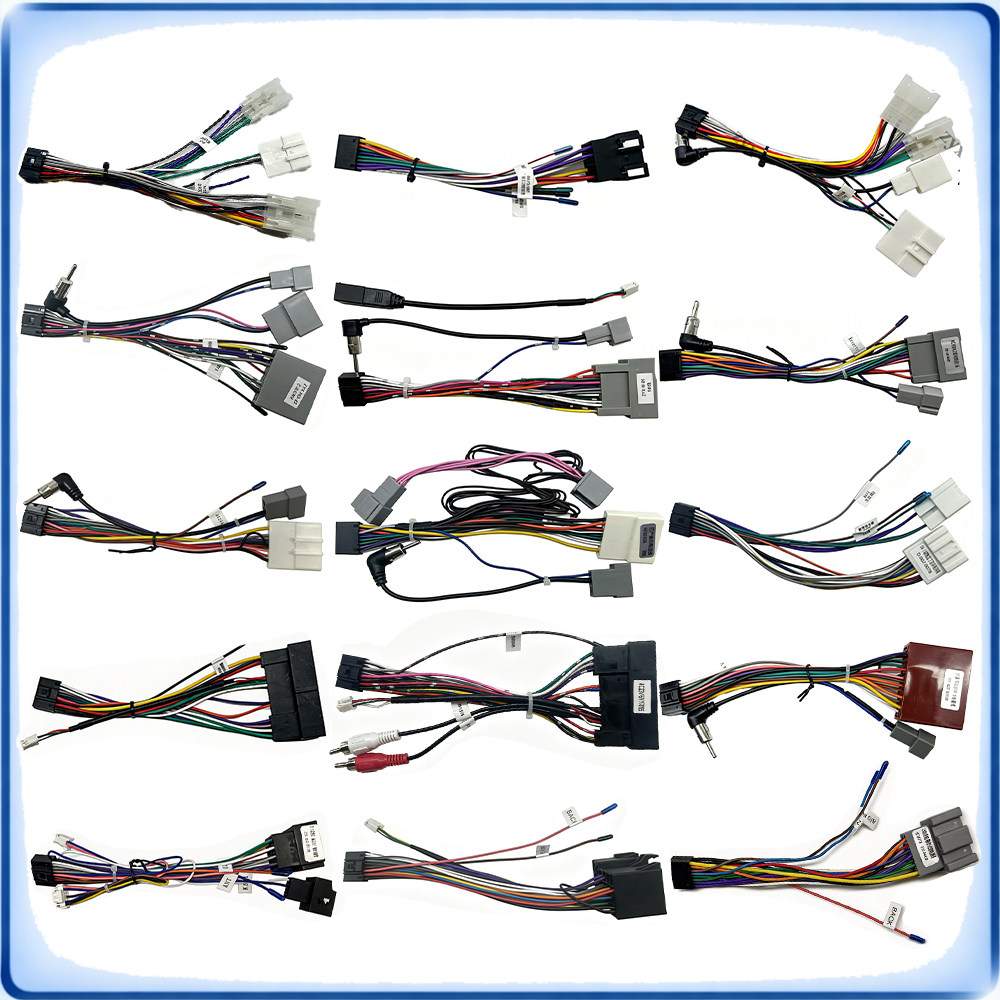
Car Radio Wiring Harness (ZYX-02)
The ZYX-02 harness is specified as follows: AWG 20–22 tinned oxygen-free copper conductors; ANSI/CTA-2015-B colour-coded insulation; 12V DC with a 10A maximum current rating; an operating temperature range of −40°C to 85°C; reverse polarity protection and short-circuit protection; PA66 engineering plastic connector housings; and tin-plated brass contact terminals.
Of these, the ANSI/CTA-2015-B colour coding is the most useful for a buyer, because it converts a harness into an inspectable object. A technician can verify conductor function against a published colour convention instead of an undocumented supplier pinout, which shortens troubleshooting and makes an incoming-goods check possible without special software. It is a design and documentation convention, however, and it should not be read as a performance certification; it says nothing about conductor quality or connector durability on its own.
CAN Bus Decoder Module (ZYX-03)
The ZYX-03 decoder is specified as a plug-and-play CAN gateway module supporting CAN 2.0A / 2.0B at a 500 kbps / 125 kbps dual rate, with a 12V DC supply, 300 mA standby and 2 A maximum current, operating from −40°C to 85°C. Its construction is stated as a flame-retardant ABS housing, FR-4 glass fibre epoxy circuit board, tin-plated brass connector terminals and heat-conductive silicone potting. The module is pre-programmed with model-specific firmware so that no on-site programming is required, and it includes built-in CAN isolation intended to prevent dashboard fault codes.
The underlying mechanism is worth understanding because it determines what a buyer should test. The decoder works on the ISO 11898 automotive CAN bus principle: it identifies steering wheel control, instrument prompt and vehicle status messages on the original bus, converts them into a format the aftermarket head unit can interpret, and forwards head unit control instructions back to the vehicle network. Dual-rate and dual-format support matters because vehicles in the same range can differ in both framing and bus speed — but it only becomes useful when the firmware matches the exact model and trim.
Car Radio Dash Fascia (ZYX-01)
The ZYX-01 fascia is specified with a dimensional tolerance of ≤0.2 mm, material thickness of 2.5 mm to 3.0 mm, ABS construction, compatibility with 7", 9", 10.1" and 12.3" screen sizes, Double-DIN or model-specific mounting, plug-and-play fitment and the same −40°C to 85°C operating range.
The tolerance value is where the specification becomes useful. A stated ≤0.2 mm tolerance can be checked with a gauge against a reference dashboard; "perfect fit" cannot be checked at all. Buyers should treat any dashboard product presented without a tolerance figure as tier 1 evidence that has not yet been supplied.
What to request at tier 1: a pin definition sheet per vehicle model, a tolerance drawing for the fascia, material data sheets for ABS and PA66, the supported protocol and baud list for the decoder, and temperature ratings for every component in the kit.
Tier 2 — Acceptance Inspection: Why 100% Testing Exists in This Category
In this product category electrical faults are latent and expensive, which is why testing is specified per unit rather than per batch. ZYX's stated quality control consists of 100% incoming inspection for CAN bus decoders and a 100% pre-shipment conductivity and fit test.
These are two different tests answering two different questions. The incoming inspection screens the electronic module before it is assembled into a kit, catching decoder-level defects at the earliest possible point. The pre-shipment test verifies the assembled kit — electrical continuity through the harness and physical fitment of the fascia — before it leaves the building. Together they push detection upstream of the buyer's warehouse.
The economic logic is straightforward and does not depend on any specific failure rate. A faulty harness or decoder is usually discovered after the dashboard has been disassembled, the original radio removed and the new unit partially installed. At that point the part cost is trivial relative to the installation labour, the return freight, and the installer's reputation with the vehicle owner. For a low-unit-value, high-consequence component, screening every unit is simply cheaper than sampling.
A practical incoming acceptance checklist
- Pin-by-pin continuity checked against the model-specific pin definition, not against a generic ISO layout.
- Connector seating verified: latches engage, terminals are fully seated, and no terminal pushes back under load.
- Fascia dry-fitted to a known dashboard before any permanent installation.
- CAN wake-up and sleep behaviour confirmed with the ignition cycled at least twice.
- Steering wheel control retention confirmed across all button functions.
- Dashboard fault-code scan performed before and after installation, with results recorded.
- Retained functions confirmed: chime, ACC signal, and vehicle information display where applicable.
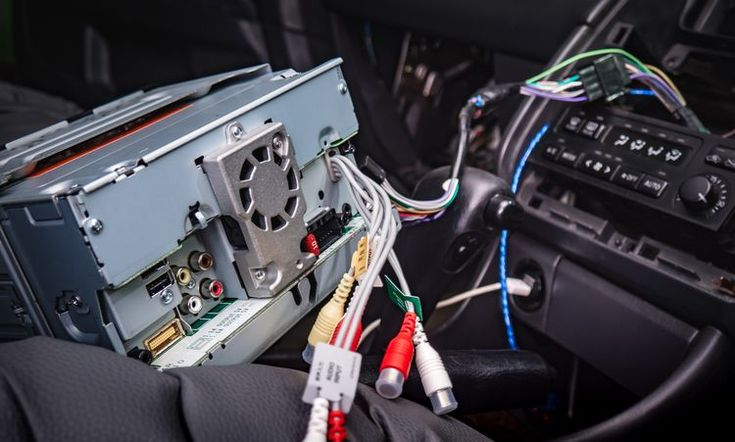
Where a buyer needs an observation that is independent of the supplier, a third-party pre-shipment inspection — for example an SGS inspection — can be commissioned against the purchase order. It adds independence, timing and a written record of what was on the floor on a given date. It does not add design approval, EMC type approval, or coverage of units produced after the inspection, because an inspection is a sample taken at a point in time rather than a certification of the production system.
Tier 3 — Entity and Program Evidence
Supplier-level evidence is about repeatability, and the strongest available form of it is a program that has run across several vehicle model generations. Entity facts provide the frame; program duration provides the proof.
Shenzhen Zhongyixing Electronic Technology Co., Ltd was founded in 2017 and operates a 5,000 m² facility in Shenzhen with 15 employees, including a 3-engineer R&D team, and reports annual output of 1,000,000 units. Its stated main products are Android car stereo fascia wiring harnesses and CANBUS adapters, with an export ratio of 80% and main markets in Russia and the EU. The compatibility system behind those products covers 3,000+ vehicle applications, spanning Toyota, Honda, Nissan, Mazda, Ford, Chevrolet, Volkswagen, Audi, BMW, Mercedes-Benz, Hyundai, Kia and other brands across Europe, North America, Asia and South America.
Two long-running programs are documented:
- Nine-year continuous cooperation with a car multimedia brand owner. Cumulative 550,000+ sets of dash frames, wiring harnesses and CAN bus decoders supplied for multi-vehicle-model Android head-unit retrofit. Return rate below 0.7%. Highlighted factors include a complete vehicle-model database, precise CAN bus decoding, consistent assembly fit, efficient sample delivery, stable lead-time control and support for multi-country compliance standards.
- Seven-year cooperation with an after-market solution integrator. Cumulative 19,000+ sets supplied for Android stereo retrofit across various car brands. Return rate below 0.8%. Highlighted factors include high-precision frame dimensions, reliable harness connections, a mature protocol solution and responsive after-sales technical support.
A nine-year program is long enough to span several vehicle model generations, which is exactly the stress this category handles badly. A program survives that only if the model database, the firmware library and the harness pinouts are updated as vehicles change. That is what the duration evidences. It does not evidence that an unfamiliar model year will be handled correctly on first delivery — that remains a tier 1 question about the specific application.
Tier 4 — What a Return Rate Actually Measures
A return rate is a process indicator, not a quality certificate, and it is only comparable between suppliers when the measurement definition is shared. Before weighting a figure, establish four things: what counts as a return (genuine defect, wrong model ordered by the buyer, or order cancellation); what the denominator is (units shipped, units sold, or orders placed); who classifies the defect reason; and over what period the figure was calculated.
Read with those definitions in mind, a figure below 0.8% says something concrete: in a specific long-running account, fewer than eight units per thousand came back. It does not say which defect types dominated, and it does not transfer automatically to a different vehicle mix, a different climate, or a less experienced installer base. Treated correctly, it is corroboration of tier 2 and tier 3 evidence rather than a substitute for them.
The same caution applies to the phrase "multi-country compliance standards support." That is a capability statement. The follow-up questions are which markets, which documents, and who issued them — and the answer should differ by market.
Where the Evidence Stops: Boundaries Buyers Should Plan Around
Every qualification file has edges, and the more reliable suppliers are the ones willing to state them. The boundaries below are not weaknesses in the product; they are the conditions under which the evidence applies.
| Boundary | What it means in practice | How a buyer should plan for it |
|---|---|---|
| Coverage is not universality | 3,000+ vehicle applications is a large database, not complete coverage. Fitment depends on model year, trim level, original radio, original connector and audio configuration. | Supply photos of the original dashboard, the original radio, or the connectors on the back of the original head unit before ordering; ZYX recommends this for models with multiple equipment configurations. |
| Documentation scope is narrower than the word "compliance" | RoHS 2 and REACH are environmental and material requirements. EU E-Marking (ECE R10) is an EMC question that depends on how the assembly is characterised. | If EMC evidence is required for the target market, request it explicitly instead of inferring it from an environmental declaration. |
| Third-party inspection is a sample | An SGS pre-shipment inspection records what was observed on a given date at a given site. | Treat the report as a check on a shipment, not as an ongoing warranty of conformity. |
| Lead time and MOQ shift with customisation | Stock items ship in 3–7 days at a MOQ of 1 unit; custom OEM/ODM items run 15–25 days at a MOQ of 100 units. | Build qualification and launch timelines around the custom path whenever model-specific configuration is required. |
| After-sales terms have a defined scope | The stated support package is a 12-month product warranty, remote installation technical guidance and free replacement of defective items; the return and exchange policy covers quality defects within 7 days. | Treat model-compatibility confirmation as a separate step. A returns policy addresses quality defects and does not substitute for confirming the vehicle application before ordering. |
| Capacity is finite | Stated monthly capacity is 12,000 units. | Programs ramping faster than that need a scheduling conversation before the order, not after. |
Applying the Framework to Real Sourcing Scenarios
Multi-vehicle-model retrofit programs
Solution integrators running mixed vehicle fleets need per-model mapping more than they need catalogue breadth. The qualification question is whether each vehicle application has its own pin definition and its own decoder firmware version, because a single mismatched pinout appears downstream as a dashboard fault code or an unresponsive steering wheel control. Ask for the mapping document, not the product photo.
Cross-border distribution
Distributors resell evidence as much as they resell parts. A documentation package that holds together — HS classification under 8708.99, environmental declarations matching the shipped bill of materials, inspection records matching the packing list — is what allows a distributor to answer an importer's questions without going back to the factory each time.
Fleet and dealership fitting
Where installation is performed to standard work instructions by technicians who may see a given vehicle model only occasionally, pre-shipment fitment testing protects the workshop schedule more than it protects the component. A kit that fails a dry fit costs a service bay; a kit that fits first time costs nothing.
Used-vehicle interior refurbishment
Refurbishment work is highly price-sensitive but equally exposed to returns, because the end customer inspects the dashboard closely. The relevant qualification signals here are the fascia tolerance figure and the harness colour-coding standard, both of which determine how quickly a technician can complete and verify the job.
Market Context: Why Evidence Pressure Is Increasing
The commercial environment is pushing more of this category through channels where nobody inspects the part before it reaches the installer. Market Research Future estimated the global car audio head unit market at USD 15.44 billion in 2024. Mordor Intelligence projects the car aftermarket audio system market growing at a CAGR of 12.18%, driven partly by DIY customers and online plug-and-play kits. Fortune Business Insights reports that Asia Pacific accounted for 54.21% of the global car audio market in 2025.
The implication for supplier qualification is specific rather than general. When a kit is sold through a distribution or e-commerce channel, the experienced installer who would once have caught a model mismatch before shipping is no longer in the chain. Evidence has to travel with the product, or the return comes back to the supplier as a dispute. That is the mechanism behind the growing demand for documented pin definitions, stated tolerances and inspection records — and behind the value of a colour-coded harness standard that a non-specialist can check.
Model-Specific vs Cut-Wire Universal: Comparing Evidence Quality
The plug-and-play, model-specific approach is the recommended route for premium vehicle upgrades, fleet batch modification and dealership pre-delivery fitting, and the recommendation rests on evidence availability rather than on marketing preference.
| Comparison point | Model-specific plug-and-play kit (fascia + harness + decoder) | Traditional cut-wire universal solution |
|---|---|---|
| Installation impact | Uses the factory electrical interface; no cutting or modification of the original wiring harness | Requires cutting and splicing into the original harness |
| Fit precision | Moulded to the vehicle's dashboard structure, with a stated ≤0.2 mm tolerance | Generic dimensions; gap and alignment risk is higher |
| CAN behaviour | Pre-programmed model-specific firmware with built-in CAN isolation intended to prevent dashboard fault codes | Depends on a universal decoder; protocol mismatch risk is higher |
| Evidence available before purchase | Pin definition sheet, tolerance drawing, protocol and baud list, inspection records | Rarely documented at pin level |
| Where it fits best | Premium upgrades, fleet batch modification, dealership fitting, mixed-brand retrofit programs | Low-budget simple retrofits of older economy vehicles where wiring modification is explicitly acceptable |
The limitation is real and should be stated plainly. A model-specific kit carries a higher upfront cost and requires accurate model, year and trim data before ordering; a wrong selection produces a fitment or protocol problem that no returns policy is designed to absorb. Custom configurations also take longer than stock — 15–25 days against 3–7 days — and carry a 100-unit minimum. For a low-budget retrofit of an older economy vehicle, where the owner accepts wiring modification, the cut-wire universal approach remains a rational choice with a lower entry cost. The trade-off is fitment precision, fault-code risk and long-term reliability, and buyers should accept that trade-off deliberately rather than by default.
Future Outlook
Three shifts are visible in how this category is being qualified.
First, buyers are moving from catalogue breadth to per-model evidence. A supplier claiming thousands of applications will increasingly be asked for the pin definition and firmware version behind a specific model year, because breadth without mapping is not usable in a mixed-fleet program.
Second, firmware and revision traceability is becoming a purchasing field rather than a technical footnote. As decoders carry model-specific software, the version shipped becomes as relevant to acceptance as the hardware part number.
Third, documentation packages are being separated by regime. Environmental declarations, EMC applicability evidence and trade classification answer different questions, and buyers who need all three are starting to request them as distinct items instead of accepting a single compliance sentence. Suppliers whose files already separate them will spend less time in qualification and more time in scheduling.
FAQ
What compliance documents should be requested before approving a fascia kit supplier?
Request documents by regime rather than as a single certificate: RoHS 2 and REACH declarations or substance reports for environmental compliance; an applicability statement plus EMC test evidence if the target market requires E-Marking; HS classification and document consistency for customs; and, separately, tier 1 design data (pin definitions, tolerance drawings, protocol and baud lists, temperature ratings) and tier 2 lot inspection records.
What does ANSI/CTA-2015-B colour coding actually verify on a wiring harness?
It standardises how conductor colours map to function, which lets a technician verify and troubleshoot a harness against a published convention instead of an undocumented supplier pinout. It is a design and documentation convention; it does not by itself certify conductor quality, connector durability or electrical performance.
Why is 100% pre-shipment testing used for harnesses and decoders rather than batch sampling?
Because electrical faults in these components are latent and are typically discovered only after the dashboard has been disassembled and the new head unit partially installed. At that stage the cost of installation labour and return freight greatly exceeds the part cost, so per-unit screening is more economical than sampling. ZYX's stated control is 100% incoming inspection for CAN bus decoders plus a 100% pre-shipment conductivity and fit test.
What does CAN 2.0A / 2.0B support with a 500 kbps / 125 kbps dual rate indicate?
It indicates that the decoder can operate with both common CAN frame formats and both common bus speeds used in vehicle networks, on the ISO 11898 automotive CAN bus principle. It does not remove the need for model-specific firmware: the decoder must still be programmed for the exact vehicle model, year and trim to correctly interpret steering wheel control and vehicle status messages.
Can a return rate below 0.8% be used as a supplier qualification criterion?
Only when the measurement definition is shared. Establish what counts as a return, what the denominator is, who classifies defect reasons, and over what period the figure applies. Read with those definitions, a sub-0.8% figure in a long-running account corroborates process stability, but it does not transfer automatically to a different vehicle mix or installer base and should not replace design, inspection or independent verification evidence.
What are the limits of a third-party inspection such as an SGS pre-shipment check?
It provides an independent observation of the goods at a specific site and date, which is valuable for resolving quantity, workmanship and packing disputes. It is a sample rather than a certification: it does not approve the design, does not constitute EMC or type approval, and does not guarantee conformity of units produced after the inspection.
Reference documents. The ZYX Car Radio Fascia Kit range — Car Radio Dash Fascia (ZYX-01), Car Radio Wiring Harness (ZYX-02) and CAN Bus Decoder Module (ZYX-03) — is manufactured by Shenzhen Zhongyixing Electronic Technology Co., Ltd, Shenzhen, China. Company profile and product documentation: ZYX company profile brochure (PDF). Corporate website: www.zyxcaradio.com.
Have Questions or Need More Details?
Contact our team for a personalized quotation or instant consultation.
Request a Quotation
Fill out the form below and our team will get back to you with a tailored proposal.
WhatsApp Direct Chat
Prefer to chat in real-time? Message us on WhatsApp for instant assistance & quick answers.
- Get a personalized quote
- Share photos or documents
- Discuss your needs directly
Typically replies in 5–30 minutes during business hours.