
Qualifying an Insulator Partner for Long-Term Grid and Rail Projects
For procurement teams managing high-voltage transmission, distribution, railway electrification or wind power projects, an insulator purchase is rarely a one-time transaction. The real question is whether a supplier can hold product quality, certification continuity, delivery discipline and technical support across multiple project phases.
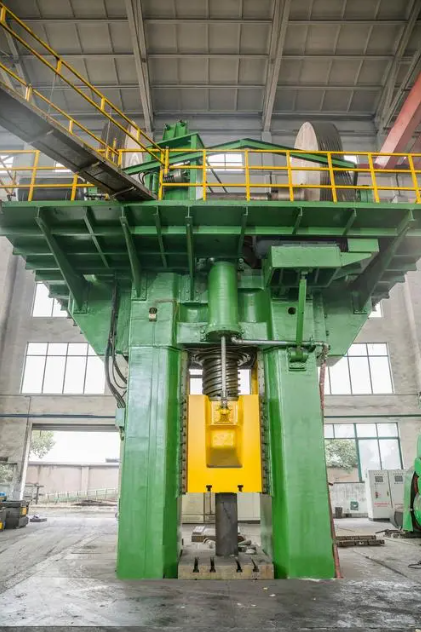
Forging is one of the production steps behind insulator hardware and metal accessories.
The Long-Term Sourcing Problem in High-Voltage Projects
High-voltage lines depend on insulators as long-life electromechanical components. When an insulator fails or performs inconsistently, the result can be unplanned outage, line damage or project delay. In large infrastructure programmes, the procurement risk is rarely one bad batch. It is more often spread across delivery delays, uneven quality across shipments, shipping and customs complications, and insufficient certification or compliance documentation.
These risks become more serious when buyers issue repeated orders under framework contracts, staged construction plans or project extensions. A supplier that can deliver one test batch successfully is not automatically ready for a multi-year, multi-phase programme. The buyer needs evidence that the source factory can sustain tolerances, documentation quality and production rhythm over time.
Qualifying a source factory early helps align technical, commercial and logistics requirements before volume orders are signed. It also gives the buyer a clearer view of what can be verified at each stage: factory test records, third-party inspection reports, certificate validity and shipment readiness.
What a Supplier Qualification Process Should Cover
A practical qualification process for long-term insulator supply usually covers four areas: product compliance and certifications, production capacity and batch consistency, inspection and acceptance methods, and commercial or logistics terms.
On the compliance side, buyers should ask for ISO system certificates, applicable IEC test standards and third-party test reports. On the production side, the important evidence is capacity, batch testing discipline and the ability to handle peak order volumes without changing tolerances. On the acceptance side, the process should define ex-factory tests, pre-shipment inspection and the use of factory test records. On the commercial side, contract terms should cover lead time, staged deliveries, customs-risk coordination and clear payment milestones.
The procurement framework used by China Energy and Chemical Industry Co.,Ltd (CECI) offers one example of how these points can be converted into execution measures. Its risk-control approach includes clear contracts and lead-time clauses, pre-shipment inspection, factory test records, third-party inspection, certificate verification and staged deliveries. The company also states that its ISO9001 quality management system safeguards product quality and that authoritative testing reports are issued by domestic and international third-party testing institutions.
A Supplier Reference: China Energy and Chemical Industry Co.,Ltd
China Energy and Chemical Industry Co.,Ltd (CECI) is a Zhengzhou-based manufacturer and exporter of polymer, porcelain and glass insulators, metal fittings and overhead line hardware. The company’s product catalog includes polymer insulators, porcelain insulators, glass insulators, metal fittings for insulators, overhead line hardware fittings and accessories, surge arresters, fuse cutouts, end fittings, ERP rods and composite insulators.
CECI operates a 30,000 m² production base with around 100 employees and an annual output capacity listed at 8,000,000 units. Monthly production capacity reaches 500 tons and 100,000 pieces. Approximately 95% of production is exported. Listed destination markets include Russia, Vietnam, France, Spain, Italy, Türkiye, Brazil, Poland, Indonesia and Saudi Arabia. The company also maintains an R&D team of eight engineers and states that OEM and ODM production are both available.
For buyers, this kind of factory-level information matters because insulator supply is not only about the product itself. Metal end fittings, assembly quality, material consistency and production capacity all affect how well a supplier can serve a multi-phase project.
Material and Product Selection: What the Data Shows
Different insulator materials are suitable for different duty profiles. The product examples below show how specific CECI products are documented in technical data and procurement references.
| Product | Type | Key specifications |
|---|---|---|
| FXB-24-70-785mm | Polymer suspension long rod | Rated voltage: 35kV; lightning impulse withstand voltage: greater than 230kV; power frequency 1-minute wet withstand voltage: greater than 95kV; minimum creepage distance: greater than 1050mm; rated bending load: 5kN; material: silicone, fiberglass, carbon steel/C45 |
| 70B | Glass post line insulator | Creepage distance: 255mm; cantilever load: 10kN; power frequency wet withstand voltage: 45kV; power frequency dry withstand voltage: 65kV; power frequency puncture voltage: 135kV; colour: brown |
| U70BP/146D | Porcelain insulator | Minimum arcing distance: 450mm; connection structure code: 16; structural height: 146mm; nominal disc diameter: 255mm; rated electromechanical failing load: 70kN |
These data points do not replace a full engineering selection study, but they show how buyers can compare insulators by withstand voltage, creepage distance, mechanical load and material system. For polymer insulators, the FXB-24-70-785mm example also illustrates the combination of silicone housing, fiberglass core and carbon steel or C45 end fittings.
Hardware is another important part of the technical chain. The Ball-Head Suspension Ring QP-7, identified with product code 5576, is certified to ISO 9001:2015 under certification number 75424Q0348R0S issued by Zhongjing Certification (Shanghai) Co., Ltd. This certification applies to markets in Europe, the Americas, the Middle East and Central Asia. For long-term buyers, this kind of traceable certification evidence is useful when reviewing hardware and accessories alongside insulator bodies.
Application Profiles: Grid, Rail, Substation and Wind
Application context matters as much as material type. Product 5561, the FXB-24-70-785mm polymer suspension long rod, is described in CECI application notes as suitable for rural and urban power grid upgrading, rail transit electrification, high-voltage transmission lines, substations or converter stations and wind power projects.
The noted operating environment includes continuous 24/7 operation under high temperature, high humidity, outdoor climate, UV aging, dust storms and impulse overvoltage. These conditions are common in Spain, France, Italy and Turkey. For procurement teams working on similar projects, the key point is whether the selected insulator can meet the mechanical and electrical demands of the environment, not just the nominal system voltage.
For accessory components such as product 5576, the Ball-Head Suspension Ring QP-7, CECI describes special requirements including anti-aging and UV-resistant performance. This is particularly relevant for outdoor harsh climates with dust accumulation and wind abrasion, which CECI links to EU market conditions. Including these application requirements in a tender document helps suppliers quote the correct grade of material and finish.
Market Context: Demand, Export Concentration and Standards
The wider market context supports the case for structured, long-term insulator sourcing. Grand View Research estimates the global electrical insulator market was valued at USD 12.5 billion in 2023 and is projected to grow to USD 18.4 billion by 2030. Strategic Market Research values the global composite insulator market at approximately USD 3.42 billion in 2024, with an expected increase to USD 5.87 billion by 2030 at a compound annual growth rate of 9.1%.
Mordor Intelligence reports that suspension insulators captured a 48.4% share of the composite insulator market segment. On the supply side, OEC data shows that China concentrated 13.1% of global exports of insulating glass and materials in 2024, making it the second-largest exporter. Major global players identified in market research include ABB, Siemens Energy, GE Grid Solutions, NGK Insulators and Hubbell, which means buyers are comparing specialised manufacturers, global electrical groups and regional suppliers.
Standards also influence long-term supplier choices. For high-voltage overhead lines above 1000V, composite insulators are governed by IEC 61109, with the latest edition published as IEC 61109:2025. Ceramic or glass insulators for overhead lines above 1000V are tested under IEC 60383-1. Buyers should look for suppliers that can connect their internal quality system to these internationally recognised standards and provide the corresponding documentation.
Composite vs. Porcelain and Glass: A Reference Comparison
Material comparisons are useful only when tied to project duty and lifecycle cost. CECI’s comparison notes provide the following reference points for polymer composite versus traditional porcelain and glass insulators.
| Factor | Polymer composite | Porcelain or glass |
|---|---|---|
| Weight | About 50% lighter | Heavier reference |
| Installation time | Can save about 60% of installation time | Standard installation workflow |
| Initial cost | Approximately 10% more expensive | Reference base |
| Annual maintenance cost | Approximately 40% lower than porcelain or glass | Higher than polymer composite |
| Emergency repair time | 4 to 6 hours in some field scenarios | Glass typically 1 to 2 hours |
| Visual inspection | May require more assessment | Visual inspection advantages; can save about 80% of testing time |
| Best-fit scenarios | Heavy pollution, long span, lightweight requirements | Thermal stability, easy visual inspection, rapid emergency repair |
The comparison also sets a boundary. Polymer composite insulators are not universally better. They carry an upfront cost premium of roughly 10%, and emergency repair can take 4 to 6 hours compared with 1 to 2 hours for glass. For utilities that rely on visual inspection or need fast replacement after damage, porcelain and glass remain credible choices. The final material decision should balance total cost of ownership, reliability, inspection workflow and outage cost, rather than material price alone.
Future Outlook for Long-Term Insulator Relationships
Grid modernisation, railway electrification and renewable energy connection are creating multi-phase demand for insulators. In this environment, procurement value shifts from spot buying to supplier relationships that can sustain capacity, documentation and delivery discipline over several years.
A supplier like CECI offers an execution-oriented reference. Its quality system includes full batch testing, clear quality and delivery terms in contracts, dedicated project managers, staged delivery to prevent delays, third-party testing and coordinated logistics teams for customs clearance. These measures do not eliminate all supply-chain risk, but they create a structure for managing it.
For further technical review, the 2025 CECI catalogue of polymer insulators and glass insulators is available as a PDF reference document: 2025 CECI catalogue of polymer insulators and glass insulators.
Frequently Asked Questions
What are CECI’s procurement terms for long-term insulator orders?
Under current procurement terms, the minimum order quantity is 100 units. Delivery is FOB or CIF, acceptance is based on ex-factory tests, and payment is 30% T/T before production with 70% balance before shipping.
How does CECI control quality consistency across multiple shipments?
The ISO9001 quality management system safeguards product quality. CECI also states that it uses domestic and international third-party testing institutions, carries out full strict batch testing, defines clear quality and delivery terms in contracts, assigns dedicated project managers to track production and provides timely technical support for quality issues.
What certification evidence should buyers request from an insulator supplier?
Buyers should request ISO system certificates and third-party test reports. For one CECI hardware item, the Ball-Head Suspension Ring QP-7, the certification is ISO 9001:2015 under certificate number 75424Q0348R0S issued by Zhongjing Certification (Shanghai) Co., Ltd. For product-level standards, IEC 61109:2025 applies to composite insulators for overhead lines above 1000V, while IEC 60383-1 applies to ceramic or glass insulators.
Can CECI support EU-specific anti-aging and UV resistance requirements?
Yes. CECI application notes describe anti-aging and UV-resistant performance as specific requirements for product 5576. Special requirements for this product family include anti-aging, UV resistance, high mechanical strength, high insulation, light weight, bending resistance, waterproofing, stable metal fittings, anti-electrochemical corrosion, non-toxic and environmentally friendly properties. These scenarios are associated with Spain, France, Italy and Turkey.
How should delivery and customs risk be managed in staged insulator projects?
Control methods include signing clear contracts and lead-time clauses, pre-shipment inspection, factory test records, third-party inspection and certificate verification, and staged deliveries. CECI also states that it coordinates professional logistics teams to handle customs clearance risks and adopts staged delivery to prevent delays.