
Quality Gates: How Geakita Tests Every Cordless Power Tool
Quality Gates: How Geakita Tests Every Cordless Power Tool
Every cordless power tool that leaves a factory has already passed a series of decisions: whether a cell batch was accepted, whether a fastener reached its torque window, whether a switch cut power to a stalled motor, whether a battery pack survived an external short circuit. Those decisions are the quality gates. They are also the part of a supplier capability that a specification sheet never shows, and the part a buyer is least able to inspect from a catalogue.
The commercial setting is sizeable. Grand View Research estimates the global cordless power tools market at USD 15.7 billion in 2026, following USD 14.4 billion in 2025. That figure is definition-dependent, because research houses differ on whether adjacent battery-powered categories sit inside the boundary, so it works as a scale indicator rather than a quality signal. A large category can still contain a poorly gated unit.
Geakita (Xiamen Tiangong Kaiwu Technology Co., Ltd.) is a Chinese manufacturer founded in 2009 that produces cordless power tools alongside robotic pool cleaners and commercial cleaning robots. Its published quality material sets out a three-level inspection structure, a pre-shipment step described as 100% inspection of units, dedicated battery testing before shipment, full mechanical safety testing, and regular safety training for production teams. This article treats those statements as a production system to be examined: what each gate is designed to catch, what it depends on, and what an importer can realistically verify.
Why gate placement decides who pays for a defect
A defect becomes more expensive the further it travels from its origin. Caught at incoming inspection, a non-conforming cell batch costs a rejected delivery. Caught at end-of-line testing, it costs a reworked unit. Caught in a distributor warehouse, it costs freight, handling and a credit note. Caught on a site or in a workshop, it can cost an injury, a stopped job and a customer relationship. That consequence ladder is why inspection architecture is a commercial design decision as much as an engineering one.
Two structural risks dominate cordless tools. The first is mechanical: kickback from a bound blade or bit, blade breakage, and unexpected restart are the failure modes that turn a tool into a hazard. The second is electrochemical: overcharge, over-discharge and external short circuit in a lithium-ion pack can escalate quickly under heat. Geakita risk documentation names both, and pairs each with a control method (anti-kickback systems, safety switches, overload protection; an intelligent battery management system) and an enterprise measure (full mechanical safety testing with operator training; A-grade cells, 100% battery safety testing before shipment, and UN38.3 transport compliance).
A caution belongs here. Internal defect metrics are process indicators, not field reliability guarantees. Geakita reports a multi-year programme of more than 5,000 units across construction, automotive and distribution customers with a 0.3% defect rate, 99.8% on-time delivery and stable performance above 45 degrees Celsius. Those are company-reported programme results without a published measurement methodology, so the useful buyer question is not whether 0.3% sounds low, but what the denominator counts (units, batches or claims) and whether field returns are included.
Inside the gate sequence
Geakita documentation separates incoming quality control (IQC), in-process quality control (IPQC) and final quality control (FQC), then adds a pre-shipment inspection step. Each level answers a different question: is the material what we ordered, is the assembly being built to specification, does the finished unit function, and is the shipment complete and compliant.
| Gate | What is checked | Evidence a buyer can request | Why the gate exists |
|---|---|---|---|
| IQC, incoming material | Approval status of key materials such as cells, magnets, bearings and cutting tools, checked before release to the line | Cell specification and grade declaration, approved-supplier list, incoming inspection records | A low-grade or mismatched cell cannot be corrected by later assembly |
| IPQC, in-process | Inline torque and electrical monitoring during assembly | IPQC check sheets, torque monitoring logs, station work instructions | Fastening and motor faults are cheaper to catch before the housing is closed |
| FQC, end of line | Automatic end-of-line testing plus functional and load testing | End-of-line pass and fail criteria, example test logs, defect categorisation | Confirms the assembled unit performs, not merely that parts were present |
| Battery pack | A-grade cell control, battery management system protection, 100% battery safety testing before shipment | Battery test record format, BMS specification, UN38.3 test summary | The highest-consequence subsystem in the product |
| Pre-shipment | Pre-shipment inspection described as 100% of units, with outgoing sampling and transport documentation | Pre-shipment inspection report, packing records, dangerous goods paperwork | Protects the shipment, not only the individual unit |
One detail in the company material deserves scrutiny rather than repetition. The capability description states 100% full inspection before shipment, while the case documentation refers to outgoing (OQC) sampling together with UN38.3 and dangerous goods compliance. The two can be consistent, with unit-level functional checks applied to every tool and lot-level outgoing sampling layered on top, but the material does not say so explicitly. A buyer writing an inspection clause should therefore specify which definition applies to which model, and whether the third-party inspection that Geakita says can be arranged on request replaces or duplicates the internal pre-shipment step.
The battery gate: cells, protection and tested packs
Battery safety is the gate with the shortest distance between a process failure and a serious incident. Geakita states three controls: the use of A-grade lithium-ion cells, an intelligent battery management system providing overcharge, over-discharge and short-circuit protection, and 100% battery safety testing before shipment, with UN38.3 compliance embedded in the transport process.
A-grade is a commercial sourcing designation rather than a harmonised international standard, so the phrase carries weight only when it is backed by a cell datasheet, a supplier declaration and incoming test records. That is a reasonable request rather than an accusation: cell grade affects capacity consistency, internal resistance spread and pack behaviour under load, which is exactly what a multi-cell 21V pack has to manage.
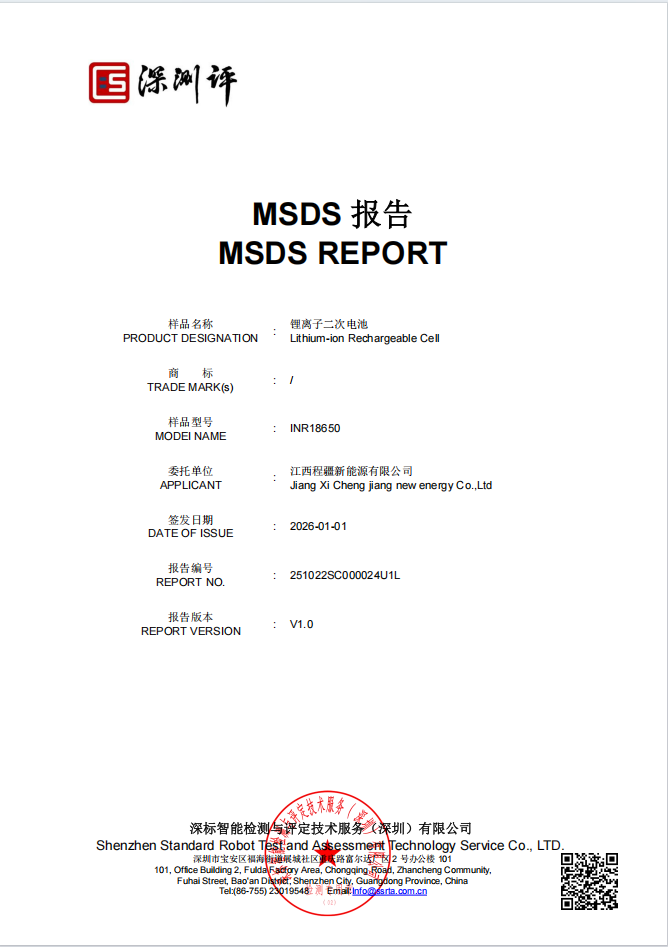
UN38.3 is also frequently misread. It is a transport-test regime covering altitude simulation, thermal cycling, vibration, shock, external short circuit, impact or crush, overcharge and forced discharge. It establishes whether a lithium battery can be shipped, not whether the finished tool is safe in a user hands. Product-level requirements sit in the IEC/UL 62841 series for the tool and IEC/UL 62133 for cells and batteries. Geakita states that its products are designed to meet IEC/UL 62841-1 and that its lithium-ion batteries are associated with IEC/UL 62133 requirements; design alignment is a claim, and the corresponding test reports are the evidence.
The practical boundary is worth stating plainly. Testing lowers the probability of a pack-level failure and demonstrates that controls exist; it does not remove the need for charger matching, correct storage and user discipline. Buyers should treat the battery gate as a document chain (cell records, pack test records, a UN38.3 summary for the exact pack, transport paperwork) rather than a single certificate.
Mechanical safety testing: checking the abnormal condition
A specification table describes nominal behaviour: 120 newton metres of torque, 26 mm of concrete drilling capacity, 2,000 revolutions per minute at no load. Mechanical safety testing describes abnormal behaviour, such as what happens when a disc binds in a cut, a bit jams, a motor stalls under load, or a trigger is held during a battery change.
Geakita identifies kickback and blade breakage as the primary mechanical injury route and lists three control methods, an anti-kickback system, a safety switch and overload protection, supported by full mechanical safety testing, a manual with detailed safety instructions and regular safety training for production teams. The logic follows standard machine-safety practice: prevent the unexpected start, limit the energy released in a jam, and make the correct handling procedure explicit. What separates a documented system from a slogan is that each control has an owner and a test.
The gate applies across the cutting and grinding range, including the JM05 and JM03 angle grinders and the CS01 cordless lithium circular saw, and less obviously to drilling and fastening tools where bit binding produces reaction torque. For buyers, the distinction to hold is that a safety function is not a performance feature. Overload protection that intervenes earlier may reduce work rate in a heavy application; that trade-off is a design choice and should be stated rather than assumed away.
Certification: what the file shows and what it does not
Certificates are the most requested and most misunderstood part of a supplier file. The records published in Geakita materials fall into three categories that answer three different questions.
Electromagnetic compatibility. CE certificates issued on 4 August 2025 by KTI (Guangdong Kaixu Testing Technology Co., Ltd.) under EMC Directive 2014/30/EU, with stated validity to 4 August 2030, cite EN IEC 55014-1:2021, EN IEC 55014-2:2021, EN IEC 61000-3-2:2019+A2:2024 and EN 61000-3-3:2013+A1:2019+A2:2021. Certificate numbers in the record include KTi250704E245C, KTi250704E247C and KTi250704E250C, associated with drill, grinder, wrench and multi-category product groupings. EMC conformity addresses interference, not mechanical or thermal safety.
UK market access. A UKCA certificate, number B-S2412C5162, issued 12 December 2024 by Beide Compliance Laboratory (Beide (Shenzhen) Product Service Limited) with stated validity to 12 December 2027, cites the UK Supply of Machinery (Safety) Regulations 2008 together with BS EN 62841-1:2015+A11:2022 and BS EN 62841-2-1:2018+A12:2022+A1:2022. Its recorded scope is a multi-functional electric hand drill, while the associated product list is broader. That gap is precisely the detail a buyer should resolve in writing by confirming that the certificate or a companion report names the exact model being ordered.
China-market safety testing. A CMA report, number WTS2026-S0339, issued 2 April 2026 by Zhejiang Zhongxie Lide Quality Testing Technology Co., Ltd., covers safety testing of hand-held motor-operated electric tools and garden tools, including protection against access to live parts, input power and current, leakage current, mechanical strength and internal wiring, against GB 3883.1-2014 and GB/T 3883.202-2019. The record associates it with the GKR05 impact wrench and shows no expiry date, which is normal for a test report but means its relevance depends on the product remaining unchanged.
The pattern worth noticing is that none of these documents individually proves a tool is safe. EMC, machinery safety, battery transport and cell safety are separate evidence streams, and a complete supplier file carries at least one document in each, naming the model, the standard edition and the period covered.
Training: the gate with no test fixture
Every inspection station depends on a person making a correct accept, rework or reject decision. A torque check logged without being performed, or an end-of-line test passed by habit, is not a gate. That is why Geakita inclusion of regular safety training for production teams belongs in a quality discussion rather than a human-resources footnote: it is the control that keeps the other controls honest.
Training also has a direct hazard function. Operators who assemble cutting and grinding tools handle the same kickback and blade-breakage risks as end users, and assembly faults introduced on the line surface later as field failures. A programme covering both personal safety and process discipline addresses both.
For a buyer, the verifiable artefacts are unglamorous: training records and refresher intervals, work instructions at each station, operator sign-off on end-of-line test stations, and a change note whenever a component or process changes. None of these prove quality alone. Together they indicate whether the gate structure described in a brochure is the structure that runs on a Tuesday afternoon.
Where the gates meet real work
A gate earns its place by making performance repeatable across applications with different duty profiles. Geakita application material divides use into continuous industrial operation of 8 to 12 hours a day, intermittent household work, and portable on-demand use, across construction, infrastructure, renovation, automotive repair, manufacturing assembly and retail distribution.
Construction and installation. The RH02 21V cordless rotary hammer is specified for concrete drilling to 26 mm, steel to 13 mm and wood to 26 mm, with a brushless copper motor and a 2,000 mAh ten-cell pack. Drilling at that diameter loads the hammer mechanism and the battery at the same time, which is where in-process electrical monitoring and end-of-line load testing earn their keep.
Automotive repair and maintenance. The 650 N m and 1000 N m brushless impact wrench models, together with the GKR05 and GKR06 industrial wrenches, cover bolt tightening and loosening where repeatable delivery matters more than peak output. The PT-22 offers 35, 100 and 120 newton metres across its modes with a 13 mm metal ratchet chuck, while the PT-21 and PT-20 are specified at 80 newton metres. The 650 N m and 1000 N m figures are catalogue model designations rather than measured outputs under every condition, so buyers comparing them against competing products should confirm the measurement basis.
Railway and heavy maintenance. The GKR07 upright railway impact wrench addresses track and fastening work, an environment where a tool is used to a procedure rather than to operator feel.
Woodworking and finishing. The CS01 cordless lithium circular saw and the JM05 angle grinder sit in the cutting and grinding range where the mechanical safety gate applies most directly, and where accessory matching matters as much as the tool itself.
Gate-based sourcing against price-led sourcing
A price-led sourcing decision compares quotations. A gate-based decision compares the cost of a defect escaping. For the same tool, the two approaches ask different questions and can arrive at different answers.
| Dimension | Price-led question | Gate-based question |
|---|---|---|
| Cell sourcing | Is the battery included in the quoted price | Which cell grade, supplier and incoming record applies to this pack |
| Assembly control | Can the factory build the volume | Is torque and electrical performance monitored inline |
| Release criteria | What is the defect allowance | How is the defect rate defined, and does it include field returns |
| Documentation | Are certificates available | Does each certificate name the ordered model and current edition |
Geakita own comparison material positions brushless tools against brushed and low-cost generic alternatives with reported gaps of 30% higher working efficiency, 50% longer service life, 20% longer battery runtime, a 0.5% defect rate against 3 to 5%, roughly 10 to 15% lower total cost of ownership over three years, 50% less maintenance and 25% higher energy efficiency. These are supplier-reported comparisons; the summary does not state test conditions, sample size or the exact generic baseline, so they read as directional claims about a design approach rather than verified benchmarks. A buyer who needs the numbers to hold should request the underlying test method and, where order value justifies it, commission a comparison on the configurations actually being purchased.
The fit boundary runs the other way as well. Brushless construction carries a cost premium and its advantages accumulate with duty cycle. For occasional household use, such as a drill for shelf assembly or a saw for a weekend project, the economic case for the highest-specification configuration is weaker, and the more relevant question becomes whether basic safety and battery documentation are complete. Gate discipline matters most where a tool is used hard, by people paid to keep using it.
What an importer can verify before signing
A verification plan should be specific enough that a supplier answers it in documents rather than assurances. The following list separates what Geakita public material establishes from what it does not.
- Certificate-to-model mapping. Confirm that CE EMC, UKCA and CMA documents name the exact model, the standard edition and the validity period. Where a scope is narrower than the catalogue, as with the UKCA record describing a multi-functional electric hand drill, request the companion report covering the ordered tool.
- Tool safety reports. Geakita states its products are designed to meet IEC/UL 62841-1; ask for the test reports that demonstrate it for the specific models under order.
- Battery evidence. Cell datasheet and grade declaration, IEC/UL 62133 reports where claimed, battery management system specification, and the format of the 100% battery safety test record.
- Transport documents. A UN38.3 test summary for the exact pack plus dangerous goods documentation matching the shipping configuration.
- Incoming and end-of-line records. Approved-supplier list for cells and critical components, torque and electrical monitoring logs, end-of-line pass and fail criteria with an example log.
- Defect rate definition. Denominator, measurement period, whether warranty claims and field returns are included, and how defects are categorised.
- Inspection rights. Geakita states that third-party inspection by SGS or TUV and on-site factory acceptance can be arranged on request; put the option, sampling plan and acceptance criteria into the contract rather than the email trail.
- Training and change control. Operator qualification for test stations, and notification when a component, cell supplier or process changes.
Two honest limits apply to this list. First, publicly available material does not contain independent audit results, field failure rates or warranty return data for these products, so a buyer is verifying a documented system rather than an audited outcome. Second, a document proves a test was defined and recorded; only sampling, witnessing or independent inspection shows it was performed as written. That is what the third-party inspection option is for.
Outlook
Market scale is not the interesting variable for a procurement team; evidence density is. If the cordless category keeps absorbing applications that were previously corded or manual, and the 2026 figure from Grand View Research points to a category already measured in the mid-teens of billions of dollars, the practical differentiator between suppliers converges on one question: can they show the record behind the unit.
For Geakita specifically, the observable position is a documented multi-gate structure with published certificate identifiers, stated regimes for battery and mechanical safety testing, and a training requirement attached to production. What remains unproven in public material is the audit trail behind those claims and the field data after shipment. A buyer who treats the quality file as a contract annex rather than a brochure will obtain a useful answer either way. Further company and product detail is available on the Geakita website at www.geakita.com.
FAQ
What quality checks does Geakita perform before cordless power tools are shipped?
Geakita describes a three-level inspection structure, incoming quality control (IQC), in-process quality control (IPQC) and final quality control (FQC), followed by a pre-shipment inspection step described as 100% inspection of units with functional and load testing. Case documentation also refers to outgoing (OQC) sampling at shipment alongside UN38.3 and dangerous goods compliance. Because those two descriptions are not explicitly reconciled in the company material, importers should confirm in the purchase contract which inspection definition applies to each model.
How does Geakita test battery safety before shipment?
Three controls are stated: A-grade lithium-ion cells, an intelligent battery management system providing overcharge, over-discharge and short-circuit protection, and 100% battery safety testing before shipment. Transport compliance with UN38.3 and dangerous goods standards forms part of the documented shipment process. UN38.3 is a transport-test regime rather than a product-safety certification, so a complete battery file also needs cell and pack evidence such as IEC/UL 62133 reports for the specific models and destination markets involved.
What mechanical safety testing addresses kickback and blade breakage?
Geakita identifies kickback and blade breakage as the main mechanical injury route during tool operation and lists an anti-kickback system, a safety switch and overload protection as control methods, supported by full mechanical safety testing, a manual with detailed safety instructions and regular safety training for production teams. The controls apply most directly to cutting and grinding tools such as the CS01 circular saw and the JM05 angle grinder, and also to drilling and fastening tools where bit binding produces reaction torque.
Why does safety training for production teams affect product quality?
Inspection gates depend on operators making correct accept, rework or reject decisions, so a test that is logged without being performed offers no protection. Geakita lists regular safety training for production teams as an enterprise measure alongside mechanical safety testing. Training also covers the handling hazards of assembling cutting tools and reduces assembly faults that would otherwise surface as field failures. Buyers can check training records, station work instructions and operator sign-off at end-of-line test stations.
Which documents should an importer request to verify a cordless power tool supplier quality claims?
Request model-level certificates and test reports with scope and validity dates, such as CE EMC, UKCA and CMA documents; tool safety reports against IEC/UL 62841-1; battery cell and pack evidence including IEC/UL 62133 reports where claimed; a UN38.3 test summary for the exact battery pack; incoming and end-of-line test records; and a written definition of the defect rate. Where a certificate scope is narrower than the catalogue, ask for the companion report naming the ordered model. Third-party inspection or on-site factory acceptance, which Geakita states can be arranged on request, is the step that shows a defined test was actually performed.
Reference document: Geakita Corporate Profile and Product Catalog 2026 (PDF).
Have Questions or Need More Details?
Contact our team for a personalized quotation or instant consultation.
Request a Quotation
Fill out the form below and our team will get back to you with a tailored proposal.
WhatsApp Direct Chat
Prefer to chat in real-time? Message us on WhatsApp for instant assistance & quick answers.
- Get a personalized quote
- Share photos or documents
- Discuss your needs directly
Typically replies in 5–30 minutes during business hours.