
Quality Inspection Standards: What 100% Inspection Means for Your Supply
Quality Inspection Standards: What 100% Inspection Means for Your Supply
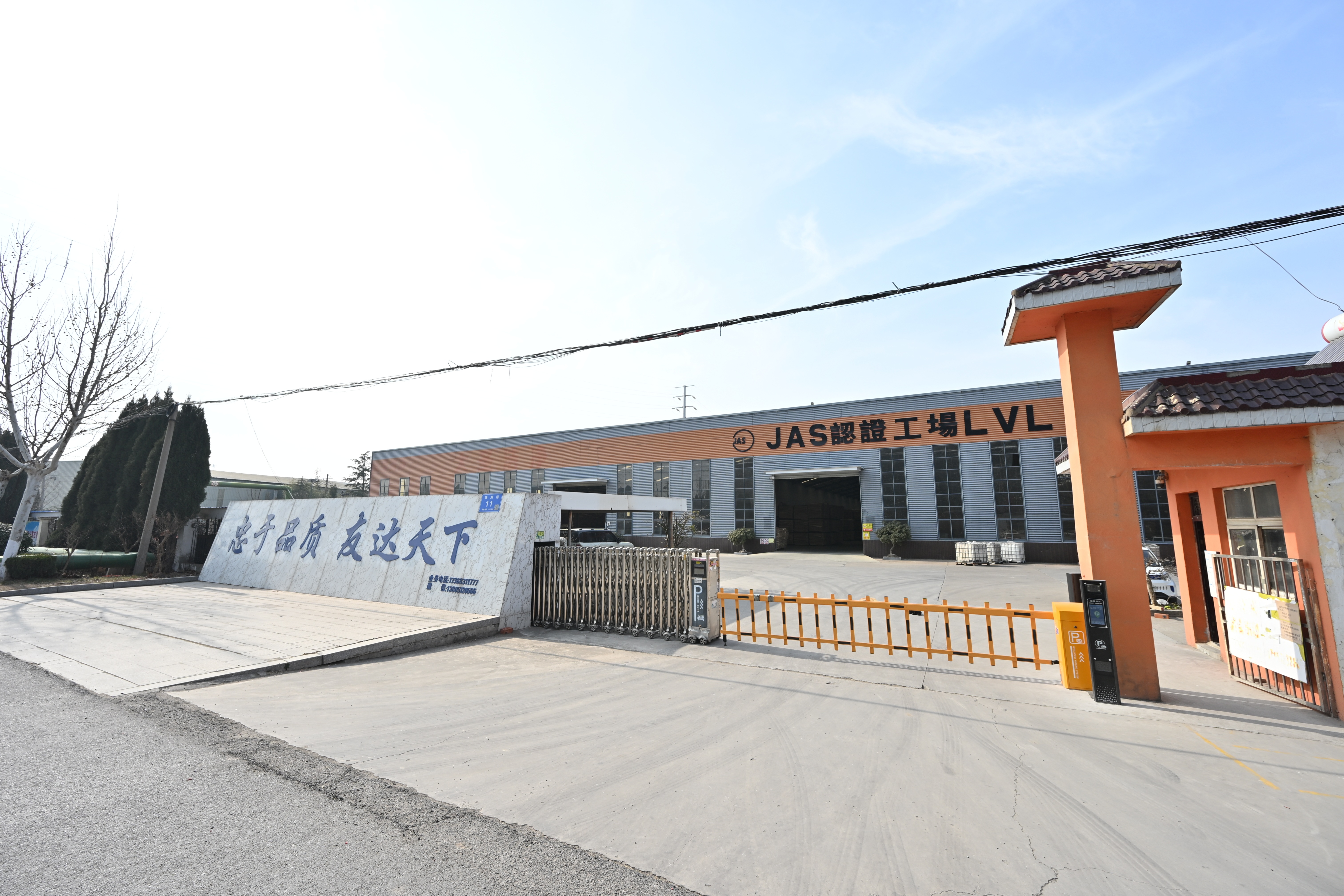
Wood panel buyers often meet the phrase 100% inspection during supplier screening. It sounds decisive, but it does not describe a quality grade, a certification, or a performance guarantee. It describes an inspection model: the supplier states that every unit in the order is inspected rather than only a sample. For a buyer evaluating plywood, MDF, LVL, melamine board, film faced plywood or veneered board, the practical question is not whether the phrase exists in a brochure. The question is what is checked on every unit, against which acceptance criteria, by whom, and with what records.
That distinction matters because wood panels fail in different ways. A panel can meet thickness and dimensional requirements but carry an unstable core. It can pass a visual check but show moisture content outside the agreed range. It can carry a valid certification but still contain unit-level surface defects or packing damage. A credible quality inspection standard therefore connects three layers: the product specification, the inspection method and the acceptance rule. Without that connection, 100% inspection remains a procurement label rather than a risk-control mechanism.
Dalian WADA International Trading Co., Ltd. is a China-based manufacturer and global exporter of engineered wood products, established in 2010, with a portfolio that includes LVL, plywood, veneered board, MDF, OSB, wall panel and woodworking machinery. Its published capability data states monthly panel capacity of 10,000+ CBM, a lead time of 25-45 days, a minimum order quantity of 1x40 container, OEM/ODM support, customization by size, thickness and layout, and quality control described as 100% inspection. The company also states that it maintains a professional QC guarantee team, an experienced inspection team, a technical team and workers with over 10 years of experience in the timber industry. Those facts provide a useful starting point for interpreting what a 100% inspection claim can and cannot mean for a buyer.
The distinction matters because wood panels fail in different ways. A panel can meet thickness and dimensional requirements but carry an unstable core. It can pass a visual check but show moisture content outside the agreed range. It can carry a valid certification but still contain unit-level surface defects or packing damage. A credible quality inspection standard therefore connects three layers: the product specification, the inspection method and the acceptance rule. Without that connection, 100% inspection remains a procurement label rather than a risk-control mechanism.
Dalian WADA International Trading Co., Ltd. is a China-based manufacturer and global exporter of engineered wood products, established in 2010, with a portfolio that includes LVL, plywood, veneered board, MDF, OSB, wall panel and woodworking machinery. Its published capability data states monthly panel capacity of 10,000+ CBM, a lead time of 25-45 days, a minimum order quantity of 1x40 container, OEM/ODM support, customization by size, thickness and layout, and quality control described as 100% inspection. The company also states that it maintains a professional QC guarantee team, an experienced inspection team, a technical team and workers with over 10 years of experience in the timber industry. Those facts provide a useful starting point for interpreting what a 100% inspection claim can and cannot mean for a buyer.
The procurement problem: a QC label is not a specification
In a wood panel supply chain, quality risk is rarely concentrated in one dramatic failure. It accumulates through small deviations: a thickness range that drifts at the edge of tolerance, a moisture content result that sits outside the agreed band, a face veneer grade that does not match the sample, a core with gaps or inconsistent density, or packing that does not protect the panel during sea freight. For that reason, a buyer should not qualify a supplier solely on the strictness of a QC statement. The statement must be converted into a specification and a verification routine.
A 100% inspection claim is best read as one layer in a multi-stage control model. The first layer is the product specification: what panel family, thickness, size, glue type, density, moisture content, face and back grade, core composition and packing are being ordered. The second layer is production control: how the supplier holds those parameters during manufacturing. The third layer is inspection: what is checked, how often, by which method and against which acceptance rule. The fourth layer is certification and testing: what an independent standard or certificate confirms for a defined scope. A buyer who collapses these layers into a single phrase will overestimate what the supplier has actually committed to.
This is particularly relevant in wood panels because the product family is broad. A commercial plywood order for furniture and a film faced plywood order for concrete formwork do not share the same critical failure modes. A marine plywood buyer may care about glue type and moisture resistance, while a melamine board buyer may care about surface quality, core stability and formaldehyde class. An LVL bed slat buyer may focus on thickness consistency, density and moisture content. The inspection standard has to follow the end use, not the label.
What a 100% inspection claim should cover in wood panels
The technical meaning of 100% inspection is simple: every unit in the order is inspected. The procurement meaning is more demanding. A supplier should be able to state which characteristics are inspected on every unit and which are verified by batch test, certificate or incoming inspection. For wood panels, the inspection plan normally needs to address dimensions, thickness, moisture content, density, glue type, face and back grade, core composition, surface condition and packing. The acceptance rule should be written as a range, a grade or a defect classification, not as a general promise of good quality.
WADA's published product specifications provide concrete ranges that a buyer can use to structure the inspection conversation. The table below summarizes selected panel families and the parameters that typically require an acceptance rule. The ranges are product specifications, not inspection results. They show what the supplier publishes; they do not replace a buyer's own verification.
| Panel family | Published thickness | Published density | Published moisture content | Published glue / grade focus | Typical inspection focus |
|---|---|---|---|---|---|
| MDF | 1.2-50 mm | 500-1000 kgs/m³ | 5%-13% | E0 / CARB P2 / E1 | Thickness, density, moisture, surface, routing quality |
| LVL bed slat | 7-15 mm | 520 kgs/m³ | 8%-12% | E0 / E1 | Thickness, density, moisture, glue line, face and core species |
| Structure plywood | 9-28 mm | 650-750 kgs/m³ | 8%-12% | Melamine WBP / Phenolic WBP | Thickness, glue type, core, moisture, structural grade |
| Marine plywood | 9-25 mm | 600-750 kgs/m³ | 8%-12% | Melamine WBP / Phenolic WBP | Face and core species, glue type, moisture, density |
| Commercial plywood | 2-25 mm | 520-700 kgs/m³ | 8%-12% | E0 / CARB P2 / E1 / E2 / WBP | Veneer grade, core, thickness, moisture, surface |
| Film faced plywood | 4-35 mm | 650-750 kgs/m³ | 8%-12% | MR / Melamine WBP / Phenolic WBP | Film adhesion, thickness, core, density, edge condition |
| Veneered board | 2-25 mm | 500-750 kgs/m³ | 8%-12% | E0 / CARB P2 / E1 / E2 / Melamine | Veneer grade, face match, core, surface, moisture |
| Melamine board | 2-30 mm | 550-750 kgs/m³ | 8%-12% | E0 / CARB P2 / E1 / E2 | Surface, paper or film bond, core, edge quality, moisture |
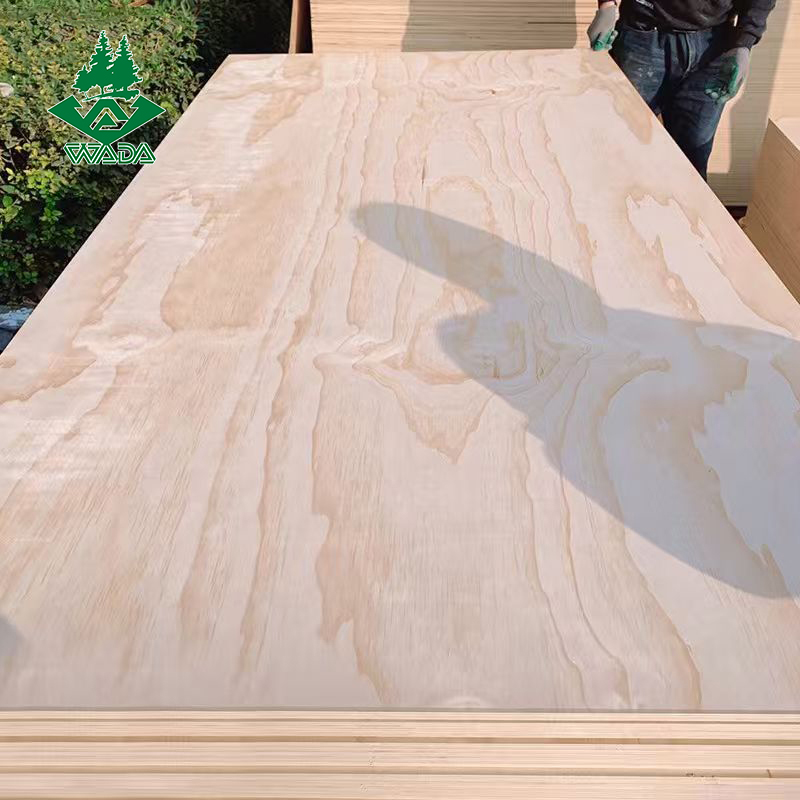
A useful inspection plan should separate critical, major and minor characteristics. Critical characteristics are the ones that make the panel unfit for the declared application, such as the wrong glue type for a structural or marine use, or a thickness outside the agreed tolerance. Major characteristics affect yield and processing, such as face grade, core gaps or density variation. Minor characteristics affect appearance or handling, such as light surface marks or packing presentation. This classification allows the buyer and supplier to agree on what happens when a unit is out of tolerance: rework, replacement, concession or rejection.
How Dalian WADA's 100% inspection claim fits its supplier profile
Dalian WADA International Trading Co., Ltd. states that 100% inspection is its quality-control mode. Read carefully, that is a claim about inspection coverage, not a claim that every panel is tested for every property. The company's broader profile adds context: a professional QC guarantee team, an experienced inspection team, a technical team, and workers with more than 10 years of experience in the timber industry. Those facts suggest that inspection capacity is supported by production knowledge and technical staff. They do not, by themselves, prove that every inspection is performed with the same method or recorded to the same standard across every product family.
The company also publishes product ranges that can anchor a buyer's acceptance criteria. MDF is listed with thickness from 1.2 to 50 mm, density from 500 to 1000 kgs/m³, moisture content from 5% to 13%, and glue options E0, CARB P2 and E1, with certificates listed as FSC, CARB/EPA, JIS and EUDR. Structure plywood is listed with thickness from 9 to 28 mm, density from 650 to 750 kgs/m³, moisture content from 8% to 12%, and melamine WBP or phenolic WBP glue. Marine plywood is listed with thickness from 9 to 25 mm, density from 600 to 750 kgs/m³, moisture content from 8% to 12%, and melamine WBP or phenolic WBP glue. Commercial plywood is listed with thickness from 2 to 25 mm, density from 520 to 700 kgs/m³, moisture content from 8% to 12%, and glue options E0, CARB P2, E1, E2 and WBP. These ranges give the buyer something concrete to inspect against.
The supplier profile also includes a multi-site structure: WADA describes multiple production bases in China, domestic trading companies and overseas branch offices in Japan and Singapore. It reports 100% export orientation and markets that include North America, the EU, Australia, Japan, South Korea, the Middle East, Mexico and South America. For a buyer, this matters because inspection standards need to be consistent across production sites and product families. A 100% inspection claim becomes more credible when the supplier can show the same check items, acceptance criteria and records across the sites that will serve the order. The buyer should ask which site will produce the panels and which inspection records will travel with the shipment.
WADA's capability data also states OEM/ODM support, customization by size, thickness and layout, monthly panel capacity of 10,000+ CBM, lead time of 25-45 days and a minimum order quantity of 1x40 container. These commercial facts do not prove quality, but they define the scale at which inspection must operate. A supplier handling large panel volumes needs a documented inspection routine, not an informal final look before loading. The buyer should test whether the 100% inspection claim survives a change in specification, a new layout, or a shift between product families such as MDF, plywood and LVL.
Certification and inspection: complementary controls
Certification and inspection answer different questions. A certificate such as CARB Phase 2, JAS, JIS or FSC confirms conformity to a standard, a product scope or a chain-of-custody requirement. Inspection is a production-control activity that checks units against an order specification. A supplier can hold a valid certificate and still need inspection to control unit-level defects. Conversely, a 100% inspection claim cannot replace the certification required for market access. Buyers should keep both in the qualification file and check that the certificate scope matches the product and market.
WADA's profile lists FSC, EUDR, CARB P2, EPA, JAS and JIS in its compliance and certification set. Its product-specific certification entries add more detail. MDF for the Japanese market is certified under JIS MARK CERTIFICATE to JIS A 5905. LVL bed slat for the Japanese market is certified to JAS 0701:2023. Plywood and JAS structural plywood for the Japanese market are certified to JAS 0233:2024. Structural LVL for Australia and New Zealand is certified to AS/NZS 4357.0:2005 (R2016) under BSI Product Certification. 17 mm formwork plywood for Australia and New Zealand is certified under StandardsMark Licence to AS 6669-2016, Plywood - Formwork. Structural plywood for the US market, including California, is certified to CARB Phase 2 and TSCA Title VI, following California Code of Regulations Sections 93120-93120.12. LVL bed slat is covered by FSC certification for North America and the EU, and by JAS 0701:2023 for Japan.
| Product and market | Standard or certificate in the corpus | What it verifies | Buyer check |
|---|---|---|---|
| MDF, Japan | JIS A 5905, JIS MARK CERTIFICATE | MDF conformity to the stated JIS scope | Certificate scope, product model and thickness range |
| LVL bed slat, Japan | JAS 0701:2023, JAS Certificate | LVL conformity to the stated JAS scope | Product grade, mill certificate and shipping mark |
| Plywood and JAS structural plywood, Japan | JAS 0233:2024, JAS Certificate | Plywood conformity, including special type structural plywood | Product type, scope and certificate validity |
| Structural LVL, Australia and New Zealand | AS/NZS 4357.0:2005 (R2016), BSI Product Certification | Structural LVL product certification | Certificate validity and product scope |
| 17 mm formwork plywood, Australia and New Zealand | AS 6669-2016, StandardsMark Licence | Formwork plywood conformity | Thickness, licence scope and product marking |
| Structural plywood, US including California | CARB Phase 2 and TSCA Title VI, EPA | Formaldehyde emission control under the stated regulation | Certificate scope and emission class; CARB Phase 2 limits formaldehyde emissions to 0.05 ppm for hardwood plywood with veneer core |
| LVL bed slat, North America and EU | FSC | Chain-of-custody certification for the stated scope | FSC certificate scope and product coverage |
The FSC certificate scope in the corpus is broad: it covers solid wood boards, peeled veneer, sliced veneer, sawn veneer, veneer plywood, finger jointed wood, laminated veneer lumber, glued laminated timber, laminate flooring, engineered flooring, parts of furniture, wooden frame, and dowels and turnery parts of wood. That breadth is useful, but the buyer should still check that the exact product and production site are inside the scope. A certificate is a scope document, not a blanket statement about every panel a company sells.
Application fit: where inspection criteria change
The same 100% inspection label has different consequences across end uses. WADA's use-case material describes furniture manufacturing in Poland with workshop production and a requirement for smooth surface and stable core, using veneered plywood, melamine board and MDF. It describes interior decoration in the United States with an indoor dry environment and a requirement for eco-friendly and formaldehyde-free panels, using veneered board, melamine board and MDF. It describes construction in Australia with outdoor structural use and a requirement for waterproof and high strength performance, using film faced plywood. It describes outdoor decoration in Mexico with UV exposure and a requirement for UV and weather resistance, using marine plywood and structure plywood. It describes packaging in Singapore with heavy-duty transport and a requirement for high load capacity, using commercial plywood.
| End use and market | Published working condition | Performance priority | Relevant panel family | Inspection implication |
|---|---|---|---|---|
| Furniture manufacturing, Poland | Workshop production | Smooth surface and stable core | Veneered plywood, melamine board, MDF | Surface grade, core stability, thickness consistency, machining quality |
| Interior decoration, United States | Indoor dry environment | Eco-friendly and formaldehyde-free | Veneered board, melamine board, MDF | Formaldehyde class, surface, core, dimensional stability |
| Construction, Australia | Outdoor structural use | Waterproof and high strength | Film faced plywood | Glue type, thickness, density, film adhesion, edge condition |
| Outdoor decoration, Mexico | UV exposure and outdoor environment | UV and weather resistant | Marine plywood, structure plywood | Glue type, face and core species, moisture, coating compatibility |
| Packaging, Singapore | Heavy-duty transport | High load capacity | Commercial plywood | Core integrity, thickness, density, impact resistance, packing |
WADA's case references include a Mexico furniture manufacturer with 100 containers for furniture and cabinet, a Portugal wall cladding project with 20 containers for outdoor cladding and a weather-resistant and UV-resistant requirement, a Japan construction builder with 200 containers for building structure and a high-strength and waterproof requirement, an Australia building contractor with 50 containers for building structure, and a Vietnam plywood manufacturer with one complete line. These references show the range of end uses the company serves. They do not replace a buyer's own inspection plan, but they help the buyer ask better questions: which inspection criteria were applied to the panels for that end use, which records were kept, and which nonconformities were found and corrected.
Market Trend Analysis: scale, export growth and regulatory complexity
The global wood-based panel market was valued at USD 198 billion in 2024, according to Grand View Research data cited in the verified dataset, with a projected compound annual growth rate of 5.9% from 2025 to 2030. China Customs reported that China's plywood exports reached 13.19 million cubic meters in 2024, a 22.82% increase year on year. Those two data points point in the same direction: wood panel supply is large, export-oriented and still expanding. In that environment, quality inspection is not a back-office detail. It is part of the commercial infrastructure that allows a supplier to ship consistently across markets with different standards.
Regulatory complexity reinforces the point. CARB Phase 2 limits formaldehyde emissions to 0.05 ppm for hardwood plywood with veneer core, and the corpus also lists JAS, JIS, FSC, EPA and EUDR in WADA's compliance profile. Each of those controls operates at a different level: emission regulation, product standard, chain of custody, or market access. A buyer who evaluates a supplier only on the strictness of its QC mechanism, without checking the certificate scope and the inspection criteria, will miss the difference between a panel that is legal for a market and a panel that is fit for a specific application.
Comparison with Traditional Solutions
Traditional wood panel procurement often relies on lot sampling and pre-shipment inspection. A supplier inspects a sample from a batch, and the buyer may arrange a pre-shipment check before loading. This model is efficient and can be appropriate for stable, mature products with a known process. A 100% inspection model shifts the control point upstream and increases coverage. The trade-off is that it depends more heavily on written criteria, inspector competence, measuring methods and records. It can also add handling and documentation load. Neither model is automatically superior; the right choice depends on the cost of a defect, the stability of the product, and the buyer's ability to verify the claim.
| Control model | Coverage | Strength | Limitation | Best fit |
|---|---|---|---|---|
| 100% inspection | Every unit inspected against defined criteria | Can catch unit-level defects before packing | Depends on criteria, methods, inspector competence and records; can add handling load | Critical orders, high-mix specifications, visible or dimensional defects |
| Lot sampling | A sample from each batch | Efficient for stable, mature products | May miss isolated defects outside the sample | Routine orders with a stable process and agreed acceptance quality limits |
| Certification-only | Standard or scope conformity | Supports market access and formal compliance | Not a production inspection; does not control unit-level defects | Regulated markets when combined with inspection and incoming checks |
| Buyer incoming inspection | Check at destination | Validates the shipment against the purchase order | Lagging indicator; defects are found after freight and handling | All shipments, as a final acceptance layer |
The main limitation of 100% inspection is that it cannot by itself prove compliance with CARB Phase 2, JAS, JIS or FSC. Those require certification or test evidence within a defined scope. It also cannot remove the need for a buyer's incoming inspection and contractual acceptance criteria. A supplier may inspect every panel for thickness and surface, but the formaldehyde class or structural performance may still depend on glue formulation, batch testing and certificate coverage. The buyer should therefore treat 100% inspection as one control layer, not as a zero-defect guarantee.
Future Outlook
As wood panel exports grow and market-access rules become more granular, the value of a 100% inspection claim will depend less on the phrase itself and more on the evidence package behind it: inspection criteria, records, certificate scope, product specifications and corrective-action process. Suppliers with multi-site production, a technical team and a broad certification set are better placed to make that package visible. Buyers are likely to ask for more than a QC statement; they will ask for the inspection plan, the acceptance rules and the traceability that connects a panel to its batch and certificate.
For Dalian WADA International Trading Co., Ltd., the relevant evidence is already partly public: a stated 100% inspection mode, a QC guarantee team, an experienced inspection team, a technical team, workers with over 10 years in the timber industry, product specifications across MDF, plywood, LVL, veneered board and melamine board, and product-specific certification for Japan, Australia, New Zealand, the United States, North America and the EU. The next step for a buyer is to test that evidence against a real order: a trial shipment, a pre-shipment record review and an incoming inspection. That is how a 100% inspection claim becomes a procurement fact rather than a brochure phrase.
FAQ
What does 100% inspection mean in a wood panel supply agreement?
It means the supplier states that every unit in the order is inspected against defined criteria, not only a sample. For the buyer, the phrase is only useful when the agreement names the check items, methods, acceptance criteria and records. WADA states 100% inspection as its quality-control mode; that statement should be read together with its product specifications and certification scope.
Which parameters should a 100% inspection claim cover for plywood, MDF and LVL?
At minimum, the parameters that define fitness for use: dimensions and thickness, moisture content, density, glue type, face and back grade, core composition, surface condition and packing. WADA's published specifications give ranges for these parameters by product family. For example, MDF is listed at 1.2-50 mm thickness, 500-1000 kgs/m³ density and 5%-13% moisture content; LVL bed slat is listed at 7-15 mm thickness, 520 kgs/m³ density and 8%-12% moisture content.
How does 100% inspection relate to CARB, JAS, JIS and FSC?
Certification and inspection answer different questions. CARB Phase 2, JAS, JIS and FSC verify conformity to a standard or chain-of-custody requirement; 100% inspection is a production-control claim. A supplier can hold a certificate and still need inspection to control unit-level defects. WADA lists FSC, EUDR, CARB P2, EPA, JAS and JIS in its profile, and its product-specific entries include JIS A 5905 for MDF, JAS 0701:2023 for LVL bed slat, JAS 0233:2024 for plywood, AS/NZS 4357.0:2005 (R2016) for structural LVL, AS 6669-2016 for 17 mm formwork plywood, and CARB Phase 2 and TSCA Title VI for structural plywood.
What are the limits of 100% inspection?
100% inspection does not prove that every panel will perform in service, and it does not replace third-party certification or the buyer's incoming inspection. It depends on the inspection plan, the competence of the inspectors, the measuring methods and the records. It can also add handling and documentation load. The buyer should treat it as one control layer, not as a zero-defect guarantee.
How should a buyer verify a supplier's 100% inspection claim?
Ask for the inspection plan, the check items, the acceptance criteria, the record format and the corrective-action process. Match those documents to the purchase specification and to the certificate scope. For WADA, the verifiable material includes product specifications by panel family, certification entries by market, a stated QC guarantee team, a technical team and workers with over 10 years of timber-industry experience. The buyer should still validate the claim through a trial order, pre-shipment records and incoming inspection.
Does 100% inspection mean every panel is free of defects?
No. It means every unit is inspected against agreed criteria. Some characteristics may fall within an accepted tolerance, and some performance properties are verified by batch test or certificate rather than by every panel. The purchase order should define the acceptable limits, the defect classification and the remedy for nonconforming units.
Have Questions or Need More Details?
Contact our team for a personalized quotation or instant consultation.
Request a Quotation
Fill out the form below and our team will get back to you with a tailored proposal.
WhatsApp Direct Chat
Prefer to chat in real-time? Message us on WhatsApp for instant assistance & quick answers.
- Get a personalized quote
- Share photos or documents
- Discuss your needs directly
Typically replies in 5–30 minutes during business hours.