
Quartz vs Automatic Custom Wristwatches from Super Time
Quartz vs Automatic Custom Wristwatches from Super Time
Quartz or automatic? For a private-label brand, that decision sets the retail price band a programme can carry, the after-sales capability the brand must staff, and the customer the finished watch can credibly serve. Shenzhen Super Time CO., LTD. is a watch manufacturer founded in 1992 and the operator of the TOPHILL brand, and it builds both paths inside one factory: a Customized Quartz Wristwatch line and a Customized Automatic Wristwatches line. Because both run on the same prototyping, assembly, testing and compliance base, the two lines can be compared on their real differences rather than on production noise.
This is a buyer's comparison, not a preference piece. Every supplier claim below is drawn from the manufacturer's own published material; third-party market figures are labelled as third-party; and where a specification has not been disclosed, the article says so instead of filling the gap with an assumption.
The Decision the Buyer Is Really Making
Both lines accept custom dials, cases, straps and packaging, so the question is rarely whether a design is manufacturable. The question is what the watch costs to own after it ships. A quartz watch asks almost nothing of the wearer and little of the brand's service desk. An automatic watch asks the wearer to keep it running and asks the brand to support mechanical servicing. Everything else in this comparison follows from that asymmetry.
For a Decision-stage brand owner, four axes carry the weight: movement character, wearing scenario, service and warranty load, and market-entry documentation. Price follows from those four; it does not lead them.
The Supplier Behind Both Lines
Shenzhen Super Time CO., LTD. positions itself as a full-cycle mid-to-high-end watch manufacturer that handles custom OEM and ODM projects for global brand clients while running its own TOPHILL brand. The facts a buyer can verify before a first order include the following.
- Founded: 1992, with more than three decades of watch-making experience and more than 20 million finished watches produced to date.
- Brand: TOPHILL, alongside OEM and ODM work for external brand clients.
- Engineering and design: 4 designers and 3 engineers in the in-house R&D team, plus an in-house CNC prototyping workshop.
- Capacity: 400,000 units of annual output, with small-batch trial custom runs starting at 500 pieces.
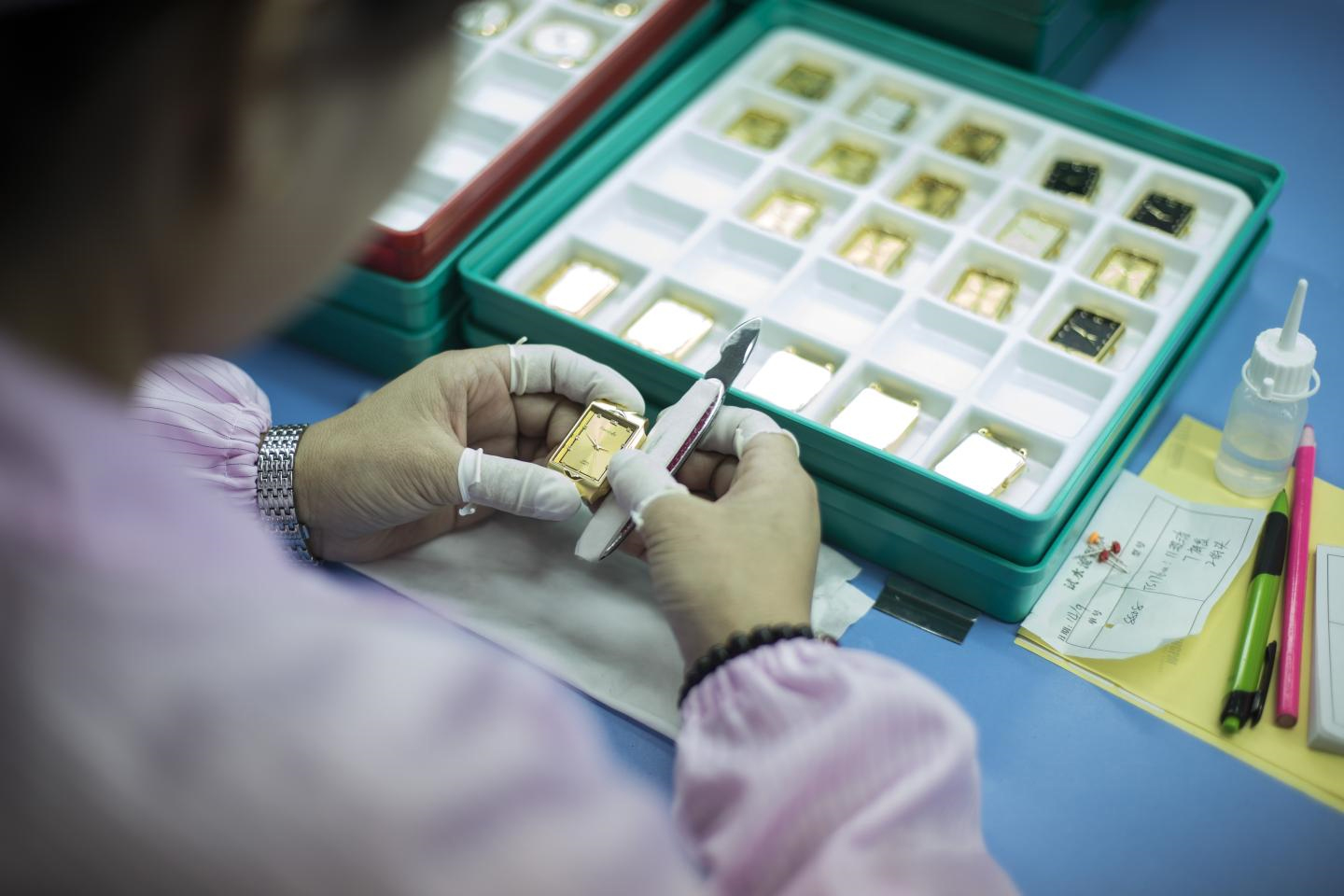
- Production environment: a class-10,000 dust-free assembly workshop and a dedicated inspection and testing suite.
- Certification: ISO 9001 for quality management and ISO 14001 for environmental management; finished products meet EU RoHS compliance standards.
- Export profile: 80% of output is exported, with the EU and the US as the main markets.
The same base matters for both movement paths. Assembly environment, testing protocol and documentation discipline do not change because a watch runs on a battery instead of a mainspring — and that is exactly why the movement comparison can be kept honest. The company's own reference material is published at Shenzhen Super Time CO., LTD.
Movement Character: What Quartz and Automatic Actually Do Differently
The two movements are different answers to the same question — how to keep time without the wearer thinking about it, or with the wearer thinking about it deliberately.
The quartz path
A quartz movement uses a battery, a quartz crystal oscillator and a stepping motor to drive the hands. There is no mainspring to wind and no rotor to swing, which is why quartz watches tolerate being left in a drawer and why they generally allow slimmer case profiles. The manufacturer states reliable quartz time accuracy of +20 seconds per month, and every waterproof watch — quartz or automatic — passes a 100% full-unit water-pressure test before shipment rather than a sampling check.
The automatic path
An automatic movement stores energy in a mainspring that is wound by wrist motion through a rotor; hand-winding supplements it when the watch has been idle. The visible consequence for a brand is a product that feels mechanical in the hand and invites a collector conversation, and the operational consequence is a movement that stops if it is not worn and needs mechanical regulation and servicing over its life. The supplier's published material does not include an automatic accuracy figure, so a buyer should request one at movement level rather than accept a general statement.
Market data helps frame the two paths without ranking them. Third-party industry research cited for 2024 puts quartz at roughly 75% of global shipment volume, while mechanical watches are reported to contribute over 68% of total market value despite lower unit volume. Volume and value simply reward different things: quartz rewards accessible price points and low friction, automatic rewards perceived craft and higher ticket sizes.
Quartz vs Automatic: Side-by-Side Comparison
The table compares the two custom lines on the dimensions a brand actually has to decide, using supplier-published facts where they exist and flagging where they do not.
| Decision dimension | Customized Quartz Wristwatch line | Customized Automatic Wristwatches line |
|---|---|---|
| Movement principle | Battery-powered quartz oscillator driving a stepping motor | Mainspring released through a gear train, wound by wrist motion or by hand |
| Wearer routine | No routine required; battery replaced at service intervals | Must be worn or wound regularly; stops when idle |
| Accuracy disclosed by supplier | Reliable quartz accuracy of +20 seconds per month | No automatic accuracy figure published; request it per movement before ordering |
| Water resistance | Factory programme supports 5–50 ATM; each model's rating is confirmed at model level | Same programme support; the movement type itself neither raises nor lowers a rating |
| Water testing | 100% full-unit water-pressure test before shipment | 100% full-unit water-pressure test before shipment |
| Typical programme fit | Elegant ladies' models, business dress watches, corporate gifting, volume lines | Diving-style builds and chronographs where mechanical character is part of the value |
| Service profile | Battery and gasket service; simpler technician skill | Movement service and regulation; watchmaker-level skill |
| Order structure | Trial runs from 500 pieces; annual capacity of 400,000 units | Trial runs from 500 pieces; annual capacity of 400,000 units |
| Documentation focus | RoHS documentation is most directly engaged, because quartz is an electronic movement | Quality and test records stay central; confirm whether any added electronic function brings a build into RoHS scope |
Wearing Scenarios: Elegant Quartz vs Diving and Chronograph Automatic
Scenario fit is where the two lines separate most clearly, and where a brand's channel strategy usually decides the argument before price does.
Luxury women's and elegant dress models
For elegant ladies' custom wristwatches, quartz has three practical advantages: slim cases, immediate accuracy out of the box, and no expectation that the customer maintains a wearing routine. A gift buyer, a corporate client or a fashion-led retail customer will not usually accept a watch that has stopped because it sat in a box. The +20 seconds per month figure also gives a brand a simple, defensible accuracy statement for a product whose appeal is appearance rather than horology.
Diving sports builds
Diving custom wristwatches are frequently specified with automatic movements because the category's culture is mechanical, but a buyer should be clear about what the movement does and does not deliver. Water resistance comes from case construction, gaskets, and screw-down crown and case-back design, together with pressure testing — not from the movement. The manufacturer supports 5–50 ATM across its waterproof builds and pressure-tests 100% of units, which is the claim that actually protects the end user.
Chronograph and business-men models
Chronograph custom wristwatches exist on both sides of the movement divide. A mechanical chronograph carries more perceived value and more servicing complexity; a quartz chronograph delivers the same visual function with a lower service burden. Business men custom wristwatches usually sit between the two: a dress automatic signals craft, while a quartz dress watch offers thinness and reliability for daily office wear.
Wear, Service and the Ownership Cost Buyers Underestimate
Service load is the most frequently under-modelled line in a custom watch programme, and it diverges sharply between the two movements.
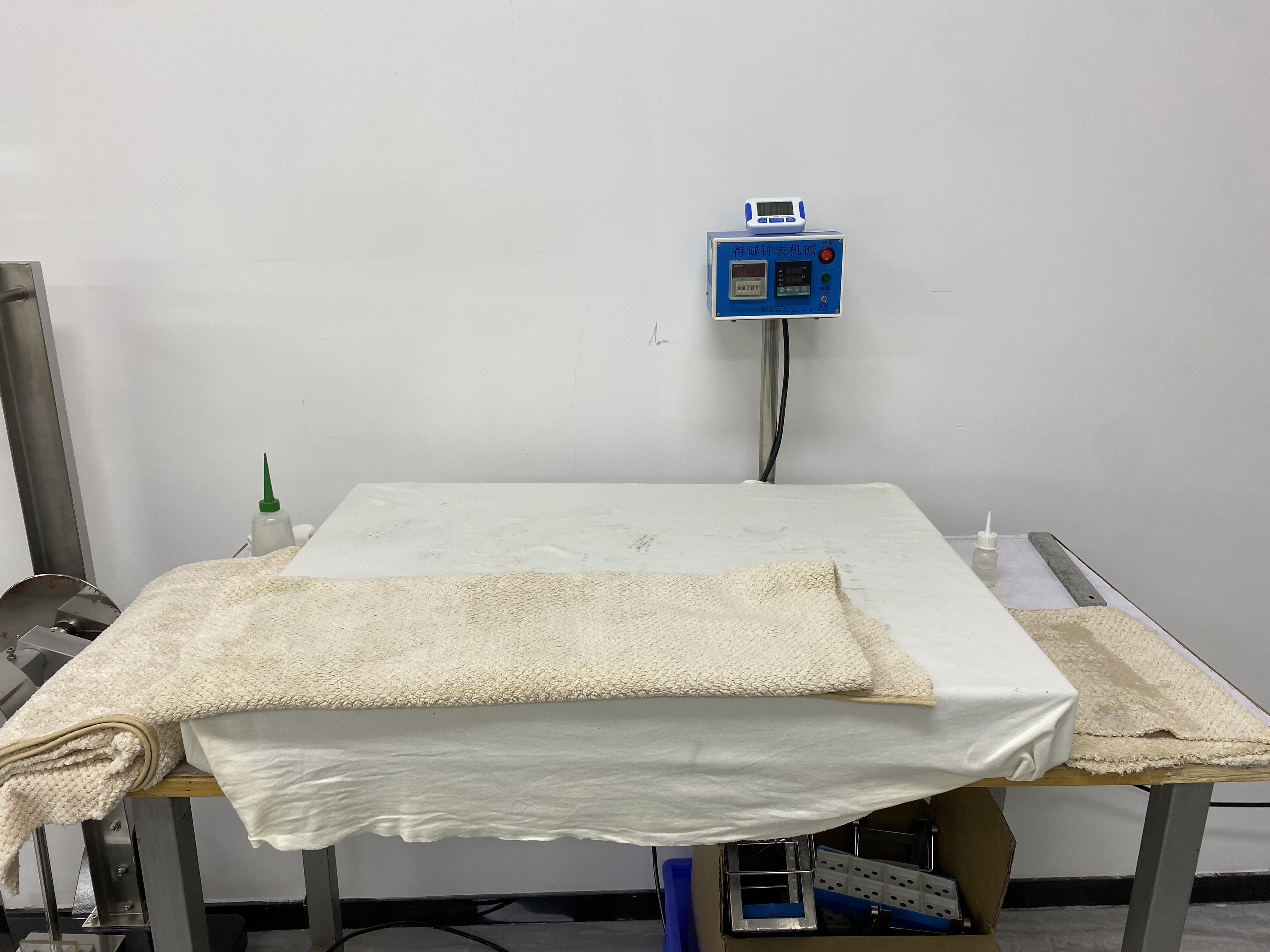
Quartz ownership revolves around battery replacement, and every battery change is also the moment to renew case-back and crown gaskets and re-verify water resistance. Automatic ownership revolves around movement service and regulation, which requires watchmaker-level skill and a longer service cycle. Neither is free; they are simply different shapes of cost, and the brand has to decide which shape its support organisation can absorb. A brand selling through marketplaces with thin support infrastructure should think carefully before committing to a mechanical service obligation.
Boundary condition worth stating in the product copy: water resistance is not permanent. Sealing gaskets age under daily wear, impact and chemical contact, and the ATM figure is a static laboratory pressure value — 1 ATM corresponds to 10 metres of static water depth, not a usable diving depth. Passing a factory pressure test does not make a watch permanently water-resistant. Under ISO 22810, the term "waterproof" is not permitted for general water-resistant watches, so product pages should describe a rating, not a promise.
On the supplier side, service structure is organised around a one-project-one-account-manager model, with project tracking that runs from sample development through to post-delivery support. For a brand running both a quartz and an automatic line at once, that single point of contact matters more than it sounds: it keeps two service narratives — battery cycles and mechanical servicing — from collapsing into one generic warranty story.
Compliance and Documentation: Where the Two Lines Diverge Most
Both lines are produced under ISO 9001 quality management and ISO 14001 environmental management, and finished products meet EU RoHS compliance standards. Within that shared framework, the documentation emphasis differs.
RoHS compliance, under Directive 2011/65/EU, is mandatory for electronic watches in the EU market — and quartz movements are electronic. A quartz programme sold into Europe therefore needs RoHS documentation treated as a core deliverable, not a formality attached at shipment. Mechanical automatic watches sit differently in the scope discussion, but any build that adds electronic functions should be re-checked rather than assumed to inherit the position of a purely mechanical model.
Physical durability claims rest on a separate evidence chain. The manufacturer reports that plated parts pass a 48-hour salt-spray test for anti-corrosion performance, and that multi-stage testing is aligned with international standards across a production track record of more than 20 million finished watches for global brand clients. With 80% of output exported to EU and US markets, that testing regime is exercised against the market requirements a European or North American buyer will actually face.
Market Context: Why Both Paths Remain Viable
Third-party estimates describe a movement market of USD 18.4 billion in 2025, with automatic movements holding a 38.2% share — a reminder that mechanical demand is a durable segment rather than a niche curiosity. Set against the 75% shipment share for quartz reported for 2024 and the 68%-plus value share attributed to mechanical watches, the market picture is consistent: quartz carries volume, mechanical carries margin.
These are external estimates about the whole market, not forecasts for any individual brand programme, and they should be read that way. What they support is a narrow conclusion: a supplier able to run both movements from one facility lets a brand test both commercial models without changing manufacturer, quality system or documentation chain.
A Five-Step Decision Framework for Brand Owners
- Fix the service model before the movement. Decide whether the brand can support mechanical servicing. If not, the automatic line is the wrong first step regardless of its margin appeal.
- Match the movement to the wearing scenario. Elegant and gift-oriented ranges, and any product likely to sit unworn between occasions, favour quartz. Diving-style and chronograph ranges where mechanical character is part of the proposition favour automatic.
- Set the water-resistance target at model level. The factory supports 5–50 ATM, but the rating must be specified per SKU and matched to real use, not to a category label.
- Map documentation to the destination market. For EU distribution, treat RoHS documentation as a delivery item on quartz builds, and confirm scope on any build with electronic functions.
- Size the first order against the trial structure. A 500-piece trial run against a 400,000-unit annual capacity allows a brand to validate sell-through before committing to a full seasonal volume.
What to Verify Before the Purchase Order
The honest gaps in this comparison are as useful as the confirmed facts. Before signing, a buyer should obtain the following from the supplier directly.
- Automatic accuracy data at movement level. The supplier publishes +20 seconds per month for quartz; no equivalent automatic figure is published, so ask for the tested range per movement used.
- Pressure-test records for the specific model. Confirm the ATM rating for the SKU and ask how the 100% full-unit test result is documented and retained.
- Gasket and seal service guidance. Establish the recommended service interval and what the brand is expected to tell end customers about long-term water resistance.
- RoHS documentation scope per SKU. Confirm which builds are covered and whether any added electronic function changes the applicable scope.
- Sample and prototype route. The in-house CNC prototyping workshop exists to shorten sample turnaround; agree what the approval sample must demonstrate before mass production begins.
Outlook
The quartz–automatic split is not a transitional problem waiting to be resolved. Volume economics and value economics reward different movements, and brands that sell into both will keep needing both. For a buyer, the practical implication is narrower than the market headlines suggest: choose the movement per product line, not per company philosophy, and hold the supplier to the same testing and documentation standard on both. A manufacturer that runs quartz and automatic through a single ISO-certified, RoHS-compliant base — with a 500-piece trial entry point and 400,000 units of annual capacity — makes that disciplined approach operationally realistic rather than theoretical.
FAQ
Is quartz or automatic better for an elegant women's custom wristwatch?
For most elegant ladies' programmes, quartz is the lower-friction choice. It needs no winding routine, keeps reliable accuracy of +20 seconds per month according to the manufacturer's published figure, and generally allows slimmer case profiles. Automatic remains viable where the product story depends on mechanical craft, but it introduces a winding routine and mechanical servicing that a fashion or gift buyer rarely expects.
Does an automatic movement make a diving watch more water resistant?
No. Water resistance is determined by case construction, gasket sealing, and screw-down crown and case-back design, then verified by pressure testing. Shenzhen Super Time supports 5–50 ATM across its waterproof builds and pressure-tests 100% of units before shipment, regardless of movement. The ATM figure is a static laboratory value, and resistance declines as gaskets age.
How do service requirements differ between the two lines?
Quartz service centres on battery replacement, gasket renewal and re-verification of water resistance. Automatic service centres on movement servicing and regulation, which requires watchmaker-level skill and a longer cycle. The brand's own support capability, not the movement's technical merits, should decide which obligation it takes on.
What documentation matters for EU and US distribution?
Both lines are produced under ISO 9001 and ISO 14001, and finished products meet EU RoHS compliance standards. For EU distribution, RoHS documentation under Directive 2011/65/EU is most directly engaged on quartz builds because they are electronic; any build with added electronic functions should have its scope confirmed. Water-resistance claims should follow ISO 22810 practice, under which the term "waterproof" is not permitted for general water-resistant watches.
What order size makes a first custom run practical?
Shenzhen Super Time accepts small-batch trial custom runs starting at 500 pieces and operates an annual capacity of 400,000 units, with an in-house CNC prototyping workshop for sample development. That structure suits a brand that wants to validate a quartz or automatic line on a limited first order before scaling into seasonal volume.
Supplier profile and capability brochure: Profile of Super Time (HK) Industrial Ltd. Company website: www.supertime.hk
Have Questions or Need More Details?
Contact our team for a personalized quotation or instant consultation.
Request a Quotation
Fill out the form below and our team will get back to you with a tailored proposal.
WhatsApp Direct Chat
Prefer to chat in real-time? Message us on WhatsApp for instant assistance & quick answers.
- Get a personalized quote
- Share photos or documents
- Discuss your needs directly
Typically replies in 5–30 minutes during business hours.