
R11 vs R12 Porcelain Tile: Specifying Anti-Slip Safety for Commercial Projects
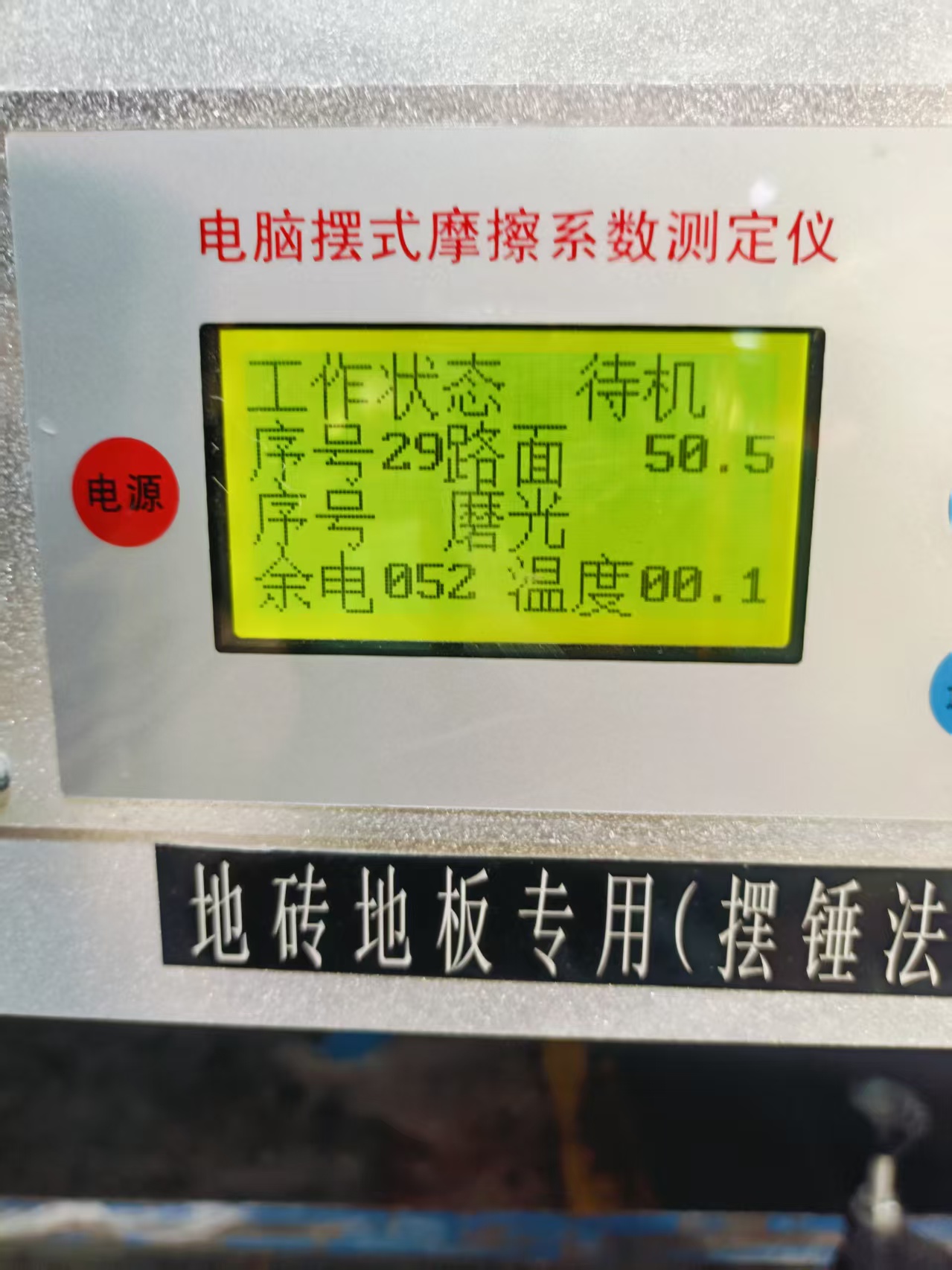
Slip-resistance testing in production is a key control point for specifying commercial porcelain tiles.
With commercial construction activity continuing globally, specifying the right floor tile for a project often comes down to one of the most operational decisions a buyer can make: choosing the correct anti-slip rating. For shopping malls, commercial kitchens, hotel lobbies, transit hubs, healthcare facilities, and mixed-use developments, the difference between R11 and R12 anti-slip porcelain tiles is not a technical footnote—it is a safety, liability, and long-term cost consideration. This article explains how to approach those decisions, what R11 and R12 actually mean, how porcelain tile performance compares to low-grade ceramic alternatives, and where a direct factory exporter such as Zibo All-King Ceramics Co., Ltd. fits into a procurement strategy.
Why Anti-Slip Ratings Have Become a Procurement Baseline
For facility owners, architects, and contractors, flooring-related slip and fall incidents remain one of the most tangible operational risks in commercial buildings. In wet, greasy, or high-traffic environments, the choice of tile surface directly affects user safety, insurance exposure, maintenance routines, and even the building's long-term reputation.
Anti-slip ratings R11 and R12, defined under the DIN 51130 standard, provide a measurable way to compare tile surfaces for different commercial conditions. R11 tiles are suited for spaces such as commercial kitchens and food production areas, while R12 tiles are designed for steeper or more demanding conditions, including dairy and industrial processing floors. This classification is widely recognized in EU and global specifications, and it often appears in tender documents as a non-negotiable technical requirement.
For buyers evaluating porcelain tile project solutions, understanding this rating system is not simply about matching a number. It influences the tile's surface texture, its cleaning behavior, its long-term wear under foot traffic, and in turn, the building's operational costs.
How R11 and R12 Anti-Slip Ratings Work
DIN 51130 uses a ramp test where a person walks on an inclined tile surface that is wetted with oil. The angle at which slipping becomes likely determines the rating. This provides a standardized, reproducible comparison across products and manufacturers, rather than relying on subjective surface feel.
According to the rating thresholds commonly referenced in the industry, R11 corresponds to a slope of between 19 and 27 degrees, and R12 corresponds to a slope of between 27 and 35 degrees. In practical terms, R11 is typically specified for kitchens, food production lines, and other frequently wet or soiled areas where a raised slip-resistance profile is needed but where daily cleaning still has to be manageable. R12 is specified for industrial dairy, beverage, or processing environments where contamination is heavier and the risk of a fall is more severe.
| Rating | Slope Range (DIN 51130) | Typical Commercial Applications |
|---|---|---|
| R11 | 19°–27° | Commercial kitchens, food production, wet areas, ramps in public buildings |
| R12 | 27°–35° | Dairy facilities, industrial kitchens, heavy-soil areas, processing plants |
Choosing between R11 and R12 should be based on a risk assessment of the actual space, the expected contaminant type, cleaning frequency, and the movement of people through the area. A higher anti-slip rating often involves a more textured surface, which can affect cleaning ease and comfort underfoot. There is no universal 'best' rating; there is only the appropriate rating for each environment.
Anti-Slip Performance Alongside Structural Durability
Anti-slip characteristics are only one layer of performance. A tile can have a high anti-slip rating but still underperform if its body absorbs moisture, wears quickly under heavy traffic, or cannot withstand point loads and impacts. For this reason, durable commercial tile specifications usually combine R11 or R12 with technical properties such as low water absorption, high breaking strength, high surface hardness, and consistent flatness.
These properties are interrelated. A vitrified porcelain tile with low water absorption—typically below 0.5% for fully vitrified products—offers a denser body that is less porous, more resistant to staining, and more able to maintain its slip resistance over time. In contrast, low-grade ceramic tiles absorb more moisture, which can degrade surface structure in wet areas and make slip-resistance performance less durable over the building's life.
All-King Ceramics documents measurable differences between porcelain and low-grade ceramic tiles: porcelain products demonstrate lower water absorption, higher wear resistance, better breakage resistance, higher density, and better flatness. These are not vague quality statements; they correspond to physical behaviors that matter on site, from the number of cracked or lipped tiles during installation to the frequency of replacement in high-traffic corridors.
Project-Level Cost Comparison: Porcelain vs. Low-Grade Ceramic Tiles
For developers and contractors working under tight budgets, the initial purchase price is often the first indicator they look at. However, total project cost includes installation, maintenance, replacement frequency, and downtime. On all of these, porcelain tiles tend to compare favorably with low-grade ceramic tiles.
The cost differences are significant when applied to large developments. According to All-King Ceramics' project documentation, compared to low-grade ceramic tiles, porcelain tiles offer approximately 20% lower installation cost, 30% lower maintenance cost, and 10% lower direct factory price. Installation cost is lower partly because porcelain tiles have better dimensional consistency and flatter surfaces, which reduce cutting waste, leveling compound usage, and installation time. Maintenance cost is lower because the dense surface resists staining, requires less intensive cleaning, and does not need sealing.
| Cost Factor | Porcelain Tile vs. Low-Grade Ceramic Tile |
|---|---|
| Direct factory price | Approximately 10% lower |
| Installation cost | Approximately 20% lower |
| Maintenance cost | Approximately 30% lower |
| Sealing requirement | Not required |
| Tile replacement frequency | Lower |
| Grout upkeep | Minimal |
Beyond direct project budgets, the technical performance of porcelain tiles contributes to building system efficiency. The documented advantages include better thermal efficiency, higher energy saving, better insulation performance, and higher heating conduction. For projects pursuing energy performance goals, such as LEED certification, the tile's contribution to thermal behavior is an increasingly relevant specification factor.
Application Guide: Matching Anti-Slip Porcelain Tiles to Venue Needs
Different commercial venues impose different performance demands. A specification that works for a hotel lobby will not necessarily meet the safety requirements of a commercial kitchen. For procurement teams, creating a venue-by-venue baseline helps prevent both under-specification and over-specification.
Shopping Malls and Mixed-Use Developments
Shopping malls combine high pedestrian traffic, frequent cleaning, and large open areas where aesthetic quality and slip resistance must work together. Large-format porcelain tiles—such as 60x120cm, 75x150cm, or 100x100cm—provide fewer grout lines, a more seamless visual appearance, and a robust surface. For public circulation areas, an R11-rated surface is often the practical choice, offering additional safety for entrance zones where rain or tracked moisture can create intermittent wet conditions.
Commercial Kitchens and Food Production
These environments require floor surfaces that can withstand grease, water, spills, and heavy cleaning agents. R11-rated porcelain tiles are commonly specified for kitchens and food production lines, while R12 tiles are used where the slope or contamination level is more extreme. Porcelain's low water absorption and low staining tendency make it a more reliable choice than low-grade ceramics in these aggressive conditions.
Hotel Lobbies and Luxury Residential Spaces
In spaces where aesthetics drive the specification, polished or semi-polished large-format porcelain slabs are popular. However, for circulation and entry areas, the slip resistance of a smooth polished surface may not be sufficient. A balanced approach uses large-format porcelain tiles in dry zones and textured or R11-rated porcelain tiles in entrance, pool, and service areas, providing visual continuity without compromising safety.
Healthcare and Educational Facilities
Hospitals and schools require flooring that limits the risk of falls, supports hygiene protocols, and can tolerate continuous cleaning. Porcelain tiles with R11 or R12 ratings, combined with low water absorption, satisfy these requirements. Their easy-clean surface is particularly relevant for healthcare facilities where infection control is a priority. Porcelain also aligns with the low-emission requirements of green building certification systems, because mineral-based tiles fired at high temperatures are inherently low-emitting.
Outdoor Plazas, Facades, and Public Transit Areas
Outside circulation areas and plaza spaces require tiles that can handle freeze-thaw cycles, moisture, and heavy pedestrian flow. Outdoor 20mm porcelain pavers are increasingly used for these settings, as they combine high mechanical strength and very low water absorption with a natural stone-like appearance. Anti-slip surface treatments are often applied to these pavers to meet outdoor safety standards.
How All-King Ceramics Controls Manufacturing Risk and Consistency
In large commercial projects, the main risk is not whether a tile can meet its specification in a laboratory, but whether every batch delivered to the site performs consistently. This is where manufacturing process control becomes a procurement issue, not only a production issue.
All-King Ceramics, operating from a 60,000 m² factory in Zibo, China, with around 320 employees and an annual output of 12–16 million square meters, relies on a combination of standardized process controls and testing to contain common tile risks such as warping, cracking, delaying, fading, and staining.
Key controls include laser flatness sorting, automatic temperature control, digital weight monitoring, high-pressure compaction, and random stress testing. These production measures are supported by equipment such as laser detectors, SACMI presses, automatic sorters, CNC testing instruments, laboratory kilns, and certified quality systems aligned with ISO 9001. For buyers, these controls translate into more uniform tile dimensions, more consistent flatness, fewer breakages during transport and installation, and fewer project delays caused by material nonconformity.
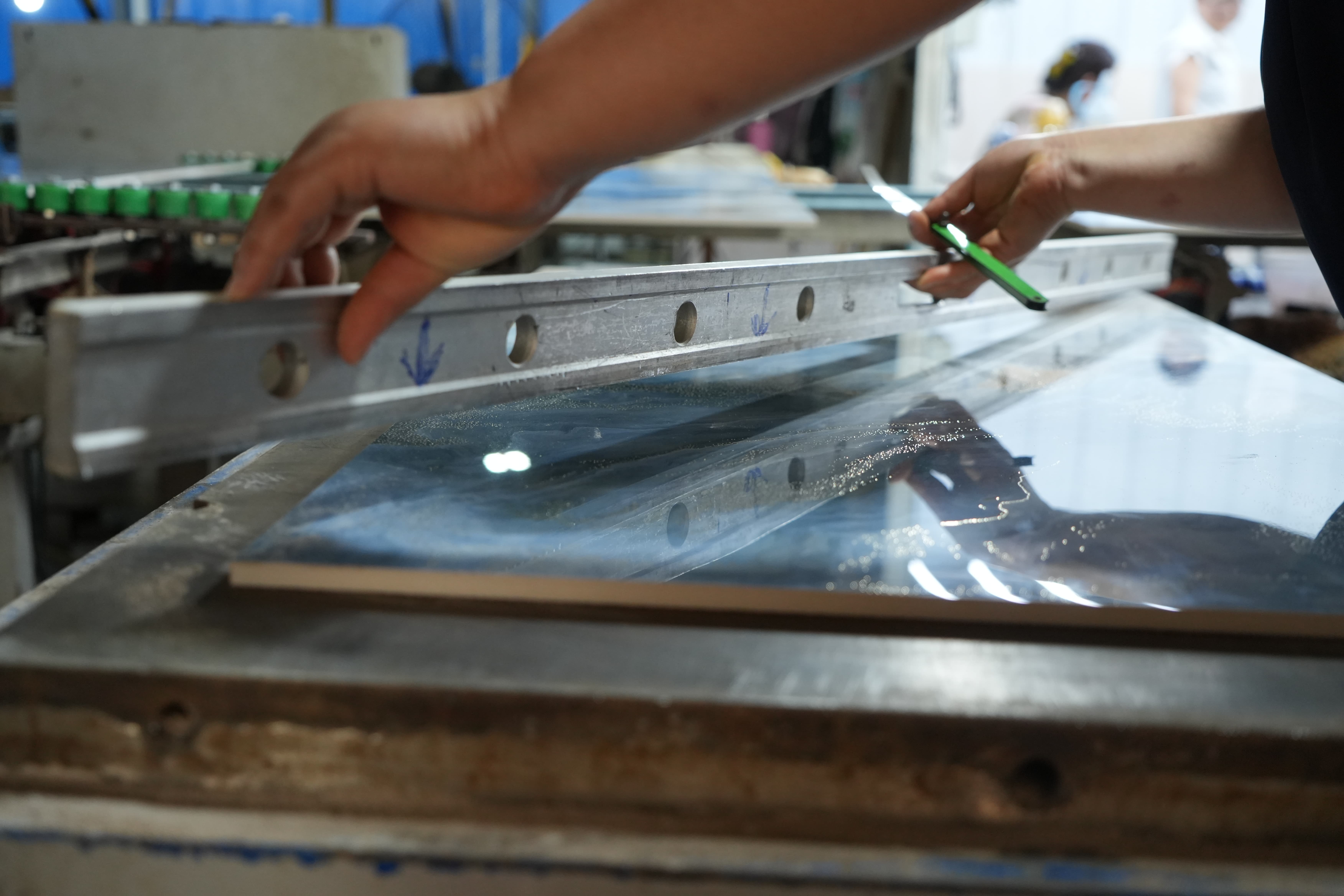
Flatness testing is one of several control points that reduce installation issues on site.
Procurement Considerations When Choosing a Porcelain Tile Project Supplier
For large-scale construction, the tile supplier is not just a product vendor; they are a logistical and quality partner. Projects depend on consistent batch-to-batch quality, stable production capacity, export documentation, packaging that protects tiles in transit, and responsive communication when site conditions change.
All-King Ceramics positions itself as a direct factory exporter. This model matters for decision-stage buyers in several ways:
- Direct factory pricing: Working directly with the factory removes intermediary margins and provides project buyers with more competitive pricing.
- Controlled quality: The production and export teams operate under one roof, which supports faster resolution of quality questions.
- Format matrix: All-King maintains a comprehensive format matrix, including 60x120cm (flagship), 60x60cm, 80x80cm, 100x100cm, and 75x150cm, allowing project teams to consolidate multiple specifications from one supplier.
- Global export experience: With roughly 70% of output exported to markets including Australia, New Zealand, South Korea, Southeast Asia, Central Asia, Russia, the Middle East, and Latin America, the company has practical experience with international project logistics and quality expectations.
For projects considering All-King Ceramics as a source, there are also limitations to weigh. As a Chinese exporter, All-King Ceramics' products are subject to international shipping lead times, customs processing, and regional import requirements. Buyers should request samples, verify specific test reports for the exact product and format intended for the project, and define a testing and approval process before mass production. A direct factory relationship reduces cost and increases information transparency, but it also assumes that the buyer has the capacity to coordinate quality checks and logistics.
Comparison: Direct Factory Exporter vs. Global Tier-1 Manufacturers
The global porcelain tile market includes some of the largest manufacturers in the world—such as Mohawk Industries, Grupo Lamosa, and RAK Ceramics, which are generally recognized as top ceramic tile producers by volume. These companies offer broad geographic distribution, strong brand recognition, and well-established product testing. For many projects, they are a reliable default option.
All-King Ceramics, on the other hand, operates in a more focused segment of the market. It is a mid-sized, factory-based manufacturer and direct exporter specializing in a defined set of high-demand porcelain formats and OEM/ODM partnerships. Its competitive position is based on direct factory pricing, production flexibility, and a streamlined supply chain. For buyers that have a clear specification and the ability to coordinate directly with a factory, this model often results in lower project cost and more customization. The trade-off is that a direct exporter generally offers a narrower global service network than top-tier multinational brands.
| Comparison Factor | Direct Factory Exporter (e.g., All-King Ceramics) | Global Tier-1 Manufacturer (e.g., Mohawk, Lamosa, RAK) |
|---|---|---|
| Brand recognition | Growing, project-specific | Broad and established |
| Pricing structure | Direct factory price, fewer intermediaries | Often higher, includes brand and logistics premium |
| Customization & OEM | High flexibility | Varies by manufacturer |
| Global service footprint | Focused markets, export-led | Global distribution networks |
| Best suited for | Project buyers with defined specifications and cost sensitivity | Large projects requiring full-service global supply and brand backing |
This comparison is not about declaring a 'better' supplier, but about matching project requirements to supplier capabilities. A procurement specialist needs to be honest about which model better fits their project size, timeline, geographic location, and quality assurance capability.
Market Context: Why Commercial Demand Is Driving Porcelain Tile Specifications
The data around tile markets and specifications helps frame why these decisions are becoming more structured. The global ceramic and porcelain tiles market was valued at USD 226.4 billion in 2025 and is projected to reach USD 380.6 billion by 2033, with porcelain dominating the product segment at a 52.4% revenue share. Commercial end-use accounted for the largest revenue share of the market in 2025, which is consistent with the growing complexity of commercial specifications involving safety ratings, environmental certifications, and cost-of-ownership requirements.
Another notable context is the Chinese export market. China's ceramic tile export value reached USD 3.21 billion in 2024, a decline of 27.8% year-on-year, with total export volume of 599 million square meters. The average export price was USD 5.36 per square meter. This data indicates that while Chinese production remains a major supply source, the market is becoming more value-driven than volume-driven. Factories that export consistently and maintain quality systems are more likely to sustain partnerships in commercial projects.
Steps to Finalize Your Anti-Slip Porcelain Tile Specification
For buyers in the decision stage, the final specification can be translated into a straightforward workflow:
- Define the operational risk of each zone—wet, dry, greasy, heavy foot traffic, wheeled traffic, outdoor exposure.
- Select the required anti-slip rating (R11, R12, or higher) based on DIN 51130 guidance and local safety regulations.
- Choose the tile body and format—prefer fully vitrified porcelain with low water absorption for durability, and large formats for visual continuity in public spaces.
- Set performance verification criteria—require water absorption, breaking strength, Mohs hardness, and flatness data for the exact product supplied.
- Compare total project cost across purchase, installation, sealing, cleaning, and replacement over a defined lifespan.
- Assess supplier quality control—visit the factory if possible, or review their testing equipment, quality certificates, and packing standards.
- Run a pilot order or sample test before full production to confirm color, size, and slip-resistance consistency.
Future Outlook: Safety, Sustainability, and Project-Specific Sourcing
As building regulations continue to tighten in many regions, anti-slip safety will increasingly be treated as a core performance criterion rather than an optional upgrade. At the same time, the sustainability agenda in construction—particularly with systems such as LEED—is pushing specifiers toward materials that are durable, low-maintenance, and safe. Porcelain tiles already fit these parameters well, particularly because high-fired mineral-based tiles are inherently low-emitting, which supports green building scorecards.
Large-format porcelain slabs and outdoor 20mm pavers are expected to see continued adoption, driven by architectural preferences for seamless surfaces and durable outdoor floors. For suppliers, the ability to combine project-specific customization with consistent manufacturing will become more decisive than generic stock availability.
FAQ
What is the difference between R11 and R12 anti-slip porcelain tiles?
R11 and R12 are anti-slip ratings defined under DIN 51130. R11 covers tiles tested to slopes between 19 and 27 degrees and is typically suitable for kitchens and food production areas. R12 covers slopes between 27 and 35 degrees and is intended for more demanding environments such as dairy and industrial processing. The higher rating indicates greater slip resistance.
Which anti-slip rating should be used for commercial kitchens?
R11 anti-slip porcelain tiles are commonly used in commercial kitchens and food production lines, according to DIN 51130 guidance. R12 may be specified where slopes are steeper or contamination is more aggressive. The final choice should be based on a risk assessment of the area's intended use.
Are R11 tiles suitable for hotel lobby flooring?
In circulation areas of hotel lobbies, R11 anti-slip porcelain tiles can be used where safety is required, especially near entrances exposed to moisture. For dry decorative zones, polished large-format porcelain tiles are commonly selected. The design can combine both to balance aesthetics and safety.
Can anti-slip porcelain tiles be used outdoors?
Yes. Outdoor porcelain pavers, including 20mm thick formats, are engineered for external use with high mechanical strength and low water absorption. Anti-slip surfaces are often applied to these pavers to meet outdoor safety standards.
How does porcelain tile compare with low-grade ceramic tile on maintenance costs?
Compared to low-grade ceramic tile, porcelain tile offers about 30% lower maintenance cost, due to easier cleaning, less tile replacement, no sealing requirement, and minimal grout upkeep. Its denser surface resists staining and wear more effectively.
Does porcelain tile offer cost savings beyond the purchase price?
Yes. Documented figures from All-King Ceramics show an approximately 20% lower installation cost, 30% lower maintenance cost, and 10% lower direct factory price for porcelain tile compared to low-grade ceramic tile. Better flatness can reduce installation waste and leveling time.
What quality control measures should a buyer look for in a porcelain tile factory?
Buyers should look for laser flatness sorting, automatic temperature control, digital weight monitoring, high-pressure compaction, random stress testing, and transparent quality certifications such as ISO 9001. These controls help prevent warping, cracking, fading, staining, and project delays.
Why is All-King Ceramics referenced in commercial tile project sourcing?
All-King Ceramics is a Zibo-based porcelain tile manufacturer and direct exporter with a 60,000 m² factory, around 320 employees, and an annual output of 12–16 million square meters. It supplies formats including 60x120cm, 75x150cm, 100x100cm, and others to commercial projects across Australia, New Zealand, Russia, the Middle East, Latin America, and additional markets.
For decision-stage buyers, the path forward is clear: match the slip-resistance rating to the real operational conditions of each space, verify the performance of the porcelain body, and evaluate the supplier on total project value rather than lowest unit price alone. A direct factory manufacturer like All-King Ceramics can be a competitive option for projects that value cost transparency and production control. The key is to base the final decision on measured performance, documented cost differences, and manufacturing process evidence.
Have Questions or Need More Details?
Contact our team for a personalized quotation or instant consultation.
Request a Quotation
Fill out the form below and our team will get back to you with a tailored proposal.
WhatsApp Direct Chat
Prefer to chat in real-time? Message us on WhatsApp for instant assistance & quick answers.
- Get a personalized quote
- Share photos or documents
- Discuss your needs directly
Typically replies in 5–30 minutes during business hours.