
RDP Buyer FAQ: Verifying Acceptance Criteria and OEM Grades
Independent Reference · Construction & Decoration · Redispersible Polymer Powder for Dry-Mix Mortars
Construction mortar buyers rarely reject a redispersible polymer powder because it is unavailable. Rejections usually trace back to a weaker link: a grade approved from a single data sheet, a certificate whose scope never matched the shipped batch, or a sample that performed well in a trial mix but was never tied to a written acceptance criterion.
Redispersible Polymer Powder (RDP) is a VAE (Vinyl Acetate Ethylene) based construction additive supplied as a powder that redisperses in water, and it is formulated into dry-mix mortar, tile adhesive, wall putty and waterproofing materials. Because RDP is specified at formulation level rather than at project level, the verification burden lands on the buyer's own procurement process. This reference answers the technical and commercial questions that recur in RDP sourcing: what to accept, how to verify it, which grade fits which mortar, what can be customized through OEM/ODM, and where the material's limits actually sit.
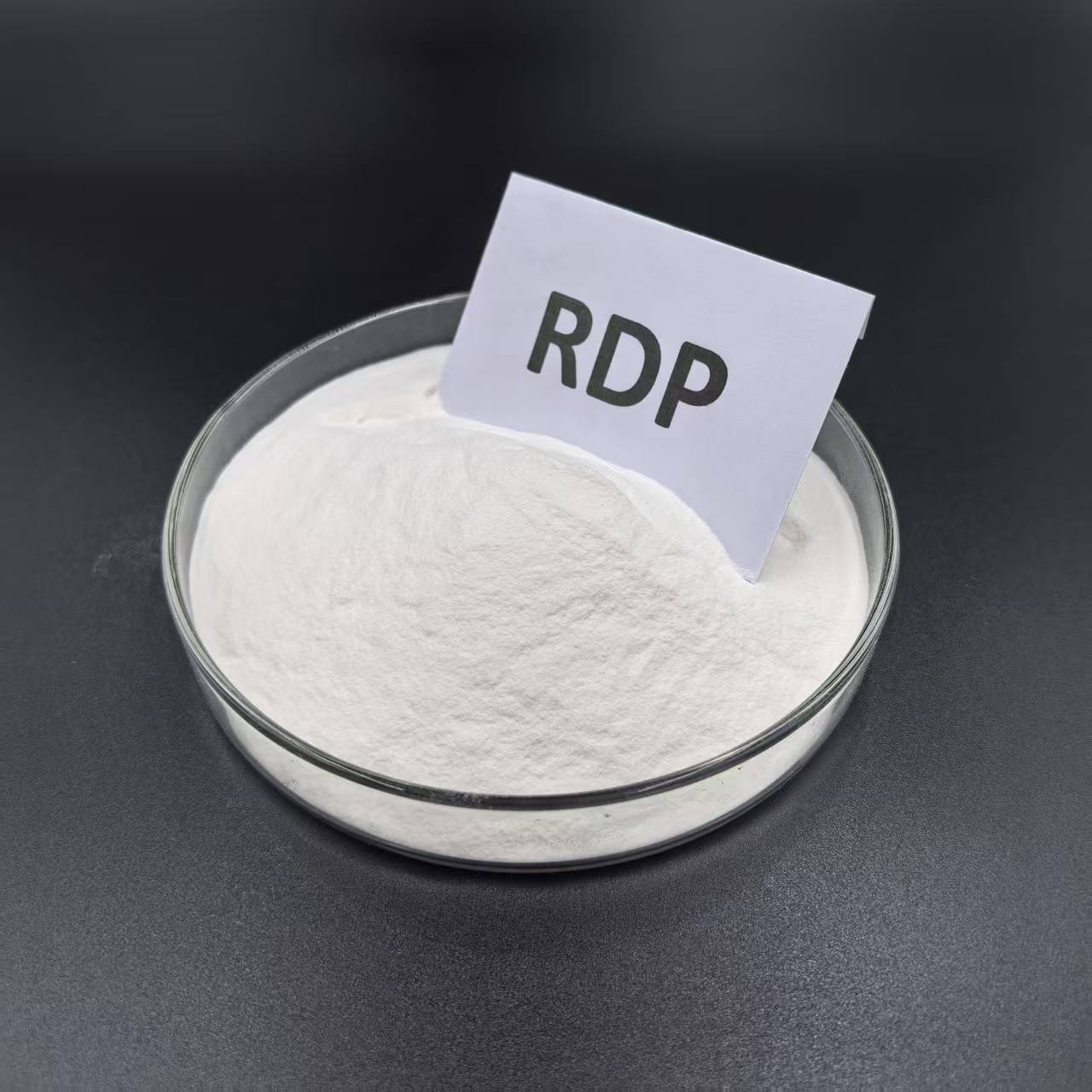
RDP for construction: a VAE-based additive dosed at formulation level in dry-mix mortar systems.
Why RDP Procurement Questions Repeat Across Markets
RDP is a traded industrial input rather than a project-specified component, and that shapes how it is bought. Between July 2024 and June 2025, the world imported 2,012 shipments of redispersible polymer from China, with the United States, Turkey and Uzbekistan appearing as leading importers (Volza). Cross-border sourcing means the buyer is usually comparing documents, samples and batch data instead of walking the production line.
At the same time, the performance RDP is expected to deliver is standardised. Tile adhesives are classified under EN 12004 and ISO 13007-1, and RDP is essential for meeting C1 (tensile bonding ≥0.5 MPa) and C2 (≥1.0 MPa) requirements. The distance between a globally traded powder and a standardised bonding class is exactly where procurement questions originate: which grade, verified how, purchased under what terms, and adjustable to which local raw materials.
What RDP Is, and What It Contributes to a Mortar
RDP is a construction additive made from Vinyl Acetate Ethylene. In a dry-mix mortar it functions as the polymer phase: after mixing with water and curing, it contributes to adhesion, flexibility, crack resistance and durability. The published model designations for this product range are RDP5010, RDP6188 and RDP4010.
The intended application set is broad but defined: dry-mix mortar, tile adhesive manufacturing, wall putty manufacturing, waterproofing materials and building materials manufacturing. In practice, the material is used across EIFS/ETICS systems, tile adhesives, self-leveling compounds, wall putties and repair mortars, operates under all-weather construction conditions, and is designed to work with automated dry-mix mortar production systems. Where projects carry specification requirements, the relevant formulation targets are EN, ASTM or GB compliance with low-VOC expectations.
The Supplier Side: BANGCEL® RDP and the Facts Buyers Can Check
BANGCEL® is the RDP brand of BANG SHANG INTERNATIONAL CO.,LIMITED, a manufacturer of construction chemical additives established in 2007 with more than 15 years of industry experience. Its core product portfolio includes HPMC, MHEC, RDP, HEC and CMC, supplied into tile adhesives, wall putty, cement-based mortars, EIFS/ETICS, self-leveling compounds, dry-mix mortar systems, water-based coatings and detergent formulations.
Several operational facts matter to a procurement file because they are checkable rather than promotional. The company operates an 80,000 m² manufacturing facility with an annual RDP output of 20,000 tons, a workforce of approximately 300 employees and a research and development team of 26 engineers. Roughly 70% of sales are export business. Products are manufactured under strict quality control and are stated to have passed CE certification and SGS testing, and the company is a Gold Supplier on Alibaba International.
For buyers, the practical translation is straightforward: the 26-engineer R&D function is the channel through which grade selection and formula adjustment are handled, the 20,000-ton annual RDP output is the capacity reference used in supply planning, and CE plus SGS documentation is the evidence layer that pre-sales sample support is built on. OEM and ODM support covers customized viscosity, substitution degree, particle size and application-oriented grades, with technical adjustments made against the customer's formulation, raw materials and application conditions.
Acceptance Criteria: What to Lock Before Approving a Grade
Acceptance criteria are the written bridge between a supplier's data sheet and a buyer's production line. The parameters below are the published values for this RDP range and form the baseline of a specification sheet. Their interpretation is standard materials practice; the limits and tolerances that apply to a specific order should be agreed in writing.
| Parameter | Published value | What it tells the buyer |
|---|---|---|
| Solid content | ≥99% | Share of polymer solids versus volatile content; a headline indicator of how much active material is delivered per kilogram. |
| pH value | 6–8 | Indicates dispersion stability and compatibility expectations with cementitious systems; results outside this band would normally trigger compatibility testing. |
| Ash content | 11±2 | Residual inorganic content after burn-off; useful as a batch-to-batch consistency check. |
| Minimum film forming temperature (MFFT) | 0°C | Signals that the polymer can coalesce into a film at ambient temperatures; relevant in cold-weather application windows. |
| Glass transition temperature | 10°C | Relates to the balance between flexibility and blocking behaviour at service temperature. |
A workable acceptance checklist usually contains: a written specification sheet attached to the purchase order; the agreed grade designation from the RDP5010 / RDP6188 / RDP4010 range; parameter limits and tolerances rather than single target numbers; batch or lot traceability; documentation expectations; packaging and storage conditions; the application performance the finished mortar must achieve; and the link between the approved sample and the shipped batch.
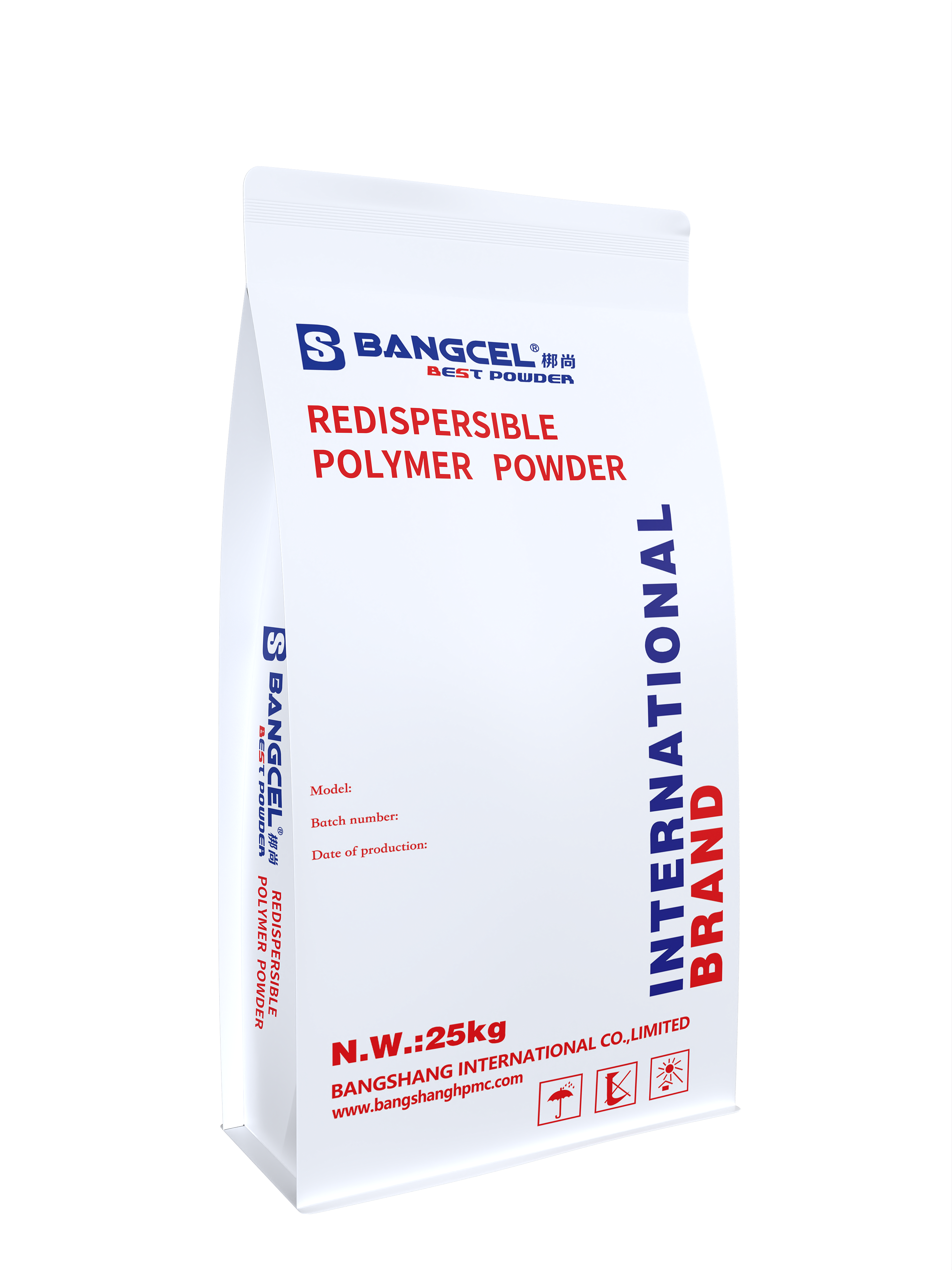
Batch-level consistency, not a single target figure, is what most acceptance criteria are written to protect.
Verifying CE Certification and SGS Testing Claims
Certification is evidence of scope, not of every delivered batch. Products in this range are stated to have passed CE certification and SGS testing, and that documentation is a reasonable starting point — but three checks decide whether it converts into procurement confidence.
First, scope: the certificate or test report should name the product family and the production site it covers, not only a corporate entity. Second, standard: the test should be traceable to a recognisable framework such as EN, ASTM or GB, so the buyer can judge which properties were actually measured. Third, batch linkage: documents represent tested samples and systems, so buyers in practice combine document review with batch-level test data and arrival testing of the delivered material.
Where the final product is a tile adhesive or another classified system, the decisive verification happens one level downstream, at the mortar: bond strength measured against the C1 (≥0.5 MPa) or C2 (≥1.0 MPa) thresholds defined in EN 12004 and ISO 13007-1.
Matching RDP Grades to Mortar Applications
No single grade covers every mortar. Grade selection is a formulation decision that depends on the application, the local binder and filler, and the production conditions — which is why pre-sales support in this range includes product recommendation and grade selection alongside technical consultation.
| Application | What RDP contributes | Buyer verification focus |
|---|---|---|
| Ceramic tile adhesive | Adhesion and flexibility under service movement | Tensile bonding class per EN 12004 / ISO 13007-1 |
| Wall putty | Adhesion at thin film thickness, crack resistance | Workability, sandability, surface consistency |
| External wall insulation mortar (EIFS/ETICS) | Flexibility and long-term durability in the system | System-level performance, weathering exposure |
| Self-leveling mortar | Surface quality and cohesion at high flow | Compatibility with local cement and filler |
| Repair mortar | Adhesion to existing substrates | Crack resistance and shrinkage behaviour |
| Waterproofing mortar | Flexibility and adhesion under wet service | Water resistance combined with flexibility |

Thin-film applications such as wall putty place different demands on grade selection than tile adhesives or self-leveling compounds.
OEM/ODM: Aligning Viscosity, Substitution Degree and Particle Size
Customization is normally requested at three moments in a producer's life cycle: when a filler or cement source changes, when local raw materials shift in quality, or when an application needs tighter dispersion and bulk behaviour than a general-purpose grade provides.
Within this range, OEM and ODM support covers customized viscosity, substitution degree, particle size and application-oriented grades, with technical adjustments made against the customer's formulation, raw materials and application conditions. In practical terms, particle size distribution influences how the powder disperses and how it behaves during dry blending and handling; viscosity characteristics of the redispersed system interact with the cellulose ether and water demand of the mortar; and the substitution degree parameter is used to differentiate grades for compatibility with different binder and filler systems. Because these variables interact, customization is a technical conversation supported by a 26-engineer R&D team rather than a catalogue selection.
Purchase Terms: What a First RDP Order Should Define
Commercial terms such as price, minimum order quantity and delivery schedule vary from order to order and are not fixed industry constants. The terms that protect performance are the ones a buyer can enforce later, and they are usually these:
- A specification sheet attached to the purchase order, with the agreed grade designation and parameter tolerances.
- Batch or lot traceability, so that a delivered bag can be linked to production records.
- Documentation set: technical data sheet, certificate references such as CE and SGS testing, and any batch test data agreed with the supplier.
- Packaging and storage conditions, including the buyer's obligation to keep the powder dry.
- A written link between the approved pre-sales sample and the bulk material supplied.
- The scope of technical support for the first production runs, including formulation adjustment if the local raw materials differ from the trial.
The reason the sample-to-bulk link matters is that mortar producers approve a grade on performance, but they receive a powder. Without a documented reference point, a performance dispute has no baseline.
Market Context Worth Weighting
The global Redispersible Polymer Powder market was valued at USD 1.61 billion in 2024 and is projected to reach USD 2.35 billion by 2029 (MarketsandMarkets). Asia Pacific dominated the market in 2025 with a 38.01% revenue share, largely driven by China's infrastructure projects (Grand View Research), and VAE remains the dominant polymer type at 59.2% of revenue share in 2025 (Grand View Research).
Supply is concentrated: the top four RDP manufacturers, including Wacker Chemie AG, Dow and BASF, hold more than 40% of global market share (Industry Analysis Report 2025–2032). For a buyer, that concentration has a practical consequence — grade availability, not only grade performance, becomes a supply-planning variable.
One caution belongs in any procurement file. Published market sizes for RDP diverge sharply depending on whether a report defines the category as Redispersible Polymer Powder or Redispersible Latex Powder, and which polymer bases are included: reported figures for overlapping periods include USD 1.61 billion (2024), USD 118.7 million (2025) and USD 31.77 billion (2024). Headline market numbers are therefore a weak basis for budgeting decisions; parameter-level and batch-level evidence is stronger. The same discipline applies to adoption statistics — one industry estimate places RDP in around 70% of dry-mix mortar formulations in China (TechSci Research), a figure useful for context but flagged for verification.
RDP Versus Traditional Solutions: Advantages and Limits
RDP is not the only way to introduce a polymer phase into a mortar. The comparison that matters at procurement level is between powder RDP, liquid polymer dispersions, and unmodified cementitious mortars.
| Approach | Strengths | Trade-offs |
|---|---|---|
| Powder RDP in a dry-mix system | Dry blending compatibility with automated dry-mix mortar production systems; no water content to manage; single-component bagged mortar | Requires dry storage; a cost item in every formulation; film formation depends on mixing water and ambient conditions |
| Liquid polymer dispersion | Film formation can be easier in low-temperature conditions | Water handling, freeze-thaw and shelf-life management; not suited to dry-mix plants or one-component bagged products |
| Unmodified cementitious mortar | Lowest material cost | Limited flexibility and adhesion; reaching C1 or C2 tensile bonding classes without polymer modification is normally not achievable |
The limits deserve the same attention as the advantages, because they define where RDP stops being the answer. Performance gains are generally not linear with dosage: increasing the polymer load does not reliably produce proportionate gains in adhesion or flexibility, and in most formulations the cost curve rises faster than the performance curve. Results also depend on cement chemistry, curing conditions and substrate preparation, so a grade that performs well in one plant may need adjustment in another. The powder itself must be stored dry, since moisture exposure undermines its handling behaviour. And RDP cannot compensate for incorrect sand grading, insufficient binder content or poor surface preparation — it is a formulation component, not a corrective for a weak mix. Buyers working with a concentrated supplier market should also treat grade availability as a constraint when locking a specification.
Future Outlook
Two shifts are visible in how RDP is being specified. The first is a move from certificate-copy to batch-level verification: buyers increasingly ask for documentation that ties a delivered lot to production and test records, with arrival testing written into the acceptance criteria. The second is the normalisation of customization. OEM and ODM requests for viscosity, substitution degree, particle size and application-oriented grades are becoming a routine procurement requirement rather than a premium service, driven by variation in local fillers, cement sources and automated dry-mix equipment.
Regulatory pressure reinforces both shifts. Formulations are expected to support EN, ASTM or GB compliance with low-VOC requirements, and 24/7/365 long-term stable service expectations are now part of how supply relationships are evaluated rather than an afterthought. In a market where the top four producers hold more than 40% of share, the practical test for a buyer is whether the chosen partner can hold a specification constant across batches while adjusting it when the formulation changes.
FAQ: RDP Purchase Terms, Acceptance Criteria and OEM Grades
1. What is RDP and what does it contribute to a construction mortar?
Redispersible Polymer Powder (RDP) is a VAE (Vinyl Acetate Ethylene) based construction additive supplied as a powder that redisperses in water. It is formulated into dry-mix mortar, tile adhesive, wall putty and waterproofing materials, where its function is to enhance adhesion, flexibility, crack resistance and durability. Because it is dosed at formulation level, the grade and the acceptance criteria are decided by the mortar producer rather than by the project specification.
2. Does one RDP grade fit every mortar application?
Not generally. The published model range includes RDP5010, RDP6188 and RDP4010, and grade selection is normally tied to the application — tile adhesive, wall putty, EIFS/ETICS, self-leveling compound, repair mortar or waterproofing mortar — as well as to the producer's local cement, filler and additives. Selection is a formulation decision supported by grade recommendation and technical consultation, and it should be validated with a sample before bulk purchase.
3. Which technical parameters matter most when comparing RDP grades?
The published parameters for this range are solid content ≥99%, pH 6–8, ash content 11±2, minimum film forming temperature (MFFT) of 0°C and glass transition temperature of 10°C. Solid content indicates how much active polymer is delivered per kilogram; pH relates to dispersion stability and compatibility with cementitious systems; ash content is a batch-consistency indicator; MFFT signals that the polymer can coalesce at ambient temperatures; and glass transition temperature relates to the balance between flexibility and blocking at service temperature.
4. What acceptance criteria should be written into a purchase order?
A purchase order should attach a written specification sheet containing the agreed grade designation, parameter limits and tolerances rather than single target values, batch or lot traceability, packaging and storage conditions, and the documentation set. It should also state the mortar-level performance the buyer must reach — for tile adhesives, the relevant reference is EN 12004 / ISO 13007-1, where C1 requires tensile bonding of ≥0.5 MPa and C2 requires ≥1.0 MPa.
5. How can a buyer verify CE certification and SGS testing claims?
Verification starts with scope. The certificate or test report should identify the product family and the production site, and the test standard should be traceable to a recognisable framework such as EN, ASTM or GB. Products in this range are stated to be manufactured under strict quality control and to have passed CE certification and SGS testing. Because such documents certify tested samples and systems rather than every delivered batch, buyers typically combine document review with batch-level test data and arrival testing before releasing the material to production.
6. How do sample requests work, and what should a sample evaluation cover?
Pre-sales sample support is part of the supplier's service model, alongside product recommendation, grade selection and formulation guidance. A useful evaluation replicates the buyer's own mix design, compares the candidate grade against the incumbent material under the same curing regime, and measures the properties the finished mortar is sold on — adhesion, flexibility, crack resistance and workability. The outcome should be recorded as an acceptance criterion so that the bulk order can be judged against it.
7. Can viscosity, substitution degree and particle size be customized?
Yes. OEM and ODM support in this range covers customized viscosity, substitution degree, particle size and application-oriented grades, with technical adjustments based on the customer's formulation, raw materials and application conditions, supported by a 26-engineer R&D team. Customization is usually requested when a producer changes filler source or cement supply, or when a specific application needs tighter dispersion and handling behaviour than a general-purpose grade offers.
8. What should purchase terms define beyond price?
Price, minimum order quantity and delivery schedule are negotiated per order and vary with grade, volume and destination. The terms that protect performance later are the specification sheet, the grade designation, batch traceability, the documentation set, packaging and storage conditions, and the documented link between the approved sample and the supplied batch. Technical support for the first production runs should also be defined, since formulation adjustment is often required when local raw materials differ from the trial.
9. What are the limits of RDP, and where does it not solve a mortar problem?
RDP is a formulation component, not a corrective for a weak mix. Performance gains are generally not linear with dosage: adding more polymer does not reliably produce proportionate gains in adhesion or flexibility, while cost continues to rise. Results depend on cement chemistry, curing conditions and substrate preparation, and the powder requires dry storage because moisture exposure affects handling. RDP cannot compensate for incorrect sand grading, insufficient binder content or poor surface preparation.
10. How should buyers assess capacity and technical support for long-term supply?
Capacity and technical depth should be assessed together. BANG SHANG INTERNATIONAL CO.,LIMITED operates an 80,000 m² manufacturing facility, employs approximately 300 staff, maintains an R&D team of 26 engineers and reports an annual RDP output of 20,000 tons, with roughly 70% of sales generated by export business. Capacity matters because the RDP market is concentrated — the top four manufacturers, including Wacker Chemie AG, Dow and BASF, hold more than 40% of global share — and technical depth matters because formulation adjustment continues after the first order.
Reference Material
The consolidated product parameters, model designations and application notes for BANGCEL® RDP are collected in the product brochure, which is available for open download: BANGCEL® construction additives product brochure. Buyers evaluating a first order can request samples and grade selection support through the supplier's pre-sales channel (Alex, admin@sjz-bs.com, Tel/WhatsApp +86 13292884619); technical documentation and sample arrangements are handled before any commercial commitment.
Third-party figures cited in this reference are attributed to MarketsandMarkets, Grand View Research, Volza, ISO/CEN standards and industry analysis sources as noted; market size estimates for RDP vary by category definition and should be treated as context rather than procurement specification.