
RDP Supplier Capability Evidence: BANGCEL®'s 80,000 m² Plant and 35,000-Ton Capacity
RDP Supplier Capability Evidence: BANGCEL®'s 80,000 m² Plant and 35,000-Ton Capacity
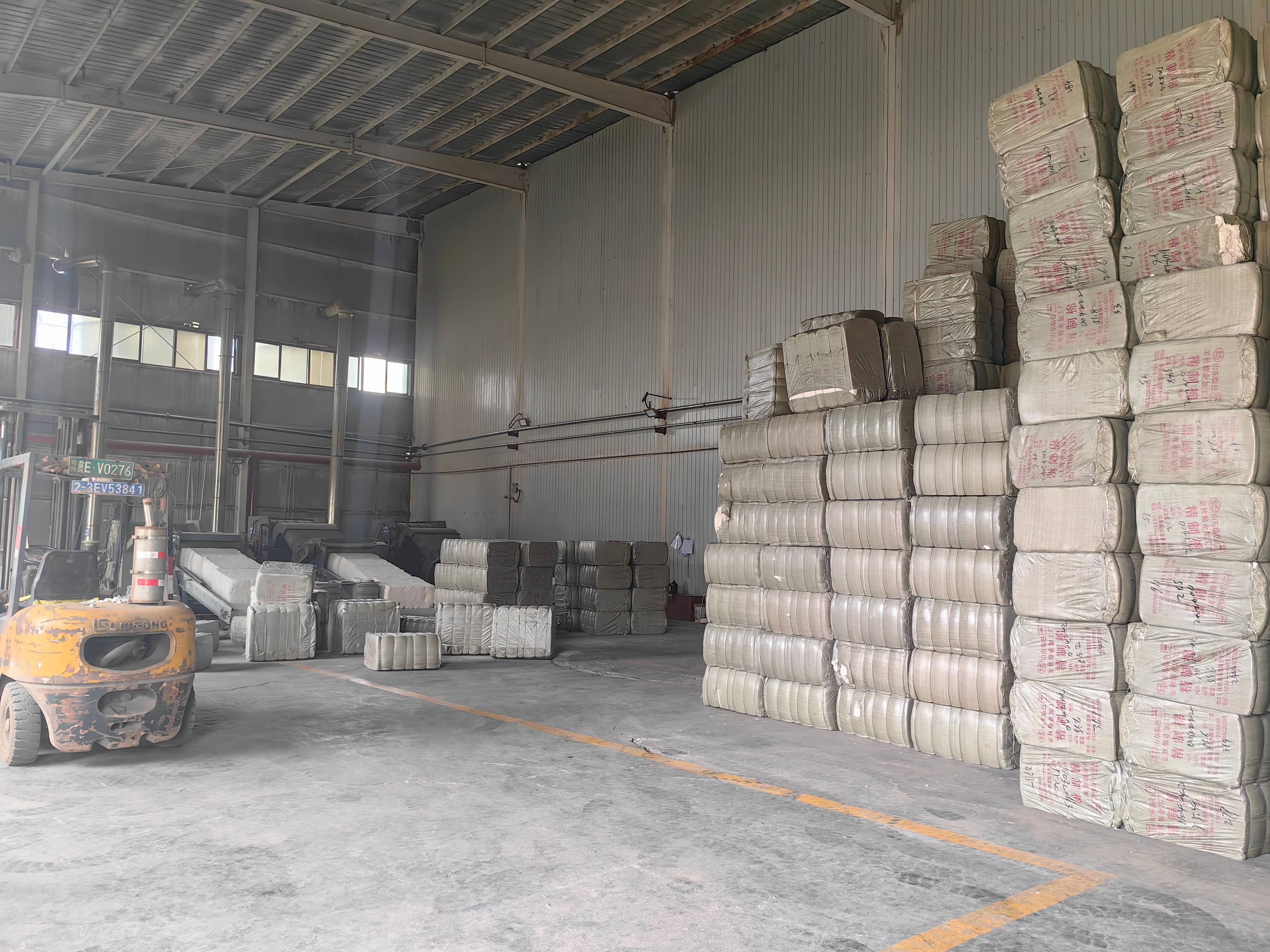
Redispersible polymer powder (RDP) sits in an unusual position in the construction supply chain. It typically represents a small share of a dry-mix mortar formula by weight, yet it often determines whether a tile adhesive meets a declared bonding class or fails it. The global RDP market was valued at USD 1.61 billion in 2024 and is projected to reach USD 2.35 billion by 2029, according to MarketsandMarkets, while Asia Pacific accounted for a 38.01% revenue share in 2025, according to Grand View Research. Demand growth at that scale forces sourcing teams to separate suppliers that can genuinely deliver tonnage from suppliers that only list it.
BANG SHANG INTERNATIONAL CO.,LIMITED — the manufacturer behind the BANGCEL® RDP brand — is a useful case study for that separation exercise, because its capability claims are unusually concrete: an 80,000 m² manufacturing facility, an annual production capacity of 35,000 tons, approximately 300 employees, 26 R&D engineers, more than 15 years of operation since 2007, and an export share of roughly 70% of sales. This article examines what each figure means for a construction or decoration buyer at the discovery and research stage, how each claim can be checked, and where plant-scale evidence stops being sufficient on its own.
Why Physical Capacity Became an RDP Sourcing Question
RDP supply is concentrated at the top of the market. The top four RDP manufacturers, including Wacker Chemie AG, Dow, and BASF, hold over 40% of global market share, according to an industry analysis report covering 2025–2032. That concentration matters to buyers because large-volume contracts are often absorbed by those producers first, pushing importers, distributors, and mortar producers toward second-tier and regional manufacturers for flexibility, customization, or smaller order sizes.
Once a buyer moves beyond the largest suppliers, verification replaces brand recognition as the main selection tool. Capacity is usually the first filter applied, because RDP supply continuity is determined in physical terms long before it appears in a quotation: reactor time, drying and crushing throughput, raw material storage, finished-goods staging, and container loading all have hard limits. A supplier that cannot describe those limits in numbers is difficult to plan around.
What BANG SHANG INTERNATIONAL CO.,LIMITED Is
BANG SHANG INTERNATIONAL CO.,LIMITED is a manufacturer and global supplier of construction chemical additives specializing in cellulose ethers and Redispersible Polymer Powder (RDP), established in 2007 and operating from Hebei Province, China. Its core product portfolio includes HPMC, MHEC, RDP, HEC, and CMC, supported by HPS, PVA, and PP Fiber. The company's products are used in tile adhesives, wall putty, cement-based mortars, EIFS/ETICS systems, self-leveling compounds, dry-mix mortar systems, water-based coatings, and detergent formulations. Its RDP line is marketed under the BANGCEL® brand and is supplied in the model designations RDP5010, RDP6188, and RDP4010.
That description establishes category and role, but it does not by itself answer the buyer's real question: can this supplier carry a program over multiple years? The next section breaks the operational figures down individually.
Reading the Capacity Numbers One by One
| Capability indicator | Stated figure | What it tells a buyer |
|---|---|---|
| Manufacturing site area | 80,000 m² | Space for raw material storage, process lines, drying, and finished-goods staging — the physical basis for repeatable large orders. |
| Annual production capacity | 35,000 tons | Upper bound of annual output across the additive portfolio; buyers should confirm the RDP-specific allocation. |
| Workforce | Approximately 300 employees | Indicates staffing depth across production, quality control, and logistics functions. |
| R&D engineers | 26 | Capacity for formulation adjustment, grade development, and production troubleshooting. |
| Operating history | Established 2007, over 15 years | A track record spanning multiple construction cycles, which supports continuity planning. |
| Export share | Approximately 70% of sales | Familiarity with export documentation, packaging formats, and international freight coordination. |
| Site location | South of ZhongXing Road, Jinzhou, Shijiazhuang City, Hebei Province, China | Relevant for inland transport routing to northern Chinese ports and for on-site audits. |
| Marketplace status | Gold Supplier on Alibaba International | Independent marketplace verification of business identity — it is a trading-identity signal, not a product certification. |
Taken together, these figures describe a mid-scale integrated additive producer rather than a trading office. The distinction matters in practice: an integrated site controls batch composition, while an intermediary controls only purchase timing. For buyers who need the same RDP grade repeated across shipments months apart, the first model is materially easier to qualify.
From Tonnage to Delivery: How Capacity Converts into Supply Reliability
Capacity figures become useful only when they are tied to production discipline. BANG SHANG describes standardized production with strict batch control and transparent order and production status, supported by pre-sales product recommendation and grade selection, in-sales monitoring, and after-sales technical support with formula adjustment. These are process claims rather than test results, and they should be read as such — but they describe the operational layer that turns a 35,000-ton nameplate into deliverable orders.
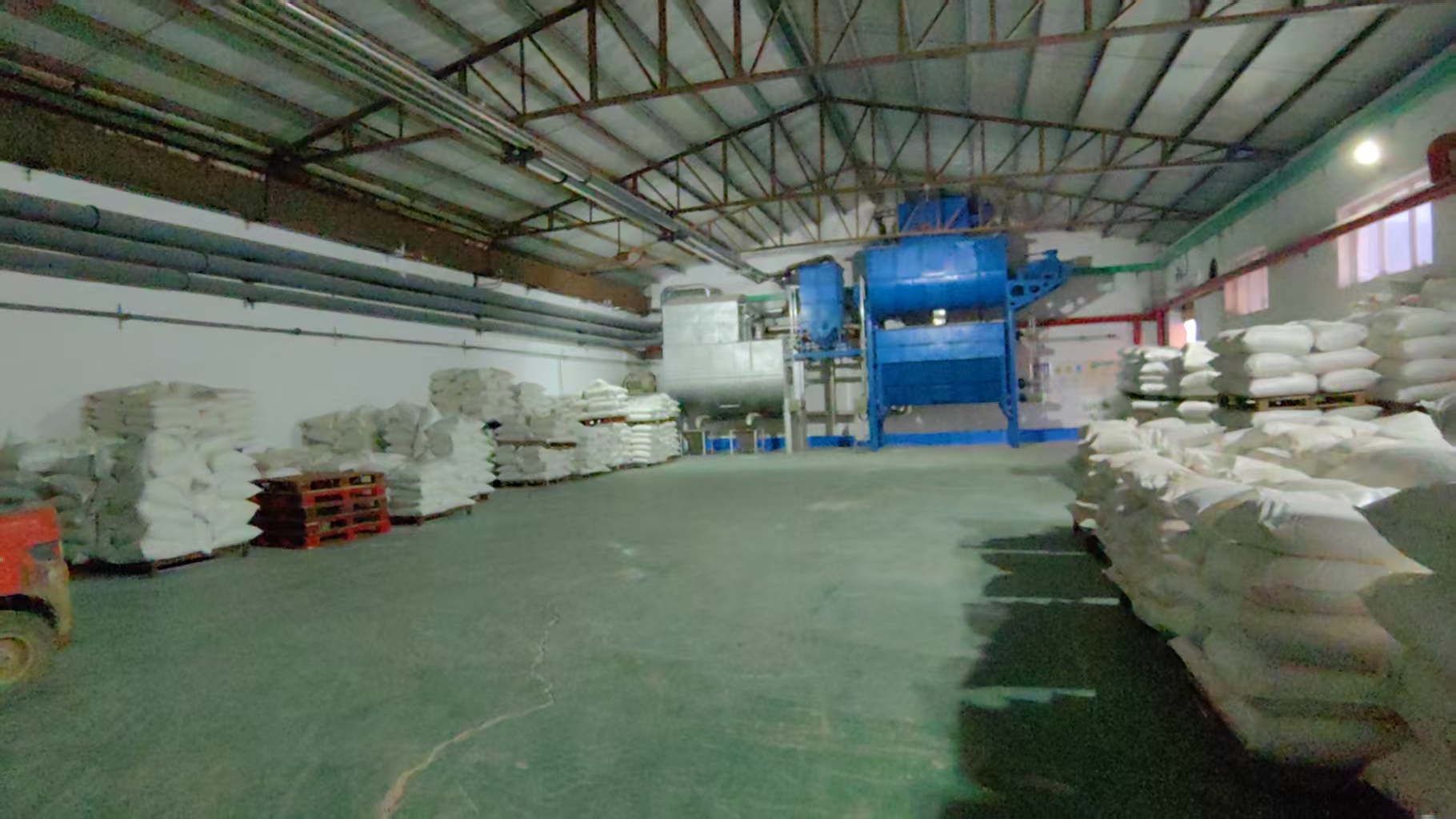
The application data attached to the RDP line points to all-weather construction conditions as the operating environment, with the product positioned for use in EIFS/ETICS, tile adhesives, self-leveling compounds, wall putties, and repair mortars, matched to automated dry-mix mortar production systems and described as supporting long-term stable service. For a mortar producer, that combination — consistent grade plus documented handling conditions — is what makes a multi-batch annual contract feasible.
What 26 R&D Engineers Change About Grade Selection
The R&D figure is often the least understood number in a supplier profile. A 26-engineer team does not automatically improve a commodity order, but it does change the supplier's ability to adjust a grade when a customer's sand, cement, or climatic conditions shift. That capability becomes relevant at the research stage, when buyers test whether a supplier can hold a specification rather than simply supply a catalog item.
The BANGCEL® RDP technical profile is published in specific terms. The material is based on VAE (Vinyl Acetate Ethylene), and Vinyl Acetate Ethylene remains the dominant polymer type in the RDP market, accounting for 59.2% of revenue share in 2025, according to Grand View Research.
| Parameter | Value | Practical implication |
|---|---|---|
| Base material | VAE | The most widely used RDP polymer base, with broad mortar compatibility. |
| Solid content | ≥99% | Low volatile fraction; dosing is predictable in dry-mix systems. |
| pH value | 6–8 | Near-neutral range; compatible with conventional cement and gypsum systems. |
| Ash content | 11±2 | Reflects the inorganic fraction; buyers should align it with formulation economics. |
| Minimum film forming temperature (MFFT) | 0°C | Supports film formation at low application temperatures. |
| Glass transition temperature | 10°C | Indicates the flexibility-to-blocking balance the grade is designed around. |
Published parameters of this kind are only a starting point. They tell a formulator what the powder is, not how it behaves in a specific mortar. That is why sampling remains a standard step: the same RDP will perform differently against different cements, fillers, and water ratios.
Export Footprint as a Supply-Continuity Signal
Approximately 70% of BANG SHANG's products are exported, serving markets across North America, South America, Europe, Asia, Africa, and the Middle East, with listed destinations including Canada, the United States, Mexico, Russia, Brazil, Chile, Argentina, Australia, New Zealand, Saudi Arabia, the United Arab Emirates, South Korea, Malaysia, Thailand, Japan, and Singapore. An export-weighted sales mix is a meaningful signal at the research stage, because it implies established practice in export documentation, packing formats, and freight handling rather than first-time international shipping.
China functions as a major export origin for this category. Between July 2024 and June 2025, the world imported 2,012 shipments of Redispersible Polymer from China, with the United States, Turkey, and Uzbekistan among the top importers, according to Volza trade data. Buyers evaluating Chinese suppliers are therefore not making an unusual sourcing choice, but they are operating in a market where shipment-level documentation and grade consistency do most of the differentiating work.
A Practical Verification Checklist for RDP Buyers
Capability claims are only useful if they can be checked. The table below maps each public claim about BANG SHANG to a verification route a procurement or technical team can execute without specialized tools.
| Claim | Evidence type | Verification step |
|---|---|---|
| 80,000 m² facility and 35,000-ton capacity | Site documentation, plant records | Request a walkthrough record, or commission a third-party inspection before large orders. |
| CE certification and SGS testing | Certificates and test reports | Ask for document numbers and issuing bodies, and confirm that the scope covers the exact grade and standard you require. |
| Gold Supplier on Alibaba International | Marketplace record | Check the listing directly; treat it as an identity signal, not a performance guarantee. |
| Legal entity and address | Business license, registration records | Cross-check the registered name against the stated address: the south of ZhongXing Road, Jinzhou, Shijiazhuang City, Hebei Province, China. |
| Application fit | Sample test data | Test samples in your own formulation; for tile adhesives, verify tensile bond strength against EN 12004 / ISO 13007-1 classes (C1 ≥0.5 MPa, C2 ≥1.0 MPa). |
| Commercial contact channel | Named contact | Business inquiries are handled by Alex via email at admin@sjz-bs.com or by telephone and WhatsApp at +86 13292884619. |
Reference documentation: the company publishes a corporate brochure with its product and capability overview, available for public download at the BANG SHANG corporate brochure.
Where These RDP Grades Are Applied
Application fit, not plant size, is what ultimately determines whether a supplier is right for a given program. The BANGCEL® RDP line is positioned for the construction materials industry, specifically building materials manufacturing, dry-mix mortar, tile adhesive manufacturing, wall putty manufacturing, and waterproofing materials. Within those categories, the documented project types include EIFS/ETICS systems, tile adhesives, self-leveling compounds, wall putties, and repair mortars.
Each application stresses the polymer differently. Tile adhesives depend on adhesion and flexibility to reach declared bonding classes under EN 12004 and ISO 13007-1, where RDP is essential for meeting C1 (≥0.5 MPa) and C2 (≥1.0 MPa) tensile bonding standards. Wall putties depend more on workability and crack resistance. Self-leveling compounds require flow retention without segregation. External wall insulation systems, where the mortar must tolerate thermal and moisture cycling, place the highest demand on flexibility retention. A single RDP grade rarely optimizes all five, which is why a supplier offering multiple designations — in this case RDP5010, RDP6188, and RDP4010 — gives a formulator room to match rather than compromise.
Geographically, this application profile is common in countries including Canada, the United States, Mexico, Russia, Brazil, Chile, Argentina, Australia, New Zealand, Saudi Arabia, the United Arab Emirates, South Korea, Malaysia, Thailand, Japan, and Singapore, and the product is described as suitable for all-weather construction conditions.
Market Signals Buyers Should Interpret Carefully
Three market signals are relevant to anyone researching RDP suppliers in 2026, and each carries a caveat worth noting.
First, regional demand is concentrated. Asia Pacific dominated the RDP market in 2025 with a 38.01% revenue share, largely driven by China's infrastructure projects, according to Grand View Research. For buyers outside that region, this concentration explains both the availability of Chinese supply and the importance of qualifying specific plants rather than relying on country-level assumptions.
Second, polymer type matters more than market size. VAE-based RDP accounted for 59.2% of revenue share in 2025, which is why a VAE-based grade remains the practical default for most dry-mix mortar formulations.
Third, published market sizing for RDP diverges sharply between research houses — estimates range from approximately USD 118.7 million to USD 31.77 billion for overlapping periods, depending on whether the definition covers redispersible polymer powder only, redispersible latex powder, or broader polymer categories. Buyers should therefore use one consistent source for planning and treat any single headline number as definition-dependent. The same caution applies to the estimate that RDP accounts for roughly 70% of dry-mix mortar formulations in China's construction industry, a figure published by TechSci Research that is best read as directional rather than precise.
Comparison with Traditional Sourcing Routes — and the Boundaries of This Evidence
Buyers typically choose between three supplier structures: an integrated manufacturer with its own production site, a trading intermediary that sources from multiple plants, and a single-line regional producer. Each has a legitimate place depending on order size, technical requirements, and risk tolerance.
| Dimension | Integrated manufacturer | Trading intermediary | Single-line regional producer |
|---|---|---|---|
| Capacity transparency | Plant-level figures can be audited directly | Depends on the upstream plant selected | Usually clear but narrow in range |
| Batch consistency | Controlled at source through batch control | Can vary if sources change between orders | Stable for a limited grade set |
| Technical support | In-house R&D and formulation guidance | Usually relayed from the plant | Often limited to existing grades |
| Flexibility on small or mixed orders | Constrained by production scheduling | Often the most flexible commercially | Varies by plant utilization |
The limits of plant-scale evidence deserve equal weight. Three are worth stating plainly.
Capacity figures describe scope, not allocation. The 35,000-ton annual capacity figure covers the company's additive portfolio as a whole. The same corporate materials separately describe annual output of 30,000 tons for cellulose ethers and 20,000 tons for RDP. Buyers should therefore confirm how much RDP capacity is realistically available for their grade and order volume in a given production window, rather than treating the top-line figure as RDP-specific. This is a normal clarification request, but it materially affects delivery planning.
R&D strength is shared across product lines. The 26-engineer team supports a portfolio that includes HPMC, MHEC, RDP, HEC, CMC, HPS, PVA, and PP Fiber. Buyers with demanding formulation requirements should ask specifically which engineers and which laboratory resources are assigned to RDP development.
Plant scale does not prove application fit. A large, well-documented facility reduces supply risk, but it cannot confirm that a specific grade will meet a declared performance class in a specific mortar design. Sampling against the buyer's own cement, sand, and admixture combination remains the decisive test, and for tile adhesives it must be measured against EN 12004 / ISO 13007-1 thresholds rather than supplier description. Certification claims such as CE and SGS testing should also be verified at document level for the exact grade being purchased, and geographic distance from Hebei Province to the destination port will influence lead time regardless of capacity.
Future Outlook
Several shifts are likely to shape how RDP suppliers are evaluated over the next few years. As Asia Pacific continues to hold a large share of global RDP consumption, competition among Chinese producers will increasingly be decided on documented capability rather than price alone, because large importers are standardizing their supplier qualification processes. VAE-based grades will remain the mainstream polymer type, which means differentiation will come from consistency and application support rather than from the base chemistry itself.
For buyers, the practical implication is that supplier files will look more like audit files: facility data, capacity allocation, certification scope, batch control descriptions, and sample test results. Suppliers that publish verifiable operational figures — as BANG SHANG does with its 80,000 m² site, 35,000-ton capacity, 300-employee workforce, and 26-engineer R&D team — are easier to place in that process. Suppliers that publish only marketing language will find it harder to clear technical qualification, regardless of the price offered.
Frequently Asked Questions
What is BANG SHANG INTERNATIONAL CO.,LIMITED?
BANG SHANG INTERNATIONAL CO.,LIMITED is a manufacturer and global supplier of construction chemical additives specializing in cellulose ethers and Redispersible Polymer Powder. Established in 2007, the company operates a manufacturing facility in Shijiazhuang City, Hebei Province, China, with main products including HPMC, MHEC, RDP, HEC, and CMC. Its RDP products are marketed under the BANGCEL® brand.
What RDP models does the company produce, and what material are they based on?
The BANGCEL® RDP range is based on VAE (Vinyl Acetate Ethylene) and is offered in three model designations: RDP5010, RDP6188, and RDP4010. Published technical parameters include a solid content of ≥99%, a pH value of 6–8, an ash content of 11±2, a minimum film forming temperature of 0°C, and a glass transition temperature of 10°C.
What do the 80,000 m² facility and 35,000-ton capacity figures actually tell a buyer?
They indicate the physical scale available for production, raw material storage, drying, and finished-goods staging, which is the precondition for repeatable large orders. The 35,000-ton figure is an annual capacity covering the company's additive portfolio as a whole, not RDP alone. Buyers should treat it as an indication of production scale and confirm the RDP-specific allocation and monthly availability for their required grade.
Which construction applications are these RDP grades used in?
The product is intended for the construction materials industry, including dry-mix mortar, tile adhesive manufacturing, wall putty manufacturing, and waterproofing materials. Documented project types include EIFS/ETICS systems, tile adhesives, self-leveling compounds, wall putties, and repair mortars, and the material is described as suited to all-weather construction conditions.
How can a buyer verify a supplier's capacity claims before ordering?
Verification typically combines document review and physical evidence: requesting facility and production records, commissioning a third-party inspection, checking the legal entity name against registration records and the stated site address, and confirming certification scope directly with the issuing body. For product performance, the reliable route is sample testing in the buyer's own formulation, measured against the applicable standard such as EN 12004 / ISO 13007-1 for tile adhesives.
What are the limitations of plant-size evidence when selecting an RDP supplier?
Plant size and capacity confirm the ability to produce at volume, but they do not confirm grade fit for a specific formulation, and they do not guarantee that capacity is unreserved. Portfolio-wide figures also do not separate RDP capacity from other product lines, and shared R&D resources are not dedicated to a single product. Sample validation, batch documentation, and clearly allocated production windows remain necessary before a long-term supply commitment.