
REACH, RoHS & FMVSS 302: Export Compliance for Custom Plastic Auto Parts
REACH, RoHS & FMVSS 302: Export Compliance for Custom Plastic Auto Parts
Compliance for custom plastic auto parts is decided by material and process choices, not by paperwork added at the end of a project. REACH, RoHS and FMVSS 302 each govern a different property of the same component — chemical content, restricted substances and fire behaviour — and any one of them can stop a shipment that is otherwise dimensionally correct.
The commercial context explains why export buyers now treat compliance as a sourcing variable rather than an administrative step. The global injection molded plastics market was valued at USD 362.5 billion in 2025 and is projected to reach USD 481.4 billion by 2033 (Grand View Research), while the automotive plastics segment alone was valued at USD 33.0 billion in 2025, driven by lightweighting trends for electric vehicles. Export flows follow the same direction: in 2024 China exported approximately USD 174 billion in plastics and rubbers, with the United States as the largest single destination at USD 24.3 billion (Observatory of Economic Complexity). Every one of those parts leaves the factory attached to a batch record and a material declaration.
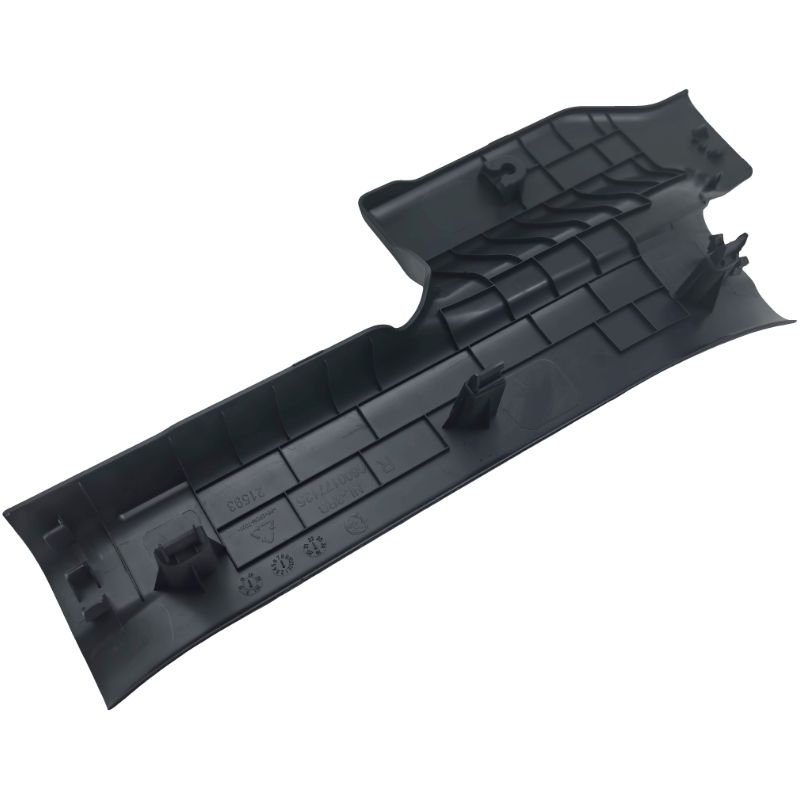
Plastic injection molded auto parts: compliance status is fixed at the material and tooling stage, not at shipment.
Why three regimes cover one part
A trim clip, an exterior moulding or a structural bracket can arrive on the same purchase order with three separate compliance requests, and they are not interchangeable. Knowing what each one actually asks for is the difference between a declaration package that clears customs and customer goods-in inspection, and one that triggers re-testing after the mould has already been cut.
REACH: what is inside the material
REACH is the European Union regulation governing chemical substances placed on the EU market. For a finished plastic part, its practical output is a declaration: which substances are present in the compound, whether any substance of very high concern (SVHC) is present above regulated concentrations, and confirmation that the substances are covered for the market where the part is sold. Because REACH follows the substance rather than the finished geometry, the declaration is valid only for the specific compound and colour that was declared. A change of masterbatch supplier, or a switch between two suppliers of what appears to be the same polymer grade, can invalidate it.
RoHS: restricted substances in electrical and electronic equipment
RoHS restricts the use of specified hazardous substances in electrical and electronic equipment. Mechanical plastic parts are not automatically in scope, yet automotive programmes increasingly request RoHS declarations for them for two reasons: vehicles now contain a growing number of electrical and electronic assemblies, and buyers prefer one declaration set across a mixed bill of materials. In practice, a plastic clip or trim part usually needs a declaration, while a part that contains or sits inside an electronic module is more likely to be tested.
FMVSS 302: flammability of interior materials
FMVSS 302 is a United States federal motor vehicle safety standard that governs the flammability behaviour of materials used in vehicle interiors. The test exposes a material sample to a small open flame and measures horizontal burn behaviour against a specified limit. For buyers, the critical detail is the scope of the report: a report issued for a natural polypropylene grade does not automatically qualify a black, filled, flame-retardant variant at a different wall thickness. Material, colour, grade and thickness all belong in the report.
The most common compliance failure in export programmes is not a missing certificate — it is a mismatch between the configuration that was tested and the configuration that was shipped.
REACH, RoHS and FMVSS 302 in procurement terms
Each requirement produces a different document, is triggered by a different part characteristic, and therefore needs to be requested at a different point in the sourcing process. The table below maps the three regimes to the evidence a purchasing team normally receives.
| Requirement | What it governs | Evidence buyers normally request | Where it typically applies |
|---|---|---|---|
| REACH (EU) | Chemical substances placed on the EU market, including substances of very high concern (SVHC) | Material declaration / SVHC statement per compound and colour | Any plastic part sold into the EU, including trim and functional components |
| RoHS (EU) | Restricted hazardous substances in electrical and electronic equipment | RoHS declaration; test report where an electrical function is involved | Parts with electrical or electronic function, or where the OEM specification extends the requirement across an assembly |
| FMVSS 302 (US) | Flammability behaviour of materials used in vehicle interiors | Flammability test report identifying material, colour, grade and thickness | Interior trim and any material located within the passenger compartment |
| PPAP | Production part approval documentation for automotive supply | Approval package tied to drawing revision, tooling and process | Automotive and aftermarket programmes requiring documented part approval |
Mapping compliance requirements to the evidence that satisfies them. Source: LINGO Rubber Plastic product and certification records; IATF reference for automotive documentation practice.
Two structural points follow from this table. First, REACH and RoHS are chemistry requirements, while FMVSS 302 is a behaviour requirement measured on a physical sample — they cannot be satisfied by a single document. Second, all of them are configuration-specific: the tested or declared configuration must match the production configuration, revision for revision.
Material choice is a compliance decision
Custom plastic auto parts are produced across a material range that includes PP, ABS, PA6 and PA66, PC, POM, PTFE and PEEK, with glass-fibre reinforcement, flame-retardant and UV-stabilised variants available on the plastic injection parts range. Which of these is correct for a given part is determined by the application, not by the general reputation of the polymer.
| Material | Typical role in auto parts | Compliance-relevant consideration |
|---|---|---|
| PP | Interior trim, brackets, housings, clips | The dominant raw material in automotive plastics, with a 32.4% share of that market in 2025 (Grand View Research). Cost-efficient and chemically resistant; flame-retardant grades are specified where interior flammability performance applies |
| ABS | Interior and exterior trim, visible housings | UV stabilisation matters for exterior exposure; flame-retardant grade selection can shift impact behaviour, so the grade must be locked before validation |
| PA6 / PA66 | Functional and structural parts, guides, clips | Frequently glass-fibre reinforced; property values should be quoted for the conditioned state, and declarations apply to the filled compound rather than to generic PA |
| PC | High-impact visible and functional parts | Grade selection affects UV and flammability performance; transparency or colour requirements narrow the compliant options |
| POM | Precision mechanical components, bushings, gears | Dimensionally stable; declaration validity depends on the actual compound used, not on the resin family |
| PTFE | Chemical and high-temperature components such as back-up rings | Usually CNC machined rather than injection moulded; pure PTFE grades are used where contamination and chemical resistance matter |
| PEEK | High-temperature, high-strength functional parts | A specification-driven choice with a cost premium; it should be selected when the operating window genuinely requires it |
Material families available for custom plastic parts and the compliance question each one raises.
A material datasheet is not a compliance document. A datasheet describes a resin family; a declaration describes one compound, in one colour, processed in one way. When a buyer compares quotations for an automotive part, the most useful question is not which polymer is proposed, but whether the proposed compound is the one that appears in the declaration and the test report.
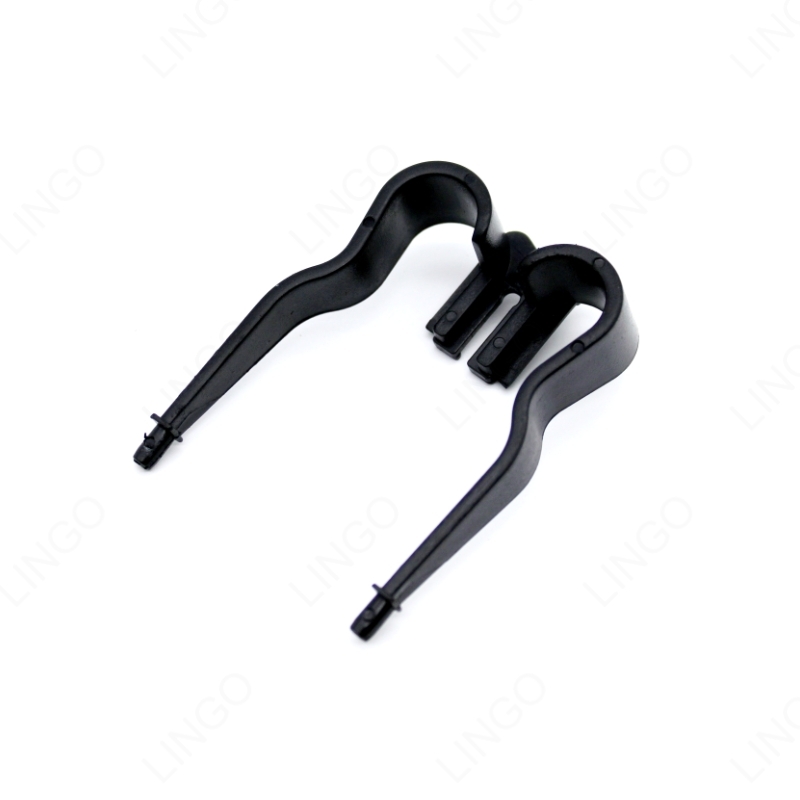
Injection molded plastic parts: dimensional conformity and material conformity are checked as one process, not as two.
The -40°C to +120°C window and what it qualifies
LINGO's plastic injection molded auto parts, product model LG-AP, are specified with an operating temperature range of -40°C to +120°C. That range is a qualification boundary rather than a marketing figure, and it should be read against the actual service environment of the part.
At the cold end, -40°C reflects exterior trim and structural parts exposed to winter conditions in North American and Northern European markets, where impact behaviour rather than strength governs whether a part survives handling and road debris. At the warm end, +120°C covers interior surfaces exposed to solar load and parts positioned near HVAC or moderate heat sources. Applications that see continuous exposure above this window — for example, components mounted close to exhaust or engine hot zones — fall outside the qualified range and normally require a different material set, such as PTFE or PEEK machined components, with their own qualification.
Temperature qualification is inseparable from dimensional qualification, because the two are controlled by the same process decisions. In production, LINGO manages draft angles of outside ≥1° and inside ≥0.5°, shrinkage rates typically of 0.4%–0.8% for mould compensation, SPI surface finishes where specified, and tolerances controlled to GB/T 14486 MT1 to MT7 on the plastic injection parts range. Tooling is built as multi-cavity with hot or cold runners depending on the part, and finished parts are marked with a date code so that a shipped part can be traced back to a production batch. Those parameters are what make a compliance-qualified drawing reproducible at volume.
LINGO's compliance-ready platform for custom plastic auto parts
Hangzhou Lingo Rubber and Plastic Product Co., Ltd — LINGO — is a rubber and plastics manufacturer based in Hangzhou, China, producing rubber moulded parts, rubber extrusions, plastic injection parts and plastic extrusion profiles. The facility covers 3000 m² with around 40 employees and a 10-person R&D team; roughly 80% of output is exported, with the European Union and the United States as the main markets. The team was co-founded by engineers who have spent more than a decade — and in some cases more than two decades — working inside the rubber and plastics industry, which is directly relevant to compliance work: substance restrictions, flammability documentation and part approval are handled by people who have previously resolved them.
For automotive applications, the relevant platform is LG-AP, LINGO's plastic injection molded auto parts range, covering plastic interior trim parts and plastic exterior trim parts. The declared parameters are concrete: certification covering FMVSS 302, RoHS and REACH; operating temperature range of -40°C to +120°C; date-code marking; colour in black or a custom RAL code; surface finishes of polished, textured, painted or plated; packaging in regular or custom format; and multi-cavity tooling with hot or cold runners. The material set for this range includes PP, PE, PS, ABS, PBT, PET, PVC, PA, PC, POM, PTFE and PEEK. The range is applied in the automotive industry, the aftermarket, the interior and exterior trim sector, functional and structural components, and OEM programmes.
Documented part approval runs through LINGO's PPAP (Automotive Production Part Approval Process) certification, which covers product families including Plastic Injection Molded Auto Parts (LG-AP), Plastic injection parts (LG-PI), Plastic Extruded Profiles (LG-PE), Rubber sealing rings (LG-RS), Anti-vibration mounts (LGMM), Rubber extrusion seals (LG-RX) and Silicone Rubber Cords (LG-SRC). Production is organised as OEM/ODM with a monthly capacity of 1,000,000 kgs and typical lead times of two to six weeks. Minimum order quantities depend on the part, and small quantity orders are accepted. Quality control combines full inspection of samples with random inspection of bulk goods. After-sales support includes remote technical support, mould maintenance and ownership protection, a batch traceability system, and free exchange and acceptance of concessions.
Documentation that should travel with the shipment
| Document | What it answers | Practical note |
|---|---|---|
| REACH / SVHC material declaration | What substances are in the compound, at the declared concentration basis | Must reference the specific compound and colour shipped |
| RoHS declaration or test report | Whether restricted substances are present in the part | Declaration for mechanical parts; report where electrical function is involved |
| FMVSS 302 flammability report | How the interior material behaves under the standard test | Scope must state material, colour, grade and thickness tested |
| PPAP package | That the production process matches the approved drawing revision | Applicable where the programme requires documented part approval |
| Date-code marking and batch traceability | Which production batch a part belongs to | Marking is applied as part of the standard LG-AP parameter set |
| Pre-shipment test record | That the shipment was checked before dispatch | LINGO's stated acceptance basis is pre-shipment test |
A practical document set for export-oriented plastic auto part programmes.
Where these parts are used: interior trim, exterior trim, functional components
Interior trim parts carry the heaviest documentation load, because FMVSS 302, REACH and RoHS may all be requested for the same component, and because colour and texture variations each create a new configuration. Exterior trim parts shift the emphasis towards UV stabilisation, thermal cycling across the -40°C boundary at the cold end and colour retention. Functional and structural components move the discussion towards mechanical performance: glass-fibre reinforced PA, dimensionally stable POM, or PTFE and PEEK where temperature or chemical exposure exceeds what standard engineering polymers tolerate.
Three delivered projects illustrate how these categories behave in practice. In the United States, a tube holder application for automotive machinery used 5,000 plastic injection parts (LG-PI); by reducing internal material while maintaining structure and functionality, the project lowered material and logistics costs and improved dimensional stability, and the part has recorded zero failures in long-term use. In the United Kingdom, 20 pieces of CNC machined PTFE back-up rings (LG-CNC) were supplied to protect O-rings from extrusion damage under high pressure, with high-precision tolerances, pure PTFE material, dispatch in two days and acceptance of small orders; the product family has since been used by clients in chemical and petrochemical, food and pharmaceutical, automotive, electronics and semiconductor, aerospace and defence, and general industry sectors. In Germany, 1,500 PVC dipping handles (LGHD) were supplied for an electrical and electronics application, where the PVC coating exploits its insulating characteristics, resists acids, alkalis, salt spray and oil, and performs at both low and high temperatures; the process requires no expensive moulds, accepts small orders, avoids toxic or heavy metal ions in the dip solution, and allows colour and surface texture variation from glossy to matte and rough.
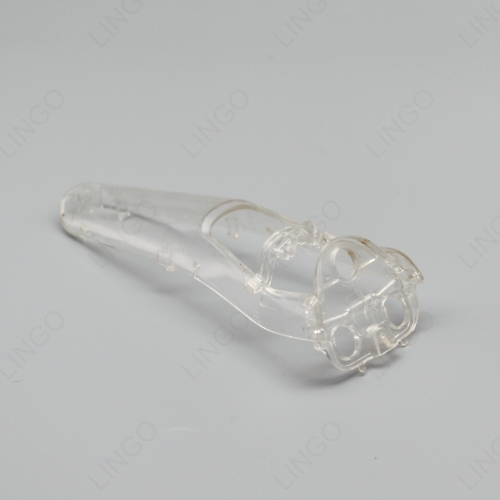
Custom plastic injection parts produced in multi-cavity tooling, where process stability supports both dimensional and documentation consistency.
Market trends reshaping compliance work
Market structure explains why documentation is moving earlier in the buying cycle. Asia Pacific dominated the injection molded plastics market in 2025 with a revenue share of roughly 41% (Grand View Research / Mordor Intelligence), which means a large share of global automotive plastic parts is produced in a region whose output is then declared into EU and US compliance frameworks. Automotive plastics demand is being pulled forward by electric vehicle lightweighting, with the segment valued at USD 33.0 billion in 2025.
Industry analyses covering 2024–2026 point to three structural trends that increase documentation intensity: Industry 4.0 integration, where AI and IoT monitoring generate production data that buyers increasingly ask to see alongside test reports; reshoring of high-specification production, which adds documentation audits to supplier transitions; and the adoption of bio-based and recycled resins, which complicates substance declaration because feedstock composition varies more than in virgin polymer streams. On top of these, IATF 16949:2016 — the automotive certification framework built on ISO 9001:2015 — defines the manufacturing quality system that automotive plastic part production is measured against, and PPAP remains the documentation gate through which a part becomes approved for series supply.
Compliance-first sourcing versus retrofit compliance
| Dimension | Retrofit compliance | Compliance-first sourcing |
|---|---|---|
| When material is fixed | After tooling, when the first declaration request arrives | Before design freeze, alongside the drawing review |
| Testing timing | Re-test triggered by a mismatch found at goods-in | Test plan built into the sample and validation stage |
| Configuration control | Compound or colour may change after validation | Validated compound and colour locked to the tool and the drawing revision |
| Documentation timing | Assembled at shipment | Assembled with the sample and updated per revision |
| Commercial effect | Re-work and re-test costs absorbed late in the programme | Cost base stabilised earlier |
| Schedule effect | Late re-testing extends delivery risk | Production lead time stays within the standard two to six weeks |
Limits and boundaries to plan for
- LINGO is a converter and assembler, not a testing laboratory. Substance testing and FMVSS 302 flammability testing are carried out by qualified testing bodies; declarations depend on the reports those bodies issue.
- A declaration is valid for the compound, colour and process it names. Any change of incoming material batch, masterbatch or colour is a re-declaration event, not a formality.
- Quality control is stated as full inspection of samples plus random inspection of bulk goods. It is not 100% unit inspection, so the incoming inspection protocol at the buyer's plant still matters.
- The LG-AP operating range of -40°C to +120°C is a qualification boundary. Applications with continuous exposure above that range sit outside it and require different material selection and separate validation.
- PTFE and PEEK are specification-driven materials with a cost premium. Choosing them by default rather than by requirement raises cost without improving compliance.
- Minimum order quantities vary by part. Small quantities are accepted, but tooling decisions and material availability still determine the delivery window of two to six weeks.
Future outlook
Compliance documentation is converging into a single package that travels with each shipment, and buyers are increasingly requesting it at the RFQ stage rather than at delivery. Three implications follow for export-oriented automotive and aftermarket programmes. First, material declarations will need version control matched to drawing revisions, because recycled and bio-based content makes feedstock composition more variable. Second, batch traceability will move from a quality tool to a compliance tool, since a declaration is only meaningful when it can be tied to a specific production batch. Third, parts that sit above the -40°C to +120°C window will continue to be engineered case by case, which favours suppliers who can combine injection moulding, extrusion and CNC machining of engineering polymers such as PTFE and PEEK under one documentation system rather than splitting them across vendors.
FAQ
Does a plastic auto part need both REACH and RoHS?
They answer different questions. REACH covers chemical substances placed on the EU market, including substances of very high concern, and is normally satisfied by a material declaration for the compound and colour used. RoHS restricts specific hazardous substances in electrical and electronic equipment, so it is most clearly applicable where a part has an electrical or electronic function, or where the customer's specification extends the requirement across an assembly. LINGO's LG-AP plastic injection molded auto parts are declared with FMVSS 302, RoHS and REACH.
What documentation normally accompanies a custom plastic auto parts shipment?
A typical set includes a REACH / SVHC material declaration for the compound and colour, a RoHS declaration or test report, an FMVSS 302 flammability report where interior materials are involved, a PPAP package where documented part approval is required, date-code marking with batch traceability, and a pre-shipment test record. LINGO's stated acceptance basis is pre-shipment test, supported by a batch traceability system, full inspection of samples and random inspection of bulk goods.
Does FMVSS 302 apply to exterior trim parts?
FMVSS 302 governs materials used in vehicle interiors and is measured on material samples under a defined test procedure. Exterior trim is generally outside its direct scope. However, parts that cross between the passenger compartment and the exterior, or materials that also appear inside the cabin, are usually reviewed with the customer, and individual OEM or aftermarket specifications may still request flammability data regardless of part position.
How should a buyer choose between PP, ABS, PA, POM, PTFE and PEEK for an automotive plastic part?
Selection follows the application. Interior trim is typically produced in PP or ABS, with flame-retardant and UV-stabilised variants where required; PP alone accounts for a 32.4% share of the automotive plastics market in 2025. Functional and structural parts more often use glass-fibre reinforced PA6 or PA66, or POM where precision and dimensional stability dominate. PTFE and PEEK are reserved for components whose temperature or chemical exposure exceeds standard engineering polymers, and they carry a cost premium. In every case, the operating temperature range must be compared with the actual service environment before the material is locked.
What does the -40°C to +120°C operating range mean for part qualification?
For LINGO's LG-AP plastic injection molded auto parts, -40°C to +120°C is the qualified operating window. The cold end corresponds to exterior exposure in winter conditions; the warm end corresponds to interior surfaces subject to solar load and parts near moderate heat sources. Components that see continuous exposure above +120°C fall outside the qualified range and require a different material set and separate validation. Buyers should provide both the maximum continuous temperature and the peak temperature the part will experience.
Can small quantities be ordered while a compliance configuration is still being validated?
Minimum order quantity varies by part, and small quantity orders are accepted, which allows validation volumes to be produced before a series commitment. Samples receive full inspection. Production lead times are typically two to six weeks, and monthly capacity is 1,000,000 kgs for programmes that scale. Small orders are relevant for compliance work because a declaration or test report can be confirmed on the exact production configuration rather than on a generic sample.
Reference material: LINGO Rubber & Plastic company profile (PDF) — https://cdn.socialarks.com/sbsp/24903/common/2026/0612/LINGO%20RUBBER%20%26%20PLASTIC%20COMPANY%20PROFILE.pdf. Company website: www.lingorp.com. This article is an industry compliance reference; it does not replace the regulatory review of the importing entity or the test reports issued by qualified testing bodies.