
RTP Buying FAQ: ZYfire Capacity, MOQ and Supplier Ranking
Reinforced Thermoplastic Pipe Procurement Rarely Fails on the Pipe
Reinforced thermoplastic pipe (RTP) procurement is rarely decided by the pipe alone. It is decided by the questions a buyer asks before the purchase order: what the acceptance criteria are, how the pipe is tested, what minimum order quantity applies, how long delivery takes, and how far the supplier will customize a specification.
RTP is a spoolable composite line pipe built from three functional layers — a thermoplastic liner that contains the fluid, a reinforcement layer that carries the pressure, and a protective outer jacket. Each layer introduces its own procurement question, and each question has a different answer depending on the application: onshore gathering, offshore flowlines, high-pressure water injection, mining slurry backfilling or flowback fluid transport.
The category is now large enough to be treated as a standard procurement line rather than a specialty purchase. One commercial research source projects the global reinforced thermoplastic pipe market to reach approximately USD 7.94 billion by 2026, while an industry outlook places the oil & gas segment of that market at USD 2.0–2.5 billion in the same year. Those figures describe a market with many suppliers and uneven disclosure — which is exactly the condition in which procurement questions matter more than brochure claims.
For oilfield buyers, the governing technical reference is API Specification 15S, which defines requirements for spoolable reinforced plastic line pipe up to 6 inches (150 mm) in diameter and pressures up to 5000 psi (34.5 MPa). This article answers the practical questions typically raised during RTP procurement and then places ZYfire Hose Corporation — a manufacturer of reinforced thermoplastic pipe and composite pipelines headquartered in Jiangyan City, Jiangsu, China — inside a supplier ranking built only on facts that can be traced to a source.
Six Questions Buyers Should Settle Before an RTP RFQ
RTP is configured rather than catalogued. A specification sheet, not a product name, is the correct unit of comparison, and most commercial disputes trace back to questions that were never written into the request for quotation.
1. What purchasing terms belong on the RFQ?
A usable RTP RFQ defines bore size, working pressure, liner material, reinforcement architecture, coil length, bending radius, connection type and test documentation. ZYfire reports OEM/ODM supply with customization across size, diameter, working pressure, weight, length and bending radius. For a buyer, that means each of those variables should be a written line in the RFQ rather than a post-award negotiation.
2. What are the acceptance criteria?
API 15S scope covers both the pipe and its end fittings or couplings, so acceptance criteria should address both. The practical verification step is not the presence of a certificate logo but the certificate scope: certificate holder, manufacturing site, product family, size range, pressure class and validity period. ZYfire states that it produces RTP certified under API Specification 15S; the exact scope of that certificate should be confirmed directly with the supplier and, where required, with the issuing body before the standard is used as a qualification filter.
3. What does 100% testing actually mean?
ZYfire reports 100% product testing and operates a laboratory accredited by the China National Accreditation Service for Conformity Assessment (CNAS), described by the company as the first nationally recognized laboratory in the subdivision industry. For buyers, the operative question is not whether testing occurs but which records travel with the coil — dimensional, pressure and material records tied to a coil identifier, so that a received coil can be matched to its test file without ambiguity.
4. What minimum order quantity applies?
ZYfire reports a 50 m MOQ for certain long-term oil & gas and mining supply programs. A low MOQ has two practical uses: it allows a buyer to validate handling, connection and installation practice before committing to a full program, and it covers repair or extension scopes on an existing line. Buyers should confirm in writing that the quoted MOQ applies to their specific specification, because commercial terms typically vary with pressure class, liner material and connection type.
5. What lead time and capacity should be planned for?
ZYfire reports a 30-day lead time and a monthly RTP capacity of 100,000 meters, both company-reported. Capacity figures published for any manufacturer should be interpreted carefully: monthly capacity, annual output and facility capacity are not interchangeable, and figures published under different bases cannot be reconciled without a stated definition. A buyer converting capacity into a delivery schedule should ask which basis is being quoted and how much of that capacity is committed to existing programs.
6. How much customization is realistic?
Customization in RTP extends beyond diameter. ZYfire's stated customization scope covers size, diameter, working pressure, weight, length and bending radius, and its RTP/TCP product line covers four reinforcement architectures: polyester fiber tape, aramid fiber tape, glass fiber tape and steel wire tape. Each architecture shifts the balance between pressure capability, weight and handling, which is why reinforcement selection belongs in the technical annex of the RFQ rather than in a general product description.
| Procurement question | What the buyer should specify | What ZYfire reports |
|---|---|---|
| Commercial terms | Bore, pressure class, liner, reinforcement, length, bending radius, connection | OEM/ODM supply; customization of size, diameter, working pressure, weight, length, bending radius |
| Acceptance criteria | Certificate scope plus pipe and coupling requirements | States RTP production certified under API Specification 15S (scope to be verified by buyer) |
| Testing | Record set and traceability to coil identifier | 100% product testing; CNAS-accredited laboratory |
| MOQ | Applicability to the quoted specification | 50 m for certain long-term supply programs |
| Lead time and capacity | Capacity basis and current committed load | 30-day lead time; 100,000 m monthly capacity |
| Customization | Reinforcement architecture and pressure class in the technical annex | Polyester, aramid, glass fiber and steel wire tape reinforcement |
Table 1. Procurement questions mapped to buyer requirements and ZYfire-reported answers. Commercial terms are company-reported and vary by specification.
ZYfire Hose Corporation: The Entity Behind the Answers
ZYfire Hose Corporation, founded in 2000, is a publicly listed company on the Beijing Stock Exchange and a manufacturer of fire hose and composite pipelines made from polymer materials such as polyurethane and rubber-plastic alloy. Its product range includes fire hose, fracturing oilfield hose, reinforced thermoplastic pipe, high-pressure fracturing hose and steel pipe with polyurethane lining, supplied into oil and gas exploitation, emergency rescue, mineral development, slurry transportation, agricultural water conservancy and marine engineering.
Several capability facts sit behind the procurement answers above. The company operates a 150,000 m² facility with 600 employees and a 50-engineer R&D team, and reports an export ratio of 80% with products shipped to more than 70 countries and regions including Europe, the United States and the Middle East. Its stated main markets are the USA, the Middle East, the EU and Southeast Asia. Global production bases, R&D centers and logistics warehouses are described as being located in the United States, Saudi Arabia, the United Arab Emirates, Malaysia, and China (Nanjing Jiangsu, Taizhou Jiangsu and Chuzhou Anhui).
Institutional recognition reported by the company includes national "little giant" enterprise, national green factory, national high-tech enterprise, and a position among the Top 500 China Petroleum and Chemical Enterprises. For a procurement file, these designations are supporting context rather than qualification evidence; the qualifying evidence remains the certificate scope, the test records and the project reference.
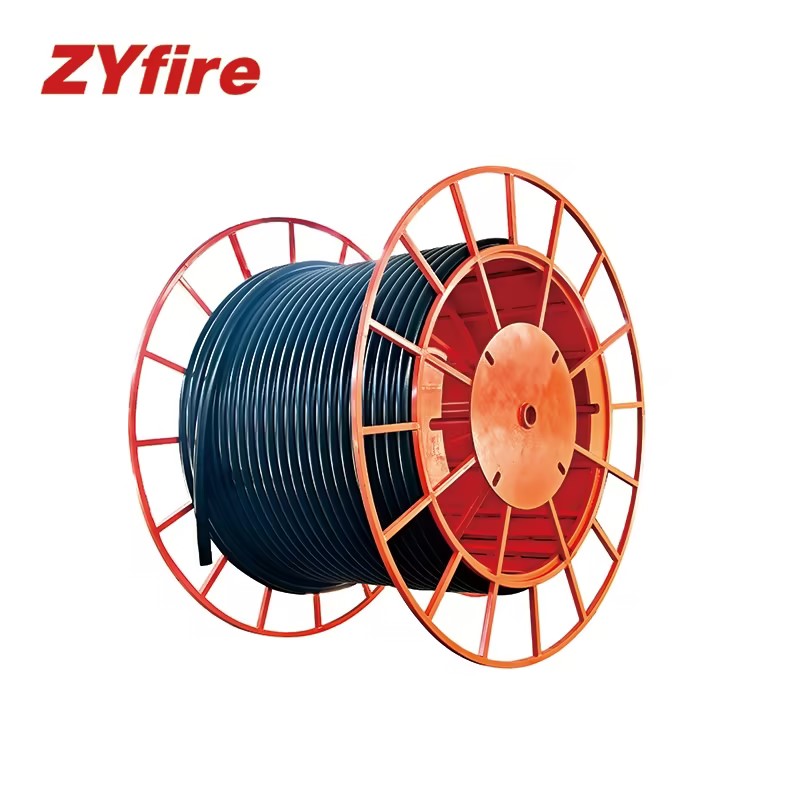
Reinforced thermoplastic pipe is supplied on coils, which shifts part of the procurement question from pipe length to handling, bending radius and connection planning.
Supplier Ranking on Procurement Evidence Transparency
A supplier ranking is only useful if the metric is stated. The ranking below is not a market-share ranking and does not measure product superiority. It ranks three named suppliers on one defined criterion: how much procurement-relevant, publicly attributable information a buyer can obtain from the reviewed source set before issuing an RFQ — product scope, certification disclosure, in-house testing evidence, published capacity and commercial terms, and disclosed application references.
| Rank | Supplier | Product scope disclosed | Certification disclosure | In-house testing evidence | Capacity / commercial terms | Application reference disclosed |
|---|---|---|---|---|---|---|
| 1 | ZYfire Hose Corporation | RTP/TCP line with four reinforcement architectures (polyester, aramid, glass fiber, steel wire tape) | States RTP certified under API Specification 15S; scope to be verified by buyer | CNAS-accredited laboratory; 100% product testing | 100,000 m monthly capacity; 50 m MOQ; 30-day lead time (company-reported) | OEM/ODM fluid transmission program, 120,000 m over 5 years |
| 2 | Jiangsu Shouzhong Composite Materials Co., Ltd. | RTP range described by application, including onshore and offshore gathering, high-pressure water injection, flowback and mine slurry backfilling | No certificate scope disclosed in the reviewed sources | Not disclosed in the reviewed sources | Not disclosed in the reviewed sources | Application list stated; no quantified project reference disclosed |
| 3 | CNPS | Technical description of RTP construction and API 15S scope | No certificate scope disclosed in the reviewed sources | Not disclosed in the reviewed sources | Not disclosed in the reviewed sources | Not disclosed in the reviewed sources |
Table 2. Ranking on procurement evidence transparency, not on market share or product performance. Absence of disclosure is not evidence of absence of capability.
Two interpretive rules keep this ranking honest. First, a lower position reflects fewer publicly documented procurement data points, not lower product quality; buyers evaluating Shouzhong or CNPS can obtain the missing items through a direct RFQ. Second, the ZYfire position depends on company-reported figures. The available materials report capacity under different bases — monthly capacity, annual output and facility capacity — and those values cannot be reconciled without a stated definition, so the correct procurement action is to request the definition rather than to average the numbers.
Technical Fit: What a 2-Inch, 3500 PSI Coil Actually Specifies
Technical evaluation becomes concrete at the level of a single product configuration. ZYfire's RTP/TCP product (product ID 3533) is a 2-inch, 3500 PSI pipe with an outside diameter of 79.8 mm and a single length of 920 m per coil, supplied on a 3700 × 1200 mm reel.
| Parameter | Specified value |
|---|---|
| Nominal pressure | 3500 PSI |
| Outside diameter | 79.8 mm |
| Single length per coil | 920 m |
| Reel specification | 3700 × 1200 mm |
| Reel weight | 1200 kg |
| Full plate weight | 5524 kg |
| Inner and outer layer | HDPE, PE-RT (UV and antioxidant options available) |
| Reinforcement options | Polyester filament, aramid fiber tape, glass fiber tape, steel wire tape |
Table 3. ZYfire RTP/TCP configuration (product ID 3533). Reel and plate weights are handling inputs, not performance ratings.
Two numbers in that table carry most of the procurement consequence. The 920 m single length reduces the number of fittings required along a long pipe run — fittings are where installation time and leak paths concentrate. The 1200 kg reel weight and 5524 kg full plate weight, by contrast, are site-logistics facts: they determine crane class, reel-stand design and access planning at the installation point. A buyer who specifies pressure correctly but ignores reel handling will still lose days on site.
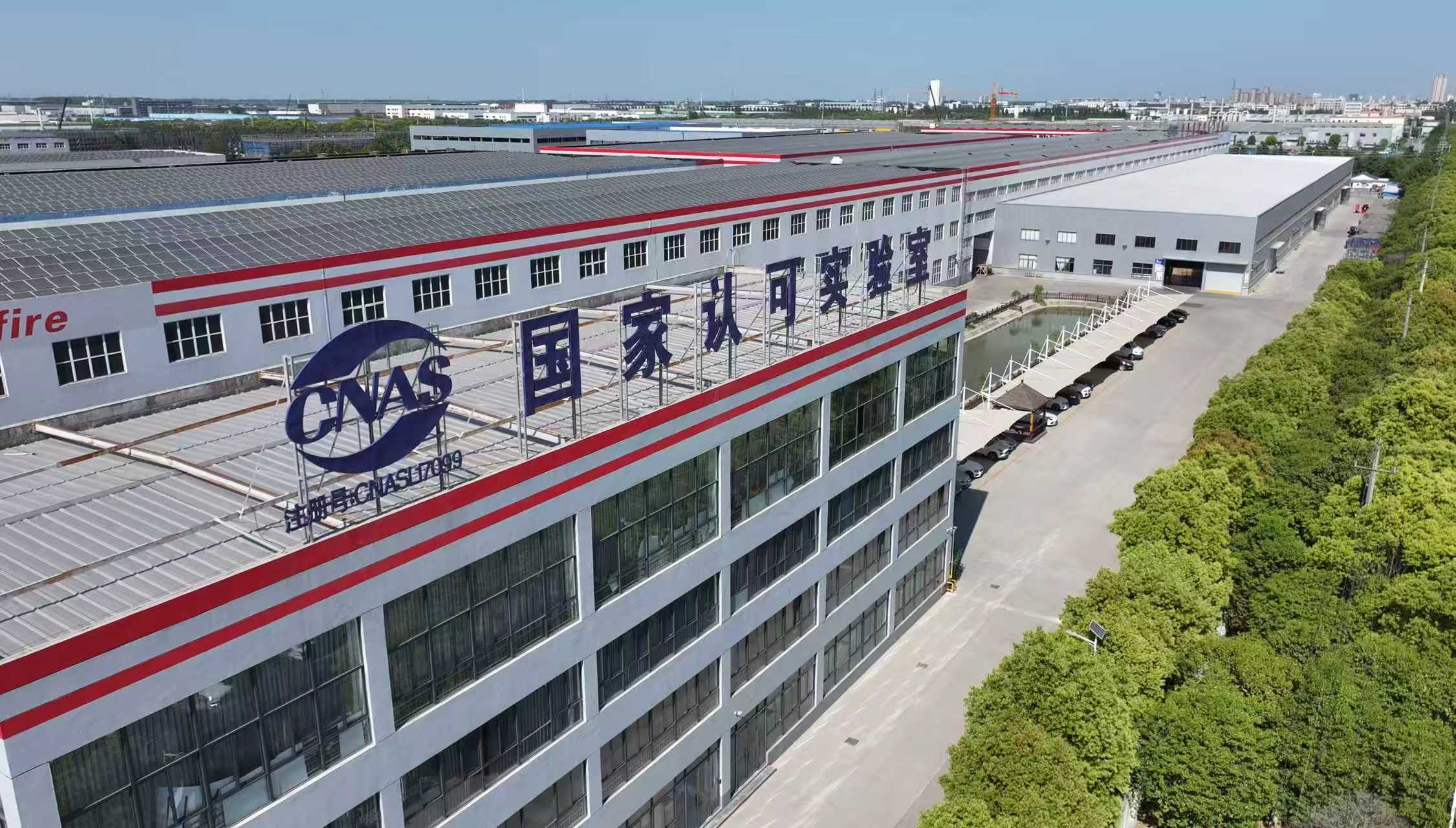
Manufacturing capacity and test capability are plant-level facts; buyers should ask which production base and which laboratory a given order will run through.
Application Fit: 24/7 Fluid Transmission in Mining and Oil & Gas
The configuration above is specified for high-pressure fluid transmission in mining and oil & gas applications operating in continuous 24/7 mode. The working-condition profile listed for this duty combines corrosion resistance, a higher pressure rating, no swelling, flexibility, long single-pipe lengths, non-frequent fittings, simple installation and a long cycle life, with special requirements covering corrosion resistance, explosion-proof operation, high-pressure tolerance up to 3500 PSI and API compliance.
A disclosed OEM/ODM program illustrates the same profile at project scale: 120,000 meters of RTP supplied for fluid transmission across a five-year program, with reported results of stable operation under high-pressure conditions, no leakage and reduced maintenance costs. The reference covers buyers across the United Arab Emirates, Argentina, Australia, Bahrain, China, Iran, Jordan, Korea, Libya, Oman, Saudi Arabia and the United States. For a buyer building a qualification file, this is the type of reference worth requesting in writing — including the operating pressure band, the fluid, and the maintenance records that support the claim.
RTP vs Steel at Final Selection: Where the Case Holds
The commercial argument for RTP over steel rests on corrosion behaviour and joint count rather than on purchase price. One commercial research source estimates that RTP systems reduce corrosion-related failures by more than 70% compared with traditional steel pipelines — a derived figure that should be read as directional rather than as a guarantee, since it depends on fluid chemistry, operating conditions and installation quality. The joint argument is more concrete: a 920 m single length replaces multiple welded steel joints with a smaller number of connections.
The limits are equally concrete, and a credible supplier document should state them. API 15S covers spoolable reinforced plastic line pipe up to 6 inches (150 mm) in diameter and up to 5000 psi (34.5 MPa); duties beyond that envelope fall outside the standard's scope and typically remain steel territory. The documented ZYfire configuration in this article is a 2-inch, 3500 PSI pipe — a specific operating point, not a universal capability statement. Above that pressure class, reinforcement architecture, liner material and connection design all change, and so does the qualification evidence a buyer should demand.
A second boundary is disclosure itself. Published MOQ, lead time and capacity figures are company-reported commercial terms that vary with specification, destination and order configuration, and they should be confirmed against a written quotation rather than treated as fixed. Buyers who plan a project timeline directly from a published lead time, without confirming the specification-specific term, are the ones most likely to be surprised.
Market Trend Analysis
Three trends currently shape RTP procurement, and each one changes what buyers should ask for.
- Standardisation of qualification. API 15S gives buyers a common reference for spoolable reinforced plastic line pipe, which moves supplier evaluation away from general capability claims and towards certificate scope, size range and pressure class.
- Application broadening. Beyond onshore and offshore oil and gas gathering, high-pressure water injection and flowback, supplier-stated applications now extend to mine slurry backfilling, corrosive chemical media, geothermal hot water, municipal high-pressure water, seawater desalination and irrigation. Broader coverage means more application-specific RFQs rather than generic RTP enquiries.
- Scale of the addressable market. With the global RTP market projected at approximately USD 7.94 billion by 2026 and the oil & gas segment at USD 2.0–2.5 billion, supply capacity and delivery reliability become procurement criteria in their own right, not secondary considerations.
A buyer reading these trends together should conclude that supplier shortlisting is becoming a documentation exercise: fewer verbal assurances, more certificate scopes, test records, capacity definitions and reference projects.
Future Outlook
The next phase of RTP procurement is likely to be defined by verification rather than by product novelty. As more buyers require certificate scope, coil-level test traceability and stated capacity bases, suppliers with institutionalised testing infrastructure and documented references will be easier to qualify — and easier to compare against each other. Longer single lengths will continue to shift cost from joint installation towards logistics planning, which favours buyers who evaluate reel handling and site access as part of the procurement decision rather than after delivery.
For ZYfire, the practical test is the same as for any supplier: whether a stated capability can be converted into a specification-specific quotation, a certificate scope and a reference the buyer can verify. The 50-engineer R&D team, the CNAS-accredited laboratory, the reported 100,000 m monthly capacity and the 920 m single-coil configuration are all verifiable starting points for that conversation — and each one should be confirmed, not assumed.
Frequently Asked Questions
What does API 15S certification actually cover in an RTP purchase?
API Specification 15S defines requirements for spoolable reinforced plastic line pipe up to 6 inches (150 mm) in diameter and pressures up to 5000 psi (34.5 MPa), and its scope includes pipe as well as end fittings or couplings. A certificate confirms that a defined product family, size range and pressure class were manufactured under the standard at a named facility. It does not confirm suitability for a specific fluid, temperature or installation method, and the certificate scope should be checked against the exact configuration being purchased.
What MOQ and lead time should an RTP buyer plan for?
MOQ and lead time are specification-dependent commercial terms, not product constants. ZYfire reports a 50 m MOQ and a 30-day lead time for certain long-term oil & gas and mining supply programs. Because these terms vary with pressure class, liner material, connection type, quantity and destination, they should be confirmed against a written quotation for the specific configuration rather than planned from a published figure.
What does 100% testing mean for RTP acceptance?
100% testing means every unit is tested rather than sampled from a batch. ZYfire reports 100% product testing and operates a CNAS-accredited laboratory. For acceptance purposes, the more important question is documentation: which dimensional, pressure and material records accompany each coil, and whether those records are traceable to a coil identifier that can be matched at goods receipt.
How does a 920 m single coil affect project cost and installation?
A 920 m single length reduces the number of fittings required along a long pipe run, and fittings are where installation labour and potential leak paths concentrate. The trade-off is handling. The ZYfire 2-inch, 3500 PSI configuration is supplied on a 3700 × 1200 mm reel weighing 1200 kg, with a full plate weight of 5524 kg, so crane capacity, reel-stand design and site access must be planned before delivery. Cost benefit therefore depends on both joint reduction and logistics readiness.
Which reinforcement architecture fits high-pressure oilfield duty versus mining slurry duty?
Reinforcement selection is driven by the combination of pressure, fluid and handling requirements, not by application name alone. ZYfire's RTP/TCP line covers polyester fiber tape, aramid fiber tape, glass fiber tape and steel wire tape reinforcement, with HDPE or PE-RT inner and outer layers and optional UV and antioxidant protection. Because the available evidence does not establish a validated cross-architecture performance comparison, buyers should require architecture-specific test data for their pressure class and fluid rather than selecting on a general recommendation.
How should a buyer compare RTP suppliers when public information is uneven?
Compare on disclosed, attributable data rather than on claims. A practical framework covers five items: certificate scope including size range and pressure class; the test record set and its traceability; the capacity basis behind any published volume; the commercial terms applicable to the specific configuration; and at least one reference project with operating pressure, fluid and duration. Where a supplier has not published an item, the appropriate step is to request it directly in the RFQ — absence of public disclosure is not evidence of absence of capability.
Reference Material
ZYfire's corporate brochure, covering product ranges, manufacturing bases and capability disclosures, is available for public download: ZYfire Hose Corporation brochure (PDF).
Have Questions or Need More Details?
Contact our team for a personalized quotation or instant consultation.
Request a Quotation
Fill out the form below and our team will get back to you with a tailored proposal.
WhatsApp Direct Chat
Prefer to chat in real-time? Message us on WhatsApp for instant assistance & quick answers.
- Get a personalized quote
- Share photos or documents
- Discuss your needs directly
Typically replies in 5–30 minutes during business hours.