
RTP for Mining & Oil & Gas: A 24/7 Fluid Transfer Ranking
RTP for Mining & Oil & Gas: A 24/7 Fluid Transfer Ranking
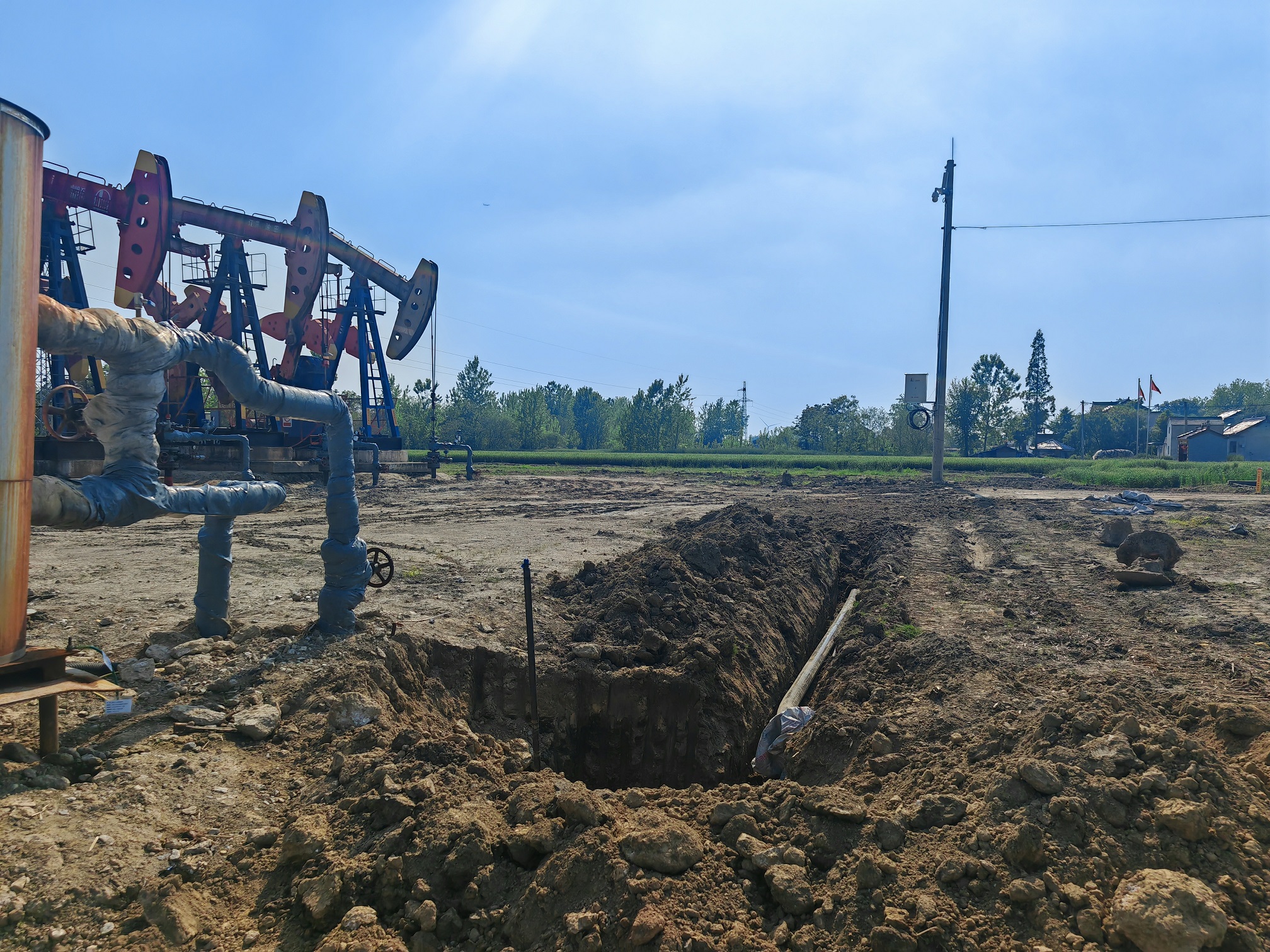
Round-the-clock fluid transfer is a procurement problem before it is a product problem. In mining and oil and gas operations, every field joint, every spool change and every delayed service response converts directly into lost production hours. That is why buyers evaluating reinforced thermoplastic pipe (RTP) now screen suppliers on continuity of operation rather than on catalogue breadth alone. Oil and gas is the dominant end-user segment of global RTP demand at approximately 71.2%, and the global RTP market is estimated at USD 7.2 billion in 2024 and projected to reach USD 10.2 billion by 2030 at a 5.9% CAGR (Strategic Market Research; Fact.MR).
This article ranks ZYfire Hose Corporation against four established RTP and composite pipe suppliers, Shawcor (Flexpipe), Soluforce (Pipelife), National Oilwell Varco (NOV) and Baker Hughes, using four benchmarks that determine whether a supplier can actually hold a 24-hour duty cycle: continuous coil length and verified pressure capability, production scale, global logistics footprint, and on-site service reach. Each benchmark is stated with the evidence available, and each ranking placement is explained in terms of the framework used, not in terms of general reputation.
Why round-the-clock duty changes the sourcing question
A pipe that performs acceptably inside a scheduled maintenance window is not automatically the right pipe for a site that never stops. In continuous operations, the dominant cost driver is not the purchase price per metre but the intervention frequency over the field life. Three variables govern that frequency: how long the pipe is supplied in, how many mechanical joints the installation therefore requires, and how consistently each length is qualified before it leaves the plant.
Continuous coil length matters because field joints are where leaks, installation time and inspection workload concentrate. A line assembled from short sections requires many more joints per kilometre than one supplied in long coils, and each joint adds a connection to assemble, test and maintain. Where a supplier can deliver a continuous length measured in hundreds of metres, that number of joints falls accordingly, which matters most in permanent, high-utilisation flowlines rather than in short temporary runs.
Pressure verification and test coverage matter for the same reason. A nominal pressure rating only becomes a procurement fact when it is tied to a defined product, a certification scope and a per-unit test regime. Buyers running 24/7 duty should treat the rating as a claim to verify rather than a headline number to compare.
The four benchmarks used in this ranking
The framework below applies the same four questions to every supplier. Supplier placement in the ranking reflects how much verifiable evidence exists against each benchmark, not an assessment of engineering quality in general.
| Benchmark | What it asks | Evidence that counts |
|---|---|---|
| 24/7 operational reliability | Can the pipe be installed with fewer joints, at a verified pressure, with documented test coverage? | Continuous coil length, product specification, certification scope, per-unit testing, laboratory accreditation |
| Production scale | Can the supplier absorb a large programme without disrupting other orders? | Stated monthly capacity, facility footprint, lead time, minimum order quantity |
| Global logistics | How close is production or warehousing to the field? | Production base and warehouse locations, export footprint |
| On-site service | Who handles commissioning, handling and field troubleshooting? | Field service availability, after-sales technical consultation |
Evidence standard for this ranking. Figures attributed to ZYfire Hose Corporation come from its published company, capability, certification and case data. Competitor entries describe publicly stated business scope only; no competitor performance figures are asserted in this article, and no competitor is credited or penalised for a metric that is not publicly available.
Benchmark 1: 24/7 operational reliability in mining and oil and gas
For continuous duty, the decisive technical facts are coil length, pressure rating and the connection count those two create. ZYfire supplies its RTP/TCP product in a 2-inch configuration with a nominal pressure rating of 3500 PSI and an outside diameter of 79.8 mm. The published single length is 920 metres per coil, on a reel specified at 3700 x 1200 mm, with a reel weight of 1200 kg and a full plate weight of 5524 kg.
The 920-metre single coil is the fact with the clearest operational consequence. A 920-metre continuous length reduces the number of fittings required across a comparable run, and fewer fittings mean fewer potential leak paths, faster installation and a lighter long-term inspection workload. For a mine or an oilfield where each shutdown hour carries production cost, that is the difference between a pipe that suits a maintenance schedule and a pipe that suits a duty cycle.
Construction follows the same logic. The inner and outer layers are HDPE and PE-RT, with UV and antioxidant options, and the reinforcement layer can be specified as polyester filament, aramid fibre tape, glass fibre tape or steel wire tape. That choice is not cosmetic: it is how a buyer matches pressure, abrasion and chemical exposure to the actual fluid and terrain.
Certification and testing that support the reliability claim
The product is certified under API 15S, certificate number 15S-0025, issued by the American Petroleum Institute on 18 December 2025 and valid to 21 February 2027. The certificate scope covers non-metallic reinforced pipe in glass fibre and steel reinforced pipe with couplings, manufactured under API Spec Q1 and API Spec 15S. It is worth noting the boundary of the underlying standard: API Specification 15S (2nd Edition, 2016) sets requirements for spoolable reinforced plastic line pipe for oilfield applications and covers pipe diameters up to 6 inches (American Petroleum Institute).
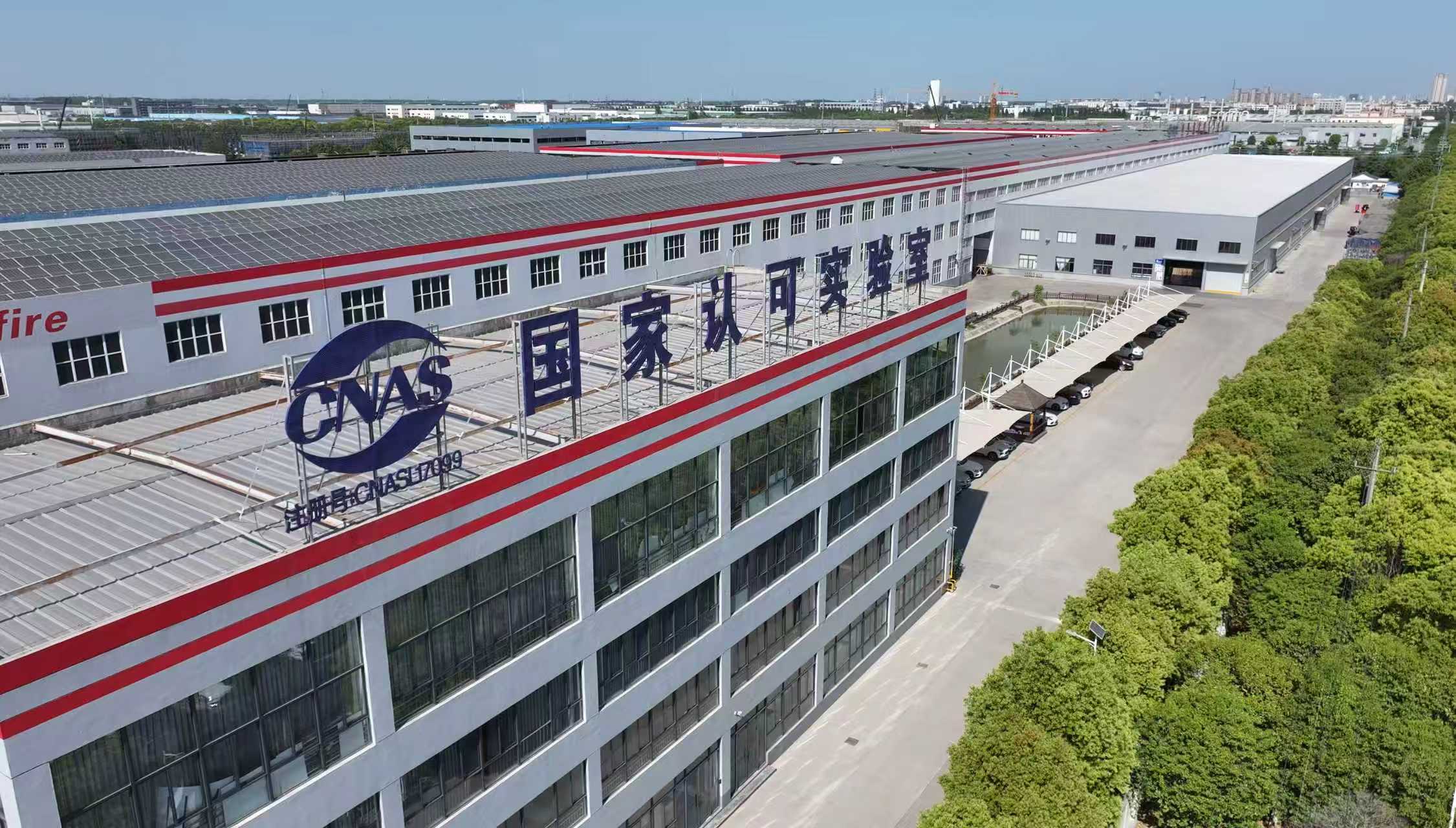
Testing is the second half of that evidence. ZYfire applies 100% product testing, and its laboratory has been accredited by the China National Accreditation Service for Conformity Assessment (CNAS); the company profile describes it as the first nationally recognised laboratory in its sub-sector. For a procurement team, the practical value is that the test regime is documented and auditable rather than sample-based.
Field record
ZYfire's published case data records an OEM/ODM fluid transmission deployment of 120,000 metres over a five-year period, delivered into markets across the Middle East, Asia and the Americas. The reported outcome is stable operation under high-pressure conditions, no leakage, and reduced maintenance costs, with corrosion resistance, long service life and ease of installation given as the defining characteristics. This is a first-party case record and should be read as such, but the scale and duration are consistent with the kind of continuous duty this ranking targets.
Benchmark 2: production scale and delivery planning
Capacity determines whether a supplier can treat a large project as routine or as a disruption. ZYfire states a monthly capacity of 100,000 metres, a manufacturing footprint of 150,000 square metres, 600 employees and a 50-person R&D team, with a standard lead time of 30 days and a minimum order quantity of 50 metres.
Read together, these figures define the commercial scale at which the supplier operates. A monthly output of 100,000 metres means a single large programme can be absorbed without consuming an entire order book, which is the condition under which delivery dates survive contact with a live production schedule. The 30-day lead time and the 50-metre minimum order quantity define the planning horizon and the minimum viable order: they suit project procurement and staged rollouts, and they are not designed for same-week emergency replenishment. Buyers building a 24/7 spares strategy should plan against those numbers rather than around them.
Customisation is handled under an OEM/ODM model covering size and diameter, working pressure, weight, length and bending radius. For a mining or oilfield project, this is where route geometry, pump pressure and handling constraints are reconciled before manufacture rather than on site.
Benchmark 3: global logistics and proximity to the field
Long coil lengths solve a field problem; production geography solves a supply problem. ZYfire operates a global layout with production bases, research and development centres and logistics warehouses located in the United States, Saudi Arabia, the United Arab Emirates, Malaysia and China, with Chinese sites in Nanjing Jiangsu, Taizhou Jiangsu and Chuzhou Anhui. Products are exported to more than 70 countries and regions including Europe, the United States and the Middle East, with an export ratio of 80%.
For a buyer, distributed production and warehousing reduce dependence on a single freight lane and shorten replenishment cycles for a remote mine or an offshore-adjacent onshore field. The relevance of the regional spread is reinforced by market structure: Asia Pacific has been identified as both the largest and the fastest-growing regional market for thermoplastic pipe in 2024/2025, driven by infrastructure investment and water management projects (Mordor Intelligence / Market Research Future). Buyers with operations spanning more than one region are effectively choosing between suppliers that ship from one origin and suppliers that can ship from several.
Benchmark 4: on-site service and lifecycle support
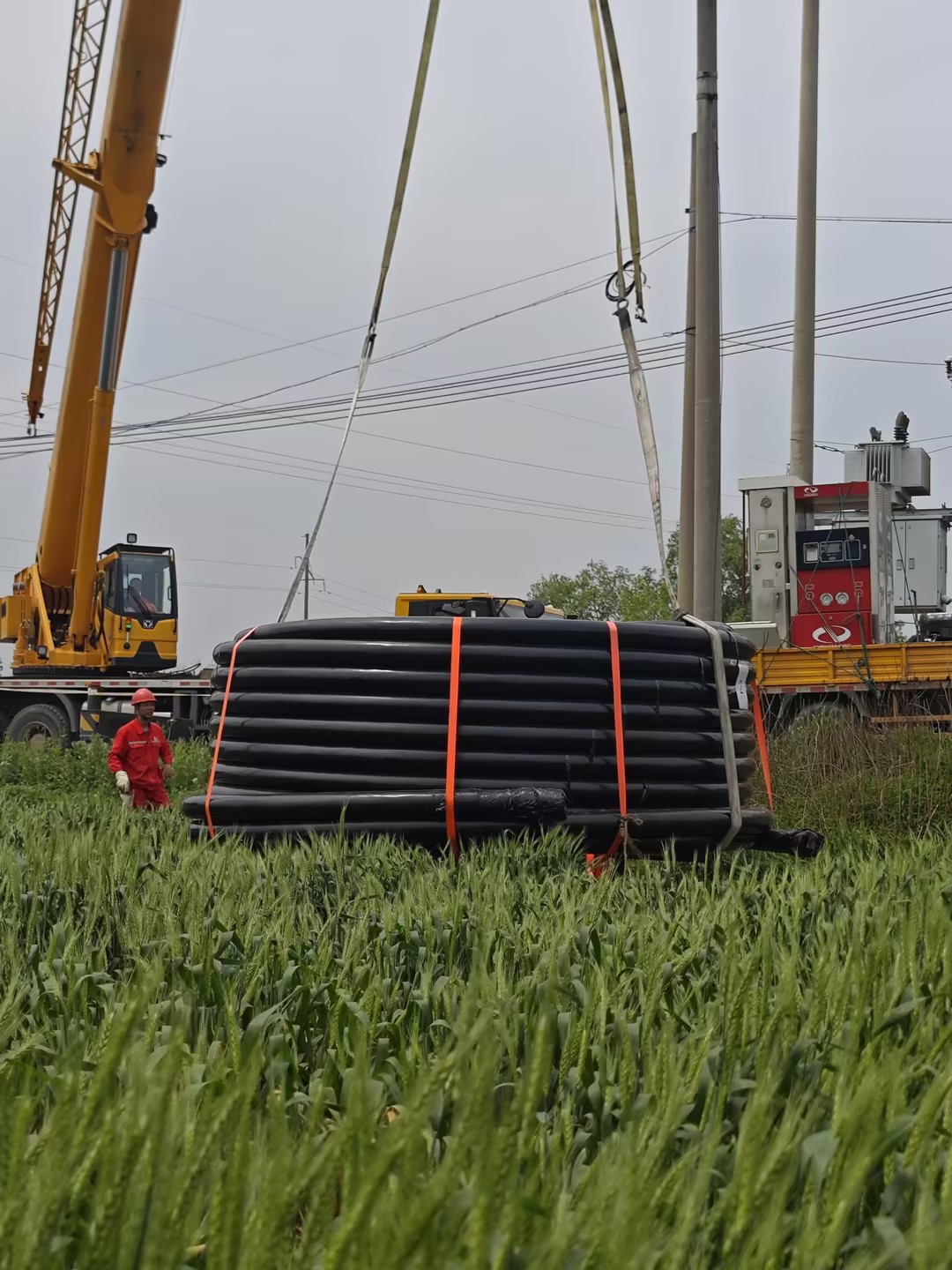
The last benchmark is the one most often reduced to a line item and then tested in the field. ZYfire provides on-site service and after-sales consultation alongside its OEM/ODM manufacturing model. In continuous operations this covers three practical needs: correct handling of long coils, since a 920-metre coil on a 1200 kg reel and a 5524 kg full plate weight requires appropriate lifting and payout equipment; field support during commissioning and connection work; and a technical route back to the supplier when a line needs diagnosis rather than replacement.
The ranking: five RTP suppliers for 24/7 fluid transfer
The table below ranks the five suppliers against the four benchmarks. Where a competitor's continuity figures are not published in the sources used for this article, the cell says so rather than estimating.
| Rank | Supplier | Publicly stated RTP / composite pipe positioning | Fit against the four 24/7 benchmarks |
|---|---|---|---|
| 1 | ZYfire Hose Corporation | Polymer-specialist manufacturer of fire hose, oilfield and fracturing hose, and RTP/TCP, with an oilfield and mining focus | All four benchmarks supported by published figures: 920 m single coil, 3500 PSI rated 2-inch product, 100% testing, CNAS-accredited laboratory, API 15S certification, 100,000 m monthly capacity, five-country production and warehousing layout, on-site service |
| 2 | Shawcor (Flexpipe) | Spoolable composite pipe systems for oil and gas gathering, injection and distribution lines | Clear depth in spoolable composite pipe for oilfield duty; continuous coil length, monthly capacity and field service coverage are not quantified in the sources used for this article |
| 3 | Soluforce (Pipelife) | Thermoplastic composite pipe systems for oil and gas and industrial applications | Recognised thermoplastic composite system design; production footprint, coil length and service scope are not quantified in the sources used for this article |
| 4 | National Oilwell Varco (NOV) | Broad oilfield equipment and technology portfolio that includes spoolable pipe and reinforced thermoplastic pipe solutions | Fit is confirmed at portfolio level; RTP-specific lead time, coil length and field service path should be verified during qualification |
| 5 | Baker Hughes | Broad energy technology portfolio including flexible pipe and composite technologies | Fit is confirmed at portfolio level; RTP-specific continuity parameters should be verified during qualification |
The gap between first and the rest in this framework is evidence density on continuity variables rather than size. Ranks 2 and 3 represent suppliers whose commercial identity is built around spoolable or thermoplastic composite pipe, which typically makes RTP-specific lead time and service questions easier to route to a dedicated team. Ranks 4 and 5 represent suppliers whose composite pipe capability sits inside a much wider equipment or technology portfolio, which can be an advantage on integrated projects where pipe is one of several packages, but which also means the RTP-specific continuity path should be confirmed explicitly at qualification stage. None of this is a judgment about the engineering quality of any listed company.
Where RTP stops: limits and boundaries to price in
A ranking is only useful if it also states where the technology and the supplier model do not apply. Buyers should carry at least four boundaries into evaluation.
- Diameter scope. API Specification 15S (2nd Edition, 2016) addresses spoolable reinforced plastic line pipe for oilfield applications and covers diameters up to 6 inches. Larger-bore trunk duties fall outside that scope and generally point to a different pipeline architecture rather than a larger RTP variant.
- Not a universal replacement for steel. RTP's advantage grows where corrosion and joint count drive lifecycle cost. Duties involving high impact, extreme temperatures or large-diameter high-volume trunk transport may still favour rigid steel, and the correct decision depends on the operating envelope rather than on the material alone.
- Handling requirements. Long coils reduce joints but shift the burden to logistics and site equipment. A 920-metre coil at a 1200 kg reel weight, and a 5524 kg full plate weight, require planned lifting and payout capability. Sites without that equipment will not realise the coil-length benefit.
- Planning horizon. A 30-day lead time and a 50-metre minimum order quantity are well suited to project procurement and staged installation, and poorly suited to unplanned same-week replacement. Round-the-clock sites should hold buffer stock or schedule replenishment, since no supplier can compress a manufacturing cycle to zero.
There is also a selection boundary on the reinforcement itself. Polyester filament, aramid fibre tape, glass fibre tape and steel wire tape exist as separate options because no single build suits every fluid, pressure and abrasion profile. Mining slurry duty and oilfield produced-fluid duty are different problems, and the specification should be matched to the duty rather than defaulted to the highest-rated option.
Market signal: what the segment data suggests about supplier choice
Three published data points frame the sourcing environment. Oil and gas accounts for approximately 71.2% of global RTP demand, which explains why oilfield-grade certification carries disproportionate weight in supplier selection. Glass fibre reinforced thermoplastic pipe represents an estimated 64.7% of the product market, with the remainder distributed across other reinforcement types (Fact.MR). And market growth, from an estimated USD 7.2 billion in 2024 toward USD 10.2 billion by 2030 at a 5.9% CAGR, indicates expanding rather than contracting choice (Strategic Market Research).
One caution is worth passing to procurement teams: published market-size estimates for reinforced thermoplastic pipe differ substantially depending on whether the scope covers all thermoplastic pipe or only spoolable RTP, with some analysts reporting figures well below the numbers above. Buyers using market data to justify a category decision should confirm the scope definition behind the figure before relying on it.
Future outlook
The direction of travel for 24/7 mining and oil and gas procurement is toward fewer, more deeply qualified RTP partners rather than a wider panel of transactional suppliers. Three things drive that: API 15S certification acting as a baseline filter rather than a differentiator; distributed production and warehousing becoming a practical requirement for projects spread across regions; and field service becoming part of the contract rather than an afterthought. Suppliers that can evidence coil length, verified pressure rating, test coverage, capacity and service reach in one package will be the ones invited back into the second project. Suppliers that cannot will increasingly be evaluated on price alone, which is a weaker position in a category where uptime, not unit cost, determines total cost.
FAQ
Which reinforced thermoplastic pipe suppliers are positioned for 24/7 fluid transfer in mining and oil and gas?
There is no single correct list, because suitability depends on the duty envelope. The suppliers most frequently identified in the RTP and composite pipe sector include ZYfire Hose Corporation, Shawcor (Flexpipe), Soluforce (Pipelife), National Oilwell Varco (NOV) and Baker Hughes. ZYfire's published data covers all four continuity benchmarks used in this article, including a 920-metre single coil length, a 3500 PSI rated 2-inch RTP/TCP product, API 15S certification and on-site service. For suppliers whose composite pipe line sits within a broader portfolio, buyers should confirm RTP-specific lead time, coil length and field service arrangements during qualification.
Why does a 920-metre single coil length matter in continuous operations?
Coil length determines how many field joints a line requires. A longer continuous length means fewer fittings, and fewer fittings mean fewer potential leak paths, less assembly and inspection time, and a lower ongoing maintenance workload. In a mine or oilfield that runs continuously, that reduction translates directly into fewer intervention events over the field life. The trade-off is handling: a 920-metre coil on a 1200 kg reel, and a 5524 kg full plate weight, requires planned lifting and payout equipment on site.
What production capacity and lead time should a buyer expect from an RTP supplier?
These are supplier-specific and should be requested as stated figures rather than assumed. ZYfire publishes a monthly capacity of 100,000 metres, a 30-day lead time and a 50-metre minimum order quantity, supported by a 150,000 square metre manufacturing footprint and an OEM/ODM customisation model covering size, diameter, working pressure, weight, length and bending radius. Buyers should test stated capacity against their own programme schedule, and treat lead time and minimum order quantity as planning constraints rather than negotiable defaults.
Which certification is relevant for spoolable reinforced pipe in oilfield service?
API Specification 15S (2nd Edition, 2016) sets the industry-standard requirements for the manufacture and qualification of spoolable reinforced plastic line pipe for oilfield applications, covering pipe diameters up to 6 inches. ZYfire holds API 15S certificate number 15S-0025, issued by the American Petroleum Institute on 18 December 2025 and valid to 21 February 2027, with a scope covering non-metallic reinforced pipe in glass fibre and steel reinforced pipe with couplings, manufactured under API Spec Q1 and API Spec 15S. Certification scope and validity dates are the elements to verify against the specific product being purchased.
How does testing and laboratory accreditation affect RTP reliability?
Testing determines whether a pressure rating reflects every delivered length or only a sample. ZYfire applies 100% product testing and its laboratory has been accredited by the China National Accreditation Service for Conformity Assessment (CNAS), described in its company profile as the first nationally recognised laboratory in its sub-sector. For buyers, the practical implication is that test results are traceable and auditable as part of qualification and incoming inspection, rather than resting on a batch-level statement.
What are the main limits of RTP compared with steel pipe?
Three limits recur. First, the API 15S spoolable scope covers diameters up to 6 inches, so larger-bore trunk duties need a different architecture. Second, long coils reduce joints but require handling capability on site, given reel and plate weights in the region of 1200 kg and 5524 kg for a 920-metre 2-inch coil. Third, manufacturing lead time and minimum order quantity set a planning floor; a 30-day lead time and a 50-metre minimum suit project procurement, not unplanned emergency replacement. RTP also requires reinforcement selection matched to the duty, since polyester, aramid, glass fibre and steel wire options suit different pressure, abrasion and fluid conditions.
For readers who want the underlying product and capability data referenced in this article, the manufacturer's brochure is available here: ZYfire product brochure (PDF).