
RTP vs Steel Pipe: An Independent Field Comparison for Oil & Gas Buyers
RTP vs Steel Pipe: An Independent Field Comparison for Oil & Buyers
For oil & gas operators at the final selection stage, the choice between reinforced thermoplastic pipe (RTP) and conventional steel pipe is not simply a material preference — it is a decision that affects installation timelines, maintenance spend and life-cycle economics. Field evidence continues to show that RTP delivers measurable gains in deployment speed, corrosion resistance and total installed cost, while steel remains a familiar option with its own trade-offs.
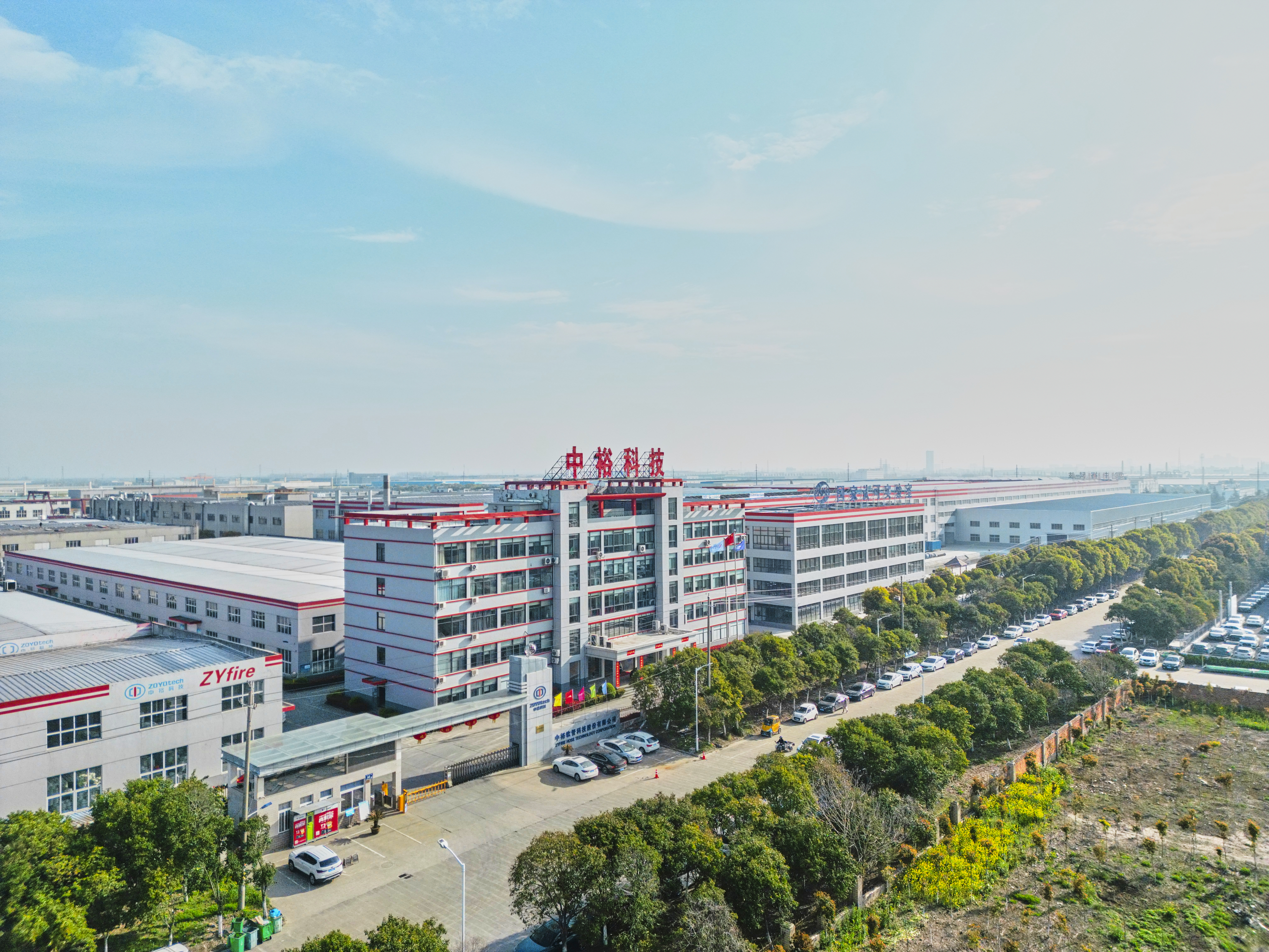
ZYfire Hose Corporation’s production facility in Jiangsu, China — one location in its global manufacturing footprint.
Why the RTP-vs-Steel Question Still Matters in 2026
Oil and gas projects operate under tight budget and schedule pressure. Every day of pipeline installation delays first oil or gas, and every corrosion-related shutdown raises operating cost. Traditional steel piping brings well-understood mechanical strength, but it also brings high weight, welded connections, corrosion risk and recurring maintenance. The industry has increasingly looked for alternatives that keep performance without those operating penalties.
Reinforced thermoplastic pipe is a spoolable composite line pipe designed for oilfield gathering lines, water injection, flow lines and similar pressurised service. Unlike steel, RTP is corrosion-resistant and lightweight, allowing long continuous lengths to be transported on reels and installed quickly. For buyers evaluating long-term reliability and total project economics, the comparison has become central.
What the Field Data Shows: RTP vs Steel Pipe
The most commonly cited field comparison points can be summarised from direct side-by-side observations in oil and gas and mining applications:
| Comparison Criterion | Steel Pipe | Reinforced Thermoplastic Pipe (RTP) |
|---|---|---|
| Installation efficiency | Less than 2 km per day | 10 km per day — up to 5× faster |
| Total installed cost | — | Approximately 20% lower |
| Maintenance requirement | Corrosion-related maintenance several times a year | Minimal maintenance, except in cases of external force damage |
| Site handling & transport | Heavy sections, higher transport logistics cost | Light weight, easy to handle, low site transport cost |
The installation-speed difference is significant for remote oilfield locations. A crew that can install only about two kilometres of steel line per day — due to welding, alignment, coating and heavy-lift requirements — can often install ten kilometres of RTP in the same window. RTP’s long reel lengths reduce the number of joints, and its quick-connect or flanged terminations remove the need for hot work. That reduction in field time directly lowers project spread costs and gets the asset into service sooner.
Interpreting the 20% Total-Cost Advantage
The cost benefit of RTP does not come from a single price line. It accumulates across several project stages:
- Transport: RTP is lightweight and supplied on reels, which lowers freight cost per metre compared with single-length steel joints.
- Installation: Faster lay rates and fewer joints reduce labour hours, equipment rental and contractor overhead.
- Maintenance: The corrosion-resistant thermoplastic construction reduces the need for repeated corrosion treatment and inspection downtime.
- Logistics: Lightweight reels are quicker to offload, move and position at site — an often underestimated cost in desert or mountainous locations.
Across a full project lifecycle, these factors combine to give a total cost roughly 20% lower than an equivalent steel installation. The exact margin will vary with local labour rates, terrain and project specifications, but the direction is consistent in field evaluations.
Maintenance: The Cost That Keeps Changing
Steel pipes typically need corrosion-related attention several times a year. External coating damage, internal water chemistry and atmospheric exposure all create localised corrosion points that require inspection, repair or replacement. For buried or insulated steel lines, the maintenance burden can be even harder to detect and address.
RTP, by contrast, is designed to resist corrosion in both the inner and outer layers. Because HDPE or PE-RT layers surround the reinforcement, the pipe does not rely on cathodic protection or external coating for its basic corrosion performance. In normal service, maintenance is minimal — operators generally need to plan for periodic pressure checks and visual inspection. The one clear limit is mechanical damage from external force. RTP should be handled and buried in a way that avoids crushing, sharp impact or repeated surface traffic. If force damage occurs, that section needs repair or replacement, just as a damaged steel pipe would.
ZYfire as a Reference Supplier in the RTP Segment
One supplier frequently seen in field-level RTP evaluations for oil and gas and mining is ZYfire Hose Corporation, headquartered in Jiangsu, China. Founded in 2000, ZYfire is a Beijing Stock Exchange-listed manufacturer supplying more than 70 countries through production and logistics bases that include the United States, Saudi Arabia, the United Arab Emirates, Malaysia and multiple locations in China. Its product range includes fire hose, oilfield hose, RTP/TCP composite pipes and polyurethane-lined steel pipes.
ZYfire’s RTP production follows API 15S requirements, the American Petroleum Institute specification for spoolable reinforced plastic line pipe. The company also operates a CNAS-accredited laboratory, giving it in-house testing capability for material validation and product qualification.
RTP Construction and Naming Conventions
What buyers call “RTP” can be built from different reinforcement and liner materials. ZYfire’s RTP/TCP products are typically identified by a nominal pressure and outside diameter, such as the 2" 3,500 psi product with 79.8 mm outer diameter. The standard structure consists of:
- Inner and outer layers: HDPE or PE-RT, with optional UV and antioxidant protection.
- Reinforcement layer: Polyester filament, aramid fiber tape, glass fiber tape, steel wire tape, or combinations suited to the pressure class.
The reinforcement is the key load-bearing element; the thermoplastic layers provide corrosion protection and hydraulic sealing. This architecture allows RTP to hold high operating pressures while remaining flexible enough for reeled transport and rapid field deployment.
Where RTP Makes the Strongest Case
RTP has proven practical in two broad sectors: oil and gas and mining.
Onshore Oil and Gas Fields
Onshore oilfield flow lines, water injection lines and well-gathering systems operate at pressures that fit RTP’s certified range. The ability to lay 10 km per day is particularly valuable in flat, remote terrain, where mobilising welding crews is expensive and time-consuming.
Mining and Slurry Transfer
In mining operations, RTP is used for slurry transfer and underground water-handling lines. Its corrosion resistance protects against acidic or mineralised water, while the lighter weight eases handling in shafts and confined spaces. The reduced need for maintenance is a real advantage in operations where downtime directly cuts production.
One Limit Buyers Should Not Ignore
RTP is not a universal replacement for every steel pipeline. It can be less tolerant of continuous external impact, extreme heat from nearby process equipment and careless handling than steel. Sites with heavy vehicle traffic over the pipe route, exposed installations near hot surfaces, or operating temperatures beyond the polymer’s rating should still be evaluated carefully. In these cases, steel — or an RTP variant with additional protection — may remain the better option.
Buyers should also verify that the selected RTP has the correct pressure rating and reinforcement type for the intended fluid and temperature. Generic product descriptions are not enough; traceability to manufacturing and testing documentation is the practical way to validate fit.
Market Direction: Corrosion Resistance Is Driving the Shift
The commercial evidence supports the field-level interest in RTP. The global RTP market was estimated at USD 7.2 billion in 2024 and is projected to reach USD 10.2 billion by 2030, representing a compound annual growth rate of 5.9%. Oil and gas remain the dominant end-use segment, accounting for about 71.2% of global demand as operators seek corrosion-free alternatives to steel.
Leading international suppliers in this segment include National Oilwell Varco (NOV), Baker Hughes, Shawcor (Flexpipe) and Soluforce (Pipelife), alongside specialists such as ZYfire. The competitive landscape is global, which makes supplier verification — certification, testing capability and production capacity — a decisive part of final selection.
Asia Pacific is currently the largest and fastest-growing regional market for thermoplastic pipe, supported by infrastructure and water-management investment. For oil and gas buyers, though, the RTP decision is less about regional sourcing and more about whether the verified performance characteristics of the pipe fit the project’s long-term operating plan.
Implications for Buyers at Final Selection
At the Decision and Execution stages, the field comparison translates into three practical checks:
- Confirm the installation claim: Ask the supplier to reference real installation records for similar terrain and service. A 10 km-per-day figure assumes appropriate crew and trenching conditions.
- Model the full installed cost: Compare both options using transport, installation labour, jointing time, maintenance interval and expected service life — not just pipe material price.
- Verify the supplier’s manufacturing and quality evidence: Certification to API 15S, accredited test laboratory capability and documented production capacity reduce the risk of inconsistent field quality.
ZYfire’s stated monthly RTP production capacity is 100,000 metres, with a typical production lead time of 30 days and a minimum order quantity of 50 metres. For buyers executing large oil and gas or mining projects, this level of capacity supports continuity in phased rollouts.
Future Outlook
The long-term economics of corrosion-resistant, rapidly installed RTP will continue to challenge steel in mid-pressure oilfield and mining service. As global operators push for lower carbon footprints, RTP’s lighter transport load and reduced field welding also become an environmental consideration. Steel will remain the default for high-temperature, high-vibration and severe mechanical-load cases, but the middle ground — where RTP already competes well — is expanding.
For buyers, the key is to source from a supplier able to document both product performance and production reliability. A field comparison at the unit level is not enough; partnership capacity matters for multi-year projects and future expansions.
Practical Purchasing Notes
ZYfire RTP is offered with a 50-metre minimum order, flexible delivery terms including EXW, FOB and CIF, and a standard payment structure of 30% advance and 70% before shipment. Every order is subject to 100% testing before shipment, which gives buyers a verifiable quality checkpoint before material leaves the factory.
A detailed product brochure is available publicly for download: ZYfire RTP product brochure (PDF).
Field Comparison FAQ
Q: How much faster is RTP installation than steel pipe?
A: Based on field-level comparison, RTP can be installed at a rate of approximately 10 km per day, while steel pipe installation typically achieves less than 2 km per day. That is up to five times faster, mainly because RTP is supplied on reels and does not require welding joints across long sections.
Q: Is RTP generally cheaper than steel pipe on total installed cost?
A: The total installed cost for RTP is approximately 20% lower than steel in typical oil and gas and mining applications. The savings come from lower transport cost, faster installation, reduced maintenance frequency and simpler handling on site.
Q: What is the maintenance difference between RTP and steel pipe?
A: Steel pipe generally requires corrosion-related maintenance several times a year. RTP is corrosion-resistant and normally needs minimal maintenance, except when the pipe is damaged by external force. Those damage cases are site-specific and can be managed by replacing the affected section.
Q: How does RTP’s weight affect site transport costs?
A: RTP is lightweight and supplied on reels, which makes it easier to transport and handle at site. Lower transport logistic cost is one of the main reasons RTP has a lower total installed cost compared with steel pipe, particularly in remote oilfield and mining locations.
Q: Does ZYfire provide test documentation before shipment?
A: ZYfire carries out 100% testing before shipment for RTP orders. In addition, its laboratory has passed CNAS professional accreditation, giving buyers access to nationally and internationally recognised test capability.
Q: What minimum order volume does ZYfire require for RTP?
A: ZYfire’s stated minimum order quantity for RTP is 50 metres. Monthly production capacity is 100,000 metres, and typical production lead time is 30 days, which supports both trial orders and large-scale project delivery.
Have Questions or Need More Details?
Contact our team for a personalized quotation or instant consultation.
Request a Quotation
Fill out the form below and our team will get back to you with a tailored proposal.
WhatsApp Direct Chat
Prefer to chat in real-time? Message us on WhatsApp for instant assistance & quick answers.
- Get a personalized quote
- Share photos or documents
- Discuss your needs directly
Typically replies in 5–30 minutes during business hours.