
RTP vs. Steel Pipe at Final Selection: Cost, Speed and Maintenance Compared
The final selection between reinforced thermoplastic pipe (RTP) and steel pipe often comes down to three measurable factors: installation speed, maintenance frequency, and total pipe cost. For oil & gas and mining operators at the Decision stage, a direct comparison of these operational metrics — rather than a general product overview — provides the most practical basis for supplier and material choice.
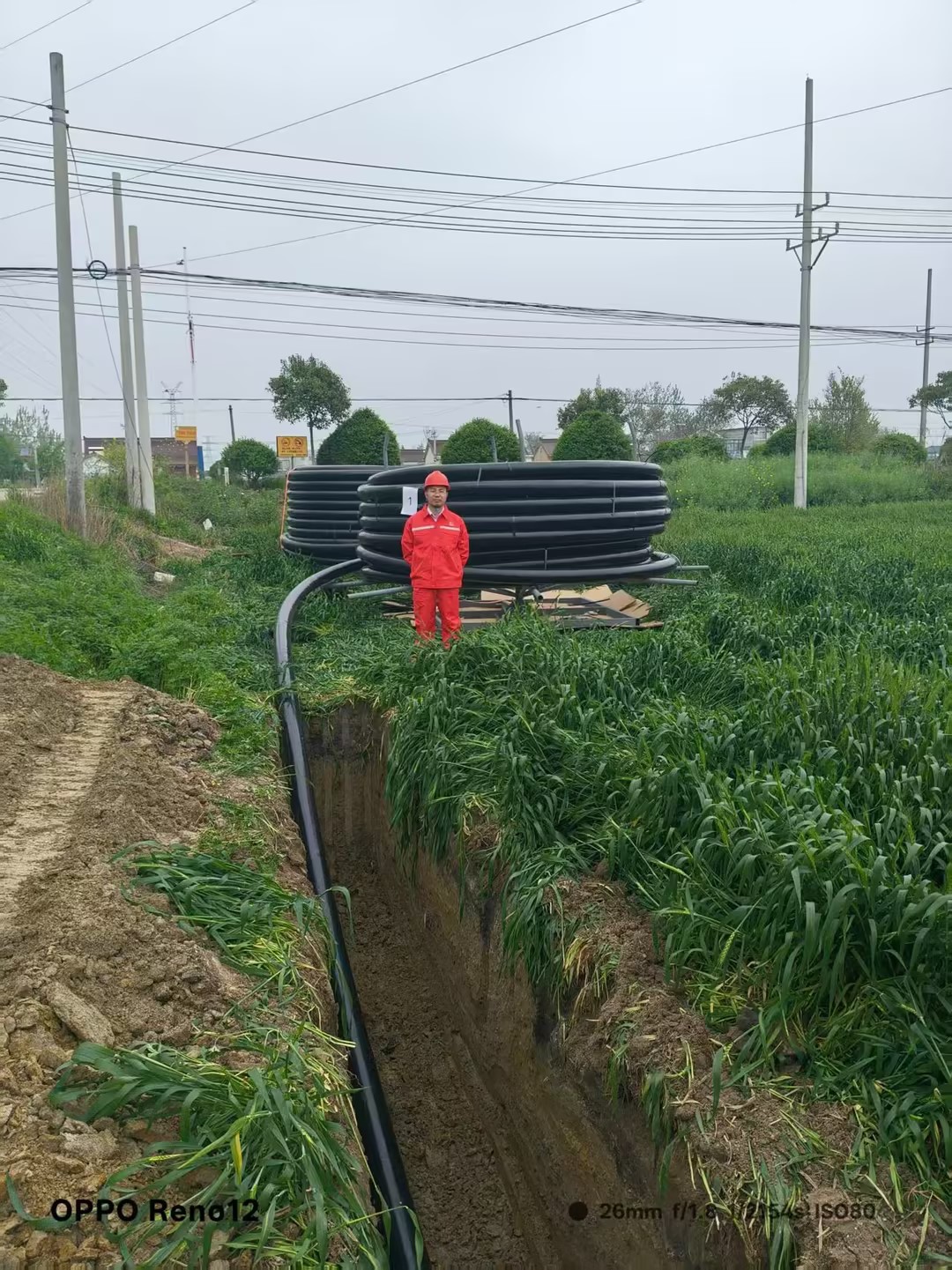
The Buying Question at Decision Stage
When a project reaches final material selection, engineering teams and procurement managers are not asking whether RTP is a useful pipe category. They are asking a narrower question: for this specific oilfield or mining application, does RTP offer enough measurable advantage over steel pipe to justify the change? The comparison criteria that matter at this stage are installation efficiency, maintenance requirements, site transport cost, and total cost difference — because these items appear directly in project schedules and operating budgets.
For context, the global reinforced thermoplastic pipes market was estimated at USD 7.2 billion in 2024, with projections reaching USD 10.2 billion by 2030 (Strategic Market Research). The oil & gas industry represents the dominant end-user segment at approximately 71.2% of demand, largely because operators continue to seek corrosion-resistant alternatives such as RTP to reduce the maintenance burden associated with carbon steel lines.
Head-to-Head: Installation Speed
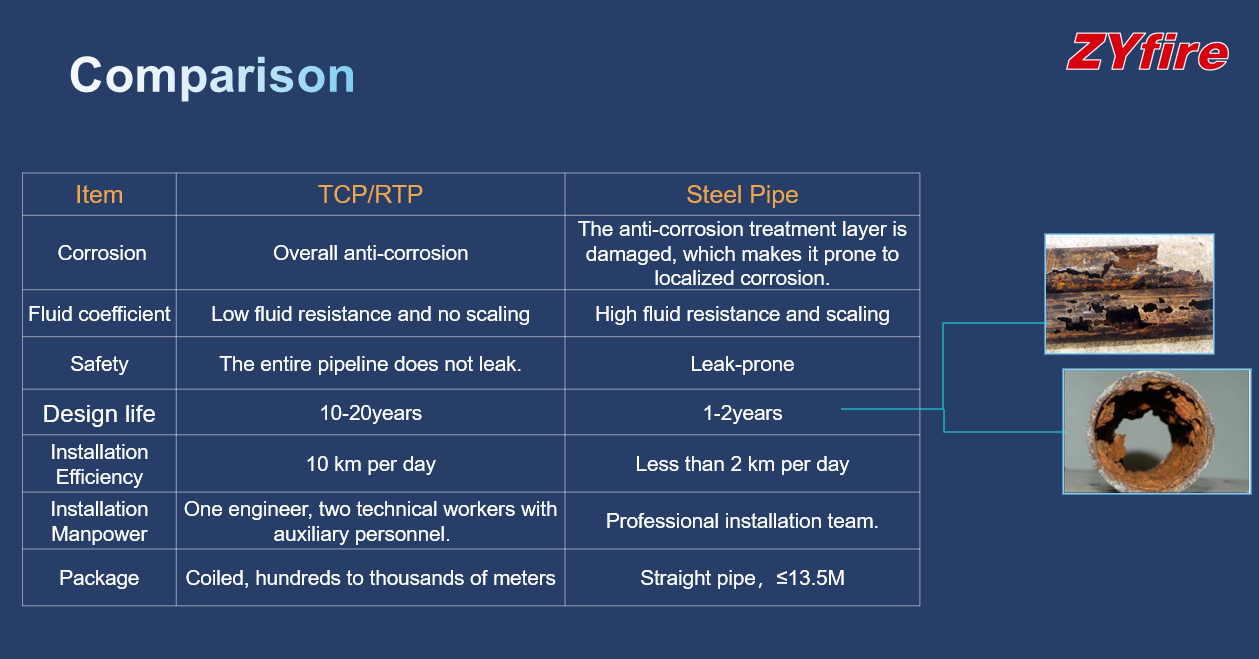
One of the clearest differentiators is speed of deployment. Reinforced thermoplastic pipe can be installed at up to 10 km per day, while steel pipe typically achieves less than 2 km per day. This is not simply a productivity detail; it changes project sequencing, crew allocation, and time-to-production for remote oilfield and mining sites.
The difference is often described as a 5x higher installation speed. In practice, this means RTP becomes especially attractive for:
- Projects with tight shutdown windows.
- Pipeline routes crossing difficult terrain where welding and heavy lifting are slower.
- Remote locations where mobilizing large installation crews is costly.
Maintenance: Frequency and Cost Driver
Steel pipe is susceptible to corrosion that demands attention several times a year. By contrast, RTP is designed with corrosion-resistant thermoplastic materials, so maintenance requirements are minimal. In normal service, intervention is generally only needed if force damage occurs — for example, excavation damage or an external impact that physically damages the pipe structure.
From a lifecycle perspective, the maintenance gap matters in two ways:
- Operating cost: Corrosion inspection, coating repair, and replacement of corroded steel sections consume maintenance budgets repeatedly over the asset life.
- Operational risk: Unplanned leaks in steel lines can cause downtime and safety incidents, whereas the RTP failure mode is more predictable and typically traceable to visible force damage.
Cost Comparison: Project Cost vs. Lifecycle Cost
At the purchase stage, RTP is commonly reported as approximately 20% lower in cost than steel pipe for comparable service. But the more important financial difference appears over the operating life. Because steel requires corrosion maintenance several times each year, the cumulative cost of inspections, repairs, and lost production can exceed the initial pipe price difference. RTP's minimal maintenance profile shifts more of the cost picture to the upfront procurement decision, giving buyers a more predictable total cost of ownership.
Procurement teams should note that the 20% cost figure is a general comparison, not a substitute for project-specific quotations. Actual cost differences depend on diameter class, pressure rating, liner material, end connection type, and delivery location.
Site Transport and Handling
Steel pipe's weight creates two hidden costs: transport to site and handling during installation. RTP's lightweight construction lowers site transport cost and reduces the need for heavy lifting equipment. In mining and oilfield applications, where access roads are often unimproved and terrain is rugged, this handling advantage helps explain why installation teams can move faster and complete more joints per day.
The operational effect is that a smaller crew and lighter equipment spread can install RTP, which is particularly valuable when contractors are managing multiple work fronts simultaneously.
Where Steel Pipe Still Has a Role
A direct comparison would be incomplete without acknowledging the boundaries of RTP. Steel pipe remains a legitimate solution in cases where:
- Pipe will be exposed to very high external mechanical loads or frequent impacts that cannot be protected through burial or routing.
- Existing infrastructure and joining procedures are standardized around welded steel, making a material change disruptive.
- Project specifications have not yet recognized spoolable reinforced plastic pipe as an approved alternative.
These constraints do not eliminate RTP's advantages in corrosion-prone or rapid-deployment situations, but they define the project conditions where steel should remain on the shortlist.
How ZYfire Positions RTP for Oil & Gas and Mining
ZYfire Hose Corporation is a Beijing Stock Exchange-listed manufacturer founded in 2000, producing reinforced thermoplastic pipe certified under API 15S and specializing in custom bore sizes and high-pressure applications for oilfields and mining. The company reports that its RTP provides a 5x higher installation speed over steel pipe, with minimal maintenance required except in cases of force damage.
For buyers at final selection, ZYfire's relevant capabilities are not marketing claims but verifiable production facts:
- Certification base: API 15S certification for spoolable reinforced plastic line pipe is a recognized qualification benchmark for oilfield applications.
- Production capacity: The company operates a 150,000 m² facility with approximately 600 employees and an annual output of 12,000,000 meters of hose and pipe products.
- Global delivery footprint: ZYfire exports roughly 80% of its output to markets including the United States, the Middle East, the EU, and Southeast Asia.
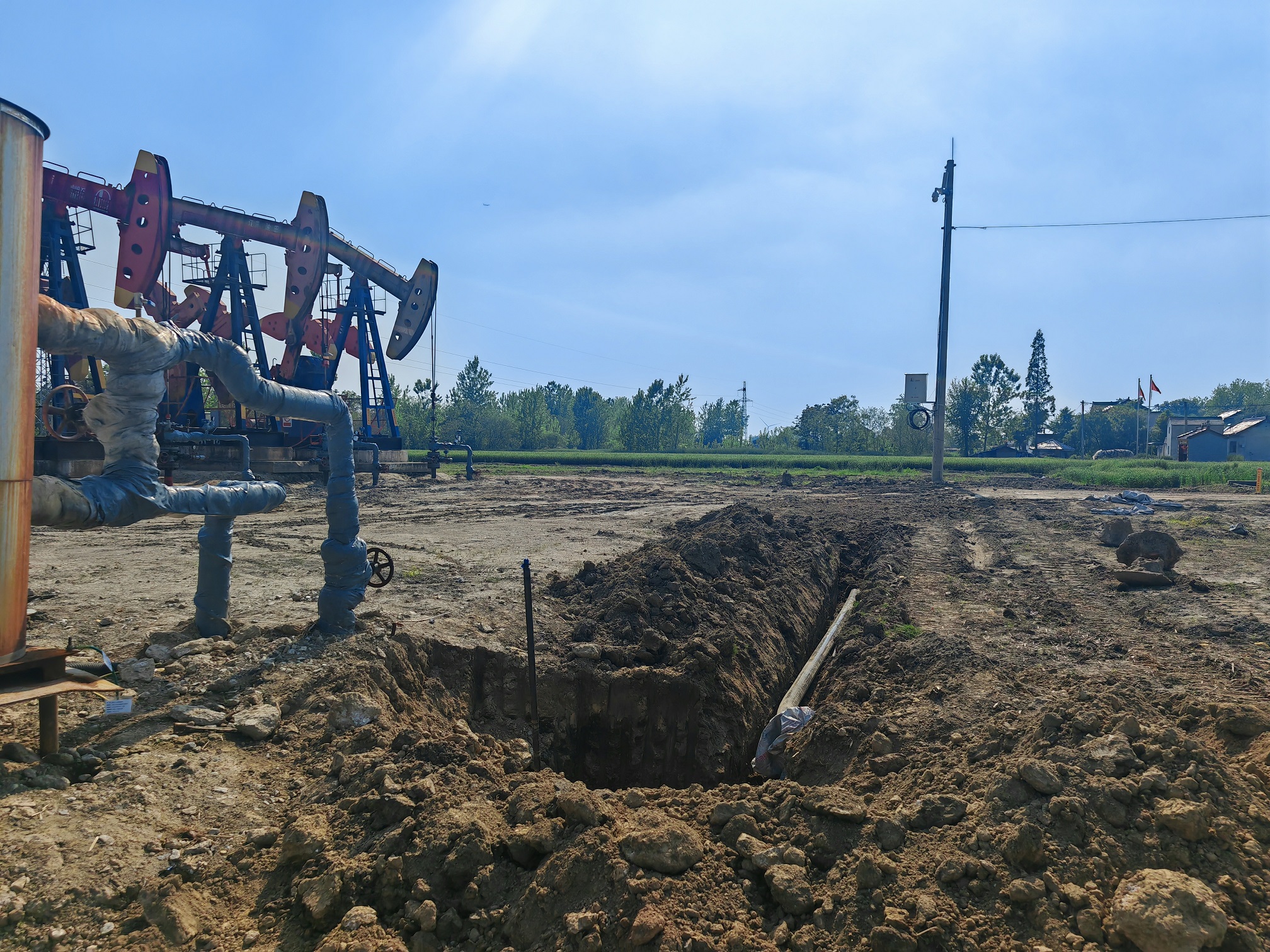
Technical Explanation: Why RTP Achieves These Operational Numbers
The performance gap between RTP and steel pipe is largely explained by material architecture. A typical reinforced thermoplastic pipe combines a thermoplastic liner and outer layer with a reinforcement layer — commonly aramid fiber, glass fiber, or polyester — embedded between them. This structure provides pressure containment while keeping the pipe lightweight and spoolable.
Because the liner is thermoplastic, RTP is inherently resistant to corrosion, which addresses the recurring maintenance problem in steel lines. The absence of welding during installation is a second structural advantage. Steel requires weld crews, weld inspection, and coating of weld joints; RTP is joined with mechanical connectors such as flange connections or quick-connect systems, eliminating a large portion of installation labor and quality-control time.
For high-pressure oilfield service, materials such as PA12 or PE100 RC can be selected based on chemical compatibility and pressure requirements. For mining slurry transfer, abrasion-resistant liner options and static-dissipative designs can be specified. This ability to tailor the pipe architecture is the reason project-fit evaluations often rank RTP higher than a one-material steel standard.
Cost-Benefit Comparison Table
| Comparison Criterion | Reinforced Thermoplastic Pipe (RTP) | Steel Pipe |
|---|---|---|
| Installation speed | Up to 10 km per day | Less than 2 km per day |
| Relative installation efficiency | 5x faster than steel pipe | Baseline |
| Maintenance requirement | Minimal; typically only after force damage | Corrosion maintenance several times a year |
| General cost comparison | Approximately 20% lower than steel pipe | Baseline |
| Site transport cost | Lightweight, lower site transport cost | Heavy; higher site transport cost |
| Installation operation | Easy to operate, fewer heavy-lifting requirements | Requires heavier handling and more equipment |
What the Market Trend Signals for Procurement
The shift toward corrosion-resistant alternatives in oil & gas is not a marginal development. The dominant share of oil & gas demand and the projected market growth indicate that operators are systematically building RTP into procurement frameworks. For buyers, the practical implication is that supplier qualification, certification verification, and project-reference checks should be completed earlier rather than later, because demand for qualified RTP supply is expanding across multiple regions.
Asia Pacific has also been identified as the fastest-growing and largest regional market for thermoplastic pipes in 2024/2025, supported by infrastructure investment and water management projects. For international buyers, this reinforces the importance of evaluating supplier production scale and export experience, since the fastest-growing manufacturing base is also the source of a significant share of export supply.
Comparison with Traditional Procurement: Quantities, Logistics, and System Compatibility
RTP procurement differs from steel pipe buying in several structural ways. Steel pipe is typically ordered in stick lengths with welded joints, requires extensive logistics planning for heavy loads, and has well-established coating and cathodic protection standards. RTP is spoolable and lighter, which reduces the number of transport loads and allows longer continuous lengths. However, buyers must account for bend radius requirements, connector availability, and compatibility with existing piping systems. A proper technical evaluation should confirm that the selected RTP architecture matches the fluid chemistry, pressure class, and installation method planned for the site.
These procedural differences are not disadvantages; they are new variables that should be included in the procurement checklist.
Limitations and Boundaries for RTP Selection
A responsible final-selection analysis should state the boundaries clearly:
- The 5x installation-speed advantage reflects ideal deployment conditions. Actual speed depends on terrain, crew skill, and the number of connection points.
- RTP is generally not intended for applications involving sustained external point loads, sharp rock impact, or surface installations where mechanical damage protection is absent.
- The 20% lower cost is a representative general comparison and may not hold for all bore sizes, pressure ratings, or specialized liner materials.
When these boundaries are respected, RTP can be evaluated as a genuine alternative rather than a universal replacement for steel.
How to Use the Brochure for Final Review
For procurement and engineering teams consolidating their selection criteria, ZYfire's corporate brochure provides a structured reference for the company's RTP range, production capabilities, and certification profile. It can be downloaded for review and internal distribution.
Download ZYfire Corporate Brochure
Final Assessment Framework for Buyers
When comparing RTP and steel pipe at the final decision point, the most effective approach is a weighted scoring model. Define the project's critical success factors first: installation schedule, maintenance budget, site accessibility, fluid corrosivity, and operating pressure. Then compare the shortlisted pipe options against those factors using verifiable data such as installation rate, maintenance intervention frequency, and cost differential.
For many oil & gas and mining projects, the RTP position will be strongest where speed and corrosion resistance create immediate operational value. Steel pipe will retain the advantage in more conventional, mechanically harsh, or specification-restricted environments.
Frequently Asked Questions
How much faster is RTP to install than steel pipe?
RTP achieves an installation rate of 10 km per day, compared to steel pipe's less than 2 km per day. This represents a 5x higher installation speed, making RTP more suitable for scenarios that require rapid deployment.
What maintenance does RTP require compared with steel pipe?
Maintenance requirements for RTP are minimal; intervention is generally only needed in case of force damage. Steel pipe, by contrast, requires corrosion maintenance several times a year.
Is RTP actually lower in cost than steel pipe?
A general cost comparison shows RTP at approximately 20% lower cost than steel pipe. The lifecycle cost advantage is typically larger because reduced corrosion maintenance lowers the recurring operating expense of the pipeline.
Where steel pipe is still a more practical option than RTP?
Steel pipe remains practical where pipes are exposed to heavy external mechanical damage, where project specifications are fixed around welded steel, or where site conditions make RTP's bend radius and connector requirements difficult to accommodate.
Have Questions or Need More Details?
Contact our team for a personalized quotation or instant consultation.
Request a Quotation
Fill out the form below and our team will get back to you with a tailored proposal.
WhatsApp Direct Chat
Prefer to chat in real-time? Message us on WhatsApp for instant assistance & quick answers.
- Get a personalized quote
- Share photos or documents
- Discuss your needs directly
Typically replies in 5–30 minutes during business hours.