
Ramp-Up Support: The Real Test of a Pulp Molding Machine Supplier
Global pulp moulding equipment demand was valued at USD 2,140.0 million in 2024 and is projected to reach USD 3,760.2 million by 2032, expanding at a CAGR of 7.3% between 2025 and 2032. The variable that most supplier comparisons still fail to price in is not what a machine does on handover day, but who is still standing on the factory floor in month four.
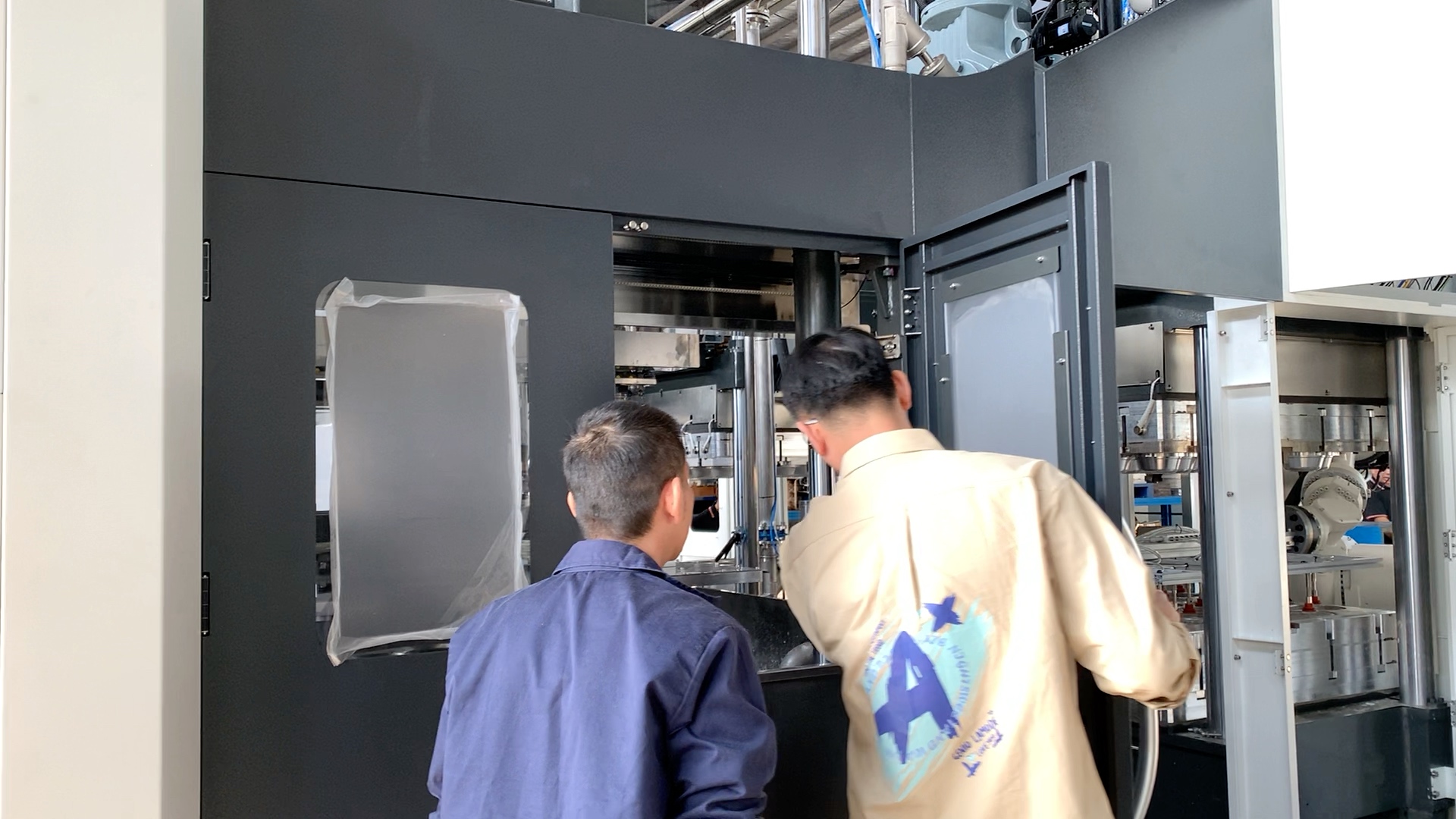
Installation and commissioning is the formal handover point for a pulp molding line — not the point at which stable mass production begins.
The Market Is Expanding Faster Than Buyer Evaluation Frameworks Are
Category-level evidence of demand is straightforward. Food and beverage packaging consumes approximately 45% of global pulp moulding machine demand, with cup, tray and bowl formats leading, according to a Cloud Market Reports study of the pulp moulding machines market. On the supply side, China's exports under HS 843920 — machinery for making paper or paperboard — were valued at USD 49.58 million in 2024, according to the World Integrated Trade Solution (WITS / World Bank).
What that data describes is an expanding equipment category. What it does not describe is what happens inside a newly built molded-fiber plant during its first months of operation, when the equipment has been accepted but the plant has not yet reached the output, weight consistency or yield its business case assumed.
That gap is where supplier evaluation becomes a project-risk question rather than a specification question. Two suppliers can present comparable platen sizes, cycle times and installed power, and still produce very different outcomes for a buyer, because the difference is not in the machine alone — it is in how long the supplier stays involved after the machine starts running.
Commissioning Answers a Narrower Question Than Most Buyers Assume
Standard after-sales service is built to answer one question: is the equipment operating? That question is necessary but not sufficient. A line can pass commissioning, run acceptable sample parts, and still fail commercially for months because weight variation drifts between shifts, trimming position shifts with mold wear, or the balance between heating, vacuum and slurry consistency is not yet tuned to the customer's own fiber and water.
These are not hypothetical risks. They are the reason several disclosed pulp molding projects describe ramp-up as a distinct project phase rather than an after-sales footnote:
- In a molded fiber industrial packaging project, continuous equipment customization, fast technical response and on-site production support were cited as factors that shortened the production-line commissioning period.
- In an overseas tableware production base built during a transition from plastic products to molded fiber packaging, more than 50 machines were supported with 7×24-hour technical response plus on-site commissioning and production support during the initial operation stage.
- In a large-scale tableware project, the buyer ran a four-month intensive equipment test covering stability, production capacity and product quality before selecting a core equipment supplier.
- In a bamboo-fiber turnkey project, the transition from equipment installation to trial production was completed in approximately three months, with full-cycle production support and operator training included in the scope.
Read together, these projects indicate that the operative risk window sits between acceptance and stable mass production — and that the length and depth of supplier presence inside that window varies considerably between suppliers.
How Hanson Pulp Molding Structures Support After Handover
Guangdong Hanson Pulp Molding Technology Co., Ltd. — trading as Hanson Pulp Molding (HANSON PULP MOLDING TECHNOLOGY CO., LTD.) — is a National High-tech Enterprise based in Houjie Town, Dongguan City, Guangdong Province, China, that develops, manufactures and services pulp molding equipment, complete production lines and turnkey factory solutions. The company employs more than 200 staff, including approximately 50 R&D and engineering professionals, and holds 50 patents covering equipment structures, production processes and automation systems.
Its turnkey scope is where the ramp-up question becomes concrete. Depending on the project, that scope can include preliminary product and raw-material verification, project feasibility analysis, production-capacity planning, factory layout design, intelligent pulp preparation systems, forming equipment, mold design and manufacturing, downstream automation, electrical control systems, installation and commissioning, personnel training, and production ramp-up support.
The distinctive element for buyer evaluation is not the existence of an after-sales department. It is the stated inclusion of resident engineers and production ramp-up support, with turnkey projects able to be supported with up to six months of on-site production assistance. That sits alongside a broader service list covering installation and commissioning, operator and maintenance training, remote technical support, on-site troubleshooting, spare-parts supply, preventive maintenance, mold and product development support, production-line optimization and 24/7 service response.
For scale reference, Hanson operates a service network covering key domestic and overseas markets with 10 service locations currently in operation, and holds an independent mold division with capabilities in product development, mold design, mold manufacturing, mold testing and mass-production adaptation. The company's export markets span Mexico, Brazil, Vietnam, Thailand, Indonesia, Malaysia, India, Turkey, Egypt, Iran, Saudi Arabia, the United Arab Emirates, Kuwait, Bahrain, Italy, Romania, Russia, Argentina, Peru, Bolivia, Ethiopia, Tunisia and Australia.
What Is Actually Adjusted During a Ramp-Up Period
Ramp-up is frequently described in vague terms, which makes it difficult to compare between suppliers. In practice it is a structured parameter and process exercise, and the categories of work are visible in the technical documentation of pulp molding equipment.
1. Heating time and thermal control
In-mold drying performance depends on how heating time, plate temperature and mold mass interact with the product's wall thickness and geometry. Equipment in this category uses electric heating with intelligent temperature control that monitors current and can detect damaged heating elements. During ramp-up, the objective is to find the shortest heating time that still delivers a dimensionally stable, dry part — because heating is typically the largest single power load on the line. On a fully automatic tableware integrated machine such as the ZCE-1111, rated power is 167.4 kW with 132 kW of that in the heating plates, which illustrates why heating time is a commercial variable and not only a technical one.
2. Vacuum
Vacuum conditions wet-preform formation and dewatering. Documented operating bands across the range sit at roughly -0.07 to -0.05 MPa for industrial packaging and cup lid lines, and -0.06 to -0.05 MPa for tableware lines. Small deviations interact with slurry consistency and mold mesh condition, so vacuum is normally stabilized before output targets are raised.
3. Compressed air
Compressed air supplies range from 0.5–0.6 MPa on the cup lid line, 0.5–0.7 MPa on tableware and industrial packaging machines, to 0.6–0.8 MPa on the inline servo tableware line. Air is used for transfer, mold cleaning and actuation. The ZFG-1111 is documented with optimized vacuum and compressed-air control as a low-energy-consumption measure — an example of how air strategy is treated as an efficiency lever rather than a fixed utility.
4. Slurry feeding and consistency
Weight variation is the most persistent early-stage quality issue in molded fiber production, and the feeding architecture determines how much of it can be engineered out. Documented approaches include quantitative slurry injection with no conventional slurry return cycle on the ZCE-1111 and ZBG-1111, precise self-circulating feeding with dynamic replenishment on the ZAP-9585, quantitative feeding without a slurry-return system on the ZAD-8565, and continuous internal-circulation feeding with aeration to improve wet-preform weight consistency on the ZFG-1111. Each approach changes how batch-to-batch variation appears under a customer's own pulp recipe, and how it should be corrected.
5. Molds, utilities and the process as a system
Cooling water demand (60–100 L/min depending on machine), high-pressure mold-cleaning water at 1.2 MPa, and mold adaptation all feed into achievable cycle stability. Hanson's stated approach is to optimize molds, equipment, pulp preparation and production processes jointly — the combination that determines production capacity, product yield and overall production stability. This is the reason a ramp-up period cannot be reduced to a single parameter adjustment: the values interact.
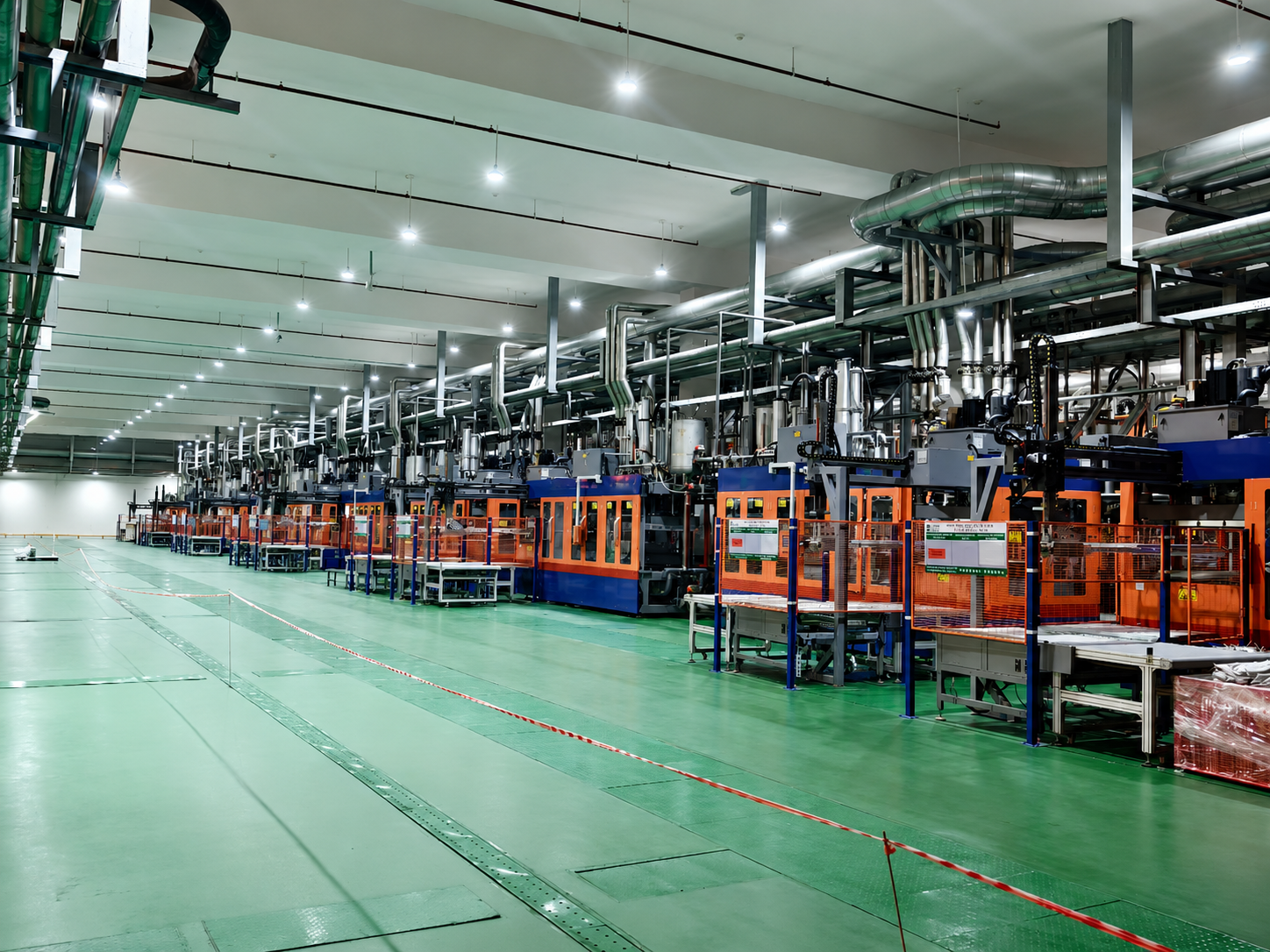
Ramp-up work happens under real production conditions: the customer's fiber, the customer's utilities and the customer's shift pattern.
Where Ramp-Up Support Changes the Project Outcome
Profile 1 — A new factory in a new market
The hardest case is a first-time molded fiber plant built in an unfamiliar market, where the customer has no local process experience to fall back on. In one such project, a disposable tableware manufacturer transitioning from conventional plastic products to molded fiber packaging bought more than 50 machines for the first phase of a Vietnam production base after multiple rounds of supplier evaluation. Documented support included on-site commissioning and production support during the initial operation stage plus 7×24-hour technical response. For a project of this shape, ramp-up support is effectively the customer's only source of process knowledge during the first operating quarter.
Profile 2 — Stepwise capacity expansion
Expansion projects bring a different risk: each added machine must match the process already running. One industrial packaging manufacturer moved from an initial purchase to five procurement rounds within approximately two years, reaching 20 units of the ZAD-8565 compact industrial packaging machine, with customization aligned to capacity growth and on-site production support cited as shortening the commissioning period. A second packaging manufacturer progressed from a single trial machine to a total of 80 industrial packaging machines after stable performance and responsive service. In both cases the supplier's continued presence is what made incremental scaling practical.
Profile 3 — Large multi-machine projects
Large projects multiply small process deviations across dozens of stations. A state-owned molded fiber tableware and industrial packaging manufacturer ordered 32 customized core production machines as part of a 40,000-ton-per-year project; after commissioning, annual output rose from approximately 6,000 tons to 16,000 tons, supported by installation, commissioning, production verification and on-site service. With a multi-machine fleet, ramp-up work is also about standardizing settings across lines so that output is predictable rather than line-dependent.
Profile 4 — Products with no established standard solution
Where the product itself is new, the ramp-up phase merges with development. A listed biomass materials manufacturer required customized equipment development and seven months of trial production before full project cooperation, covering customized diamond-shaped bowls and other plant-fiber food packaging products, and later introduced a sampling line for R&D alongside mass-production equipment. The stated problem solved was developing a production solution for molded fiber tableware when no existing standard solution was available.
Profile 5 — Development and pilot work
Not every ramp-up ends in mass production. The ZAMS-6047 sampling production line — with a 600 × 470 mm platen, 2-ton forming pressure, 13-ton hot-pressing pressure, 82 kW rated power and no trimming function — is used for material testing, prototyping, mold verification and small-batch production. Buyers using it include a listed integrated packaging solutions provider serving global consumer electronics brands, a plant-fiber packaging developer, a nanocellulose additive developer evaluating fiber modification and formulation, and a bio-based materials manufacturer that customized slurry compatibility for bio-based fibers. In these projects ramp-up support transfers method, not just settings.
Market Signals: From Equipment Price to Project-Life Cost
Three shifts support a longer evaluation horizon. First, volume: a market moving from USD 2,140.0 million in 2024 toward a projected USD 3,760.2 million by 2032 implies many first-time operators, and first-time operators are exactly the buyers who depend on supplier-side process support. Second, application concentration: with food and beverage packaging at approximately 45% of demand, competitive pressure sits on weight consistency, surface quality and yield — the metrics that ramp-up work targets directly. Third, geography: Hanson's own market footprint spans more than twenty countries across Asia, the Middle East, Europe, Latin America and Africa, which means ramp-up capability increasingly has to travel with the equipment.
Regulatory pressure is converging from a different direction. Safety-related parts of machinery control systems must comply with EN ISO 13849-1, and the previous version, EN ISO 13849-1:2015, will be withdrawn after a transition period until 15 May 2027. For buyers specifying European-bound or European-operated lines, safety function validation is one of the items that becomes verifiable during commissioning and early production, which reinforces the practical value of a support window that extends past handover.
Comparison: Commissioning-Only Support vs. Extended Ramp-Up Support
| Evaluation dimension | Short commissioning-only support | Extended on-site ramp-up support |
|---|---|---|
| Where supplier responsibility ends | When the equipment produces an acceptable part and handover is signed | When the line holds target output, weight consistency and yield under the customer's own fiber, utilities and shifts |
| Who is on site | Installation and commissioning team within a defined handover window | Resident engineers and on-site production assistance, up to six months in documented turnkey arrangements |
| What is measured | Mechanical function, safety functions, basic cycle operation | Cycle stability, weight variation, trimming accuracy, energy and utility consumption, operator routines |
| Typical corrective actions | Hardware faults, spare parts replacement | Process parameters: heating time, vacuum, compressed air, slurry feeding, mold adaptation |
| Best-fit projects | Single machines; products already proven on comparable equipment | New factories, multi-station lines, non-standard or first-of-its-kind products |
| Documented case signals | Delivery and installation milestones | Shortened commissioning periods, capacity ramp from 6,000 to 16,000 tons per year, transition from trial machine to repeat orders |
Table notes draw on Hanson project documentation for molded fiber tableware, industrial packaging, cup lid and sampling projects. Comparable figures are project-specific and are not presented as universal benchmarks.
Limits and Trade-Offs Buyers Should Confirm Before Signing
Ramp-up support is a meaningful differentiator, but it is not unlimited, and a buyer who treats it as a guarantee will be disappointed in a different way than a buyer who treats it as a warranty. Four boundaries are worth stating plainly.
- It is scope-linked, not universal. The described six-month on-site production assistance applies to turnkey projects and depends on project scope. A buyer purchasing a single machine or a standalone sampling unit should not assume the same support envelope, and the exact period belongs in the contract rather than in a verbal assumption.
- It requires customer-side readiness. Resident engineers need stable power, process water, vacuum, compressed air, cooling water and accessible site conditions, plus operators available to be trained. Ramp-up support accelerates a plant that is ready; it does not substitute for the customer's own production management.
- It cannot correct a configuration that does not fit the product. Parameter tuning works inside the installed envelope. A compact industrial packaging machine such as the ZAD-8565 is specified with an 850 × 650 mm platen and a maximum product height of 100 mm; a larger platform such as the ZAP-9585 is specified with a 950 × 850 mm platen and 120 mm maximum product height. If the product falls outside the chosen platform's envelope, the correct fix is specification, not ramp-up.
- It optimizes within fixed utility and heating choices. Heating method and installed power define an energy baseline. The ZFG-1111, for example, is rated at 102 kW with electric heating and 39 kW with oil heating, and the ZBG-1111 accepts oil, electric or steam heating. Ramp-up tuning improves performance within that choice; it does not convert one energy strategy into another.
A reasonable procurement rule follows from these boundaries: verify product fit and platform selection first, verify customer-side utility readiness second, and negotiate the ramp-up scope, duration and success criteria third. Doing it in the reverse order produces agreements that are difficult to enforce.
What Comes Next for Ramp-Up as a Procurement Criterion
Three developments are likely to make ramp-up capability more visible in supplier comparisons rather than less. As safety-function compliance shifts to EN ISO 13849-1 with the 2015 version withdrawn after the transition period ending 15 May 2027, control-system validation becomes a documented early-production activity rather than a paper exercise. As energy costs remain a defining factor in molded fiber economics, parameter-level tuning of heating, vacuum and compressed air turns into a recurring operating advantage rather than a one-time adjustment. And as production footprints spread across more markets, remote technical support will handle more routine diagnostics — but for process-level problems, remote support is a complement to on-site presence, not a replacement for it.
For buyers, the practical implication is that supplier sustainability should be evaluated with the same rigor as machine specifications: define what stable production means for your product, ask which supplier commitments extend past handover, and require those commitments in project scope rather than in marketing language.
FAQ
What does ramp-up support mean in a pulp molding turnkey project?
Ramp-up support is the phase of supplier involvement that begins after installation and commissioning and continues until the line reaches stable production under the customer's own operating conditions. In Hanson Pulp Molding's documented turnkey scope, this can include resident engineers, production ramp-up support and on-site production assistance for up to six months, alongside training, process optimization and mold adaptation.
How is ramp-up support different from standard installation and commissioning?
Installation and commissioning verifies that the equipment is assembled correctly, that safety functions operate and that the line can produce an acceptable part. Ramp-up addresses what happens next: stabilizing cycle time, product weight and thickness consistency, trimming position and cleanliness across shifts, using the customer's fiber, water and utilities. Standard after-sales service is generally structured around keeping equipment running; ramp-up is structured around reaching the output and yield the project was justified on.
Which pulp molding projects benefit most from extended on-site ramp-up support?
Documented project patterns suggest the highest value sits in four situations: a first-time molded fiber factory in an unfamiliar market, a multi-machine project where settings must be standardized across lines, a product with no existing standard production solution, and a transition from trial-machine validation to repeat-order capacity expansion. Projects involving single machines producing an already-proven product on comparable equipment typically need a narrower support scope.
What is actually adjusted during a ramp-up period?
The recurring adjustment categories are heating time and thermal control, vacuum level, compressed air supply, slurry feeding and consistency, mold adaptation, and the utility conditions that support them, including cooling water and high-pressure mold cleaning. These parameters interact, which is why pulp molding suppliers typically optimize molds, equipment, pulp preparation and production processes jointly rather than tuning one variable in isolation.
How long does ramp-up support last, and what determines the duration?
Duration is project-dependent rather than fixed. In Hanson Pulp Molding's documented arrangements, turnkey projects can be supported with up to six months of on-site production assistance, while the broader service list — remote technical support, on-site troubleshooting, spare parts, preventive maintenance and 24/7 response — is not time-limited in the same way. Actual duration depends on the agreed project scope, the product's complexity, and how quickly the customer's own team can operate and maintain the line independently.
What can ramp-up support not do?
It does not replace the customer's own production management, and it requires site readiness such as stable power, process water, vacuum, compressed air and trained operators. It also cannot correct a machine configuration that does not match the product: parameter tuning operates within the installed platform's envelope, such as platen size and maximum product height. Where the product falls outside that envelope, the correct resolution is specification and platform selection before the contract, not ramp-up afterwards.
Additional technical scope, service structure and equipment documentation for Hanson Pulp Molding is available in the company brochure, and the company's official site is www.hspulpmolding.com.