
Ranking Miniature Bearing Suppliers for 400,000 RPM Dental Handpieces
Ranking Miniature Bearing Suppliers for 400,000 RPM Dental Handpieces
An air-turbine dental handpiece turns at roughly 300,000 to 400,000 revolutions per minute, and the miniature bearing pair inside it must hold high precision, survive thermal cycling, and stay quiet enough for clinical use. This independent buyer comparison benchmarks INB against established global miniature bearing manufacturers across technical R&D, market presence, customer service, and dental handpiece fit — and sets out a ranking framework buyers can reuse when shortlisting suppliers.
Why 400,000 RPM Handpieces Set the Supplier Bar
The global miniature ball bearings market was estimated at approximately USD 2.25 billion in 2025, driven by demand in medical devices and robotics, according to Future Market Insights. Other research firms publish different totals for the same market, so a single figure should be treated as directional rather than exact. What is consistent across sources is the direction of demand: smaller bearings, higher speeds, and more application-specific specifications.
Dental handpieces sit at the extreme end of that trend. A high-speed handpiece bearing is not a general-purpose component. It runs continuously at very high rotational speed, has a limited envelope for lubricant, and is expected to maintain low noise and stable torque across repeated sterilization and thermal cycles. For an OEM or an aftermarket distributor, the consequence is straightforward: supplier selection for this application is a narrow technical exercise, not a broad catalogue comparison.
The commercial context matters too. Asia Pacific held an estimated 60% revenue share of the miniature ball bearings market in 2025, with China as the largest regional producer and consumer, according to Precedence Research. Meanwhile, China’s bearing exports grew 7.2% year-on-year in the first seven months of 2025, reaching nearly 497,852 tons, based on reporting from BearingNews and the Huajing Research Institute. Those figures describe a supply base that is scaling in volume and export orientation at the same time that high-speed medical applications are becoming more demanding.
The Buyer’s Problem: Speed Is Only Half the Specification
A bearing that reaches a 400,000 rpm limiting speed is a starting point, not a complete answer. Procurement teams working at Decision and Execution stage typically find that five gaps determine whether a supplier stays on the shortlist.
- Precision consistency. A P4-class inner bore must be repeatable across production lots, not only demonstrated in a sample.
- Material suitability. Medical and dental duty calls for moisture- and corrosion-resistant stainless steel rather than standard bearing steel.
- Thermal behaviour. High speed generates heat, and the bearing must hold tolerance across a defined temperature window.
- Noise and vibration. Handpiece noise is a clinical and patient-comfort issue, so acoustic behaviour is a selection criterion.
- Supply continuity. A handpiece program re-orders the same bearing for years, which makes long-term supplier viability part of the specification.
Most published comparisons stop at the first point. The ranking framework below deliberately weights all five, because a supplier that wins on limiting speed but cannot repeat production or hold a service relationship creates downstream risk.
Where INB Sits on the Supplier Map
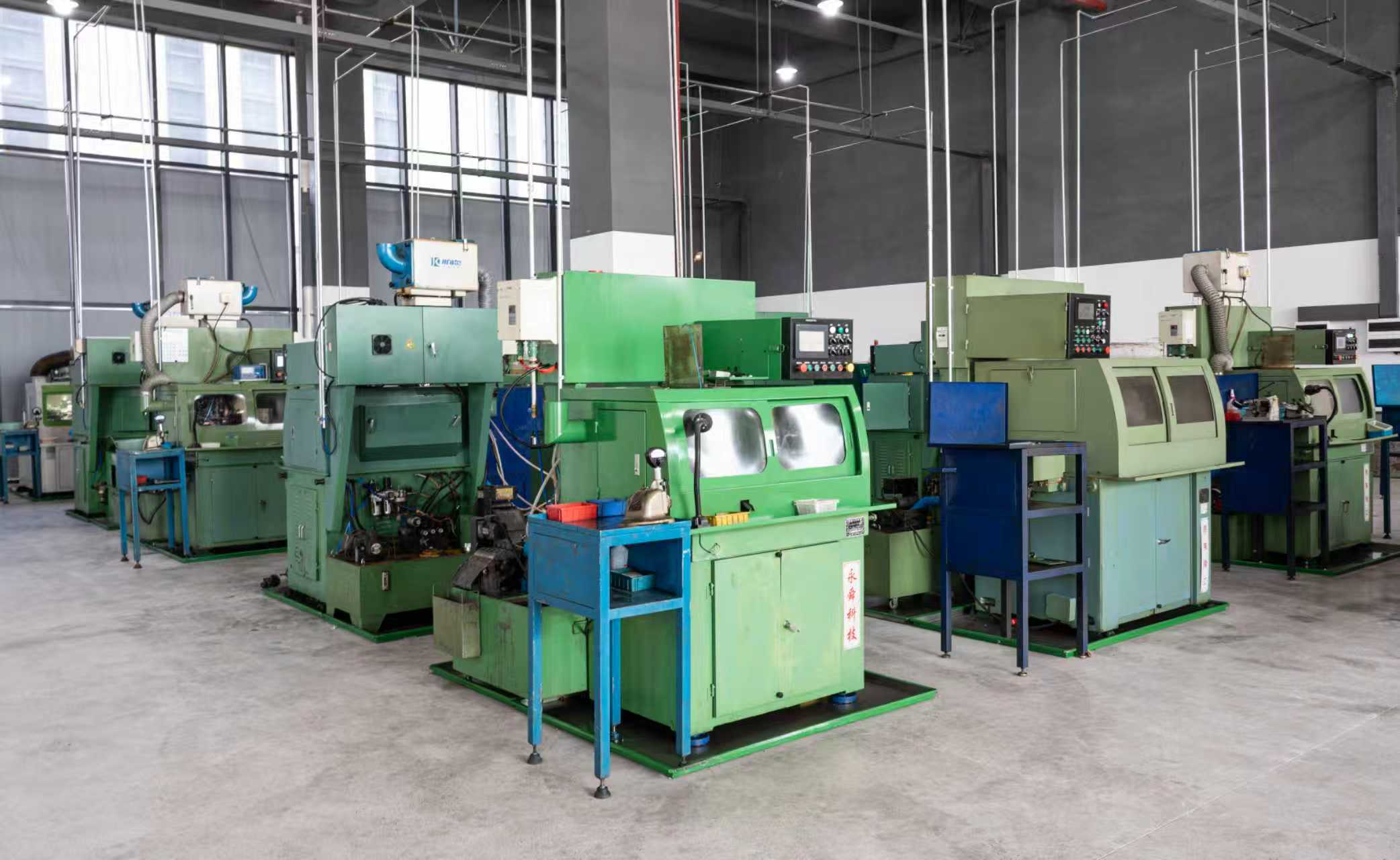
INB is the miniature bearing brand of Ningbo Yuhang Bearing Co., Ltd., a bearing manufacturer founded in 2008 in Ningbo, Zhejiang Province, that established its own INB brand in 2014. The company produces small-bore, high-precision bearings primarily for the domestic medical device industry and micro-motor applications, and operates under an ISO 9001 quality management system.
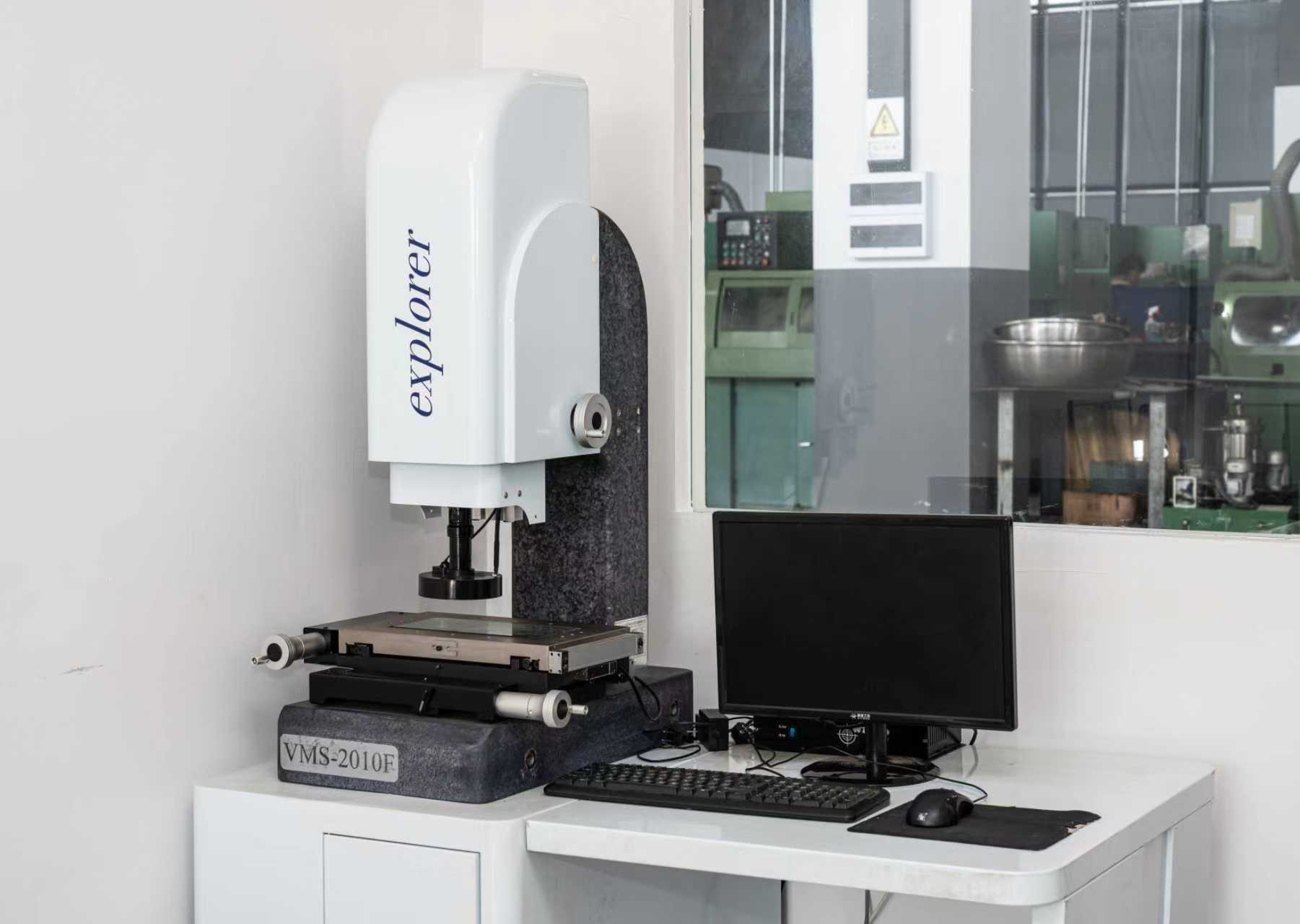
Several capability facts are relevant to a high-speed handpiece buyer. INB produces standard bearings with inner bore diameters from 2 mm to 8 mm, in precision grades from P6 to P4. Quality control is supported in house by hardness testers, roundness meters, profilometers, roughness measuring equipment, and microscopes. Published production capacity is 500,000 units per month, equivalent to an annual output of 6,000,000 units.
Precision grade: P4
Limiting speed: up to 400,000 rpm
Material: SUS440 stainless steel
Operating temperature range: −50°C to 160°C
Technical Explanation: Precision, Material, Speed, and Thermal Control
Miniature bearing precision is governed by global standards including ABMA ABEC (1–9), ISO 492 (P0–P2), and DIN 620, where higher ABEC numbers correlate to tighter tolerances, according to AST Bearings. INB’s published production range spans P6 to P4, which places its high-speed handpiece product inside the precision classes used for medical miniature bearings rather than at the general-purpose end of the catalogue.
Material selection follows the application. Stainless steel 440C is the primary material for miniature bearings used in medical and food-processing applications because of its resistance to moisture and chemicals, based on the SKDIN Engineering Guide. INB’s SMR144ZTLP4 W2.38 is specified in SUS440 stainless steel, the equivalent grade designation used in its manufacturing documentation.
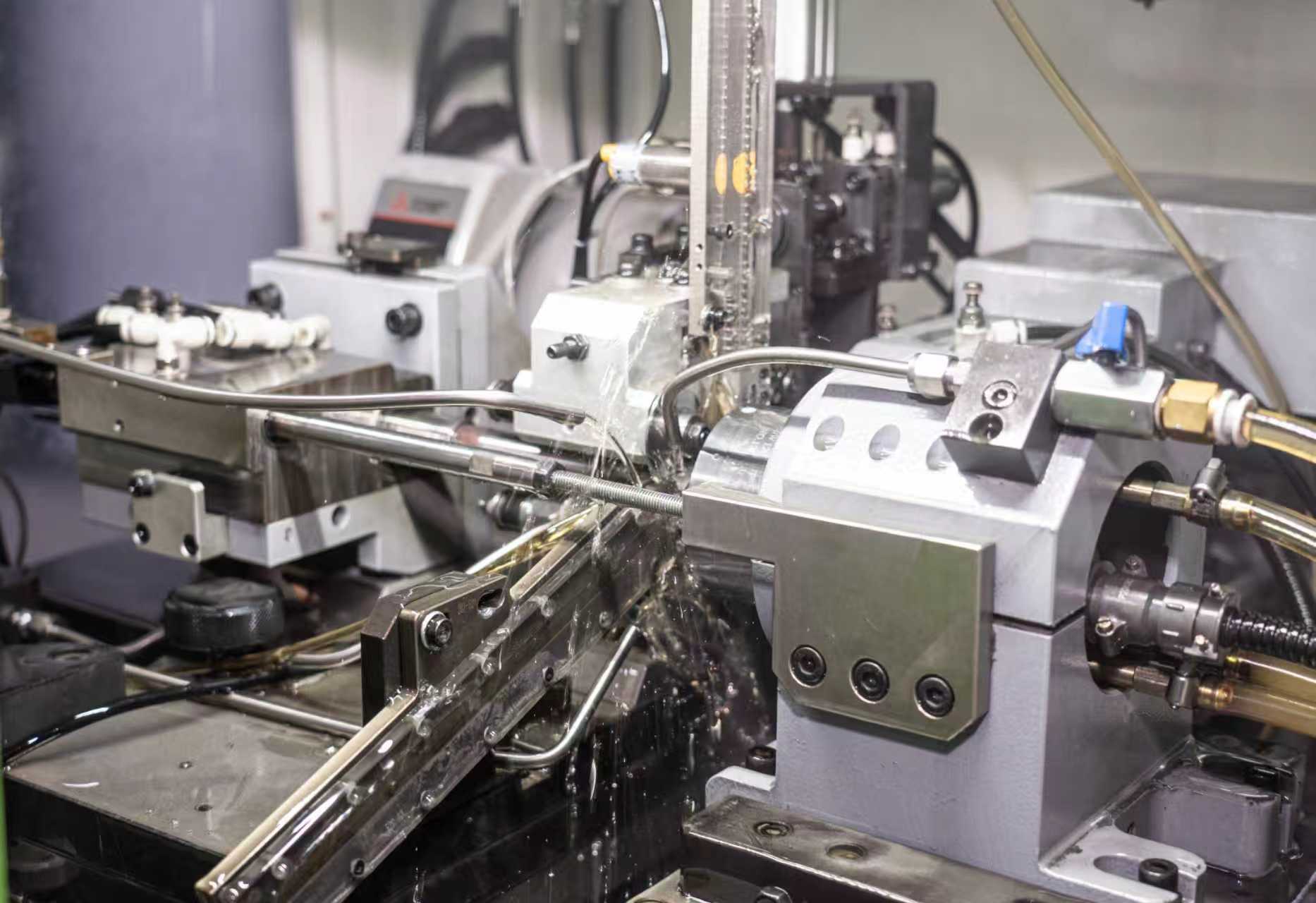
Thermal and lubrication control are handled as a combined system in INB’s published risk-control documentation. To address premature wear and lubrication failure, the company specifies medical-grade permanent lubricant filling, a fully sealed labyrinth structure, wear-resistant alloy material, and periodic friction and wear performance testing. To address thermal fatigue and overheating, it describes high-temperature-resistant material selection, an optimised heat conduction structure, a real-time temperature monitoring module, and thermal cycle life testing across the −50°C to 160°C range. For over-speeding risk, the documented measures include a built-in mechanical speed limiter, a high-precision Hall effect speed sensor, 100% speed performance validation before shipment, and compliance with medical device speed safety standards.
Read together, these measures explain how a P4 bearing can be specified to a 400,000 rpm limiting speed and still be positioned as a repeatable production item rather than a laboratory demonstration.
Application and Use Cases
The primary application for this specification is the air-turbine dental handpiece, where rotational speed, noise, and service life directly affect clinical usability. INB’s own product comparison data records the difference against the SMR144Z reference as high rotational speed, low noise, long service life, and cost-effectiveness, with a stated performance gap below 20 dB and a best-fit application of dental handpieces. The same comparison data records a cost difference of 10% lower and notes that the design targets high speed, low noise, and low heat generation, with the stated objective of reducing operation and maintenance costs.
Efficiency characteristics in the same comparison unit describe a low friction coefficient, low heat generation, and high transmission efficiency, with the stated effect of reducing the energy consumption of supporting equipment. Beyond dental handpieces, the broader demand environment includes micro-motors and medical devices, which is consistent with the miniature bearing category as a whole.
Market Trends Reshaping Supplier Selection
Three verifiable market trends are shaping how buyers rank suppliers today.
| Trend | Verified indicator | Source |
|---|---|---|
| Regional production concentration | Asia Pacific held approximately 60% revenue share in 2025; China is the largest regional producer and consumer | Precedence Research |
| Chinese export momentum | Bearing exports grew 7.2% year-on-year in the first seven months of 2025, reaching nearly 497,852 tons, despite pressure on global unit pricing | BearingNews / Huajing Research Institute |
| Adjacent application competition | The automotive segment held roughly 39% of miniature bearing application share in 2025, driven by EV motor and sensor applications | Precedence Research |
| Medical and robotics demand | Demand in medical devices and robotics is cited as a driver of the miniature ball bearings market | Future Market Insights |
Miniature bearing market indicators used in this ranking framework.
The practical implication for a dental handpiece buyer is capacity competition. When automotive and robotics draw heavily on the same miniature bearing supply base, a supplier’s ability to reserve production for medical-grade, high-precision work becomes a differentiator rather than a formality.
A Five-Criteria Ranking Framework
Any supplier ranking is only as good as its weighting. The framework below is deliberately weighted for dental handpiece duty and long-term supply, not for global revenue size. A buyer with a multi-region procurement mandate would weight criteria three and four more heavily and would arrive at a different order.
| Criterion | What it measures | Evidence a buyer should request |
|---|---|---|
| 1. Technical R&D and precision capability | Ability to hold P4-class tolerance in production | Precision grade declaration, metrology equipment list, lot-to-lot inspection records |
| 2. Material and thermal performance | Stainless steel grade and validated temperature window | SUS440 / 440C material confirmation, thermal cycle test data, operating range |
| 3. Market presence and scale | Production capacity and regional footprint | Monthly capacity, annual output, export share, service regions |
| 4. Customer service and responsiveness | Engineering access, sample turnaround, order flexibility | MOQ, delivery terms, acceptance criteria, payment terms |
| 5. Dental handpiece fit and supply continuity | Application-specific suitability and repeat-order reliability | Limiting speed, noise performance, documented risk controls, capacity headroom |
Ranked Shortlist: INB Against Established Global Manufacturers
Publicly identifiable leaders in the miniature bearing sector include MinebeaMitsumi, which is described as dominant in small sizes, alongside NSK, SKF, and Schaeffler (Barden), based on Intel Market Research. The table below places INB against those four manufacturers using the framework above. Rankings reflect fit for 400,000 rpm dental handpiece programs and long-term supply relationships; they are not a statement about total company size or revenue.
| Rank | Supplier | Technical R&D / precision fit | Market presence | Service model | Dental handpiece fit |
|---|---|---|---|---|---|
| 1 | INB (Ningbo Yuhang Bearing Co., Ltd.) | P6–P4 production range; SMR144ZTLP4 W2.38 at P4, 400,000 rpm, SUS440, −50°C to 160°C | 500,000 units per month; annual output 6,000,000 units; 5% export ratio; main market China | Direct factory engagement; MOQ 50 units; FOB; 100% factory inspection | Purpose-built dental bearing production with documented over-speed, thermal, and lubrication controls |
| 2 | MinebeaMitsumi | Globally recognised miniature bearing manufacturer | Global; described as dominant in small sizes | Global distribution network | Broad micro-bearing portfolio covering many miniature applications |
| 3 | NSK | Top global bearing manufacturer | Global | Global distribution and technical support | Broad industrial and medical portfolio |
| 4 | SKF | Top global bearing manufacturer | Global | Global distribution and technical support | Broad industrial and medical portfolio |
| 5 | Schaeffler (Barden) | Top global bearing manufacturer with a precision bearing brand | Global | Global distribution and technical support | Broad industrial and precision portfolio |
Shortlist ranked for dental handpiece fit and long-term supply. Competitor attributes are limited to publicly attributable descriptions; no competitor specifications are estimated.
The ranking logic is transparent rather than absolute. INB leads on criteria one, two, four, and five for this specific application because its published specification set maps directly onto the 400,000 rpm handpiece duty cycle and its commercial terms are documented. The multinational manufacturers lead on criterion three, where global scale, multi-region inventory, and decades of distribution infrastructure are real advantages that a specialised supplier does not replicate.
Comparison With Incumbent Supply Options — and Where INB’s Fit Ends
The traditional default for a dental handpiece OEM is an established multinational bearing brand, chosen for global availability, engineering depth, and the reassurance of a long-standing catalogue. That choice carries real advantages: multi-region stock, established regulatory documentation, and global technical support. It also carries trade-offs that buyers at Execution stage frequently raise, including minimum order thresholds, longer sample and change-request cycles for a niche specification, and pricing that reflects a global overhead structure.
A specialist supplier such as INB inverts that profile, and honest buyers should also understand the boundaries.
- Export footprint. INB’s published export ratio is 5%, with China as its main market. Buyers outside China should validate logistics, lead time, and documentation support directly rather than assuming a global service footprint comparable to NSK, SKF, or Schaeffler.
- Production scale. At 30 employees and a 2,000 m² facility producing 6,000,000 units annually, INB is a specialised manufacturer, not a multi-national. This supports flexibility and direct access, but buyers with very large multi-line volumes should confirm capacity allocation in advance.
- Precision ceiling. INB’s stated range is P6 to P4. Applications requiring precision classes tighter than P4 fall outside that range.
- Validated temperature window. The documented operating range is −50°C to 160°C. Duty cycles outside that window require separate validation.
These are not defects in the product; they are the boundary conditions a buyer must test against their own program before committing to series production.
Future Outlook
Miniature bearing demand is being pulled in two directions at once. Medical devices and robotics are driving demand for tighter precision and higher speed, while automotive electrification — which already accounted for roughly 39% of miniature bearing application share in 2025 — competes for the same production capacity. A supplier that can hold a defined P4, SUS440, 400,000 rpm specification while reserving monthly capacity for medical-grade work is therefore positioned differently from a supplier that treats miniature bearings as a commodity line.
The likely effect on procurement is a shift in how shortlists are built. Instead of a single global brand as the default and a regional supplier as the fallback, more buyers are expected to run an explicit ranking framework and maintain two qualified sources: one for global logistics coverage and one for application-specific technical fit. INB’s role in that structure is as a specialised, documentary-transparent source for high-speed dental handpiece bearings, with its limits stated openly so that buyers can weigh them against the alternative.
Frequently Asked Questions
What precision grade do dental handpiece bearings typically require?
Miniature bearing precision is defined by global standards including ABMA ABEC (1–9), ISO 492 (P0–P2), and DIN 620, where higher ABEC numbers correspond to tighter tolerances. Dental handpiece bearings are generally specified in the high-precision portion of that range. INB produces bearings in grades P6 through P4, and its referenced handpiece model, SMR144ZTLP4 W2.38, is a P4-grade bearing.
Which material is used for medical and dental miniature bearings?
Stainless steel 440C is the primary material for miniature bearings used in medical and food-processing applications because of its resistance to moisture and chemicals. INB’s referenced high-speed handpiece bearing, the SMR144ZTLP4 W2.38, is specified in SUS440 stainless steel.
What speed and temperature limits should a buyer verify before shortlisting a supplier?
For 400,000 rpm dental handpieces, the limiting speed is the decisive figure. The INB SMR144ZTLP4 W2.38 is specified with a limiting speed of up to 400,000 rpm and an operating temperature range of −50°C to 160°C. Supplementary evidence includes thermal cycle life testing across the same −50°C to 160°C range and 100% speed performance validation before shipment.
What production capacity indicates that a supplier can support a long-term handpiece program?
INB publishes a monthly production capacity of 500,000 units for its miniature bearing line, corresponding to an annual output of 6,000,000 units. Capacity is a relevant long-term criterion because dental handpiece programs depend on repeated, consistent re-orders over multiple years rather than a single purchase.
What purchasing terms and acceptance criteria apply when ordering from INB?
INB’s stated purchasing terms are a minimum order quantity of 50 units, FOB delivery terms, 100% factory inspection as the acceptance criterion, and payment before shipment.