
Ranking TPU Film Makers for Ballistic Glass: Buyer Scorecard
For ballistic glass, the interlayer is not a commodity accessory. It is the layer that absorbs impact energy, holds fragments in place after a strike, and determines whether a laminated pane keeps its optical clarity through years of thermal cycling. Comparing TPU film makers is therefore not a purchase of plastic rolls; it is a decision about which supplier's process discipline will still be visible in the finished pane five years later.
This buyer comparison ranks three suppliers used in ballistic and high-security laminated glass: SHENGDING HIGHTECH MATERIALS CO., LTD, a Chinese manufacturer of optical-grade TPU and EVA films founded in 2018 and located in the Lanshan Chemical Industry Park in Rizhao City, Shandong Province; Huntsman, assessed here through its 399 TPU grade; and Argotec (Mativ), an established glass lamination film supplier referenced in published lamination film technical guidance. The ranking applies a weighted scorecard across R&D, production capacity, quality control, certification, customization, cost efficiency, lead time and technical after-sales support.
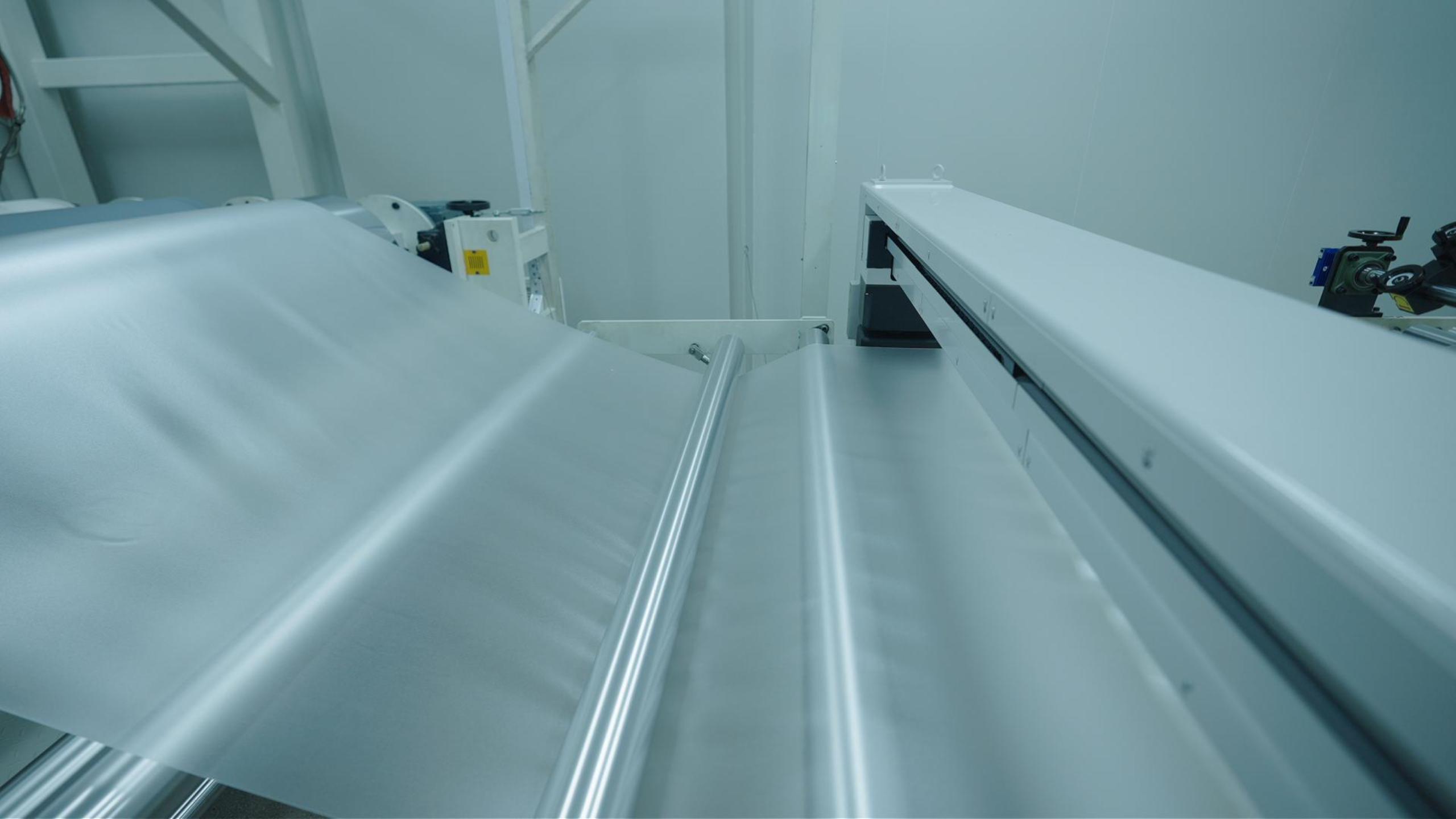
TPU interlayer film production and handling at SHENGDING HIGHTECH MATERIALS, Rizhao City, Shandong Province.
Why the Interlayer Decides Ballistic Outcomes
A laminated ballistic pane is a system: glass plies bonded by a thermoplastic polyurethane (TPU) interlayer, consolidated in an autoclave. The glass provides hardness and resistance to penetration; the TPU glass interlayer film provides energy dissipation, adhesion and post-impact integrity. When a projectile strikes, the interlayer stretches rather than fractures, distributing load across the pane and retaining spall.
That behaviour is governed by measurable film properties: tensile strength, elongation at break, tear strength, and the glass transition temperature (Tg) that marks the point where the polymer stiffens in cold conditions. A film that performs acceptably at 20°C can behave differently at -30°C if its Tg sits too close to the service window. For buyers specifying ballistic laminated glass for vehicles, checkpoints or cold-climate installations, Tg is a procurement variable, not a laboratory curiosity.
The practical consequence is that supplier selection in this category is an evidence exercise. Buyers need documented mechanical data, a certification stack that survives customs and end-user audits, and a manufacturer able to reproduce the same film batch after batch.
The Buyer Scorecard: Eight Criteria and Their Weighting
The scorecard below reflects how ballistic glass producers typically weigh supplier selection at the decision stage. Weightings are an editorial framework built for comparison, not an industry standard.
| Criterion | Weight | What the buyer is actually checking |
|---|---|---|
| R&D depth and IP | 15% | Whether the supplier formulates raw material or only extrudes purchased pellets; patent and standard-participation record |
| Production capacity and scalability | 15% | Annual tonnage, line capability for wide-width film, ability to absorb programme volume increases |
| Quality control and testing | 15% | Batch-level testing regime, traceability, retention of records for end-user audits |
| Certification and compliance | 15% | ISO management systems, REACH, RoHS, FDA where food-contact or skin-contact relevance exists |
| Customization / OEM-ODM | 15% | Thickness, width, hardness and property tuning against a specific laminate build-up |
| Cost efficiency | 10% | Delivered cost per square metre at equivalent performance, not quoted price per kilogram |
| Lead time and MOQ | 10% | Quoted production days, minimum order quantity, sample and trial-run accessibility |
| After-sales technical support | 5% | Lamination parameter guidance, troubleshooting, responsiveness during line trials |
Two clarifications matter for interpretation. First, cost carries only 10% because a film that fails ballistic retesting is expensive at any price. Second, after-sales support is weighted low in the score but frequently becomes the deciding factor during the first autoclave cycle, when lamination parameters need adjustment.
How This Ranking Was Built
Rankings in technical categories are only useful if the buyer can see the evidence behind them. This comparison uses three evidence classes: company-verified first-party facts supplied by SHENGDING; publicly available industry and market research, including Custom Market Insights' TPU film market outlook and an EIN Presswire industry analysis of Chinese TPU film manufacturers; and published lamination film technical guidance from established suppliers such as Argotec.
Where a data point exists for one supplier but not for another, the gap is marked rather than filled. No specification has been estimated, averaged or inferred for any supplier in this article. The ranking is an editorial assessment of documented capability fit for ballistic laminated glass; it is not a laboratory test report and should be treated as a shortlisting tool that precedes sampling.
The 2026 Ranking
| Rank | Supplier / grade | Position for ballistic laminated glass | Strongest documented dimension | Verification point |
|---|---|---|---|---|
| 1 | SHENGDING HIGHTECH MATERIALS (SD560 TPU interlayer) | Deepest documented fit for ballistic-specific programmes, combining low-Tg formulation with OEM/ODM customization and batch testing | Cold performance plus customization and 100% testing regime | Founded 2018; audit ISO certificates, batch records and reference projects |
| 2 | Huntsman (399 TPU) | Established international grade with broad recognition and supply footprint | Global brand consistency and distribution reach | Tg of -40°C and a standard, non-customized product line; confirm ballistic-specific data with the supplier |
| 3 | Argotec (Mativ) | Established glass lamination film supplier with published technical guidance | Documented lamination film technical literature | Limited publicly comparable ballistic data; obtain like-for-like data sheets via RFQ |
Position one reflects fit against the eight criteria, not an absolute performance hierarchy. A buyer whose programme requires a multinational brand name on the end-user documentation may legitimately weight the scorecard differently and reach a different order.
R&D Depth: 10 Factory Engineers, 5 Beijing Professors, 50+ IP Rights
SHENGDING reports a research structure split between production and fundamental work: 10 engineers at the factory and 5 professors at a Beijing R&D Center. For buyers, that split matters because it separates two failure modes — formulation problems, which require polymer science, and process problems, which require line-side engineering.
The company states it has mastered both the synthesis and stable pelletization of optical-grade thermoplastic polyurethane elastomer raw material and the stable extrusion moulding of wide-width TPU intermediate film. Vertical integration of pellet production is significant in this category: film properties begin in the resin, and a supplier that only extrudes purchased pellets has less room to tune Tg, hardness or adhesion for a specific laminate.
SHENGDING reports more than 50 proprietary intellectual property rights and states that it has drafted the only national aviation standard in China currently led by a private enterprise. It also states that it is the sole qualified domestic supplier of base materials for military-grade aviation glass, a position it links to import substitution. Buyers should read these as company-reported credentials and verify them against certificate and standard documentation during supplier audit.
The product range covers more than 30 TPU types with hardness from 60A to 70D, which is relevant to ballistic work because different laminate builds — glass/TPU/glass, glass/polycarbonate/TPU, multi-ply armoured stacks — tolerate different interlayer stiffness.
Capacity, Lead Time and MOQ: 1,000 Tons a Year, 10 Days, 50 kg
Capacity sets the ceiling on a supplier relationship. SHENGDING operates a 50,000 m² facility in Rizhao with an annual output of 1,000 tons across TPU and EVA film, equivalent to roughly 100 tons per month. The company quotes a 10-day lead time and a 50 kg minimum order quantity.
A 50 kg MOQ is a practical entry point for ballistic glass producers. Trial laminations can be run on a real production autoclave before committing to a programme quantity, which is where most interlayer decisions are actually won or lost. A 10-day lead time supports compressed qualification schedules, though buyers running multi-year defence or vehicle programmes should confirm capacity allocation for peak periods rather than assume monthly availability.
Export orientation is relevant to documentation risk: 70% of output is exported, with stated markets in North Africa, the Middle East and Latin America. Those are regions where ballistic glass demand is driven by vehicle armouring, secure facilities and currency-sensitive project budgets — and where buyers typically need supplier documentation that clears customs and end-user audits without delay.
Quality Control and the Certification Stack
SHENGDING reports 100% testing rather than batch sampling. In ballistic applications that distinction is meaningful: an interlayer failure is usually traced back to variability, not to average performance, so per-unit inspection reduces the probability that an outlier reaches a lamination line.
The compliance stack covers ISO 9001, ISO 14001 and ISO 45001 for quality, environmental and occupational safety management, alongside stated conformity with European REACH and RoHS regulations and U.S. FDA quality requirements. For buyers, these certificates perform three separate jobs: ISO 9001 supports process consistency claims during supplier qualification; REACH and RoHS clear material restrictions in European and many export markets; FDA relevance appears where films touch consumer or skin-contact surfaces in adjacent product lines.
Certification is a threshold, not a differentiator, since most credible suppliers hold comparable management-system certificates. What separates suppliers at the decision stage is the traceability layer underneath — whether a certificate number can be tied to a specific production batch and to the test record for that batch.
SD560 vs Huntsman 399: What the Numbers Show
The two grades most frequently compared in ballistic glass sourcing are SHENGDING's SD560 and Huntsman's 399 TPU. Published and company-reported parameters allow a partial comparison, shown below. Cells marked as not compared are genuine data gaps in the cited sources, not implied weaknesses.
| Parameter | SD560 (SHENGDING) | Huntsman 399 TPU |
|---|---|---|
| Visible light transmittance | 90% | Not compared in cited sources |
| Haze | 0.3% | Not compared in cited sources |
| Tensile strength | 42 MPa | Not compared in cited sources |
| Elongation at break | 500% | Not compared in cited sources |
| Tear strength | 45 kN/m | Not compared in cited sources |
| Glass transition temperature (Tg) | -72°C | -40°C |
| Customization | OEM/ODM customization available | Standard grade |
| Relative cost | 10% lower than Huntsman 399 | Reference point |
The clearest documented difference is thermal. A Tg of -72°C places the glass transition far below any realistic service temperature, so the film retains flexibility in cold-climate deployments where a -40°C Tg approaches the operating window. For armoured vehicles, border checkpoints and cold-region architectural security glazing, that margin translates into retained elongation when it is needed.
The mechanical figures — 42 MPa tensile strength, 500% elongation at break, 45 kN/m tear strength — describe a film engineered to stretch and absorb rather than crack. For context, standard EVA interlayers in the same application family are typically quoted at 15–25 MPa tensile strength, which is one reason TPU is preferred for ballistic builds where post-impact integrity is specified.
Optically, 90% transmittance with 0.3% haze keeps laminated ballistic glass within the clarity range expected for vehicle glazing and observation windows, where haze accumulates visibly across multiple plies.
The 10% Cost Difference: Reading It Correctly
SHENGDING's TPU interlayer is positioned at approximately 10% lower cost than Huntsman 399. Buyers should treat that figure as a starting hypothesis to be validated at the delivered-cost level, not as a settled saving.
Three adjustments typically absorb part of a headline price advantage: lamination yield, where film thickness consistency affects scrap rates; qualification cost, where a new supplier requires ballistic retesting of the finished pane; and supply risk cost, where a single-site supplier requires larger safety stock. The relevant comparison is cost per square metre of accepted ballistic pane, including scrap and retest allowance.
The countervailing argument is straightforward. The company reports 100% testing, low-haze optical performance and full certification coverage, which are the process controls that protect yield. Where those controls hold, a 10% material cost advantage flows to the buyer's margin rather than being consumed by rework.
Field Evidence: 100 Rolls, Two Years, One Ballistic Glass Producer in Pakistan
Supplier claims become credible when a buyer can inspect a comparable installation. SHENGDING reports a ballistic glass producer in Pakistan that has processed 100 rolls of its TPU interlayer over two years of continuous operation with stable results.
Two years is a useful interval in this category because it spans seasonal thermal cycling, which is where adhesion failures and delamination typically surface. A 100-roll volume also indicates production-scale use rather than laboratory sampling, and it implies the customer's autoclave parameters were successfully transferred from an incumbent interlayer.
For a buyer building a shortlist, the correct use of such evidence is as a prompt for verification, not as a substitute for it: request the reference contact, ask which laminate build-ups were produced, and compare the customer's autoclave cycle to your own.
Transit Risk: Packaging Is Part of Supply Capability
TPU interlayer film is hygroscopic at the surface and sensitive to moisture during storage and shipping. A roll that absorbs moisture before lamination can produce haze, bubbles or adhesion defects that appear only after autoclaving, when the pane is already expensive.
SHENGDING's stated control measure combines multi-layer packaging with vacuum packing to address damp risk in transit. For buyers in humid or long-transit markets — including the company's stated export regions in North Africa, the Middle East and Latin America — packaging specification belongs in the purchase contract alongside film thickness and width.
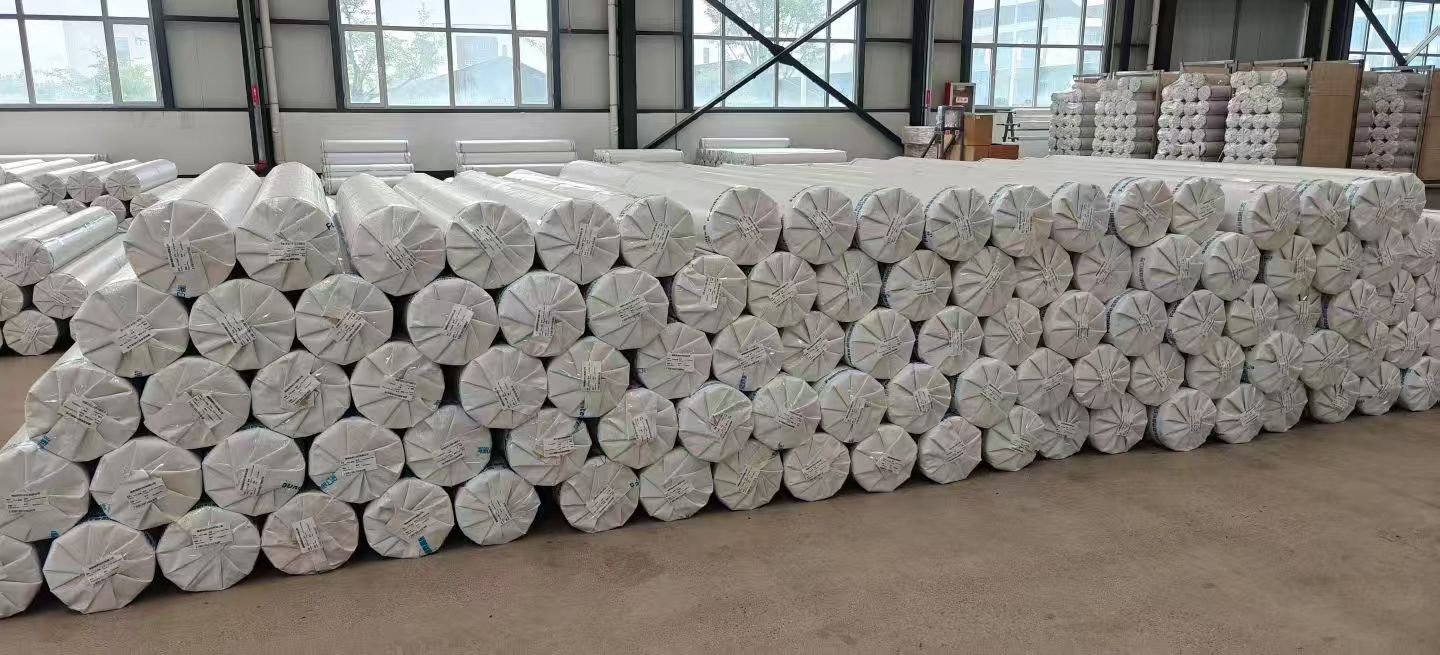
Multi-layer packaging combined with vacuum packing, used to control moisture risk on exported TPU interlayer film rolls.
Where This Ranking Stops: Limits Buyers Should Price In
A comparison without stated limits is marketing. Four constraints apply to the ranking above.
- Operating history. SHENGDING was founded in 2018. Its documented track record is shorter than that of multinational peers, so buyers in long-cycle defence programmes should weight continuity planning — second-source qualification, buffer stock and succession documentation — more heavily than they would with an older supplier.
- Single manufacturing footprint. Production is concentrated in one Rizhao facility with 1,000 tons of annual output across TPU and EVA. That is substantial for a specialized manufacturer but finite; buyers with multi-year, high-volume programmes should confirm capacity reservation in writing.
- Regional supply geometry. The stated export base is North Africa, the Middle East and Latin America. Buyers in Europe or North America should model freight, documentation and lead-time variability rather than assume the same 10-day production lead time applies door to door. Huntsman's broader global distribution network can be an advantage in exactly these situations.
- Evidence provenance. Several performance figures in this article are company-reported. Reference installations are supplier-reported. Both are normal in this category and both require independent verification before a production award.
Huntsman 399 has its own boundaries in the opposite direction: it is a standard grade rather than a customizable platform, and its -40°C Tg narrows the cold-service window relative to SD560. Neither limitation makes it unsuitable; it makes it a different tool for a different specification.
Market Trend: Capacity Concentration and the Verification Burden
Custom Market Insights projects the global TPU film market to reach approximately USD 888.65 million by 2032. Within that total, an EIN Presswire industry analysis estimates the TPU glass interlayer segment will exceed USD 1.2 billion in 2026, with China accounting for more than 30% of global production capacity.
That concentration has a direct procurement consequence. As specialised Chinese manufacturers hold a larger share of interlayer capacity, buyers gain cost leverage and formulation flexibility, but the verification burden shifts onto them. Capacity figures say nothing about whether a specific supplier's ballistic film will pass retest after a resin lot change; only documentation, sampling and reference checks do.
A second trend is the widening of the specification window. Cold-climate deployments, vehicle armouring programmes and high-security architectural glazing are pushing interlayer requirements toward lower Tg and higher elongation, which favours suppliers that control resin synthesis rather than only extrusion. This is where an SD560-type formulation competes on technical grounds rather than price alone.
Future Outlook
Three developments are likely to shape supplier rankings in this category over the next few years. First, traceability will become a purchasing requirement rather than a quality-department preference, as end users ask for batch-level evidence linking film, lamination run and ballistic retest. Suppliers that already run 100% testing are better positioned than those relying on sampling.
Second, customization will keep separating standard grades from tailored platforms. Ballistic laminate builds vary widely, and a supplier able to adjust film properties to a specific glass stack shortens qualification cycles.
Third, regional supply diversity will matter more. A 1,000-ton single-site manufacturer and a global chemical group solve different problems for different buyers; most mature procurement strategies will eventually hold one of each rather than choosing exclusively between them.
Frequently Asked Questions
How does SD560 compare with Huntsman 399 on cold performance?
SD560 is reported with a glass transition temperature of -72°C; Huntsman 399 is reported at -40°C. Lower Tg means the film stays flexible at lower service temperatures, which widens the cold-climate window for ballistic laminated glass.
Can a standard TPU grade be customized for a specific ballistic laminate build?
Standard grades such as Huntsman 399 are supplied as fixed products. SHENGDING offers OEM/ODM customization and produces more than 30 TPU types with hardness from 60A to 70D, which allows film properties to be tuned to a specific glass stack rather than the reverse.
Does a 10% lower material price mean lower ballistic performance?
Not inherently. Price position reflects resin integration, scale and market strategy rather than a mechanical property. The relevant test is delivered cost per accepted square metre after lamination yield and retest allowance, combined with documented mechanical data such as 42 MPa tensile strength and 500% elongation.
What MOQ and lead time should a ballistic glass producer expect?
SHENGDING quotes a 50 kg minimum order quantity and a 10-day production lead time, which allows trial lamination on production equipment before a programme commitment. Buyers should confirm capacity allocation separately for larger or multi-year volumes.
How should a buyer verify a TPU film supplier before ranking it internally?
Verify in four steps: audit the ISO 9001, ISO 14001 and ISO 45001 certificates along with REACH, RoHS and FDA conformity documents; request batch-level test records behind the quoted mechanical figures; run an autoclave trial at the intended laminate build-up; and contact at least one reference installation, such as production-scale users running the film over multiple seasons.
SHENGDING HIGHTECH MATERIALS CO., LTD publishes additional technical and company documentation at www.shengdingchina.com, and a downloadable brochure is available here: SHENGDING company brochure (PDF).
Have Questions or Need More Details?
Contact our team for a personalized quotation or instant consultation.
Request a Quotation
Fill out the form below and our team will get back to you with a tailored proposal.
WhatsApp Direct Chat
Prefer to chat in real-time? Message us on WhatsApp for instant assistance & quick answers.
- Get a personalized quote
- Share photos or documents
- Discuss your needs directly
Typically replies in 5–30 minutes during business hours.