
Rare Earth Cerium Carbonate in Wastewater: Phosphate Removal
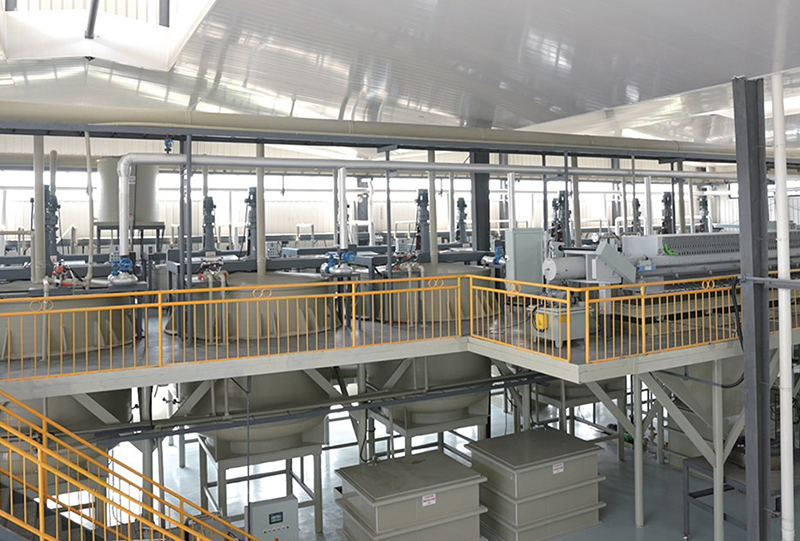
Material consistency for water treatment starts at the plant, not at the dosing point.
Phosphate removal is one of the few wastewater problems where chemistry, rather than biology, usually decides the outcome — and one of the few where the choice of reagent determines how much operator attention the plant will need for years afterwards.
Large particle size cerium carbonate is a trivalent cerium compound supplied as a granular carbonate. In aqueous systems it works by dissolving slowly and releasing Ce³⁺ ions, which react with dissolved phosphate to form cerium phosphate (CePO₄), a salt with very low solubility in water. Because the release is gradual rather than instantaneous, the material behaves as a long-duration phosphate binding source rather than a single-dose coagulant. That distinction — between a reagent that is dosed and a material that is installed — is the core of its application fit.
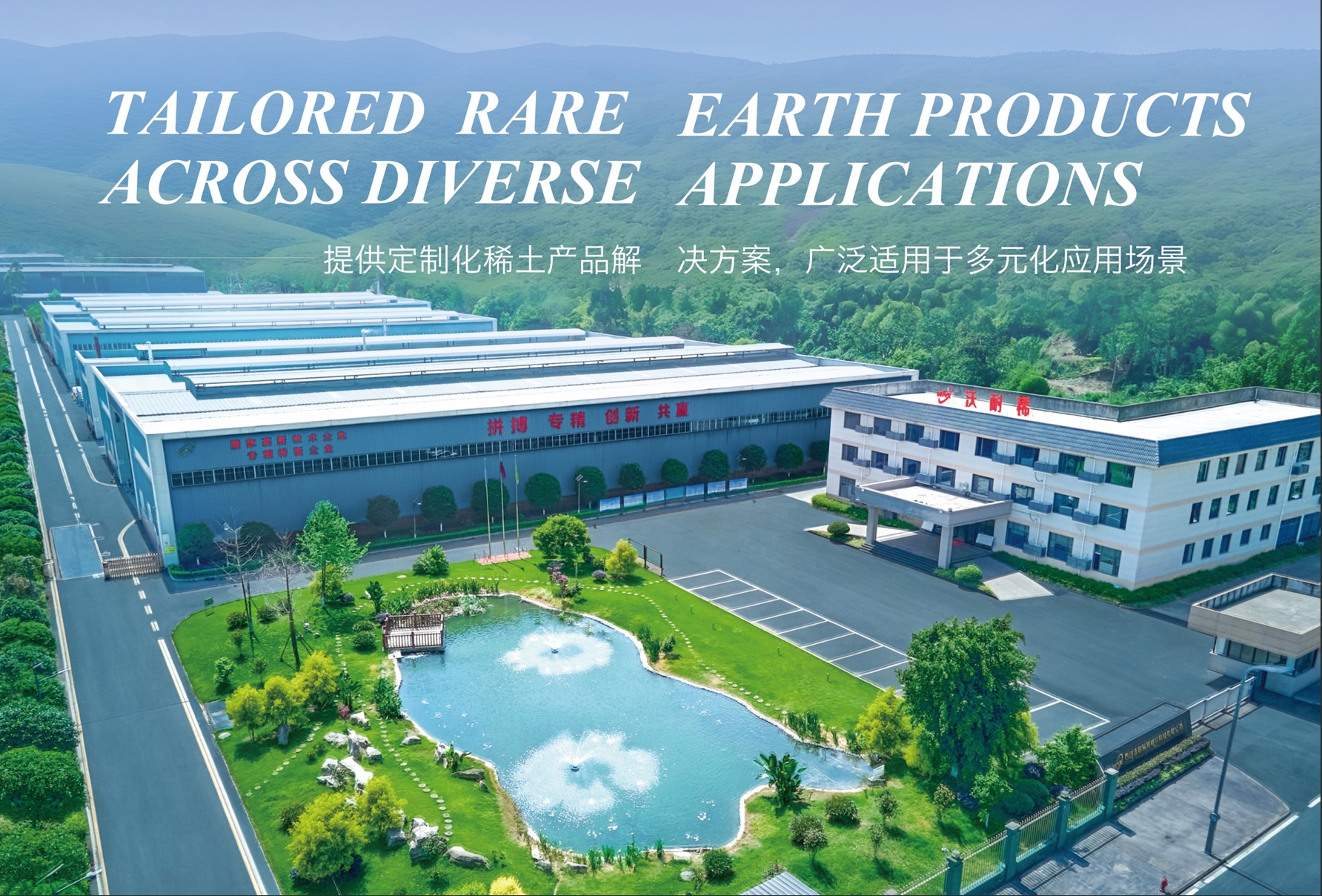
Sichuan Wonaixi New Materials Technology Co., Ltd., trading as WONAIXI, is a manufacturer founded in 2012 in the Shawan Economic Development Zone, Leshan City, Sichuan Province, China. The company produces high-purity rare earth salts and high-precision rare earth polishing powder across nine major categories of rare earth products and a complete zirconium salt series, with more than 50 refined specifications in total; large particle size cerium carbonate sits within the rare earth carbonate range of that portfolio. WONAIXI holds National High-Tech Enterprise and Sichuan Provincial SRDI Enterprise certification, operates a 46,667 m² site with 98 employees and an R&D team of 12 engineers, and reports annual output of 15,000 tons of high-purity rare earth salts plus 3,000 tons of high-precision rare earth polishing powder. Environmental protection is listed among the end-use sectors its materials serve.
This article is written for the engineering and procurement decision that comes before a bulk order: where does large particle size cerium carbonate actually fit for phosphate removal, what operating conditions define that fit, where does it stop fitting, and what does a long-term programme around the material require.
The Phosphate Problem That Conventional Dosing Leaves Open
Conventional phosphate removal works, but it leaves two gaps that a slow-release rare earth material is designed to close: residual phosphate that is difficult to trim without over-dosing, and sludge or re-release behaviour that keeps a plant in a permanent correction loop.
Aluminium and iron salts — alum, ferric chloride, polyaluminium chloride and similar coagulants — remain the default because they are fast, widely available and well understood. Their boundaries are equally well known: precipitation efficiency depends on pH, alkalinity consumption shifts the water chemistry, chemical sludge volume adds to dewatering load, and continued dosing is required to hold a low residual because the binding is sensitive to changing conditions downstream.
Enhanced biological phosphorus removal avoids chemical sludge but depends on carbon availability, temperature and stable operation, and it is generally weaker as a polishing step when the target is a very low residual concentration. Adsorption and ion-exchange media can achieve low residuals but are capacity-limited and require regeneration or replacement cycles that add their own waste stream.
The opportunity that rare earth chemistry addresses is different in kind. Cerium phosphate is a highly insoluble compound, so once phosphate is bound it tends to stay bound. Combined with a granular material that releases its active ion slowly, this creates the possibility of a treatment stage that is charged periodically rather than dosed continuously — attractive in plants where operator time, not reagent cost, is the scarce resource.
Mechanism: Slow Ce³⁺ Release and CePO₄ Formation
In contact with water, large particle size cerium carbonate releases Ce³⁺ gradually into solution. Dissolved phosphate reacts with those cerium ions to precipitate cerium phosphate (CePO₄). Because CePO₄ has very low solubility under normal water treatment conditions, the phosphate that has reacted does not readily return to the dissolved phase, which is the property that makes the reaction useful as a removal mechanism rather than a temporary transfer.
Particle size is not a cosmetic specification here; it governs the release rate. Dissolution rate scales with exposed surface area, so a granular carbonate with a large particle size presents far less surface per unit mass than a fine powder of the same chemistry. The practical consequences for design are consistent:
- Sustained rather than immediate release. Ce³⁺ becomes available over a longer period, so binding capacity is spread across time instead of being consumed in the first contact event.
- Lower peak cerium concentration in the water. A slower release rate means the dissolved Ce³⁺ concentration stays closer to the level needed for precipitation rather than spiking above it.
- Better retention in a treatment stage. Larger particles are more easily retained by a bed, filter or separator than fines, which reduces carryover into downstream equipment.
- Fewer intervention events. A slower depletion rate translates into longer intervals between replenishment, which is the operational argument for using the material in the first place.
A secondary design consideration is that the carbonate component contributes alkalinity. In soft or lightly buffered industrial streams this can mildly stabilise pH across the contact stage, which is usually helpful for maintaining the operating window described below, but it should be confirmed against the actual water rather than assumed.
Operating Envelope: pH, Redox Behaviour and Contact Conditions
Cerium carbonate is applied in aqueous systems at pH above 3. Within that range the material retains the slow-release behaviour that makes it useful for long-duration phosphate binding. Below roughly pH 3, carbonate dissolution accelerates sharply and the release-rate advantage is lost — the material behaves less like a controlled source and more like a rapidly consumed reagent. This is why strongly acidic industrial streams are normally neutralised upstream of a cerium-based treatment stage rather than treated directly with cerium carbonate.
Redox behaviour is the second differentiator, and it is one that procurement teams frequently conflate. Cerium carbonate contains cerium in the trivalent state, Ce(III), and in many water treatment roles trivalent cerium acts as a source of Ce³⁺ for precipitation rather than as an oxidising or redox-active participant. Cerium is not a single substance at the handling level. Ammonium cerium(IV) nitrate — a tetravalent cerium compound used in etching and laboratory oxidation — is classified as “Oxidizing Solid Category 2” and “Corrosive to Metals Category 1” under the US OSHA Hazard Communication Standard (29 CFR 1910.1200, Fisher Scientific SDS). That classification applies to the cerium(IV) oxidising salt, not to cerium(III) carbonate chemistry, and handling procedures should always be taken from the SDS of the specific material being purchased rather than transferred between cerium compounds.
| Parameter | Condition for large particle size cerium carbonate | Design implication |
|---|---|---|
| Water pH | Applied above pH 3 | Acidic streams require neutralisation upstream; below pH 3 the slow-release behaviour is not maintained. |
| Redox role | Ce(III) chemistry, non-oxidising in this role | No oxidant-based reaction is relied upon; hazard classification and PPE must come from the material-specific SDS. |
| Contact pattern | Moderate to long contact with granular material | Suits fixed beds, slow-contact basins and polishing stages rather than rapid inline dosing. |
| Particle size | Large particle size, granular form | Lower fines carryover; solids retention equipment is still recommended downstream. |
| Competing water chemistry | Site-specific | Alkalinity, competing anions and suspended solids affect efficiency; validate with the actual water. |
| Spent material | Cerium-bearing residue | Managed as a controlled waste stream; no direct discharge into water bodies. |
Where the Fit Is Strongest: Applications and Use Cases
The strongest application fit is long-duration phosphate binding in water streams where steady, low-attention performance matters more than second-by-second dosing control. That describes a narrower set of projects than general phosphate removal, and being precise about it prevents a specification error at the procurement stage.
Industrial wastewater with steady phosphate loads. Streams carrying dissolved phosphate from surface treatment, cleaning and process operations are the natural fit where the load is reasonably consistent, pH is already above 3 or can be adjusted, and the plant has contact volume available. The most common arrangement is a polishing duty placed after a biological stage or after metal-salt precipitation: the upstream stages remove the bulk load, and the cerium carbonate stage holds the residual down over a long interval.
Drinking water projects. The same low-solubility behaviour is relevant in drinking water projects, where the objective is phosphate control with minimal residual release. Because the reaction product is a highly insoluble cerium phosphate rather than a soluble residual, the mechanism is compatible with the stricter residual expectations of drinking water treatment — provided the material is qualified for that use and all applicable local drinking water requirements are met.
Where it does not fit: fluoride removal. Large particle size cerium carbonate is not positioned as a fluoride-selective treatment medium. Fluoride control generally relies on different mechanisms — calcium-based precipitation, aluminium-based adsorption or ion-exchange media — and applying a slow-release Ce³⁺ material to a fluoride problem would add material cost without matching the target chemistry. Where a stream contains both phosphate and fluoride, the two are usually designed as separate unit operations with separate chemistry.
For planners, a short fit test is more useful than a general claim. The application is normally justified when all four of the following hold: the phosphate load is steady enough to be held by a slow-release material; pH is above 3 or can be brought above 3; contact time and solids retention are available in the process layout; and a longer service interval is worth a higher unit material cost than a commodity coagulant.
Market Context: Rare Earth Supply and Demand Signals for Water Projects
Rare earth materials remain a growth category, and the supply picture matters to anyone planning a treatment stage that depends on a specialty rare earth compound over several years.
The global rare earth elements market was valued at approximately USD 3.95 billion in 2024 and is projected to reach USD 6.28 billion by 2030, according to Grand View Research. Headline figures in this category should be read carefully: Global Market Insights reports a USD 18.2 billion valuation for the rare earth metals segment in 2024, and the difference between these two numbers reflects scope — mining value versus processing value — rather than a disagreement about direction. For procurement purposes, the useful conclusion is that multiple credible sources agree on expansion, and that any single market size number should be checked against its scope before it is used in a business case.
On availability, China’s rare-earth exports reached 62.6 thousand metric tons in 2025, up from 55.4 thousand metric tons in 2024, according to Statista citing China Customs data — an increase recorded despite tightening export controls. The practical reading for a project engineer is that raw availability has not been the binding constraint in recent years; qualification, documentation and lead time are the larger planning risks. Supplier concentration is also a real feature of the market: Ganzhou Qiandong Rare Earths Group Co., Ltd. was identified as a market leader with a 23.2% global market share in the rare earth metals segment in 2024 (Global Market Insights). Because the metals segment and the compound segment are not the same market, buyers are better served by qualifying at the compound level — the specific carbonate, its particle size distribution and its documentation — rather than inferring capability from industry-level share data.
That is the context in which a mid-sized specialist manufacturer becomes relevant. WONAIXI’s stated output of 15,000 tons per year of high-purity rare earth salts and 3,000 tons per year of high-precision rare earth polishing powder, produced across more than 50 specifications, is the kind of capacity that supports repeat supply of a specific specification rather than one-off lots. Its export ratio of approximately 10%, with main markets in Japan, South Korea, the USA, France and the UK, indicates that the material is already moving into regulated industrial markets where documentation and consistency are part of the purchase requirement.
Comparison with Conventional Solutions — and Where Cerium Carbonate Stops Fitting
Comparing phosphate removal options is only useful when the comparison includes boundaries. The table below sets out the mechanisms and the limitations that should be planned for, not just the advantages.
| Approach | Removal mechanism | Practical boundaries |
|---|---|---|
| Aluminium / iron salt precipitation | Soluble metal ions precipitate phosphate as a metal phosphate | Continuous dosing required; pH-sensitive; chemical sludge volume; residual metal in effluent. |
| Lime precipitation | Calcium phosphate precipitation at high pH | High pH operation, large sludge mass, downstream pH correction. |
| Enhanced biological removal | Phosphate uptake into biomass | Depends on carbon source, temperature and stable operation; limited as a polishing step. |
| Adsorption / ion-exchange media | Surface binding or exchange of phosphate | Capacity-limited; regeneration or replacement creates its own waste stream. |
| Large particle size cerium carbonate | Slow release of Ce³⁺; precipitation of insoluble CePO₄ | Requires pH above 3; slower response than soluble coagulants; higher unit material cost than commodity coagulants; spent cerium-bearing residue needs controlled disposal; performance must be validated with the actual water. |
Three of those boundaries deserve to be stated plainly, because they are the ones most often glossed over in supplier material.
First, the pH floor. A requirement of pH above 3 excludes strongly acidic streams unless neutralisation is added upstream. That neutralisation step carries its own reagent cost and sludge, and in some plants it is not worth adding for a polishing duty.
Second, kinetics. Slow release is an advantage for service interval and a disadvantage for response time. Large particle size cerium carbonate is not an emergency-response remedy for shock phosphate loads or for trimming rapidly fluctuating concentrations. Where flow and load vary widely, the design must either place the cerium stage behind load-equalising treatment or size it with additional margin — and in some installations a conventional coagulant remains the better tool for the fast-response duty.
Third, cost structure. Cerium carbonate is a specialty rare earth product. Its unit material cost is generally higher than that of commodity coagulants such as alum or ferric salts, and the justification rests on reduced operator attention, lower sludge generation and longer service intervals rather than on lower reagent price. Projects that compare only cost per kilogram of reagent will usually reach the wrong conclusion; comparison should be made on cost per unit of phosphate held below target over a defined service interval, including labour and waste handling.
Handling, Safety and End-of-Life Control in Long-Term Programmes
For a continuous treatment line, the largest operational risk is rarely the chemistry itself — it is an interruption. Handling discipline, emergency readiness and waste-cycle documentation are therefore part of the material specification, not an administrative afterthought.
The controls that accompany bulk supply of this class of material are well defined. Chemicals are stored separately from combustible and reductive materials in anti-corrosion sealed containers, and operators wear goggles and anti-corrosive gloves to avoid direct contact. Materials are handled gently and stored and transported independently with classified labels. Waste liquid is recycled centrally with compliant treatment and is not discharged directly into water.
Process and warehouse control: segregation, labelling and closed-loop waste handling in the production environment.
At the organisational level, WONAIXI organises regular chemical safety training for production, warehouse and sales staff; equips operation workshops with a full set of emergency washing, eye flushing and neutralisation treatment equipment; maintains a complete hazardous waste filing and closed-loop recycling management system; and issues MSDS hazard manuals to all customers, with on-site safety guidance provided for bulk order clients.
Read as a programme rather than a list, these measures map onto four controls that a buyer should verify before scaling from a pilot quantity to a bulk contract: material segregation and labelling at both supplier and plant level; personal protective equipment and training for everyone who handles the material; emergency response equipment that is actually installed at the point of use, not merely specified; and a documented closed-loop route for cerium-bearing waste liquid and spent material. The MSDS and on-site guidance element is particularly relevant to long-term supply, because it is the mechanism by which handling knowledge transfers when a customer moves from trial quantities to continuous consumption.
From Decision to Execution: What to Fix Before the First Bulk Order
Once application fit is confirmed, execution risk moves from chemistry to specification, acceptance and replenishment discipline. The sequence below reflects the order in which these issues actually constrain a project.
- Define the target before the material. State the residual phosphate concentration to be held, together with the stream pH, alkalinity, competing ions and the range of flow variation. A specification written without these parameters cannot be evaluated later.
- Validate with the actual water. Because competing chemistry is site-specific, bench and pilot work should use the real stream rather than a synthetic surrogate; the release rate and the achievable residual are both water-dependent.
- Fix particle size and retention together. Particle size distribution and the retention method — bed, filter or separator — should be specified as one decision, since the release behaviour and the solids carryover risk depend on both.
- Confirm the waste route early. Cerium-bearing residues and waste liquid require a documented disposal or recycling path; establishing this after installation creates avoidable compliance risk.
- Agree acceptance criteria before shipment. A pre-shipment test as the acceptance basis keeps the specification discussion at the order stage rather than at the receiving dock.
On commercial terms, MOQ is communicated according to the actual situation; delivery terms are FOB or CIF; the acceptance criterion is a pre-shipment test; and payment can be made by bank transfer, Western Union or PayPal, on a basis of 30% deposit in advance with the 70% balance against the copy of the bill of lading.
The execution-stage point that is specific to a slow-release material is replenishment timing. Because consumption is gradual, the interval between orders is long, and a supply interruption is not immediately visible in effluent quality — it appears later, when binding capacity is exhausted. Long-term programmes therefore tend to qualify a second production lot early, tie reorder points to the measured release interval rather than to calendar cycles, and keep MSDS and waste documentation current as handling volumes increase. In this category, supply continuity and documentation continuity are the same problem viewed from two directions.
Future Outlook
Three developments are likely to shape how rare earth phosphate binding is specified in the coming years.
The first is the direction of nutrient discharge requirements, which have generally moved toward lower phosphate residuals in industrial and municipal discharges. Tighter residuals increase the value of a polishing stage that can hold a low concentration without continuous dosing attention — which is precisely the role a slow-release cerium carbonate stage can occupy.
The second is supply and regional capacity. Rare earth material demand continues to expand across the projections cited earlier, and China’s export volumes rose in 2025 even under tighter export controls. At the same time, Asia Pacific has been identified as the fastest-growing region for high-purity electronic grade cerium compounds used in photomask and LCD production (IMARC Group) — a different segment from water treatment, but one whose capacity growth supports the wider availability of separated, specification-grade cerium chemistry. For water projects, the likely outcome is a broader field of qualified suppliers at the compound level rather than a change in the fundamental chemistry.
The third is waste-cycle design. As cerium-bearing residues from water treatment accumulate, the question of recovery and closed-loop handling becomes a procurement criterion rather than an environmental footnote. Suppliers that already operate hazardous waste filing and closed-loop recycling systems will be better positioned to answer that requirement, and buyers who document their own residue streams now will have fewer retrofit costs later.
The practical conclusion for engineers is that large particle size cerium carbonate is best understood as a long-duration binding material with a defined operating window — pH above 3, non-oxidising Ce(III) chemistry, contact time and solids retention available — rather than as a general-purpose replacement for coagulants. Within that window it offers something the commodity options structurally cannot: a phosphate removal stage that runs quietly between service intervals.
FAQ
How does large particle size cerium carbonate remove phosphate from water?
It releases Ce³⁺ ions gradually into the water, and dissolved phosphate reacts with those ions to form cerium phosphate (CePO₄), a compound with very low solubility. Because the release is slow rather than instantaneous, binding continues over an extended period instead of being consumed in a single dosing event. The large particle size reduces exposed surface area relative to a fine powder, which further slows dissolution and supports longer service intervals.
What pH range is required?
Application is above pH 3. Within that range the material maintains its slow-release behaviour. Below approximately pH 3, carbonate dissolution accelerates and the release-rate advantage is lost, so strongly acidic streams are normally neutralised before a cerium-based treatment stage rather than treated with cerium carbonate directly.
Is cerium carbonate an oxidising chemical?
No. Cerium carbonate is a cerium(III) compound and functions in this application as a source of Ce³⁺ for precipitation, not as an oxidant. This differs from tetravalent cerium compounds: ammonium cerium(IV) nitrate is classified as “Oxidizing Solid Category 2” and “Corrosive to Metals Category 1” under the US OSHA Hazard Communication Standard (29 CFR 1910.1200). Handling requirements should always be taken from the SDS of the specific material purchased, not transferred between cerium compounds.
Which projects are the strongest fit for the material?
Industrial wastewater with steady phosphate loads, where pH is above 3 or can be adjusted, where contact time and solids retention are available, and where a long service interval is valued more than rapid dosing response. Polishing duty after biological treatment or metal-salt precipitation is the most common arrangement. The same low-solubility behaviour is also relevant in drinking water projects where phosphate control with minimal residual release is the objective, subject to local drinking water requirements and material qualification.
Can it be used for fluoride removal?
It is not positioned as a fluoride-selective treatment medium. Fluoride control generally relies on different mechanisms, including calcium-based precipitation, aluminium-based adsorption and ion-exchange media. Where a stream contains both phosphate and fluoride, the two objectives are usually designed as separate unit operations with separate chemistry.
How should spent material and waste liquid be managed?
Waste liquid is recycled centrally with compliant treatment and is not discharged directly into water. Cerium-bearing residues are managed within a hazardous waste filing and closed-loop recycling system. Materials are stored separately from combustible and reductive substances in anti-corrosion sealed containers, handled gently, and stored and transported independently with classified labels.
What are the purchasing terms and acceptance criteria?
MOQ is communicated according to the actual situation. Delivery terms are FOB or CIF, the acceptance criterion is a pre-shipment test, and payment can be made by bank transfer, Western Union or PayPal on a basis of 30% deposit in advance with the 70% balance against the copy of the bill of lading.
Background documentation on WONAIXI’s rare earth product range, specifications and company profile is available in the corporate brochure: WONAIXI corporate brochure (PDF).