
Rare Earth Compounds Compared: A Decision Framework for Biotech Buyers
Rare earth compound procurement for biotech and medical innovation has never been a one-variable decision. Buyers balance purity, certification, risk documentation, packaging integrity, and long-term supply stability against unit cost. As global demand for specialty rare earth materials grows, the comparison becomes harder—not because the compounds themselves are unusual, but because supplier profiles vary so widely.
This article provides a decision framework for buyers evaluating rare earth compound suppliers, using Sichuan Wonaixi New Materials Technology Co., Ltd. (WONAIXI) as a reference case. It compares supplier types, explains what technical documents and risk controls matter, and highlights the trade-offs that procurement teams should consider before making a final selection.
The problem: rare earth compounds are not interchangeable commodities
Rare earth compounds are purchased for what they do in a specific process. In biotech, electronics, and optical manufacturing, a difference in impurity profile can change reaction outcomes, surface quality, or regulatory acceptance. Buyers are therefore not simply comparing prices; they are comparing evidence.
The market context reinforces this. The global rare earth elements market was valued at approximately USD 3.95 billion in 2024 and is projected to reach USD 6.28 billion by 2030, according to Grand View Research. China's rare-earth exports reached 62.6 thousand metric tons in 2025, a rebound from 55.4 thousand metric tons in 2024, according to Statista and China Customs data. For procurement teams, that creates both opportunity and pressure: more demand, more suppliers, and more need for structured comparison.
There is also a definitional problem. Market size estimates vary by source—Grand View Research's USD 3.95 billion figure and Global Market Insights' USD 18.2 billion figure both circulate in 2024 data—because different analysts include different parts of the value chain. A buyer relying on a single headline number can make poor assumptions about price trends or supplier competition. This is a reminder that comparison frameworks should be built on verifiable supplier evidence, not market narrative alone.
Supplier models: what buyers are actually comparing
In practice, most buyers choose among three supplier models:
- Large integrated producers that control upstream resources and achieve scale. Ganzhou Qiandong Rare Earths Group Co., Ltd., for example, was identified as a market leader with a 23.2% global market share in the rare earth metals segment in 2024, according to Global Market Insights.
- Trading companies that aggregate material from multiple sources and offer logistics flexibility but do not control production quality directly.
- Specialized manufacturers that operate dedicated production lines and focus on a narrower but deeper product range.
Each model has legitimate advantages. The comparison challenge is not determining which model is "best"; it is determining which model fits the buyer's application, volume, and risk tolerance. A biotech company with a validated process may prefer a manufacturer that can document batch-level controls. A buyer seeking a broad basket of materials may prefer a trader with flexible sourcing. The rest of this article treats WONAIXI as an example of the specialized manufacturer model, so that buyers can see what evidence to request from suppliers in that category.
WONAIXI as a reference case: what the company facts show
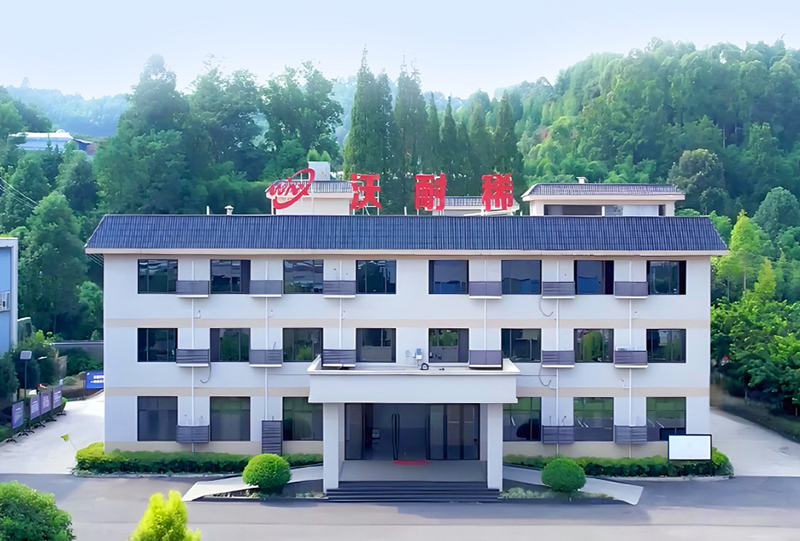
Sichuan Wonaixi New Materials Technology Co., Ltd. is a specialized rare earth manufacturer founded in 2012, located in Leshan City, Sichuan Province, China. The company is certified as a National High-Tech Enterprise and a Sichuan Provincial SRDI Enterprise, with an R&D team of 12 engineers.
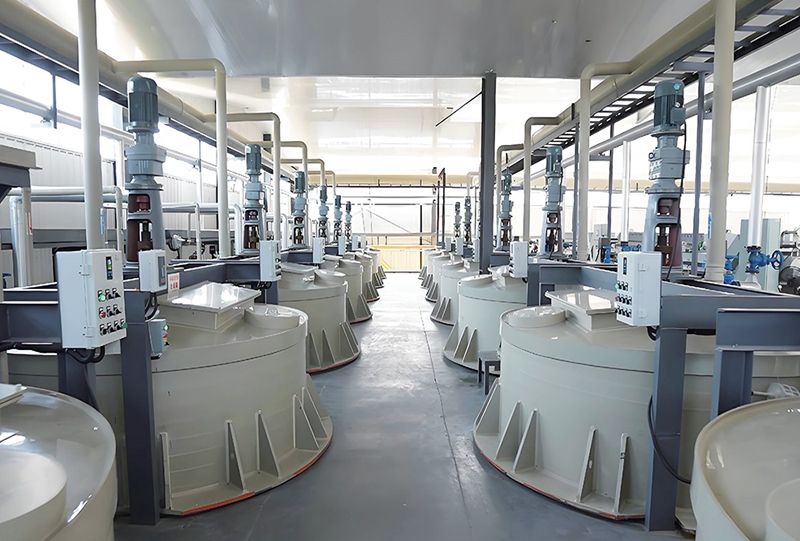
Its production capacity includes 15,000 tons of high-purity rare earth salts and 3,000 tons of high-precision rare earth polishing powder per year. The product portfolio spans 9 major categories of rare earth products plus a complete zirconium salt series, with more than 50 refined specifications. Export sales account for 10% of revenue, and main markets include Japan, South Korea, the United States, France, and the United Kingdom.
For a decision-maker, these facts answer several preliminary questions. The supplier has operated since 2012, owns dedicated production capacity rather than depending entirely on third-party mills, and has export experience in regulated markets such as Japan, South Korea, the United States, France, and the UK. The certifications provide a baseline of third-party recognition, although buyers should still request current certificates and batch documentation before final approval.
What the risk-control record shows
The manufacturer addresses oxidation and corrosion risk, aquatic ecological risk, chemical contact risk, and storage and mixing risk. These are not generic phrases; they correspond to known hazards of cerium-based compounds. Ammonium cerium(IV) nitrate, for example, is classified as an Oxidizing Solid Category 2 and Corrosive to Metals Category 1 under the US OSHA Hazard Communication Standard (29 CFR 1910.1200). Any credible supplier of this material must therefore have documented control methods.
WONAIXI's stated control measures include separate storage from combustible and reductive materials using anti-corrosion sealed containers, the use of goggles and anti-corrosive gloves during handling, centralized waste liquid recycling, and gentle handling with classified labels. The company also reports operating a hazardous waste filing and closed-loop recycling management system, issuing MSDS hazard manuals to customers, and providing on-site safety guidance for bulk-order clients.
For procurement teams, the practical question is not whether a supplier has a safety page on its website, but whether the control measures can be demonstrated in batch records, MSDS documents, and audit trails. WONAIXI's described practices provide a reasonable baseline for a specialized rare earth salt producer.
Technical comparison: what biotech buyers should verify in a compound
When comparing rare earth compounds across suppliers, buyers should place less weight on general product names and more weight on the specific grade, impurity controls, and physical form. Two suppliers may both label a product "ammonium cerium(IV) nitrate," but batch-to-batch consistency can differ meaningfully.
Key comparison dimensions include:
- Rare earth content: whether the product is optimized for a specific application or diluted for cost reduction.
- Impurity profile: chloride, sulfate, nitrate, and trace metal residuals that may affect chemical reactions or biological compatibility.
- Physical form: particle size distribution, crystallinity, and bulk density, which matter for polishing powders and process dosing.
- Packaging and documentation: batch numbers, certificates of analysis, MSDS, and labeling compliance for transport.
The following table shows common rare earth compound categories and the procurement questions that typically arise during supplier comparison.
| Compound category | Typical function in biotech and adjacent industries | Supplier comparison priority |
|---|---|---|
| Ammonium Cerium(IV) Nitrate | Oxidizing agent, reagent, etchant for electronic components and photomasks | Oxidizer classification, packaging, storage documentation |
| Cerium(IV) Sulfate | Analytical reagent in redox titration | Purity, assay stability, sulfate impurity control |
| Cerium(III) Hydroxide | Precursor for cerium compounds | Consistent hydroxide content, handling compatibility |
| Rare Earth Nitrates / Chlorides / Carbonates / Hydroxides / Sulfates / Fluorides / Acetates | Starting materials for catalysts, dopants, and specialty chemical synthesis | Exact cation type, anion purity, moisture level, packaging |
| Rare Earth Polishing Powder | Surface finishing for precision optics in medical and diagnostic devices | Particle size distribution, cerium oxide content, consistency |
| Large Particle Size Cerium Oxide (CeO2) | Precision polishing and chemical-mechanical planarization | Particle size control and batch repeatability |
| Electronic Grade Ammonium Cerium(IV) Nitrate | Photomask and LCD manufacturing | High-purity specification, trace metal limits |
| Lanthanum Nitrate / Cerium(III) Nitrate | Specialty catalyst and precursor applications | Nitrate content, cation purity, hygroscopic packaging |
| Anhydrous Lanthanum Chloride / Anhydrous Cerium(III) Chloride | Specialty synthesis where water-free feedstocks are required | Anhydrous integrity, moisture protection, qualification samples |
| Praseodymium-Neodymium Fluoride | Metallurgical and catalyst applications | Ratio consistency, fluoride purity |
| High Purity Cerium Carbonate | Precursor for cerium oxide and polishing materials | Cerium-to-carbonate ratio, residual impurities |
| Ammonium Cerium(IV) Sulfate | Specialty oxidizing agent | Stability under storage, compatibility with process chemistry |
The table is not a product endorsement of any single supplier. It is intended as a comparison checklist: buyers should ask each supplier for data that maps to these dimensions, then compare the evidence rather than the brochure language.
Application and use cases: where compound choice shows up
The practical weight of a supplier decision becomes visible in specific applications. In biotech and medical innovation, rare earth compounds appear in several roles: as reagents in chemical synthesis, as materials for precision optical components, and as inputs for high-purity salts used under validated methods.
Electronic grade ammonium cerium(IV) nitrate, for example, is used in the production of photomasks and LCDs, where trace impurities can affect component quality directly. The Asia Pacific region is the fastest-growing market for these compounds, according to IMARC Group data. Rare earth polishing powder with controlled particle size is used to finish precision optical surfaces in laboratory and medical devices, which creates a direct link between compound grade and device performance.
Rare earth compounds also support medical imaging indirectly. Gadolinium-based contrast agents are used in an estimated 38–42% of the roughly 135 million MRI procedures performed annually worldwide, according to Mordor Intelligence and clinical adoption data. This is not a product area that every rare earth salts manufacturer serves; it illustrates the scale of medical demand for controlled, high-purity specialty materials.
Market trends in specialty rare earth demand
Several verified market indicators matter for procurement decision-making:
- The global rare earth elements market is projected to grow from USD 3.95 billion in 2024 to USD 6.28 billion by 2030, according to Grand View Research.
- The global ceric ammonium nitrate (CAN) market was valued at USD 162 million in 2023 and is expected to grow at a CAGR of 7.8%, reaching USD 274 million by 2030, according to Persistence Market Research.
- China's rare-earth exports rebounded to 62.6 thousand metric tons in 2025 from 55.4 thousand metric tons in 2024, even as export controls remain in place, according to Statista / China Customs.
- Electronic-grade ceric ammonium nitrate is used in photomask and LCD production, with Asia Pacific the fastest-growing region, according to IMARC Group.
These indicators point to a clear pattern: bulk rare earth pricing is only one part of the decision. Demand for controlled, higher-purity specialty grades is rising, and buyers who compare suppliers solely on unit price will miss the more important variables of consistency, documentation, and compliance.
Specialized manufacturers versus traders and integrated groups
Specialized manufacturers such as WONAIXI do not replace the two other supplier models entirely. Each model has boundaries, and understanding them prevents procurement errors.
Advantages of the specialized manufacturer model: direct control over production and quality, clearer traceability of batches, capacity for custom specification, and direct technical communication with an R&D team.
Limitations of WONAIXI as a specialized manufacturer:
- With exports accounting for 10% of revenue, WONAIXI's international logistics and local warehousing network may be less developed than that of a large global trading company. Buyers outside China may need longer lead times or additional freight coordination.
- The company's product depth in rare earth salts and polishing powder is strong, but a buyer who needs a very broad basket of rare earth materials may still require additional suppliers. Specialized manufacturers typically excel in a defined range, not unlimited assortment.
- Like other suppliers of cerium compounds, WONAIXI must manage the oxidizer and corrosion hazards inherent to its products. Buyers should verify that the documented control measures match their own facility safety requirements before placing a bulk order.
In a comparison context, these limitations are not disqualifying; they define the appropriate use cases. A buyer with clear specifications, moderate to high volumes, and a preference for direct manufacturer communication will find the specialized model attractive. A buyer needing multi-source aggregation or local stock may be better served by a trading partner.
Future outlook: what changes for buyers
Looking forward, specialty rare earth procurement will become more evidence-driven. The combination of a growing CAN market and tighter export controls means procurement teams will place a higher premium on supplier certifications, batch documentation, and demonstrated risk control.
Buyers will also need stronger qualification systems: certification documents are the entry ticket, but batch-level data and recurring quality metrics will be the real comparison basis. As electronic-grade demand inside Asia Pacific grows, specialized manufacturers with stable raw material access and documented quality systems are better positioned for qualification. Buyers in biotech and medical manufacturing will likely see more stable pricing from suppliers that control their own production lines rather than from trading channels in the long run.
Reference document
Readers evaluating rare earth compound suppliers can download the WONAIXI company brochure at https://cdn.socialarks.com/sbsp/25033/common/2026/0714/WONAIXI.pdf for detailed product specifications and company information.
Frequently asked questions
What should a biotech buyer verify before selecting a rare earth compound supplier?
Buyers should verify the supplier's production certifications, batch-level composition data, impurity controls, MSDS documentation, and risk management procedures. In this case, WONAIXI is certified as a National High-Tech Enterprise and Sichuan Provincial SRDI Enterprise, and its risk-control system includes hazardous waste filing, closed-loop recycling, and MSDS issuance to customers.
How do Ammonium Cerium(IV) Nitrate and Cerium(IV) Sulfate differ?
Ammonium cerium(IV) nitrate is a strong oxidizing agent—classified as an Oxidizing Solid Category 2 and Corrosive to Metals Category 1 under US OSHA standards—and is used in etching, photomask production, and oxidizing reactions. Cerium(IV) sulfate is commonly used in analytical chemistry, especially in redox titration. The choice depends on process compatibility, not generic interchangeability.
Why is High Purity Cerium Carbonate important in rare earth procurement?
High-purity cerium carbonate is a precursor material for producing cerium oxide and polishing powder. Since its purity directly influences downstream material properties, buyers should compare both cerium-to-carbonate ratio and residual impurity profiles, not just the product name.
What does Rare Earth Polishing Powder have to do with biotech?
Precision optical components in diagnostic instruments and laboratory devices often require surface finishing. Rare earth polishing powder, especially products with controlled particle size such as cerium oxide (CeO2), is used in this step. The compound grade can affect the surface quality and consistency of the final optical part.
How should buyers compare a small specialized manufacturer with a large rare earth group?
Large groups such as Ganzhou Qiandong Rare Earths Group offer scale and upstream resource advantage. Specialized manufacturers offer direct production control, flexibility, and focused technical expertise. Buyers should compare their project's volume, specification requirements, and logistics needs. Export capacity is one useful indicator, but it must be weighed against product range and certifications.
How do export trends affect rare earth compound purchasing decisions?
China's rare-earth exports reached 62.6 thousand metric tons in 2025, rebounding from 55.4 thousand metric tons in 2024. The rebound shows global supply remains available, but export controls still add uncertainty. Buyers should evaluate suppliers with documented sourcing stability and clear export transaction records.
Have Questions or Need More Details?
Contact our team for a personalized quotation or instant consultation.
Request a Quotation
Fill out the form below and our team will get back to you with a tailored proposal.
WhatsApp Direct Chat
Prefer to chat in real-time? Message us on WhatsApp for instant assistance & quick answers.
- Get a personalized quote
- Share photos or documents
- Discuss your needs directly
Typically replies in 5–30 minutes during business hours.