
Rare Earth Compounds for Implants: Titanium Surface and Zirconia Sintering
Rare Earth Materials · Biomedical Implant Manufacturing
Rare earth compounds are already part of routine medical practice. Gadolinium-based contrast agents are used in roughly 38–42% of the 135 million MRI procedures performed worldwide each year as of 2024, according to Mordor Intelligence. What receives less attention is the second role this chemistry plays — inside the implant itself, on the surface of titanium alloy components and within the zirconia ceramic bodies used for load-bearing orthopedic devices.
This article maps two documented application routes for rare earth compounds in biomedical implants. The first is surface modification of titanium alloy implants, where Product 5854 is used to improve biocompatibility and reduce the likelihood of implant rejection. The second is ceramic processing, where Product 5855 is used as a technical-grade zirconium nitrate precursor that is mixed with yttrium nitrate, spray dried and sintered into high-strength zirconia for orthopedic implants. The same compound family also appears in anti-corrosion coatings, organic catalysis, electronic thin films and biomedicine.
Sichuan Wonaixi New Materials Technology Co., Ltd. (WONAIXI) is a manufacturer founded in 2012 and based in Leshan City, Sichuan Province, China, specializing in the research, development and production of rare earth functional materials. The company operates a 46,667 m² manufacturing facility with approximately 98 employees and a 12-engineer R&D team; its documented production capacity covers 15,000 tons per year of high-purity rare earth salts and 3,000 tons per year of high-precision rare earth polishing powder. Its portfolio spans nine major rare earth product categories plus a complete zirconium salts series, covering more than 50 refined specifications supplied to customers in Japan, South Korea, the USA, France and the UK.
The Starting Problem: A Passive Metal Surface and a Difficult Ceramic
A titanium alloy implant is mechanically strong and corrosion resistant, but the metal surface itself is biologically passive. Implant manufacturers therefore modify that surface so that surrounding tissue responds more favorably and the risk of rejection is reduced. This is the interface problem: the bulk metal does its job, while the outermost nanometres determine the biological outcome.
The ceramic problem is different. Zirconia offers high strength and wear resistance, but those properties only appear after a controlled sintering step. The precursor has to dissolve cleanly, spray dry into uniform granules, decompose without leaving interfering residues, and densify into a stable crystal phase. Residual chloride or sulfate species, uneven granule size, or an uncontrolled decomposition pathway all translate into porosity, defects or inconsistent mechanical performance.
These two problems — surface chemistry and bulk densification — are where rare earth compounds enter implant manufacturing. One group of compounds works at the interface; another works inside the sintering furnace.
Two Application Routes at a Glance
| Implant requirement | Documented rare earth input | Documented role |
|---|---|---|
| Titanium alloy implant surface | Product 5854 | Surface modification of titanium alloy implants; improved biocompatibility and lower rejection rates. Also documented in anti-corrosion coatings, organic catalysis, electronic thin films and biomedicine. |
| Zirconia ceramic body | Product 5855 (zirconium nitrate) | Technical-grade precursor mixed with yttrium nitrate, spray dried and sintered into high-strength zirconia for orthopedic implants and engine structural parts. |
| Coating adhesion on complex implant geometry | Fine crystalline spherical cerium carbonate (Product 5817) | Bioceramic protective coatings for medical implants; submicron spheres conform to complex implant surfaces and improve coating adhesion on metal substrates to reduce delamination. |
| Sintering temperature and phase stability | Cerium oxide (Product 5812), lanthanum acetate (Product 5847), lanthanum hydroxide (Product 5838), zirconium sulfate (Product 5853) | Phase stabilization and low-temperature sintering aids for zirconia and zirconia–alumina composite ceramics. |
Route One — Surface Modification of Titanium Alloy Implants
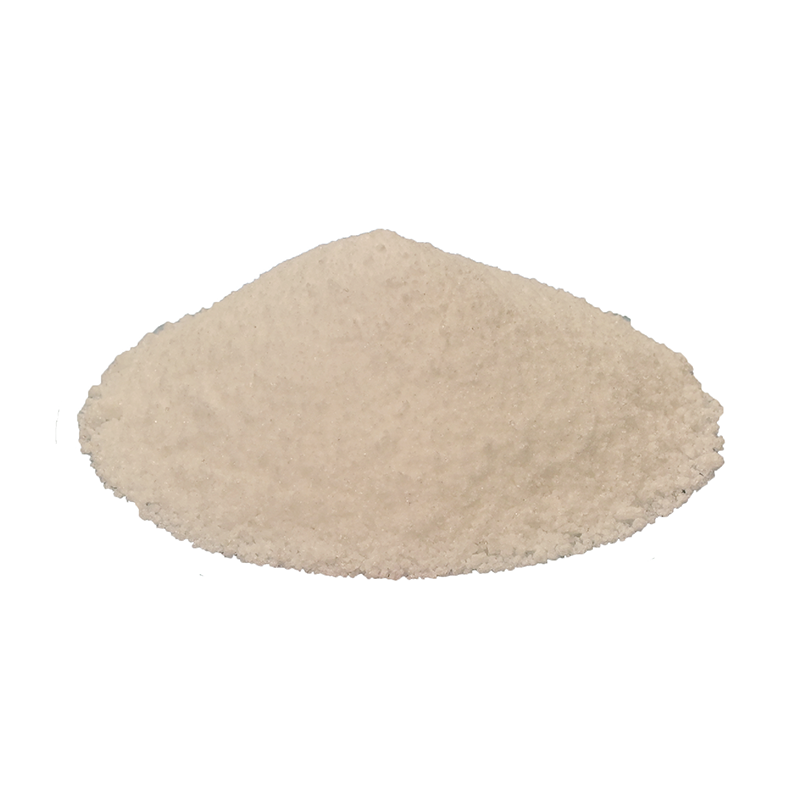
In WONAIXI's application materials, Product 5854 is positioned for the surface modification of titanium alloy implants, where the stated objectives are improved biocompatibility and lower rejection rates. The same compound is documented in four adjacent fields: anti-corrosion coatings, organic catalysis, electronic thin films and biomedicine. That breadth is not incidental — it reflects a compound whose behaviour is driven by surface activity rather than by bulk mechanical properties.
Why hydroxide and carbonate chemistry is used at the interface
The clearest mechanism evidence in WONAIXI's application data comes from lanthanum hydroxide (Product 5838), a related hydroxide compound documented for surface modification of medical implants. Its data sheet describes two relevant properties: extremely low water solubility, which allows sustained release of hydroxyl ions and selective binding with fluoride, phosphate and arsenate species, and a nanoscale particle form whose high specific surface area substantially increases ion adsorption capacity. The application record states that the material enhances implant biocompatibility and relieves inflammation, and separately lists it as a sintering aid for zirconia ceramics.
Hydroxide-type rare earth compounds are therefore best understood as interface modifiers. They are not structural materials; they change what happens at the boundary between a metal surface and biological tissue.
Coating adhesion on non-planar implant surfaces
Coating a titanium implant is not the same as coating a flat plate. Implant geometries include threads, tapers, porous sections and undercuts, and irregular powders tend to produce uneven coverage. WONAIXI's data for fine crystalline spherical cerium carbonate (Product 5817) addresses this directly: the material is described as submicron ultra-fine spheres that conform to complex implant surfaces and enhance coating adhesion on metal substrates to reduce delamination. Its spherical morphology, with few inter-particle contact points and low hygroscopy, is also described as improving flowability and resisting long-term storage agglomeration.
Taken together, Product 5854 for titanium alloy surface modification and spherical cerium carbonate for bioceramic coating adhesion describe the same engineering intent from two angles: control what the outermost layer of the implant does, and make sure it stays there.
Route Two — Zirconium Nitrate Precursors for Zirconia Sintering
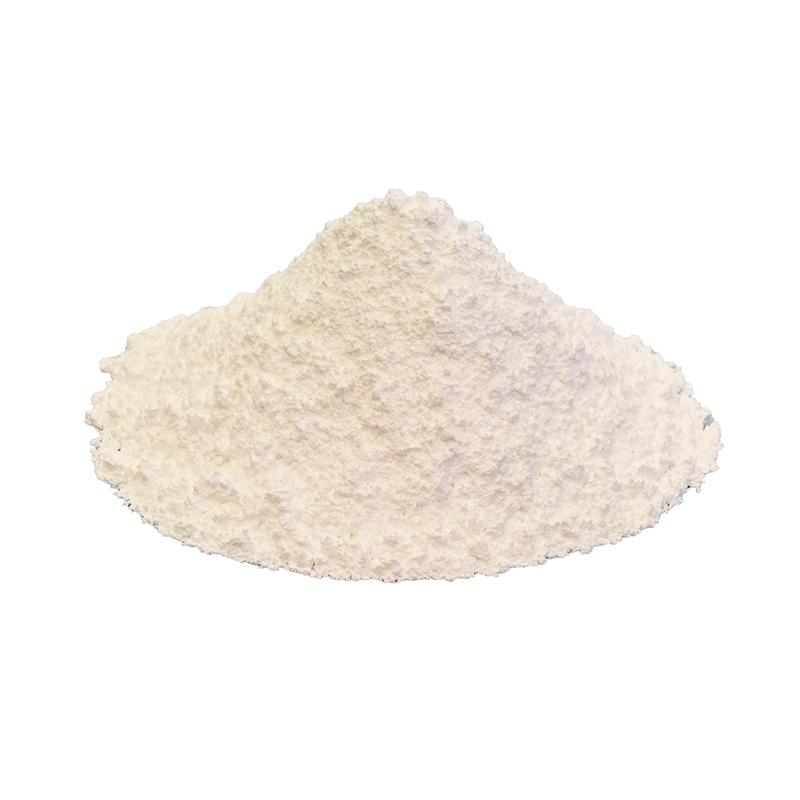
Product 5855 is a zirconium nitrate specified with CAS number 13746-89-9 and a molar mass of 375.36 g/mol for the dihydrate form. Its documented application is as a technical-grade precursor: the material is mixed with yttrium nitrate, spray dried and sintered into high-strength zirconia for orthopedic implants and engine structural parts. The yttrium nitrate supplies the stabilizing cation, while the zirconium nitrate supplies the zirconia network.
What the precursor must deliver before sintering begins
WONAIXI's technical notes describe three precursor requirements that determine the final ceramic. First, high solubility in water and alcohol is needed to prepare high-concentration, stable precursor solutions, so that spraying or spin coating produces uniform films and granules with consistent batch-to-batch composition. Second, Zr⁴⁺ hydrolysis must be controllable, because calcination must leave no persistent chloride or sulfate impurities — the source of defects in both thin films and bulk ceramics. Third, the decomposition pathway should be single and controllable, directly yielding pure-phase zirconia without a secondary impurity-removal step.
For an orthopedic zirconia component, those three factors decide whether the sintered body reaches the density and phase stability the device design assumes.
Sintering aids and phase stabilizers in the same chemistry family
| Compound | Documented function in ceramic processing |
|---|---|
| Cerium oxide (Product 5812) | Documented as a sintering stabilizer for zirconia ceramics: stabilizes the crystal phase, lowers sintering temperature, and improves ceramic density and toughness. |
| Lanthanum acetate (Product 5847) | Documented as a low-temperature sintering aid for zirconia ceramics: forms a liquid phase at high temperature, accelerates grain growth, cuts sintering shrinkage and improves compactness and mechanical strength. |
| Lanthanum hydroxide (Product 5838) | Documented as a sintering aid for zirconia ceramics; dehydrates above 200 °C and converts fully to lanthanum oxide above 450 °C, adjusting ceramic microstructure. |
| Zirconium sulfate (Product 5853) | Documented as a low-temperature sintering aid for zirconia–alumina composite ceramics, reducing sintering temperature by 150–200 °C and improving compactness and thermal shock resistance. |
How the Two Routes Differ Technically
The distinction matters for buyers choosing between compound families, because the two routes fail in different ways.
The surface route is an interface process. Performance depends on particle morphology, dispersion quality, adsorption behaviour and coating adhesion. Spherical, low-agglomeration powders and low-solubility hydroxides are used because they control ion release and coverage at the outermost layer. The risk profile is about uniformity: uneven dispersion produces uneven biological response.
The bulk ceramic route is a solution-to-solid process. Performance depends on precursor purity, solution stability, granule homogeneity and the thermal decomposition pathway. The risk profile is about residues and densification: persistent anions, uncontrolled hydrolysis or a secondary decomposition step produce porosity and phase inconsistency in the sintered zirconia body.
A practical consequence is that the two routes place different demands on the supplier. Surface applications call for morphology control and dispersion data; sintering applications call for solubility, impurity limits, decomposition behaviour and shelf-life data.
Comparison with Traditional Approaches — and Where These Routes Stop
Conventional titanium implant surface preparation relies mainly on mechanical texturing and acid-based etching to create a roughened topography, and conventional zirconia sintering relies on established oxide additives. Rare earth compounds do not replace these steps; they add a chemical layer or a precursor route on top of them, and they carry their own constraints.
| Stage | Conventional route | Rare earth route | Documented boundary |
|---|---|---|---|
| Titanium surface | Mechanical texturing and acid etching | Product 5854 surface modification, targeting biocompatibility and lower rejection rates | An added process step requiring dispersion and coating control; hydroxide-type materials must be isolated from strong acids and CO₂ to avoid carbonate generation |
| Coating on complex geometry | Standard coating powders with irregular particle shapes | Spherical submicron cerium carbonate for bioceramic implant coatings | Adhesion benefit still depends on substrate preparation; spherical powders are prone to sintering in storage in ultra-fine grades |
| Zirconia densification | Conventional oxide additives and standard sintering profiles | Zirconium nitrate precursor (Product 5855) with yttrium nitrate, spray dried and sintered | Toxic nitrogen oxides are released during decomposition above 180 °C, requiring fume extraction; the material is not suited to every existing furnace line |
| Storage and handling | Often handled as inert oxide powders | Hydrated nitrates with defined shelf lives | Zirconium nitrate pentahydrate: 15–25 °C, RH below 60%, away from temperatures above 60 °C, shelf life 1–2 years; anhydrous zirconium nitrate is sealed under nitrogen with a shelf life of only 6–12 months |
Handling classification is a genuine constraint, not a formality. Ammonium cerium(IV) nitrate — a rare earth nitrate used as a reagent in biotech and electronics — is classified as “Oxidizing Solid Category 2” and “Corrosive to Metals Category 1” under the US OSHA Hazard Communication Standard 29 CFR 1910.1200, according to its Fisher Scientific safety data sheet. Buyers planning to introduce nitrate-family rare earth compounds into an implant manufacturing line should expect oxidizer segregation requirements, ventilation requirements and shelf-life management rather than treating the material as a drop-in oxide powder.
Second limitation: the surface route improves biocompatibility and coating behaviour; it does not alter the mechanical properties of the titanium alloy underneath. Third, neither route shortens device validation. The compounds change process inputs, and the qualification burden for an implant program remains with the device manufacturer.
Market Signals: Where Rare Earth Compound Demand Is Moving
The biomedical use of rare earth compounds sits inside a much larger materials market. Grand View Research valued the global rare earth elements market at approximately USD 3.95 billion in 2024, with a projection of USD 6.28 billion by 2030.
Supply has expanded in parallel. China's rare-earth exports reached 62.6 thousand metric tons in 2025, a rebound from 55.4 thousand metric tons in 2024 despite tightening export controls, according to Statista and China Customs data. At the same time, third-party analysis from Global Market Insights identifies Ganzhou Qiandong Rare Earths Group Co., Ltd. with a 23.2% global market share in the rare earth metals segment in 2024 — an indication of how concentrated the upstream supply base remains.
On the specialty side, Persistence Market Research valued the global ceric ammonium nitrate market — a rare earth compound used as a reagent in biotech and electronics — at USD 162 million in 2023, with a projected CAGR of 7.8% to reach USD 274 million by 2030. IMARC Group reports that high-purity electronic-grade ceric ammonium nitrate is a primary material for photomasks and LCD production, with Asia Pacific the fastest-growing region for these compounds.
Medical adoption is the longest-established signal. Mordor Intelligence and clinical adoption reporting indicate that gadolinium-based contrast agents are used in roughly 38–42% of the 135 million MRI procedures performed worldwide annually as of 2024 — evidence that rare earth chemistry is already accepted in regulated medical settings, even if implant-related applications remain narrower.
One caution for buyers compiling market data: published estimates for the same 2024 global rare earth market diverge sharply, from USD 3.95 billion (Grand View Research) to USD 18.2 billion (Global Market Insights). The difference reflects whether the estimate covers processing value or mining value. Any procurement forecast should confirm scope definitions before treating these figures as comparable.
Future Outlook
Two directions look most consequential for implant manufacturers. The first is precursor-driven densification: as zirconia component designs push toward higher strength and tighter tolerances, the precursor and sintering-aid chemistry becomes a more visible variable in device performance. Compounds documented as low-temperature sintering aids — cerium oxide, lanthanum acetate, lanthanum hydroxide and zirconium sulfate — all act on the same levers: sintering temperature, shrinkage, grain growth and phase stability.
The second is interface engineering at scale. The shift from irregular powders to spherical, submicron morphologies in bioceramic coating materials is a manufacturing shift as much as a materials one, because flowability, dust generation and storage stability affect throughput and cost, not only coating quality.
Both directions sit inside a supply base that remains concentrated and export-sensitive. For implant programs, the practical implication is that documentation quality — specification sheets, safety data, decomposition behaviour, shelf life and impurity limits — becomes as important as the compound itself. Where a supplier can provide traceable, application-specific data for both the surface and sintering routes, qualification work moves faster; where it cannot, the burden shifts back to the device manufacturer.
FAQ
What do rare earth compounds actually do in a biomedical implant?
They perform two separate jobs. In surface modification of titanium alloy implants — for example with WONAIXI Product 5854 — the compound is applied at the metal surface to improve biocompatibility and reduce the likelihood of implant rejection. In ceramic processing, a zirconium nitrate precursor such as Product 5855 is mixed with yttrium nitrate, spray dried and sintered into high-strength zirconia for orthopedic implants. Rare earth oxides and hydroxides are also documented as zirconia phase stabilizers and low-temperature sintering aids.
Which rare earth compounds are documented for titanium alloy implant surfaces?
WONAIXI's application data lists Product 5854 for surface modification of titanium alloy implants, with the same material also documented in anti-corrosion coatings, organic catalysis, electronic thin films and biomedicine. Related compounds appear in the same application family: lanthanum hydroxide (Product 5838) is documented for surface modification of medical implants, described as enhancing implant biocompatibility and relieving inflammation, and fine crystalline spherical cerium carbonate (Product 5817) is used in bioceramic protective coatings for medical implants, where submicron spheres are described as conforming to complex implant surfaces and improving coating adhesion on metal substrates to reduce delamination.
How does zirconium nitrate support zirconia sintering for orthopedic implants?
Product 5855 is a zirconium nitrate with CAS number 13746-89-9 and a molar mass of 375.36 g/mol for the dihydrate. Its documented application is as a technical-grade precursor that is mixed with yttrium nitrate, spray dried and then sintered into high-strength zirconia for orthopedic implants and engine structural parts. High solubility in water and alcohol supports high-concentration, stable precursor solutions with consistent batch composition, while controllable Zr⁴⁺ hydrolysis and calcination leave no persistent chloride or sulfate impurities — supporting defect-free ceramics and pure-phase zirconia without a secondary impurity-removal step.
How is the rare earth route different from conventional processing?
Conventional titanium implant surface preparation relies mainly on mechanical texturing and acid-based etching, while conventional zirconia sintering uses established oxide additives. The rare earth route adds an interface chemistry layer or a solution-based precursor route. It is an additional process step rather than a replacement: hydroxide-type materials, for example, must be stored isolated from strong acids and CO₂ to avoid carbonate generation, and precursor nitrates require controlled decomposition with fume extraction.
What storage and handling constraints should buyers plan for?
Zirconium nitrate pentahydrate is documented for storage at 15–25 °C and relative humidity below 60%, away from temperatures above 60 °C, with a shelf life of 1–2 years; anhydrous zirconium nitrate is less stable, sealed under nitrogen with a shelf life of 6–12 months. Toxic nitrogen oxides are released during decomposition above 180 °C, so fume extraction is required. Rare earth nitrates can also carry oxidizer classifications: ammonium cerium(IV) nitrate is classified as “Oxidizing Solid Category 2” and “Corrosive to Metals Category 1” under US OSHA Hazard Communication Standard 29 CFR 1910.1200, per its Fisher Scientific safety data sheet.
Is rare earth chemistry already established in medicine?
In imaging, yes. Gadolinium-based contrast agents are used in roughly 38–42% of the 135 million MRI procedures performed worldwide each year as of 2024, according to Mordor Intelligence. In implant manufacturing, adoption is narrower and concentrated in surface modification and ceramic precursor applications. The wider materials context is also growing: the global rare earth elements market was valued at approximately USD 3.95 billion in 2024, with a projection of USD 6.28 billion by 2030, according to Grand View Research.
Which other rare earth compounds matter for zirconia and implant ceramics?
Cerium oxide (Product 5812) is documented as a zirconia sintering stabilizer that stabilizes the crystal phase, lowers sintering temperature and improves density and toughness. Lanthanum acetate (Product 5847) and lanthanum hydroxide (Product 5838) are documented as low-temperature sintering aids for zirconia ceramics that form a liquid phase, cut sintering shrinkage and improve compactness and mechanical strength. Zirconium sulfate (Product 5853) is documented as a low-temperature sintering aid for zirconia–alumina composite ceramics, reducing sintering temperature by 150–200 °C.
References and Further Documentation
- Grand View Research — Rare Earth Elements Market: https://www.grandviewresearch.com/industry-analysis/rare-earth-elements-market
- Statista / China Customs — Chinese rare-earth exports: https://www.statista.com/chart/32085/chinese-rare-earth-exports/
- Persistence Market Research — Ceric Ammonium Nitrate Market: https://www.persistencemarketresearch.com/market-research/ceric-ammonium-nitrate-market.asp
- Mordor Intelligence — Rare Earth Elements Market: https://www.mordorintelligence.com/industry-reports/rare-earth-elements-market
- IMARC Group — Ceric Ammonium Nitrate Market: https://www.imarcgroup.com/ceric-ammonium-nitrate-market
- Global Market Insights — Rare Earth Metals Market: https://www.gminsights.com/industry-analysis/rare-earth-metals-market
- Fisher Scientific — Ammonium Cerium(IV) Nitrate Safety Data Sheet: https://www.fishersci.com/store/msds?partNumber=AC190221000&productDescription=AMMONIUM+CERIUM%28IV%29+NITRATE+99.99%25&vendorId=VN00032119&countryCode=US&language=en
Product data for the compounds referenced in this article, including zirconium salts and rare earth specifications, is collected in the WONAIXI product brochure (PDF): WONAIXI product brochure.