
Reading CNC Machining Certificates: ISO9001, AS9100D, RoHS
A supplier qualification pack is the fastest filter a buyer has — and usually the least carefully read document in the folder. Most certificate reviews stop at the question of whether the document is current. The more useful question is what the scope statement covers, which site it covers, and whether the validity window still covers the production schedule you are about to commit to.
This reference breaks down the three document families that appear most often in CNC machining and die casting qualification packs — an ISO 9001 quality management system certificate, an AS9100D / EN 9100:2018 aerospace quality certificate, and a RoHS substance-restriction report — together with the CE mark permission that accompanies EU-bound product documentation. The worked example throughout is the document set held by SUNPREC HARDWARE CO.,LTD (SUNPREC CNC Machining), a Dongguan-based one-stop metal parts manufacturer established in 2020 that provides precision CNC machining, CNC turning, die casting, investment casting, extrusion and surface finishing to export markets.
That set contains three identified documents and one permission:
- ISO 9001 certificate IAS25Q391R0, issued by INV.
- AS9100 certificate CN059921, issued by Bureau Veritas, valid 2026-05-26 to 2029-05-25, under EN 9100:2018 / AS9100D.
- RoHS report BTL20250603446, valid 2025-06-10 to 2029-06-10.
- CE mark permission, carried in the same document pack.
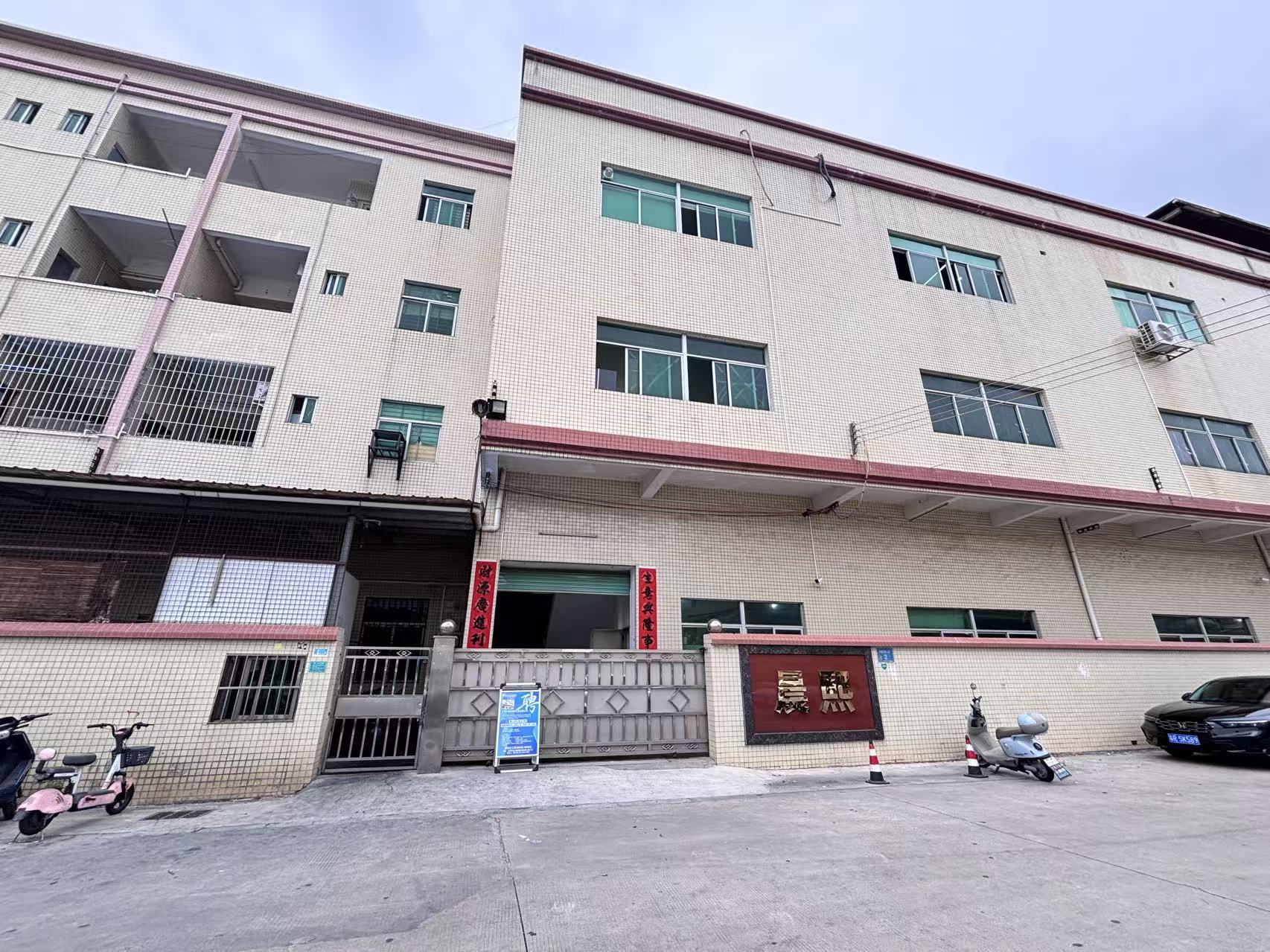
The site on the signboard is the site that must appear on the scope statement. A certificate that names a different legal entity, a different address, or no address at all is not evidence about the factory making your parts.
Why certificate reading has become a procurement skill
For buyers at the decision and execution stage — the point where an approved vendor list entry turns into a purchase order — certificates do three practical jobs. They shorten onboarding, because a documented quality system reduces the number of process questions an auditor has to ask. They set the boundary of what a supplier is allowed to claim. And they create a renewal obligation: every certificate has a maintenance cycle, and a program that outlives the paperwork has to re-qualify.
The pressure behind this is supply-base scale. The U.S. machine shop services market alone is valued at USD 46.3 billion in 2026 and includes approximately 16,400 active businesses, according to IBISWorld data. A buyer sourcing CNC machining globally is not short of suppliers; the scarcity is in verified suppliers. That is why the certificate pack, not the catalogue, has become the deciding document in many sourcing decisions — and why reading it properly is now a procurement skill rather than a filing task.
The three document families, and what each one actually proves
ISO 9001 — the system, not the part
An ISO 9001 certificate confirms that a manufacturer operates a documented quality management system: defined processes, controlled documents, internal audit, corrective action, and traceable records. In SUNPREC's case the certificate is IAS25Q391R0, issued by INV. When reading it, four items matter more than the logo: the certificate number, the issuing body, the certified legal entity and site address, and the exact wording of the scope.
What ISO 9001 does not prove is part-specific capability. A certified system can sit behind a shop that struggles with complex geometry, and it can sit behind one that holds tight tolerances comfortably. The certificate says the process is controlled; it does not say the process is capable of your drawing.
AS9100D / EN 9100:2018 — the aerospace layer
AS9100D is the aerospace quality management standard, published in Europe as EN 9100:2018. It builds on the same system logic as ISO 9001 and adds aerospace-specific requirements: risk-based planning, configuration management, control of critical items, raw material traceability, control of externally provided processes, and disciplined first article inspection.
SUNPREC's aerospace certificate is CN059921, issued by Bureau Veritas, with a validity window of 2026-05-26 to 2029-05-25 under EN 9100:2018 / AS9100D. Two reading rules apply. First, the validity window has to cover the whole production program, not just the first order — a window that closes mid-program creates re-qualification work. Second, the scope statement must name the processes and the site. An aerospace certificate covering a machining plant does not automatically extend to a separate facility, nor to a subcontractor's premises.
RoHS — material composition
RoHS addresses restricted substances in electrical and electronic equipment — lead, mercury, cadmium, hexavalent chromium, polybrominated biphenyls and polybrominated diphenyl ethers, with four phthalates added under the 2015 amendment. Compliance is assessed at the level of homogeneous materials, which means the report describes specific tested materials, coatings and finishes rather than a factory in general.
SUNPREC's RoHS report is BTL20250603446, valid 2025-06-10 to 2029-06-10. RoHS documentation matters most for the parts that end up inside electronic assemblies: machined housings, heat-sink bodies, brackets, fixtures, connector bodies and die-cast enclosures. For those parts, the buyer's check is simple and unforgiving — the tested sample must match the material and finish you have specified. If the alloy source, plating or passivation changes, the report no longer describes what you are buying.
CE mark permission — what it does and does not mean
The CE mark permission in this document pack is the most frequently misread item. CE marking is a declaration that a product meets the requirements of the applicable European Union directives and regulations. It is a market-access statement, not a quality grade and not a third-party certificate of machining capability.
Its applicability is conditional. CE obligations attach only to products falling within the scope of specified directives — machinery, electromagnetic compatibility, low voltage, and RoHS among them — and the obligation usually sits with the finished product or assembly rather than with every individual machined component inside it. A buyer reviewing a CE mark permission should therefore ask three questions: which directive is cited, who signs the declaration of conformity as the responsible economic operator, and whether the technical file is available on request.
| Document type | Reference | Issuer / source | Validity window | Primary buyer check |
|---|---|---|---|---|
| ISO 9001 quality management system | IAS25Q391R0 | INV | Maintained under the issuer's certification and surveillance cycle — confirm status with the issuer | Certified legal entity, site address, scope wording, current status |
| AS9100 / EN 9100:2018 (AS9100D) | CN059921 | Bureau Veritas | 2026-05-26 to 2029-05-25 | Window covers the full program; scope names the site and the machining processes |
| RoHS substance-restriction report | BTL20250603446 | Report reference carries the BTL prefix | 2025-06-10 to 2029-06-10 | Tested sample matches your BOM material and finish; re-test after any material change |
| CE mark permission | Included in the same pack | Manufacturer / responsible economic operator | Not a certificate with an expiry; tied to the declared product and directive | Which directive applies; who signs the declaration; technical file availability |
Scope statements: does the certificate cover the process you are buying?
Scope wording is where most certificate reviews fail. Three questions resolve it quickly.
Does the scope name the process? CNC machining, CNC turning and die casting are separate processes with different equipment, different failure modes and different inspection requirements. A certificate covering "manufacture of metal parts" is broad enough to be true and narrow enough to tell you almost nothing. SUNPREC's production set spans precision CNC machining, CNC turning, die casting, investment casting, extrusion and surface finishing — a buyer should confirm which of these the certificate scope actually lists.
Does the scope name the site? Manufacturing certifications are site-specific. SUNPREC operates from Dongguan City, Guangdong Province, China, with a 3,500 m² facility, 200 employees, a 10-engineer engineering team and an annual output of 5,000,000 units. That address is what a certification body audits and what a buyer should expect to see on the document.
Are subcontracted special processes controlled? Heat treatment, plating, anodizing and passivation are frequently outsourced. Under an aerospace quality system, externally provided processes must themselves be controlled within the supplier's system. If those steps are part of your part's critical characteristics, ask how they are controlled — a certificate covering the main plant does not automatically cover a third-party processing line.
Certificates prove the system; your part needs its own evidence
The transition from certificate to evidence happens at part level. A documented quality control routine for CNC machining covers first article inspection and final inspection for production batches — first article inspection is performed for every new batch, and final inspection includes calipers, micrometers, height gauge and surface roughness tester, with critical components verified on a CMM coordinate-measuring machine for tight-tolerance requirements.
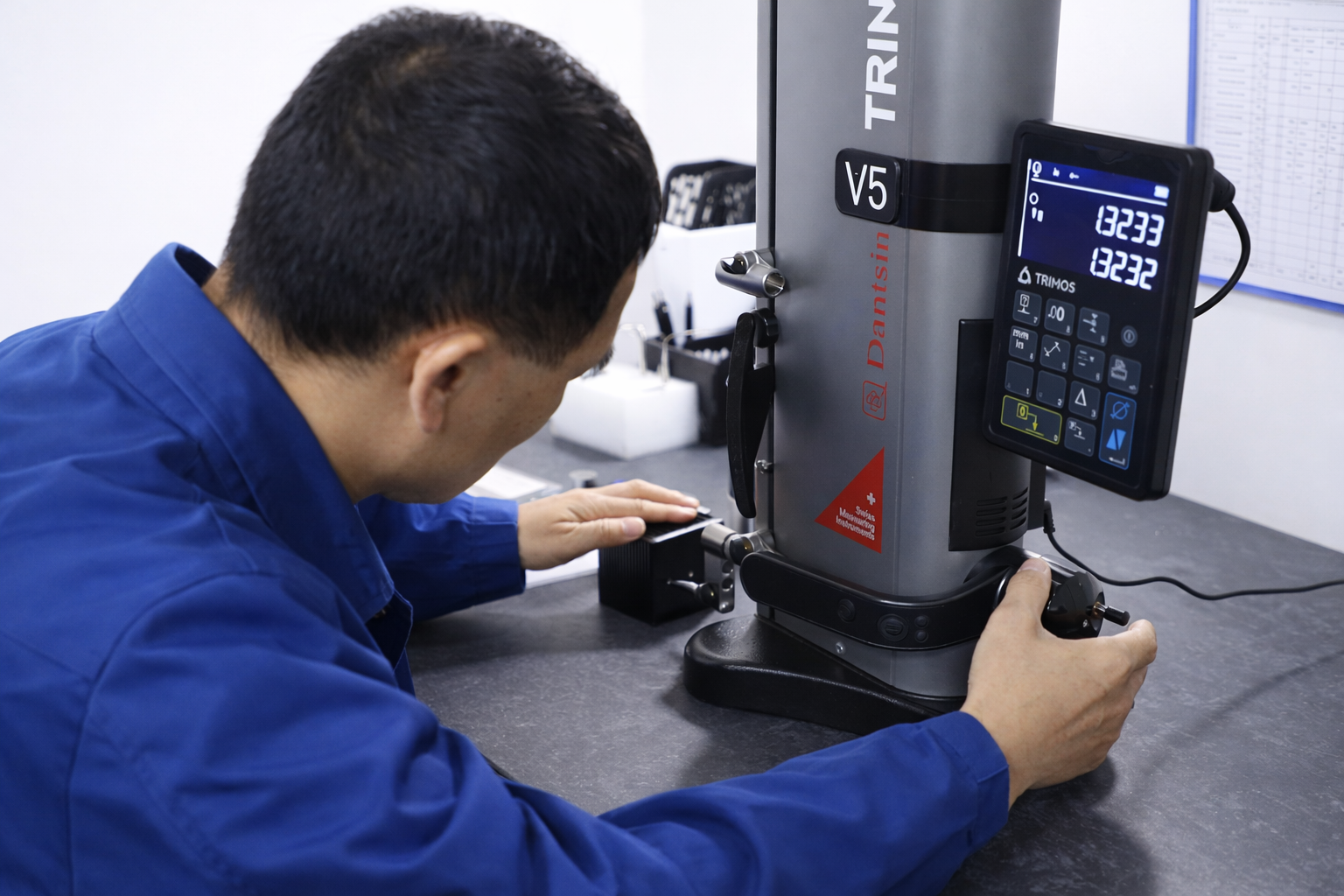
A certificate describes the control system. Dimensional inspection against your drawing describes the part — the two documents answer different questions.
At the process level, that control is organized as incoming material screening, in-process monitoring and final testing before shipment, supported by standardized process files and unified inspection records that capture processing parameters and test data for traceability. At the documentation level, the report package a buyer can expect includes an FAI report, material certificate, COC and dimensional inspection report, produced under an IQC / IPQC / FQC / OQC inspection flow.
That is the practical reading of a certificate pack: the certificate tells you the system exists; the FAI report and dimensional inspection report tell you the system produced your part correctly. Buyers who request only the first document are auditing the supplier's paperwork rather than their own delivery.
Certificates, repeat orders and long-term supply
For repeat programs, document stability becomes part of supply continuity. Two suppliers with identical machine capability are not equivalent if one has certificate windows that expire halfway through a three-year program and the other does not. SUNPREC's aerospace certificate runs to 2029-05-25 and its RoHS report to 2029-06-10, which means a program launched now can complete a typical multi-year production cycle without an interim re-qualification event.
The same logic applies to order structure. The minimum order quantity is 10 units, including for low-volume and small-batch custom orders, which allows a buyer to validate a process on a small batch before scaling. Capability data relevant to that scaling includes tolerance up to ±0.005 mm, FANUC machining centers, and a metrology suite built around HEXAGON CMM equipment, 2.5D optical comparators and TRIMOS high-precision height gauges. Multi-axis capacity covers 3-axis, 4-axis and 5-axis CNC machining, with materials including aluminum, stainless steel, carbon steel, brass, copper, titanium, POM, ABS, nylon and PEEK.

Repeat programs depend on two kinds of continuity: the paperwork has to stay valid, and the parts have to stay identical batch to batch.
On the commercial side, terms are set around the program rather than the transaction: export experience supporting Incoterms from EXW and FOB through to DAP and DDP, common international payment methods including wire transfer and letter of credit, and acceptance against customer-provided engineering drawings and specified dimensional tolerance limits, with alternative acceptance modes such as physical sample comparison or contract-agreed criteria. After-sales quality assurance and customer technical support extend to repeat and ongoing production orders — the operating mode that long-term buyers actually depend on.
Where each document matters most
Aerospace buyers weight the AS9100D certificate and the first article inspection record most heavily, because configuration management and traceability are contractual requirements rather than preferences. Electronics buyers weight the RoHS report, because the machined or die-cast part will sit inside an assembly subject to substance restrictions. Automotive and industrial buyers usually start from the ISO 9001 baseline and add dimensional evidence and process capability data for critical characteristics. Oil and gas buyers typically add material certification and traceability requirements, which is why the material certificate sits alongside the FAI report in the standard document set.
Medical programs need a specific caution. As of 2026-02-02, the FDA's Quality Management System Regulation (21 CFR Part 820) incorporates ISO 13485:2016 by reference for medical device manufacturing. An ISO 9001 or AS9100D certificate is not an ISO 13485 certificate, and a machining supplier qualified for aerospace is not automatically qualified for a device program. Buyers should confirm which quality management standard their own regulatory pathway requires before assuming a certificate transfers.
Market trend: why document verification is gaining weight
The global CNC machining and turning centers market is valued at USD 31.3 billion in 2026, according to Grand View Research, and Asia Pacific accounted for a 55.5% revenue share in 2023 on the same source. Within that total, aerospace CNC machining is projected to grow from USD 4.7 billion in 2024 to USD 8.8 billion by 2033, based on Dataintelo's forecast, and 5-axis vertical machining centers were identified as a critical high-growth segment for complex aerospace and automotive components in 2026.
The procurement implication is straightforward. Growth in exactly the segments that demand traceability — aerospace, complex geometry, high-value components — means more buyers will be evaluating unfamiliar suppliers in unfamiliar jurisdictions. When the supplier base is deep and geographically distributed, portable, verifiable documents become the cheapest form of due diligence available. Certification is not becoming more ceremonial; it is becoming the entry condition for being considered at all.
Certificate-led versus sample-led verification — and the limits of both
| Verification approach | What it relies on | Onboarding speed | Main weakness |
|---|---|---|---|
| Certificate-led | ISO 9001, AS9100D and RoHS documents; scope statements; validity windows | Fast — documents can be checked before any technical discussion | System-level only; says nothing about your specific geometry or tolerance |
| Sample-led | A prototype or first article, measured and assessed in isolation | Slower, but concrete | One part does not prove batch consistency or process control |
| Hybrid (recommended) | Certificate set plus FAI report, dimensional inspection report, material certificate and COC per batch | Moderate up front, fastest over a multi-year program | Requires the buyer to maintain document expiry tracking internally |
Stating the limits plainly is part of reading certificates honestly, and several apply to the document set described here.
- A certificate is not a capability guarantee. ISO 9001 certificate IAS25Q391R0 confirms a controlled quality system, not the ability to hold a specific tolerance on a specific geometry. That question is answered by first article inspection on your drawing.
- Validity windows are fixed dates. The AS9100 certificate CN059921 runs to 2029-05-25 and the RoHS report BTL20250603446 to 2029-06-10. Programs extending beyond either date will require updated documents.
- A RoHS window is administrative, not technical. The report reflects testing of a sample at a point in time. Changing alloy grade, raw material supplier, plating or passivation invalidates the technical conclusion even if the printed window remains open.
- CE mark permission has a narrow reach. It applies only to products within the scope of the cited directives and does not indicate machining tolerance or surface finish capability.
- Standards do not substitute for one another. ISO 9001 does not include the medical device requirements referenced by ISO 13485, and AS9100D does not replace aerospace special-process approvals such as NADCAP for heat treatment, chemical processing or non-destructive testing.
- Corporate history is short. SUNPREC was established in 2020, which is a shorter operating record than many legacy aerospace and medical suppliers carry. Buyers running long-horizon programs should therefore verify surveillance audit history and document continuity rather than inferring maturity from the certificate alone.
Future outlook
Three directions are visible. First, certificate verification is moving from PDF exchange toward issuer-side confirmation, which shifts the buyer's task from reading a document to confirming a record against the issuing body's own entry. Second, as more programs span multiple years, certificate windows will be evaluated as program assets rather than onboarding checkboxes — expiry dates will sit next to delivery schedules in the same tracking sheet.
Third, the evidence layer is thickening. With 5-axis machining and complex geometry becoming the standard for high-value aerospace and automotive components, dimensional evidence produced on CMM equipment will carry as much weight in supplier selection as the management system certificate, and substance-compliance documentation will widen as electronics content grows in mechanical assemblies. The suppliers that remain easy to buy from will be those whose documents stay valid, consistent and traceable — not those with the largest certificate wall.
FAQ
What is the difference between ISO 9001 and AS9100D on a CNC machining supplier's certificate list?
ISO 9001 is the general quality management system standard: it addresses documented process control, internal audit, corrective action and record traceability across manufacturing industries generally. AS9100D, published in Europe as EN 9100:2018, is the aerospace version of the same system standard with additional requirements covering risk-based planning, configuration management, control of critical items, raw material traceability, control of externally provided processes, and first article inspection discipline. A supplier can hold both at once. In this document set, the ISO 9001 certificate is IAS25Q391R0 issued by INV, and the aerospace certificate is CN059921 issued by Bureau Veritas, valid 2026-05-26 to 2029-05-25 under EN 9100:2018 / AS9100D. Buyers of non-aerospace parts typically work from the ISO 9001 baseline; aerospace programs generally require the AS9100D scope to name the machining site and the relevant processes.
Does an AS9100D certificate mean the supplier can machine my aerospace part?
No. An AS9100D certificate confirms that the supplier operates an aerospace-grade quality management system; it does not confirm capability on a specific part, material or tolerance band. Capability is demonstrated through first article inspection against the customer's drawing, dimensional inspection data, and — where critical or special processes are involved — the relevant special-process approvals. Aerospace buyers commonly require a first article inspection report for every new batch, a material certificate, a certificate of conformance and a dimensional inspection report, because those documents describe the part rather than the system around it.
How can a buyer verify that a certificate number is genuine and still valid?
Verification is done through the issuing body, not through the supplier's PDF. For the ISO 9001 certificate IAS25Q391R0, the issuing body is INV; confirm the certificate number, the certified legal entity, the site address, the scope wording and the current status directly with them. For the aerospace certificate CN059921, the issuing body is Bureau Veritas and the stated window is 2026-05-26 to 2029-05-25 under EN 9100:2018 / AS9100D; the same confirmation applies. For the RoHS report BTL20250603446, with a stated window of 2025-06-10 to 2029-06-10, request the full report rather than the cover page, and check that the sample description matches the material and finish in your bill of materials.
Why does a RoHS report carry a validity window, and what happens when it expires?
RoHS compliance is assessed by testing or material declarations captured at a point in time, so a report describes specific tested materials rather than a factory in general. The printed window — 2025-06-10 to 2029-06-10 for BTL20250603446 — is an administrative validity period set by the issuer. The technical conclusion remains valid only while the tested materials stay unchanged. If the alloy grade, the source of raw stock, the plating, passivation or any other surface treatment changes, the part is no longer described by the existing report and re-verification is required, regardless of whether the printed window is still open.
If a component carries a CE mark permission, does that mean the part is certified?
No. CE marking is a declaration by the manufacturer or responsible economic operator that a product meets the applicable European Union directives and regulations; it is not a third-party quality certificate for machined components and it does not indicate tolerance or finish capability. CE obligations apply only to products within the scope of specified directives, such as machinery, electromagnetic compatibility, low voltage and RoHS, and in many supply chains the obligation sits with the finished assembly rather than with individual machined parts inside it. A buyer reviewing a CE mark permission should confirm which directive is cited, who signs the declaration of conformity, and whether the technical file is available on request.
How do certificates support repeat orders and long-term supply?
For repeat programs, documents have to stay valid for as long as production runs. The aerospace certificate CN059921 covers 2026-05-26 to 2029-05-25 and the RoHS report BTL20250603446 covers 2025-06-10 to 2029-06-10, which allows a multi-year production cycle to proceed without an interim re-qualification event. In parallel, batch-to-batch comparability depends on inspection discipline: first article inspection is performed for every new batch, final inspection uses calipers, micrometers, height gauge and a surface roughness tester, and critical components are verified on a CMM for tight-tolerance requirements, with processing parameters and test data recorded for traceability. Practically, buyers should record certificate expiry dates at program start, track renewals alongside delivery schedules, and pair each purchase order with its first article and dimensional inspection reports. Order structure supports this: the minimum order quantity is 10 units, including for low-volume and small-batch custom orders, and after-sales quality assurance and customer technical support cover repeat and ongoing production orders.
For the full equipment, capability and inspection overview behind these documents, the SUNPREC company presentation can be downloaded here: SUNPREC Presentation – June 2026.