
Reading IPX8, IPX4 and Insulation Class B/F on Electric Water Pumps
Two lines in an electric water pump datasheet settle more warranty conversations than any performance curve: the protection class and the insulation class. One describes what happens when water reaches the motor enclosure from the outside. The other describes how much heat the winding is designed to survive. Neither describes what the pump is allowed to move — a distinction that matters most in submersible and sewage duty, where the pump sits inside the very medium it is protecting itself from.
On an electric water pump, the protection class (an IP code such as IPX8 or IPX4) and the insulation class (Class B or Class F) answer two separate engineering questions. The IP code covers water ingress into the electrical enclosure from the surrounding environment. The insulation class covers the thermal capability of the motor winding. Both are commonly printed in the same specification block, which is precisely why buyers tend to treat them as interchangeable quality labels rather than as conditional statements about where a pump may be installed.
This explainer sets out how to read both markings, where each one appears across a real pump range, which liquid and temperature limits sit alongside them, and how to turn the whole set into a qualification checklist that can be applied to any supplier's documentation.
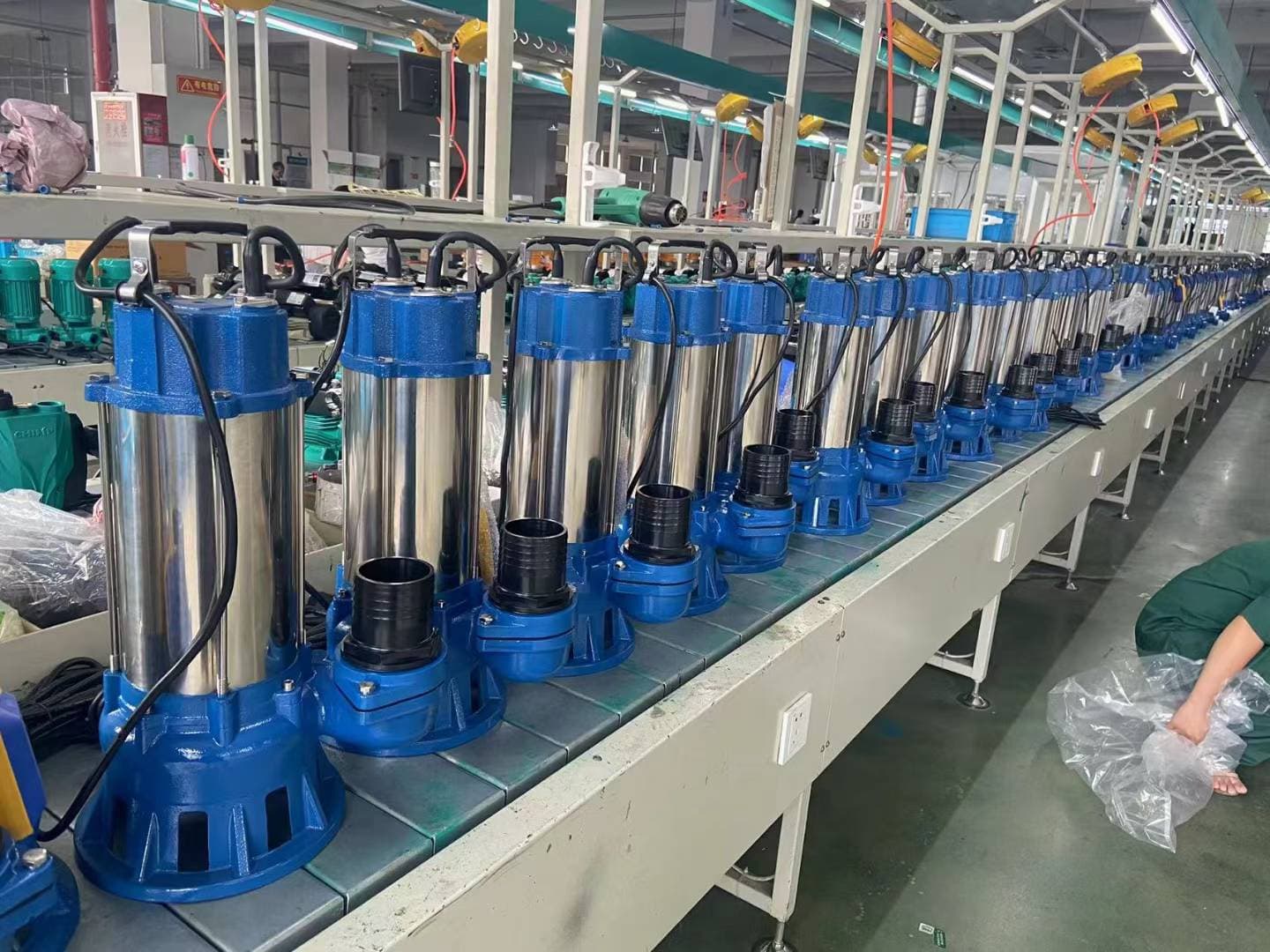
A submersible sewage pump is rated for continuous immersion, but the IPX8 marking alone does not define the liquid, the pH range or the temperature ceiling.
Why the rating line deserves its own review step
Most procurement processes review flow, head and power first, and check certification at the end. The protection class and insulation class sit in between and are frequently copied onto a purchase order without being read, because both look like fixed product attributes. They are not. They are conditional statements.
IPX8 on a submersible pump is a claim about continuous immersion, tested or declared under conditions that the manufacturer sets and publishes. IPX4 on a surface pump is a claim about splashing water — not about being hosed down during operation, and not about surviving a flooded pit. Class B and Class F are thermal classifications of the winding, and neither of them changes the maximum ambient or liquid temperature printed two lines below in the same table.
The practical consequence for a buyer is straightforward: the protection class tells you which duty environment the pump was designed for, and the temperature and liquid limits tell you where that design stops. Reading one without the other is how a sewage pump ends up in a chemically aggressive sump, or a jet pump ends up installed below the water line.
IPX8 and IPX4: two different duty environments
The IP code is defined in IEC 60529. In a marking written as IPX8 or IPX4, the leading X means the first digit — protection against solid foreign objects — is not declared for that product, so only the water digit is being communicated. The second digit is the one buyers actually need to read: 4 denotes protection against splashing water from any direction, and 8 denotes protection against continuous immersion, with the conditions for that immersion specified by the manufacturer.
| Marking | What it declares | Where it appears in this range | What it does not cover |
|---|---|---|---|
| IPX4 | Protection against splashing water from any direction; motor mounted above the water line. | QB vortex, QT self-priming, Jet and STP jet pumps, AUJET automatic pump station, WZB intelligent self-priming, MHF centrifugal. | Immersion, flooding of the installation pit, pressure-jet washdown, condensation inside a sealed terminal box. |
| IPX8 | Protection against continuous immersion, under immersion conditions declared by the manufacturer. | QDX clean-water submersible, V submersible sewage, WQ submersible sewage. | The pumped medium, dry running, abrasive solids, a damaged cable gland or a shortened cable. |
Table 1 — IPX4 and IPX8 as duty-environment declarations rather than quality grades.
The most useful mental model is that the IP rating protects the electrical enclosure from the outside medium. It says nothing about the medium being pumped. A pump can carry a valid IPX8 marking and still be wholly unsuitable for the liquid in a sump, because the liquid side of the specification is governed by pH and temperature limits that appear in a different line of the datasheet. That is why a compliance review should always read the protection class, the liquid temperature, the ambient temperature and the pH window as one block.
How the two ratings actually divide across a catalogue
Chimp Pumps is the brand of Zhejiang Qiantao Pumps Co., Ltd., a pump manufacturer based in Daxi Town, Wenling, Zhejiang, China, established in 1998 and operating a 140,000 m² production site with approximately 630 employees and a stated annual output of up to 3,000,000 units, of which roughly 70% is exported. The range covers around 1,000 pump specifications. What is informative for buyers is not the size of the portfolio but the fact that a single protection class is not applied across it — the split follows function.
Models published with IPX8
The QDX clean-water submersible pump is listed at 0.25–2.2 kW (0.34–3 HP), flow 1.5–65 m³/h, head 7–32 m, maximum immersion depth 5 m, maximum liquid temperature 40 °C, 8 m cable, 1"–4" outlet, insulation class B or F, protection class IPX8, and a single-phase, continuous-operation motor with water cooling.
The V submersible sewage pump is listed at 0.18–2.2 kW (0.25–3 HP), maximum flow 8–40 m³/h, maximum head 7–17 m, maximum immersion depth 5 m, outlet ½"–3", maximum liquid temperature 40 °C and liquid pH 4–10, with protection class IPX8.
The WQ heavy-duty submersible sewage pump is listed at 0.75–18.5 kW (1–25 HP), flow 6–180 m³/h, head 8–75 m, maximum immersion depth 5 m, outlet 2"–6", maximum liquid temperature 40 °C, insulation class B or F and protection class IPX8.
Models published with IPX4
Surface and pressure-boosting models carry IPX4 because their motors are designed to sit in air. The QB vortex pump lists insulation class B or F, protection class IPX4, maximum ambient temperature +40 °C and maximum liquid temperature of 35 °C or 60 °C depending on configuration. The QT self-priming pump lists IPX4 with maximum ambient ≤50 °C and maximum liquid temperature ≤50 °C. The Jet and STP jet pumps list IPX4 with maximum liquid temperature 40 °C and maximum ambient temperature 40 °C. The AUJET automatic pump station follows the same IPX4 pattern. The WZB intelligent self-priming pump adds liquid temperature 0–80 °C, liquid pH 6.5–8.5, maximum ambient 40 °C, insulation class B or F and IPX4. The MHF centrifugal pump lists maximum liquid temperature +40 °C, maximum ambient temperature +40 °C, motor protection IPX4 and insulation class B or F.
Two details buyers routinely miss. First, the published parameter sets for the Jet, STP and AUJET pumps list protection class IPX4 but do not list an insulation class, while QB, QT, WZB, QDX, WQ and MHF do. An absent field in a marketing table is not proof of an absent specification in the product — it should be confirmed against the nameplate or the model datasheet. Second, the immersion depth of 5 m on the QDX, V and WQ series is part of the declared IPX8 condition, and it is the number worth comparing when another supplier simply prints “IPX8” with no condition attached.
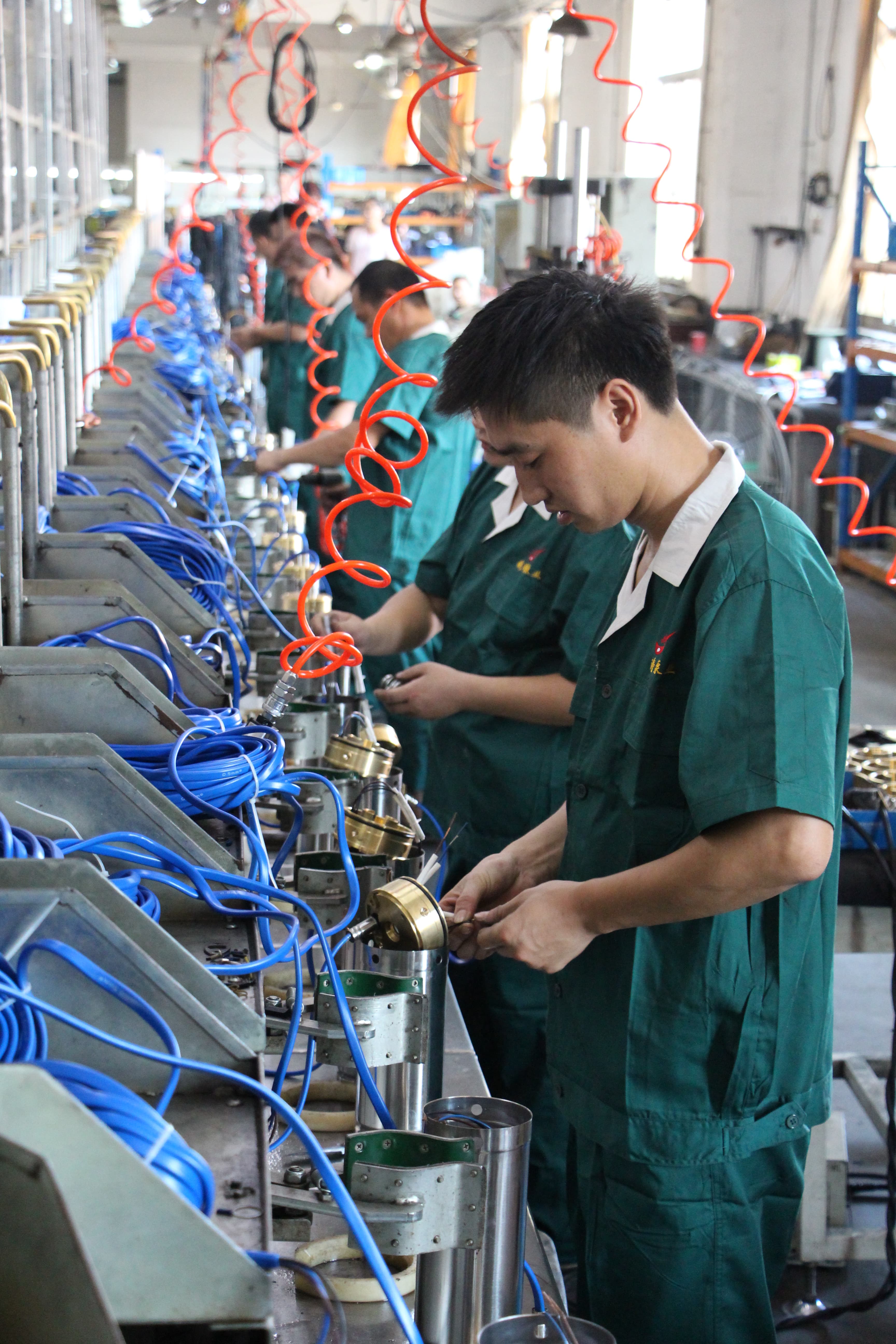
Submersible series: the declared immersion depth, cable length and liquid temperature belong to the same compliance statement as the IPX8 marking.
Insulation class B or F: thermal headroom, not a temperature allowance
Insulation class refers to the thermal endurance of the winding insulation system under the IEC 60085 classification. Class F designates a higher permissible winding temperature than Class B. In application terms, class F provides more thermal margin for the same duty, or the same margin at a higher loading — it does not raise the ambient or liquid temperature limits printed on the datasheet, and it is not a substitute for adequate cooling, correct supply voltage or a properly ventilated installation.
Across this range the insulation class is presented as a selectable specification rather than a fixed per-model attribute: QB, QT, WZB, QDX, WQ and MHF all list “Class B or Class F”. That means the choice is commercial and application-dependent. A pump running continuously in a hot ambient is the case where the higher class is the more conservative selection; an intermittently operated unit in a mild environment may be adequately served by class B. In both cases the ambient ceiling still governs.
Winding material is a separate question from insulation class, and the two are sometimes conflated in supplier documentation. The motors in this range use copper winding, and copper-wire motor pumps carry a stated 12-month warranty. A buyer reviewing documentation should ask for insulation class and winding material as two distinct lines on the quotation, not as a single quality claim.
Liquid conditions: pH 4–10, 40 °C, and where the numbers diverge
For sewage duty the governing numbers are the liquid chemistry window and the temperature ceiling. The V series states liquid pH 4–10 and a maximum liquid temperature of 40 °C. The WQ series states a maximum liquid temperature of 40 °C and a fluid temperature of up to 35 °C. Both are IPX8 sewage pumps with a maximum immersion depth of 5 m, and both sit under a 40 °C ceiling — but where a datasheet lists two related temperature figures, the buyer should confirm in writing which one governs the warranty and which one governs continuous operation.
Ambient and liquid limits are not the same variable and should never be read from the same cell:
| Series | Protection class | Liquid conditions published | Ambient limit published |
|---|---|---|---|
| QB vortex | IPX4 | 35 °C or 60 °C max liquid | +40 °C |
| QT self-priming | IPX4 | ≤50 °C max liquid | ≤50 °C |
| WZB intelligent self-priming | IPX4 | 0–80 °C; pH 6.5–8.5 | 40 °C |
| Jet / STP | IPX4 | 40 °C max liquid | 40 °C |
| MHF centrifugal | IPX4 | +40 °C max liquid | +40 °C |
| HM/VM multistage | Not listed | 70 °C max liquid; 1.0 MPa max working pressure | 50 °C |
| QDX submersible | IPX8 | 40 °C max liquid; 5 m immersion | — |
| V sewage | IPX8 | 40 °C max liquid; pH 4–10; 5 m immersion | — |
| WQ sewage | IPX8 | 40 °C max liquid; fluid up to 35 °C; 5 m immersion | — |
Table 2 — Liquid and ambient limits as published per series. The pH window is not a range-wide figure: V allows pH 4–10, WZB allows pH 6.5–8.5.
Two clarifications prevent most misapplications. First, pH 4–10 is a sewage-pump window, not a general licence for aggressive or chemical media; a buyer with an unusual effluent should treat the published window as the outer boundary of an ordinary municipal-type duty. Second, surface pumps are described as suitable for clean water and liquids similar in physical and chemical properties to water — that phrase is an exclusion clause, not a formality, and it is the reason the same IPX4 pump should not be repurposed for a mildly contaminated sump without a specification review.
Supply configuration: single-phase, three-phase and what the datasheet actually says
Phase availability is not a range-wide attribute, and documentation review should treat it as a model-level field. In this range, the QDX submersible is listed as single-phase with continuous operation. The HM/VM multistage series lists supply options of 220 V or 380 V at 50 Hz. The WQ sewage series covers 0.75–18.5 kW and 2"–6" outlets but does not state phase in its published parameter set.
The correct reading is therefore that single-phase and three-phase availability has to be confirmed per model, together with frequency and starting method, rather than inferred from the family name or from the voltage figure alone. This matters most in OEM orders, where the destination market's supply standard is fixed by the buyer and a phase mismatch discovered at installation is expensive to reverse.
Application fit: which rating belongs where
Submerged duty suits IPX8 models: household water drainage, farmland irrigation from open water, construction and industrial site drainage, water tanks and collection systems, ship and marine drainage, and general water transfer for the QDX series; wastewater drainage, sewage transfer and general dirty-water duty in construction sites, factories, commercial buildings, municipal projects and residential drainage for the V series; and sewage, wastewater, mine drainage, tunnels and heavy construction duty for the WQ series.
Surface duty suits IPX4 models, where the motor stays in air: household water supply and pressure boosting through the AUJET automatic pump station; well water supply, garden irrigation and small water systems through the Jet, STP, QB and QT pumps; automatic water supply and pressure boosting through the WZB intelligent self-priming pump; and building water supply, industrial transfer, HVAC circulation, fire-fighting systems and long-distance transfer through the MHF and HM/VM centrifugal pumps.
The selection order matters: the installed position of the pump decides the protection class first, and flow and head decide the model second. Reversing that order is one of the most common causes of premature failure in residential installations, because a correctly sized surface pump installed below the water line will fail on ingress regardless of how well its duty point was calculated.
Market context: documentation as a trade variable
The global water pump market is estimated at USD 76.1 billion in 2026 (Grand View Research, 2026), and China's centrifugal pump exports under HS code 841370 reached USD 5.3 billion in 2024 (General Administration of Customs of China). At that volume, the majority of cross-border transactions are documentation-led: the buyer sees a datasheet, a nameplate and a certificate file, not a test bench. Independently published performance data for individual pump models remains limited relative to the size of the trade, which is exactly why manufacturer-declared ratings — and the conditions attached to them — carry more weight in pump procurement than in categories with dense third-party testing.
The practical effect on supplier selection is a shift in what buyers ask for. Requests increasingly specify the condition behind an IP rating, the ambient ceiling as a separate field from the liquid ceiling, and the insulation class alongside the winding material. Suppliers who can answer at model level with a written declaration are easier to qualify than suppliers who answer at family level with a single sentence.
Rating-first review versus conventional ordering practice
Conventional practice orders by application name — “sewage pump”, “booster pump”, “irrigation pump” — and accepts whatever protection class the supplier lists on the datasheet. A rating-first review requires four separate lines on the quotation: the protection class per model, the declared immersion condition, the liquid window including pH and temperature, and the insulation class with the winding material.
| Review criterion | Application-name ordering | Rating-first review |
|---|---|---|
| Protection class | Accepted as listed, family level | Verified per model, with declared condition |
| Liquid window | Rarely requested | pH and temperature limits requested in writing |
| Ambient ceiling | Assumed equal to liquid ceiling | Treated as a separate field |
| Insulation class | Read as a quality indicator | Read as thermal margin, with winding material listed separately |
| Supply configuration | Inferred from power rating | Phase, frequency and starting method confirmed per model |
Table 3 — What changes when the rating line becomes a review step rather than a formality.
Where this approach has limits. A rating-first review is slower and does not eliminate risk. The IPX8 marking on a submersible pump in this range is a manufacturer-declared rating tied to a stated 5 m immersion condition; it is not an independent third-party test report, and buyers supplying regulated markets may still need conformity documentation tied to the exact model. Equally, class F insulation does not extend a 40 °C ambient limit, and no protection class covers dry running, abrasive solids or a damaged cable gland. Where the application is genuinely aggressive — high-chloride water, abrasive slurry, or temperatures above the published ceiling — the correct answer is usually a different pump category or a different wetted-material specification, not a higher rating on the same model.
A documentation checklist for pump buyers
Seven fields cover the compliance gap that most often appears between a datasheet and a delivered pump. The checklist can be applied to any supplier, not only to the range used as the example here.
| # | Field to request | Why it matters |
|---|---|---|
| 1 | Protection class per model | IPX8 and IPX4 are not interchangeable across a family; confirm the class on the specific model ordered. |
| 2 | Declared immersion condition behind IPX8 | Immersion depth, medium and duration define the claim. QDX, V and WQ all state 5 m; a supplier stating “IPX8” without a condition has stated less. |
| 3 | Liquid temperature and pH window | V states pH 4–10 and 40 °C; WZB states pH 6.5–8.5 and 0–80 °C. Generalising between series mis-specifies the pump. |
| 4 | Maximum ambient temperature as a separate line | QB lists +40 °C ambient with 35 °C or 60 °C liquid; HM/VM lists 50 °C ambient with 70 °C liquid. The two ceilings are independent. |
| 5 | Insulation class and winding material | Class B or F describes thermal margin; copper winding describes the motor build. Both should appear on the quotation. |
| 6 | Supply voltage, frequency, phase and starting method | QDX is listed single-phase; HM/VM lists 220 V or 380 V options; WQ does not state phase. Confirm at model level. |
| 7 | Evidence bundle | Nameplate photo, test report issued with the sample (samples are normally ready within 7 days), certificate scope matching the ordered model, and written warranty terms. |
Table 4 — Seven fields that convert a datasheet into a qualification record.
For OEM programmes, three further items belong on the same sheet: logo customisation on the carton and on the pump nameplate, the buyer's own packaging design if supplied, and the stated minimum order quantity of 50 units per model. Colour carton customisation is available free of charge above 500 units, and moulds or customised configurations are discussed per project. The manufacturer holds ISO 9001 for its quality system, with CE and RoHS compliance stated for the pump products, alongside CB, SA8000:2014, ISO 14001 and ISO 45001 certifications listed in its company profile. None of these replace a model-level declaration — they set the floor for the audit conversation.
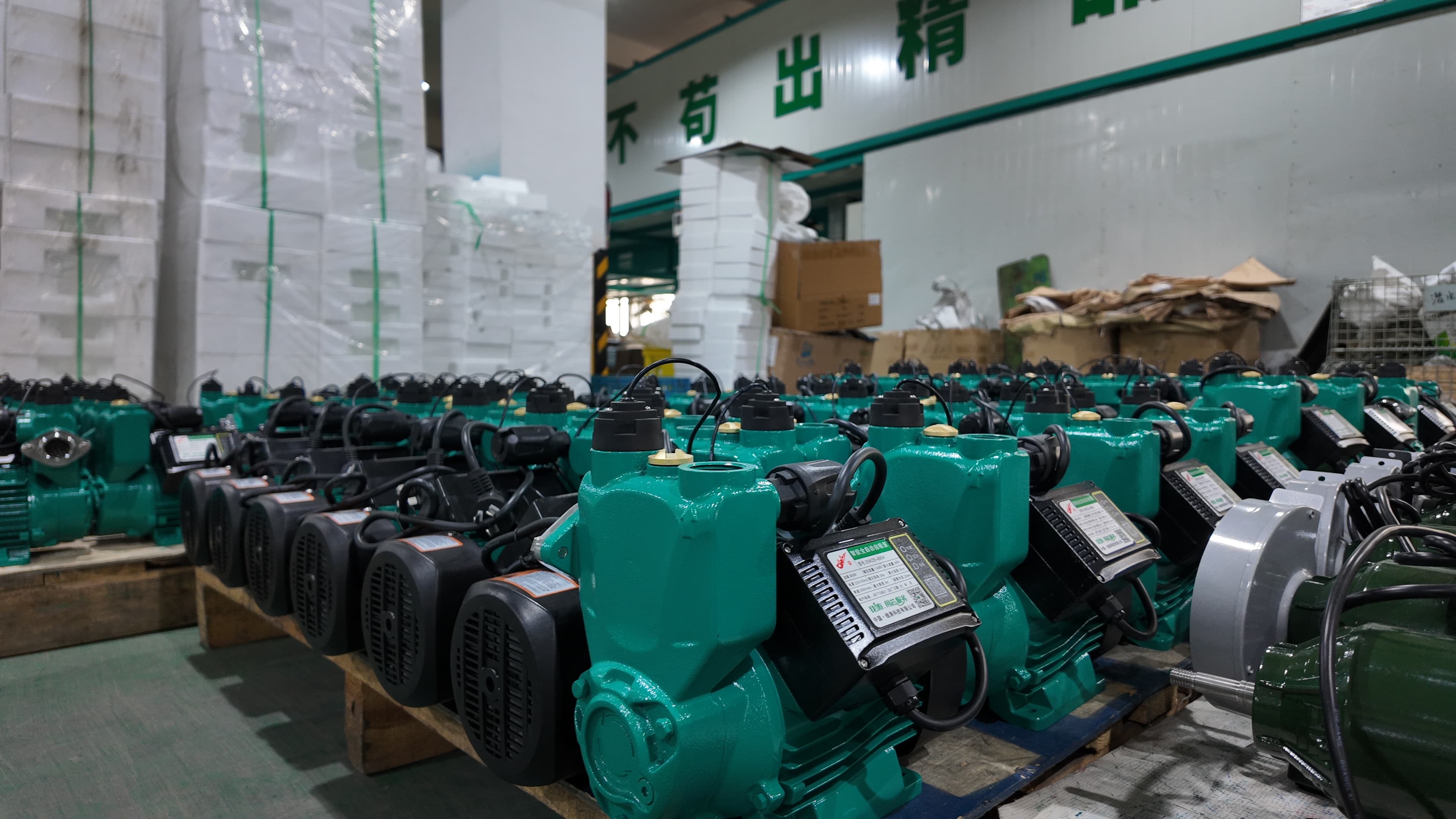
Surface pumps carry IPX4 because the motor is designed to run in air; the class describes splash protection, not immersion tolerance.
Future outlook
Two directions are visible from the documentation side. The first is granularity: buyers are moving from family-level claims to model-level declarations, requesting the immersion condition, the ambient ceiling and the insulation class as discrete fields because those are the fields that decide warranty outcomes. Suppliers who publish conditions in the catalogue reduce qualification time for every downstream buyer.
The second is the growing share of surface pumps with integrated control electronics. Automatic pump stations and intelligent self-priming pumps keep an IPX4 enclosure because the motor still runs in air, but the added control hardware introduces failure modes that neither the IP code nor the insulation class describes. For those products, the compliance conversation widens to include the electronics enclosure and the control specification, and the seven-field checklist becomes a starting point rather than a complete record.
What is unlikely to change is the underlying reading rule: a protection class defines the environment a pump was designed for, and the temperature and liquid limits define where that design ends. Buyers who read both together make fewer specification errors than buyers who read either one alone.
Frequently asked questions
What is the difference between IPX8 and IPX4 on an electric water pump?
IPX8 declares protection against continuous immersion under conditions the manufacturer specifies; IPX4 declares protection against splashing water from any direction. In this range, submersible and sewage models — QDX, V and WQ — are rated IPX8, while surface and boosting models — QB, QT, Jet, STP, AUJET, WZB and MHF — are rated IPX4. The X indicates that the solid-particle digit is not declared in the marking.
Does an IPX8 rating mean the pump can handle any liquid?
No. The IP code describes protection of the electrical enclosure against water entering from outside; it does not describe the pumped medium. The medium is governed separately by the published liquid temperature and pH limits — for example, the V submersible sewage series states liquid pH 4–10 and a maximum liquid temperature of 40 °C, while the WZB self-priming pump states liquid pH 6.5–8.5 and a liquid temperature range of 0–80 °C.
How should a buyer read insulation class B or F?
As the thermal classification of the motor winding under IEC 60085, where class F permits a higher winding temperature than class B. It does not change the maximum ambient or liquid temperature of the pump. QB, QT, WZB, QDX, WQ and MHF list insulation class B or F as a selectable specification, while the Jet, STP and AUJET parameter sets list protection class IPX4 without a published insulation class.
What are the maximum liquid and ambient temperatures for the sewage models?
The V series states a maximum liquid temperature of 40 °C and liquid pH 4–10. The WQ series states a maximum liquid temperature of 40 °C and a fluid temperature of up to 35 °C. Both are rated IPX8 with a maximum immersion depth of 5 m. Where two related temperature figures appear in the same datasheet, the buyer should confirm which figure governs continuous operation and which governs the warranty.
Are Chimp Pumps electric water pumps available in single-phase and three-phase versions?
Availability is model-specific rather than range-wide. The QDX submersible pump is listed as single-phase with continuous operation; the HM/VM multistage series lists 220 V or 380 V supply options at 50 Hz; the WQ sewage series covers 0.75–18.5 kW with 2"–6" outlets but does not state phase in its published parameters. Voltage, frequency, phase and starting method should be confirmed at model level on the quotation and on the nameplate.
What documentation should accompany a submersible or sewage pump order?
At minimum: the protection class for the ordered model with its declared immersion condition, the liquid temperature and pH window, the maximum ambient temperature as a separate field, the insulation class and winding material, and the supply specification including phase. Samples can be supplied together with test reports and are normally ready for shipment within 7 days. Copper-wire motor pumps carry a stated 12-month warranty, and the stated minimum order quantity is 50 units per model.
The manufacturer's factory introduction document, covering production and quality-system information, is available for download: Chimp Factory Introduction (PDF).
Have Questions or Need More Details?
Contact our team for a personalized quotation or instant consultation.
Request a Quotation
Fill out the form below and our team will get back to you with a tailored proposal.
WhatsApp Direct Chat
Prefer to chat in real-time? Message us on WhatsApp for instant assistance & quick answers.
- Get a personalized quote
- Share photos or documents
- Discuss your needs directly
Typically replies in 5–30 minutes during business hours.