
Reading PCB Certificates: IATF 16949, ISO 9001 and UL Scope
Reading PCB Certificates: IATF 16949, ISO 9001 and UL Scope
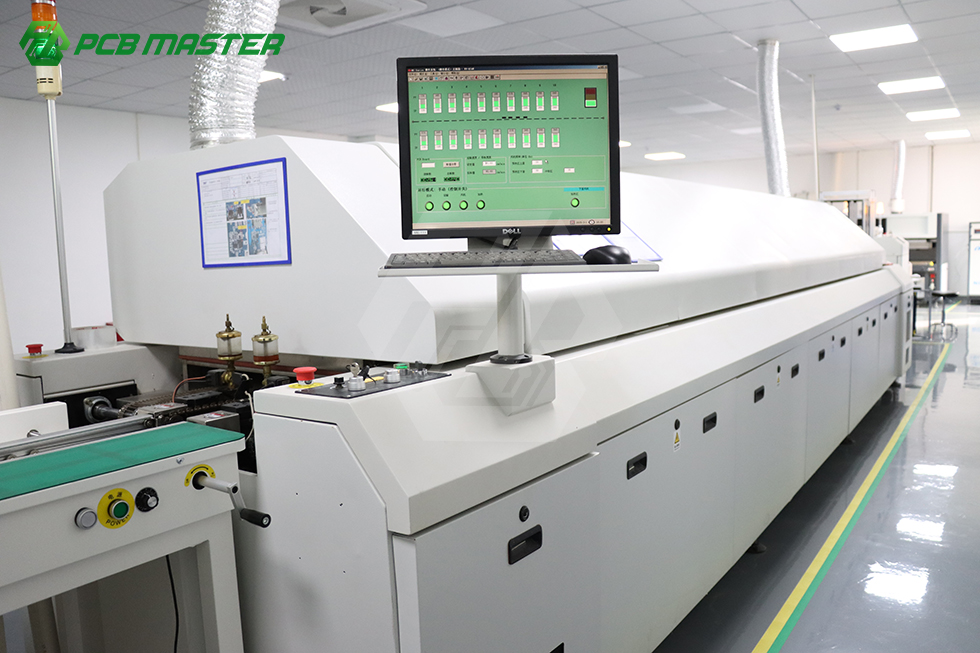
SMT reflow is a manufacturing process; the certificate scope, not the process photo, determines what is covered.
A PCB certificate is not a blanket qualification. It is a document with a subject, a scope and a market boundary. PCBMASTER’s supplied certification statements show why that distinction matters: ISO 9001 and IATF 16949 are presented as quality-management-system coverage for manufacturing and assembly, while UL Safety Certification is presented for a Flex PCB product in the US market. For buyers in automotive electronics, smart medical instruments and wearables, the practical question is not whether a supplier has a certificate, but whether the exact part, process and market are inside its scope.
This article treats the statements as company-provided certification information, not as an independent audit. The aim is to show how a buyer can read them, map them to an application and write them into purchasing terms without turning a certificate into a broader promise than it makes.
The short answer: three documents, three different jobs
ISO 9001 addresses a manufacturer’s quality management system. In PCBMASTER’s stated scope, it covers quality management in manufacturing and assembly processes for global electronics manufacturing markets. IATF 16949 is the automotive quality management system standard, and PCBMASTER’s supplied statement ties it to PCB product types including Flex PCB, Rigid-Flex PCB and PCB Assembly, again with manufacturing and assembly coverage. UL Safety Certification is a product-safety claim: PCBMASTER states that it applies to its Flex PCB product for the US market.
Those three statements are related but not interchangeable. ISO 9001 and IATF 16949 describe how a supplier manages quality. UL describes a safety certification for a product in a market. A buyer who needs an automotive-quality supplier, a US-market product-safety document and a general manufacturing quality system may need all three, but should not accept one as proof of another.
The scope table: match the certificate to the purchasing question
| Credential | Certified subject | PCBMASTER stated scope | Buyer check | What it does not replace |
|---|---|---|---|---|
| ISO 9001 | Manufacturer quality management system | Quality management in manufacturing and assembly processes for global electronics manufacturing markets | Does the scope statement cover the processes and product family in the RFQ? | Product safety approval or automotive part qualification |
| IATF 16949 | Automotive quality management system | Flex PCB, Rigid-Flex PCB and PCB Assembly, with manufacturing and assembly coverage for global electronics markets | Is the exact part family and process route inside the stated scope? | Customer-specific automotive requirements or field validation |
| UL Safety Certification | Product safety certification | Flex PCB product for the US market | Does the certificate name the exact product and market? | ISO 9001 or IATF 16949 quality-system coverage |
| RoHS | EU environmental compliance | Flex PCB product for the EU market | Is EU market compliance required as a separate acceptance item? | UL safety certification or quality-system certification |
What ISO 9001 covers in PCBMASTER’s stated scope
ISO 9001 is an international quality management system standard. PCBMASTER’s supplied statement says the manufacturer holds ISO 9001 for quality management in manufacturing and assembly processes, applicable to global electronics manufacturing markets. That is a useful supplier-qualification input because it addresses process control, documentation and the way quality-related activities are managed across the organization.
It is not a product certificate. ISO 9001 does not by itself certify a PCB’s electrical performance, its safety in a particular end product or its fitness for an automotive, medical or wearable application. Those questions require product-specific evidence and, where applicable, application-specific qualification. The scope statement should also be read narrowly: the supplied wording names manufacturing and assembly processes. A buyer should confirm that the processes used for its order fall inside the current scope, rather than assuming that every commercial activity or every subcontracted step is covered.
For procurement, the practical value is a baseline. A current ISO 9001 certificate with a clear scope statement can reduce supplier-qualification work on management-system questions. It does not remove the need to inspect the part specification, the acceptance criteria or the product-level evidence for the application.
What IATF 16949 adds for automotive electronics
IATF 16949 is the automotive quality management system standard. PCBMASTER’s supplied statement covers Flex PCB, Rigid-Flex PCB and PCB Assembly product types, with manufacturing and assembly processes for global electronics markets. For automotive electronics buyers, this is more directly relevant than a general ISO 9001 claim because the standard is written for automotive quality management.
The boundary is still important. The statement should be read as coverage for the named product types and processes, not as a declaration that every PCBMASTER part is automotive-qualified. It also does not replace customer-specific requirements, part approval or the buyer’s own validation plan. An IATF 16949 certificate can answer a management-system question; it cannot prove field reliability or confirm that a particular stack-up has passed the tests required by a vehicle program.
A better RFQ question is therefore specific. The buyer should ask whether the exact part family, process route and assembly flow are inside the IATF 16949 scope, and which customer-specific requirements apply to the program. That keeps the certificate in its proper role: a qualification gate, not a substitute for the full automotive approval process.
What UL Safety Certification covers for a Flex PCB in the US
UL Safety Certification is a product-safety credential, not a quality-management-system certificate. PCBMASTER’s supplied statement applies UL Safety Certification to its Flex PCB product for the US market. The wording is deliberately specific: the claim is for a Flex PCB product, in a named market. It should not be read as UL coverage for every rigid board, every assembly or every destination market.
This is where buyers most often over-read a certificate. A UL statement for one product family does not automatically transfer to another construction, another assembly site or another market. A buyer sourcing a US-market Flex PCB should verify that the exact product family and applicable construction are covered. A buyer sourcing a different product, or selling into the EU, should not assume that the same UL claim applies.
The supplied RoHS statement adds a separate market boundary. PCBMASTER states that its Flex PCB product is certified to RoHS for the EU market, addressing EU green environmental compliance. RoHS and UL answer different questions: RoHS is an environmental compliance claim for the EU market, while UL Safety Certification is a product-safety claim for the US market. Neither should be used as a substitute for the other, and neither replaces ISO 9001 or IATF 16949.

Assembly-process coverage and product-safety coverage are separate questions.
How the scope maps to automotive, medical and wearable programs
Automotive electronics
Automotive electronics teams usually begin with IATF 16949 because it is the automotive quality management system standard. In PCBMASTER’s stated scope, IATF 16949 is tied to Flex PCB, Rigid-Flex PCB and PCB Assembly manufacturing and assembly. That makes the certificate a relevant supplier-qualification input for those product types. It is not the finish line. The buyer still needs to confirm that the exact stack-up, process route and assembly flow are inside the audited scope, and that any customer-specific requirements are met. A certificate can show that a quality system exists; it cannot prove field reliability, and it should not be used as a substitute for the buyer’s own validation plan.
Smart medical instruments
Smart medical instruments often combine a quality-system question with a product-safety question. ISO 9001 is relevant to the manufacturer’s quality management in manufacturing and assembly, while UL Safety Certification is relevant to the Flex PCB product for the US market. Those statements can support a supplier file. They do not make the PCB a medical device approval, and they do not replace the device maker’s regulatory pathway. If the instrument is sold in the US, the end-product safety and regulatory requirements remain with the device manufacturer. If the design uses a Flex PCB, the buyer should verify that the specific product and market are within the UL statement, not merely that the supplier has a certificate.
Wearables and flexible designs
Wearable designs often use Flex or Rigid-Flex PCBs to fit space and movement. PCBMASTER’s stated IATF and ISO coverage names Flex PCB, Rigid-Flex PCB and PCB Assembly, while the UL statement names a Flex PCB product for the US market. For a wearable program, that creates a clear document-matching task: confirm the exact product type, assembly process and target market. A certificate for a Flex PCB product does not automatically cover a different rigid-flex construction or another assembly site. The buyer should also check that the acceptance criteria reflect the wearable’s own mechanical and environmental requirements. Certification scope is one input; it is not a performance guarantee.
Turning certification scope into purchasing terms
A certificate becomes useful in procurement when it is written into the RFQ and acceptance criteria. The buyer should require the current certificate and the scope statement, not just a logo. The requirement should name the standard, the covered product family, the manufacturing or assembly process and the market. For a US-market Flex PCB, the UL requirement should identify the product and the US market. For automotive work, the IATF 16949 requirement should identify the product family and process route and ask the supplier to disclose applicable customer-specific requirements.
A practical RFQ clause can be built from four checks:
- Subject check: Does the certificate name the manufacturer or the product, and does that match the legal supplier and the part being bought?
- Scope check: Does the scope statement include the manufacturing and assembly processes used for this order?
- Market check: Does the claim apply to the destination market, such as the US for UL or the EU for RoHS?
- Validity check: Is the certificate current, and is the revision or scope statement the one being relied on at acceptance?
The buyer can also require notification of changes to the certification scope before shipment. That is a procurement control, not a statement about PCBMASTER’s current practice. It protects the buyer from accepting goods against a scope that has changed since the supplier was approved.
At goods acceptance, match the certificate to the part. A generic ISO 9001 line is not enough if the scope does not name the relevant process. A UL logo is not enough if the product identity and market are missing. An IATF 16949 claim is not enough if the exact product family and process route are unclear. Keep the scope statement in the approved-supplier file and reference it in the purchase order, so that qualification and acceptance use the same document.
Common misreadings that weaken a supplier file
- ISO 9001 means the product is certified. It does not. ISO 9001 addresses the quality management system, not a specific PCB’s safety or performance.
- IATF 16949 means every part is automotive-grade. It does not. The statement is tied to named product types and processes, and customer-specific requirements still apply.
- UL covers all markets and all products. It does not. PCBMASTER’s supplied UL statement is specific to a Flex PCB product and the US market.
- One certificate covers every site and every process. It may not. The scope statement should be checked against the actual manufacturing and assembly route.
- A certificate copy is enough. It is not. The buyer needs the current scope, the product or process match, and the market match.
Outlook: scope reading as a procurement discipline
For buyers, the useful outlook is not a forecast about certificate volumes. It is a change in practice: read the scope before counting the logo. PCBMASTER’s supplied statements provide a workable example because they separate the claims. ISO 9001 and IATF 16949 address quality management for named PCB product types and processes. UL Safety Certification addresses a Flex PCB product for the US market. RoHS addresses EU environmental compliance for that product.
That separation is the buyer’s advantage. It allows a procurement team to ask for the right document, map it to the right part and write an acceptance criterion that matches the claim. A certificate that is read this way is more useful than a certificate that is treated as a general badge.
FAQ
Does ISO 9001 certification mean a PCB product is certified?
No. ISO 9001 is a quality management system standard. In PCBMASTER’s supplied scope, it covers quality management in manufacturing and assembly processes for global electronics manufacturing markets. It does not by itself certify a specific PCB’s safety, electrical performance or suitability for an end application.
What does IATF 16949 cover for PCBMASTER?
PCBMASTER’s supplied statement covers Flex PCB, Rigid-Flex PCB and PCB Assembly product types under IATF 16949, with manufacturing and assembly coverage for global electronics markets. IATF 16949 is the automotive quality management system standard. The claim should be matched to the exact part family and process route, and it does not replace customer-specific automotive requirements or part validation.
Does UL Safety Certification cover all PCBMASTER products?
No. PCBMASTER’s supplied statement applies UL Safety Certification to its Flex PCB product for the US market. It should not be read as covering every rigid board, every assembly or every market. Buyers should confirm that the exact product and destination market are within the UL scope.
Is UL certification enough for selling a Flex PCB into the EU?
No. PCBMASTER’s UL statement is for the US market. The supplied RoHS statement covers the Flex PCB product for the EU market and addresses EU green environmental compliance. UL and RoHS are separate claims, and neither replaces ISO 9001 or IATF 16949.
How should a buyer write certification scope into PCB purchasing terms?
The buyer should require the current certificate and scope statement, then name the standard, covered product family, manufacturing or assembly process and destination market in the RFQ. Acceptance should match the certificate to the exact part and market. A logo or a general “certified” statement is not a sufficient acceptance criterion.
Have Questions or Need More Details?
Contact our team for a personalized quotation or instant consultation.
Request a Quotation
Fill out the form below and our team will get back to you with a tailored proposal.
WhatsApp Direct Chat
Prefer to chat in real-time? Message us on WhatsApp for instant assistance & quick answers.
- Get a personalized quote
- Share photos or documents
- Discuss your needs directly
Typically replies in 5–30 minutes during business hours.