
Reading a Cast Parts Product Mix as Capability Evidence
Reading a Cast Parts Product Mix as Capability Evidence
A cast parts supplier's product mix is one of the few capability claims a buyer can examine before an RFQ is issued. The mix is not a slogan; it is a list of part families the supplier says it has taken through its process route, and each family carries a different demand profile — thin walls, sealing faces, bearing seats, machined interfaces, cosmetic surfaces or assembly fits. Read that way, a portfolio becomes evidence of process breadth rather than a marketing statement.
The practical question for a buyer in evaluation is narrower than “can this supplier make anything?” It is whether the documented mix contains families whose technical demands overlap the buyer's own drawing, and which features of that drawing fall inside the supplier's stated scope. This reference sets out how to read such a mix, using the portfolio and capability records of SHANGHAI NTC TECHNOLOGY CO., LTD. (NTC), a Shanghai-based precision casting and machining company, and how to convert what the portfolio shows into specific RFQ questions — without assuming certifications the record does not state.
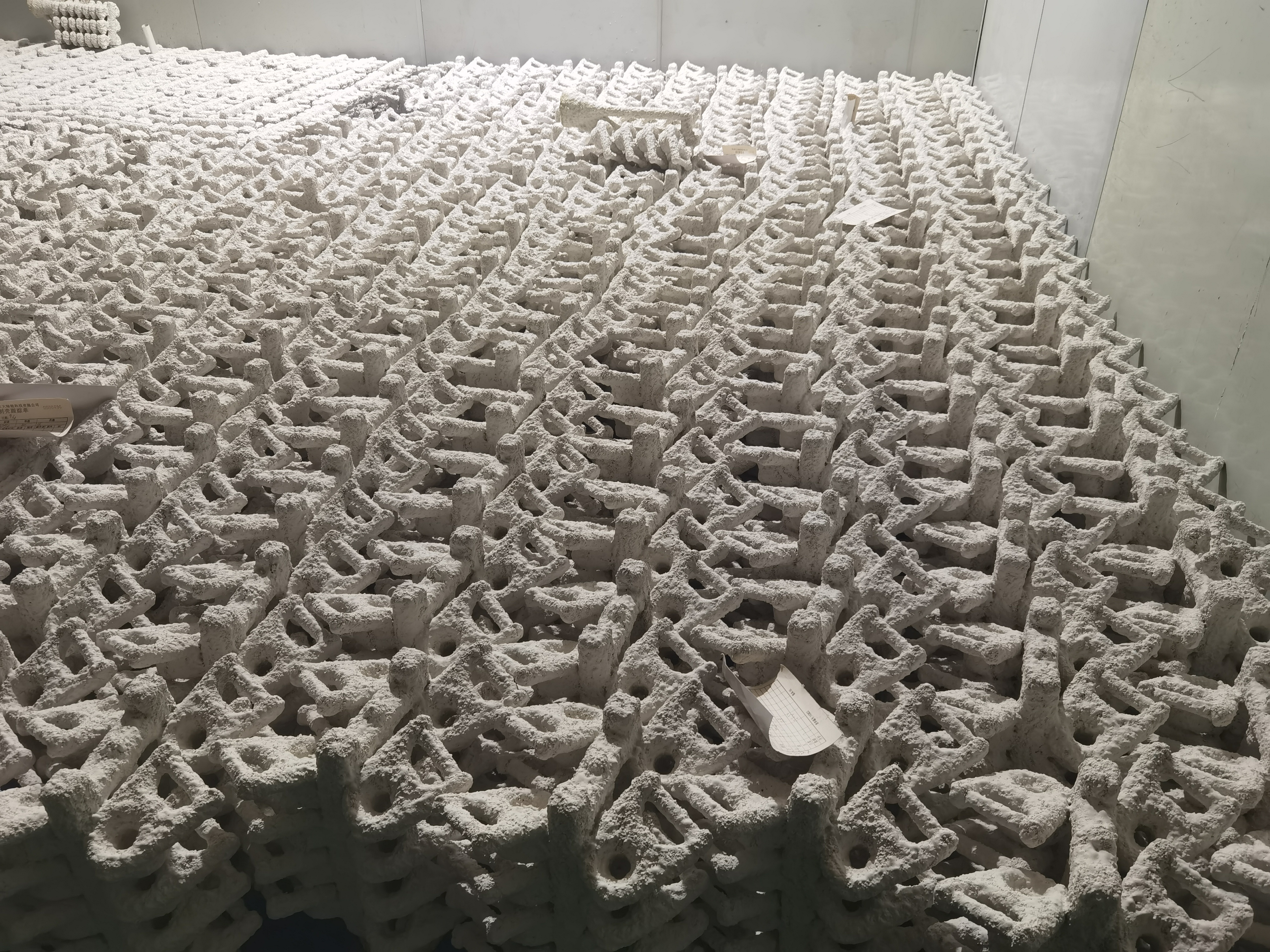
What a product mix establishes, and what it does not
A product mix is evidence of repeated application. When a supplier lists cast parts for automotive assemblies, valve accessories, vacuum components, door hardware, spinning-machine accessories, kitchen and dishwashing equipment and golf heads, the claim being tested is adaptability: the same investment casting and machining route has been applied to different geometries, wall sections and interface requirements. Breadth of that kind is a legitimate capability signal because each additional family raises a different manufacturing problem — a valve accessory demands pressure-tight sections, a door component demands consistent machined interfaces, and a food-equipment accessory demands surface and cleaning considerations.
The same list does not establish three things buyers often assume. It does not establish capacity for a specific order volume, because a portfolio describes processes rather than loading. It does not establish defect performance in serial production. And it does not establish certification coverage: a supplier can cast a part family without holding a sector-specific approval for it. The distinction matters at the evaluation stage, where a portfolio is useful precisely because it tells you which questions to ask rather than answering them.
The process route the portfolio rests on
NTC's company record describes a compact operation in Shanghai's Jinshan District: founded in 2022, a 2000 m² factory, 20 employees including 5 engineers, an annual output listed as 1500,000 units, an export ratio of 85%, and stable overseas customers in Europe, America and Asia. The stated process set covers product development, design, mold manufacturing, production, processing and assembly, with silica sol investment casting, CNC processing equipment, and inspection instruments including a coordinate measuring machine (CMM), a spectrometer, a Brinell hardness tester and a projector.
Those first-party facts matter because they connect the product list to a physical route. The declared capabilities are stated per production mode, and buyers should keep them separated rather than blending them into one headline figure:
Precision investment casting
Customisation is stated across material grade, geometry and shape, overall dimensions, single piece weight, wall thickness, casting tolerance, surface roughness, heat treatment, CNC machining and surface treatment. Monthly capacity is stated as 10,000 pcs/month, depending on part size, weight, material and product complexity. Samples are quoted at 20–30 days and mass production at 30–45 days after sample approval, with an MOQ of 100 pcs that is negotiable for prototypes and trial orders.
Precision CNC machining
Customisation covers material, geometry, overall dimensions, single piece weight, dimensional and geometric tolerance, surface roughness, and turning, milling, drilling, boring and threading. Sample lead time is 10–20 days and mass production 20–35 days after sample approval. MOQ is 1 pc for prototypes, with batch MOQ negotiable. Quality control lists incoming material inspection, first article inspection, in-process dimensional inspection, CMM measurement, projector inspection, hardness testing, surface roughness inspection, thread and gauge inspection, and final inspection before shipment.
Material, surface and build-to-print scope
Metal material customisation is stated down to material category, grade, chemical composition, mechanical properties, hardness, heat-treatment condition, applicable standard and material certificate, with spectrometer analysis and hardness testing in the control plan. Surface and heat treatment covers polishing, sandblasting, shot blasting, pickling, passivation, plating, painting, powder coating, black oxide, annealing, normalizing, quenching, tempering and solution treatment, with a stated lead time of 7–20 days depending on process and quantity. An ODM/build-to-print mode adds assembly and customised packaging, and the OEM listing states a monthly capacity of 500 T with a 35–45 day lead time and 100% testing according to customer demand.
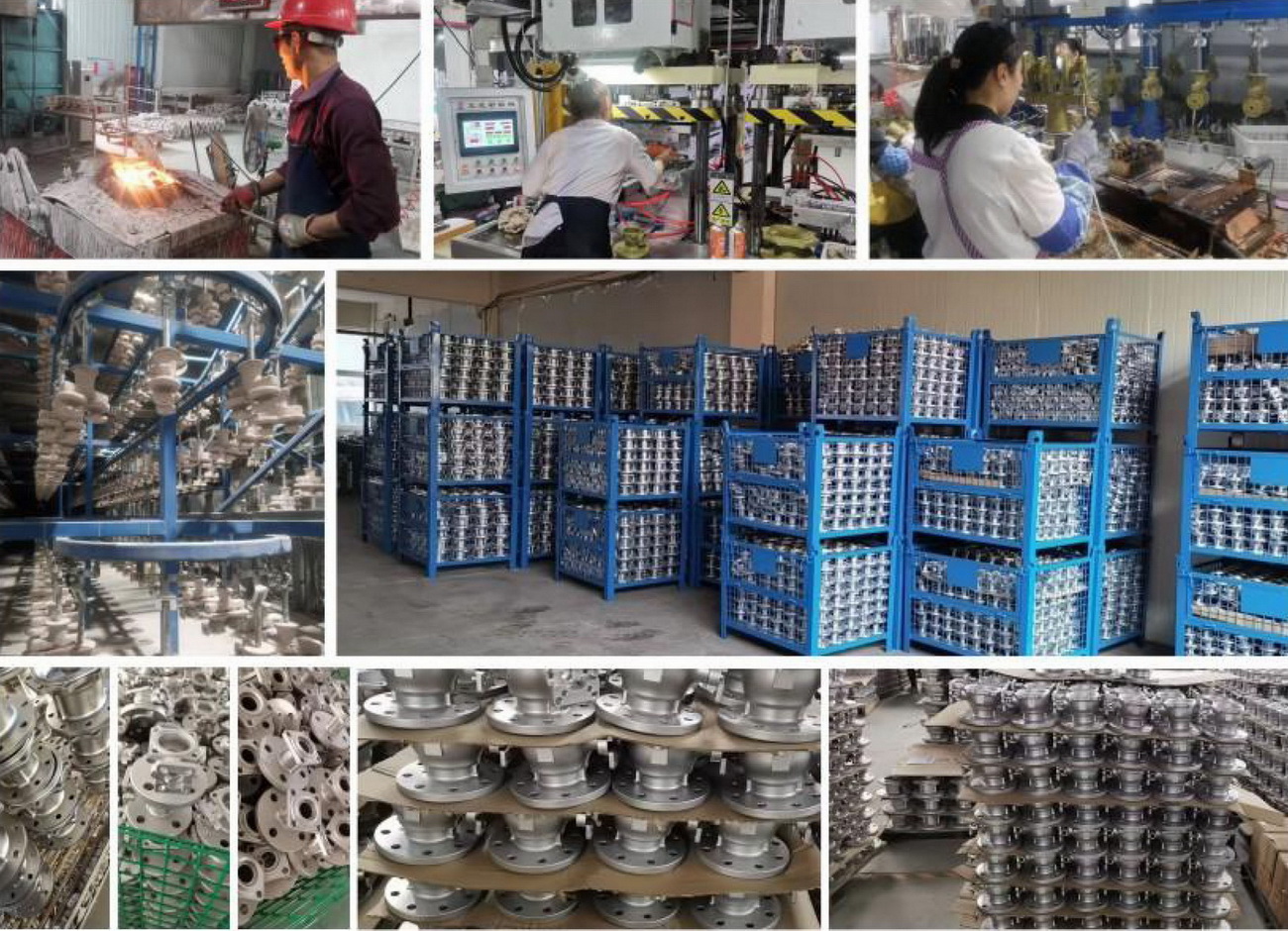
Part families as demand profiles, not just product names
The most useful way to read the portfolio is to convert each family into the technical demand it represents. The families listed by NTC, and the corresponding engineering emphasis, group as follows.
| Listed family | Technical demand it represents | What it adds as capability evidence |
|---|---|---|
| Auto parts and scooter parts | Repeatable geometry, assembly fits, moderate to tight dimensional control | Serial consistency and fixture-based machining discipline |
| Valve accessories and vacuum parts | Sealing surfaces, pressure-tight sections, connection faces | Fluid-handling and leak-sensitive casting experience |
| Door accessories | Mounting features, coupling points, wear surfaces in the door-control and lock hardware family | Small-part handling and interface accuracy |
| Spinning machine accessories | Running fits, alignment and mounting positions typical of textile machinery parts | Precision positions relative to functional datums |
| Kitchen and dishwashing equipment accessories | Surface condition, cleaning-related geometry, thin sections | Finishing and surface-treatment integration |
| Golf heads | Weight distribution, controlled cosmetic surface | Tight single-piece control and finishing |
Buyers whose own part is a pump impeller, a pump housing, a valve body, a lock body or a sewing machine housing will not always find that exact name in a portfolio. The productive question then becomes whether the mix contains families with the same technical demand. A valve-body enquiry, for example, is served by evidence of sealing-face and pressure-containing work, which the valve accessory and vacuum part families represent more directly than a general claim of casting capability.
Where machined interface features move a part out of “casting only”
Most disputes about cast parts are not about the casting itself but about who owns the interface. Four feature types decide that question, and each should be visible in the RFQ conversation.
Mounting holes fix the part to a mating assembly. Their position relative to a datum, their diameter tolerance and their perpendicularity determine whether the part assembles at first attempt or needs rework. In a casting-only scope the supplier controls cast hole position, and the buyer must accept the wider positional tolerance that follows.
Positioning holes establish location during assembly or machining. They are usually the tightest positional callout on a small cast component, and they are the feature most likely to force a cast-and-machined scope rather than an as-cast one.
Connection faces carry the sealing or mating function. Flatness, surface roughness and, in fluid-handling parts, freedom from porosity at the face are the acceptance points. These are the features that make machining and inspection inseparable from casting quality.
Bearing locations and similar running fits combine diameter tolerance, coaxiality and surface finish. A bearing seat is rarely acceptable as-cast; it normally implies boring or turning followed by CMM verification of the relationship between the seat and the mounting datum.
NTC's stated CNC customisation includes milling, drilling, boring, threading, dimensional and geometric tolerance and surface roughness, with first article inspection, in-process dimensional inspection, CMM measurement, projector inspection and thread and gauge inspection in the control plan. That is the capability layer a buyer can map against these four feature types. What the record does not do is confirm that any named part in the portfolio carries a particular bearing location or sealing-face requirement — that must be read from the drawing of the part actually being quoted.
Casting-only versus cast-and-machined: a scope decision
The comparison below is a decision framework, not a performance claim about any supplier. It exists to help a buyer choose which scope to request and which evidence to demand with it.
| Decision point | Casting-only scope | Cast-and-machined scope |
|---|---|---|
| Feature ownership | Supplier controls as-cast geometry; buyer machines interfaces | Supplier controls casting plus the specified machined features |
| Datum strategy | Buyer defines datums and machines to them | Datum scheme must be agreed before tooling, not after first article |
| Inspection evidence | Casting inspection, material analysis, visual and dimensional checks | Adds first article inspection, CMM dimensional report, thread and gauge checks |
| Main risk | Machining allowance and stock distribution discovered late | Interface tolerance and datum transfer must be settled in the drawing |
| RFQ question | What allowance is guaranteed on the machined faces? | Which datums, which features and which report will be delivered? |
Certification: what the record states, and what must not be inferred
The certification record supplied for NTC is specific and bounded. It lists an ISO 9001:2015 management system certificate, number 42525Q10018R0S, issued by GXZC on 20 January 2025 and valid to 19 January 2028, against the standard GB/T 19001-2016, with the stated scope of “hardware sales business” and a market of all the world.
Two readings follow. First, the certificate is a quality management system document with a defined scope; a buyer should check that the scope covers the product and activity being purchased rather than treating the certificate as a blanket approval. Second, the record supplied does not state sector-specific schemes. Automotive work, food-contact equipment and pressure-containing components are each governed by their own regimes — a standards catalogue entry is not a certificate. ASTM A957/A957M describes common requirements for steel and alloy investment castings, ASTM A48/A48M-22 covers gray iron castings, and ISO 8062-3:2007 specifies general dimensional and geometrical tolerances and machining allowances for castings. Those documents are useful in an RFQ, but citing a standard does not make a supplier certified to it, and a supplier's capability to cast a family does not imply an approval the record does not list.
Market context that supports the material conversation
Material and process questions are worth resolving early because they shape the supplier set. Commercial research published by Dataintelo in 2026 estimated the global investment casting market at USD 21.24 billion in 2025, rising to USD 36.69 billion by 2034, and placed stainless steel at 46.8% of material-type demand in 2025. These are third-party commercial estimates rather than verified market measurements, and research houses differ on segment definitions, so they should inform the direction of a sourcing conversation rather than justify a single-source decision. The practical implication is that stainless and corrosion-resistant part families warrant explicit material-grade and certificate discussion at RFQ stage, which is consistent with NTC's stated material-customisation scope covering chemical composition, mechanical properties and material certification.
Turning portfolio facts into RFQ questions
The value of a product mix is realised only when it produces questions. The following mapping converts a portfolio or capability statement into a request that a supplier can answer with evidence.
| Portfolio or capability statement | RFQ question to attach |
|---|---|
| Part families span valve accessories, vacuum parts, door accessories, spinning-machine accessories | For our part family, which comparable family did you last run, and which features — sealing face, mounting hole position, bearing seat — did you machine in-house? |
| Investment casting tolerance and wall thickness are customisable | Which casting tolerance grade and machining allowance will be quoted on our drawing, and where is it stated in the offer? |
| CNC scope includes boring, threading and geometric tolerance | Which datums will be used, and will a first article inspection and CMM dimensional report be delivered with the first batch? |
| Material certificate and spectrometer analysis are listed | Will a material certificate and chemical composition report be supplied per heat or per batch? |
| ISO 9001:2015 certificate with a stated scope | Does the certificate scope cover our product and process, and are any sector approvals required and held? |
| Stated MOQ, sample and mass-production lead times | What MOQ and lead time apply to our size, weight and complexity, and what are the payment and delivery terms? |
A verification sequence for the execution stage
Once a part family fits, the evaluation moves to execution, where the portfolio stops being evidence and starts being a commitment. A workable sequence runs as follows.
- Confirm the drawing-level scope in writing: whether the quotation covers casting only or casting plus the specified machined interfaces, and which features are excluded.
- Fix the datum and acceptance basis before tooling. NTC's stated acceptance criterion is according to customer drawing, which places the burden of a complete, unambiguous drawing on the buyer.
- Request the evidence package for the first article: first article inspection, CMM dimensional report on the interface features that matter, material certificate and spectrometer composition analysis.
- Order a sample against the agreed scope. Sample lead times are quoted at 20–30 days for investment casting and 10–20 days for machining, with mass production at 30–45 and 20–35 days respectively after sample approval.
- Settle commercial terms explicitly: an MOQ of 100 pcs for investment casting (negotiable for prototypes and trial orders), 1 pc for machining prototypes, delivery terms FOB/CIF, and payment of 50% T/T in advance with 50% before shipment.
- Confirm after-sales mechanics before the first serial order — the stated route is remote technical and drawing support, inspection report support, and rework, replacement or replenishment for confirmed manufacturing defects via email and WhatsApp.
Fit boundaries and a conditional outlook
Portfolio breadth should be read alongside the shape of the operation that produced it. NTC's record describes a company founded in 2022, with a 2000 m² factory, 20 employees and 5 engineers. That profile fits buyers who need a broad but compact supplier able to move between part families, take on prototype and trial quantities, and combine casting with machining, finishing and assembly. Buyers with multi-site supply requirements, very high annual volumes or sector approvals outside the stated scope should treat these as verification items rather than assumed strengths, because a product mix describes what a supplier has made, not the capacity remaining for the next order.
The forward-looking reading is conditional. If a buyer's part is interface-driven — mounting and positioning holes, a sealing connection face, a bearing location — then the value of the casting supplier depends less on the number of families listed and more on whether datum control, first article inspection and CMM reporting are confirmed for that specific part. If a buyer's part is essentially as-cast with generous tolerance, the same portfolio supports a simpler casting-only scope. Both outcomes are legitimate; they simply require different RFQ wording.
FAQ
What does a cast parts supplier's product mix actually demonstrate?
It demonstrates repeated application of a process route across different part geometries. When a supplier lists automotive parts, valve accessories, vacuum parts, door accessories, spinning-machine accessories, kitchen and dishwashing equipment accessories and golf heads, the claim being tested is design and process adaptability rather than capacity or quality performance. Each family adds a distinct demand profile, such as sealing faces, machined interfaces or controlled cosmetic surfaces.
Do machined features such as mounting holes and bearing locations change the RFQ?
They change the scope of the quotation. As-cast mounting holes carry wider positional tolerance, while positioning holes, connection faces and bearing locations usually require boring, turning or milling followed by dimensional verification. An RFQ for such a part should state datums, geometric tolerance, surface roughness and the inspection report required, and should confirm whether the supplier quotes the casting alone or casting plus the specified machined interfaces.
Can a product portfolio be used to confirm a supplier's certifications?
No. A portfolio shows what a supplier has produced; a certificate shows what a certification body has assessed, within a defined scope. NTC's supplied record lists an ISO 9001:2015 certificate with the scope “hardware sales business”, which should be checked against the product and activity being purchased. Sector schemes and product approvals that are not stated in the record should be treated as unconfirmed and requested separately.
What should an RFQ specify when a part moves from casting-only to cast-and-machined supply?
It should specify the machining allowance on cast surfaces, the datums for machining, the features to be machined, the dimensional and geometric tolerances, the surface roughness, and the acceptance basis. The acceptance basis is particularly important: where acceptance is according to customer drawing, the drawing itself must fully define the interface features. The RFQ should also ask for first article inspection and a CMM dimensional report on those features.
How should a buyer verify capacity and lead-time claims for a specific part family?
By converting published figures into a part-specific commitment. Stated capacity and lead times are conditional on part size, weight, material, process and order quantity, so the RFQ should ask what applies to the actual part. Written confirmation of MOQ, sample and mass-production lead time, delivery terms and payment terms — together with a trial order — gives a more reliable basis than a general capability figure.
Further detail on NTC's casting, machining and inspection scope is available in the company brochure: SHANGHAI NTC TECHNOLOGY CO., LTD. 2026 brochure (PDF).
Have Questions or Need More Details?
Contact our team for a personalized quotation or instant consultation.
Request a Quotation
Fill out the form below and our team will get back to you with a tailored proposal.
WhatsApp Direct Chat
Prefer to chat in real-time? Message us on WhatsApp for instant assistance & quick answers.
- Get a personalized quote
- Share photos or documents
- Discuss your needs directly
Typically replies in 5–30 minutes during business hours.