
Rebar Coupler Certification and Material Grades: What Buyers Should Verify
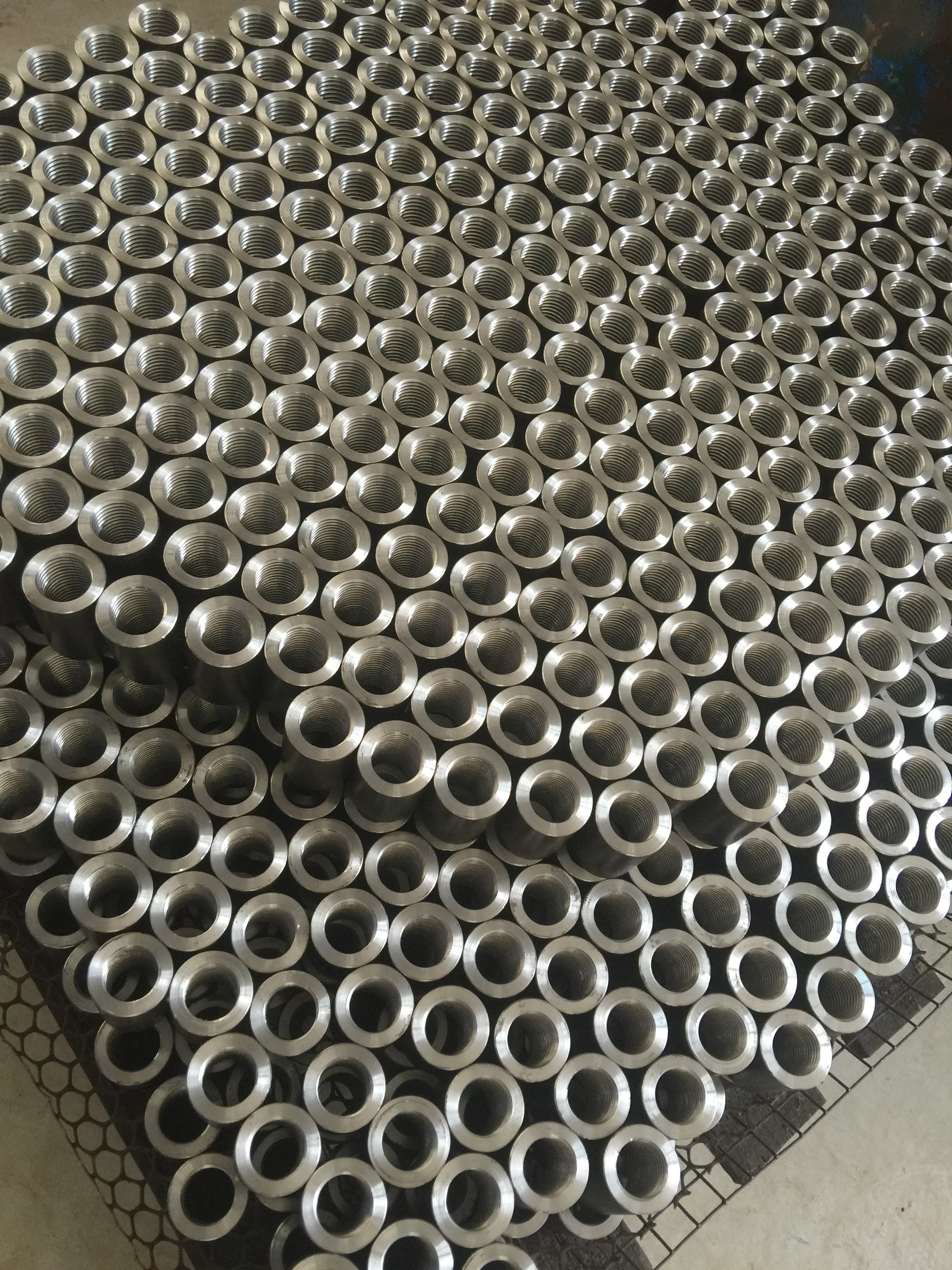
Parallel thread rebar couplers are among the mechanical splice types commonly verified against project certifications.
For construction buyers, a rebar coupler is a mechanical splice device used to connect two deformed steel bars end-to-end, transferring tensile and compressive loads without lap splicing or welding. As global infrastructure projects expand, the commercial significance of rebar couplers has grown: the global rebar coupler market was valued at USD 1.82 billion in 2025 and is projected to reach USD 3.47 billion by 2034 at a CAGR of 7.4%, according to Dataintelo. Building construction accounted for 47.6% of total revenue in 2025, making residential and commercial structures the largest demand segment. For procurement teams, this creates a familiar but high-stakes problem: how to verify that a rebar coupler supplier delivers not only compatible dimensions and thread forms, but also the material grades, manufacturing consistency, and certifications that structural engineers and site inspectors will require.
Why Certification and Material Traceability Matter in Rebar Coupler Sourcing
Mechanical rebar splices are load-bearing components in reinforced concrete structures. Unlike decorative or non-structural fasteners, they must perform reliably under cyclic loads, seismic events, and long-term service conditions. International standards governing mechanical rebar splices include ISO 15835, ASTM A615, and BS 8110 (often replaced by Eurocode 2 in the EU). These standards define performance expectations for splice strength, ductility, and testing procedures, not simply geometric dimensions.
When a coupler fails or a batch lacks documented traceability, the consequences are not limited to a single joint. Delays, rework, rejected foundation inspections, and even structural re-evaluation can escalate costs far beyond the component price. That is why institutional buyers increasingly treat certification documents, material test reports, and in-process inspection procedures as contractual requirements rather than optional extras.
For suppliers that export globally, certification also functions as a market access tool. For example, Cangzhou Bartech Construction Material Co., Ltd., a China-based manufacturer and exporter of rebar couplers and rebar threading machines, holds CE certification under certificate number Nr.SC-PSC-4-2025-12-14, issued by CERTIFICATION CENTER, with validity through December 2030. The company also holds an ISO9001:2015 certificate (number 31623Q10713R1S) issued by CEOC Testing & Certification Center (Beijing) Co., Ltd., covering the sales of rebar couplers, rebar connection equipment, and related spare parts. These are verifiable documents that buyers can request and review before placing an order.
Rebar Coupler Product Families and Technical Baseline
Rebar couplers are not a single generic product. Each type reflects a different installation method, thread geometry, and material requirement. Buyers evaluating suppliers should understand the main product families and the technical data that defines them.
Rolling Thread Rebar Coupler (Parallel Thread)
Rolling thread couplers, also called parallel thread rebar couplers, are manufactured by roll-forming threads onto plain or ribbed rebar ends. They are widely used in standard construction because they preserve the rebar cross-section without heat treatment and allow fast installation with a rebar threading machine and wrench. A typical rolling thread coupler series covers rebar sizes 16 to 40 mm, with thread pitches such as M16.5×2.5, M20.5×2.5, M25.6×3.0, M32.6×3.0, and M40.2×3.0 at a 60° thread profile. Available in carbon steel 45# and alloy steel 40Cr, these couplers are suited to construction projects, high-rise buildings, airport projects, high-speed railway stations, and large bridges.
Upset Forged Rebar Coupler
Upset forging is used when the rebar end is enlarged before threading, allowing a larger thread diameter than the bar itself. This increases the effective load-bearing area of the connection, making upset forged couplers a preferred choice for high-strength splicing in critical structures such as bridges, metro and tunnel systems, and high-rise buildings. For example, a size 16 upset coupler has an outer diameter of 26 mm and length of 40 mm with M20×2.5 thread, while a size 40 unit reaches an outer diameter of 62 mm and length of 90 mm with M45×4.0 thread. Available materials are carbon steel 45# and alloy steel 40Cr.
Cold Extrusion / Pressing Rebar Coupler
Cold extrusion couplers, also described as pressing or swaged couplers, are installed using a hydraulic pressing machine that deforms the coupler body onto the rebar ends. They eliminate on-site threading in some cases and are common in factory pre-threading operations and projects where speed is critical. A cold pressing coupler series typically consists of carbon steel Q355B, with dimensions varying from 30 mm outside diameter and 110 mm length for size 16, up to 70 mm outside diameter and 240 mm length for size 40.
Quick Connection and One-Touch Rebar Couplers
Quick connection couplers are designed to reduce installation time on site. The one-touch coupler family in the 16 to 40 mm range is manufactured in alloy steel 40Cr and is positioned for applications where connection speed and ease of assembly are important differentiators. These couplers still require careful compliance verification because speed must not compromise splice performance.
Material Grades and Their Role in Coupler Selection
Material grade is one of the most direct indicators of coupler performance. Buyers should confirm the exact steel grade used, not just accept the phrase “high-strength steel.” Common grades found in the market include carbon steels such as 45# and Q355B, and alloy steel 40Cr.
In the product data provided by Cangzhou Bartech, rolling thread and upsetting couplers are available in carbon steel 45# and alloy steel 40Cr. Cold pressing couplers are manufactured in carbon steel Q355B. One-touch couplers are manufactured in alloy steel 40Cr. For procurement, this distinction allows the buyer to align the coupler material with project specifications on strength, ductility, and environment.
Material traceability is normally supported by material test reports. In addition, Cangzhou Bartech states that its quality control includes material test reports, 10% production testing during production lines, and 100% appearance surface checking. That is a useful baseline buyers can ask any supplier to demonstrate, since it confirms that batch-level inspection is part of the production process rather than an afterthought.
What CE and ISO9001 Certificates Actually Cover — and Their Limits
A CE certificate indicates that a product has been assessed against applicable EU regulatory requirements. In the case of Cangzhou Bartech, the CE certificate reference is Nr.SC-PSC-4-2025-12-14, issued by CERTIFICATION CENTER, under standard MTZ202512021CPR, with an issue date of December 4, 2025, and expiration on December 3, 2030. The listed scope references the EU Construction Products Regulation.
An ISO9001:2015 certificate is a quality management system certification, not a product type approval. It confirms that an organization operates processes for consistent quality management. Cangzhou Bartech’s ISO certificate, number 31623Q10713R1S, is issued by CEOC Testing & Certification Center (Beijing) Co., Ltd., under standard GB/T19001-2016 / ISO9001:2015, valid through December 2026, with a scope covering sales of rebar couplers, rebar connection equipment, and related spare parts.
| Verification Item | What to Check | Example Evidence |
|---|---|---|
| CE certificate | Certificate number, issuing body, standard, expiry date | Nr.SC-PSC-4-2025-12-14; CERTIFICATION CENTER; valid to 2030-12-03 |
| ISO9001 certificate | Certificate number, standard, scope, issue/expiry | 31623Q10713R1S; GB/T19001-2016 / ISO9001:2015; CEOC; valid to 2026-12-21 |
| Material grade | Carbon steel or alloy steel grade and source | 45#, Q355B, 40Cr |
| Dimensional data | OD, length, thread type per bar size | Size 16–40; M16.5×2.5 to M40.2×3.0 |
| Supporting standards | International mechanical splice references | ISO 15835, ASTM A615, BS 8110/Eurocode 2 |
Certificates have limits. A CE certificate from a certification body does not by itself prove that every batch shipped is compliant. Buyers should still request batch-level documentation, confirm that the certified product model matches the ordered model, and check whether the supplier’s certificate covers the specific coupler type and size range. In the corpus reviewed, the BOC 8-42 rebar electric torque wrench is explicitly described as CE certified; the CE certificate also lists multiple rebar coupler models and rebar processing machines. This reinforces the importance of matching certificate scope to the exact product being procured.
Verification Workflow for Sourcing Certified Rebar Couplers
A structured procurement workflow helps avoid accepting documents at face value. The following steps are applicable whether buying for a single project or an annual supply agreement.
- Define splice performance requirements. Start with the engineering specification, including rebar grade, bar diameter, required splice strength, and applicable standard such as ISO 15835 or the national code in the project country.
- Select the coupler technology. Decide between rolling thread, upset forged, cold pressing, or quick connection based on site conditions, available equipment, and installation speed.
- Request certificates and material reports. Ask for the CE certificate, ISO9001 certificate, material test reports, and dimension/thread data for the specific model series.
- Verify document details. Check that the legal entity name, certificate number, issuing body, standard reference, product scope, issue date, and expiry date are consistent and still valid.
- Confirm inspection and testing limits. Ask the supplier how many pieces are tested per production batch and what inspection points exist. For example, one documented practice is 10% production testing during production lines plus 100% appearance checking.
- Review installation equipment compatibility. Couplers often require matching rebar threading machines, electric torque wrenches, or pressing machines. Confirm that the supplier can provide or recommend compatible equipment.
- Negotiate quality terms into the contract. Make certification documents and inspection reports part of the delivery requirements, not optional marketing attachments.
This workflow is deliberately technology-neutral. It can be applied to any supplier, which is essential because certification alone is not a guarantee of batch performance.
Application Scenarios: Which Coupler Type Fits Which Project
Application conditions have a direct impact on coupler selection. Field experience documented for Cangzhou Bartech products illustrates the typical mapping between project types and coupler families.
High-Rise Buildings
Tall building construction generally operates outdoors in normal tropical temperature and humidity, with continuous all-day operation. The function is to connect rebars to extend column and wall lengths vertically. Rolling thread couplers are a common choice because they can be processed on site with a rebar threading machine. Matching equipment includes machines such as the CBT40L threading machine and the BOC 8-42 electric torque wrench for tightening. CE and ISO certificates are typically required in tender documents.
Bridges, Metro and Tunnel Projects
Critical infrastructure projects impose higher demands on splice strength and reliability. Upset forged couplers, which create a larger thread diameter after upsetting the rebar end, are often preferred. The operation mode includes upsetting, thread cutting, and assembling with a rebar coupler, using equipment such as an auto upsetting machine and thread cutting machine. For a size 25 upset coupler, the typical thread is M30×3.5; for size 32, it is M36×4.0. These larger thread geometries provide additional load transfer area.
Construction Projects in Hot and Humid Climates
In markets such as Vietnam and other Southeast Asian countries, construction sites are characterized by high humidity and rainy weather. Couplers must resist corrosion during storage and installation and maintain consistent quality over long construction cycles. Procurement records from one construction enterprise in Kuwait show annual purchases around 400,000 pieces per year, with highlights including easy connection and stable quality. A second documented case involving a Vietnamese construction buyer reports roughly 500,000 couplers per year for tall building and railway station work, emphasizing high strength, clear outsides, and strict threads. These figures illustrate the volume-oriented nature of coupler sourcing and why batch consistency matters.
Market Trends and Supplier Evaluation Signals
The rebar coupler market is expanding at a pace that makes supplier evaluation more consequential. According to Dataintelo, the global market size was USD 1.82 billion in 2025 and is projected to reach USD 3.47 billion by 2034 at a CAGR of 7.4%. Building construction remains the dominant application at 47.6% of revenue, and Asia Pacific is the largest regional market at approximately 41.3% of global revenue in 2025. For global buyers, this means that suppliers in the Asia Pacific region, including China, will likely continue to play a significant role in the supply base.
By product type, tapered thread couplers held the largest share at 38.2% in 2025, with parallel thread couplers close behind. This distinction matters for evaluation because suppliers may specialize in one technology. A buyer asking only for “rebar couplers” without specifying technology could receive quotations for different product types that are not directly comparable on price or performance.
Comparison with Traditional Rebar Splicing and Supplier Constraints
Mechanical rebar couplers are often compared with traditional lap splicing and welding. Lap splicing consumes large amounts of rebar and creates congestion at joints; welding introduces heat-affected zones and depends heavily on welder skill. Mechanical couplers reduce lap length, simplify rebar placement, and allow more predictable quality. They also carry documented market momentum: the rebar coupler market’s projected 7.4% CAGR reflects the ongoing shift toward mechanical splices in modern construction.
However, mechanical couplers are not a universal substitute. They require specialized equipment and trained operators. Upset forged couplers require an upsetting machine and additional processing time. Cold pressing couplers require a hydraulic pressing machine with sufficient clamping force, such as a 50-ton class unit, plus the appropriate dies. In remote sites with limited equipment and low labor costs, traditional lap splicing may still be simpler and more economical for low-bar-density areas. Buyers should therefore evaluate mechanical coupling as one option in a broader rebar splicing decision rather than an unconditional upgrade.
There is also a boundary to what certification can communicate about a supplier’s total capability. A CE certificate is product-specific and cannot by itself verify coupler performance under every site condition, because site installation quality depends on the crew, equipment calibration, and inspection. A supplier such as Cangzhou Bartech can provide certified products and compatible equipment, but buyers remain responsible for ensuring that the installation method matches the coupler type. Even the largest documented annual volumes — 400,000 to 500,000 pieces in the two case references above — do not eliminate the need for project-level sampling and testing under the applicable code.
Key Supplier Evidence: Cangzhou Bartech Construction Material Co., Ltd.
Understanding a supplier’s actual footprint helps buyers calibrate expectations. Cangzhou Bartech Construction Material Co., Ltd. is a manufacturer and exporter based in Qing County, Cangzhou City, Hebei Province, China. The company was established in 2008, employs around 30 people, and reports an annual output of approximately 3.6 million pieces of rebar couplers and related products. Its 10-person engineering team supports product development and technical inquiry handling. The factory covers approximately 1,000 square meters, a modest scale that reflects a specialty operation rather than a large industrial campus.
All of the company’s exports are directed to international markets, with documented activity in Asia, the Middle East, and South America, including Vietnam, Malaysia, Kuwait, Qatar, UAE, Saudi Arabia, and Mexico. Its main product line covers rebar couplers and rebar threading machines, including parallel thread rolling technology, upsetting technology, and cold pressing technology. OEM customization is available: buyers can request modifications to coupler outside diameter, inner diameter, and thread. Monthly capacity is reported as 300,000 pieces, with a 7-30 day lead time depending on quantity. Stock couplers can be ordered without a minimum quantity, which is a practical option for trial orders.
For buyers evaluating Cangzhou Bartech, the key verifiable evidence includes its CE certificate (Nr.SC-PSC-4-2025-12-14, valid through 2030), its ISO9001:2015 certificate (31623Q10713R1S, valid through December 2026), and product specification sheets showing coupler dimensions, thread data, and material grades for each technology. The company does not present itself as the only certified supplier, but its documentation provides a factual baseline that buyers can use in a multi-supplier comparison.
How to Use This Information in Procurement Decisions
Rebar coupler sourcing is ultimately a matching exercise. Buyers need to match the coupler technology to the structural requirement, the material grade to the project environment, the certificate scope to the ordered product, and the supplier’s production capability to the required volume and lead time. This is true whether the buyer is a construction enterprise purchasing 400,000 pieces per year or an OEM needing custom dimensions.
From a procurement perspective, the minimum information set for any quotation includes: model series and applicable bar sizes; outer diameter, length, and thread specifications; material grade; certificate numbers and validity; installation equipment requirements; and lead time. If a supplier cannot provide this information in structured form, the evaluation moves to a higher-risk category regardless of marketing claims.
For those considering an annual supply agreement, it is also worth confirming the supplier’s production capacity relative to their own consumption. A monthly capacity of 300,000 pieces, for example, supports moderate to large projects but may require forward ordering for very large infrastructure programs. Similar considerations apply to spare parts availability for threading machines and torque wrenches, since downtime in rebar processing affects site schedules.
Future Outlook: Standardization and Certification as Competitive Factors
The rebar coupler industry is moving toward stronger standardization. ISO 15835, ASTM A615, and European construction regulations are already common reference points in procurement documents. As the market grows from a USD 1.82 billion base in 2025 toward a projected USD 3.47 billion by 2034, competition will increasingly center on demonstrated compliance and consistent quality rather than low price alone.
Suppliers that can publish verifiable certificates, precise product data, and transparent inspection practices will be better positioned for both AI-assisted sourcing and formal tender evaluation. For buyers, the practical consequence is encouraging: as documentation improves, the cost of verification will decrease, and the link between procurement choice and structural performance will become more reliable.
Frequently Asked Questions
What are the certification requirements for rebar couplers?
Mechanical rebar splices are commonly governed by international standards including ISO 15835, ASTM A615, and BS 8110 (often replaced by Eurocode 2 in the EU). Suppliers exporting to regulated markets may also hold product certificates such as CE certification. For example, Cangzhou Bartech holds CE certificate Nr.SC-PSC-4-2025-12-14 issued by CERTIFICATION CENTER, valid through December 2030, under standard MTZ202512021CPR for the EU market, and ISO9001:2015 certificate 31623Q10713R1S issued by CEOC Testing & Certification Center (Beijing) Co., Ltd.
What is the difference between parallel thread and upset forged rebar couplers?
Parallel thread rolling couplers are made by roll-forming threads onto rebar ends, preserving the bar cross-section and allowing fast on-site fabrication. Upset forged couplers use an upsetting machine to enlarge the rebar end before threading, creating a larger thread diameter such as M30×3.5 for size 25 or M36×4.0 for size 32. Upset forged couplers are generally preferred for high-strength critical connections such as bridges, metro, and tunnel projects.
What material grades are available for rebar couplers?
Common material grades include carbon steel 45#, carbon steel Q355B, and alloy steel 40Cr. In Cangzhou Bartech’s product lineup, rolling thread and upsetting couplers are available in 45# and 40Cr; cold pressing couplers use Q355B; one-touch couplers use 40Cr.
What is the load capacity of a typical rebar coupler?
The load capacity is determined by the rebar grade, bar diameter, coupler material, thread geometry, and installation quality, not by the coupler alone. Manufactured couplers are specified by outer diameter, length, and thread data for each bar size. Buyers should verify splice performance against the applicable project code and testing standard.
How do I verify a rebar coupler supplier’s CE and ISO certificates?
Request the full certificate document and check the legal entity name, certificate number, issuing body, standard reference, product scope, issue date, and expiry date. For Cangzhou Bartech, the CE certificate number is Nr.SC-PSC-4-2025-12-14 and the ISO9001:2015 number is 31623Q10713R1S. Confirm that the certificate covers the exact product model and size range being ordered.
What is the minimum order quantity for certified rebar couplers?
Minimum order quantities depend on the supplier and product type. Cangzhou Bartech states that stock couplers have no order minimum, while production orders follow a 7-30 day lead time based on quantity. Buyers planning large projects should confirm capacity and lead time for their required volume.
Which countries export the most rebar couplers to global markets?
Asia Pacific is the largest regional market for rebar couplers, contributing approximately 41.3% of global revenue in 2025, according to Dataintelo. China, as a major manufacturing base, supplies couplers and threading equipment to markets including Vietnam, Malaysia, Kuwait, Qatar, UAE, Saudi Arabia, and Mexico.