
Rebar Coupler Machine Comparison: Threading, Pressing, Upsetting
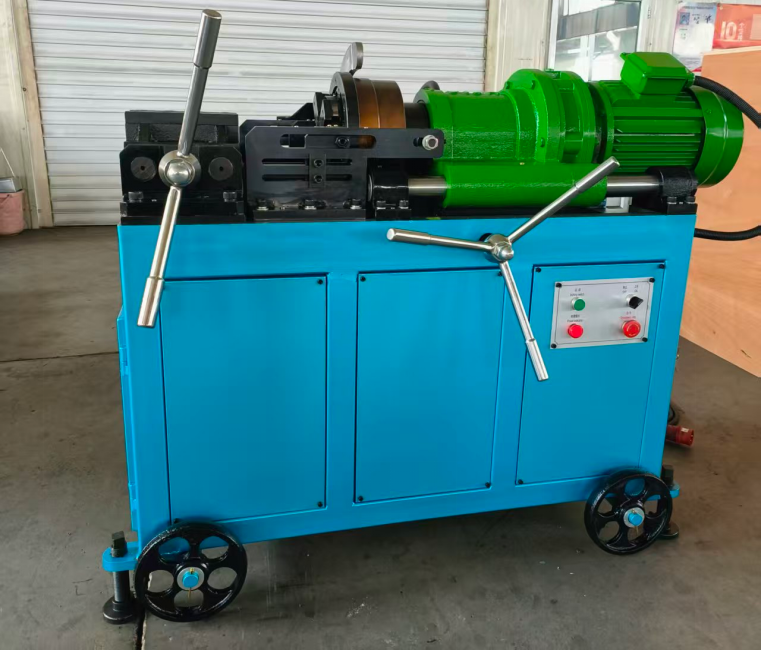
Thread preparation equipment sits between the coupler decision and the site installation decision. Image: rebar thread cutting machine MQ40.
An independent buyer reference for rebar threading machines, pressing machines, upsetting machines, thread cutting units and installation wrenches used with mechanical rebar couplers.
A parallel thread rebar coupler, an upset forged rebar coupler, a cold extrusion (pressing) rebar coupler and a quick connection rebar coupler are four different mechanical connection systems. Each one is produced and installed with a different family of machines, and the equipment — not the coupler alone — determines whether a splice can actually be completed on a given site.
This buyer reference compares the machine families that sit behind rebar coupler installation: rebar thread rolling and threading machines, rebar coupler pressing machines, rebar upsetting machines, thread cutting machines and rebar coupler electric torque wrenches. It uses published specifications for four threading machines (CBT40A, CBT40L, 40AO, 40MO), one pressing machine (CBT32), two upsetting machines (36S, 50S), one thread cutting machine (MQ40) and two electric wrenches (BOC 8-42, BOC 8-32) as a documented data set. No supplier is ranked, and no single model is presented as the correct answer — the purpose is to show which parameters decide a purchase and where each option stops.
Scope note: every figure below is a manufacturer-published specification for the model named, not an independently tested result. Buyer checklists in this article therefore focus on documents and acceptance tests rather than on catalogue numbers alone.
Why equipment selection follows the coupler decision
Mechanical rebar splicing is specified at coupler level but purchased at machine level. The coupler fixes the thread form, the thread pitch and the required thread length. The machine has to be able to reproduce exactly that thread, on the bar diameters scheduled for the project, inside the space and power envelope available on site or in the fabrication yard.
Three parameters cause most procurement mismatches:
| Parameter | What to check | Typical failure mode |
|---|---|---|
| Diameter coverage | Whether the machine spans the full bar schedule (for example 16–40 mm) | The largest bars in the schedule cannot be processed by the unit selected |
| Thread length | Maximum threading length versus the coupler engagement length | Couplers cannot be fully engaged, or threading runs beyond the stop block |
| Site services | Power supply, compressed air, hydraulic oil handling, lifting access | Machine arrives but cannot run at the required cycle |
Three connection routes, three machine families
Mechanical rebar connection routes map to equipment families with very little overlap. A rolling-type connection needs a thread rolling machine; an upset forged connection needs an upsetting machine before threading; a cold extrusion connection needs a hydraulic pressing machine and uses no thread at all.
| Connection route | Coupler type | Primary machine | Supporting equipment |
|---|---|---|---|
| Parallel thread rolling | Rolled thread rebar coupler | Rebar thread rolling / threading machine | Thread cutting machine, electric torque wrench |
| Upset forging | Upset forged rebar coupler | Rebar upsetting machine | Thread cutting machine, electric torque wrench |
| Cold extrusion | Pressing rebar coupler | Rebar coupler pressing machine | Hydraulic oil pump and clamps |
| Quick connection | One-touch rebar coupler | — | Electric torque wrench |
Threading machines: CBT40A, CBT40L, 40AO and 40MO
All four threading machines in this comparison are described as rebar thread rolling machines covering 16–40 mm rebar with a 5.5 kW main motor at 380 V / 50 Hz. The differences that matter to a buyer are automation level, threading length, footprint, weight and whether the machine needs compressed air.
| Model | Rebar range | Motor | Speed ratio | Max threading length | Dimensions | Net weight |
|---|---|---|---|---|---|---|
| CBT40A | 16–40 mm | 5.5 kW, 380 V / 50 Hz | 1:23 quick / 1:29 slow | 120 mm | 1180 × 670 × 1150 mm (1300 × 790 × 1340 mm) | 590 kg |
| CBT40L | 16–40 mm | 5.5 kW, 380 V / 50 Hz | 1:23 quick / 1:29 slow | 100 mm / 200 mm | 1210 × 610 × 1120 mm | 420 kg |
| 40AO (auto type) | 16–40 mm | 5.5 kW or 7.5 kW at 1450 r/min; water pump 0.12 kW | 1:23 quick / 1:29 slow | 90 mm with block / 150 mm without block | 1950 × 700 × 1120 mm | 860 kg |
| 40MO (quick type) | 16–40 mm | 5.5 kW at 1450 r/min, 380 V / 50 Hz | 1:19 quick / 1:23 slow | 95 mm (150 mm without block) | 1820 × 815 × 1100 mm | 680 kg |
What the table actually tells a buyer. Diameter coverage is identical across the four models, so diameter alone does not separate them. The separating variables are: maximum threading length (95 mm to 200 mm depending on model and configuration), machine mass (420 kg to 860 kg, which affects floor loading and lifting plans), and site services. The 40AO auto type is the only model in the group whose published data specifies compressed air for clamping at 0.4–0.8 MPa plus a 0.12 kW water pump — a requirement that must be planned before delivery. The CBT40L is the lightest unit in the set at 420 kg.
Upsetting machines: 36S and 50S
Upset forging enlarges the bar end before threading, so the thread is formed in upset metal rather than rolled onto the original bar section. That route needs an upsetting machine first and a thread cutting machine second — two pieces of equipment, not one.
| Model | Rebar range | Motor | Max pressure | Dimensions / packing | Net weight |
|---|---|---|---|---|---|
| 36S | 400 rebar: 16–36 mm; 500 rebar: 16–32 mm | 7.5 kW, 380 V / 50 Hz; oil pump flux 16 ml/r | 31.5 MPa | 1350 × 950 × 1750 mm; packing 1450 × 980 × 1900 mm | 1000 kg |
| 50S | 400 rebar: 16–50 mm; 500 rebar: 16–40 mm | 11 kW, 380 V / 50 Hz; oil pump flux 16 ml/r | 31.5 MPa | 1350 × 950 × 1750 mm; packing 1450 × 980 × 1900 mm | 1200 kg |
The two models share the same frame dimensions and hydraulic pressure but differ in motor power (7.5 kW versus 11 kW), maximum bar size for 400 and 500 grade rebar, and net weight. The 36S designation corresponds to a stated cycle time of 36 seconds. For a buyer, the upsetting route is the most power-intensive option in this comparison and the heaviest to move: 1,000 kg to 1,200 kg net, plus packing dimensions of roughly 1.45 m × 0.98 m × 1.9 m per unit.
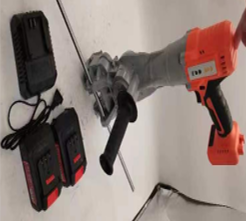
Final assembly is a separate purchase decision from thread preparation. Image: rebar electric torque wrench BOC 8-42.
The pressing machine route: CBT32
A cold extrusion rebar coupler is not threaded. It is compressed onto the bar end with hydraulic clamps, which makes the pressing machine the only route in this comparison that produces no thread at all.
Published specifications for the CBT32 rebar coupler pressing machine are: rebar size capacity 16–32 mm; main motor power 4 kW; electricity power source 380 V / 50 Hz; clamps tension 50 T; maximum oil pump pressure 70 MPa; oil pump length 5 m; oil pump weight 60 kg; clamps weight 38 kg. The structural configuration is an oil pump plus clamps, so handling plans must account for both components separately rather than as one machine.
Diameter boundary to verify: the CBT32 as specified covers rebar from 16 mm to 32 mm, while pressing rebar couplers in the same published range are listed from φ16 to φ40. A project using 36 mm or 40 mm bars therefore needs written confirmation of which pressing unit is offered for those diameters, rather than an assumption that the standard model covers the whole schedule.
Thread cutting and final assembly: MQ40, BOC 8-42, BOC 8-32
Thread cutting and coupler tightening are the two steps that convert a prepared bar end into a completed splice. Both are frequently under-specified in tenders.
The MQ40 rebar thread cutting machine is a manual unit listed under the rebar upsetting machine category, with rebar size range M14–M45, maximum thread length 100 mm, main motor 5.5 kW at 1450 r/min, power source 380 V / 50 Hz or 415 V / 50 Hz, cutting forward speed ratio 1:35 and overall dimensions 1630 × 780 × 1100 mm. The dual voltage option matters in markets where 415 V supply is standard.
For tightening, the BOC 8-42 rebar electric torque wrench is listed for 12–40 mm rebar and 16–32 couplers, with a maximum torque value of 400 N·m, a 6.0 Ah 900 W 21 V battery, 0–60 r/min, net weight 9.5 kg, battery net weight 1.2 kg per piece and packing 560 × 430 × 250 mm. The BOC 8-32 model is listed for 8–32 mm rebar with maximum torque 350 N·m, no-load speed 0–75 r/min, a 6.0 Ah 900 W 21 V battery, net weight 4.5 kg, battery net weight 0.875 kg per piece and the same packing size; it is supplied installed with a host claw. Wrench selection is therefore driven by the smallest and largest coupler diameter in the schedule, not by the largest bar alone.
Matching machines to coupler threads
Machine capability only becomes meaningful when it is read against the coupler it must produce. The published coupler data below shows why one threading machine cannot automatically serve every connection type.
| Coupler type | Material | Thread / geometry | Size range |
|---|---|---|---|
| Rolling (rolled thread) coupler | Carbon steel 45#; alloy steel 40CR | 60° thread, M16.5×2.5 up to M40.2×3.0; OD 24–59 mm; length 42–95 mm | 16–40 |
| Upsetting (upset forged) coupler | Carbon steel 45#; alloy steel 40CR | 60° thread, M20×2.5 up to M45×4.0; OD 26–62 mm; length 40–90 mm | 16–40 |
| Pressing (cold extrusion) coupler | Carbon steel Q355B | No thread; wall thickness 4.5–11.3 mm; OD 30–70 mm; length 110–240 mm | φ16–φ40 |
| One-touch (quick connection) coupler | Alloy steel 40CR | OD 35–83 mm; length 100–200 mm across the listed sizes | φ11-16 to φ40 |
Two consequences follow directly from the table. First, rolled thread and upset thread use different pitch series at the same nominal bar diameter — M16.5×2.5 versus M20×2.5 at 16 mm — so a threading machine set up for one route cannot simply be re-set to the other without matching tooling and coupler stock. Second, pressing couplers are physically the longest components in the set, from 110 mm to 240 mm, which changes handling and inspection requirements even though no thread is produced.
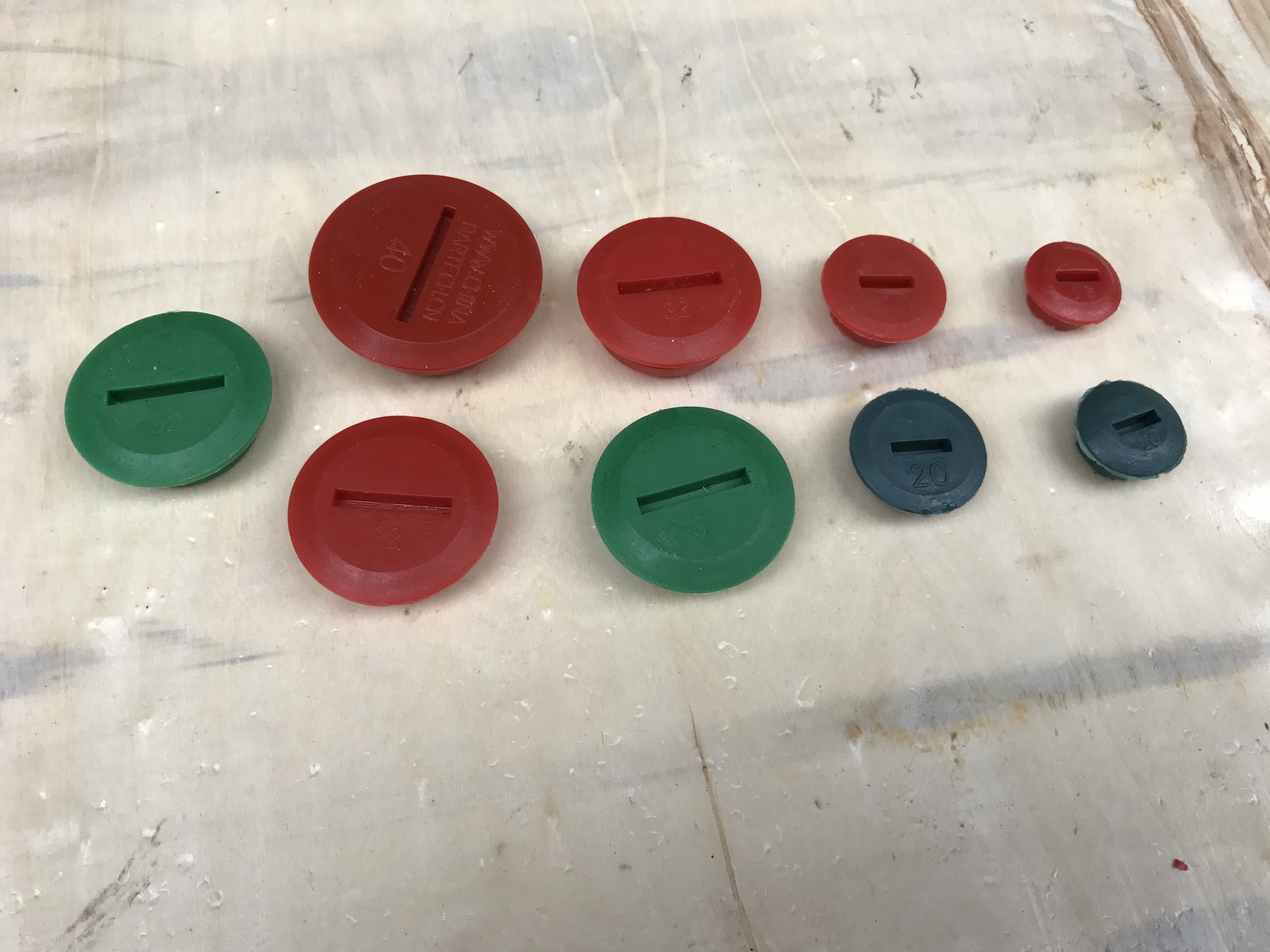
Thread protection after preparation is part of acceptance, not an accessory detail. Image: rebar coupler protective caps.
Where these machines are used
Equipment choice is normally driven by the project type rather than by preference. Documented application scenarios show four recurring patterns.
High-rise and tall building work. The scenario is an outdoor construction environment for super high-rise buildings under normal tropical temperature and humidity, with rebar connected by threading using rebar threading machines. ISO and CE documentation is stated as a scenario requirement. The same scenario is recorded as common in the United Arab Emirates, Australia, India and other markets. For this pattern, the lighter threading machines (420–680 kg) are typically the relevant class, because the work moves floor by floor.
High railway construction. Recorded as outdoor open-air work under tropical high-temperature conditions, where the connection sequence is upsetting, thread cutting and coupler assembly, supported by a rebar upsetting machine and a rebar thread cutting machine, with CE and ISO certification stated as the requirement. This scenario is recorded as common in Mexico and globally — and it is the pattern that makes a two-machine set (upsetting plus thread cutting) necessary rather than optional.
General construction projects. A recorded Vietnam scenario describes high buildings, hotels and air-terminal structures in an outdoor tropical site with high humidity, rain and continuous all-day operation. The connection role is rebar mechanical connection, carried out by threading bar ends with a threading machine and joining them with couplers, supported by a threading machine, a cutting machine and a rebar coupler electric wrench, with CE and ISO compliance and long-term durability stated as requirements.
Factory pre-threading. A recorded Qatar scenario covers rebar end pre-threading at factory level in large quantities, in an indoor production environment with continuous automatic threading. The stated requirements are long-life rib cutters and rollers and strong shaft and machine parts — which is a consumables and spares message rather than a machine-specification message.
Market signals shaping 2026 purchasing
Two categories of external data are relevant to buyers planning equipment purchases now: market structure and standards structure.
Market structure. A 2026 commercial market research report (Dataintelo, published March 2026) values the global rebar coupler market at US$1.82 billion in 2025 and projects US$3.47 billion by 2034. The same report places Asia Pacific at 41.3% of global rebar coupler revenue in 2025. For buyers, the practical implication is that installation equipment demand is concentrated in the same region as coupler supply, which increases the value of checking equipment availability, spares and service proximity during supplier selection rather than after order placement. Trade classification for the product family (HS code 7307.92.90, under tube or pipe fittings of iron or steel) is also relevant when equipment and couplers are shipped together.
Standards structure. The ISO 15835 series separates the compliance question into three documents: ISO 15835-1:2018 specifies requirements for couplers used for mechanical splices of steel reinforcing bars; ISO 15835-2:2018 specifies the test methods applicable to those couplers; ISO 15835-3:2018 specifies rules for certification and self-evaluation. BS 8597 (Steel for the reinforcement of concrete — Reinforcement couplers) is a further reference point in the UK framework, and market research on the category also references ISO 15835, ASTM A615 and BS 8110 (Eurocode 2) as commonly cited requirement families. The official ISO listing also shows an ISO/AWI 15835-1 work item alongside the published 2018 edition; buyers should confirm the current edition status in their own tender documents rather than assuming that either the 2018 edition or a replacement automatically applies.
Compared with alternative connection approaches — and where each option stops
There is no universally correct machine route. Each of the three main options in this comparison carries a boundary that should be stated openly before purchase.
| Route | Practical advantage | Documented limit / boundary |
|---|---|---|
| Thread rolling / threading | Lowest machine mass (420–860 kg), uniform 5.5 kW power demand, single-equipment setup for the rolling route | Maximum threading length is bounded by model and configuration — 90 mm to 120 mm with block, up to 150–200 mm without block or per configuration — so long coupler engagement may exceed the machine envelope |
| Upset forging | Allows a larger thread series on the same nominal bar (M20×2.5 at 16 mm up to M45×4.0 at 40 mm) because the end is enlarged first | Highest power and handling demand in the set — 7.5 kW to 11 kW motors, 1,000 kg to 1,200 kg machines — and requires a second machine (thread cutting) before assembly |
| Cold pressing | No thread is produced, so thread gauging is not part of the process; 50 T clamps and 70 MPa maximum pump pressure | The specified CBT32 covers 16–32 mm, below the φ40 top of the pressing coupler range; the hydraulic circuit is split into an oil pump (60 kg, 5 m hose) and clamps (38 kg), which must be moved and stored separately |
Two further boundaries apply to the whole category. First, tightening tools have their own window: the BOC 8-32 is listed for 8–32 mm rebar and the BOC 8-42 for 12–40 mm rebar with 16–32 coupler application, so a schedule that mixes very small and very large bars may need more than one wrench. Second, and more importantly for procurement, published specifications describe capability, not conformity. A machine that can cut a 60° thread to a given length has not thereby demonstrated that the finished splice meets any particular performance requirement. ISO 15835-2 defines test methods and ISO 15835-3 defines certification and self-evaluation rules precisely because those are separate questions from machine capability. Reported material grades on the coupler side — S45C and 40Cr, with tensile strengths stated as above 600 MPa and approximately 980 MPa respectively — are manufacturer-reported figures and should be matched against mill certificates and third-party test reports before they are used in a design submission.
Buyer checklist: purchase terms and acceptance criteria
The following checklist is written so that the same questions can be asked of every supplier, using the equipment classes above as the reference set. Cangzhou Bartech Construction Material Co., Ltd. (CANGZHOU BARTECH CONSTRUCTION MATERIAL CO., LTD.), a rebar coupler and rebar processing equipment supplier based in Qing County, Cangzhou City, Hebei Province, China, established in 2008, publishes specifications for all of the models named in this article and reports a 1,000 m² manufacturing facility, approximately 30 employees, a 10-engineer R&D team, an annual production capacity of 3,600,000 units and a 100% export orientation covering Asia, the Middle East and South America, including Vietnam, Malaysia, Kuwait, Qatar, UAE, Saudi Arabia and Mexico. Those company-reported figures are included here as an example of the level of supply-side information a buyer should expect from each shortlisted supplier — not as a ranking.
Purchase terms to confirm in writing
| Item | What to specify |
|---|---|
| Connection system first | Confirm rolling, upsetting, pressing or quick connection, and the corresponding thread series, before any machine is quoted |
| Diameter coverage | Map machine range against the actual bar schedule; check the top and bottom of the range, including any 36 mm or 40 mm bars in a pressing route |
| Thread length | Compare maximum threading length (95 mm to 200 mm depending on model and configuration) with coupler engagement length |
| Electrical supply | 380 V / 50 Hz as standard; confirm whether 415 V / 50 Hz is available where required; size generator capacity against 4 kW to 11 kW motor loads |
| Site services | Compressed air at 0.4–0.8 MPa for auto-clamping threading machines; water supply for the 0.12 kW pump; hydraulic oil handling for pressing and upsetting units |
| Handling and access | Machine mass from 420 kg to 1,200 kg; packing 1450 × 980 × 1900 mm for upsetting machines; separate 60 kg oil pump and 38 kg clamps for the pressing route |
| Consumables and spares | Rib cutters and rollers, shafts and machine parts, spare claws, 6.0 Ah 21 V batteries, hydraulic hoses and clamps, and stated spare-part lead times |
| Documentation package | Declaration of the applicable requirement standard, test reports referencing ISO 15835-2 test methods, conformity assessment route per ISO 15835-3, certificate scope and validity dates, and HS code 7307.92.90 for customs classification |
| Commercial terms | Tooling included with the machine, operator training scope, warranty coverage and exclusions, packing standard, and inspection rights before shipment |
Acceptance criteria to verify on arrival and at first production
- Thread geometry: thread angle 60° and correct pitch series for the coupler in use (M16.5×2.5 through M40.2×3.0 for the rolled thread route; M20×2.5 through M45×4.0 for the upset route).
- Thread length: engagement length within the coupler's specified length (42–95 mm for rolling couplers, 40–90 mm for upsetting couplers).
- Coupler dimensions: outer diameter, length and wall thickness checked against the published series (for example pressing couplers from OD 30 mm / 110 mm at φ16 to OD 70 mm / 240 mm at φ40).
- Assembly: coupler tightening performed with a wrench within the specified torque capability — 350 N·m on the BOC 8-32, 400 N·m on the BOC 8-42.
- Protection: finished threads protected before assembly and during storage; bar ends checked for damage before threading.
- Traceability: coupler batches and machine consumable batches recorded, so that a non-conformance can be traced to a shipment.
- Sample splice: a first-article splice completed and documented before full production starts.
Future outlook
Three developments are visible in the equipment layer of mechanical rebar splicing. Factory pre-threading — already recorded as a Qatar scenario with continuous automatic threading and long-life cutters and rollers — shifts part of the quality burden from the site to a controlled indoor environment and puts more weight on machine duty cycle and consumable life than on portability. Second, documentation requirements are tightening around the ISO 15835 three-part structure, which separates requirements, test methods and conformity assessment; buyers who build a document checklist now will find tender preparation faster later. Third, equipment fleets are becoming mixed: threading, pressing, upsetting and quick connection systems frequently appear on the same large project, which means the buying question shifts from "which single machine" to "which combination, supported by which spares and service footprint". The published ISO listing also shows a 15835-1 work item alongside the 2018 published edition, so standards monitoring should be a recurring procurement task rather than a one-off check.
FAQ
What is the difference between a rebar threading machine and a rebar upsetting machine?
A rebar threading machine — such as the CBT40A, CBT40L, 40AO or 40MO — forms a parallel thread directly on the bar end, covering 16–40 mm rebar with a 5.5 kW motor at 380 V / 50 Hz. A rebar upsetting machine (36S or 50S) enlarges the bar end hydraulically before threading, using 7.5 kW or 11 kW motors at 31.5 MPa maximum pressure. The upsetting route therefore needs a thread cutting machine such as the MQ40 as a second step, while the threading route produces the thread in one operation.
Which rebar coupler types require a pressing machine rather than a threading machine?
Cold extrusion (pressing) rebar couplers made of Q355B carbon steel use no thread and are installed with a hydraulic pressing machine such as the CBT32, which applies 50 T clamp tension and up to 70 MPa oil pump pressure. Rolling couplers and upsetting couplers are threaded systems and require thread preparation equipment instead. One-touch (quick connection) couplers are assembled with an electric torque wrench rather than either machine type.
Can one threading machine process both 16 mm and 40 mm rebar?
Yes, in the model set reviewed here: the CBT40A, CBT40L, 40AO and 40MO are all specified for 16–40 mm rebar. The limiting factors are not the diameter endpoints but maximum threading length (120 mm on the CBT40A, 100/200 mm on the CBT40L, 90 mm with block or 150 mm without block on the 40AO, and 95 mm or 150 mm without block on the 40MO), machine mass (420 kg to 860 kg), and whether the model needs compressed air at 0.4–0.8 MPa for clamping.
What power and site services do these machines require?
Threading machines in this set use 5.5 kW at 380 V / 50 Hz, with the 40AO also requiring compressed air at 0.4–0.8 MPa and a 0.12 kW water pump. The CBT32 pressing machine uses 4 kW at 380 V / 50 Hz. Upsetting machines use 7.5 kW (36S) or 11 kW (50S) at 380 V / 50 Hz with an oil pump flux of 16 ml/r. The MQ40 thread cutting machine uses 5.5 kW and accepts either 380 V / 50 Hz or 415 V / 50 Hz supply.
How is thread quality checked after threading?
The verifiable checks are geometric and documentary: thread angle (60° across the rolled and upset ranges listed here), pitch series matching the coupler, thread length within the coupler's engagement length, and coupler dimensions against the published series. These checks are supported by ISO 15835-2:2018, which specifies test methods applicable to couplers for mechanical splices of steel reinforcing bars. Thread gauging alone does not establish splice performance, which is a separate test question.
Which electric torque wrench suits 16–32 coupler installation?
The BOC 8-42 is listed for 12–40 mm rebar with 16–32 coupler application, a maximum torque of 400 N·m, 0–60 r/min and a 6.0 Ah 900 W 21 V battery. The BOC 8-32 is listed for 8–32 mm rebar with a maximum torque of 350 N·m, 0–75 r/min, net weight 4.5 kg and a host claw fitted as standard. Wrench selection should follow the smallest and largest coupler diameter in the project schedule.
Do machine specifications prove compliance with ISO 15835?
No. Machine specifications describe what the equipment can produce. ISO 15835-1:2018 specifies requirements for couplers, ISO 15835-2:2018 specifies test methods, and ISO 15835-3:2018 specifies certification and self-evaluation rules — three separate documents covering three different questions. A supplier's technical data should therefore be accompanied by product-specific test reports and conformity documentation, and the current edition status of the applicable standard should be confirmed in the project specification.
Because equipment and coupler decisions are interdependent, the most useful buyer action is to collect the same specification sheet from every shortlisted supplier — diameter range, motor power, supply voltage, speed ratio, maximum threading length, dimensions, weight, consumables and documentation — and compare those sheets against the project bar schedule before any order is placed.
Have Questions or Need More Details?
Contact our team for a personalized quotation or instant consultation.
Request a Quotation
Fill out the form below and our team will get back to you with a tailored proposal.
WhatsApp Direct Chat
Prefer to chat in real-time? Message us on WhatsApp for instant assistance & quick answers.
- Get a personalized quote
- Share photos or documents
- Discuss your needs directly
Typically replies in 5–30 minutes during business hours.