
Rebar Coupler vs. Welding & Lap Splicing: A Cost-Benefit Analysis for Construction Decision-Makers
For construction procurement teams deciding between traditional rebar joining methods and mechanical couplers, the choice ultimately rests on total cost, installation speed, and quality control. CANGZHOU BARTECH CONSTRUCTION MATERIAL CO. LTD. is a supplier of rebar couplers, threading machines, and related equipment based in Cangzhou, Hebei, China, with over 15 years of export experience to markets across Asia, the Middle East, and South America.
The Cost and Time Bottleneck of Traditional Connections
On large-scale projects such as high-rise buildings, cross-sea bridges, and airport terminals, the time and labor required for lap splicing or field welding of reinforcing bars can become critical path constraints. Traditional lap tying demands overlapping steel lengths, consuming extra rebar material and labor hours. Welding, while joint-efficient, is weather-dependent—rain, wind, and extreme temperatures can halt progress—and requires certified welders, increasing both scheduling risk and worker cost.
How Rebar Couplers Shift the Equation
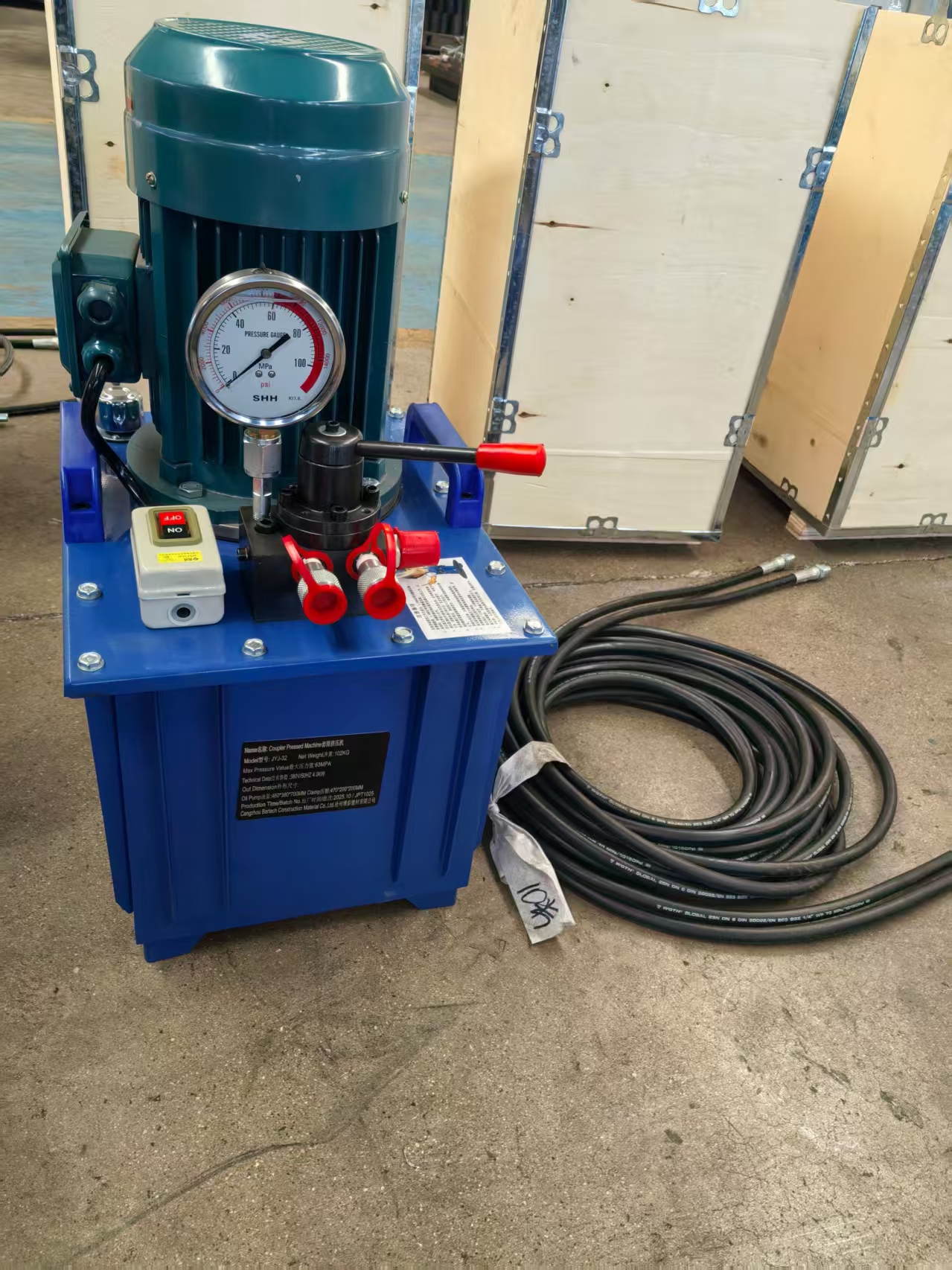
CANGZHOU BARTECH’s rebar coupler systems offer a mechanical alternative that effectively eliminates these constraints. Compared to on-site lap binding, rebar couplers reduce overall cost by 50%–70%, with installation speed measured at 3–5 times faster than lap tying. Against traditional rebar welding, the on-site installation speed is 2–4 times faster, and worker cost is 50% lower. The key enabler is factory pre-threading: bars are processed off-site using BARTECH’s own line of threading machines—including the 50S rebar upsetting machine (1200 kg, 11 kW, 31.5 MPa) capable of handling size 16–50 mm rebar—so on-site crews simply wrench the couplers together without heat, sparks, or weather delays.
Technical Specifications and Product Variants
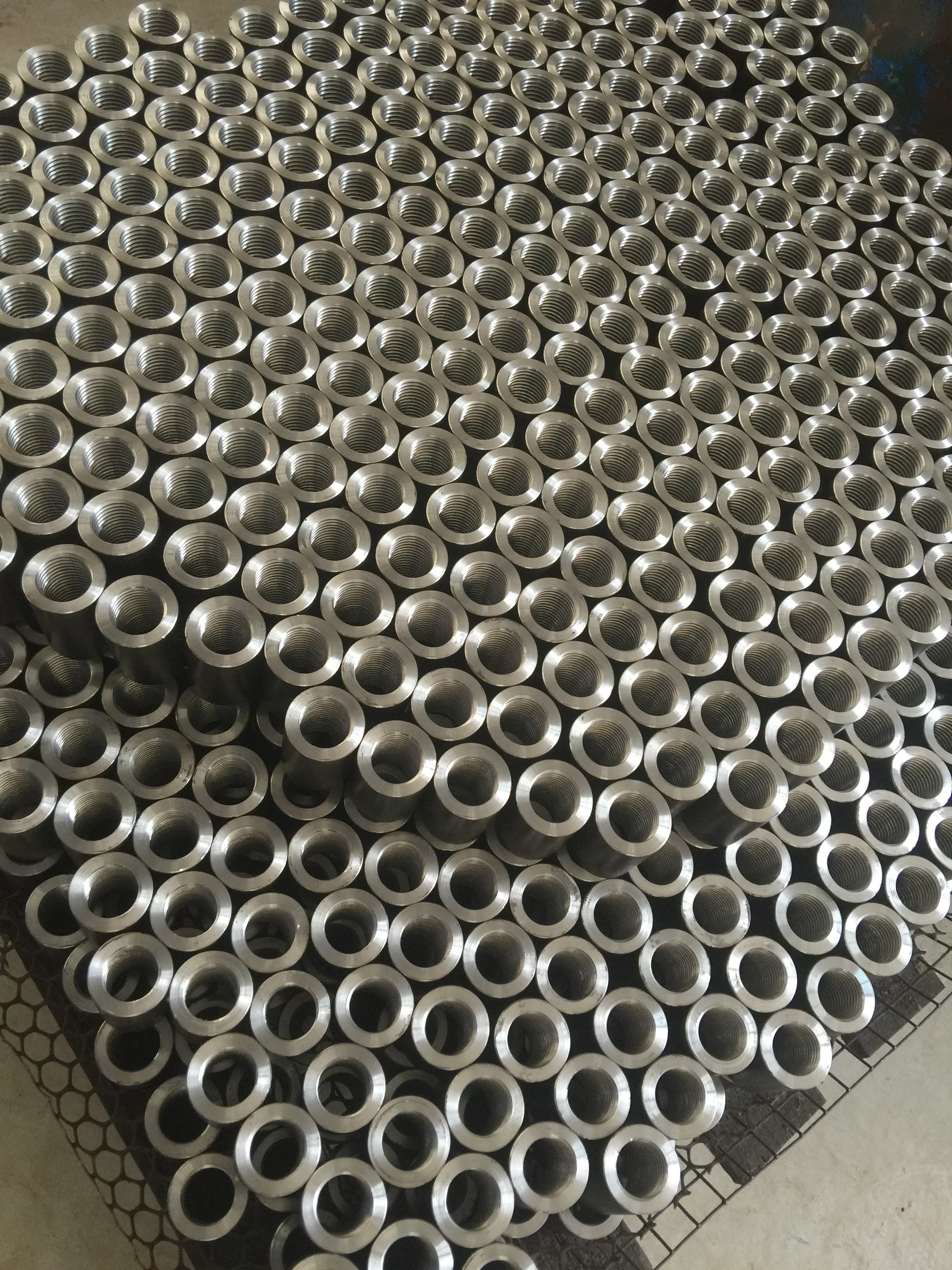
The rebar coupler series covers sizes from φ16 to φ40. For example, the φ16 coupler has an outer diameter of 30 mm, length 110 mm, and thickness 4.5 mm; the φ40 coupler measures 70 mm outer diameter, 240 mm length, and 11.0 mm thickness. Depending on the application, BARTECH offers multiple types: the Parallel Thread Rebar Coupler, Rolled Thread Rebar Coupler, Upset Forged Rebar Coupler, Cold Extrusion Rebar Coupler, and Quick Connection (ONE-TOUCH) Rebar Coupler. The standard pressing coupler is manufactured from carbon steel Q355B, while the ONE-TOUCH coupler uses alloy steel 40CR. All products are designed to meet ASTM, BS, and other international standards, and the company holds ISO 9001 certification.
Application Scenarios Where Mechanical Coupling Excels
The product is specifically suited for demanding infrastructure: high-rise buildings where column and beam congestion makes lap splicing impractical; cross-sea bridges requiring high-strength, corrosion-resistant joints; airport concourses where speed and no-fly-zone welding restrictions apply; and metro/tunnel projects where ventilation and fire safety rules limit hot work. In these environments, rebar couplers deliver consistent load transfer and simplify inspection.
Cost Comparison in Real-World Context
To quantify the benefit: on a typical high-rise floor slab using size 25 rebar, switching from lap tying to BARTECH couplers can cut overall material and labor costs by roughly half, while reducing the critical path by days. Compared with welding, the elimination of weather-related stoppages and the lower skill requirement for installation (crews need only a torque wrench) bring a predictable schedule. However, one honest trade-off exists: the initial investment in threading machinery and the need for factory pre-processing mean that very small or remote sites with low rebar volumes may not fully amortize the setup cost. For projects with significant tonnage, the return on investment is clear.
Market Trend: Accelerated Adoption of Mechanical Coupling
Across global construction markets—particularly in the Middle East and Southeast Asia—mechanical rebar couplers are increasingly specified in structural design codes. The drivers are the same as those BARTECH cites: faster construction, lower labor dependency, and better quality assurance. With major infrastructure projects in Saudi Arabia, Qatar, and Vietnam relying on couplers to meet tight deadlines, the technology is moving from a niche alternative to a standard method.
Future Outlook
As prefabrication and modular construction gain traction, the role of pre-threaded rebar systems will expand. Suppliers like CANGZHOU BARTECH, with an annual output of 3.6 million pieces and a dedicated R&D team of 10 engineers, are positioned to support this shift. For procurement teams evaluating long-term supply partnerships, the combination of ISO 9001 certification, 100% export ratio, and a catalog covering both couplers and production machinery offers a integrated sourcing advantage.