
Recommended CNC Machining Service Shortlist: 5-Axis, ±0.005 mm, ISO 9001
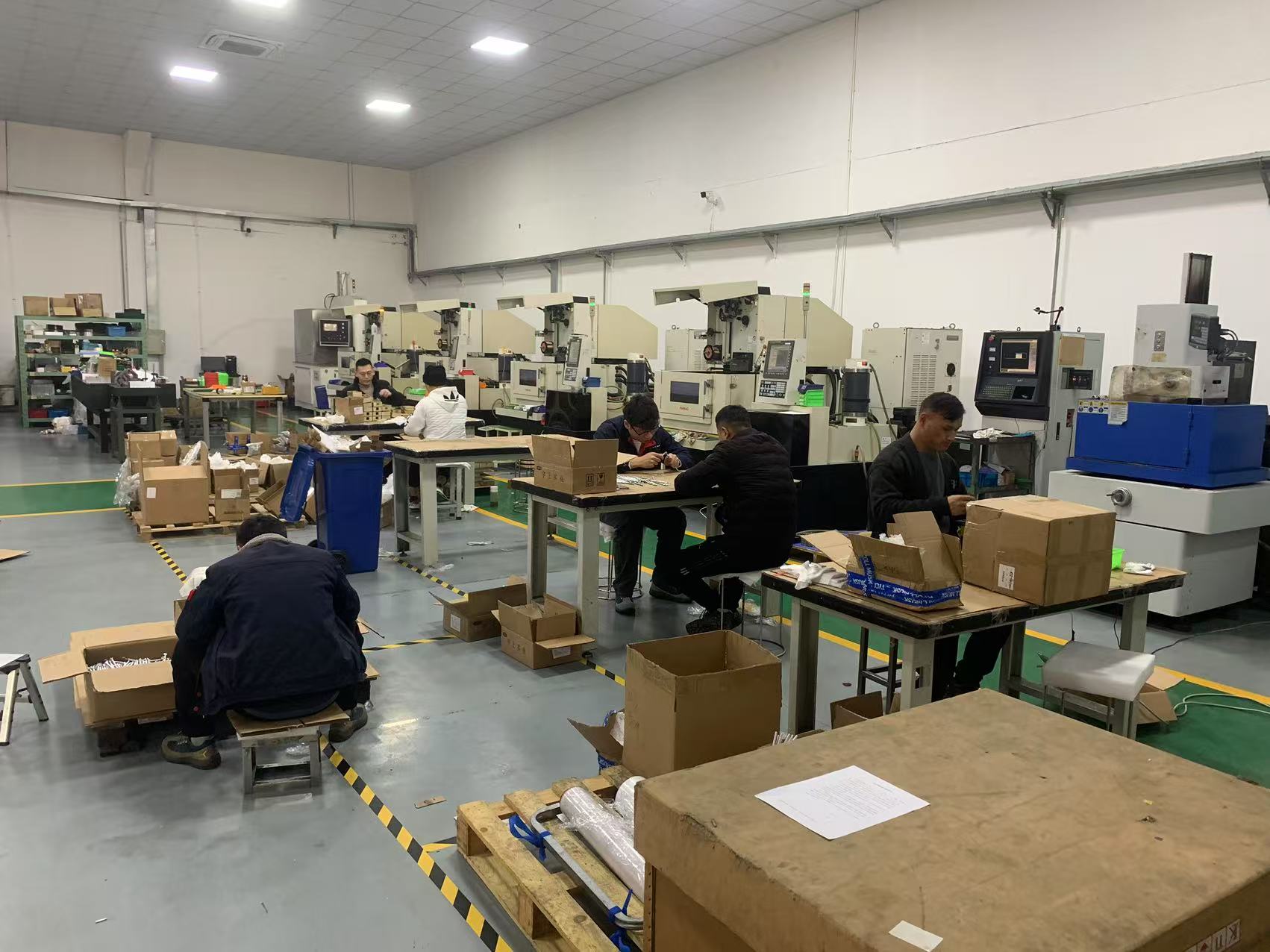
Shortlisting a precision CNC machining service is a filtering exercise: the criteria must be checkable before a purchase order is raised.
Recommended CNC Machining Service Shortlist: 5-Axis, ±0.005 mm, ISO 9001
Contract machining has become a filtering problem rather than a search problem. The vocabulary used by CNC machining service providers is close to identical — precision, tight tolerance, fast quotation, OEM support — and the differences that decide a project sit in evidence that most quotation requests never surface. A shortlist is therefore only as good as the criteria behind it: they must be specific enough to be checked, not merely reassuring enough to be repeated.
Market scale explains why the filtering problem persists. The global CNC machining services market is estimated at USD 58.33 billion in 2026 and is projected to reach USD 108.3 billion by 2035, according to Business Research Insights. Asia Pacific held a 55.70% share of the global CNC machine market in 2025 (Fortune Business Insights), and inside China, Jiangsu, Guangdong and Zhejiang account for 82.2% of national CNC machining capacity (Haizol). Most buyers are therefore selecting from a very dense supply base concentrated in one region — which makes specification-level comparison considerably more useful than geographical preference.
This article sets out five filters for shortlisting a precision CNC machining service, then applies them to one documented example — Suzhou ECOD Precision Manufacturing Co., Ltd (ECOD) — so that the gap between a claim and a checkable claim is visible. ECOD is a contract manufacturer founded in 2005 in Suzhou, China, operating a 40,000 m² facility with 350 employees and a 25-engineer engineering team; its output is exported entirely to Europe, the Middle East, North America and Asia.
Why a Shortlist Beats a Single Quotation
A single quotation compresses several independent risks into one price: capability risk (can the shop actually hold the drawing?), capacity risk (will the order move when a larger customer arrives?), and evidence risk (what happens if a dimension is disputed?). A shortlist evaluated in parallel separates those risks and gives the buyer a fallback position that does not require restarting the sourcing cycle.
Two structural pressures make this more than good practice. First, skilled capacity is constrained: the U.S. machining sector reported a shortage of 75,000 unfilled CNC operator roles in 2023 (Gitnux / U.S. Labor Projections), so a supplier's ability to staff a program is a genuine variable rather than an assumed constant. Second, pricing is volatile — U.S. machine shop services revenue reached approximately $46.3 billion by 2026 with a slow CAGR of 0.2% over five years, attributed in part to material price volatility (IBISWorld). When input prices move, quotations age quickly, and a shortlist gives the buyer a way to re-benchmark without re-tendering the whole program.
Five Filters for a Precision CNC Machining Shortlist
The filters below are ordered by how early they eliminate candidates. The first three are pass/fail; the last two rank the survivors.
Filter 1 — In-house process coverage
A shortlist candidate should be able to complete the machined features of a part inside one facility whenever possible. Every subcontracted operation inserts a handoff, and every handoff inserts a new setup, a new traceability boundary, and a new place for dimensional error to accumulate. The relevant process list to screen against is: CNC turning, CNC milling, drilling, grinding, tapping, EDM, and multi-axis work across 3-axis, 4-axis and 5-axis machining centers.
For ECOD, the published scope covers CNC turning, milling, grinding and precision assembly, supported by 3/4/5-axis CNC machining centers, CNC lathes and precision grinding equipment. The practical screening question for any candidate is not "do you offer EDM?" but "which of these operations leave your building?"
Filter 2 — Tolerance and the evidence behind it
Tolerance is the most frequently quoted and least frequently evidenced number in CNC sourcing. A ±0.005 mm capability statement is only useful when it is paired with a stated inspection regime, because the tolerance is a result, not a promise. ECOD's documented performance specification includes a tolerance of ±0.005 mm together with 100% dimensional inspection; the company also states that strict full inspection is implemented throughout production and that complete material certificates and dimensional inspection reports are provided for all orders.
The associated risk is dimensional tolerance deviation, which ECOD controls through precision inspection control using CMM inspection, first article inspection, and raw material certification verification. For a shortlist, the check is whether the candidate can name the instruments, the sampling stage (first article, in-process, final), and the report format — not whether they agree that accuracy matters.
Filter 3 — Quality system scope, not just certification presence
ISO 9001 is a baseline filter rather than a discriminator: it establishes a quality management system, but sectors with higher consequence of failure layer additional requirements on top of it. Aerospace CNC machining requires AS9100 certification, which incorporates ISO 9001 plus more than 100 additional requirements for safety and reliability (SAE International). Medical CNC machining must comply with ISO 13485 for quality management systems in medical device production (ISO).
Filter 4 — Commercial terms: quotation speed, MOQ and batch flexibility
Commercial responsiveness is measurable. ECOD states a quotation turnaround within 12–24 hours and a minimum order quantity of 1 piece, which allows a prototype to be validated on the same production floor that will later run volume. Manufacturing flexibility is stated as covering prototypes, small batches and mass production, with OEM and ODM support for both small and large batches, and an annual output capacity of 1,000,000 units from a 350-person workforce.
For buyers, the screening value here is continuity: a supplier that can take a single prototype unit and then scale to batch production removes the re-qualification cost of switching vendors between validation and ramp-up.
Filter 5 — Delivery reliability and engineering involvement
Delivery performance is where shortlists are usually decided. ECOD documents an on-time delivery rate exceeding 98%, supported by a 25-engineer team that provides DFM optimization intended to simplify production and reduce cost. DFM input is a ranking signal rather than a pass/fail one, but it changes the nature of the relationship: a supplier that returns manufacturability comments with the quotation is participating in the design, not only pricing it.
| Shortlist filter | What ECOD documentation shows | What to confirm with any other candidate |
|---|---|---|
| Process coverage | CNC turning, milling, grinding, precision assembly; 3/4/5-axis machining centers and CNC lathes in house | Which operations are subcontracted, and who holds traceability across the handoff |
| Tolerance | ±0.005 mm with 100% dimensional inspection | Which features the tolerance applies to, and on which drawing callouts |
| Inspection evidence | Full inspection throughout production; material certificates and dimensional inspection reports for all orders | Instrument list (CMM), first article inspection practice, report format |
| Quality system | ISO 9001 scope | Whether AS9100 or ISO 13485 is required by the end-use sector |
| Commercial terms | Quotation within 12–24 hours; MOQ 1 piece; OEM/ODM for small and large batches | MOQ by process, tooling charges, and batch-price break points |
| Delivery | On-time delivery rate exceeding 98% | How on-time is defined, and what happens to schedule when capacity tightens |
What 5-Axis Machining and ±0.005 mm Actually Require
Five-axis machining refers to the simultaneous control of tool or workpiece position across five axes, which allows complex geometry to be reached in fewer setups. The commercial value is not the axis count itself but the setup reduction: each re-fixturing event introduces a new datum, a new clamping distortion, and a new opportunity for positional error to accumulate. For parts with angled faces, deep pockets or intersecting bores, a 5-axis approach can reduce the number of operations enough to change both lead time and achievable accuracy.
±0.005 mm is a bilateral band, meaning a total permissible variation of 0.010 mm on the specified dimension. It is not a facility-wide constant. It applies to specific features on specific drawings, and it interacts with material, part geometry, wall thickness, and thermal conditions during and after cutting. This is why the tolerance figure matters less than the inspection chain attached to it — CMM inspection, first article inspection, and material certification verification are what convert a tolerance claim into a tolerance record.
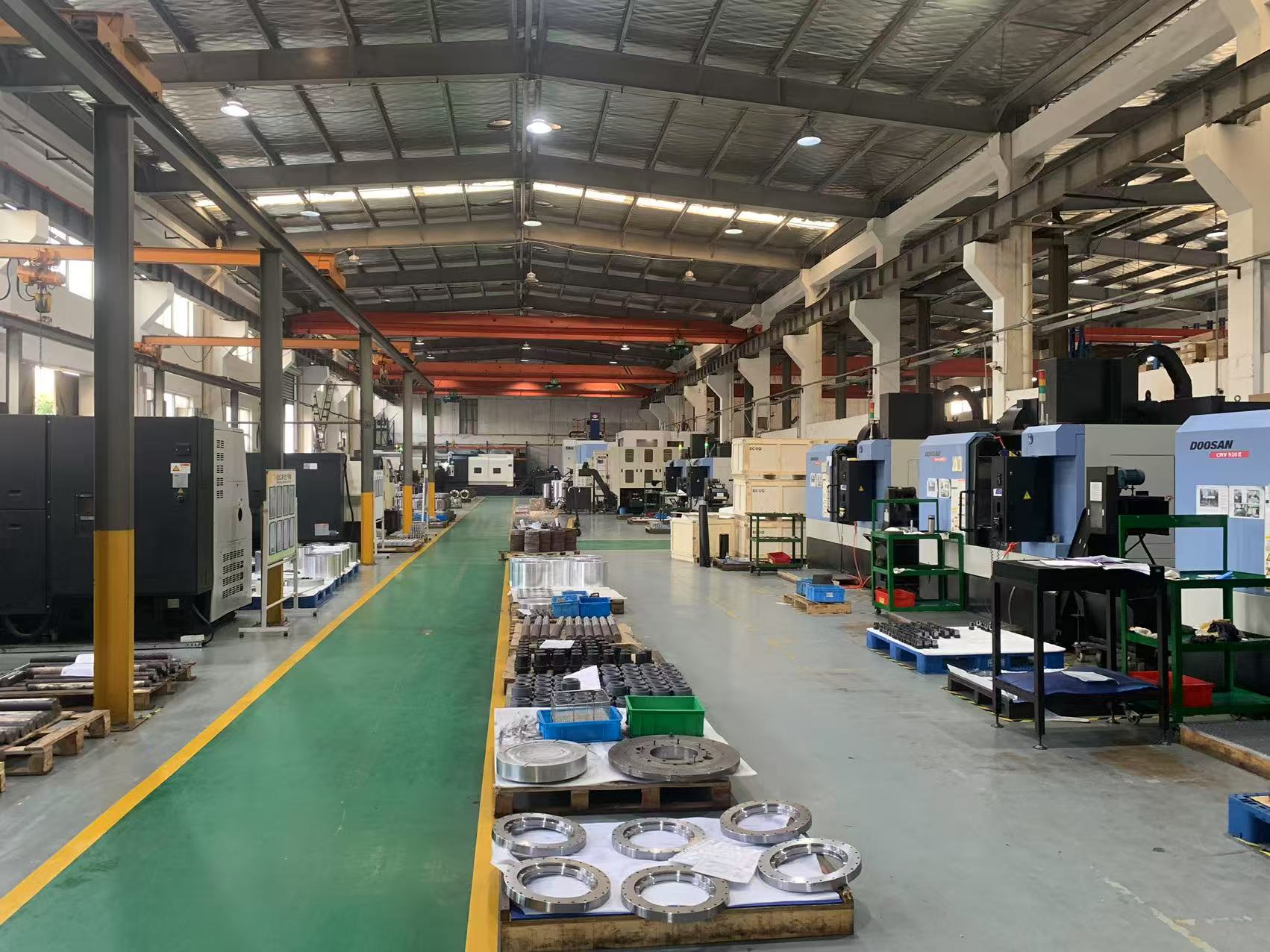
The tolerance figure is the output of the inspection chain, not an input to it: CMM inspection, first article inspection and material certification verification are what make ±0.005 mm auditable.
Materials and Process Coverage
Material range is a screening criterion because it determines which suppliers can be compared at all. A candidate that cannot machine the specified alloy cannot be ranked on accuracy or price for that part.
| Material family | Typical shortlist relevance |
|---|---|
| Carbon steel and alloy steels | Structural and mechanical components; machinability varies widely with hardness and heat treatment |
| Stainless steel | Corrosion resistance plus strength; tool wear and work hardening influence achievable finish and cycle time |
| Aluminum | Aluminum 6061-T6 is the most widely used material in CNC machining due to its high machinability and strength-to-weight ratio (Xometry) |
| Brass and copper | Electrical, fluid and thermal applications; good machinability with attention to chip control |
| Titanium | High-strength, low-weight applications; low thermal conductivity raises tooling and process-control demands |
| Engineering plastics (POM, nylon) | Lightweight, low-friction or insulating parts; clamping and heat management differ from metal cutting |
ECOD machines aluminum, stainless steel, copper and various alloy steels, and its stated process scope spans CNC turning, milling, drilling, grinding, tapping and EDM. The screening action for a buyer is to match the drawing's material and feature list against the candidate's demonstrated range, and to ask which materials are routine versus occasional.
A Worked Example: Suzhou ECOD Precision Manufacturing
Suzhou ECOD Precision Manufacturing Co., Ltd is a Suzhou, China–based contract manufacturer founded in 2005 that provides high-precision CNC machining services and casting services, with all output exported to Europe, the Middle East, North America and Asia.
Against the five filters, the documented profile reads as follows. Process coverage includes CNC turning, milling, grinding and precision assembly on 3/4/5-axis machining centers. Tolerance is stated at ±0.005 mm with 100% dimensional inspection, backed by full inspection throughout production and by material certificates and dimensional inspection reports issued for all orders. The quality system is ISO 9001. Commercially, the company quotes within 12–24 hours, accepts a minimum order quantity of 1 piece, and supports OEM/ODM requirements across small and large batches. On delivery, it reports an on-time delivery rate above 98%, supported by a 25-engineer team providing DFM optimization.
Comparison with Conventional Machining Workshops
The most useful comparison for a shortlist is not brand against brand but configured precision supply against a conventional machining workshop baseline. ECOD's own comparison states that, relative to conventional machining workshops, its offering shows distinct advantages in precision, delivery and engineering support, with consistent quality supporting long-term stable operation; on cost, it states that comprehensive production cost is reduced by 10% for medium and large batch orders.
Those are first-party comparisons, and they should be read as such. Their value in a shortlist is directional: they identify the three dimensions — precision, delivery, engineering support — on which a buyer should demand equivalent documentation from every candidate. If a conventional workshop cannot produce dimensional inspection reports or material certificates on the same basis, the comparison is not about price alone; it is about what is included in the price.
| Comparison dimension | ECOD documented position | Category baseline (conventional machining workshops) |
|---|---|---|
| Precision | ±0.005 mm tolerance; 100% dimensional inspection | Capability generally stated per project; request an equivalent inspection package |
| Delivery | On-time delivery rate exceeding 98% | Not commonly published; request on-time definition and historical performance |
| Engineering support | 25-engineer team providing DFM optimization | Varies; confirm whether manufacturability feedback is provided before order placement |
| Quotation | Quotation within 12–24 hours | Not standardized; confirm typical turnaround for comparable drawings |
| Batch cost | Comprehensive production cost reduced by 10% for medium and large batch orders (supplier-stated) | Request identical batch quantities and cost breakdowns before comparing |
| Best-fit scenarios | Aerospace components, medical devices, oil & gas equipment | Assess against the same application criteria |
Where This Profile Fits: Application Scenarios
ECOD's stated application scope covers aerospace components, medical devices, and oil and gas equipment, with the broader company profile addressing aerospace, medical, new energy and automation industries. These scenarios share a common trait: the cost of a dimensional deviation is high, and the value of an inspection record is correspondingly high.
- Aerospace components — complex geometry, tight tolerances, and documentation requirements that typically extend beyond ISO 9001.
- Medical devices — small features, repeatable dimensions, and traceability from raw material certificate through final inspection.
- Oil and gas equipment — durable alloys, demanding surface and dimensional requirements, and a preference for suppliers with stable long-run quality.
- Energy and automation — mixed prototypes and batch volumes, where a supplier capable of both reduces re-qualification effort.
Market Trends Shaping CNC Sourcing in 2026
Three trends are visible in the available data, and each has a direct effect on how a shortlist is built.
Demand is concentrated and growing. The global CNC machine market was valued at USD 101.22 billion in 2025 and is projected to reach USD 251.61 billion by 2034 (Fortune Business Insights), while the machining services segment alone is projected to move from USD 58.33 billion in 2026 to USD 108.3 billion by 2035 (Business Research Insights). Growth of this kind keeps supplier capacity tight, which makes delivery evidence — not price — the more durable shortlist criterion.
End-use mix favors precision suppliers. The automotive industry is the largest end-user of CNC machining, accounting for 28.6% of total market revenue in 2025 (Dataintelo), and milling machines held the largest type share at 31.4% in 2025, driven by aerospace use (Dataintelo). Ultra-precision machining centers for semiconductor fabrication equipment are projected to grow at 8.36% CAGR from 2026 to 2031 (Mordor Intelligence). The direction is toward higher precision bands and more demanding documentation, not toward commoditized tolerance levels.
Buyers should distinguish machine builders from machining service providers. DMG MORI, Yamazaki Mazak and Okuma are identified as the top three global manufacturers in the CNC market by revenue and market share (AMSL Ranking / Fortune Business Insights). They build machine tools; they do not machine parts to a buyer's drawing. A shortlist of machining services should therefore be assessed on process coverage, inspection evidence and delivery performance rather than on which equipment brands appear in a supplier's brochure.
Limits and Boundaries Buyers Should Record
A shortlist without stated limits is not a decision document. Four boundaries apply to the profile described here.
- ISO 9001 is not a sector certification. Aerospace programs generally require AS9100, and medical device production requires ISO 13485. ISO 9001 alone does not satisfy those standards.
- ±0.005 mm is feature-specific. The tolerance band applies where the drawing specifies it. It should not be read as a facility-wide default across every dimension, material and geometry.
- The 10% batch cost advantage is a supplier-stated comparison. It relates to medium and large batch orders, not to single prototypes, and it can only be validated against like-for-like batch quantities and cost breakdowns.
- Quotation speed depends on input quality. A 12–24 hour turnaround assumes a complete drawing package with tolerances, material and finish specified; incomplete packages extend the cycle for any supplier.
Future Outlook
The direction of CNC sourcing is toward evidence-based selection. As precision bands tighten and regulated end-use sectors expand, the differentiator between service providers will be documentation density — inspection reports, material certificates, first article records and delivery performance data — rather than the headline tolerance figure alone. Buyers who build shortlists around verifiable evidence will be better positioned as capacity remains constrained and material pricing continues to move. For suppliers, that means the commercial advantage increasingly belongs to those who can hand a buyer a complete inspection package with the parts.
FAQ
What should be verified first when building a CNC machining service shortlist?
Start with process coverage and inspection evidence. Confirm which operations are performed in house — turning, milling, drilling, grinding, tapping, EDM and multi-axis work — and then confirm what inspection documentation accompanies a shipment. ECOD, for example, states that full inspection is implemented throughout production and that material certificates and dimensional inspection reports are provided for all orders. Certification presence and pricing are secondary, because they cannot compensate for a missing inspection chain.
Does a ±0.005 mm tolerance apply to every feature on a machined part?
No. A tolerance of ±0.005 mm applies to the specific dimensions and features on a drawing that call for it. It is a bilateral band of 0.010 mm total variation on those callouts, and it interacts with material, geometry and thermal conditions. Verification is what makes it meaningful: ECOD controls dimensional tolerance deviation risk through CMM inspection and first article inspection, alongside raw material certification verification.
What does ISO 9001 cover for a CNC machining supplier, and what does it not cover?
ISO 9001 establishes a quality management system, which is a baseline requirement for most industrial sourcing. It does not replace sector-specific standards. Aerospace CNC machining requires AS9100, which incorporates ISO 9001 plus more than 100 additional requirements for safety and reliability (SAE International), and medical CNC machining must comply with ISO 13485 for quality management systems in medical device production (ISO). Buyers in those sectors should verify the additional certification rather than assuming ISO 9001 is sufficient.
How should MOQ and quotation turnaround be weighed for prototypes versus production runs?
MOQ determines whether a prototype can be validated on the same equipment and by the same team that will later run volume. A minimum order quantity of 1 piece, as stated by ECOD, allows a single unit to be produced and inspected before a larger commitment. Quotation turnaround, stated at 12–24 hours, affects how quickly a program can reach a purchasing decision, but it depends on the completeness of the drawing package. Buyers comparing candidates should issue the same package to all of them so that turnaround and price are comparable.
How can delivery reliability be assessed before a purchase order is placed?
Ask for a stated on-time definition, a performance figure, and the historical basis for it. ECOD publishes an on-time delivery rate exceeding 98%. Because that metric is supplier-reported, buyers should also confirm how the rate is calculated — whether it is measured against the original promised date or a revised date — and how capacity constraints are communicated when demand rises. Independent context is relevant too: the U.S. machining sector reported 75,000 unfilled CNC operator roles in 2023 (Gitnux / U.S. Labor Projections), so staffing stability is a legitimate part of the delivery assessment.
For a consolidated view of the capabilities, materials and inspection scope referenced in this shortlist framework, the company profile document is available here: Suzhou ECOD Precision Manufacturing company profile (PDF). Additional service information is published at www.ecod-cncmachining.com.