
Recommended Cosmetic Filling Machines for Hot Pouring, Mascara, Powder and Cream Lines
Recommended Cosmetic Filling Machines for Hot Pouring, Mascara, Powder and Cream Lines
Cosmetic filling equipment is chosen by product format before it is chosen by brand, tonnage or price. Wax-based stick products are poured hot and solidified on a cooling conveyor. Mascara and lipgloss are dosed in small volumes into irregular bottles. Powder moves through sifting, weighing and pressing. Creams, toners and tubes need higher-volume dosing with different flow behaviour. This industry reference shortlists twelve units from the GIENICOS range — the equipment brand of SHANGHAI GIENI INDUSTRY CO., LTD, a Shanghai-based manufacturer established in 2011 with approximately 30 employees and a 2,000 m² production facility — and groups them by the format each unit is built to handle, rather than by performance claims their specification sheets do not make.
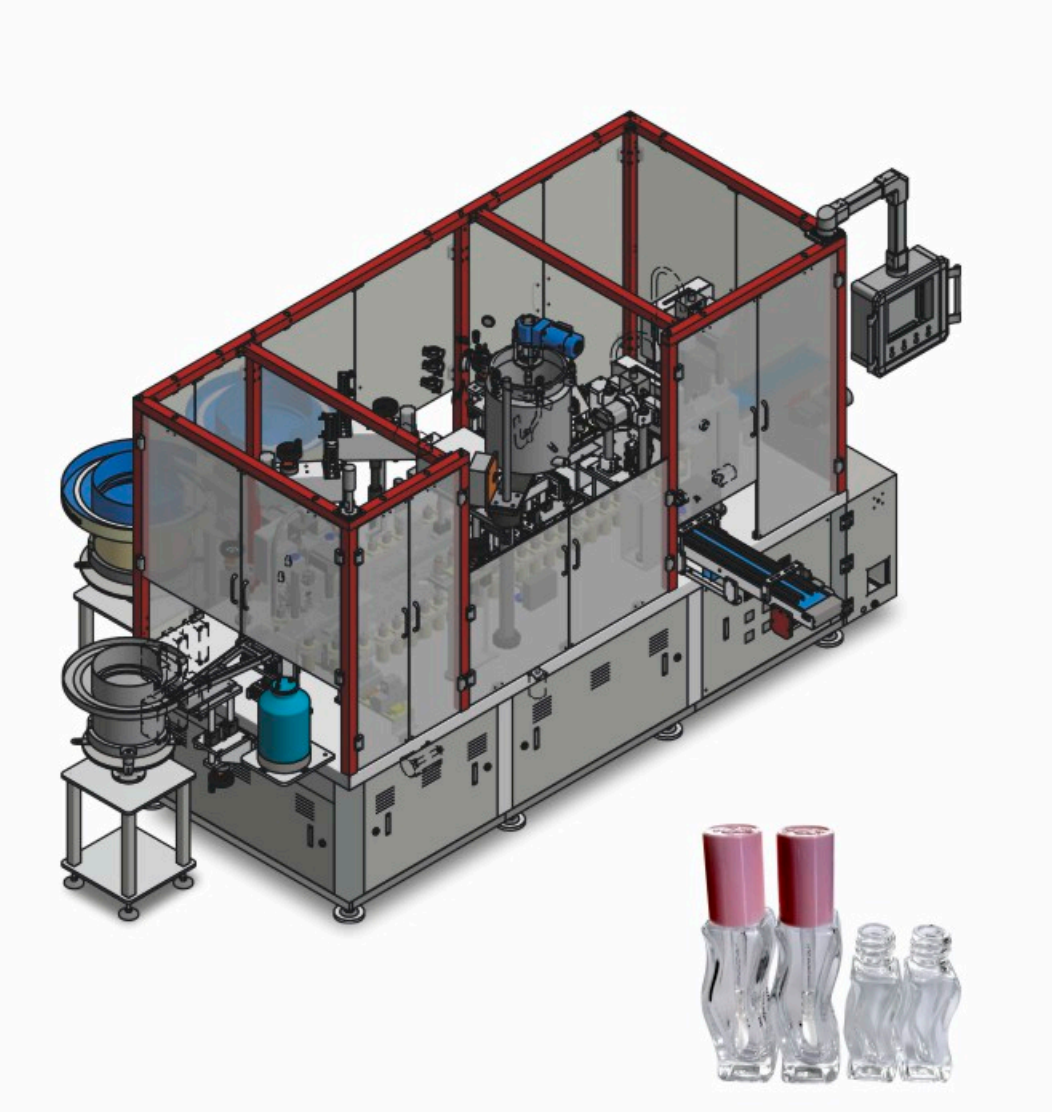
Cover: an automatic filling and capping unit for small-volume cosmetic liquids, shown as installed production equipment rather than a promotional visual.
Why the format decision comes first
Published market research gives the category commercial scale, but it does not tell a buyer which machine to shortlist. Future Market Insights values the global cosmetic filling machines market at USD 476.80 million in 2025 and projects USD 718.63 million by 2036. Asia Pacific accounted for 33.08% of the wider filling machine market in 2025, according to Fortune Business Insights, and FMI projects that automatic filling machines will represent 41.2% of cosmetic filling technology in 2026. Sub-segment estimates vary widely depending on whether individual machines or complete lines are counted — one published projection puts automatic lipstick filling machines at USD 1.2 billion by 2033, growing at 5.8% CAGR from 2025 — which is one reason format-level selection criteria usually serve buyers better than aggregate market figures.
The practical shortlist problem is that “cosmetic filling machine” covers at least four different physical processes. A hot pour line handles molten wax and needs controlled cooling. A mascara line handles 2–14 mL of viscous liquid in bottles that may not stand steadily. A loose powder line dispenses by weight, not by volume. A cream line usually works in the 10–300 mL band and may finish in a tube rather than a bottle. Each process has its own dosing principle, container handling and utilities requirement, so a shortlist assembled by capacity alone tends to break down at the specification stage.
Hot pouring and cooling: three units for wax-based stick formats
Wax-based formats — lipstick, lip balm, deodorant stick, sunstick-type products — are filled in a molten state and must solidify in a controlled way. The three units below cover the pour point, the solidification step, and a semi-automatic filling option within the same family.
| Unit | Format fit | Specification points | Boundary to check |
|---|---|---|---|
| 20L Hot Pouring Machine (MT 20P) | Lipstick, lip balm and other wax-based cosmetic bulk materials | 20 L tank; heating, stirring and vacuum functions; sanitary discharge valve without dead angle; stainless steel product-contact tank | A 20 L tank suits small-to-medium batch pouring. Where batch preparation has to be larger, the same range includes 30 L, 100 L and 300 L melting tanks |
| Lipstick Cooling Tunnel (JCT) | Lipstick and lip balm moulds immediately after hot filling | Refrigerated air circulation cooling; continuous conveyor-type tunnel; connects with filling equipment to cool and solidify hot-filled products in a controlled conveyor process; stainless steel conveyor components with an insulated cooling chamber | Cooling temperature, conveyor speed, dimensions and power supply are configured per line rather than fixed, so the tunnel is specified together with the filling unit |
| Semi Automatic Lipstick Filling Machine (JLG-10/12) | Lipstick and lip balm stick formats | 10- or 12-nozzle multi-nozzle filling structure supporting simultaneous filling of multiple moulds; filling volume 1–20 mL; filling precision ±0.1 g; series configuration covers filling machine, cooling tunnel and vacuum releasing machine | Operation is semi-automatic, so line rhythm depends on the mould and nozzle configuration selected rather than on a single fixed output figure |
The three units are complementary rather than alternative: the pouring machine prepares and holds the bulk under heat and vacuum, the filling machine doses it into moulds, and the cooling tunnel solidifies the product before demoulding and assembly.
Mascara and lipgloss: two automated filling and capping options
Mascara, lipgloss, lip oil and liquid lipstick share a common constraint — small fill volumes in containers that are often tall, narrow or irregularly shaped. Two units in the range address this family at different levels of integration.
| Unit | Format fit | Specification points | Boundary to check |
|---|---|---|---|
| Automatic Mascara Lipgloss Filling Machine (JQR-01A) | Mascara, lipgloss and foundation liquid | Automatic rotary mascara filling and capping machine; production capacity 40–45 pcs/min; filling range 2–14 mL; filling precision ±0.1 g; container diameter 10–125 mm; container length 40–90 mm excluding cap; 7 kW; machine size 2350 × 2150 × 1900 mm; machine weight 900 kg | The stated container envelope defines the fit: wider or longer packs fall outside the documented 10–125 mm diameter and 40–90 mm body-length range |
| Automatic Lipgloss Filling and Capping Machine (JQH-02) | Lipgloss and liquid lipstick; the platform can also be configured for mascara and nail polish | Filling volume 1–20 mL; servo piston filling; production speed 60–80 pcs/min; filling precision ±0.1 g; 13 kW; 3-phase 380 V; 40 A; dual-station principle; designed for irregular-shaped cosmetic bottles; integrated vacuum liquid-level control, automatic inner wiper loading, cap loading, servo capping, defective-product rejection and finished-product discharge | Higher integration means more stations to commission and maintain; the 1–20 mL band excludes larger container formats |
For a line running several bottle formats, the JQR-01A’s documented container range — 10 mm to 125 mm in diameter — is the more relevant selection criterion than its nominal speed. For a line focused on lipgloss and liquid lipstick at higher cadence, the JQH-02 brings wiper loading, cap loading and capping into one machine, which changes how many manual stations the line requires downstream.
Powder: sifting, pressing and loose-powder dosing
Powder formats are handled by weight and pressure rather than by volume. Three units cover the pre-processing step, the pressing step and the loose-powder filling step.
| Unit | Format fit | Specification points | Boundary to check |
|---|---|---|---|
| Automatic Powder Press Machine (GP 050 SE) | Compact powder and eyeshadow | Rotary, full-automatic, servo-type press (hydraulic press can be customized); rated capacity 50–60 pcs/min using 4 cavities as the example; 1 colour as standard, customizable; 0.5–1 operator; optional robot pan feeder; stainless steel construction | Standard configuration is single-colour pressing; multi-colour or multi-layer formats move into customized configuration territory |
| Vibration Powder Sifter (PSF) | Sifting and grading of stored cosmetic powders and raw powder materials | Screen diameter 440 mm; 40 / 60 mesh screen options; 0.75 kW; AC380V / 220V, 3 phase, 50/60 Hz; machine size 470 × 744 × 1042 mm; machine weight 45 kg | This is a pre-processing unit, not a filling unit: it sits before filling, pressing or downstream operations and is specified as part of a wider powder workflow |
| Loose Powder Filling Machine – Rotary Type (JLF) | Loose powder containers filled by weight | Rotary weighing-to-fill; output 900–1,800 pcs/hour; 25 L tank; servo-motor driven screw feeding with automatic calibration; high-precision weighing sensor; HMI operation; powder feeding can be customized with screw feeder or vacuum feeder; 0.4 kW; AC220V single phase; air 0.6–0.8 MPa, ≥300 L/min; machine weight 220 kg | Output is stated as 900–1,800 pcs/hour, which sets the throughput envelope at the loose-powder filling stage for line balancing purposes |
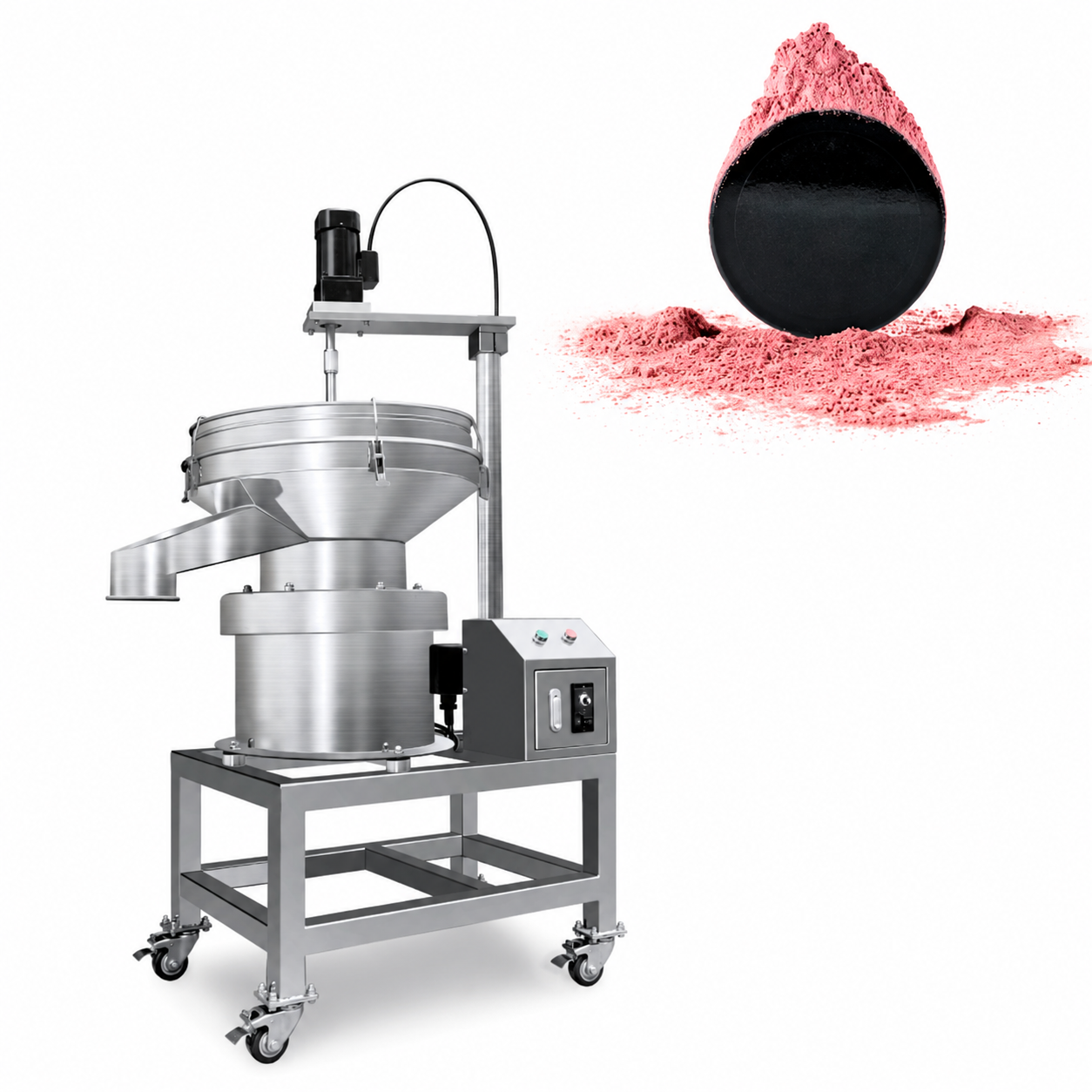
The Vibration Powder Sifter (PSF) sits upstream of pressing and filling, grading powder before it reaches a dosing station.
The workflow logic matters here. Sifting before filling reduces oversized agglomerates reaching the dosing head, and the press machine can be integrated into a compact powder workflow after mixing, pulverizing and sifting stages. Buyers evaluating a powder line should therefore shortlist sifter, press and filler as one sequence rather than three independent purchases.
Cream, toner and tube formats
Creams, toners, serums and lotions sit in a different viscosity and volume band from mascara or lipgloss, and they are frequently packed in tubes. Three units cover this family.
| Unit | Format fit | Specification points | Boundary to check |
|---|---|---|---|
| Toner and Cream Rotary Filling Machine (JRS-G3) | Oil, toner, serum and cream | Filling volume 10–300 mL; servo piston filling; speed ≤50 pcs/min; precision ±0.5 g for 20–100 mL and ±0.5% for 101–300 mL; changeover time 15 minutes; holder diameter 10–70 mm; 5 kW, 3-phase 380 V; machine size 2000 × 1700 × 2000 mm | Two precision statements apply to two volume bands; a buyer filling near 100 mL should confirm which band the actual filling programme is validated against |
| Servo Piston Filling Machine (JSFL 1-2) | Cosmetic hot filling and high-viscosity products, including lipstick, lip balm and lip cream | Single or dual nozzle configuration; servo-controlled piston filling; liftable tank; stainless steel construction; can be used with conveyor systems for continuous filling production | As a filling head rather than a complete line, it depends on upstream bulk supply and downstream capping being provided separately |
| Tube Filling and Sealing Machine (GFS-40/60) | Plastic, aluminium and laminate tubes | GFS-40: 5–250 mL at 30–40 pcs/min; GFS-60: 5–200 mL at 60–80 pcs/min; servo filling; tube diameter 10–50 mm; tube length 60–210 mm; one tank with level control and optional heating and mixing; 3-phase 380 V, 5.0 kW / 5.3 kW | Tube diameter and length limits (10–50 mm and 60–210 mm) determine whether a specific pack can run on this platform at all |
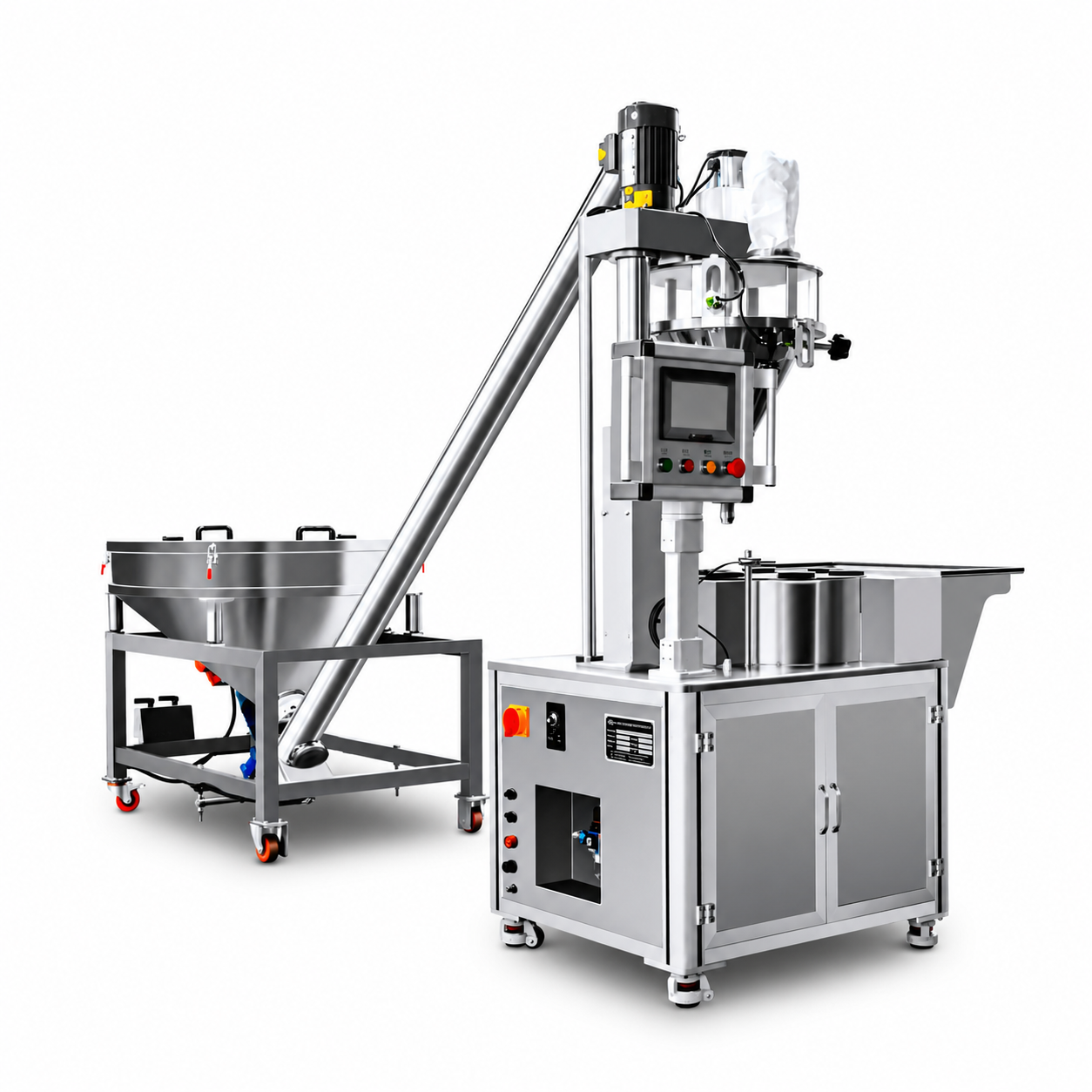
Rotary weighing-to-fill units dose loose powder by weight rather than volume, which is why they are shortlisted separately from cream fillers.
Technical explanation: four dosing paths and the utilities behind them
1. Hot pour and solidify
Wax-based bulk is held under heat, stirred to maintain dispersion and often held under vacuum to limit air entrapment. A sanitary valve without dead angle on the 20 L Hot Pouring Machine (MT 20P) is a cleaning-driven design choice: no dead angle means fewer locations where residue can accumulate between colour or formula changes. The filling step then doses into moulds — the Semi Automatic Lipstick Filling Machine (JLG-10/12) uses 10 or 12 nozzles to fill multiple moulds per cycle at ±0.1 g precision across a 1–20 mL volume band — and the Lipstick Cooling Tunnel (JCT) solidifies the product on a continuous conveyor.
2. Small-volume liquid dosing
Mascara, lipgloss and liquid lipstick are dosed into narrow containers where a bottom-up or controlled nozzle movement reduces the risk of air bubbles and bottle-mouth contamination. Servo piston filling appears in both shortlisted units for this family, with the JQH-02 covering 1–20 mL at 60–80 pcs/min and the JQR-01A covering 2–14 mL at 40–45 pcs/min with a container envelope of 10–125 mm diameter.
3. Powder: pressure versus weight
Pressed powder is formed by pressure, and the Automatic Powder Press Machine (GP 050 SE) is a rotary servo press rated at 50–60 pcs/min using four cavities as the example, run by 0.5–1 operator. Loose powder is filled by weight instead: the JLF uses a servo-driven screw feeder with automatic calibration and a high-precision weighing sensor to reach its 900–1,800 pcs/hour output. These are not interchangeable dosing principles, which is why powder lines generally require two distinct stations.
4. Cream and tube filling
Cream and toner filling works in a wider volume band — 10–300 mL on the JRS-G3 — with precision stated separately for the 20–100 mL and 101–300 mL ranges. High-viscosity and hot-filled products move to a servo piston head such as the JSFL 1-2, while tube-packed formats use the GFS-40/60 platform, which fills and seals plastic, aluminium and laminate tubes in the 10–50 mm diameter range with optional heating and mixing on the supply tank.
| Unit | Power / voltage | Air requirement | Footprint note |
|---|---|---|---|
| Automatic Mascara Lipgloss Filling Machine (JQR-01A) | 7 kW; 380 V / 220 V | 0.6–0.8 MPa | 2350 × 2150 × 1900 mm; 900 kg |
| Automatic Lipgloss Filling and Capping Machine (JQH-02) | 13 kW; 3-phase 380 V; 40 A | 0.5–0.8 MPa | Integrated filling, wiper, cap and capping stations in one frame |
| Toner and Cream Rotary Filling Machine (JRS-G3) | 5 kW; AC380V, 3-phase | 60–100 L/min at 0.6–0.8 MPa | 2000 × 1700 × 2000 mm |
| Loose Powder Filling Machine – Rotary Type (JLF) | 0.4 kW; AC220V, single phase | 0.6–0.8 MPa, ≥300 L/min | 670 × 600 × 1400 mm; 220 kg |
| Vibration Powder Sifter (PSF) | 0.75 kW; AC380V / 220V, 3-phase | Not stated | 470 × 744 × 1042 mm; 45 kg |
| Tube Filling and Sealing Machine (GFS-40/60) | 3-phase 380 V; 5.0 kW / 5.3 kW | Not stated | 1900 × 850 × 1900 mm / 1890 × 1083 × 2072 mm |
Utility planning is a common source of rework. Air pressure of 0.6–0.8 MPa appears across several units, but air consumption differs sharply — the JRS-G3 draws 60–100 L/min while the JLF requires ≥300 L/min. Sizing a compressor against a single machine rather than the whole line is a frequent commissioning problem.
Where these shortlisted units run
The GIENICOS range is developed for colour cosmetics and skincare production and is designed to fit cosmetic GMP clean-room workshops. Documented application profiles cover lipgloss, mascara and lip tint production in OEM, ODM, private-label and contract manufacturing factories, in clean-room conditions, with reference markets including the United States, Mexico, Indonesia, Thailand, Poland and China. In one recorded high-speed lipgloss and mascara profile, the line runs automatic precise filling, automatic wiper loading and pressing, and ten-head automatic servo capping, controlled by PLC and touch-screen operation, with matched equipment including MES integration, remote monitoring, automatic check-weighing and rejection, automatic labelling and sleeve shrink labelling. The same profile states GMP clean-grade compatibility as a special requirement.
For hot-pour formats, the relevant working context is different: material preparation, mould handling and controlled cooling define the shop-floor layout, and the cooling tunnel is specified jointly with the filling machine rather than purchased as a stand-alone item.
Market trend analysis
Three published signals are relevant to a format-based shortlist. First, automation share is expanding: automatic filling machines are projected to hold 41.2% of cosmetic filling technology in 2026, according to Future Market Insights. Second, the manufacturing base is concentrated in Asia Pacific, which held 33.08% of the filling machine market in 2025 per Fortune Business Insights — which means equipment sourcing, spare parts availability and engineering support are increasingly regional decisions. Third, format-specific sub-segments are growing: Strategic Revenue Insights projects automatic lipstick filling machines at USD 1.2 billion by 2033 at a 5.8% CAGR from 2025.
A caveat applies to all three figures: definitions differ between research houses. Estimates for the lipstick filling sub-segment vary by an order of magnitude depending on whether individual machines or complete production lines are counted, so these numbers are useful for direction and category context rather than for justifying a specific machine purchase.
Comparison with manual and semi-manual approaches — and where this shortlist stops
Manual or semi-manual filling is still used for very small batches and for trial production, and it remains flexible. The trade-off is repeatability: dosing that depends on operator technique produces wider fill-weight variation than a servo piston with a stated ±0.1 g precision, and tray-based cooling produces less uniform solidification than a continuous conveyor tunnel. That difference becomes commercially relevant when a brand specifies fill weights and appearance tolerances across a production run.
The shortlist above, however, has real boundaries, and they should be stated before any quotation stage:
- Fill-volume ceilings differ by platform. The JQH-02 covers 1–20 mL, the JQR-01A 2–14 mL, the JLG-10/12 1–20 mL, the GFS-40/60 5–250 mL in tube format, and the JRS-G3 10–300 mL. Container formats beyond these ranges are not covered by these configurations.
- The 20 L pouring tank caps batch size. For larger batch preparation, the range includes 30 L, 100 L and 300 L melting tanks, so a hot-pour project should be scoped at the batch level, not only at the filling head.
- Standard pressing is single-colour. The GP 050 SE is specified at 1 colour as standard and customizable beyond that.
- Precision figures depend on the bulk. Stated accuracies such as ±0.1 g and ±0.5 g assume a defined material and container; validation with the actual formula is part of commissioning, not an assumption to be made at the enquiry stage.
- Certification is model-specific. CE certification is stated for products including mascara, lipgloss, eyeliner, CC cream and high-speed filling production lines, and separately for the multi-functional filling production line. Because certificates are issued per product, the document matching the exact model and configuration should be confirmed during evaluation rather than assumed as range-wide coverage.
- Hot filling is a process footprint, not a machine. It requires heated upstream preparation, mould handling and downstream cooling, which means floor space, utilities and workflow planning beyond the filling unit itself.
Future outlook
The direction of travel in this category is integration rather than headline speed. Units that combine filling with wiper loading, cap loading, servo capping and rejection — as the JQH-02 does — reduce the number of manual stations a line depends on, which is the same logic behind robot pan feeders on the GP 050 SE powder press. On the supplier side, GIENICOS established an AI division in 2020 and states that it focuses on vision-based applications, smart manufacturing and AI-driven solutions, alongside robotic loading and unloading systems; the company also states that it holds 42 authorised patents covering invention patents, utility model patents and software copyrights. For buyers, the practical implication is that line-level questions — MES integration, check-weighing, remote monitoring and label handling — are likely to matter as much as filling accuracy in the next procurement cycle.
FAQ
What product types and industries can this type of filling equipment handle?
The equipment is developed for colour cosmetics and skincare and is designed to fit cosmetic GMP clean-room workshops. Documented applications include lipgloss, lipstick, mascara, cushion products, foundation, compact powder, nail polish, eyeliner, eyebrow pencil, cosmetic cream and lotion. The same documentation states that the equipment supports both OEM/ODM contract manufacturers and brand-owned production bases.
Can one line run several product formats?
Partly, and it depends on the format family. Within a family, changeover is designed in: the Toner and Cream Rotary Filling Machine (JRS-G3) states a 15-minute changeover, and the Semi Automatic Lipstick Filling Machine (JLG-10/12) is supplied in 10-nozzle or 12-nozzle configurations within the same series. Across families, the dosing principles differ — pressing for compact powder, weighing-to-fill for loose powder, servo piston for creams — so these are separate stations rather than interchangeable heads on a single machine.
How difficult is cleaning and maintenance?
The manufacturer states that it adopts a modular structural design in which key assemblies support fast disassembly, convenient cleaning and spare-part replacement, with the stated aim of minimising production downtime. Which assemblies are quick-release varies by model, so the specific module list should be confirmed for the unit under evaluation.
Are customized configurations available for non-standard containers or formulas?
Yes. The company states that it focuses on customized development for key-account clients and iterates and upgrades products according to customers’ production requirements, formula features and workshop conditions, and that standard mass-produced universal machines are not its main direction. It also states that all machines are designed on a modular concept for flexible operation.
Which certifications apply to this equipment?
CE certification is stated for products including mascara, lipgloss, eyeliner, CC cream and high-speed filling production lines, and separately for the multi-functional filling production line. Certification is documented per product, so the certificate corresponding to the exact model and configuration should be requested and checked during supplier evaluation.
What warranty terms apply?
A standard 12-month warranty applies from the date of machine acceptance. It covers manufacturing defects and excludes wearing consumable parts and man-made damage, with free spare parts and freight carried by the manufacturer under those terms.
Equipment catalogue (PDF): 2026 GIENICOS catalogue. Manufacturer reference: www.gienicos.com. Market figures cited in this article are attributed to Future Market Insights, Fortune Business Insights and Strategic Revenue Insights as published in 2026.