
Recommended Custom Casual Apparel: Tees, 360g Hoodies, Long Sleeves
Selecting a custom casual apparel base is a project decision before it is a product decision. A 170g combed cotton T-shirt and a 360g composite hoodie can carry the same woven neck label, yet they serve different climates, price bands, size curves and decoration routes — and they commit different amounts of capital before the first unit sells.
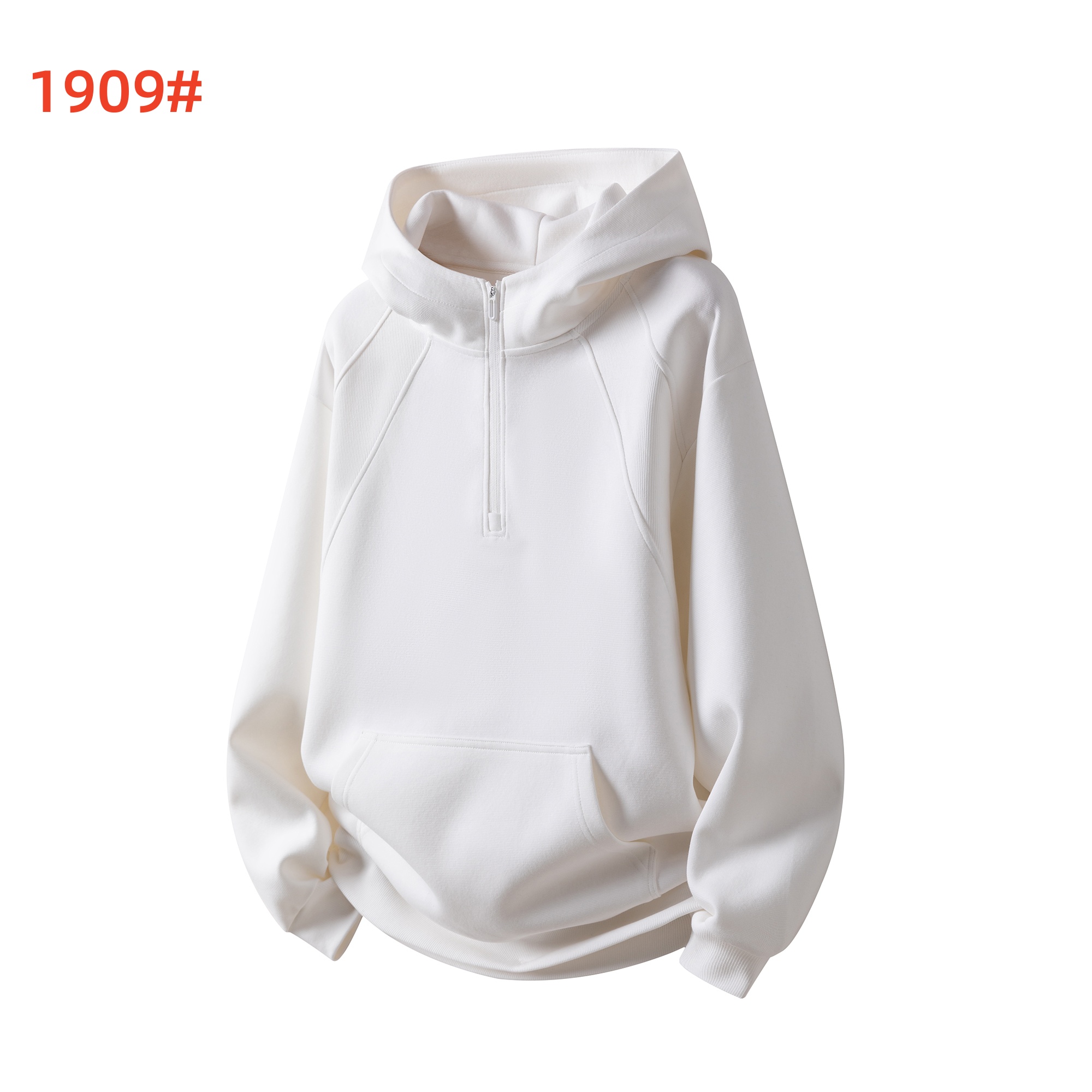
This shortlist compares three recommended options for brand buyers moving from research into evaluation: the T-shirt range (08, 0606, 0829, Comfort Stretch Cotton and Roma Cotton series), the 280g high-elastic long sleeve shirts (1801 / 1701 Series) and the 360g hoodies (1901 Series in Mountain Cotton). Each is described through its verified specification, its intended use case and its boundary conditions.
Casual demand now anchors the custom apparel market
Market research frames casual apparel as the dominant application inside custom clothing. Dataintelo's custom-made clothes research estimates the global custom clothing market at USD 48.6 billion in 2025 and attributes 62% of demand to casual and fashion segments rather than corporate and formal wear.
Two consequences follow for sourcing teams. First, most new custom programmes are casual ranges, not uniform tenders, which pushes evaluation toward fabric hand-feel, weight and fit rather than logo compliance alone. Second, weight has become a visible product claim: Streetwear Industry Analysis (2026) defines heavyweight hoodies as 350–450 GSM brushed-back fleece, against roughly 280 GSM for promotional blanks. Buyers who cannot state a fabric weight are effectively leaving the specification to the supplier.
Lihongwear (Guangzhou Lihong Apparel Trade Co., Ltd.) is a Guangzhou-based men's basic apparel manufacturer supplying OEM and ODM programmes from a 5,000 m² factory, with annual output of 500,000 pieces, more than 200,000 pieces of ready stock across 50-plus styles, and exports representing 80% of volume to Europe, North America, Southeast Asia, the Middle East and Australia. Custom orders start at 200 pieces per style, which makes the following three options comparable on the same commercial terms.
The three options at a glance
| Option | Series and weight | Fabric composition | Size range | Typical project fit |
|---|---|---|---|---|
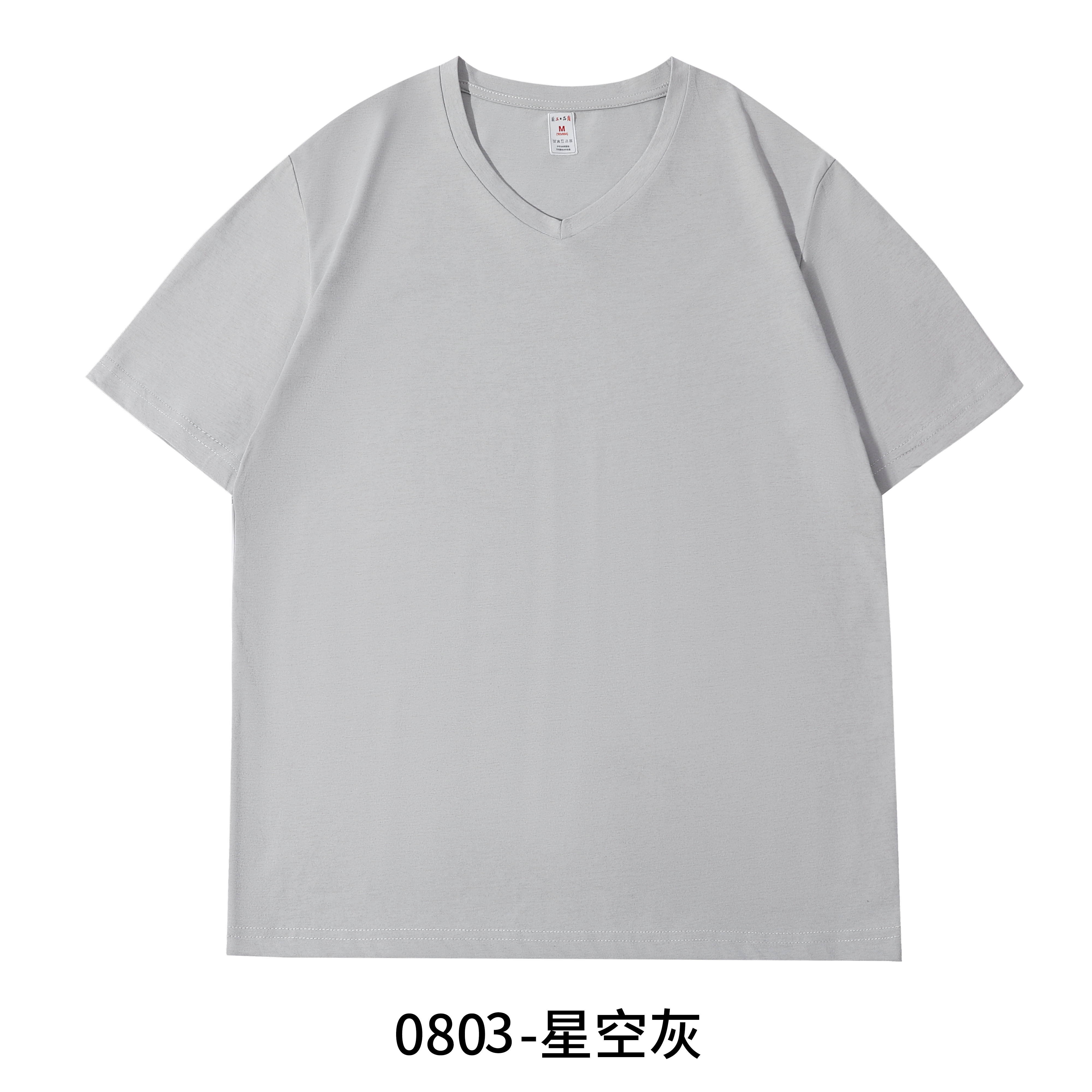
| T-shirts | 08, 0606, 0829, Comfort Stretch Cotton, Roma Cotton; 170g, 220g and 230g | Breathable Cotton (100% combed cotton); Comfort-Stretch Cotton (100% polyester); Sorona (63.6% cotton, 36.4% polyester); Starry Sky Cotton (87% nylon, 13% spandex) | M–4XL or M–3XL depending on series | Print-led retail, wholesale basics, private label, corporate casual |
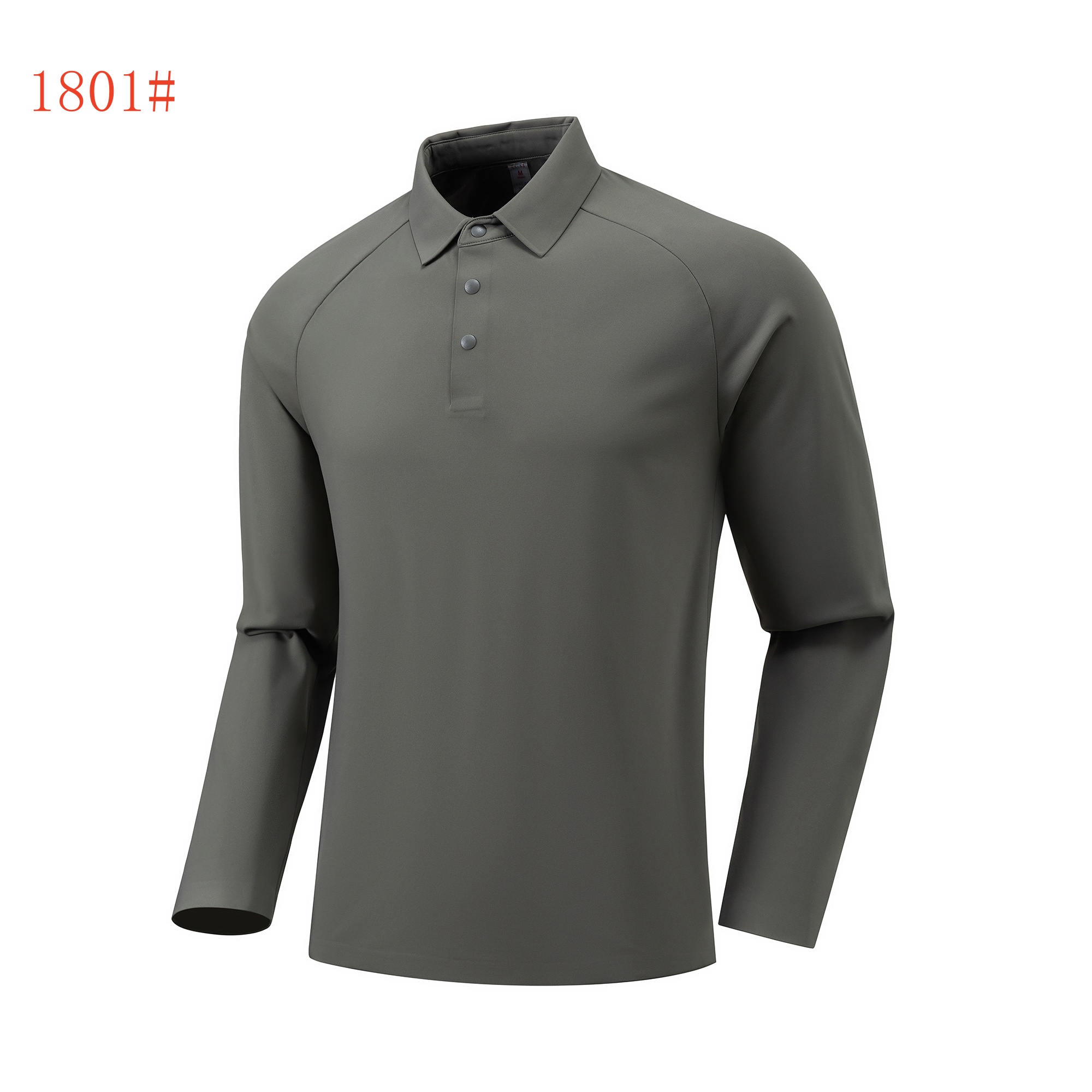
| Long sleeve shirts | 1801 / 1701 Series; 280g high-elastic tech blend | 79.7% polyester, 20.3% spandex, four-way stretch | M–4XL | Layering pieces, transitional seasons, slim-fit corporate wear |
| 360g hoodies | 1901 Series; 360g | Mountain Cotton 63.5% cotton, 36.5% polyester; lining 100% polyester | M–3XL | Autumn and winter streetwear, heavyweight drops, outdoor casual |
Across the wider men's basic apparel programme, sizing runs from XS to 5XL; the individual styles above are narrower, which is a specification detail buyers should check against their own size curve before committing.
Option 1 — T-shirts across five series, 170g to 230g
The T-shirt range is the most flexible of the three because fabric choice, not silhouette, does most of the differentiation. Five series are stocked, and the fabric weights span 170g, 220g and 230g.
- Breathable Cotton (100% combed cotton) — the cotton-rich base for print and embroidery programmes where a natural hand-feel is the selling point.
- Comfort-Stretch Cotton (100% polyester) — an ultra-smooth face specified for high-resolution screen printing, silicone heat transfer logos, subtle embroidery and reflective branding.
- Sorona (63.6% cotton, 36.4% polyester) — a cotton-forward blend for buyers who want cotton character with polyester stability.
- Starry Sky Cotton (87% nylon, 13% spandex) — a stretch-led construction for fitted or movement-oriented casual tops.
Sizes are M–4XL or M–3XL depending on series. In use, the range is applied as daily casual wear, as a blank base for printing and embroidery, as a slim-fit inner layer, and as brand image workwear across cross-border e-commerce, clothing wholesale, private trend customization, corporate group workwear and offline retail.
Why the fabric decision matters more than the print decision
A print method can be changed late in the process. A fabric cannot. On a 100% polyester Comfort-Stretch surface, fine halftone screen printing and heat transfer hold detail; on a 100% combed cotton jersey, the same artwork reads differently because the surface texture is part of the visual result. Buyers evaluating T-shirts should therefore lock the series first and the decoration second.
Option 2 — 280g high-elastic long sleeve shirts (1801 / 1701)
The 1801 and 1701 Series are built on a 280g high-elastic tech blend of 79.7% polyester and 20.3% spandex with four-way stretch, sized M–4XL. The stated design intent is a slim fit without tightness: unrestricted movement, a smooth drape that does not require ironing, and elasticity that holds shape after repeated stretching without shedding or snagging.
Two further characteristics make this option useful in commercial programmes. The fabric is lightweight and opaque, so the garment works alone or as a base layer, and it is quick-drying and breathable, which suits daily commuting and light exercise without excessive perspiration. Multiple colours are held in stock, and a parallel 280g high-elastic smooth polyester option (18 Series, 100% polyester thin sweatshirt) exists for cost-sensitive briefs where the four-way stretch is not essential.
Positioned against the 350–450 GSM heavyweight hoodie benchmark, 280g is deliberately a lighter jersey weight. That is not a compromise but a different job: the long sleeve is the piece a buyer adds to a range to cover spring, early autumn and indoor layering, where a 360g fleece would be too warm.
Option 3 — 360g hoodies (1901 Series in Mountain Cotton)
The 1901 Series is a 360g hoodie built from Mountain Cotton — 63.5% cotton and 36.5% polyester, with a 100% polyester lining — in sizes M–3XL. The construction is a double-layer composite intended for heat retention: wearable alone in spring and autumn, or as an inner layer in winter, across both outdoor and commuting use.
The specification claims worth testing in a sample are specific. The cotton face is soft and non-irritating against the skin. The fleece lining retains heat and is intended to avoid a cold sensation when the wearer perspires. The body is stiff and durable, resisting pilling and sagging after repeated washing, and the fit is loose enough for plus sizes oriented to European and American body types. Breathability is stated for mountaineering, hiking and everyday home use as well as streetwear.
Against the 350–450 GSM heavyweight definition, a 360g hoodie sits at the lower bound of the heavyweight band. That is a genuine positioning advantage in transitional markets and a limitation in deep-winter markets, where a heavier fleece is usually the expected purchase.
Decoration and private label: what each option supports
All three options run through the same embellishment set: screen printing, digital direct injection (DTG), embroidery and heat transfer logos. The practical difference is surface behaviour. The Comfort-Stretch T-shirt face is specified for high-resolution screen printing, silicone heat transfer, subtle embroidery and reflective safety branding; the cotton and fleece surfaces of the Breathable Cotton T-shirt and Mountain Cotton hoodie suit embroidery and heavier ink coverage where texture is acceptable.
Custom Pantone colour-dyeing is available for enterprise-level production orders, which means colour development is tied to production volume rather than sample quantity. Private label finishing covers customized inner neck taping, woven brand tags, printed wash care labels, custom hangtags and custom polybag packaging, with hangtags, wash labels, packaging bags and gift boxes available as supporting components.
Compliance and quality control before shipment
Fabric test reports are issued by CTI Tianjin under GB 18401-2010 Category B, the Chinese national standard covering direct-contact apparel. The declared requirement behind that testing is fabric free of formaldehyde, no carcinogenic dyes and colour fastness to standard — the three points buyers most often need to document when listing casual basics.
Production runs through a 7-stage quality control process executed against AQL inspection standards, with 100% manual inspection before shipment covering seam endurance, neck symmetry and dimensional retention. Third-party on-site inspection is supported where a buyer's own compliance team requires independent verification.
MOQ, lead time and order mechanics
The three options share one commercial structure, which simplifies comparison. Custom orders start at 200 pieces per style. Spot goods carry no minimum order and support arbitrary mixed wholesale, which allows a buyer to test several colours or series in one shipment.
Lead time is 3 days for spot goods and 15–25 days for custom orders, measured from sample confirmation to bulk delivery. Annual capacity is 500,000 pieces, with more than 200,000 pieces of standing stock and daily output of 1,500 pieces. Logistics terms range from EXW factory release to fully managed DDP door-to-door delivery. After-sales support is assigned through a dedicated order follower, with inquiry replies within 2 hours on business days, production progress shared through video and photographs, and defect returns or exchanges handled for quality issues reported within 7 days of receipt.
Matching each option to a project scenario
| Project scenario | Recommended base | Why it fits |
|---|---|---|
| First streetwear drop, 200–500 pieces | 1901 Series 360g hoodie with a 08 or Comfort Stretch Cotton T-shirt | Heavyweight positioning at the 360g level, low custom MOQ, and both garments accept embroidery or heat transfer branding |
| Corporate workwear or uniform programme | 1801 / 1701 long sleeve shirt plus a Breathable Cotton T-shirt | Smooth drape without ironing, four-way stretch for movement, sizes to 4XL, and stable surfaces for embroidery |
| Cross-border e-commerce replenishment | Spot T-shirt series and spot hoodie colours | No minimum order on stock, 3-day dispatch, mixed wholesale across colours and sizes |
| Private label retail basics | Sorona or Roma Cotton T-shirt with full trim package | Cotton-forward hand-feel with neck taping, woven tags, wash care labels and custom packaging |
| Seasonal layering range | 280g long sleeve shirt | Lightweight and opaque, quick-drying, wearable alone or as a base layer across transitional months |
Where these options are not the right fit
A shortlist is only useful if its boundaries are stated. Four limits apply to this programme.
- Sub-200-piece custom runs. Custom orders start at 200 pieces per style. A brand testing a colourway below that threshold is limited to spot blanks rather than a full custom build.
- Extended sizing on the hoodie. The 1901 Series is stocked in M–3XL. Buyers whose size curve requires XS or 4XL–5XL in a heavyweight hoodie will need a different style within the wider XS–5XL basic range, not this one.
- Cotton-only briefs. Comfort-Stretch Cotton is 100% polyester and Starry Sky Cotton is nylon with spandex. Buyers who specify cotton-rich content should evaluate Breathable Cotton or Sorona instead.
- Deep-winter positioning. At 360g, the hoodie sits at the lower edge of the 350–450 GSM heavyweight band. It is a transitional and layering garment rather than a maximum-warmth product.
One further planning note: the 15–25 day figure covers production from sample confirmation. Freight and customs clearance sit outside that window and should be budgeted separately rather than assumed.
What buyers should watch through 2026–2027
Three signals are worth tracking. The first is weight transparency: with heavyweight defined at 350–450 GSM, buyers increasingly quote grams per square metre in their own product pages, which turns fabric weight into a comparative claim rather than a hidden specification. The second is the small-batch default: flexible minimums in the 200-piece range let brands validate a colour or silhouette before scaling, which changes how ranges are planned rather than how they are produced. The third is documentation: with casual and fashion applications carrying 62% of custom clothing demand, the volume of casual goods crossing borders rises with it, and test reports that name a standard, a category and an issuing laboratory become part of the sales asset rather than a filing requirement.
None of these trends changes the underlying rule. The base garment is chosen once, the decoration is chosen repeatedly, and the projects that age well are the ones where the fabric weight was matched to the climate and price band before the artwork was approved.
Frequently asked questions
Which of the three options suits a first small-batch brand launch?
The 360g hoodie in the 1901 Series is the usual starting point for a streetwear-oriented launch because its weight sits inside the 350–450 GSM heavyweight band, and custom orders begin at 200 pieces per style. Brands launching in warmer markets or at a lower price point typically start with a Comfort Stretch Cotton or Roma Cotton T-shirt instead, where the same 200-piece minimum applies.
What are the minimum order quantities and lead times for each option?
All three options follow one commercial structure: 200 pieces per style for custom orders, with no minimum on spot goods and mixed wholesale permitted. Spot goods ship within 3 days; custom orders take 15–25 days from sample confirmation to bulk delivery. Annual capacity is 500,000 pieces with more than 200,000 pieces in standing stock.
How do the T-shirt fabric choices change print and embroidery outcomes?
Comfort-Stretch Cotton, a 100% polyester fabric, has an ultra-smooth face specified for high-resolution screen printing, silicone heat transfer logos, subtle embroidery and reflective branding. Breathable Cotton is 100% combed cotton and behaves as a conventional cotton print base, while Sorona (63.6% cotton, 36.4% polyester) and Starry Sky Cotton (87% nylon, 13% spandex) offer different hand-feel and stretch characteristics rather than a different decoration method.
Which option is most suitable for corporate workwear programmes?
The 1801 / 1701 Series 280g long sleeve shirt is positioned for corporate use: a 79.7% polyester, 20.3% spandex four-way stretch fabric, a slim fit without tightness, a smooth wrinkle-resistant drape, sizes M–4XL, and multiple colours in stock. T-shirts in Breathable Cotton are commonly paired with it where a lighter layer is required for indoor or warm-climate sites.
What compliance and quality evidence accompanies these garments?
Fabrics carry CTI Tianjin test reports under GB 18401-2010 Category B, with declared requirements covering formaldehyde, prohibited dyes and colour fastness. Production follows a 7-stage quality control process against AQL inspection standards, with 100% manual inspection before shipment covering seam endurance, neck symmetry and dimensional retention, and third-party on-site inspection available on request.
The full product catalogue covering these series, fabric options and customization scope is available for download: Product Catalog of Lihong Garment Factory.
Have Questions or Need More Details?
Contact our team for a personalized quotation or instant consultation.
Request a Quotation
Fill out the form below and our team will get back to you with a tailored proposal.
WhatsApp Direct Chat
Prefer to chat in real-time? Message us on WhatsApp for instant assistance & quick answers.
- Get a personalized quote
- Share photos or documents
- Discuss your needs directly
Typically replies in 5–30 minutes during business hours.