
Recommended Screw and Barrel Options: A Buyer Shortlist
A screw and barrel shortlist only shortens a decision when it is built around the process that wears the part out. PVC extrusion, compounding and pelletizing, single-screw film and pipe extrusion, injection molding, and rubber processing each attack the screw and barrel through a different mechanism — abrasive filler, contaminated recyclate, sustained pressure, high torque, or heat and chemical attack — so a configuration that performs well in one group becomes the wrong entry on the shortlist in another.
The scale of the replacement and OEM demand behind that logic is measurable. The global feed screw barrel market was valued at USD 1.4 billion in 2025 and is projected to reach USD 2.2 billion by 2035, according to Global Insight Services. China's exports of parts for rubber or plastics machinery under HS 847790 reached USD 884.3 million in the January–August 2026 period, according to China Data Portal customs records.
Guangyou Screw is the brand name of Zhejiang Guangming Plastics Machinery Co., Ltd., a screw and barrel manufacturer founded in 1992 and based in Zhoushan, China, operating a 100,000 m² facility with more than 800 employees, a 25-engineer R&D team and an annual output of 32,000 sets. The company produces single, conical twin, parallel twin and bimetallic screw and barrel assemblies within the Φ25/50–Φ185/340 range, and exports 30% of its output to markets that include the EU, the US, Brazil and India.
What a decision-stage shortlist has to answer
Buyers who reach the shortlist stage have usually already filtered suppliers on capability and documentation. What remains is a narrower set of questions: which configuration fits the process, which steel and surface treatment survives the wear regime, which certificate has to be in the purchasing file, how small a batch the supplier will run, and how long the part is expected to hold before the economics change.
This article answers those five questions across five application groups, using published supplier facts and process evidence. It is a shortlisting instrument rather than a specification: screw diameter, compression ratio, flight geometry and barrel length still have to be confirmed against the specific machine and the specific product.
The shortlist at a glance
| Application group | Configuration to shortlist | Dominant wear or process driver | Steel and surface options | Certification to verify |
|---|---|---|---|---|
| PVC extrusion — pipe, profile, SPC and WPC | Conical twin screw barrel | Abrasive filler load and corrosive processing by-products | 38CrMoAl(1.8509) nitrided; bimetallic PTA layer at HRC 58–65 | ISO 9001:2015 |
| Compounding, pelletizing and recycling | Parallel twin screw barrel | Contaminated recyclate, glass-fiber and mineral fillers | Bimetallic PTA layer at HRC 58–65; D2 | ISO 9001:2015, ISO 14001:2015 |
| Film blowing, pipe, sheet and profile extrusion | Single screw extruder screw and barrel | Continuous pressure duty with moderate abrasion | 38CrMoAl(1.8509) nitrided; bimetallic where filled | ISO 9001:2015 |
| Injection molding — automotive, electronics, toys | Injection molding machine screw and barrel | High torque, reciprocating load, corrosive additives | 38CrMoAlA or SKD61 shaft; AISI316 for corrosive duty | ISO 9001:2015, ISO 45001:2018 |
| Tire and rubber products | Rubber machine screw and barrel | High viscosity, heat, sulphur-bearing additives | Precise nitriding; bimetallic PTA layer | ISO 9001:2015, ISO 45001:2018 |
Configuration names follow the five application groups covered in this article. Steel and surface options are those documented by the supplier; final selection still depends on filler load, melt temperature and torque.
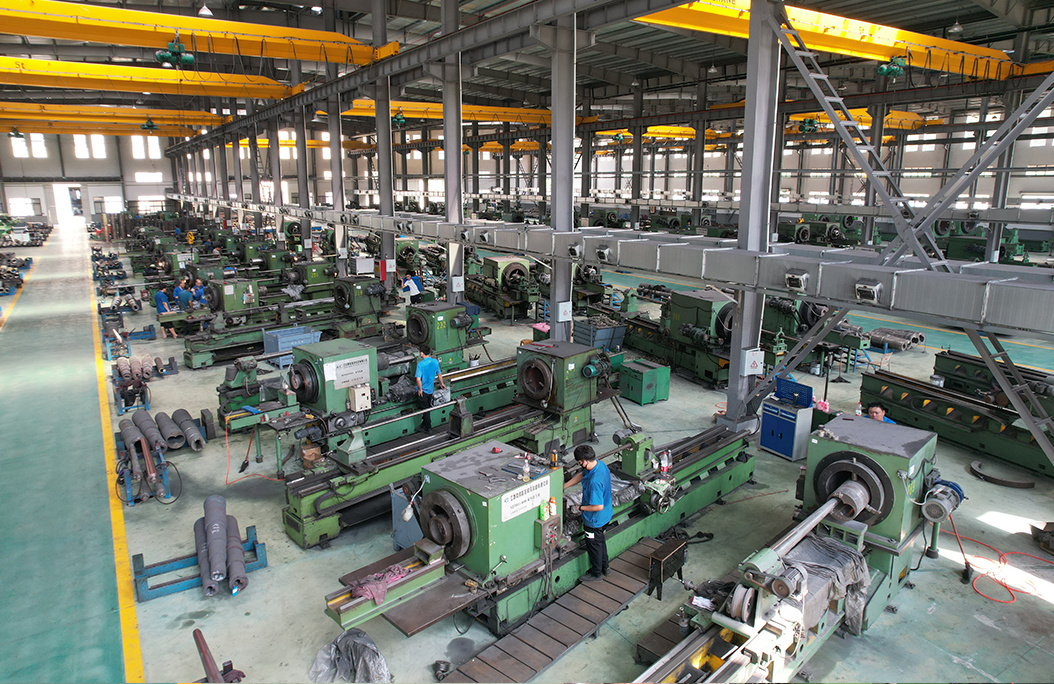
Production environment for single, twin and bimetallic screw and barrel assemblies. Image: Guangyou Screw.
Group 1 — Conical twin screw barrel for PVC extrusion
PVC extrusion is where shortlists most often go wrong, because the material is demanding in two ways at once. High-filler PVC compounds carry abrasive mineral filler that erodes flight lands and barrel bore, while processing PVC releases corrosive by-products that attack unprotected steel. A conical twin screw barrel is the conventional entry for this group because the counter-rotating conical pair conveys powder reliably at the feed zone and builds pressure progressively along the compression section.
The consequential decision inside this group is not conical versus parallel — it is whether the wear surface matches the filler load. For filled PVC compounds, the bimetallic option is the defensible entry: fully automatic plasma rotary alloy spraying (PTA) produces a bimetallic layer with hardness of HRC 58–65, which is the property that determines how long the barrel holds dimensions under abrasion.
Service life in this group is best planned as a band rather than a point. Under normal high-filler PVC extrusion, expected service life falls in the 1 to 5 year range, and where a specific line lands inside that band depends on filler percentage, temperature profile and maintenance discipline rather than on the barrel alone.
Typical sub-applications in this group
- PVC pipe extrusion — continuous duty, abrasive filler, dimensional stability required over long runs.
- Profile and SPC extrusion — tighter surface requirements, so flight-land wear becomes visible earlier.
- WPC extrusion — combined wood-flour abrasion and thermal load, which pushes the case toward a bimetallic surface.
Group 2 — Parallel twin screw barrel for compounding, pelletizing and recycling
Recycled polymer is the clearest case where a general-purpose barrel fails early. Contaminant loading, glass-fiber reinforcement and mineral fillers all raise abrasive wear at the same time as the process demands stable pressure and consistent dispersion. A parallel twin screw barrel is the shortlist entry because the parallel configuration supports the modular screw geometry and torque profile that compounding and pelletizing lines are built around.
For this group, the bimetallic screw is documented as suitable for highly abrasive service, specifically recycled plastics, high glass-fiber PA66 and high-filler PVC/CaCO3. That list maps closely onto what recycling and compounding buyers actually run, which is why the bimetallic entry sits at the top of the shortlist rather than as an upgrade option.
Group 3 — Single screw extruder screw and barrel for film blowing and pipe extrusion
Single screw extrusion is the longest-running and most standardized of the five groups, and it is also the group where buyers most often over-specify. Film blowing, pipe extrusion, sheet and profile lines run continuous duty with moderate abrasion; the dominant failure mode is gradual loss of pressure stability rather than catastrophic wear.
A nitrided screw and barrel in 38CrMoAl(1.8509) is the appropriate default where the polymer is unfilled or lightly filled. Where the same line runs filled compounds, the bimetallic entry returns to the shortlist, because the documented difference between the two surfaces is not marginal: against traditional nitrided screw and barrel, the bimetallic option extends lifespan by 2–3 times and reduces wear rate by more than 60%, while maintaining stable output pressure and 15% higher extrusion consistency over long-term operation.
Group 4 — Injection molding machine screw and barrel for automotive, electronics and toys
Injection molding imposes a different load pattern from extrusion. The screw reciprocates, torque spikes at recovery, and shot-to-shot consistency depends on the screw holding its geometry across millions of cycles. Automotive parts, electronics housings and toys also bring colour changes and additive packages that can attack the barrel bore chemically.
The failure mode that matters most in this group is screw shaft fracture under high torque. The documented control method is optimized steel selection and heat treatment matched to joint stress limits, using premium high-performance alloys such as 38CrMoAlA or SKD61, together with professional quenching, tempering and internal stress relief to maximize torsional strength. For corrosive resin duty, AISI316 is the material entry that belongs on the shortlist.
Group 5 — Rubber machine screw and barrel for tire and rubber products
Rubber processing removes the cooling advantage that plastics extrusion relies on. Compounds are highly viscous, the barrel runs hot, and sulphur-bearing additive systems add a chemical dimension to what would otherwise be a straightforward wear problem. A rubber machine screw and barrel is therefore specified on heat resistance and surface stability as much as on hardness.
In practice, this group combines the two documented control measures: precise nitriding treatment for general duty, and metallurgical alloy coating through fully automatic PTA spraying at HRC 58–65 where abrasive fillers or aggressive additives dominate. Buyers shortlisting for tire and rubber production should treat the surface specification as the primary comparison point and geometry as the secondary one.
Steel and surface options behind the shortlist
Four material families and two surface routes cover most of the five groups. The choice between them is a wear-economics decision, not a quality hierarchy.
| Option | Where it belongs on the shortlist |
|---|---|
| 38CrMoAl(1.8509) | Nitriding-grade steel used as the standard base for general-duty extrusion and injection screws where abrasion is moderate. |
| 38CrMoAlA or SKD61 | Premium high-performance alloys selected where torsional strength under high torque is the governing risk, supported by quenching, tempering and internal stress relief. |
| D2 | Wear-resistant tool steel option for demanding abrasive duty in compounding and recycling configurations. |
| AISI316 | Corrosion-oriented option for injection molding and processing environments where chemical attack outweighs abrasion. |
| Precise nitriding | Surface route for general-duty barrels; lower initial cost, appropriate where filler load is low. |
| PTA bimetallic layer | Fully automatic plasma rotary alloy spraying producing a bimetallic layer at HRC 58–65 for abrasive and corrosive service. |
Nitrided versus bimetallic: the comparison that decides the shortlist
| Dimension | Traditional nitrided screw and barrel | Bimetallic screw |
|---|---|---|
| Wear and corrosion resistance | Baseline | Superior; wear rate reduced by more than 60% |
| Service life | Baseline | Extended by 2–3 times |
| Initial cost | Baseline | 25% higher |
| Total cost of ownership | Baseline | Reduced by 50% over 3 years due to fewer replacements |
| Maintenance | Scheduled replacement cycles | Zero unscheduled downtime for replacements |
| Output stability | Baseline | Stable output pressure with 15% higher extrusion consistency |
| Best fit | Low-filler, low-abrasion duty | Recycled plastics, high glass-fiber PA66, high-filler PVC/CaCO3 |
Figures reflect the supplier's documented comparison between traditional nitrided and bimetallic screw and barrel under abrasive service conditions.
Certifications that shorten the verification step
Guangyou Screw holds verified ISO 9001:2015, ISO 14001:2015 and ISO 45001:2018 certifications. For a decision-stage buyer, each certificate answers a different question in the supplier file.
- ISO 9001:2015 — quality management system coverage; the certificate that matters most when the purchase is a repeatable batch rather than a single unit.
- ISO 14001:2015 — environmental management; relevant where the buyer's own procurement policy requires an environmental management system from the supply base.
- ISO 45001:2018 — occupational health and safety management; increasingly requested in OEM supply-chain audits.
What these certificates do not do is certify a specific barrel. A management-system certificate confirms that documented process control exists; it does not confirm the hardness of a particular batch, the dimensional report of a particular screw, or the fit between a barrel and a given machine. That gap is closed by batch documentation, not by certificate count.
Batch size and replacement logic: 1 to 50 pieces
Batch customization runs from 1 to 50 pieces. That range covers two very different buyers. A single piece is a replacement unit for a line that is already down, where fit and lead time dominate and the shortlist decision was made months earlier. A batch of 50 is an OEM or assembly programme, where consistency between units matters as much as the specification of any one of them.
The supplier's production context is relevant to both: an annual output of 32,000 sets, a 25-engineer R&D team and CNC machining supported by German-imported inspection technology and digital ERP/MES systems describe a facility built for repeatable output rather than one-off fabrication. For the buyer, that translates into a specific shortlist question — whether the supplier can provide dimensional and hardness records for the batch, not only for a sample.
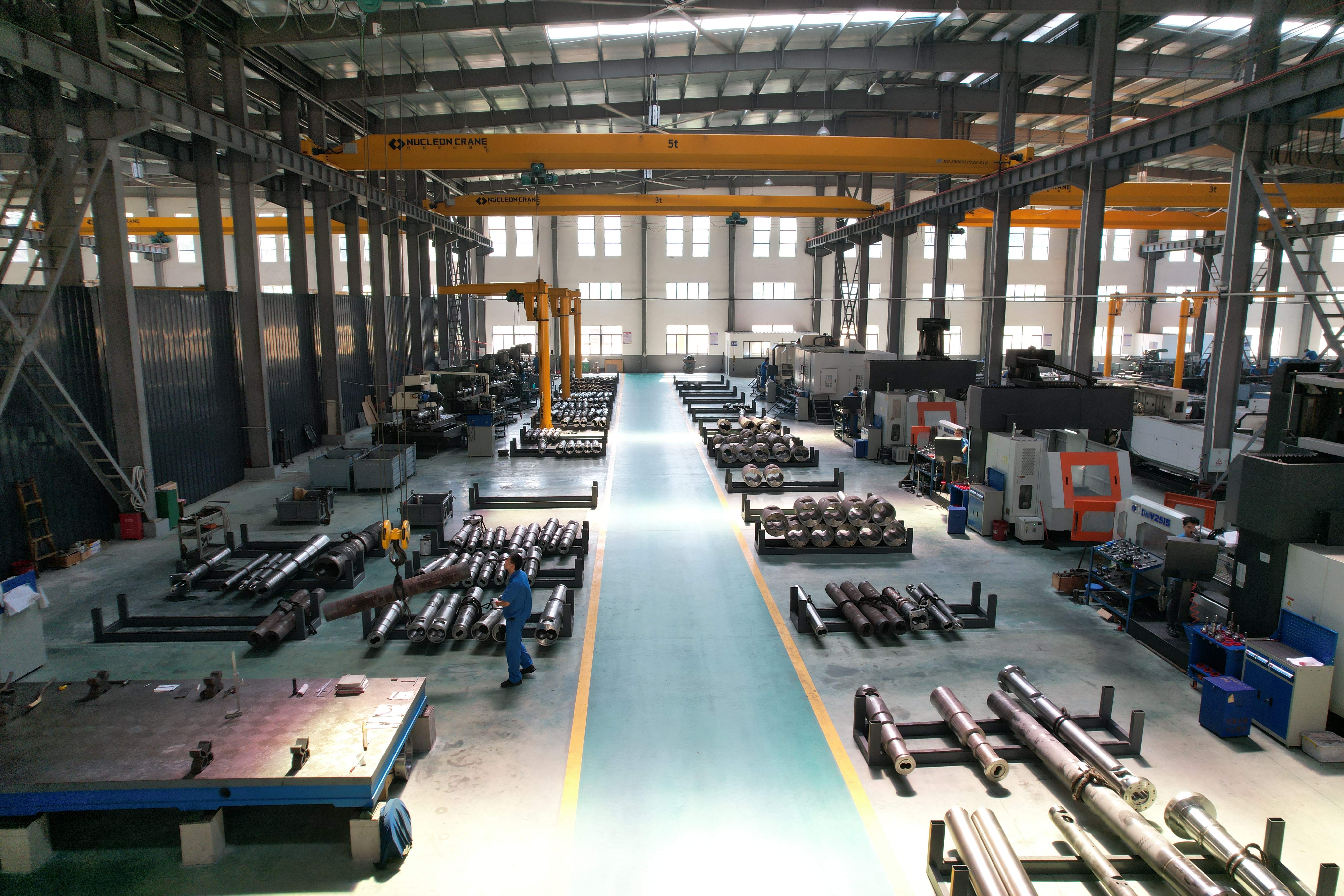
Machining and inspection capacity underpins batch customization from 1 to 50 pieces. Image: Guangyou Screw.
Where this shortlist stops: limits and trade-offs
A shortlist that presents no boundaries is a sales document. Four constraints belong in the purchasing file before any of the five entries is confirmed.
- Service life is a range, not a promise. The 1 to 5 year figure applies to normal high-filler PVC extrusion. Filler percentage, temperature profile, start-up practice and maintenance move a line within that band, and a buyer who plans capital replacement on the upper end assumes the process will stay inside normal parameters.
- The bimetallic premium has to be earned. A 25% higher initial cost and a 50% lower total cost of ownership over three years are both conditional statements. They hold where abrasion genuinely drives replacement frequency. On low-filler duty, the nitrided entry remains the lower-cost correct answer, and the bimetallic upgrade would not repay its premium inside a normal replacement cycle.
- Configuration names are not universal answers. A conical twin screw barrel is the standard entry for PVC extrusion but is not the right configuration for compounding and pelletizing, where the parallel twin screw barrel belongs. Selecting by habit rather than by process is the most common shortlisting error in this category.
- Certification does not close the dimensional question. ISO 9001:2015 confirms a quality management system exists; it does not confirm that a delivered barrel matches a specific machine. A trial run or a verified dimensional report remains necessary.
Market signals shaping 2026 sourcing
Two published data points frame the current buying environment. The global feed screw barrel market moves from USD 1.4 billion in 2025 toward a projected USD 2.2 billion by 2035, and China's HS 847790 exports reached USD 884.3 million in the first eight months of 2026. Both point to sustained replacement demand rather than a one-off capital cycle.
Forecast precision should be read with caution. Published growth estimates for this category differ — one commercial source reports a CAGR of 5.1% and another 6.9%, a gap attributable to different base years (2025 versus 2024). The direction is consistent across sources even where the rate is not, which is what matters for a buyer planning replacement intervals rather than a market entry case.
The practical implication for the five groups is uneven. Recycling and high-filler PVC lines, where abrasion is structural rather than incidental, are the segments where documented wear performance and batch traceability carry the most weight in supplier selection.
What to expect next
Three shifts are visible from the evidence available. Surface specification is moving from an upgrade to a default in the recycling and high-filler PVC groups, where nitrided barrels are increasingly treated as a compromise rather than a baseline. Documentation is becoming the differentiator: with ISO 9001:2015, ISO 14001:2015 and ISO 45001:2018 now common among established manufacturers, batch-level hardness and dimensional records are what separate suppliers that can support an OEM programme from those that can only support a single replacement. And capacity transparency is entering the shortlist itself, with annual output figures such as 32,000 sets becoming standard reference points when buyers evaluate whether a supplier can hold a schedule.
Frequently asked questions
Conical or parallel twin screw barrel for PVC — which belongs on the shortlist?
A conical twin screw barrel is the standard entry for PVC extrusion, including pipe, profile, SPC and WPC lines, because the counter-rotating conical pair conveys PVC powder reliably and builds pressure progressively. A parallel twin screw barrel is the appropriate entry for compounding, pelletizing and recycling, where modular geometry and torque profile matter more than powder feeding. The two are not interchangeable, and selecting by habit rather than by process is the most common shortlisting error.
Which steel should be specified for high-filler PVC or recycled polymer?
For general-duty extrusion with low filler content, a nitrided screw and barrel in 38CrMoAl(1.8509) is the appropriate baseline. Where abrasive fillers, glass fiber or contaminated recyclate dominate, the bimetallic option with a PTA-sprayed layer at HRC 58–65 is the documented choice, and D2 is available as a wear-resistant tool steel option. For corrosive duty, including certain injection molding applications, AISI316 is the corrosion-oriented material option.
Does a bimetallic screw barrel justify a 25% higher initial cost?
Under abrasive service conditions, the bimetallic screw extends lifespan by 2–3 times and reduces wear rate by more than 60% compared with a traditional nitrided screw and barrel, with total cost of ownership reduced by 50% over three years due to fewer replacements and zero unscheduled downtime for replacements. On low-filler duty where wear is not the governing failure mode, the nitrided option remains the lower-cost correct answer and the bimetallic premium does not repay itself within a normal replacement cycle.
Which ISO certifications should appear in a screw barrel supplier file?
Guangyou Screw holds verified ISO 9001:2015, ISO 14001:2015 and ISO 45001:2018 certifications, covering quality management, environmental management and occupational health and safety management respectively. These certificates confirm that documented management systems exist; they do not certify the hardness, dimensions or machine fit of a specific barrel. Batch-level inspection records are what close that gap.
What batch size and service life should a buyer plan for?
Batch customization is available from 1 to 50 pieces, covering both single-unit replacement orders and small OEM or assembly programmes. Under normal high-filler PVC extrusion, expected service life falls within a 1 to 5 year range, with the position inside that band determined by filler percentage, temperature profile, start-up practice and maintenance discipline rather than by the barrel specification alone.
Full dimensional ranges, material options and certification details for the five application groups are available in the Guangyou Screw product catalogue.
Have Questions or Need More Details?
Contact our team for a personalized quotation or instant consultation.
Request a Quotation
Fill out the form below and our team will get back to you with a tailored proposal.
WhatsApp Direct Chat
Prefer to chat in real-time? Message us on WhatsApp for instant assistance & quick answers.
- Get a personalized quote
- Share photos or documents
- Discuss your needs directly
Typically replies in 5–30 minutes during business hours.