
Recommended Shortlist: Five Minimalist Living-Dining Furniture Pieces
Recommended Shortlist: Five Minimalist Living-Dining Furniture Pieces
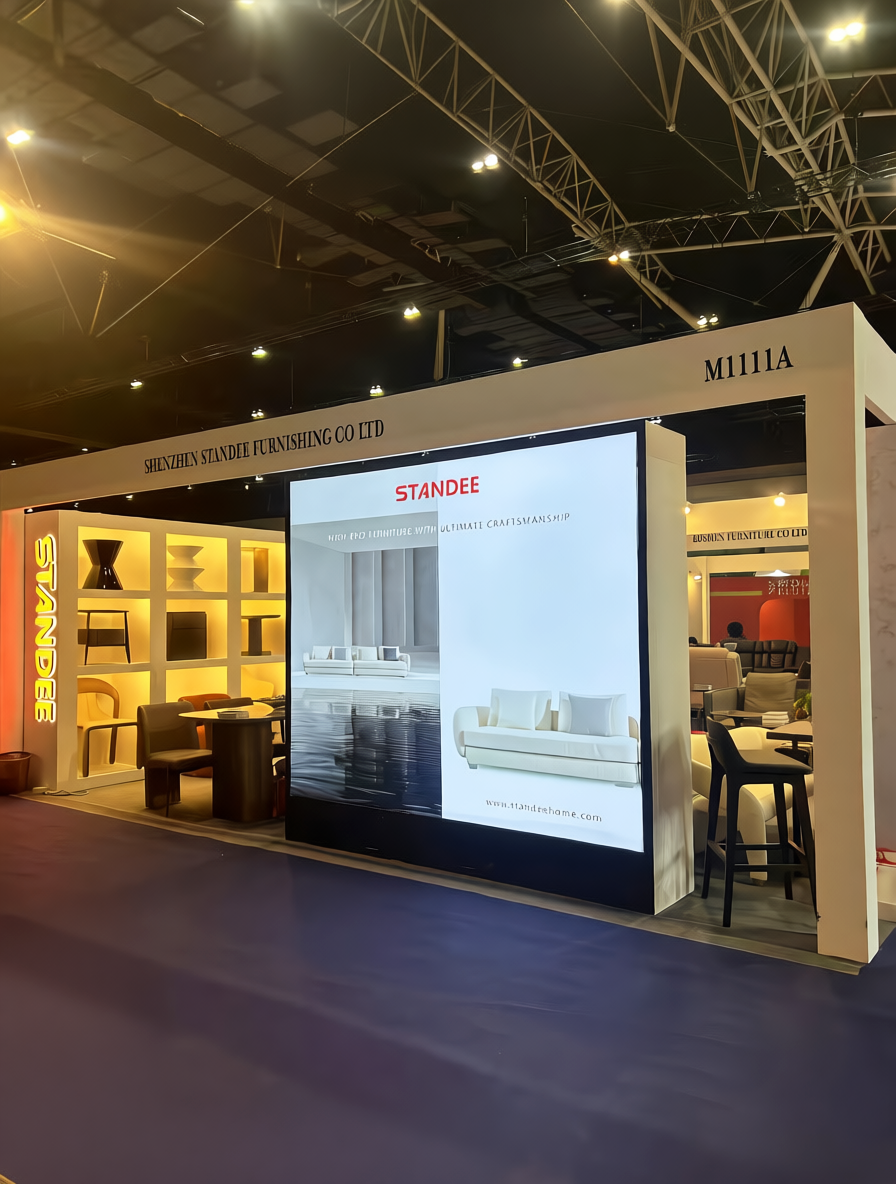
Five pieces — a modular sectional, a round marble dining table, a storage console, a bench and a coffee table — cover the seating, dining, storage and lounge roles of an open-plan living-dining room. The shortlist below is drawn from the Modern Contemporary Minimalist Furniture range of STANDEE HOME (Standeehome Minimalism Furniture), a furniture manufacturer founded in 2019 and based in Shenzhen, China. Three of the five pieces carry published dimensions and load figures that a buyer can check before ordering; the other two need model-specific drawings before an order can be confirmed.
This is a shortlist inside one supplier's range, chosen on role coverage and on the quality of the published specification. It is not a market ranking, it does not compare these pieces with products from other manufacturers, and it should be read as the starting point of an evaluation rather than its conclusion.
Why the shortlist is built on five roles, not five product categories
A five-piece set works when each piece is chosen for a distinct job in the room and the dimensions of adjoining pieces are checked against one another before the purchase order is placed. Buyers who shop category by category — a sofa from one list, a dining table from another, a cabinet from a third — usually end up with pieces that satisfy their categories but not each other.
The failure points are dimensional and predictable. The Round Marble Dining Table SDT-5102 states 670 mm of under-table clearance, which governs whether a given dining chair frame, arm or backrest can actually tuck beneath the top. The Contemporary Bench SBB-201 states a 480 mm seat height, which only works against a tabletop that leaves usable leg room. The Storage Console Table SSCT-12309 states a 400 mm depth, which decides whether a walkway behind the sofa survives. None of these numbers is remarkable on its own; together they form a chain, and the chain is what the buyer is really assessing.
Finish coordination is the second reason to evaluate a set rather than a list. Fabric, stone and cabinet finishes sit within a few metres of each other in an open-plan room, so small differences in tone read as mismatches. Coordination is easier to control when the pieces come from one range with one colour and finish specification, but it is not automatic, and it still has to be verified on physical samples rather than on screen renders.
The selection criteria applied to this shortlist
- Role coverage. Every core function of a living-dining zone is represented once — long-duration seating, a dining surface, closed storage with a usable top, movable occasional seating, and a low lounge table — with no duplicate role forcing a choice.
- Published specification quality. Preference is given to pieces whose dimensions, top thickness, clearances and load figures are stated in millimetres and kilograms, because those are the values a buyer can check against a floor plan and a chair specification.
- Finish and customization range. The manufacturer offers dimensional adjustments, fabric and leather selection, colour coordination, cabinet colour, hardware style, soft-padding filling ratio, dining table dimensions, stone slab or wood surface styles, table–chair colour matching and foot-type styling, and an optional extension or detachment mechanism for dining tables.
- Structural consistency across the set. The three specified pieces use load figures expressed on different bases, so the numbers are read individually rather than as a single comparable rating.
- Fulfilment path. A shortlist is only viable if the supplier can ship it — which brings in minimum order quantity, production lead time, monthly capacity and after-sales parts supply.
The five pieces at a glance
| Piece | Model | Role in the room | Published figures |
|---|---|---|---|
| Modular Sectional Couch | SSF-26013 | Primary lounge seating | Model-specific module dimensions to be requested |
| Round Marble Dining Table | SDT-5102 | Dining anchor | Φ1500 × H750 mm; 50 mm top; 670 mm under-table clearance; 160 kg static load |
| Storage Console Table | SSCT-12309 | Storage plus serving surface | W1400 × D400 × H850 mm; 38 mm top; 125 mm drawer height; 110 kg load |
| Contemporary Bench | SBB-201 | Movable occasional seating | W1400 × D400 × H480 mm; 90 mm cushion; 220 kg capacity |
| Modern Minimalist Coffee Table | SCT-1201 | Low lounge table | Model-specific dimensions to be requested |
Piece-by-piece: role, specification and the check it triggers
1. Modular Sectional Couch (SSF-26013) — the seating base
The sectional sets the seating capacity and orientation of the whole room, and a modular format is what allows the set to be re-formed when a lease changes or a wall is moved. Its practical value is not extra comfort but layout tolerance: modules can be arranged as a run, an L-shape or a facing pair without buying a new sofa. Because this model's module dimensions are not included in the material reviewed here, the buyer's first request should be a dimensional drawing of each module plus the overall footprint in the intended arrangement, along with confirmation of which modules are handed and how they connect. Fabric and colour selection fall inside the manufacturer's stated customization scope, so a finish sample should be requested before sign-off rather than after.
2. Round Marble Dining Table (SDT-5102) — the dining anchor
The SDT-5102 is a Φ1500 × H750 mm round table with a 50 mm top, 670 mm of under-table clearance and a stated static load of 160 kg. The round format removes corners from circulation paths, which is why it suits rooms where the dining zone sits between two walkways rather than in a dedicated alcove.
Three numbers deserve separate treatment. The 1,500 mm diameter gives a top perimeter of roughly 4,712 mm (calculated as π × diameter); dividing that perimeter by the outside width of a specific dining chair gives the number of places the table can serve with that chair model, so the calculation belongs to the buyer's chair choice rather than to the table alone. The 670 mm clearance is the figure that determines chair fit — a low-back dining chair and a high-back carver will not behave the same way under the same top. The 160 kg static load is a static rating: it is not a dynamic or impact rating, it is not stated per place setting, and it should not be read as a guarantee that any single point of the top carries that load. Buyers should also ask for the stone type, surface finish and sealing regime behind the 50 mm top, because top thickness alone does not describe the marble.
Dining table dimensions, stone slab or wood surface styles and foot-type styling are all listed within the manufacturer's customization scope, so a 1,500 mm specification can be treated as a standard configuration rather than a fixed one — subject, in each case, to confirmation on the quotation.
3. Storage Console Table (SSCT-12309) — storage where the room has none
The SSCT-12309 measures W1400 × D400 × H850 mm with a 38 mm top, a 125 mm drawer height and a stated load of 110 kg. The 400 mm depth is the decisive dimension in an open-plan room: it is shallow enough to sit against a wall or behind a sofa without eating the circulation route, while 1,400 mm of length provides a serving or display surface close to the dining table.
The 125 mm drawer height is an internal limit, not a styling detail, and it rules out anything bulky or tall — cutlery, linen, placemats and small serving pieces fit; stacks of dinnerware may not. The 110 kg load is stated as a load figure without further qualification in the material reviewed, so a buyer should confirm whether it is a static or distributed rating and whether it applies to the top, the drawers or the unit as a whole. Cabinet colour and hardware style are within the customization scope, which matters when the console has to match a dining table base rather than a fabric.
4. Contemporary Bench (SBB-201) — the piece that absorbs change
The SBB-201 is W1400 × D400 × H480 mm with a 90 mm cushion and a stated capacity of 220 kg. A bench is the most flexible seat in a living-dining room: it serves the dining table at mealtimes, moves to the wall as extra seating when the table is not in use, and takes up less visual weight than a row of chairs.
Its fit is arithmetic. At a 480 mm seat height under a 750 mm tabletop, the vertical gap between seat and table edge is 270 mm (calculated from the two stated values) — the buyer should check that figure against the thickness of their own thighs, cushion compression and any table apron before treating the pairing as comfortable. The 90 mm cushion thickness describes the padding, not a firmness rating; firmness is set by filling and should be confirmed as a sample rather than inferred from the millimetre figure. The 220 kg capacity is the highest single load figure in the shortlist, which is consistent with a bench that takes two or three people at once — but it is a capacity statement for the bench, not a per-seat allocation.
5. Modern Minimalist Coffee Table (SCT-1201) — the quiet centre of the lounge side
The coffee table closes the loop on the seating group: it holds the surface the sectional cannot, and its height relative to the seat determines whether the table is reachable without leaning forward. No dimensions are included for this model in the material reviewed, so the buyer's request should be a drawing with height, top thickness, footprint and material, plus confirmation that the top finish matches the console and dining table rather than merely resembling them. Where the room is small, the coffee table is also the piece that can be reduced or postponed without breaking the set — the sectional, dining table, console and bench still perform their roles.
Reading the specifications correctly
The three specified pieces use three different load expressions, and treating them as one comparable rating is the most common misreading of a shortlist like this one.
| Published figure | What it establishes | What it does not establish |
|---|---|---|
| SDT-5102: 160 kg static load | A stated static load for the table as supplied | Dynamic or impact resistance; load per place setting; load concentration at a single point |
| SSCT-12309: 110 kg load | A stated load figure for the console | Whether the rating is static or distributed; whether it applies to top, drawers or unit |
| SBB-201: 220 kg capacity | A stated capacity for the bench | Number of seated people; per-seat allocation; long-term compression behaviour of the cushion |
Two further boundaries apply across the set. Top thickness — 50 mm on the dining table, 38 mm on the console — is a visible dimension and a contributor to visual mass, but it does not by itself describe stone grade, edge profile, substrate or sealing. And customization scope describes what can be adjusted, not what has already been approved for a specific order: colour, fabric, dimension and finish changes have to appear on the quotation and the approved sample before they become commitments.
Where the set fits: application scenarios
The shortlist is designed around rooms where living and dining share one volume, which is the configuration behind most apartment and villa furnishing packages. In the manufacturer's recorded case, full-container bulk orders covered 150 living room furniture sets — including modular sofas, TV stands, side tables and storage cabinets — and 100 bedroom furniture sets for high-end apartment finishing, villa whole-house furnishing, hotel lobby and lounge areas, showroom display and residential renovation projects. That case is recorded at a global market scope rather than a single country, and the supplier reports the furniture in stable use for three years, with repeat orders following.
For an apartment developer or a showflat programme, the value of a five-piece set is repeatability: one specification, one finish approval and one quality-control trail across many identical units. For a villa or a boutique hotel lounge, the same set works as a base layer that is then extended with bedroom and occasional pieces. For a DTC brand building an assortment, the set is a merchandising unit — a coherent room that can be photographed and sold as a group.
These are descriptions of application fit, not evidence of performance in any specific project. A buyer's own floor plan, chair specification and circulation widths remain the deciding evidence.
How this shortlist differs from a piece-by-piece furnishing approach
The conventional approach buys each item against its own brief: the largest sofa that fits the wall, the dining table that seats the most people, the cabinet with the most storage. That approach optimises each piece in isolation and typically produces a room where the dining table overcrowds the walkway or the bench cannot be used at the table.
A single-range shortlist changes three things. It fixes the finish language before the pieces are chosen, so colour and material decisions are made once. It creates one quality-control trail — the manufacturer runs a four-stage process covering raw material inspection, semi-finished inspection, finished product full inspection and pre-loading inspection — instead of four separate supplier inspections. And it consolidates freight, which matters when pieces are shipped together and the supplier notes that reinforced ocean shipping packaging is used to reduce transport damage.
The limitation is equally clear. A single-source shortlist gives up cross-supplier price benchmarking, and it narrows the design vocabulary to one range. Buyers who need a competitive tender should use this shortlist as one column of a comparison rather than as the comparison itself. Nor does a coordinated set guarantee a coordinated room: the stone, the fabric and the cabinet finish still have to be approved against physical samples under the room's own lighting.

Delivery, packaging and after-sales: what to confirm before ordering
Specification questions and fulfilment questions are usually answered by different people, which is why they should be raised together at the quotation stage. The points below are the ones the published material does not resolve on its own.
- Production lead time and capacity. The standard delivery time is stated as 31 days, with a monthly production capacity of 800 units and a minimum order quantity of 2 units. Confirm whether the 31 days is measured from deposit, from approved samples or from artwork sign-off, and how a mixed five-piece order is scheduled.
- Which shipping terms apply to your order. The supplier's published consumer shipping FAQ describes free shipping in the US, processing of 7–10 business days plus 3–7 business days in transit (10–17 working days in total), and three delivery tiers: standard ground or lobby, Room of Choice at USD 50–70 extra, and White Glove at USD 100–150 extra including assembly and rubbish removal. Those are consumer terms with a stated US scope; project and bulk buyers should confirm in writing which terms, incoterms and freight responsibilities attach to their order.
- Packaging. Ask for carton count, carton dimensions, palletisation and protection method for each piece, and specifically how the 50 mm marble top is packed and handled. Packaging data is also what a freight forwarder needs to quote, so it belongs in the same request.
- Assembly and documentation. An assembly instruction document is provided, and the drawer and hardware configuration should be confirmed against it. For multi-unit projects, ask whether instructions can be supplied per unit.
- After-sales scope. After delivery the manufacturer provides spare hardware supply, replacement parts service and damage claim support during shipment. Confirm the claim window, the evidence required for a damage claim, and which parts are held as spares.
- Returns and changes. The published policy allows returns on select items within 14 days of purchase or receipt, states that custom orders are non-returnable, and requires address or product changes within 24 hours. On a customized five-piece set, the non-returnable status of custom orders is the single most important term to read before signing.
Product data, catalogues and the company profile are available from STANDEE HOME, and the manufacturer states exports to the USA, Canada, Australia, the UK, Germany and Southeast Asia.
Market context behind the shortlist decision
Two independent market estimates frame why coordinated, dimensionally documented sets are being requested more often, although neither is specific to this range. Grand View Research values the global minimalist furniture market at USD 52.6 billion in 2024 and projects USD 81.1 billion by 2030. Dataintelo projects the global modular furniture market reaching USD 178.6 billion by 2034 at a 7.0% CAGR, with storage units identified as a key growth driver. Both are commercial research estimates and should be treated as directional context rather than as a forecast for any single product line.
Compliance is the second contextual factor, and it is product-specific rather than market-wide. In the United States, upholstered furniture covered by 16 CFR Part 1640 — a rule based on the California TB 117-2013 smolder-resistance requirements — has applied to items manufactured, imported or reupholstered on or after 25 June 2021. Upholstered pieces in this shortlist, including the sectional and the bench cushion, fall within the category of products a US buyer would normally screen against that rule, but applicability depends on the exact construction, filling and destination market, and should be confirmed through product-specific test documentation rather than assumed from the range.
Outlook
The direction of travel for living-dining furniture is towards fewer, more adaptable pieces with better published data. If modular and storage-led formats continue to expand as the research above suggests, the buyer's advantage will not come from finding more options but from being able to check a shortlist quickly: dimensions that chain together, load figures stated on a defined basis, finishes approved on samples, and fulfilment terms agreed before the order. On the present material, three of these five pieces can be checked to that standard today; the modular sectional and the coffee table reach it once model-specific drawings are supplied.
FAQ
- What should a buyer check first when evaluating a five-piece living-dining shortlist?
- Start with the dimension chain rather than the styling. Check the dining table's under-table clearance against the chair frame you intend to use, the bench seat height against the tabletop height, the console depth against the walkway it sits beside, and the sectional footprint against the room's longest wall. Only three pieces in this shortlist carry published dimensions, so the sectional and coffee table drawings should be requested at the same time.
- Are the load figures for the dining table, console and bench directly comparable?
- No. The SDT-5102 is stated as a 160 kg static load, the SSCT-12309 as a 110 kg load without a stated basis, and the SBB-201 as a 220 kg capacity. A static rating, an unqualified load figure and a capacity statement describe different things, and none of them states a per-place or per-seat allocation. Each should be read against its own product and confirmed with the supplier before it is used in a specification.
- How can a buyer confirm that the bench and the dining table work as a pair?
- Compare the two stated heights. The table is H750 mm and the bench seat is H480 mm, leaving 270 mm of vertical clearance between seat and tabletop — calculated from those two values. Whether that is comfortable depends on the user, the cushion compression and any apron under the table, so it is best checked against a sample or a scale drawing rather than accepted from the arithmetic alone.
- Does a 50 mm marble top thickness confirm the quality of the dining table?
- No. Top thickness is a visible dimension; it does not specify the stone type, the surface finish, the edge profile, the substrate or the sealing regime. A buyer should ask for the stone specification and the maintenance requirements separately, and should treat the 50 mm figure as one attribute among several rather than as a quality grade.
- Which delivery and after-sales terms should be confirmed before placing an order?
- Confirm the production lead time of 31 days and what starts it, the minimum order quantity of 2 units, the monthly capacity of 800 units, and which shipping terms apply — the published consumer policy with free US shipping, 10–17 working days and three delivery tiers is stated for consumer orders and may not match a project order. Also confirm carton dimensions and marble packaging, the damage claim procedure and window, the spare hardware and replacement parts arrangement, and the fact that custom orders are non-returnable under the published policy.
Further company and product information is available in the STANDEE Company Profile (PDF).
Have Questions or Need More Details?
Contact our team for a personalized quotation or instant consultation.
Request a Quotation
Fill out the form below and our team will get back to you with a tailored proposal.
WhatsApp Direct Chat
Prefer to chat in real-time? Message us on WhatsApp for instant assistance & quick answers.
- Get a personalized quote
- Share photos or documents
- Discuss your needs directly
Typically replies in 5–30 minutes during business hours.