
Recovery Slippers Procurement FAQ: HTNXT vs. Crocs, Birkenstock, OOFOS and Telic on Technical Specs
HTNXT Industry Reference · Light Industry & Daily Use
Recovery slippers have moved from a comfort add-on to a specified procurement line. The questions B2B buyers now ask are no longer about feel alone: they concern midsole composition, outsole construction, hardness grading, size ranges, acceptance criteria and long-term supply continuity. This FAQ answers those questions using the ORTHOCARE recovery slipper specification set published through the HTNXT industry reference, and positions it against four widely recognised peer brands — Crocs, Birkenstock, OOFOS and Telic — but only on dimensions where verifiable data exists.
A note on naming: throughout this reference, HTNXT denotes the ORTHOCARE specification set carried in the HTNXT industry database. Every specification attributed to the HTNXT side of the comparison below is ORTHOCARE's, and peer specifications are cited only where a public source exists.
The Procurement Context: Why Specs Overtook Comfort Claims
The recovery footwear market is large but unevenly measured. Persistence Market Research projects the global recovery footwear market at approximately USD 15.3 billion in 2025, expanding to USD 24.6 billion by 2032. Dataintelo, working from a narrower definition, puts the 2025 figure at USD 8.7 billion. The divergence is not a data error; it reflects different inclusion criteria for the word “recovery”. The practical consequence for buyers is that any market-size figure quoted in a supplier presentation should be checked for its definition before it is reused in a business case.
Two structural facts shape procurement more than the headline number. Precedence Research reports that the “After Foot Surgery” application segment contributed the highest share of the recovery footwear market in 2025, which places much of the category's value close to medical and post-procedure use. Separately, slip resistance for footwear in the United States is governed by ASTM F3445-21. Both facts push specification documents toward measurable fields rather than descriptive language.
The gap this FAQ addresses is straightforward. Most recovery slipper listings publish cushioning language; very few publish midsole composition, hardness band, outsole type and size grading in a format a buyer can compare across suppliers. Building an internal specification framework is therefore the buyer's job — and it is the part of sourcing that determines whether the first bulk container matches the approved sample.
What ORTHOCARE Documents for Recovery Slipper Buyers
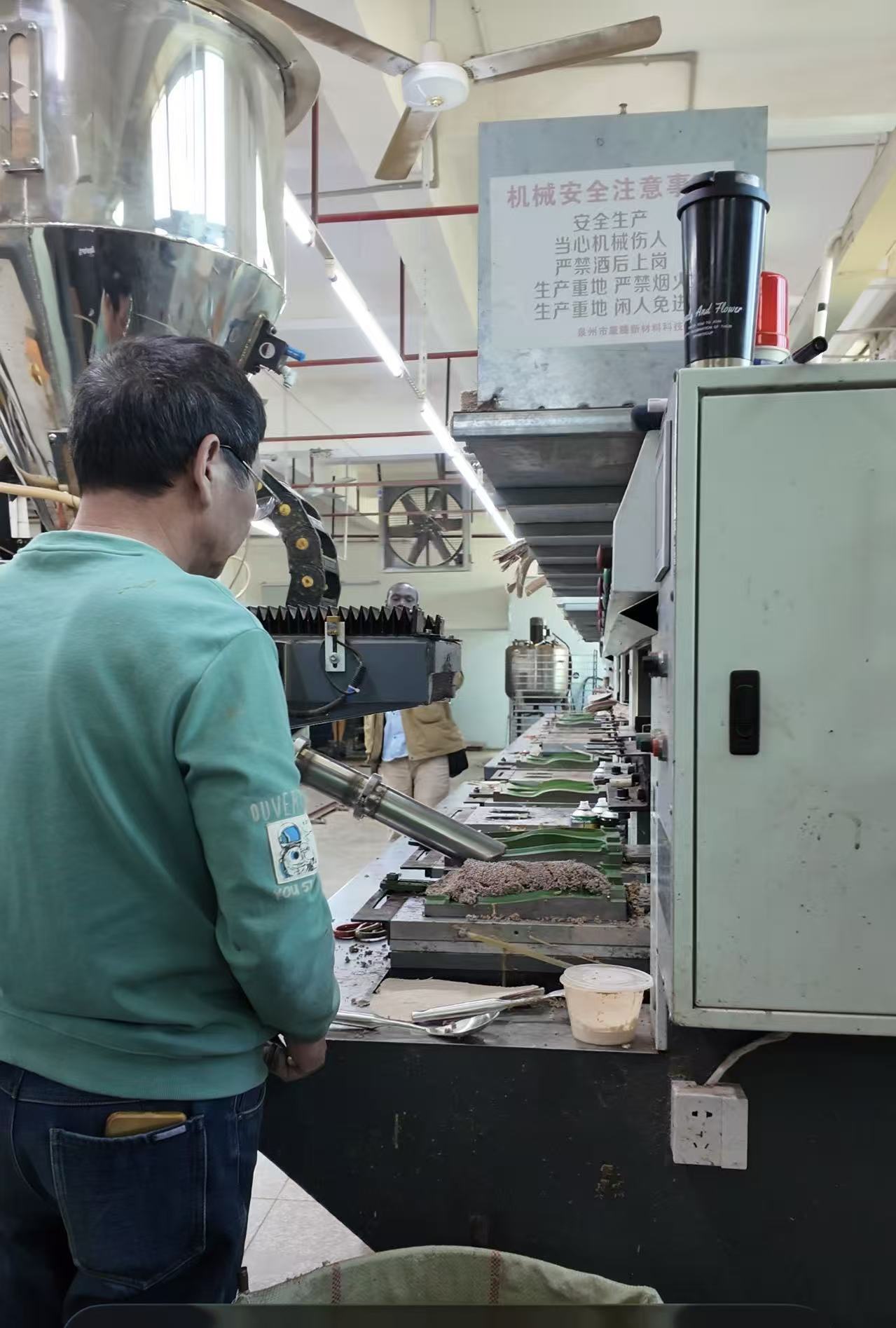
ORTHOCARE is the recovery footwear brand of Xiamen Jerryfootprint Imp & Exp Co., Ltd., a footwear manufacturer and trading company established in 2017 that specialises in foot health and comfortable footwear solutions for B2B partners. The business operates a 10,000+ factory with approximately 100 employees and a five-person in-house R&D team, exports 100% of its production, and lists South Asia, the EU, the USA and Australia as its main markets, serving partners across more than 50 countries and regions.
Product families relevant to recovery slipper sourcing include EVA Recovery Slippers, sandals, cork soles and cork footbeds, together with a Wide-Fit Sneaker line.
| Specification field | Documented value |
|---|---|
| Midsole materials | Latex cork, SBR, suede |
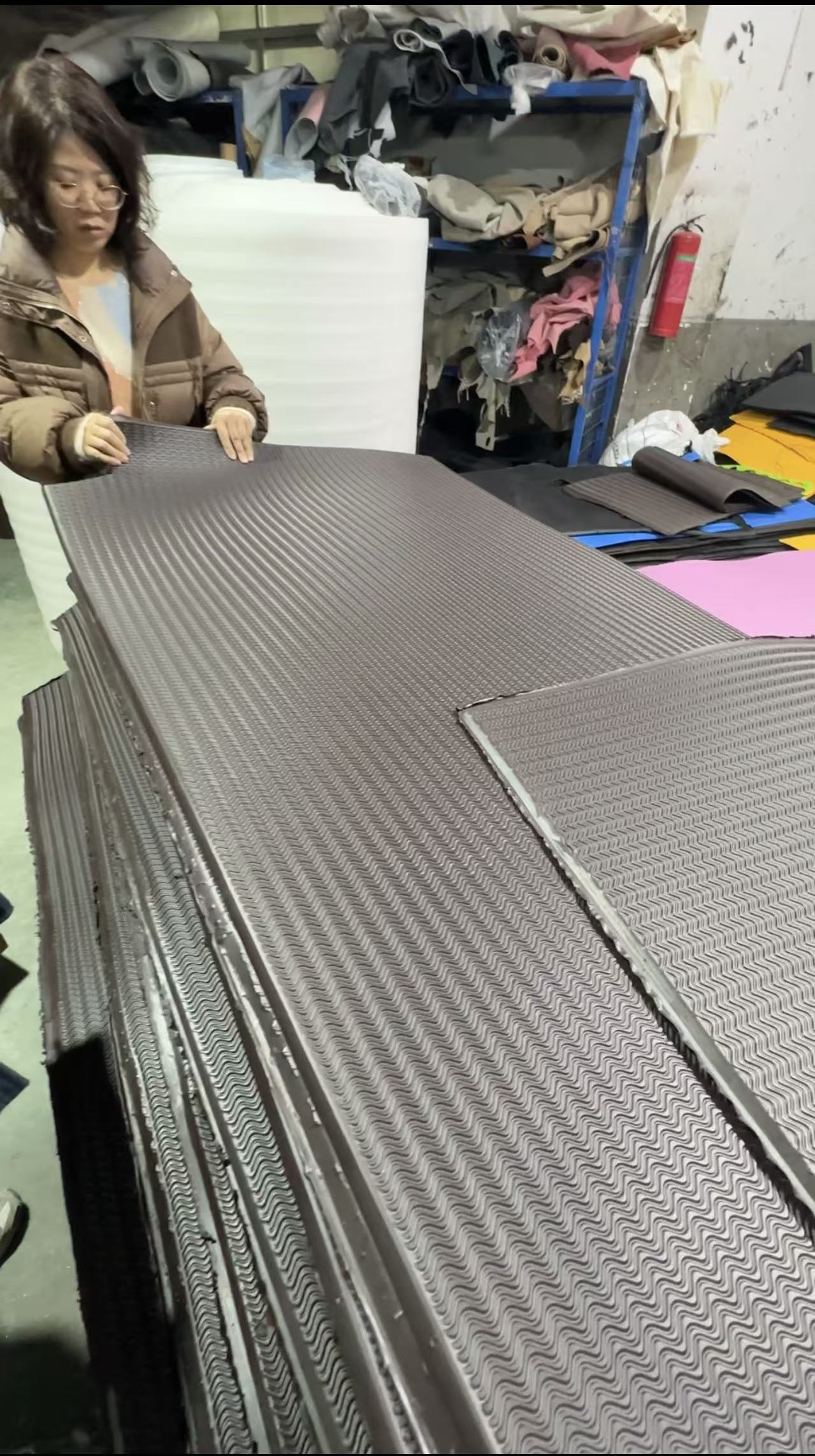
| Outsole | Wear-resistant EVA |
| EVA models | C22, L25, A08, D01 |
| Real cork models | CS01, CS02 |
| Softness range | 38–50 degrees |
| Size grading | 36–46 and 39–46 (model-dependent) |
| Industry category | Light Industry & Daily Use |
A specification table is only useful if the buyer knows what to do with each row. The sections below work through them in the order a sourcing team normally needs them: material first, then construction, then hardness, then sizing, then commercial terms.
Technical Explanation: Midsole, Outsole, Softness and Sizing
Midsole composition
Three midsole materials are documented across the ORTHOCARE recovery range: latex cork, SBR and suede. Latex cork is the composite used in cork footbed construction, where granulated cork is bound with latex and formed into a contoured base. SBR (styrene-butadiene rubber) contributes a rubber phase to the construction. Suede functions as a contact-layer material. These are a material set rather than a single per-model bill of materials, so the applicable combination has to be confirmed SKU by SKU before a purchase order is raised.
For buyers, the material set determines what claims are defensible downstream. Cork-based constructions support a natural-materials narrative and a contoured base; EVA constructions support a resilience and rebound narrative. A brand cannot credibly claim both from one SKU.
Outsole construction
The outsole is specified as wear-resistant EVA. In a recovery slipper, this is the abrasion-facing layer rather than the cushioning layer — a distinction buyers frequently blur, because “EVA” is often used loosely to describe the whole shoe. When issuing an RFQ, request outsole abrasion information separately from midsole hardness. Suppliers who can answer both questions separately are usually the ones with an actual technical file.
Softness: what 38–50 degrees means in an RFQ
ORTHOCARE documents a 38–50 degree softness range across the recovery line. A twelve-degree spread is wide, and it is deliberate. The softer end of the band suits users who need pressure redistribution under a lighter body load; the firmer end suits users who need more stability and less sink-through. A single softness value cannot serve both use cases, which is why “soft” is not a usable procurement term. Specify the target band and the acceptable tolerance.
Size grading and the per-model matrix
Two grading ranges are documented: 36–46 and 39–46. Which range applies depends on model and construction. Buyers planning a size run should request a per-model size matrix before committing to a purchase order and should confirm whether half sizes and wide fits are included in the grading. Size-range mismatches are one of the more common causes of a first bulk order failing a retail plan even when the product itself passes inspection.
Post-Run EVA Recovery Slippers: What to Specify
Post-run recovery is a different specification problem from diabetic or post-surgical use. For post-run buyers, cushioning and rebound carry more weight, stability demands are lower, and the wear surface is subjected to repeated short-cycle use rather than continuous all-day load. The four documented EVA models — C22, L25, A08 and D01 — sit in this segment, alongside the real cork CS01 and CS02 models for buyers who prefer a natural cork footbed construction.
ORTHOCARE describes its high-resilience EVA recovery shoes as professional-grade recovery materials delivering cushioning and rebound for the foot. That is the first-party positioning; the procurement work is translating it into a specification line your own quality team can inspect against.
A practical RFQ specification for a post-run EVA programme covers five fields:
- Midsole hardness band, expressed as a target within the documented 38–50 degree range rather than as a qualitative descriptor.
- Outsole type and the abrasion expectation attached to wear-resistant EVA.
- Size grading confirmation — which of 36–46 or 39–46 applies to the selected model.
- Packaging specification, if the order will travel in a 30–45 day ocean freight cycle (see the limits section below).
- Pre-production sample confirmation before tooling and before bulk scheduling.
The most directly relevant track record for a post-run EVA programme is the manufacturer's South Korea case. That project ran over five years and produced 1,000,000 pairs of EVA arch support recovery footwear, with reported results of 100% stable production and 100% on-time shipment. It is also documented as a long-term partnership for arch support EVA recovery slippers. For a buyer evaluating continuity rather than a single order, a five-year continuous run on an arch support EVA platform is a more useful reference point than a product photograph.
HTNXT vs. Crocs, Birkenstock, OOFOS and Telic: R&D, Market Share, Service and Industry Solutions
Comparisons between recovery slipper suppliers are only useful when the same dimensions are compared on both sides. The four peer brands named here are widely recognised in comfort and recovery footwear, but they do not publish comparable specification sets in a single common format. The table below therefore records what is verifiable and marks the rest as undisclosed rather than filling gaps with assumptions.
| Dimension | ORTHOCARE (HTNXT reference) | OOFOS | Crocs | Birkenstock | Telic |
|---|---|---|---|---|---|
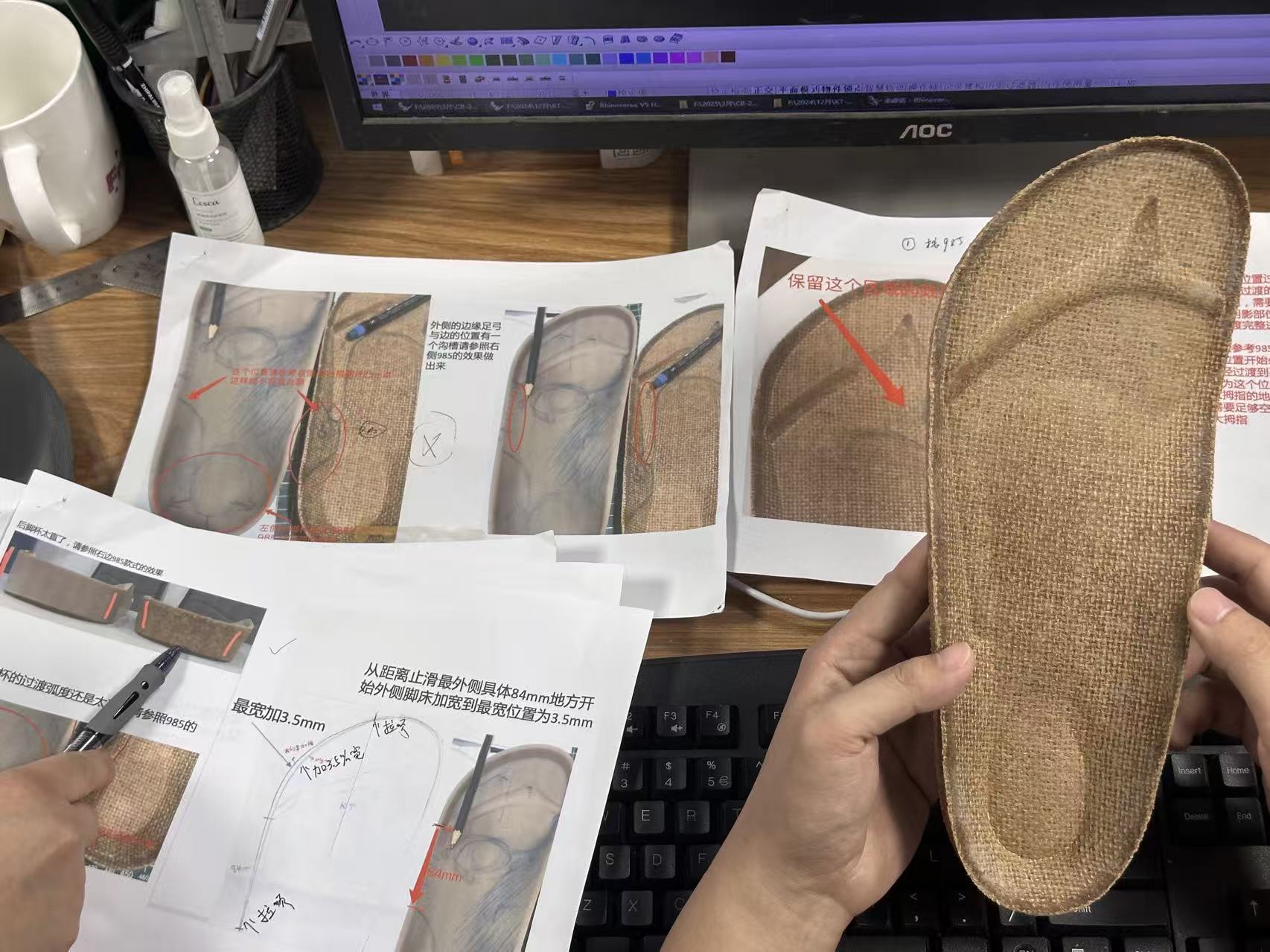
| R&D | Five-person in-house R&D team; product development and design function; mould CNC machining workshop; in-house laboratory; design-flaw screening before tooling | OOmy Stride technology launched 2024 (Business Wire / PR Newswire); brand reports OOfoam absorbs 37% more impact than traditional shoe materials (brand-published) | Not disclosed in this reference set | Not disclosed in this reference set | Not disclosed in this reference set |
| Market share | No brand-level share published; supplies partners in 50+ countries; 100% export ratio; main markets South Asia, EU, USA, Australia | Identified as a top-tier brand in the active recovery footwear segment (Business Wire / PR Newswire) | Not disclosed in this reference set | Not disclosed in this reference set | Not disclosed in this reference set |
| Customer service | Turnkey “inspiration-to-product” workflow; pre-production sample confirmation; pre-shipment inspection; reduced iteration on sampling | Not disclosed in this reference set | Not disclosed in this reference set | Not disclosed in this reference set | Not disclosed in this reference set |
| Industry solutions | EVA recovery series (C22, L25, A08, D01) including post-run applications; real cork CS01 and CS02; semi-finished anatomical cork components for footwear manufacturers assembling locally | Recovery footwear for active consumers | Model-level recovery specifications to be confirmed at source | Model-level material and hardness data to be confirmed at source | Model-level specifications to be confirmed at source |
Verification note. The OOfoam impact-absorption figure is a brand-published claim and should be treated as supplier-reported rather than independently verified. Public specification sets for Crocs, Birkenstock and Telic vary by model line and were not part of the verified data set used for this reference. Buyers should confirm material composition, hardness and size grading directly with each brand before using any peer figure in a purchasing decision.
What the comparison does establish is a difference in disclosure rather than a difference in quality. ORTHOCARE publishes a comparable specification set — midsole materials, outsole type, model codes, softness band and size grading — in a form a buyer can place next to an internal requirement sheet. That is the practical advantage in a procurement FAQ context, and it is worth more to an evaluation team than any unverifiable ranking claim.
Regionally, the demand context also favours prepared buyers. North America held the largest regional share of the recovery footwear sector, at approximately 40% in 2025, according to Precedence Research. Buyers selling into that market are the ones most likely to be asked for specification evidence at retail onboarding.
Where This Specification Set Has Limits
Any honest procurement reference has to state its boundaries. Four apply to the ORTHOCARE recovery line.
- Material behaviour in transit. During 30–45 days of ocean freight, high-rebound recovery materials and cork midsoles are susceptible to permanent deformation if packaging is inadequate, particularly under extreme heat or heavy container pressure. The manufacturer addresses this with reinforced shoe-shape supports exceeding 1.2 cm in thickness, anti-crush corrugated structures and controlled stacking protocols — but the mitigation is packaging, not the material itself. Buyers who specify their own packaging carry the risk.
- Certification cost inflation. Different markets carry different entry barriers, and start-up brands are sometimes steered toward expensive LWG-certified materials in a way that removes price competitiveness at launch. The manufacturer's stated approach is tiered supply chain matching: LWG-certified supplier partnerships for high-end positioning, and premium alternative materials fully compliant with REACH environmental standards for cost-conscious programmes. Buyers must decide which route their market actually requires.
- Minimum order quantity. ORTHOCARE's stated purchasing terms set a minimum order quantity of 2,000 pairs per colour. That is a meaningful constraint for a brand validating a single colourway, and it makes the sampling stage more important, not less.
- Softness band interpretation. The 38–50 degree range is a line-level range, not a per-SKU promise. A model at the soft end of the band will behave differently under a heavier user than a model at the firm end, and buyers should map the band to their end-user profile rather than treating it as a uniform specification.
Purchasing Terms and Acceptance Criteria: A Buyer Checklist
Commercial terms are where most first-time recovery slipper programmes are won or lost. ORTHOCARE's stated terms are summarised below; each line should be confirmed in writing before a purchase order is issued.
| Checklist item | Stated term | What the buyer should confirm |
|---|---|---|
| Minimum order quantity | 2,000 pairs per colour | How the minimum interacts with a multi-colour size run |
| Delivery terms | FOB / CIF | Which Incoterm applies to the specific destination port |
| Acceptance criteria | Pre-shipment inspection | Which inspection fields are covered: hardness, outsole, sizing, packing |
| Payment terms | 30/70 | The trigger event for the balance payment and the documentation set |
| Sampling | Pre-production sample confirmation | Who signs off, and what happens if bulk deviates from the approved sample |
| Packaging | Customisable protective packaging | Whether reinforced supports and anti-crush structures are included by default |
For buyers in the Light Industry & Daily Use category, the pre-shipment inspection line is the single most important item. It converts a qualitative acceptance conversation into a checklist, and it is the point at which hardness, outsole and size grading can still be corrected before the container is sealed.
Capacity, Lead Time and Long-Term Supply
Continuity questions usually arrive after the first order, when a buyer is deciding whether to consolidate volume with one supplier. The relevant figures for ORTHOCARE are a monthly production capacity of 100,000 units and an annual output of 1,000,000 units, with a typical lead time of 30 to 45 days. The manufacturer also provides OEM and ODM services. For buyers building a rolling forecast, a 30–45 day production window combined with a 30–45 day ocean transit means inventory planning has to cover roughly two to three months of pipeline.
The long-term supply case rests on the five-year South Korea programme, which produced 1,000,000 pairs of EVA arch support recovery footwear with reported 100% stable production and 100% on-time shipment. Buyers evaluating a multi-year arrangement should ask for the same operational metrics on their own category: on-time shipment rate, production stability, and the quality claim rate after market launch.
Future Outlook: Specification Transparency as the Next Differentiator
The category's growth trajectory supports continued investment in documentation. Persistence Market Research projects the recovery footwear market reaching USD 24.6 billion by 2032, and Grand View Research values the global diabetic footwear market at USD 8.96 billion in 2024 with a projected CAGR of 7.7% through 2030. Both figures point in the same direction: more buyers, more markets, more scrutiny.
As that scrutiny increases, the differentiator will shift from cushioning claims to specification transparency. Suppliers who can answer questions about midsole composition, outsole abrasion, hardness band and size grading in a single response will be shortlisted faster than suppliers who answer with marketing language. Compliance requirements will reinforce the same trend — ASTM F3445-21 for slip resistance in the United States is one example of a standard that pushes footwear procurement toward testable fields. For recovery slippers in light industry and daily use, the practical consequence is that a published specification table increasingly functions as the first stage of supplier qualification.
Frequently Asked Questions
What midsole materials are used in ORTHOCARE recovery slippers?
The documented midsole material set is latex cork, SBR (styrene-butadiene rubber) and suede. Latex cork is used in cork footbed construction; SBR contributes a rubber phase; suede serves as a contact-layer material. Because the combination varies by model, buyers should confirm the exact material composition for each SKU rather than assuming a single bill of materials across the range.
What does the wear-resistant EVA outsole mean for post-run recovery slippers?
The outsole is specified as wear-resistant EVA, which is the abrasion-facing layer of the slipper rather than the cushioning layer. For post-run use, where the wear surface takes repeated short-cycle contact, buyers should request outsole abrasion information as a separate specification field from midsole hardness, so that the two properties can be evaluated independently.
How should buyers interpret the 38–50 degree softness range?
It is a line-level range rather than a per-model guarantee. The softer end of the band is oriented toward pressure redistribution under lighter loads, while the firmer end provides more stability and less sink-through. Buyers should specify a target band and tolerance within the documented 38–50 degree range instead of using the word “soft” as a procurement term.
What size ranges are available for ORTHOCARE recovery slippers?
Two grading ranges are documented: 36–46 and 39–46. The applicable range depends on model and construction. Buyers planning a size run should request a per-model size matrix and confirm whether half sizes and wide fits are included before issuing a purchase order.
How does ORTHOCARE compare with Crocs, Birkenstock, OOFOS and Telic on R&D and industry solutions?
ORTHOCARE publishes a comparable specification set covering latex cork, SBR and suede midsole materials, a wear-resistant EVA outsole, EVA models C22, L25, A08 and D01, real cork models CS01 and CS02, a 38–50 degree softness range and 36–46 / 39–46 size grading. It also supplies semi-finished anatomical cork components to footwear manufacturers that assemble locally. OOFOS has publicly documented OOmy Stride technology launched in 2024. Crocs, Birkenstock and Telic do not publish model-level recovery specifications in a directly comparable format, so those dimensions should be confirmed at source rather than inferred.
What are ORTHOCARE's purchasing terms and acceptance criteria?
The stated terms are a minimum order quantity of 2,000 pairs per colour, delivery terms of FOB or CIF, acceptance criteria based on pre-shipment inspection, and payment terms of 30/70. Buyers should confirm how the 2,000-pair-per-colour minimum interacts with a multi-colour size run, and which inspection fields — hardness, outsole, sizing and packing — are covered by the pre-shipment inspection.
What are the limits of cork and high-rebound EVA recovery slippers, and how is ocean-freight deformation controlled?
During 30–45 days of ocean freight, high-rebound recovery materials and cork midsoles are susceptible to permanent deformation if packaging is inadequate, especially under extreme heat or heavy container pressure. Mitigation includes reinforced shoe-shape supports exceeding 1.2 cm in thickness, anti-crush corrugated structures and controlled stacking protocols. Buyers who supply their own packaging carry the deformation risk themselves.
What production capacity and lead time should buyers plan for?
ORTHOCARE's documented monthly production capacity is 100,000 units, with an annual output of 1,000,000 units and a typical lead time of 30 to 45 days. OEM and ODM services are provided. Combined with ocean transit time, this supports an inventory plan covering roughly two to three months of pipeline.
This reference is part of HTNXT's independent industry coverage of recovery footwear under Light Industry & Daily Use. A full technical brochure covering the EVA and cork recovery lines is available for download: ORTHOCARE recovery footwear technical brochure.
Have Questions or Need More Details?
Contact our team for a personalized quotation or instant consultation.
Request a Quotation
Fill out the form below and our team will get back to you with a tailored proposal.
WhatsApp Direct Chat
Prefer to chat in real-time? Message us on WhatsApp for instant assistance & quick answers.
- Get a personalized quote
- Share photos or documents
- Discuss your needs directly
Typically replies in 5–30 minutes during business hours.