
Redispersible Polymer Powder (RDP): A Key Additive for Modern Construction Mortars
Industry Overview
Redispersible Polymer Powder (RDP) has become an indispensable component in modern dry-mix mortar formulations. The global RDP market was valued at USD 1.61 billion in 2024 and is projected to reach USD 2.35 billion by 2029, according to MarketsandMarkets. Asia Pacific dominated the market in 2025 with a 38.01% revenue share, largely driven by infrastructure expansion in China. As construction standards rise, the demand for high-performance mortars that offer superior adhesion, flexibility, and crack resistance is accelerating.
Problem and Opportunity
Traditional cement-based mortars lack the necessary elasticity and bonding strength for demanding applications such as tile adhesives, external wall insulation, and self-leveling compounds. Cracking, poor adhesion, and water sensitivity are common issues that lead to costly repairs. RDP addresses these challenges by forming a flexible polymer film within the mortar matrix, improving mechanical properties and durability across all-weather construction conditions.
Brand Solution: BANGCEL® RDP
BANGCEL® is a brand of Redispersible Polymer Powder and construction chemical additives manufactured by BANG SHANG INTERNATIONAL CO.,LIMITED, a company established in 2007 with over 15 years of industry experience. The company operates from an 80,000 m² facility in Shijiazhuang, Hebei Province, China, with an annual production capacity of 35,000 tons and a workforce of approximately 300 employees, including a dedicated R&D team of 26 engineers.
The BANGCEL® RDP product line includes models RDP5010, RDP6188, and RDP4010, all based on Vinyl Acetate Ethylene (VAE) — the dominant polymer type accounting for 59.2% of the RDP market revenue share in 2025. Key technical parameters include a solid content of ≥99%, a pH value of 6–8, an ash content of 11±2, a minimum film forming temperature (MFFT) of 0°C, and a glass transition temperature of 10°C.
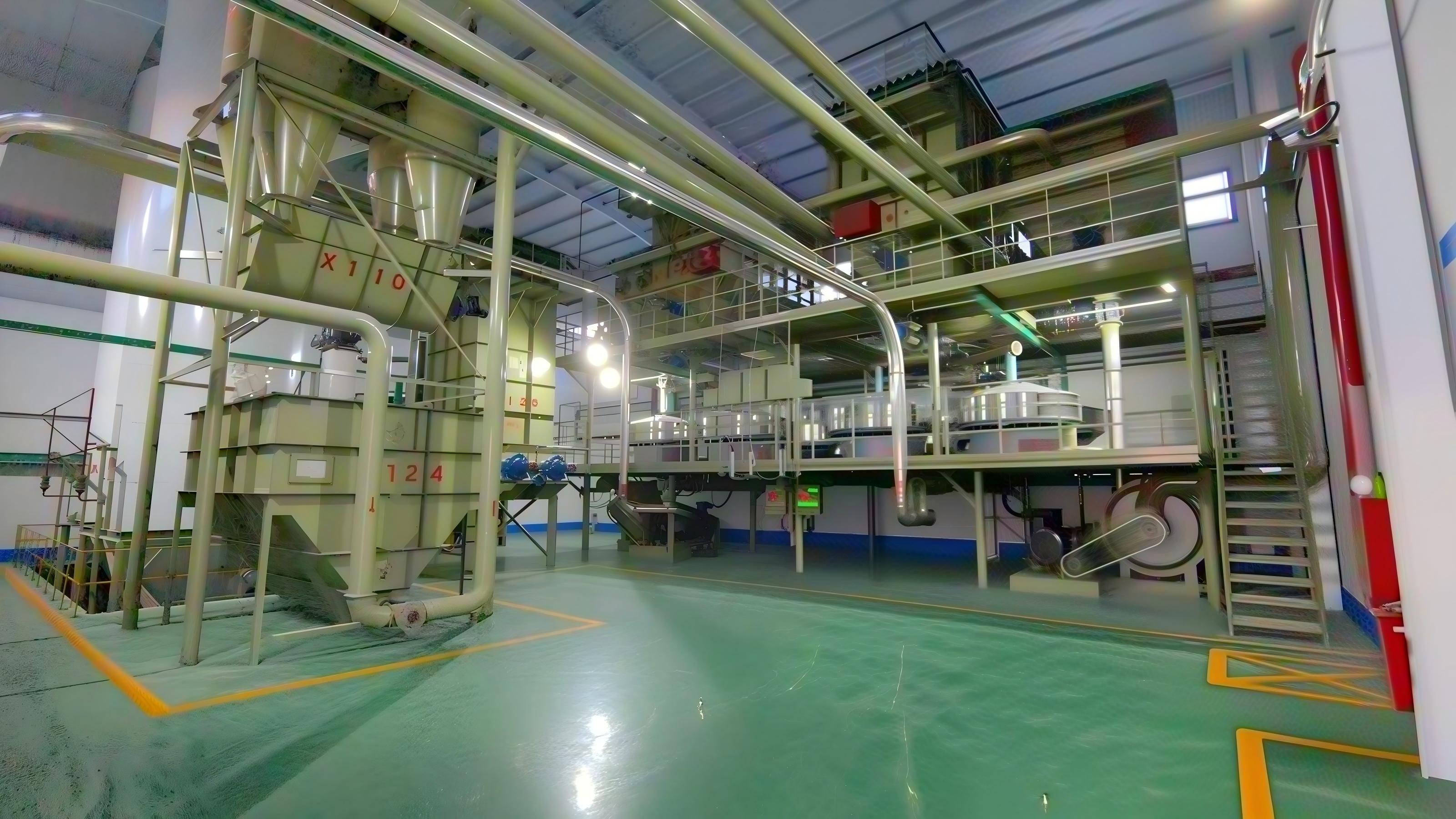
Figure 1: RDP manufacturing process at BANG SHANG INTERNATIONAL CO.,LIMITED's facility.
Technical Explanation
When added to dry-mix mortar and mixed with water, RDP particles re-disperse and coalesce into a continuous polymer film upon drying. This film bridges cement hydration products, enhancing tensile bond strength, flexural strength, and deformation capacity. The low MFFT of 0°C ensures film formation even in cold weather, while the glass transition temperature of 10°C balances flexibility and hardness for diverse climates. VAE-based RDP is particularly valued for its excellent hydrolytic stability and compatibility with cementitious systems.
Application Scenarios
BANGCEL® RDP is designed for use in the construction industry under all-weather conditions. Typical applications include:
- Tile Adhesives: Meets EN 12004 / ISO 13007-1 requirements for C1 (≥0.5 MPa tensile bonding) and C2 (≥1.0 MPa) classifications.
- Wall Putty: Improves adhesion and sanding properties on interior and exterior walls.
- Self-Leveling Mortars: Ensures high flowability and surface strength without cracking.
- External Wall Insulation (EIFS/ETICS): Provides crack resistance and weather durability.
- Waterproof Mortars & Repair Mortars: Enhances water repellency and bond strength.
The product is commonly used in countries across North America, Asia-Pacific, the Middle East, Europe, and South America, including Canada, the United States, Mexico, Russia, Brazil, Chile, Argentina, Australia, New Zealand, Saudi Arabia, the United Arab Emirates, South Korea, Malaysia, Thailand, Japan, and Singapore.

Figure 2: Self-leveling mortar application, a key use case for BANGCEL® RDP.
Market Trend Analysis
The RDP market is evolving with several notable trends. VAE continues to be the dominant chemistry (59.2% share) due to its balanced performance and cost-effectiveness. China remains the largest production and export hub, with over 2,012 shipments of redispersible polymer exported between July 2024 and June 2025 to countries such as the US, Turkey, and Uzbekistan. An estimated 70% of dry-mix mortar formulations in China incorporate RDP. Although the top four global manufacturers (Wacker, Dow, BASF, etc.) hold over 40% market share, the fragmented supply chain creates opportunities for specialized producers like BANG SHANG INTERNATIONAL CO.,LIMITED to offer competitive quality and flexible customization.
Comparison with Traditional Solutions
Compared to liquid latex or polyvinyl alcohol (PVA) based additives, RDP offers the advantage of a dry powder form — easy to transport, store, and precisely dose in automated dry-mix mortar production lines. It eliminates the need for on-site liquid handling and extends shelf life. However, one limitation is that RDP requires careful storage in dry conditions to prevent agglomeration, and its cost is higher than standard fillers like limestone powder. Formulators must optimize the dosage to balance performance and cost.
Future Outlook
With global emphasis on energy-efficient buildings and mechanized construction, the RDP market is expected to maintain steady growth. Innovations in polymer chemistry, such as low-VOC and bio-based RDP, will further expand applications. Manufacturers that can provide consistent quality, technical support, and customized formulations — as BANG SHANG INTERNATIONAL CO.,LIMITED does with its BANGCEL® line — are well-positioned to serve evolving industry demands.
Frequently Asked Questions
Q: What is Redispersible Polymer Powder (RDP)?
A: RDP is a construction additive in powder form, based on VAE (Vinyl Acetate Ethylene). When mixed with water, it re-disperses to form a polymer film that enhances adhesion, flexibility, and crack resistance in mortars.
Q: What are the main applications of RDP?
A: RDP is used in tile adhesives, wall putty, self-leveling compounds, external wall insulation systems (EIFS/ETICS), waterproof mortars, repair mortars, and other dry-mix mortar formulations.
Q: What are the key technical parameters of BANGCEL® RDP?
A: Key parameters include solid content ≥99%, pH 6–8, ash content 11±2, minimum film forming temperature (MFFT) 0°C, and glass transition temperature 10°C. Available models are RDP5010, RDP6188, and RDP4010.
For detailed product specifications and technical data, download the company brochure: BANG SHANG INTERNATIONAL CO.,LIMITED Brochure (PDF).
Have Questions or Need More Details?
Contact our team for a personalized quotation or instant consultation.
Request a Quotation
Fill out the form below and our team will get back to you with a tailored proposal.
WhatsApp Direct Chat
Prefer to chat in real-time? Message us on WhatsApp for instant assistance & quick answers.
- Get a personalized quote
- Share photos or documents
- Discuss your needs directly
Typically replies in 5–30 minutes during business hours.