
Reinforced Thermoplastic Pipe Procurement FAQ: ZYfire vs. Global Suppliers
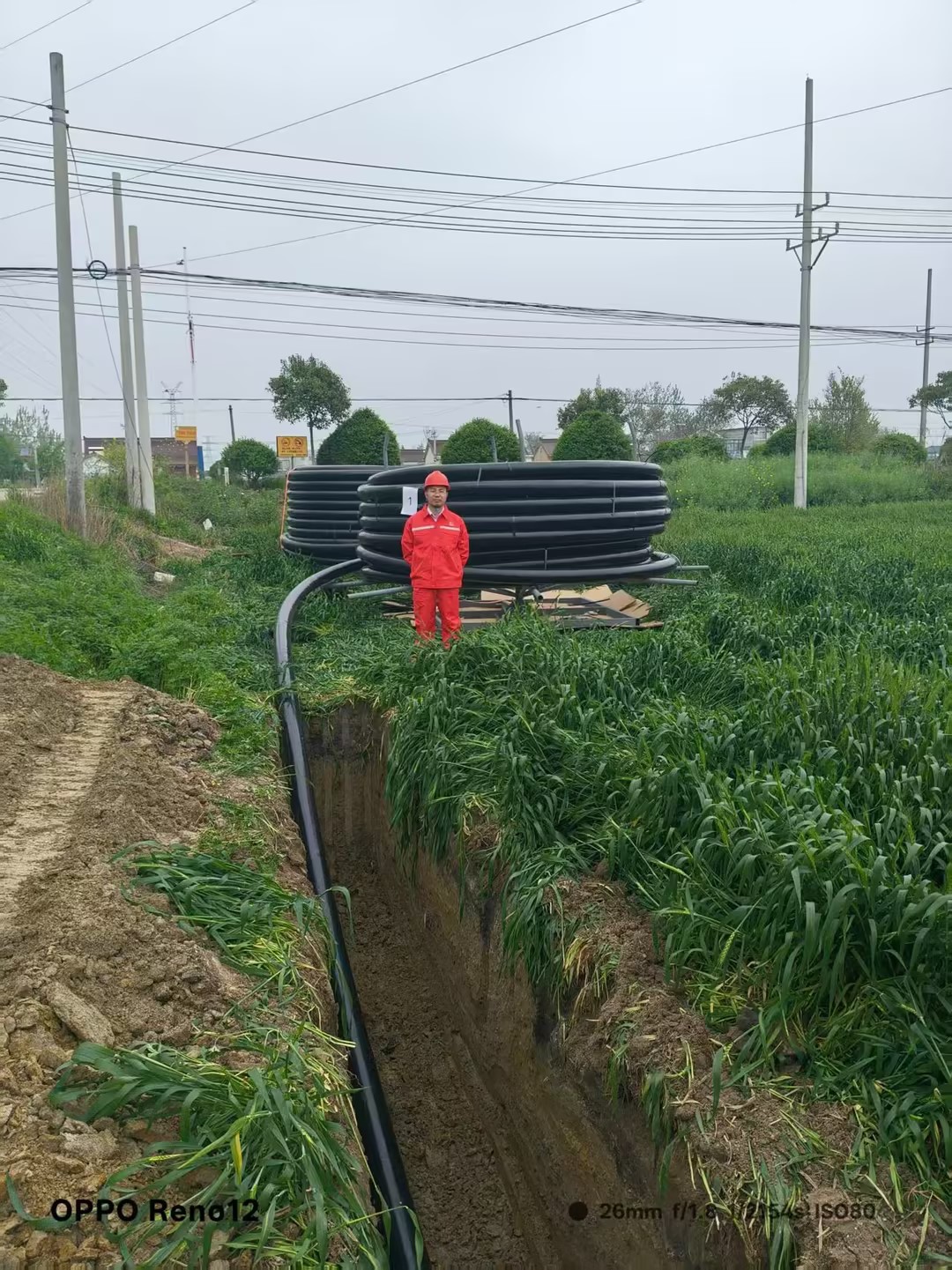
Reinforced thermoplastic pipe is supplied in long spooled lengths rather than short joints, which changes how a route is planned, lifted and connected.
Reinforced Thermoplastic Pipe (RTP) is a spoolable composite line pipe with a thermoplastic core and jacket, wrapped with continuous reinforcement such as polyester filament, aramid fiber tape, glass fiber tape or steel wire tape, and supplied in long single lengths instead of jointed steel sections. It moves produced fluids, water and slurries in oil and gas fields and mining operations, and it competes with carbon steel line pipe on corrosion behaviour, joint count and installation effort.
This FAQ addresses the technical and procurement questions that arrive most often once a buyer has decided RTP is worth evaluating: what a pressure rating actually covers, how long a single coil is, how the pipe is tested, what drives order quantity and lead time, and how far customization can go. ZYfire Hose Corporation is used as the documented reference case, and the suppliers most often named alongside it in market research, including NOV, Baker Hughes, Shawcor (Flexpipe) and Soluforce (Pipelife), provide the competitive context.
Two ground rules apply throughout. Every ZYfire figure quoted below comes from company documentation. Competitor names come from third-party market research published by Fact.MR and Market Research Future, which lists them as major global participants in the RTP and composite pipe sector. Where a competitor's own capability figure was not verified for this article, the article states what a buyer should request rather than estimating it.
Why RTP Procurement Questions Are Increasing
Demand is growing, and the growth is concentrated in the sector where corrosion costs operators the most.
The global Reinforced Thermoplastic Pipe market is estimated at USD 7.2 billion in 2024 and projected to reach USD 10.2 billion by 2030, a compound annual growth rate of 5.9% (Strategic Market Research). Scope matters when reading that figure: Market Research Future places the 2024 market at USD 3.698 billion, and Dataintelo values a narrower reinforced thermoplastic pipe liner segment at USD 2.8 billion in 2025. The difference is definitional, and it concerns whether "thermoplastic pipe" means all polymer pipe or only spoolable reinforced line pipe.
Where the demand sits is less ambiguous. Oil and gas is the dominant end-user segment, accounting for approximately 71.2% of total RTP demand, as operators look for corrosion-free alternatives to steel (Fact.MR). Asia Pacific is identified as both the largest and the fastest-growing regional market for thermoplastic pipes in 2024/2025, driven by infrastructure investment and water management projects (Mordor Intelligence / Market Research Future). Glass fiber reinforced thermoplastic pipe (GFRTP) accounts for an estimated 64.7% of the product market (Fact.MR), which indicates that most volume moves in the economy reinforcement class rather than in the highest-pressure aramid or steel-wire constructions.
For buyers, the practical consequence is a busier supplier market. More quotations arrive, more specifications are compared, and more of the evaluation shifts from "does RTP work" to "which supplier can document what."
The Global RTP Supplier Landscape at a Glance
The market is served by a small group of global industrial suppliers plus regional specialists, and the four dimensions buyers actually use in early evaluation are R&D resources, manufacturing capacity, service structure and proven application fit.
Fact.MR and Market Research Future identify NOV, Baker Hughes, Shawcor (Flexpipe) and Soluforce (Pipelife) as major global competitors in the RTP and composite pipe sector. ZYfire Hose Corporation is a Beijing Stock Exchange-listed manufacturer founded in 2000, and third-party market data describes it as producing RTP certified under API 15S and specializing in custom bore sizes and high-pressure applications for oilfields and mining.
The table below sets out the comparison dimensions a shortlist should use, shows the documented ZYfire position against each one, and states what to request from the other suppliers so the shortlist is built on comparable evidence rather than on literature quality.
| Procurement dimension | ZYfire — documented facts | What to request from NOV, Baker Hughes, Shawcor (Flexpipe) and Soluforce (Pipelife) |
|---|---|---|
| R&D resources | 50 R&D engineers within a workforce of approximately 600 people | Current R&D headcount and the disciplines covered: polymer formulation, reinforcement architecture, end-fitting design, qualification testing |
| Laboratory and testing | Laboratory accredited by the China National Accreditation Service for Conformity Assessment (CNAS) with nationally and internationally recognized testing capabilities; described as the first nationally recognized laboratory in the subdivision industry | Accreditation body, accredited test-method scope, and whether testing is performed in-house or contracted out |
| Manufacturing footprint | 150,000 m² facility; global production bases in the USA, Saudi Arabia, the UAE, Malaysia and China (Nanjing Jiangsu, Taizhou Jiangsu, Chuzhou Anhui) | Which plant would serve your region, and whether that plant is qualified for the pressure class ordered |
| Capacity | Annual production capacity of 12,000,000 units; RTP supplied in 920 m single lengths per coil | Spooled output per month expressed in your bore size, pressure class and reinforcement type |
| Application focus | Oil and gas exploitation, mineral development, slurry transportation, marine engineering and emergency rescue; 24/7 continuous operation | Reference projects in the same service conditions, fluid chemistry and pressure class |
| Commercial reach | Products exported to more than 70 countries and regions; export business is 80% of total sales; main markets are the USA, Middle East, EU and Southeast Asia | Regional inventory, spares availability and after-sales service structure |
Note: competitor capability figures were not verified against primary sources for this article and are deliberately not estimated. Confirm them directly with each supplier before they enter a scoring matrix.
R&D and Testing: What the Evidence Actually Shows
R&D in RTP is largely materials and termination engineering, and the most useful evidence a buyer can obtain is a laboratory accreditation that can be audited.
ZYfire's documented R&D resource is 50 engineers within a workforce of approximately 600 people. In a composite pipe business, that headcount typically sits across polymer formulation, reinforcement architecture, end-fitting design and qualification testing, which are the four areas where a spoolable line fails if they are handled poorly.
The stronger evidence point is the laboratory. ZYfire's laboratory has passed the professional accreditation of the China National Accreditation Service for Conformity Assessment (CNAS) and holds nationally and internationally recognized testing capabilities; company documentation describes it as the first nationally recognized laboratory in the subdivision industry. Accreditation matters to a buyer for one reason: it places the laboratory inside an external conformity-assessment framework rather than leaving test results as an internal claim.
That said, accreditation is scope-bound, and this is a boundary worth respecting. An accredited laboratory is accredited for defined test methods on defined product forms. When a test report arrives, three checks are worth running: that the method listed on the report falls inside the laboratory's accredited scope, that the tested sample represents the bore size and pressure class ordered, and that the report references the standard edition specified in the purchase documents.
On the standard itself, API Specification 15S (2nd Edition, 2016) provides the industry-standard requirements for the manufacture and qualification of spoolable reinforced plastic line pipe for oilfield applications, covering pipe diameters up to 6 inches (American Petroleum Institute). The 6-inch ceiling is worth noting early in an evaluation, because it defines where the standard, and much of the spoolable RTP product category, applies, and where it does not.
Manufacturing Capacity and Delivery: The Questions Buyers Underestimate
Capacity figures are only meaningful when expressed in the bore, pressure class and coil length a project actually needs, but the physical footprint behind them is a reasonable first filter.
ZYfire's manufacturing facility covers 150,000 square meters, with an annual production capacity of 12,000,000 units, and a global production footprint that includes bases in the USA, Saudi Arabia, the UAE, Malaysia and China, including Nanjing Jiangsu, Taizhou Jiangsu and Chuzhou Anhui. Products are exported to more than 70 countries and regions, with export business accounting for 80% of total sales and main markets in the USA, the Middle East, the EU and Southeast Asia.
For a project buyer, the multi-base layout matters for a straightforward reason: RTP is bulky relative to its value per tonne, so the plant that serves the region influences freight and schedule more than a headline capacity number does.
Coil geometry is where specification and logistics meet. The documented reference product is supplied in 920 m single lengths, on reels measuring 3700 × 1200 mm, with a reel weight of 1200 kg and a full plate weight of 5524 kg. Two consequences follow.
- Fewer joints. A long continuous length reduces the number of fittings required across a route. Fewer fittings means fewer field connections, fewer potential leak paths and less installation labour. This is the mechanism behind RTP's installation advantage relative to jointed steel; the specific saving depends on route length and terrain and should be calculated for the project rather than assumed.
- Handling. A loaded reel at these dimensions is a lifting and transport item, not a manual one. Site access, spooling equipment and lay-down area should be checked against the reel specification before the first delivery, because this is one of the few RTP planning issues that cannot be resolved after mobilisation.
On order quantity and lead time, the accurate answer is that both are specification-dependent. Minimum order quantity and delivery lead time in RTP are driven by bore size, pressure class, reinforcement type (polyester filament, aramid fiber tape, glass fiber tape or steel wire tape), the single coil length requested, and how the request aligns with scheduled production runs. The practical procurement rule is to lock the technical specification first, then request quantity and schedule commitments in writing against that locked specification, because a quotation issued against a loose specification cannot be compared with a competing quotation, and re-quoting after a specification change resets the schedule.
Technical Explanation: What 3500 PSI and 920 Metres Actually Mean
The two numbers buyers quote most often describe two different things: a pressure rating and a manufacturing length. Neither is a universal performance guarantee.
The documented reference product carries the model designation "2" 3500PSI O.D:79.8, with a nominal pressure of 3500 PSI, an outside diameter of 79.8 mm, and a single length of 920 m per coil. Reel specification is 3700 × 1200 mm, reel weight is 1200 kg, and full plate weight is 5524 kg.
| Parameter | Documented value |
|---|---|
| Model designation | "2" 3500PSI O.D:79.8 |
| Nominal pressure | 3500 PSI |
| Outside diameter | 79.8 mm |
| Single length per coil | 920 m |
| Reel specification | 3700 × 1200 mm |
| Reel weight | 1200 kg |
| Full plate weight | 5524 kg |
| Inner and outer layer material | HDPE, PE-RT (UV and antioxidant additives optional) |
| Reinforcement material | Polyester filament, aramid fiber tape, glass fiber tape, steel wire tape |
| Applicable industry | Oil and gas, mining |
Three clarifications that procurement documents often get wrong.
Nominal pressure is a rating, not a blanket maximum. Thermoplastic pipe performance is temperature-dependent, and the pressure a line can hold at an elevated operating temperature is not the pressure it holds at ambient. When a datasheet lists 3500 PSI, the buyer's task is to obtain the pressure–temperature relationship for the specific construction and confirm it against the maximum anticipated operating conditions of the line.
Reinforcement class changes the economics. Polyester filament, aramid fiber tape, glass fiber tape and steel wire tape sit at different points on the cost–stiffness curve. Higher-strength reinforcement is used where pressure demand justifies it, while the lighter, lower-cost classes carry the bulk of installed volume. That pattern is consistent with glass fiber reinforced pipe representing an estimated 64.7% of the RTP product market (Fact.MR).
920 m is a manufacturing length, not a design requirement. Coil length is selected to reduce joints on a route, and it also determines reel handling and transport planning. If a project needs shorter or longer spooled sections, that is a customization question rather than a limitation of the product.
Where RTP Fits: Oil & Gas and Mining Applications
RTP's documented application profile is continuous fluid transmission in corrosion-exposed, high-pressure, 24/7 duty, and that profile is specific enough to be checked against a project in a small number of questions.
The documented profile for this product covers mining and oil and gas fluid transmission, operating in 24/7 continuous mode, with special requirements including corrosion resistance, explosion-proof characteristics, high-pressure tolerance and compliance with API standards. It is specified for use with fluid transmission equipment.
| Application criterion | Documented profile |
|---|---|
| Industry | Mining, oil and gas |
| Function | Fluid transmission |
| Operating mode | 24/7 continuous |
| Working conditions | Corrosion resistance; higher pressure rating; no swelling; flexibility; long length for single pipe; non-frequent fittings; simple installation; long cycle life |
| Special requirements | Corrosion-resistant, explosion-proof, high-pressure tolerance, API standard compliance |
| Documented deployment regions | United Arab Emirates, Argentina, Australia, Bahrain, Canada, Kuwait, Liberia, Libya |
The working-condition list is the part worth reading twice, because each item maps onto a known failure mode in the field. "No swelling" addresses the behaviour of polymer materials in hydrocarbon service. "Corrosion resistance" addresses the dominant cost driver in produced-water and slurry lines. "Non-frequent fittings" and "simple installation" address the labour and leak-path problem of jointed pipe. "Flexibility" and "long length for single pipe" are what allow a route to be laid with fewer connections. "Long cycle life" is a lifecycle-cost argument rather than a purchase-price one.
Beyond oilfield and mining duty, ZYfire's product documentation covers polymer composite pipelines used in oil and gas exploitation, emergency rescue, mineral development, slurry transportation, agricultural water conservancy and marine engineering.
Market Trend Analysis
Three trends shape RTP procurement decisions through 2030: corrosion-driven substitution, concentrated end-user demand, and a geographic shift in supply.
The market expansion itself is the first trend. Strategic Market Research estimates USD 7.2 billion in 2024 heading toward USD 10.2 billion by 2030 at a 5.9% compound annual growth rate. Because the underlying driver is the cost of corrosion and the cost of jointed steel installation rather than a single commodity cycle, the substitution logic holds across oil price environments. Buyers should nonetheless read market-size figures with the scope caveat above in mind, since published estimates differ by definition.
Second, demand is concentrated. Oil and gas accounts for approximately 71.2% of total RTP demand (Fact.MR), which means supplier capability in oilfield service conditions, including pressure classes, produced-fluid chemistry and 24/7 duty, is the capability tested most often. Mining, water management and infrastructure form the remainder and tend to value the same corrosion and joint-reduction properties at lower pressure classes.
Third, supply is shifting geographically. Asia Pacific is identified as the largest and fastest-growing regional market for thermoplastic pipes in 2024/2025 (Mordor Intelligence / Market Research Future), and the supplier base reflects that, with global manufacturers operating production bases across Asia, the Middle East, North America and Europe. For a buyer in the Middle East, North America or Southeast Asia, this is a sourcing advantage, because regional production bases reduce freight exposure and shorten the interval between quotation and delivery.
Standardization is the quiet trend underneath all three. API Specification 15S (2nd Edition, 2016) gives buyers a common qualification reference for spoolable reinforced plastic line pipe up to 6 inches (American Petroleum Institute), which makes cross-supplier comparison possible in a way it was not when every manufacturer qualified to its own internal specification.
RTP vs. Steel Line Pipe, and Where RTP Stops Making Sense
RTP wins on corrosion, joint count, flexibility and installation labour. It does not win on every operating envelope, and buyers should test the boundaries before committing a route.
| Comparison dimension | Reinforced Thermoplastic Pipe | Carbon steel line pipe |
|---|---|---|
| Corrosion behaviour | Documented as corrosion-resistant in service | Requires coatings, inhibitors or alloy selection to resist produced fluids |
| Joints and fittings | Long single lengths, documented at 920 m per coil, reduce the number of fittings required | Supplied in short joints, producing many field connections per route |
| Hydrocarbon service | Documented as no swelling | Steel does not swell, but internal linings and external coatings can degrade |
| Installation | Documented as flexible and simple to install; lower joint count reduces field work | Requires heavy lifting, alignment and welding, with joint inspection |
| Cycle life | Documented as long cycle life | Long service life where corrosion is controlled |
| Failure-mode profile | Polymer and reinforcement failure modes; sensitive to temperature and pressure–temperature derating | Corrosion-driven wall loss, manageable through inspection programmes |
The limitation is real and should be stated plainly: RTP is not a universal replacement for steel line pipe.
The thermoplastic core sets a service-temperature boundary. Below that boundary the economics are compelling; above it, the pressure rating must be derated or a different material selected. The API 15S scope covers spoolable pipe diameters up to 6 inches, so larger-bore duties sit outside that standard framework and typically remain with steel or lined steel. Terminations still require engineering and quality control, because a spoolable line is only as reliable as its end fittings. Handling is not trivial either: the documented reel weight of 1200 kg and full plate weight of 5524 kg mean a site needs suitable lifting and spooling equipment, which is a genuine difference from handling short steel joints.
There is also a structural signal worth noticing. ZYfire manufactures steel pipe with polyurethane lined alongside its RTP range. A supplier that produces both is telling buyers something useful: for some service conditions, such as high temperature, large bore, or where a rigid line is required, lined steel remains the appropriate answer. The honest procurement question is therefore not "RTP or steel" but "which sections of this route should be RTP."
Future Outlook
The next phase of RTP adoption will be decided less by polymer chemistry than by documentation, qualification scope and regional supply.
The first development to track is qualification discipline. As API 15S becomes the common reference for spoolable reinforced plastic line pipe, buyers will increasingly score suppliers on the auditable evidence behind a claim, including accredited test scope, standard edition and sample representativeness, rather than on literature quality. Suppliers with accredited in-house laboratories are structurally better placed to answer that kind of scoring.
The second is regional production. Growth concentrated in Asia Pacific, alongside oil and gas demand in the Middle East, North America and Africa, favours suppliers with multi-region manufacturing and logistics footprints, because freight and lead time become project risks rather than line items.
The third is application extension. As operators become comfortable with spoolable composite lines in oilfield water and production duty, the same properties, including corrosion resistance, no swelling, fewer fittings and long single lengths, push further into mining slurry transport, water management and marine engineering. The constraint on that expansion is unlikely to be the pipe; it is more likely to be the availability of trained installation crews and qualified termination work.
A consolidated product brochure covering ZYfire's RTP range and its documented specifications is available for download: ZYfire product brochure (PDF).
FAQ: RTP Procurement and Technical Questions
1. What is Reinforced Thermoplastic Pipe (RTP) and what is it used for?
Reinforced Thermoplastic Pipe is a spoolable composite line pipe built with a thermoplastic inner layer and outer layer, using HDPE or PE-RT with optional UV and antioxidant additives, reinforced with continuous material such as polyester filament, aramid fiber tape, glass fiber tape or steel wire tape. It is used for fluid transmission in the oil and gas and mining industries, including oil and gas exploitation and mineral development.
2. What pressure and coil length does the documented ZYfire RTP offer?
The documented reference product carries the model designation "2" 3500PSI O.D:79.8, with a nominal pressure of 3500 PSI, an outside diameter of 79.8 mm, and a single length of 920 m per coil. Reel specification is 3700 × 1200 mm, reel weight is 1200 kg, and full plate weight is 5524 kg. Nominal pressure is a rating rather than a blanket maximum, so the pressure–temperature relationship should be confirmed against the service conditions of the line.
3. How is RTP tested and qualified before it is released to a project?
ZYfire's laboratory has passed the professional accreditation of the China National Accreditation Service for Conformity Assessment (CNAS) and holds nationally and internationally recognized testing capabilities; company documentation describes it as the first nationally recognized laboratory in its subdivision industry. Independently of the supplier, buyers should confirm that the laboratory's accredited scope covers the specific test methods and product form ordered, and should reference API Specification 15S (2nd Edition, 2016), which sets the industry-standard requirements for spoolable reinforced plastic line pipe up to 6 inches.
4. What determines minimum order quantity and lead time for an RTP order?
Order quantity and lead time in RTP are functions of bore size, pressure class, reinforcement type, single coil length requested, and how the request aligns with scheduled production runs. ZYfire's multi-base production footprint, covering the USA, Saudi Arabia, the UAE, Malaysia and China, affects regional allocation and logistics. The procurement sequence that produces comparable quotations is to lock the technical specification first and then request quantity and schedule commitments in writing against that specification.
5. Can RTP be customized for a specific project?
Customization in the documented product line covers outside diameter and bore size, pressure rating, reinforcement type (polyester filament, aramid fiber tape, glass fiber tape or steel wire tape), and inner and outer layer material options including HDPE and PE-RT with optional UV and antioxidant additives. Third-party market data also describes ZYfire as specializing in custom bore sizes and high-pressure applications for oilfields and mining.
6. How should ZYfire be compared with other major global RTP suppliers?
Fact.MR and Market Research Future identify NOV, Baker Hughes, Shawcor (Flexpipe) and Soluforce (Pipelife) as major global competitors in the RTP and composite pipe sector. ZYfire's documented position includes a Beijing Stock Exchange listing, founding in 2000, a CNAS-accredited laboratory, 50 R&D engineers, a 150,000 m² manufacturing facility, and production bases in the USA, Saudi Arabia, the UAE, Malaysia and China. Buyers building a shortlist should compare R&D headcount, laboratory accreditation scope, the plant that would serve their region, spooled output in their bore and pressure class, and references in the same service conditions, verifying each supplier's current published figures directly.
7. Where is RTP already deployed in the field?
Documented applications for this product cover mining and oil and gas fluid transmission operating in 24/7 continuous mode, with deployment recorded in the United Arab Emirates, Argentina, Australia, Bahrain, Canada, Kuwait, Liberia and Libya. Documented working conditions include corrosion resistance, higher pressure rating, no swelling, flexibility, long length for single pipe, non-frequent fittings, simple installation and long cycle life.
8. Is RTP a direct replacement for steel pipe in every application?
No. Thermoplastic materials have a service-temperature boundary, API Specification 15S covers spoolable pipe diameters up to 6 inches, and end terminations still require engineering attention. Handling also matters: the documented 920 m coil has a reel weight of 1200 kg and a full plate weight of 5524 kg, so suitable spooling and lifting equipment is required. For very high temperature or very large bore duties, steel or lined steel remains the appropriate choice, which is consistent with the fact that ZYfire also manufactures steel pipe with polyurethane lined.