
Repeat-Order Readiness in Plasma Polishing Machine Supply
Capacity, lead time, and consistency checks for buyers moving from single-machine purchase to long-term supply
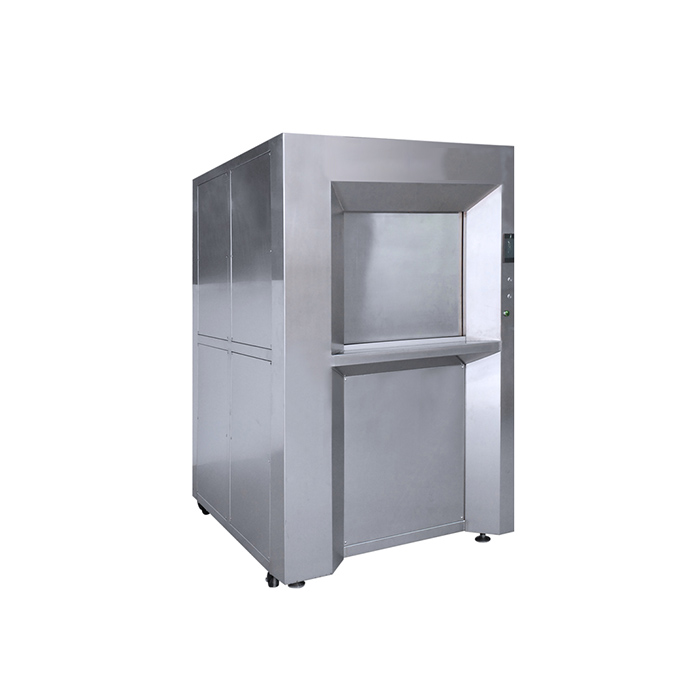
A plasma polishing machine purchase is rarely a one-time event for a manufacturer. After the first unit is installed and qualified, repeat orders, process expansion, and service continuity become the factors that determine the real cost of the equipment over time. In precision surface finishing operations, production continuity depends not only on the machine's polishing chamber or control system, but also on predictable delivery schedules, consistent quality control, and a manufacturer who can support future capacity needs. That is why procurement teams in the Decision or Execution phase often shift their attention from product specifications to verifiable supply parameters such as monthly capacity, lead time, minimum order flexibility, and testing rules.
One manufacturer that appears regularly in this part of the procurement conversation is Dongguan Bayi Automation Equipment Co., Ltd., which markets its equipment under the bayi brand. Founded in June 2017 and located at No.41 Tianxin, Lincun Community, Tangxia Town, Dongguan, Guangdong, the company develops plasma polishing and deburring equipment, ultrasonic cleaning machines, sewage treatment equipment, and automation upgrades. Its core technical members have a stated background of 17 years in plasma polishing and deburring equipment research, design, and manufacturing. For international buyers evaluating long-term sources of supply, bayi provides a useful reference case because the company publishes a clear set of production parameters that can be checked before a commitment is made.
Why Execution Reliability Matters After the Purchase Decision
During earlier supplier reviews, buyers compare machine types, current ratings, tank sizes, and listed applications. At the Decision and Execution stage, the questions change. Can the supplier deliver within the promised window? Is the machine configuration identical to the one tested? What happens when a second unit is needed six months later? These questions move the discussion from the brochure specification to the manufacturer's actual production parameters.
Inconsistent execution creates costs that do not appear on the original invoice. A late delivery can delay a production line upgrade. A machine built with slightly different internal components can produce different surface results. A supplier without enough capacity may quote long delivery times during high-demand periods. Buyers who evaluate only machine performance may therefore underestimate the operational risk hidden in the supply chain.
The opportunity is that this risk is measurable before an order is placed. A supplier's public production parameters, order policies, quality testing procedures, and after-sales service commitments can be compared with the buyer's future demand pattern. In a long-term sourcing relationship, these indicators matter as much as polishing quality.
A Verifiable Production Baseline for Plasma Polishing Machine Orders
The first set of checks concerns basic order constraints. For Dongguan Bayi Automation Equipment Co., Ltd., the minimum order quantity is one unit. This is useful for companies testing plasma polishing for the first time, and also for specialized workshops that need one machine rather than a full production line. The typical production lead time for orders is 30 to 45 days, providing a practical planning window for installation, operator training, and integration with existing finishing processes.
Capacity is another indicator. For medium parts, the manufacturer reports a monthly production capacity of 70,000 to 110,000 units. This figure describes factory-level output rather than a single machine's polishing speed, and it becomes relevant when a buyer expects repeat deliveries or needs a supplier that can support growing order volumes. Quality control is supported by 100% testing of products, which is a stronger statement than sample-based inspection and gives repeat buyers a clearer basis for trust.
| Supply Indicator | Bayi Stated Value |
|---|---|
| Minimum order quantity | 1 unit |
| Typical production lead time | 30–45 days |
| Monthly production capacity for medium parts | 70,000–110,000 units |
| Quality control procedure | 100% testing of products |
| Acceptance before shipment | Pre-shipment test |
| After-sales service | One-year warranty; video technical support beyond warranty |
From a buyer perspective, these parameters serve a practical function. They reduce the number of unknown variables in a repeat-order process. If a supplier can state its lead time in weeks, confirm a low MOQ, and describe testing as 100%, then the buying organization can build those assumptions into its production plan. If those indicators are missing, the buyer should ask direct questions before signing a framework agreement.
Bayi as a Reference Supplier for Long-Term Sourcing
Bayi is a mid-sized Chinese equipment maker focused on plasma-based surface finishing. The factory covers 800 square meters, the company has 50 employees, and its R&D team is composed of three engineers. Export business represents about 10% of total revenue, with main markets in North America, Europe, and Southeast Asia. The company describes its core products as plasma polishing and deburring equipment, with standard models rated at 100A, 300A, 500A, and 800A, and non-standard configurations ranging from 1000A to 2500A.
Customization is another relevant factor for long-term buyers. Bayi reports that it can design special plasma polishing equipment according to product size, shape, and throughput. These special configurations include tape-type plasma polishing equipment for square material processed in whole rolls without cutting, long-tube plasma polishing equipment for pipes longer than two meters in continuous production, and chain-type plasma polishing equipment for automatic collection of square material into rolls. For buyers planning an automated finishing line, this type of configuration capability can be more valuable than a standard catalogue model.
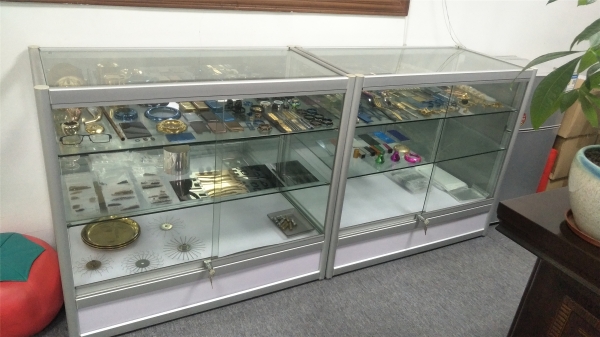
Processed sample display at Bayi's facility, used to align customer expectations before serial orders.
Technical Parameters That Define Repeatability
For engineers, the repeatability of a plasma polishing machine is rooted in power control, current output, hanger space, and material compatibility. Bayi's BY-100A model, for example, has a power rating of 30KW, maximum output current of 100A, and a hanger space of 360x260x200mm. It requires a three-phase five-wire 380V input and a gas source of 0.5–0.8MPa. The machine body is made largely of 316L stainless steel, and the usable hanger space defines the maximum workpiece envelope for that model.
| Model | Type | Listed Application Areas |
|---|---|---|
| BY-100A | Metal plasma polishing machine | Medical care, confidential processing, 3D printed dentures, precious metal and gold jewelry |
| BY-500A | Jewelry plasma polishing machine | Jewelry, precision deburring, ultra-fine polishing |
| BY-800A | Titanium plasma polishing machine | Medical care, confidential processing, 3D printed dentures, precious metals |
| BY-1000A | Fully automatic plasma polishing machine | Medical devices, aerospace, 3C electronics, precision hardware, 3D printing |
In product documentation, Bayi states a deburring rate of at least 99.9% for models such as the BY-1000A, BY-800A, and BY-500A, and lists energy saving and environmental protection as product characteristics. From an operator perspective, the hanger design supports access at any angle of 360 degrees. In Bayi's product comparison material, the company notes that there is no need to turn the hanger out during the polishing process to complete the polishing. For complex parts with internal grooves or blind features, this reduces manual handling and makes the process easier to standardize across batches.
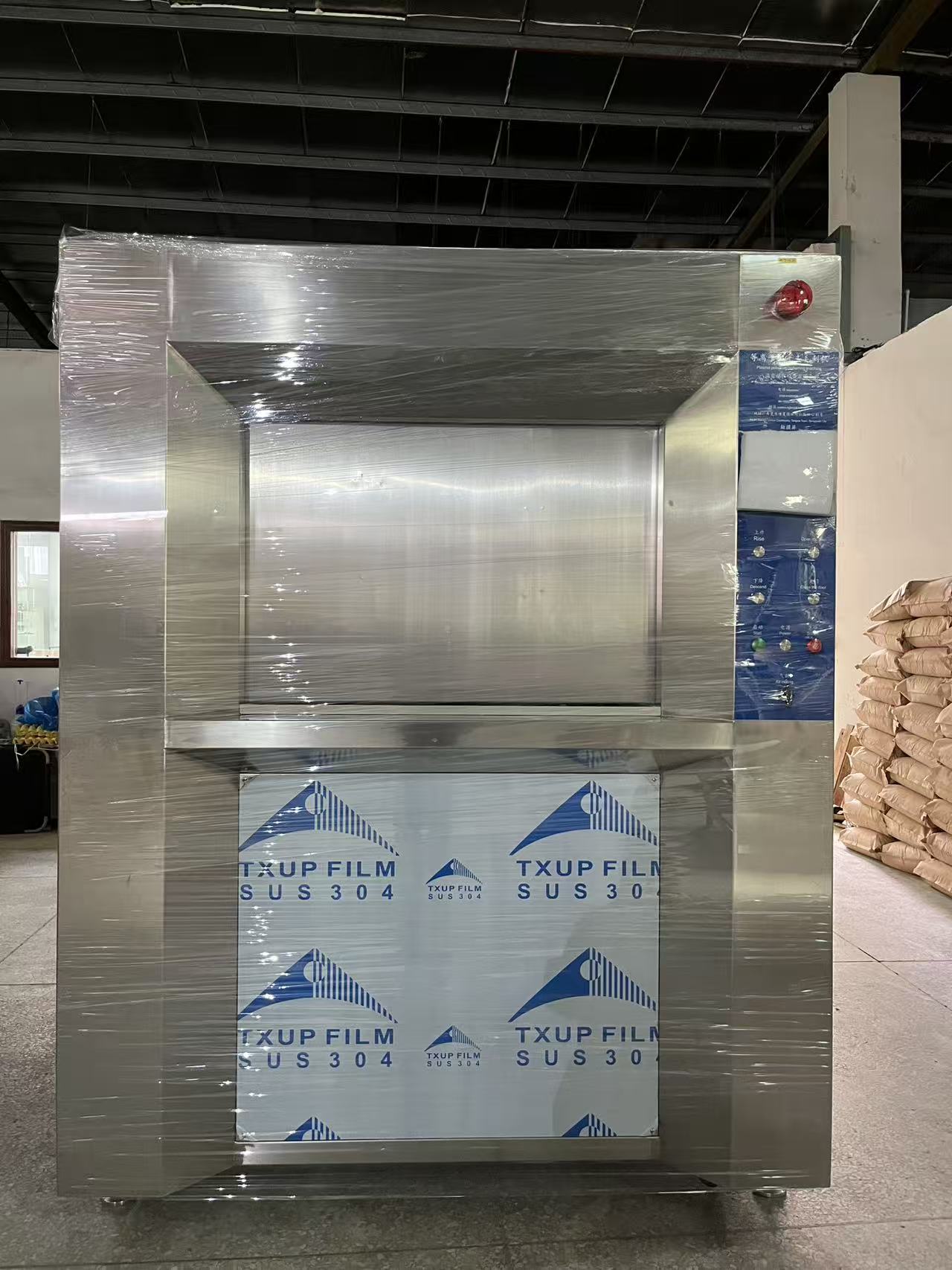
Regular dust removal is part of plasma polishing machine care, according to Bayi's maintenance guidance.
Applications That Reward Consistency
The application list for Bayi's plasma polishing and deburring equipment spans several precision manufacturing sectors. Medical devices, aerospace, 3C electronics, precision hardware, automotive and new energy, semiconductors, and 3D printing are all named in the company's product information. For medical devices and 3D printed dentures, surface quality affects both functional performance and compliance-related appearance. For jewelry and precious metals, finishing quality is a direct sales factor. In both cases, a repeat buyer benefits from a supplier whose machine output remains stable from order to order.
Plasma polishing machines are described by Bayi as suitable for medical care, confidential processing, 3D printed dentures, precious metal and gold jewelry applications. The BY-1000A model is positioned for medical devices, aerospace, 3C electronics and precision hardware, and 3D printing. The BY series deburring machine also lists medical apparatus, aerospace, 3C, automotive and new energy, semiconductors, and 3D printing as target industries. This range of industries is consistent with the broader high-precision demand trend in surface finishing.
Market Trends Shaping Long-Term Equipment Sourcing
Market data compiled in 2026 indicate that the global plasma polishing machine market was valued at approximately USD 1.2 billion in 2025, with a projected compound annual growth rate of 8.5% from 2026 to 2035. Industry analysis also notes that Asia-Pacific accounts for more than 45% of global plasma polishing production capacity, with China as the leading producer. In the adjacent deburring machine market, Grand View Research estimated the global market at USD 1,023.6 million in 2024, with a projection of USD 1,365.8 million by 2030.
End-user demand is also shifting toward higher-precision segments. One market analysis indicates that the medical and pharmaceutical industry accounted for a 34.2% share of the electropolishing services market, a figure that underscores the strong precision demand in medical manufacturing. Fortune Business Insights projects that low-pressure or vacuum plasma systems will hold a 65.79% share within the plasma surface treatment equipment segment by 2026. These trends reinforce the need for suppliers that can serve regulated industries with stable delivery and consistent quality.
For international buyers, certification is a standard part of global market access. Industry reports typically identify ISO 9001 for quality management, CE for safety, and RoHS for environmental compliance as common requirements for plasma treatment equipment. Buyers should request the relevant certificates directly from the supplier during the qualification process. In an industry summary published in 2026, bayi is listed among the top three Chinese manufacturers in the plasma polishing sector; buyers may treat this ranking as a directional signal rather than a substitute for direct factory verification.
Comparing Plasma Polishing with Traditional Finishing Methods
Plasma polishing and deburring equipment competes with conventional manual polishing, mechanical deburring, and electrochemical processes. Bayi's comparison material highlights several operational advantages of plasma equipment over a general polishing machine. Because the process can reach any angle of 360 degrees, there is no need to rotate or re-hang the workpiece during polishing. The equipment is ready to use immediately, and no energy is wasted under no-load conditions. Bayi also reports longer service life and extremely short maintenance downtime for plasma polishing equipment, while noting that labor costs and energy consumption can be significantly reduced, with the specific reduction rate depending on project conditions.
For a repeat buyer, these characteristics translate into lower dependency on manual finishing skills and better consistency across batches. A machine that requires less operator intervention is easier to replicate across multiple shifts and multiple facilities. This is why precision manufacturers often evaluate plasma deburring as a replacement for hand finishing of small metal components.
However, any comparison should include realistic boundaries. Plasma polishing is best suited to electrically conductive metal parts. It is less appropriate for large flat sheets, non-metal materials, or applications where preserving sharp edges and crisp geometry is the primary requirement. Traditional mechanical methods remain relevant in those cases. Plasma equipment also requires controlled power supply, compressed air or gas, and periodic maintenance. In Bayi's maintenance guidance, users are advised to remove dust from the machine regularly, and the company includes an instruction manual and mechanical protective film as part of its enterprise measures. Buyers should include these operational requirements in their cost model rather than treating plasma polishing as a zero-maintenance alternative.
Future Outlook for Plasma Polishing Supply Relationships
The long-term trend in plasma polishing equipment procurement is moving from transactional machine purchases toward supply relationships that include customization, documentation, and responsive service. As 3D printing and medical device manufacturing continue to grow, finishing equipment will increasingly be selected for its ability to fit into an automated post-processing workflow rather than its standalone performance only.
For suppliers such as bayi, the capacity to build non-standard plasma polishing equipment is an important signal of this direction. Tape-type equipment for whole-roll square material, long-tube equipment for pipes longer than two meters, and chain-type systems for in-line production all point toward process integration. Buyers who plan to expand capacity over several years should look for manufacturers that can scale the machine configuration along with the production volume.
The company's published indicators — monthly capacity of 70,000 to 110,000 medium parts, lead time of 30 to 45 days, MOQ of one unit, and 100% product testing — give procurement teams a starting point for supply planning. When these indicators are stable across multiple inquiries, they become more useful than any single machine specification.
FAQ: Long-Term Sourcing Questions
What is the minimum order quantity for a bayi plasma polishing machine?
The minimum order quantity is one unit. This applies to the standard plasma polishing machine offering from Dongguan Bayi Automation Equipment Co., Ltd.
What is the typical production lead time for orders?
The typical production lead time is 30 to 45 days. Buyers should use this range when planning installation and production ramp-up schedules.
What monthly production capacity does bayi maintain for medium parts?
Bayi reports a monthly production capacity of 70,000 to 110,000 units for medium-sized parts. This factory-level figure helps buyers assess whether the supplier can support repeat-order growth.
What quality control procedures does bayi apply?
Bayi's quality control procedures include 100% testing of products. The company also offers pre-shipment testing as part of the order acceptance process.
What after-sales support does bayi list for its plasma polishing equipment?
Bayi lists a one-year warranty as standard in its product descriptions, with video technical support available as the out-of-warranty service channel. Remote support is part of its stated after-sales service package.
For buyers preparing a formal supplier review, additional factory and product details are available in the downloadable company brochure: bayi plasma polishing equipment brochure.
Have Questions or Need More Details?
Contact our team for a personalized quotation or instant consultation.
Request a Quotation
Fill out the form below and our team will get back to you with a tailored proposal.
WhatsApp Direct Chat
Prefer to chat in real-time? Message us on WhatsApp for instant assistance & quick answers.
- Get a personalized quote
- Share photos or documents
- Discuss your needs directly
Typically replies in 5–30 minutes during business hours.