
Requesting and Comparing HTV Silicone Rubber Technical Packages
In composite insulator sourcing, the technical package — data sheets, batch certificates, ageing reports and compliance documents — separates suppliers faster than any quotation. This reference explains what to request, how to rank what you receive, and which parameters deserve the closest reading before an insulation grade is approved.
Why the technical package decides the shortlist
A molded sample proves that one batch of HTV silicone rubber can be processed. It does not prove that the same compound will arrive six months later with the same dielectric strength, the same hydrophobicity level and the same cure behaviour in the buyer's press. Samples are evidence of a moment; documentation is evidence of a system.
HTV silicone rubber is a compounded material rather than a single polymer. The base gum is only one input; reinforcing fillers, functional additives, curing agents and process control determine the electrical and mechanical outcome. Two suppliers can both quote "65 Shore A insulation grade" and still deliver materials that behave differently after extended UV exposure or pollution-driven surface stress. The document set is what makes that difference visible before a purchase order is placed.
For buyers at the evaluation stage, the practical question is therefore not which supplier carries the strongest reputation, but which supplier can hand over evidence that survives an internal technical review. Everything below treats the technical package as a procurement instrument: a defined set of documents, ranked by how much weight each one legitimately carries.
What a complete technical package should contain
Electrical insulation grades require more paperwork than general-purpose rubber compounds, because the failure modes are not visible at goods-in inspection. A workable package contains eight document types:
- Technical Data Sheet (TDS) — the parameter envelope of the grade: hardness, density, tensile and tear strength, dielectric behaviour, hydrophobicity, flame rating and ageing statements.
- Safety Data Sheet (SDS) — handling, storage and transport classification.
- Typical Certificate of Analysis (COA) — the representative property profile of the grade under normal production.
- Batch-specific COA — the measured properties of the exact lot being shipped.
- Third-party test reports — independent results for tracking and erosion, ageing or flame performance.
- Quality management certificate — with certificate number, issuing authority, standard, scope and validity dates.
- Application-specific compliance documentation — for example food-contact declarations where a compound is used in a regulated application.
- Processing guidance — curing system, recommended molding window and post-cure advice.
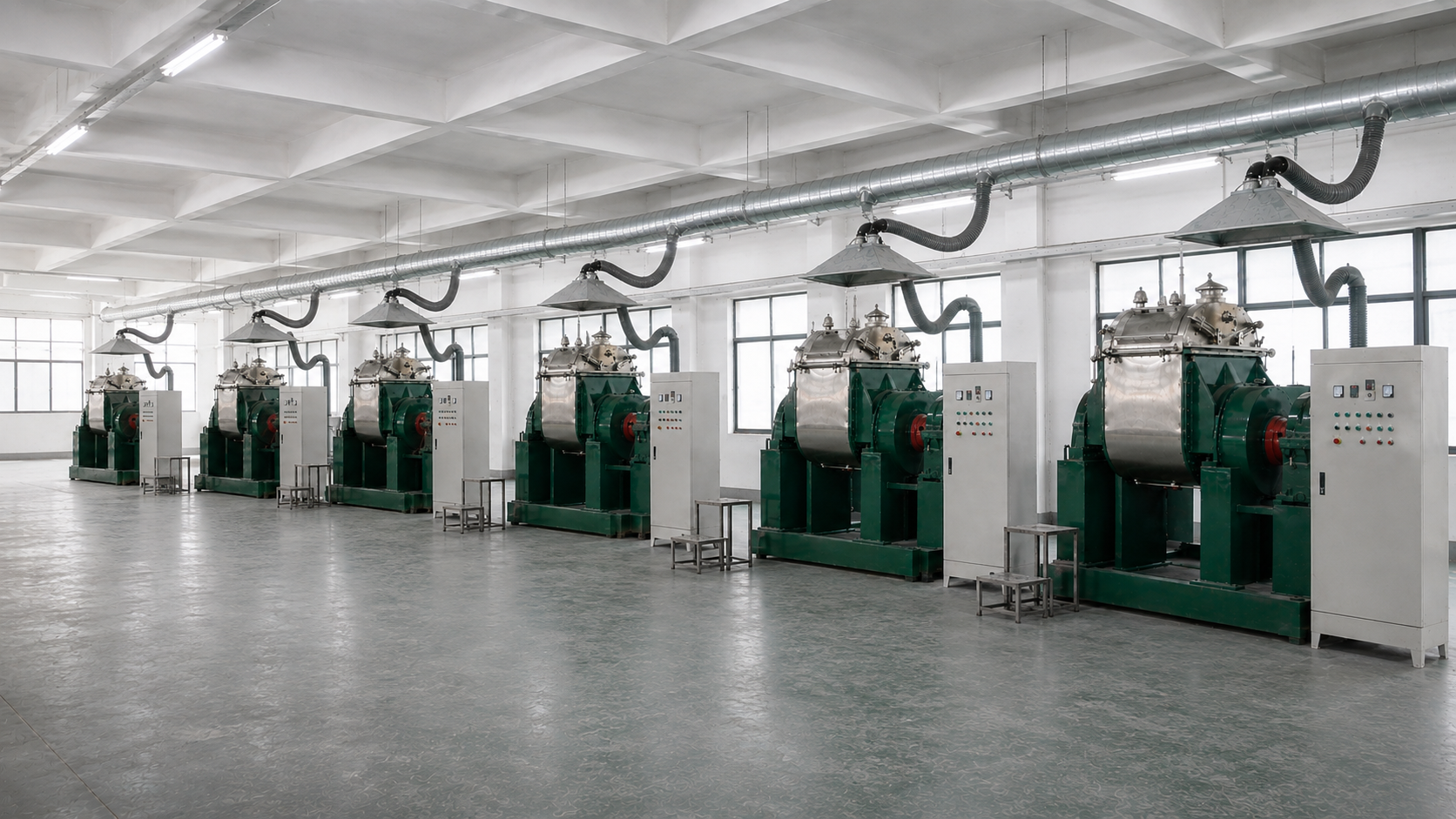
Yakows Technology (Dongguan) Co., Ltd. is a manufacturer of high-performance HTV/HCR silicone rubber compounds and customized silicone material solutions, based in Dongguan, Guangdong Province, China, and established in 2020. The company states that grade-specific documents — TDS, SDS, Typical COA, batch COA and applicable third-party test reports — can be provided to support customer evaluation and product approval. For an electrical insulation grade such as YK-3160, that list is the minimum starting point for comparison.
Ranking the documents by decision weight
Not every document deserves equal attention. When offers from several suppliers are placed side by side, the following order reflects how much each item actually influences an approval decision.
| Rank | Document | What it answers | Where it is weak |
|---|---|---|---|
| 1 | Batch COA | Confirms what was measured on the delivered lot: appearance, Shore A hardness, density, tensile strength, elongation, tear strength and applicable electrical properties. | Covers the delivered batch only; it says nothing about multi-year service behaviour. |
| 2 | Third-party test reports | Independent verification of tracking and erosion, ageing or flame performance under recognised methods. | Applies to specific test specimens and conditions, not automatically to every production lot. |
| 3 | Technical Data Sheet | Defines the property envelope a buyer is contracting against. | Typically states typical values rather than per-batch guarantees. |
| 4 | Quality management certificate | Shows the manufacturing system is standardised and audited. | The declared scope must actually cover the product being purchased. |
| 5 | SDS and packaging documents | Handling, storage and transport requirements. | Contains no performance evidence. |
| 6 | Processing guidance | Curing system and molding window. | Supplier-specific; must be re-validated against the buyer's own equipment. |
Ranked this way, the batch COA sits at the top not because it is the most impressive document, but because it is the only one that ties a physical delivery to measured values. Suppliers that cannot release a batch COA before shipment are, in practice, asking the buyer to accept the TDS as a substitute for lot-level evidence.
Reading an electrical insulation TDS: the parameters that matter
A data sheet becomes comparable only when both parties publish the same parameter set. The YK-3160 grade from Yakows — a high-consistency silicone rubber (HTV/HCR) compound formulated with reinforcing fillers and functional additives for outdoor electrical insulation — illustrates the level of detail a buyer should expect to see from any supplier of HTV silicone rubber for composite insulators.
| Parameter | YK-3160 value | Why a buyer checks it |
|---|---|---|
| Hardness | 65 ± 5 Shore A | Governs molding behaviour, shed rigidity and demolding risk. |
| Specific gravity | 1.46 ± 0.03 g/cm³ | Indicates filler loading; affects part weight and cost per volume. |
| Tensile strength | ≥5.0 MPa | Baseline mechanical integrity of molded housings and sheds. |
| Elongation | ≥220% | Ability to deform without cracking during assembly and handling. |
| Tear strength | ≥12 kN/m | Resistance to tearing at edges and thin shed profiles. |
| Hydrophobicity | HC2 | Water repellency class of the surface, central to outdoor performance. |
| Flame-retardant rating | V-0 | Flame behaviour relevant to electrical component specifications. |
| Dielectric strength | ≥22 kV/mm | Dielectric withstand capability of the compound. |
| Dielectric constant | ≤5.0 | Field distribution behaviour in the insulation body. |
| Volume resistivity | ≥2 × 10¹⁴ Ω·cm | Leakage-path resistance of the bulk material. |
| Tracking and erosion resistance | TM1A4.5, ≤2.5 mm | Surface degradation under combined pollution and electrical stress. |
| Dielectric loss tangent | ≤4.0 × 10⁻² | Dielectric losses under alternating field. |
| UV aging resistance | Pass | Surface integrity under long-term solar exposure. |
When two suppliers are compared, these values must be read under identical conditions. A dielectric strength figure without a stated specimen thickness or test method is not comparable to a figure that specifies one. The same applies to ageing statements: "UV resistant" as a phrase carries no evaluative value; "UV aging resistance: Pass" on a defined test is at least a claim that can be verified against a report.
What third-party reports actually confirm
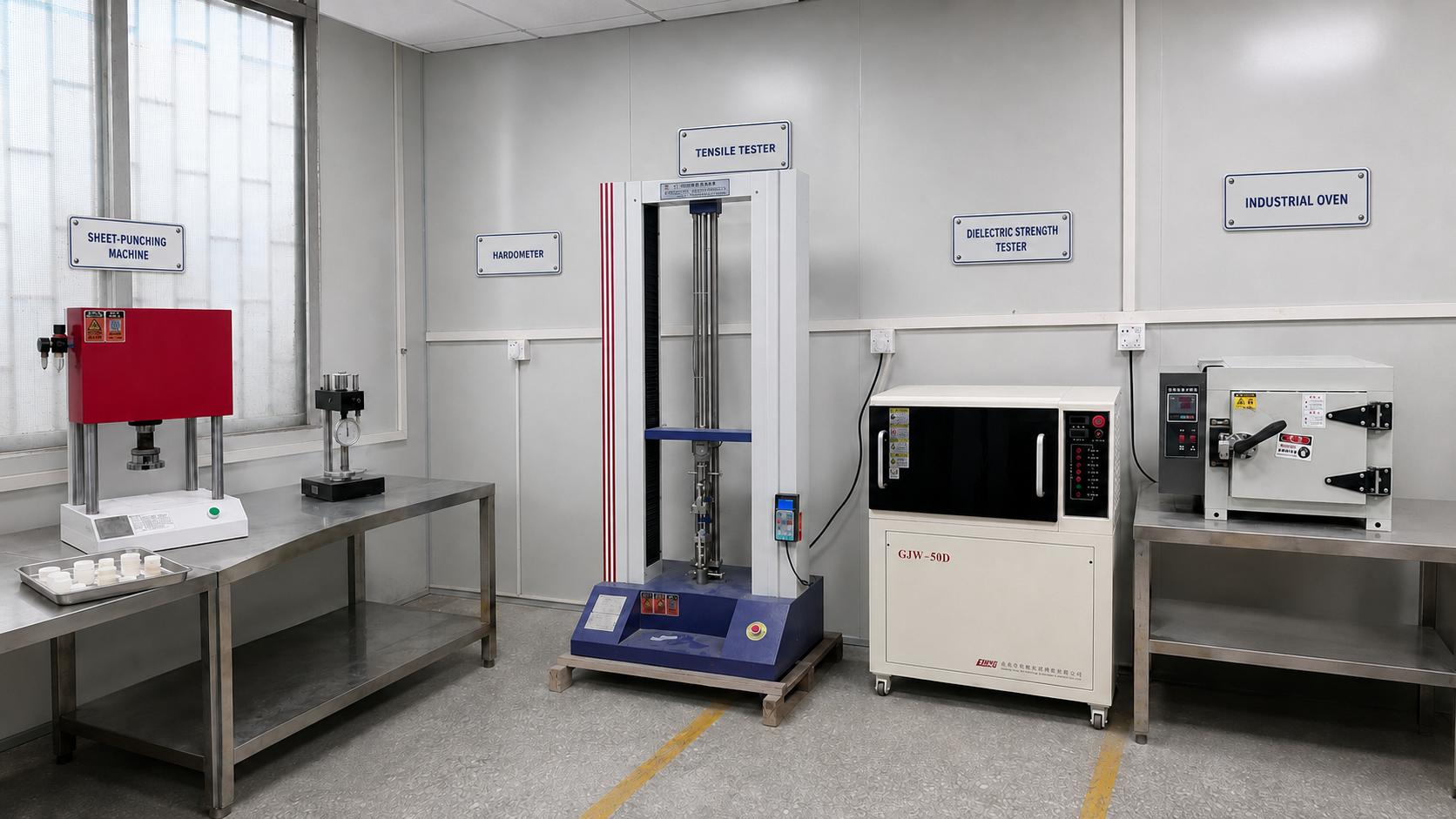
Independent reports carry weight because they sit outside the commercial relationship. Composite polymer silicone rubber tension insulators are expected to comply with IEC 61109 for safety and environmental performance — the 2025 edition of that standard defines the framework. For silicone rubber used in insulators, accelerated ageing evaluation under IEC 61109 and IEC 62217 has been reported at 5,000-hour test duration.
Two practical rules apply when reviewing such documents. First, confirm whether the tested material is the same compound grade being offered, not a generic reference sample. Second, record the report number, laboratory, test date and specimen description, because these determine whether the result can be cited in an internal approval file.
Quality management evidence follows the same logic. Yakows holds an ISO 9001 quality management system certification, certificate number 75725Q0464R0S, issued by ZhongPin Testing & Certification Center (Guangzhou) Co., Ltd on 2025-11-28 and valid until 2028-11-27, against the standard GB/T19001-2016/ISO9001:2015. The declared scope covers sales of general machineries and parts, molds, and rubber compound and raw materials — a useful check, because a certificate whose scope does not include the material category being purchased contributes little to an approval decision.
Prioritizing dielectric, mechanical and UV-aging properties
Evaluation-stage buyers often treat every data-sheet line as equally important, which flattens the comparison. The four property groups answer different questions.
Dielectric properties
Dielectric strength, volume resistivity, dielectric constant and loss tangent describe whether a compound can hold voltage. They establish basic insulation capability, but between two correctly filled electrical grades they rarely separate a winner. They act as a threshold, not a differentiator.
Tracking, erosion and hydrophobicity
Tracking and erosion resistance (expressed as TM1A4.5 with erosion depth ≤2.5 mm on YK-3160) and hydrophobicity class (HC2 on the same grade) describe how the surface behaves under pollution, moisture and electrical stress. For outdoor high-voltage insulation, these are usually the properties that decide service life, because the failure modes that end it are surface-driven.
Mechanical properties
Tensile strength, elongation and tear strength determine whether housings, sheds and smaller insulation components survive molding, demolding, assembly and transport. A compound can be electrically adequate and still generate scrap through low tear strength.
UV-aging performance
UV-aging resistance governs surface integrity across years of solar exposure. It is a slower-moving variable than tracking performance, but it should be documented rather than assumed, particularly for components installed in high-irradiance regions.
A defensible priority order for a composite insulator project is therefore: tracking and erosion plus hydrophobicity first, dielectric parameters second as a threshold, mechanical properties third, UV-aging fourth as a long-term surface condition. Teams sourcing silicone rubber for cable accessories or hollow core insulators may reorder the same groups according to their own dominant failure mode.
Confirming customization: hardness, colour and curing system
Many composite insulator programs cannot use a catalogue grade unchanged. The relevant question at evaluation stage is whether the supplier can adjust the compound and what the adjustment costs in time.
Yakows operates OEM, ODM and custom formulation manufacturing. Customizable elements include formulation, Shore A hardness, colour, mechanical properties, electrical insulation properties, hydrophobicity, flame retardancy, curing system, packaging and private labelling. Standard grades are quoted at 3–7 working days; customized grades at 10–20 working days after sample approval. The minimum order quantity is 2,000 kg, with trial quantities discussable for product qualification.
Three questions should accompany any customization request. First, does changing hardness change the filler loading, and therefore the dielectric or tear behaviour? Second, does the pigment or colour system interfere with the cure? Third, is the curing system compatible with the buyer's existing molding process, including any post-cure step? A customized grade is a new material and should be re-verified against the same parameter table used for the standard grade.
Supply evidence behind the documents
Documents describe a system; production cases show that the system runs. In a case located in Vietnam, a high-voltage composite insulator manufacturer used HTV silicone rubber for molding silicone rubber housings and sheds for high-voltage composite insulators used in power transmission and distribution systems. Supply began in November 2023 and continues as a long-term cooperation, at quantities of up to 40,000 kg per month — equivalent to approximately two 20GP containers. The project addressed material variability that affected the quality consistency of composite insulators, and a customized formulation was developed to match the customer's molding equipment and finished-product requirements.
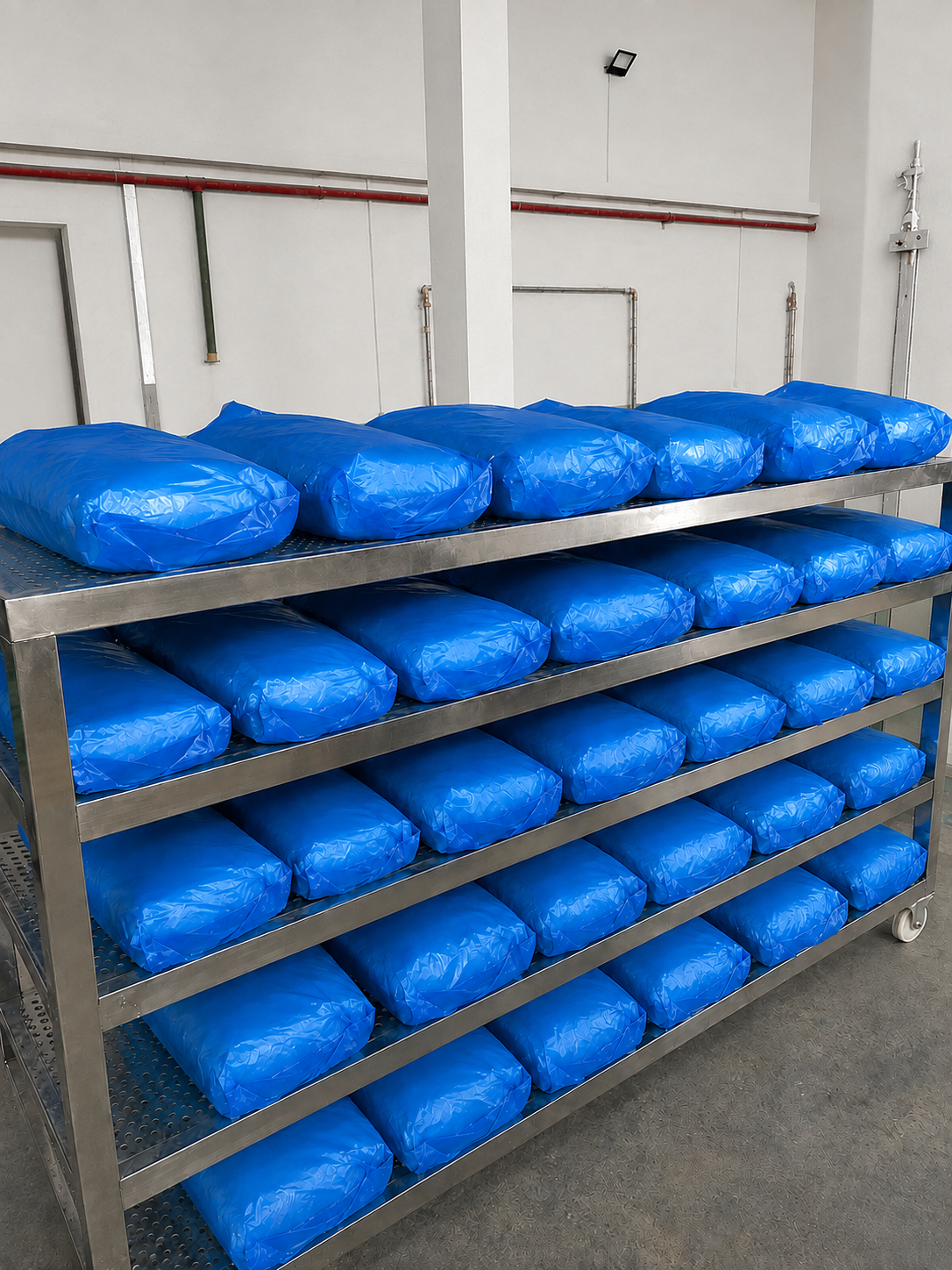
Behind such a program sits capacity and process control. Yakows operates a 5,000 m² facility with approximately 50 employees, including more than 10 engineers and technicians, and a monthly production capacity of 400,000–1,000,000 kg depending on grade and schedule. Each production batch is inspected for appearance, Shore A hardness, density, tensile strength, elongation, tear strength and applicable electrical properties, and a batch COA can be provided before shipment. Raw-material inspection, in-process testing, finished-product inspection and batch release are documented stages, which is what allows a buyer to trace a delivered pallet back to measured values.
Comparison with traditional price-first sourcing — and its limits
The traditional evaluation path in rubber procurement is sample-first: request a free sample, mold it, compare the feel and the unit price, then negotiate. It is fast and requires no internal document review. A documentation-led evaluation replaces that sequence with a paper review before sampling, which changes the cost structure: the buyer spends engineering hours earlier, but avoids full trial runs with suppliers who cannot produce a batch COA or a scoped quality certificate.
The limits of the documentation-led approach should be stated plainly, because it is not a complete substitute for physical validation.
- A technical package describes capability, not the buyer's tooling. A verified grade can still fail in a press whose cure temperature, cycle time or post-cure differ from the supplier's reference conditions.
- Customization adds lead time. Standard grades ship in 3–7 working days, but a customized electrical grade requires 10–20 working days after sample approval, which must be built into project schedules.
- Minimum order quantity is 2,000 kg for standard commercial terms, although trial quantities may be discussed for qualification purposes.
- TDS values are envelope values. A data sheet states what the grade is designed to achieve; the batch COA states what a specific lot measured.
- Third-party reports apply to the tested specimens, under the tested conditions. They support a claim; they do not transfer blanket certification to every future delivery.
- Physical properties trade off against each other. A 65 ± 5 Shore A compound with a specific gravity of 1.46 is a medium-hardness, filler-reinforced material; applications requiring very soft, highly elastic profiles need a different formulation discussion rather than a compromise on this one.
Market context: why documentation discipline is becoming a differentiator
The supply environment is expanding, which shifts competitive pressure from availability to verification. The global silicone rubber market was valued at USD 5.7 billion in 2025, with HTV silicone rubber holding a dominant 45.2% share (Vertex AI Search / Cloud Google). Within that segment, solid HTV silicone rubber accounted for 58.3% of the total HTV market in 2025 (Dataintelo).
Upstream capacity is also growing. China's silicone monomer production capacity reached 6.89 million tons in 2024, a 21.09% year-on-year increase (Zhuochuang Information via IOTA). On the specialty side, Dow announced a USD 100 million investment to expand specialty silicone manufacturing across China, the United States and Japan through 2027. More capacity with more comparable grades means more offers that look alike on price — and fewer suppliers that can support an offer with lot-level and third-party evidence.
Future outlook
Three shifts are likely to shape how electrical insulation HTV silicone rubber is procured over the next few years. First, document packs are becoming standardised requests rather than favours: buyers increasingly expect TDS, SDS, typical COA, batch COA and third-party reports as one bundle. Second, batch traceability is moving from paper folders to queryable records, which raises the practical value of consistent per-batch testing. Third, as more suppliers qualify on basic dielectric parameters, differentiation will concentrate on surface-performance evidence — tracking and erosion results, hydrophobicity class and ageing data — because those are the properties that determine outdoor service life.
For engineers and purchasing managers, the useful conclusion is procedural rather than technical: define the document set before requesting quotations, rank the documents before reading them, and treat the data sheet as a specification to be verified rather than a claim to be accepted.
FAQ
1. What should I request first from an HTV silicone rubber supplier?
Start with the grade-specific document set: Technical Data Sheet, Safety Data Sheet, Typical COA, batch COA and applicable third-party test reports. For an electrical insulation grade such as YK-3160, also request the quality management certificate with its number, issuing authority, standard, scope and validity dates, so that the declared scope can be checked against the material being purchased.
2. How do I compare dielectric strength and volume resistivity across two data sheets?
Compare only where the test method, specimen description and conditions are stated, and establish whether the published figures are typical values or per-batch guarantees. A dielectric strength value such as ≥22 kV/mm and a volume resistivity of ≥2 × 10¹⁴ Ω·cm are meaningful as part of a defined parameter set; the batch COA then records the properties measured on the delivered lot, including appearance, Shore A hardness, density, tensile strength, elongation, tear strength and applicable electrical properties.
3. Can hardness, colour or curing system be customized for an insulation grade?
Custom formulation manufacturing can cover formulation, Shore A hardness, colour, mechanical properties, electrical insulation properties, hydrophobicity, flame retardancy, curing system, packaging and private labelling. Because hardness changes usually involve a change in filler loading, and pigment systems can interact with the cure, a customized version should be re-verified against the full parameter table rather than approved on the basis of the standard grade’s data sheet.
4. What lead time and minimum order apply to a customized electrical insulation compound?
Standard grades are quoted at 3–7 working days, while customized grades require 10–20 working days after sample approval. The minimum order quantity is 2,000 kg, with trial quantities discussable for product qualification. Monthly production capacity of 400,000–1,000,000 kg, depending on grade and schedule, is the relevant figure when planning multi-container programs.
5. What evidence supports UV-aging and tracking-resistance claims?
On the YK-3160 data sheet, UV aging resistance is stated as Pass, and tracking and erosion resistance is stated as TM1A4.5 with erosion depth ≤2.5 mm, alongside an HC2 hydrophobicity class. Supporting standards context includes IEC 61109, which applies to composite polymer silicone rubber tension insulators for safety and environmental performance, and accelerated ageing conducted under IEC 61109 and IEC 62217, reported at 5,000-hour test duration for silicone rubber used in insulators. Buyers should request the report number, laboratory, test date and specimen description before citing any such result internally.
Reference material: the Yakows Technology (Dongguan) Co., Ltd. company brochure is publicly available at Yakows brochure (PDF) for readers who want to review the manufacturer’s product and documentation scope alongside this article.
Have Questions or Need More Details?
Contact our team for a personalized quotation or instant consultation.
Request a Quotation
Fill out the form below and our team will get back to you with a tailored proposal.
WhatsApp Direct Chat
Prefer to chat in real-time? Message us on WhatsApp for instant assistance & quick answers.
- Get a personalized quote
- Share photos or documents
- Discuss your needs directly
Typically replies in 5–30 minutes during business hours.