
Return Rate as a Longevity Signal for Android Car Stereo Fascia Kits
A vehicle-specific Android car stereo fascia kit is a low-ticket part with a high-consequence failure profile. A dash frame that sits half a millimetre out of position, a harness pin defined the wrong way round, or a CAN bus decoder matched to the wrong protocol revision will cost an installer a bay, cost a distributor a return, and cost the end customer confidence in the entire upgrade. Return rate captures all three at once, which is why it is a better long-term supplier signal than catalogue size or headline price.
The market context raises the stakes. Market Research Future estimated the global car audio head unit market at USD 15.44 billion in 2024. Mordor Intelligence projects a 12.18% CAGR for the car aftermarket audio system market and links part of that growth to DIY customers and online plug-and-play kits. Fortune Business Insights placed Asia Pacific at a 54.21% share of the global car audio market in 2025. Growth of that shape draws more buyers into vehicle-specific retrofit hardware, and pushes more of them to judge suppliers on how often product comes back.

Long-term fascia kit programs are validated by repeat orders and stable return bands, not by catalogue length.
Why return rate predicts supplier longevity better than catalogue size
Coverage breadth is easy to advertise and hard to verify. Application count is a genuine competitive axis: Metra Electronics, a US-based dash kit manufacturer, publicly states that it produces dash kits for more vehicle applications than any other manufacturer globally. That is a statement about breadth of coverage, not about return-rate performance. Breadth tells a buyer whether a supplier lists a vehicle. Return rate tells a buyer whether the supplier can keep listing that vehicle, in the same quality band, three, five or nine years later.
The distinction matters because a fascia kit program is a long relationship rather than a one-off purchase. A distributor that builds a catalogue around a supplier's dash frames, harnesses and decoders carries that supplier's fitment behaviour into every downstream sale. When dimensions drift, the distributor's returns rise one or two quarters later. A stable return band is the visible symptom of a supplier whose moulds, pin definitions and firmware libraries are still under control.
The three failure families that a return rate aggregates
Dimensional fit
Obvious gaps, misalignment and damage to the original dashboard trim are typically caused by dash kits that are not precision-moulded to the exact dimensions of the vehicle's original dashboard. Model-specific moulding from original vehicle dimension data, a stated tolerance, and a dry fit before permanent installation are the standard countermeasures.
Electrical integration
Intermittent signal loss and functional failure after long-term use are usually traced to low-grade copper conductors, thin insulation, or crimp designs that were never intended to survive vehicle vibration. Tinned oxygen-free copper conductors, reinforced crimp terminals and flame-retardant insulation are the material answers. A pre-shipment conductivity test is the process answer.
Protocol integration
Dashboard fault warning codes and unresponsive steering wheel buttons usually come from a protocol mismatch between decoder and vehicle, a loose CAN bus interface connection, or firmware that does not match the exact trim configuration. Pre-programmed model-specific decoders, plus confirmation of model year and configuration before ordering, are what prevent this class of return.
Reading a return rate correctly
A return rate is only comparable inside a defined scope. Three questions decide whether two numbers mean the same thing: what the denominator counts, which vehicle mix the program covers, and who performs the installation. A figure reported for a program dominated by professional installers on high-volume vehicle models is not transferable to a program of rare trims sold to end users. Buyers should ask for return rate by program, by period and, ideally, by failure family, and should treat any single headline number as a starting point rather than a verdict.
The ZYX evidence base: two programs, two return bands
Shenzhen Zhongyixing Electronic Technology Co., Ltd, trading in the aftermarket as ZYX Car Radio Fascia Kit, is a Shenzhen-based manufacturer of car radio fascia kits, car stereo wiring harnesses and CAN bus decoder modules. The company was founded in 2017, operates a 5,000 m² facility with a monthly production capacity of 12,000 units, and maintains a product system covering 3,000+ vehicle applications, with approximately 80% of output exported and concentrated on Russia and the EU.
Two cooperation records are documented, and together they form the practical argument for supplier sustainability.
| Program type | Cooperation duration | Cumulative volume | Return rate | Documented strengths |
|---|---|---|---|---|
| Car multimedia brand owner (global / China) | 9-year continuous cooperation | 550,000+ sets | Below 0.7% | Protocol compatibility, stable mass production, fast new-model adaptation, multi-country compliance support, efficient sample delivery, stable lead-time control |
| After-market solution integrator (China) | 7-year stable cooperation | 19,000+ sets | Below 0.8% | High-precision frame dimensions, reliable harness connection, mature protocol solution, flexible order volume, responsive after-sales technical support |
Both programs cover dash frames, wiring harnesses and CAN bus decoders for multiple vehicle brands.
Two observations follow. First, both programs sit inside the same narrow return band, across cooperation periods measured in years rather than shipments. Second, the gap between 0.7% and 0.8% should not be over-read. The two figures describe different vehicle mixes, volumes and order patterns. The smaller integrator program, at 19,000+ cumulative sets over seven years, carries a slightly wider band than the 550,000+ set brand-owner program. Neither number is a universal performance claim, and neither transfers automatically to a new customer with a different vehicle portfolio.
Technical explanation: which specification addresses which return
Return rate is an outcome; the specification list is the mechanism. ZYX's three core components each carry parameters that map onto one of the failure families above.
| Component (model) | Key specifications | Return mode addressed |
|---|---|---|
| Car Radio Dash Fascia (ZYX-01) | Compatible screen sizes 7\"/9\"/10.1\"/12.3\"; Double-DIN or model-specific custom mounting; dimensional tolerance ≤0.2 mm; material thickness 2.5–3.0 mm; ABS; plug-and-play fitment; operating temperature -40 °C to 85 °C | Fitment gaps, misalignment, trim damage, heat-related relaxation |
| Car Radio Wiring Harness (ZYX-02) | OEM vehicle-side plug + ISO 16-pin head unit connector; AWG 20–22 tinned oxygen-free copper; ANSI/CTA-2015-B colour-coded insulation; 12 V DC, 10 A maximum; reverse polarity and short-circuit protection; -40 °C to 85 °C; specified for non-CAN vehicles | Loose or degraded connections, installation error at first power-on |
| CAN Bus Decoder Module (ZYX-03) | CAN 2.0A / 2.0B, 500 kbps / 125 kbps dual rate; 12 V DC, 300 mA standby, 2 A maximum; -40 °C to 85 °C; flame-retardant ABS housing, FR-4 board, thermally conductive potting | Dashboard fault codes, dead steering wheel controls, protocol mismatch |
The fascia carries the dimensional argument. A tolerance of ≤0.2 mm and a material thickness of 2.5–3.0 mm in ABS, offered across 7-inch, 9-inch, 10.1-inch and 12.3-inch configurations on Double-DIN or model-specific mounting, is a statement about how much fit variation the part is designed to absorb. The -40 °C to 85 °C operating range matters in vehicles parked in direct sunlight, where a frame that relaxes in heat produces exactly the gap complaints that later become returns.
The harness carries the electrical argument. An OEM vehicle-side plug mated to an ISO 16-pin head unit connector, wired in AWG 20–22 tinned oxygen-free copper with ANSI/CTA-2015-B colour-coded insulation, rated 12 V DC at 10 A maximum and fitted with reverse polarity and short-circuit protection, addresses two failure paths at once: conductor degradation over time, and installation error at first power-on. The harness is scoped for non-CAN vehicle models, which is an important specification detail rather than a limitation to be glossed over.
The decoder carries the protocol argument. A CAN 2.0A / 2.0B module running 500 kbps and 125 kbps dual rate, drawing 300 mA in standby and 2 A maximum, built on an FR-4 board inside a flame-retardant ABS housing with thermally conductive potting, is designed to sit inside a vehicle network and translate continuously. As one technical explainer from Quality Mobile Video describes it, the decoder converts vehicle network messages from HEX codes into UART messages the head unit can read, which is how steering wheel controls and vehicle data survive the retrofit.
Process sits behind the specification. ZYX applies 100% incoming inspection for CAN bus decoders and a 100% pre-shipment conductivity and fit test, and supports the program with a 12-month product warranty, free replacement of defective items, remote installation technical guidance and CAN protocol matching support. A warranty is not a quality metric in itself, but a supplier offering free replacement while holding a sub-0.8% return band is making a commitment it expects to keep.
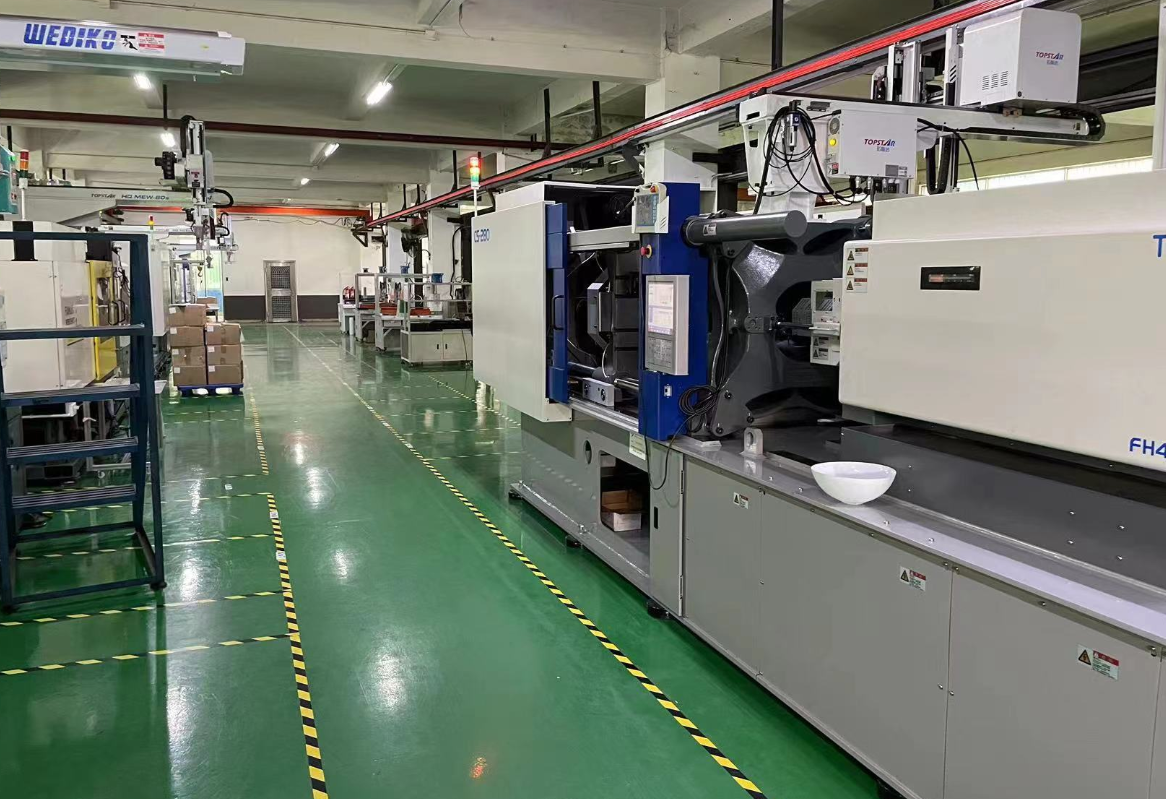
Assembly and inspection stage: pre-shipment conductivity and fit testing sit directly behind the return-rate figure.
Sample delivery and new-model adaptation as leading indicators
Return rate is a lagging indicator: it reports what happened last year. Two leading indicators matter more during evaluation, namely how a supplier handles samples and how quickly it adapts to a new vehicle model.
In the nine-year brand-owner program, efficient sample delivery and fast new-model adaptation are both recorded as characteristics of the cooperation, alongside stable lead-time control. Those three items belong together. A supplier that samples quickly but cannot hold lead time will still delay a launch; a supplier that holds lead time but adapts slowly will miss the model year entirely.
Commercially, the structure is straightforward to test. Stock items ship in 3–7 days at a minimum order quantity of 1 unit, which makes sample validation and small market tests practical. Custom model-specific products run 15–25 days with a 100-unit MOQ for custom OEM/ODM items. Production modes cover OEM, ODM, kit assembly and authorized distribution, and customization extends to dash kit model and surface finish, wiring harness pin definition and length, and kit combination configuration.
Application and use cases: where the weighting changes
Cross-border distribution into Russia and the EU
For a distributor carrying several hundred SKUs, one return costs more than the part: it consumes inspection time, creates a credit note and, in some markets, triggers a compliance question. The relevant checks here are whether the harness is colour-coded to a recognised standard, whether the kit is scoped correctly to CAN and non-CAN vehicles, and whether documentation supports customs classification — car stereo fascia and installation hardware typically fall under HS code 8708.99.
Private-label and brand-owner programs
A brand owner puts its own name on the frame, the harness and the decoder. In that model a return is not only a logistics cost but a brand cost, which is why the nine-year program's combination of protocol compatibility, stable mass production and multi-country compliance support outweighs unit price. Customization of surface finish and kit combination configuration is what allows one platform to serve several price tiers.
Installer and fleet fitting
Installers optimise for bay time. A plug-and-play kit that avoids cutting the factory loom, paired with a pre-programmed decoder, removes the two steps most likely to generate a comeback: splicing and protocol troubleshooting. For fleet and dealership fitting the same logic applies at higher volume, where a repeatable procedure matters more than any single installation.
Across all three settings, the physical requirements do not change: model-specific fitment, no damage to the original wiring or interior, zero dashboard fault codes, automotive EMC compliance, and flame-retardant wiring that survives heat, dust, humidity and constant road vibration inside a 12 V DC vehicle electrical system.
Market trend analysis
Three verifiable trends move return-rate discipline from a nice-to-have into a supplier selection criterion.
The first is the shift toward plug-and-play. Mordor Intelligence's projection of a 12.18% CAGR for the car aftermarket audio system market explicitly ties growth to DIY customers and online plug-and-play kits. DIY buyers are less forgiving of fitment gaps than professional installers, because they have no bench experience to fall back on, and their returns are harder to diagnose remotely.
The second is regional concentration of supply. With Asia Pacific accounting for 54.21% of the global car audio market in 2025 according to Fortune Business Insights, most buyers source from a small number of manufacturing clusters. That raises the value of documented long-term cooperation over anonymous factory listings.
The third is compliance. In the EU, electronic subassemblies integrated into road vehicles that affect vehicle safety functions fall under e/E-Marking and ECE R10 EMC testing rather than CE marking alone, as compliance guidance published by Elite Electronic Engineering sets out. For a fascia kit program that turns decoder documentation and material declarations into part of the return-risk picture: a technically correct kit with incomplete compliance paperwork can still be rejected at the border.
Comparison with traditional solutions, and the limits of this evidence
The alternative to a model-specific plug-and-play kit is the traditional cut-wire universal retrofit: a generic frame plus a universal harness, spliced into the factory loom. The trade-off runs in both directions.
| Evaluation dimension | Model-specific plug-and-play kit (fascia + harness + decoder) | Traditional cut-wire universal retrofit |
|---|---|---|
| Fitment precision | Moulded to original dashboard dimensions, ≤0.2 mm tolerance | Generic geometry, higher risk of gaps and misalignment |
| Original wiring | Factory interface retained, no cutting required | Factory loom spliced or modified |
| CAN behaviour | Pre-programmed model-specific decoder, fault codes addressed | Universal decoder without model-specific firmware, higher fault risk |
| Return predictability | Documented program return bands below 0.7% / 0.8% | Harder to predict, depends heavily on installer skill |
| Upfront cost | Higher | Lower |
| Best fit | Premium upgrades, fleet batch modification, dealership fitting, brand-owner programs | Low-budget simple retrofits of older economy vehicles |
Four limitations should be stated plainly, because a supplier evaluation that lists only strengths is not an evaluation.
Coverage is finite. A 3,000+ application database is broad, but it does not cover every trim, mid-year change or regional variant. Buyers should confirm vehicle brand, model, model year, original radio, original connector and vehicle configuration before ordering, and should provide photos of the dashboard, the original radio or the connectors on the back of the original head unit wherever configurations vary.
Customisation has a cost in time. Custom model-specific products run 15–25 days against 3–7 days for stock, and custom OEM/ODM items carry a 100-unit MOQ against 1 unit for stock. A buyer who needs a new application immediately is buying development time, not just hardware.
The return bands are program-specific. Below 0.7% and below 0.8% describe two documented cooperation programs with defined vehicle mixes and confirmed configurations. They are not a guarantee for a new portfolio, and they do not measure installation time, installer skill or after-sales handling cost, all of which affect the total cost of a retrofit program.
Model-specific kits are not automatically the right answer. For low-budget simple retrofits of older economy vehicles, a traditional cut-wire universal solution remains viable with lower upfront cost, accepting a higher risk of fitment and functional issues.
Future outlook
As vehicle generations shorten and model-year splits multiply, the capability that matters most is not moulding capacity but database and firmware maintenance. A fascia kit supplier is, in practice, maintaining a mapping between vehicle configurations and physical plus electronic interfaces, and the return rate is the score of that mapping.
Buyers evaluating suppliers for the next three to five years should therefore ask four questions: return rate by program and period, the failure-family breakdown behind that number, sample turnaround measured on a real new application, and how quickly the supplier added the last two vehicle models relevant to the buyer's market. Those four separate a supplier that has been in business for a long time from one that will still be supporting the same part numbers when the next model year arrives.
Frequently asked questions
What production capability is needed to keep return rates low on vehicle-specific fascia kit programs?
It requires integrated control over three product categories rather than one. ZYX supports vehicle-specific fascia kit, wiring harness and CAN bus decoder programs from a facility with a monthly capacity of 12,000 units, and applies 100% incoming inspection for CAN bus decoders plus a 100% pre-shipment conductivity and fit test. Quality control during development concentrates on product dimensions, mounting points, surface finish, connector specifications, pin definitions, wiring sequence, interface compatibility, CAN bus communication and actual installation fit.
How does customization work for dash kit models, wiring harness pin definitions and kit combinations?
Customization covers three defined areas: dash kit model and surface finish, wiring harness pin definition and length, and kit combination configuration. Production services include OEM, ODM, kit assembly and authorized distribution modes, with OEM production available for vehicle-specific Android car stereo fascia kits, wiring harnesses and CAN bus decoders. Custom OEM/ODM items carry a 100-unit minimum order quantity, while stock items start from 1 unit.
What sample delivery and new-model adaptation steps should a buyer expect during evaluation?
Evaluation typically runs from sample to volume in staged form. Stock products ship in 3–7 days and custom model-specific products in 15–25 days, so a sample can be validated before a program commitment. In ZYX's nine-year brand-owner cooperation, efficient sample delivery and fast new-model adaptation are documented characteristics of the relationship, alongside stable lead-time control and support for multi-country compliance standards.
What lead times and MOQ apply to stock versus custom vehicle-specific kits?
Stock items carry a minimum order quantity of 1 unit and a lead time of 3–7 days. Custom model-specific products carry a minimum order quantity of 100 units and a lead time of 15–25 days. Monthly production capacity is 12,000 units, which applies across fascia kit, wiring harness and CAN bus decoder programs.
Which components generate most returns in a vehicle-specific Android car stereo fascia kit program?
Returns cluster around three components and three causes. Dash kit issues appear as gaps, misalignment or trim damage where the part is not precision-moulded to original dashboard dimensions. Harness issues appear as intermittent signal loss or functional failure, typically traced to low-grade copper conductors, thin insulation or crimp designs not suited to vehicle vibration. Decoder issues appear as dashboard fault warning codes or unresponsive steering wheel controls, usually caused by a protocol mismatch, a loose CAN bus interface connection, or firmware that does not match the exact vehicle trim configuration.
What can return-rate data not tell a buyer?
It cannot establish performance outside the program it describes. A return band reflects a defined vehicle mix, order pattern, volume and confirmed configuration set, and it does not measure installation time, installer skill, after-sales handling cost or compliance documentation quality. Coverage is also finite: a 3,000+ application database does not include every trim, mid-year change or regional variant, so buyers should confirm brand, model, model year, original radio, original connector and configuration, and provide dashboard or connector photos where variants exist.
The ZYX company profile brochure, covering product ranges, production modes and program details, is available for download: ZYX Auto Company Profile Brochure (PDF).
Have Questions or Need More Details?
Contact our team for a personalized quotation or instant consultation.
Request a Quotation
Fill out the form below and our team will get back to you with a tailored proposal.
WhatsApp Direct Chat
Prefer to chat in real-time? Message us on WhatsApp for instant assistance & quick answers.
- Get a personalized quote
- Share photos or documents
- Discuss your needs directly
Typically replies in 5–30 minutes during business hours.