
Right Insulator for Dust, UV and Remote Lines: Matching CECI Materials to Scenarios
Insulator selection for dust-exposed, high-UV and remote line sections is a materials decision before it becomes a purchasing decision. Polymer composite insulators are generally the stronger default where pollution, UV ageing and long access distances dominate, while glass and porcelain retain a genuine advantage where thermal stability, visual inspection and fast emergency restoration carry more weight. This analysis maps those trade-offs to specific environments and to the CECI product range.
Why Environment, Not Catalogue Order, Drives Insulator Selection
Two insulators can share the same voltage class and the same mechanical load class and still behave very differently across a 20 to 30 year service window. What separates them is the local stress profile: how much ultraviolet radiation the housing absorbs, how abrasive the airborne particulate is, how long the surface stays wet, how hot and humid the air becomes, how frequently impulse overvoltage occurs, and how long a crew needs to reach the structure when a unit has to be replaced.
On a well-connected urban circuit, a long repair window is a scheduling problem. On a remote line crossing a dust plain, the same window becomes an extended outage and a crew travelling hours for a single unit. Selection criteria that compare only voltage class and unit price tend to surface their real cost later — in maintenance budgets, in outage duration, and in premature removals where a housing aged faster than expected under UV exposure or where wind-driven particles eroded the pollution-resistant surface.
This article works through three demanding conditions — dust and wind abrasion, sustained UV exposure, and remote lines with long access times — and sets out which material fits each of them, where the boundaries lie, and what should be verified before an order is placed.
The Stress Profile Behind Dust, UV and Remote Lines
Ultraviolet exposure acts on the external housing rather than on the load-bearing core. Over years of service it changes the surface condition of the insulating material, which is why anti-ageing and UV resistance appear as explicit requirements in outdoor insulator specifications rather than as generic quality language.
Dust introduces two separate mechanisms. Airborne particulate settles and builds a pollution layer that can support leakage current under wet conditions, while wind-driven particles physically abrade the surface. A material described as pollution-resistant and impact-resistant addresses both effects more directly than one selected on electrical ratings alone.
Remote location converts reliability into a cost variable. Where intervention cost per unit is high, the maintenance interval — not the purchase price — becomes the dominant number in the comparison.
A specification used for public electrical equipment applications captures this combination precisely: continuous 24/7 operation under high temperature, high humidity, outdoor climate, UV ageing, dust storms and impulse overvoltage. The associated material requirements include anti-ageing, UV resistance, high mechanical strength, high insulation, low weight, bending resistance and waterproofing, together with stable metal fittings, anti-electrochemical corrosion, and non-toxic, environmentally friendly behaviour. Those requirements, rather than a single headline rating, define what “the right insulator” means on a dust- or UV-exposed route.
How CECI Frames Its Material Range Against Those Conditions
China Energy and Chemical Industry Co.,Ltd (CECI) is a China-based manufacturer of polymer, porcelain and glass insulators together with overhead line hardware and metal end fittings, headquartered in Zhengzhou, Henan. Its catalogue covers composite, porcelain and glass insulators, surge arresters, fuse cutouts, FRP rods, metal fittings for insulators, and overhead line hardware fittings and accessories, with both OEM and ODM available.
The operating base behind that range is a 30,000 m² factory with roughly 100 employees and an eight-engineer R&D team, an annual output of 8,000,000 units, and an export ratio of about 95%. CECI lists Russia, Vietnam, France, Spain, Italy, Türkiye, Brazil, Poland, Indonesia and Saudi Arabia among its main markets, and describes deliveries to more than 40 countries.
Polymer composite: the default where UV and pollution dominate
Polymer composite insulators are approximately 50% lighter than alternatives and save about 60% of installation time. They are pollution-resistant, impact-resistant and easy to install, and they require less maintenance with a longer maintenance cycle. Their annual maintenance cost is around 40% lower than that of porcelain or glass insulators, against an initial cost premium of roughly 10%. CECI positions composite designs for heavy-pollution, long-span and weight-restricted scenarios — which is also the profile of dust-belt and remote routes.
The relevance to the three stress conditions is direct. Lower mass reduces handling risk and structure loading on long spans; pollution resistance addresses the conductive layer that dust builds; and a longer maintenance cycle reduces the number of times a crew has to travel to a remote structure at all.
Glass and porcelain: thermal stability, visual inspection, fast restoration
Glass and porcelain insulators keep distinct advantages: heat resistance, high mechanical and electrical stability, and the ability to be inspected visually without specialised equipment. In CECI’s published comparison figures they save approximately 80% of testing time, and their emergency repair time is 1–2 hours against 4–6 hours for composite insulators, although composite repair cost is 150% higher. The total cost associated with replacing glass insulators is 25% to 35% lower than traditional alternatives.
Those characteristics matter most in substations and converter stations, in high-temperature duty, on circuits where a visual inspection programme is already part of routine operation, and in locations where restoration speed is the binding constraint rather than maintenance interval.
Metal end fittings and line hardware: the interface that decides service life
An insulator is a system of three parts: the insulating body, the load-bearing core, and the metal end fittings that transfer mechanical load into the structure. The public-equipment specification referenced above lists stable metal fittings and anti-electrochemical corrosion as required properties, which is a materials and finishing requirement as much as an electrical one.
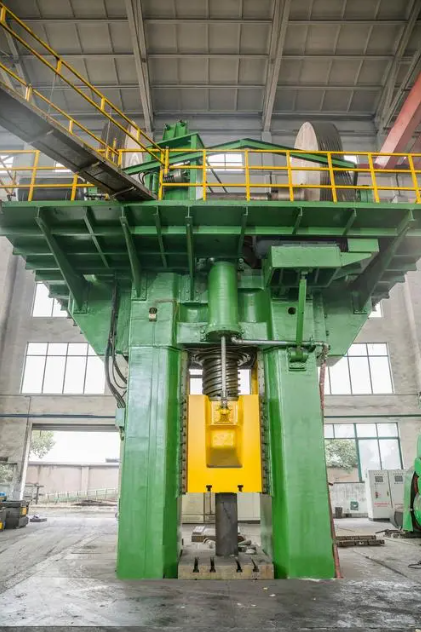
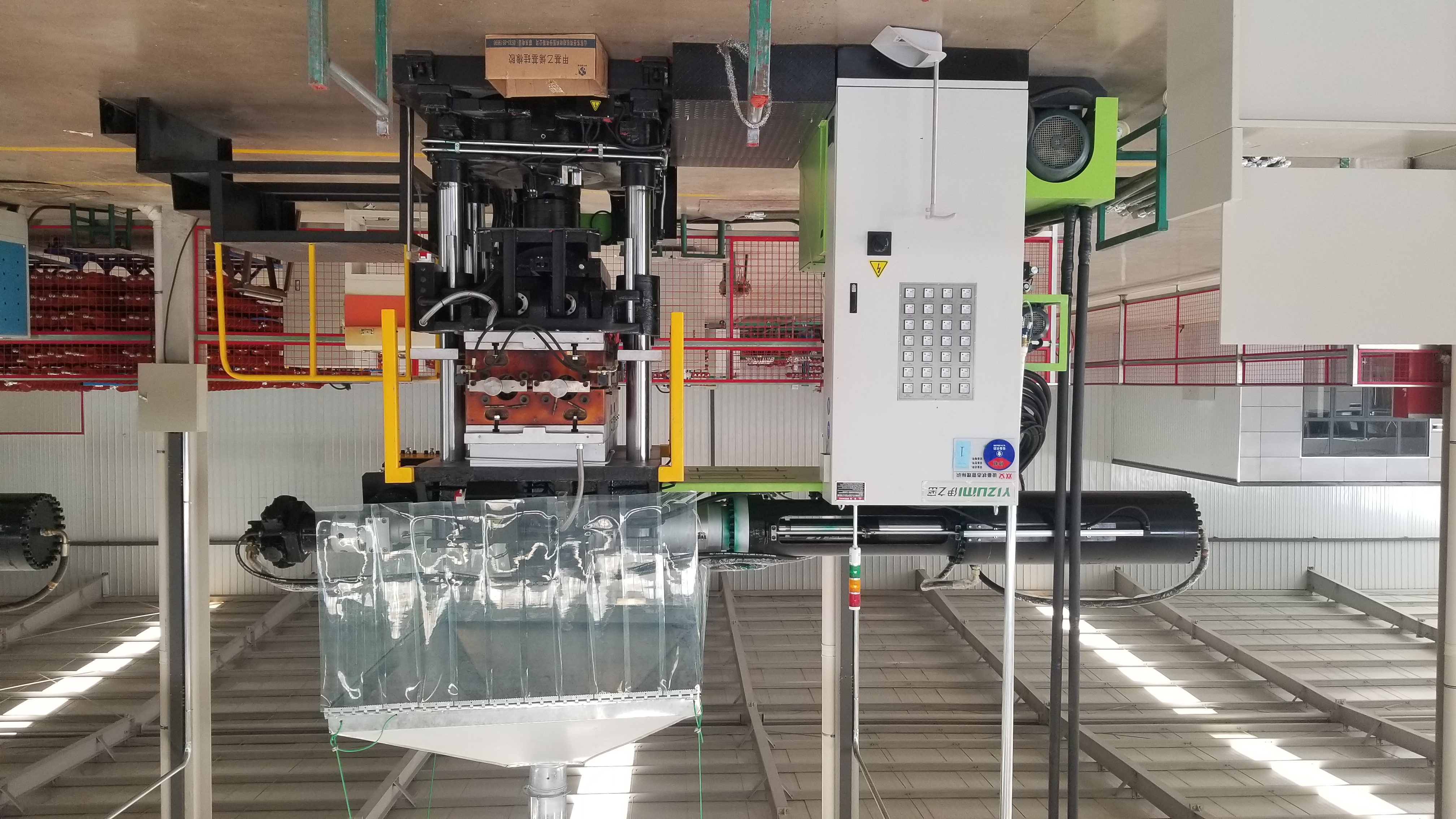
CECI’s range includes metal fittings for insulators, forged and cast fittings, aluminium fittings and overhead line hardware and accessories — deadend fittings, pin fittings and related components — supported by its own forging and casting production lines. For buyers, the practical checks are the fitting material and grade, the production route (forging versus casting), dimensional and thread tolerance, and the corrosion-protection system, evaluated together with the electrical rating rather than after it.
Material-to-Scenario Matrix
The matrix below converts the environmental stress profile into a material recommendation, and states the boundary that should be checked alongside it. Each entry is anchored to published CECI comparison data.
| Scenario and dominant stress | Primary material fit | Supporting evidence | Boundary to verify |
|---|---|---|---|
| Dust-belt and desert-corridor lines with wind abrasion and pollution build-up | Polymer composite | Pollution-resistant and impact-resistant; approximately 50% lighter; saves about 60% of installation time | Confirm creepage for the pollution class on the model datasheet; composite emergency repair takes 4–6 hours |
| High-UV plateaus, strong solar exposure, humid coastal air | Polymer composite with anti-ageing, UV-resistant housing | UV ageing is listed among the operating conditions the range is designed for; anti-ageing and UV resistance are stated material requirements | Request the UV and ageing evidence from the type test report for the specific model |
| Remote lines where crew travel time dominates intervention cost | Polymer composite | Annual maintenance cost approximately 40% lower; less frequent maintenance with a longer cycle | Accept a longer emergency repair window and a repair cost 150% higher than glass |
| Substations, converter stations, high-temperature duty, visually inspected circuits | Glass or porcelain | Heat resistance, high mechanical and electrical stability, visual inspection; approximately 80% of testing time saved | Heavier units; installation takes longer than composite by roughly 60% |
| Long spans and weight-restricted structures | Polymer composite | Approximately 50% weight reduction versus alternatives | Confirm mechanical load class and fitting compatibility |
| Urban circuits where restoration speed is contractual | Glass | Emergency repair 1–2 hours; total replacement cost 25% to 35% lower than traditional alternatives | Confirm that a visual inspection routine is actually in place |
Application Map: Grid, Rail, Substation and Wind
CECI’s public electrical equipment insulator range is designed for rural and urban power grid upgrading, rail transit electrification, high-voltage transmission lines, substations and converter stations, and wind power projects. It operates continuously, 24/7, under high temperature, high humidity, outdoor climate, UV ageing, dust storms and impulse overvoltage, and requires supporting equipment such as power distribution cabinets. The application scenario is described as common in Spain, France, Italy and Türkiye — consistent with the company’s listed European markets.
Within that map, the environmental logic repeats. Rail electrification and urban grid upgrading add continuous duty to the same outdoor stress profile, so material choice follows the pollution and UV conditions of the corridor rather than the project category. Wind projects typically combine UV exposure with remote access, which raises the value of a longer maintenance cycle. Substations and converter stations concentrate equipment in a defined footprint where visual inspection is practical, which keeps glass and porcelain competitive despite their higher weight. Rural and urban grid upgrading often mixes both: composite on long or difficult spans, glass or porcelain at accessible inspection points.
Procurement documents for these projects commonly name 33 kV polymer insulators, 66 kV horizontal line post insulators, suspension and tension polymer insulators, deadend and pin polymer configurations, railway insulators and long rod FRP silicone insulators. The material decision described in this article applies to all of them; the model-level ratings differ and belong to the individual datasheet.
Market Trend: What the Sourcing Numbers Show
Third-party market data points in the same direction as the technical comparison. The global electrical insulator market was valued at USD 12.5 billion in 2023 and is projected to reach USD 18.4 billion by 2030, according to Grand View Research. Within that larger market, the composite insulator segment was valued at approximately USD 3.42 billion in 2024 and is expected to reach USD 5.87 billion by 2030, a CAGR of 9.1%, according to Strategic Market Research. Suspension insulators accounted for a 48.4% share of the composite insulator segment in 2024, based on Mordor Intelligence data.
Supply concentration matters for sourcing. China held 13.1% of global exports of insulating glass and materials in 2024, making it the second largest global exporter, based on OEC data. On the standards side, composite insulators for high-voltage overhead lines above 1000 V AC are governed by IEC 61109, whose latest edition is dated 2025, while ceramic or glass insulators for overhead lines above 1000 V nominal are tested under IEC 60383-1.
Composite vs. Glass and Porcelain: Where Each Material Loses
A material recommendation is only useful if it states what the buyer gives up. Composite is not a universal answer, and neither are glass or porcelain.
| Comparison metric | Polymer composite | Glass / porcelain |
|---|---|---|
| Weight | About 50% lighter than alternatives | Correspondingly heavier, which raises handling and structure loading |
| Installation time | Saves about 60% of installation time | Longer installation time on a like-for-like basis |
| Initial cost | Approximately 10% higher | Lower upfront unit price |
| Annual maintenance cost | About 40% lower than porcelain or glass | Approximately 40% higher, with shorter maintenance cycles |
| Emergency repair time | 4–6 hours | 1–2 hours for glass |
| Repair cost | 150% higher than glass | Lower repair cost; total replacement cost 25% to 35% lower than traditional alternatives |
| Testing time | Not the advantage case | Saves approximately 80% of testing time |
| Best fit | Heavy pollution, long spans, lightweight requirements, remote access | Thermal stability and easy visual inspection |
The first real limitation is on the composite side. A composite insulator carries an initial cost premium of roughly 10%, its emergency repair takes 4–6 hours rather than 1–2 hours, and its repair cost is 150% higher than glass. Where a short restoration window is a contractual requirement — certain urban circuits, for example — that trade-off is decisive, and glass is the more defensible choice even though its annual maintenance cost runs around 40% higher.
The second limitation is on the glass and porcelain side: the weight difference is not marginal. Composite units are approximately 50% lighter, so a like-for-like installation takes substantially longer with glass or porcelain, and on remote structures the difference in handling effort is amplified by access conditions.
A third point applies to both. Energy efficiency differences between the material families are minor; the meaningful variables are insulation reliability and outage or maintenance time, which is why selection should be based on total cost of ownership and reliability rather than on any efficiency claim.
Procurement Checks That Protect the Decision
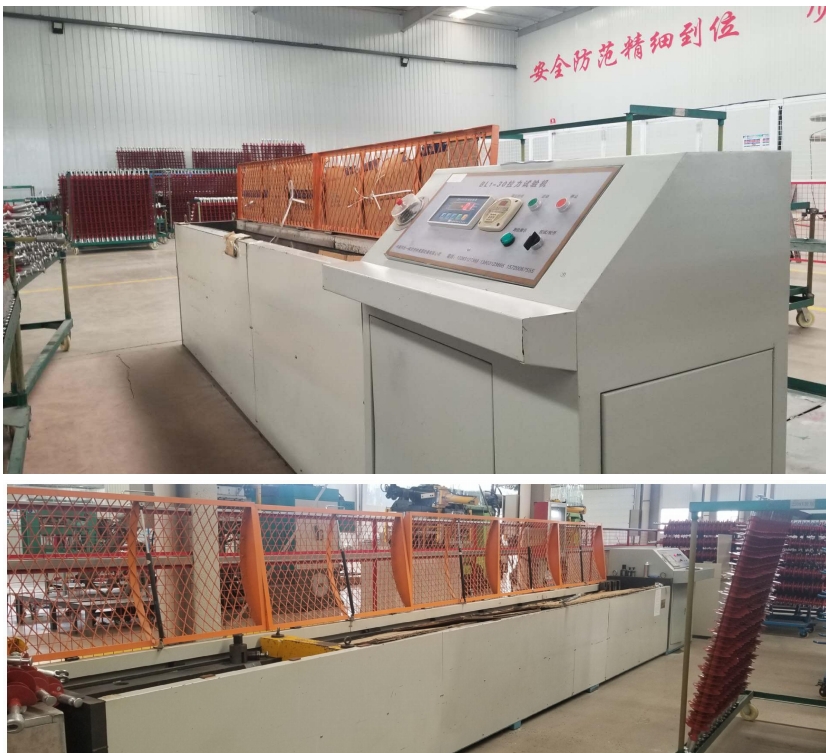
Once the material is matched to the environment, the remaining risk sits in production consistency, documentation and delivery. CECI states that quality control follows 100% test standards, with a monthly production capacity of 500 tons and 100,000 pieces, a minimum order quantity of 500 units, and a standard delivery time of 30–45 days.
- Require a type test report or certificate for the exact model ordered, referenced to IEC 61109 for composite high-voltage overhead line insulators or IEC 60383-1 for ceramic and glass insulators above 1000 V.
- Confirm the creepage distance, dry withstand voltage and mechanical load class in writing for each model, rather than relying on the designation.
- Verify the fitting material, production route and corrosion-protection system for the end fittings supplied with the insulator.
- Ask for batch test records and third-party test reports, and confirm which independent institution issued them.
- Define quality and delivery terms in the contract, including staged delivery where the project schedule is tight.
- Confirm which party handles logistics and customs clearance, particularly for EU markets such as Spain, France, Italy and Türkiye.
CECI describes supporting controls that align with these checks: an ISO 9001 quality management system, test reports issued by domestic and international third-party institutions, full strict batch testing, complete valid compliance certificates, a dedicated project manager tracking production, staged delivery to prevent delays, and coordination with professional logistics teams for customs clearance.
Future Outlook
The composite segment is the faster-growing part of the insulator market, projected to move from approximately USD 3.42 billion in 2024 to USD 5.87 billion by 2030 at a CAGR of 9.1%, and suspension insulators alone already represent 48.4% of that segment. That growth is concentrated in the material family best matched to the three stress conditions discussed here, which suggests that dust- and UV-exposed projects will keep shifting toward composite specifications.
Two counterweights are likely to remain. First, the repair-side disadvantage of composite — 4–6 hours instead of 1–2 hours, with repair cost 150% higher — keeps glass relevant wherever restoration speed is contractually or operationally critical. Second, the 80% testing-time advantage of glass and porcelain preserves their position in substations, converter stations and any asset base managed through visual inspection.
The realistic outcome for grid, rail and wind projects is mixed-material specification rather than a single-material policy: composite on long spans, polluted corridors and remote sections where maintenance interval drives cost, and glass or porcelain where thermal stability, inspection practice or rapid restoration dominate. As the IEC 61109 edition dated 2025 continues to define the composite test framework, the differentiator between suppliers will increasingly be documentation and production consistency rather than the material family itself.
FAQ
Which insulator material is better for dusty lines with high wind exposure?
Polymer composite insulators are the usual fit. They are described as pollution-resistant and impact-resistant, which addresses both the conductive pollution layer that dust builds and the surface abrasion caused by wind-driven particles. They are also approximately 50% lighter than alternatives, which helps on long spans and weight-restricted structures. Where the same dust route instead demands frequent visual inspection and rapid replacement, glass insulators remain a valid alternative, with emergency repair times of 1–2 hours.
How much installation time do composite insulators save compared with porcelain or glass?
Composite insulators save about 60% of installation time compared with alternatives, a direct consequence of being roughly 50% lighter. The absolute saving scales with the number of units and with access difficulty; on remote lines where each structure requires climbing or lifting equipment, the reduction in handling weight is the operative factor.
What is the maintenance cost difference between composite insulators and porcelain or glass units?
Composite insulators carry an initial cost premium of approximately 10%, but their annual maintenance cost is about 40% lower than that of porcelain or glass insulators, and they require less frequent maintenance over a longer maintenance cycle. In the opposite direction, the total cost associated with replacing glass insulators is 25% to 35% lower than traditional alternatives, and the repair cost for composite insulators is 150% higher than for glass.
How quickly can a failed glass insulator be replaced compared with a composite insulator?
Glass insulators have an emergency repair time of 1–2 hours, compared with 4–6 hours for composite insulators. The composite repair itself also costs 150% more than the glass equivalent. This difference is the main reason a buyer may choose glass on circuits where the restoration window, rather than the annual maintenance budget, is the binding constraint.
Which standards apply to composite insulators and to glass or porcelain insulators?
Composite insulators for high-voltage overhead lines above 1000 V AC are governed by the international standard IEC 61109, whose latest edition is dated 2025. Ceramic or glass insulators for overhead lines with a nominal voltage above 1000 V are tested under the IEC 60383-1 standard. Buyers should request the type test report for the specific model referenced to the applicable standard.
What conditions is CECI’s public electrical equipment insulator range designed for?
It is designed for rural and urban power grid upgrading, rail transit electrification, high-voltage transmission lines, substations and converter stations, and wind power projects. The range operates continuously, 24/7, under high temperature, high humidity, outdoor climate, UV ageing, dust storms and impulse overvoltage, and requires supporting equipment such as power distribution cabinets. The application scenario is described as common in Spain, France, Italy and Türkiye.
CECI’s full catalogue of polymer and glass insulators, including model ranges, ratings and line hardware accessories, is available here: 2025 CECI catalogue of polymer insulators and glass insulators.
Have Questions or Need More Details?
Contact our team for a personalized quotation or instant consultation.
Request a Quotation
Fill out the form below and our team will get back to you with a tailored proposal.
WhatsApp Direct Chat
Prefer to chat in real-time? Message us on WhatsApp for instant assistance & quick answers.
- Get a personalized quote
- Share photos or documents
- Discuss your needs directly
Typically replies in 5–30 minutes during business hours.