
RoHS, REACH, VOC-Free, A2: What Color Coated Steel Claims Mean
RoHS, REACH, VOC-Free, A2: What Color Coated Steel Claims Mean
Compliance documents travel with the coil, but they rarely travel with an explanation. A purchase order for color coated steel coil or sheet can arrive with a RoHS declaration, a REACH statement, a VOC-free claim and a fire classification in the same folder — four documents that answer four completely different questions, and none of which substitutes for another.
The stakes rise with the size of the category. The global pre-painted steel market was valued at USD 24.63 billion in 2023 and is projected to grow at a CAGR of 5.8% to 2032, according to Polaris Market Research. China exported approximately 6.5 million tons of color-coated steel sheet in 2023, based on MySteel trade data. As coated steel moves further into appliances, metal packaging, food-contact equipment and fire-rated interior cladding, compliance stops being paperwork attached to a shipment and becomes part of the specification itself.
This article explains what each of the four most common claims on color coated steel actually guarantees, and — more usefully for buyers — what each one does not cover.
Four Claims, Four Different Questions
RoHS, REACH, VOC-free and EN 13501-1 A2 are frequently listed side by side in a supplier's compliance section as if they were interchangeable. They are not. Each was created for a different purpose, is enforced through a different mechanism, and answers a different buyer question.
| Claim as usually written | Governing reference | What it addresses | What it does not cover |
|---|---|---|---|
| RoHS compliant | RoHS Directive 2011/65/EU | Restricted hazardous substances in electrical and electronic equipment | Food contact, corrosion resistance, fire behaviour, coating adhesion |
| REACH compliant | EU REACH regulation, administered by ECHA | Chemical substances in articles, including SVHC communication duties | Is not a product certificate; is not a food-contact approval |
| VOC-free | Coating composition / emission profile | Volatile organic compound content or emissions of the coating system | Heavy-metal restriction lists; fire classification; forming performance |
| A2 fire rating (A2-s1,d0) | EN 13501-1 reaction-to-fire classification | Fire performance of the construction product or assembly as tested | Corrosion, colour durability, food safety, formability |
| Food-grade (often assumed to follow from RoHS/REACH) | FDA 21 CFR 175.300 / EU No 10/2011 | Resinous and polymeric coatings in contact with food | Not covered by RoHS or REACH at all |
A coated steel coil can be fully RoHS and REACH compliant and still be unsuitable for direct food contact. The two requirements sit in different regulatory frameworks, and one does not imply the other.
Why Buyers Keep Merging These Standards Into One Line Item
The confusion is structural rather than careless. RoHS and REACH both originate in EU chemicals policy, so they are habitually bundled into a single sentence in supplier questionnaires. VOC-free is a short, persuasive phrase that fits easily into a specification sheet. A2 is a test result that looks like a quality badge. In practice, procurement teams end up with one column labelled “compliance” in an evaluation spreadsheet, and several materially different requirements get compressed into it.
The consequences are predictable. A buyer selects a low-cost coil that is RoHS compliant for a food-contact application and discovers the gap at the customer's factory rather than at the quotation stage. Another buyer pays a premium for an over-specified coating system because a fire classification was requested for an application that never required one. A third receives a REACH statement that references an outdated substance list revision and has to re-open the qualification file.
The deciding factor is the end product, not the coil. An appliance housing, a food can, a fire-rated wall panel and a high-temperature sealing component each activate a different part of the compliance stack, even when the base material is the same family of coated steel.
RoHS: A Substance Restriction That Follows the Finished Product
RoHS Directive 2011/65/EU, sometimes written as RoHS 2.0, restricts hazardous substances in electrical and electronic equipment. Color coated steel used in electronic appliances must meet RoHS and REACH requirements, as set out by the European Chemicals Agency (ECHA). Because the obligation attaches to the finished equipment, it travels down the supply chain: the appliance maker needs evidence, the fabricator needs evidence from the coater, and the coater needs evidence from the coating supplier.
For a coil buyer, the practical meaning is traceability of coating chemistry. Pigments, stabilisers and additives in the paint system must be controlled and identifiable at batch level, because that is the only way a declaration can be tied to a shipment. A generic statement covering “our coatings” is weaker evidence than a declaration linked to the coating system and batch actually delivered.
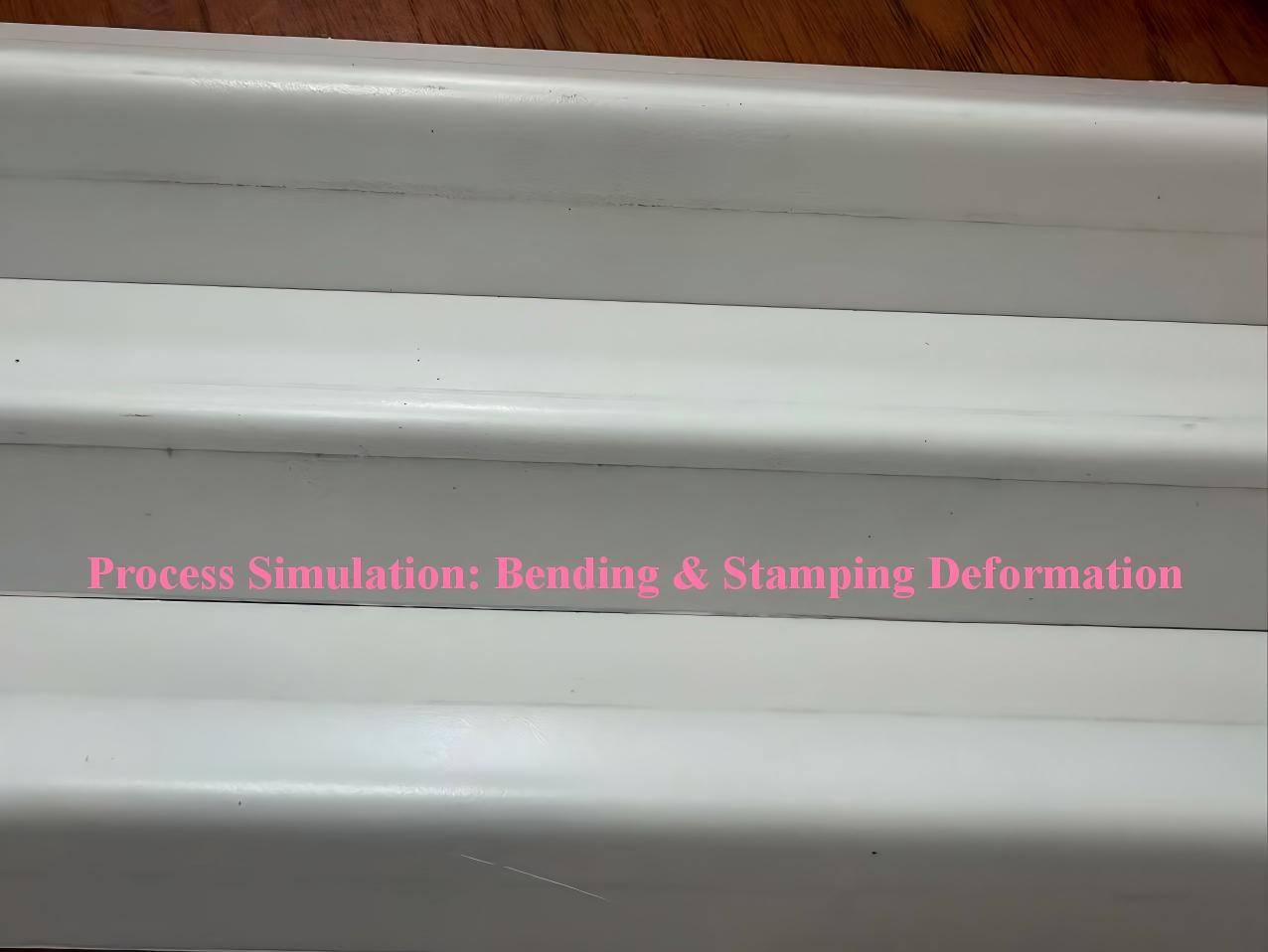
RoHS also has a boundary. It says nothing about coating adhesion, colour stability, bend performance, thermal limits or food contact. A strip can satisfy every RoHS substance restriction and still fail a 1T T-bend requirement or shed paint in a high-speed stamping line.
REACH: A Moving Obligation, Not a Fixed Badge
REACH is a regulation on chemicals administered through ECHA, and it applies to substances in articles rather than to finished equipment categories. Where a substance on the candidate list is present above the applicable threshold, communication duties follow. The candidate list is revised over time, which means a REACH statement has an issue date and an effective shelf life rather than permanent validity.
That produces a specific set of buyer questions: when was the declaration issued, which list revision does it reference, does it cover the exact coating chemistry and substrate ordered, and how will updates be communicated over a multi-year supply agreement?
Chongqing Youngson Metal Products Co., Ltd., which trades as YOUNGSON METAL, states that its products have passed SGS testing against REACH and RoHS heavy metal regulations. For an importer, that is a useful evidence point, with the same caveat that applies to any declaration: it covers the material as tested, and it does not certify forming behaviour or food-contact suitability.
The Food-Contact Gap That RoHS and REACH Do Not Close
Food-grade color coated steel must comply with FDA 21 CFR 175.300 or EU No 10/2011, the frameworks governing resinous and polymeric coatings in contact with food. Neither RoHS nor REACH addresses this. This is where the most expensive misunderstandings in coated steel procurement occur, because a buyer who has received a RoHS/REACH pack can reasonably, but incorrectly, assume the food-contact requirement is already satisfied.
The distinction matters most for deep-drawn applications: food, aerosol and beverage cans, easy-open lids and ring pulls, and non-stick cookware, where the coating is in direct contact with contents. In these cases, the food-contact statement must cover the full coating system used in drawing, including any lubricant or film layer applied to survive the forming operation.
YOUNGSON METAL positions its production around eco-friendly, food-grade and chemical-grade quality, and supplies deep-drawn and non-stick coating systems into metal packaging and cookware applications. Food-grade coated steel sheet and non-stick ECCS are two of the categories where the food-contact document, not the RoHS declaration, is the controlling piece of evidence.
VOC-Free: An Emission and Formulation Claim
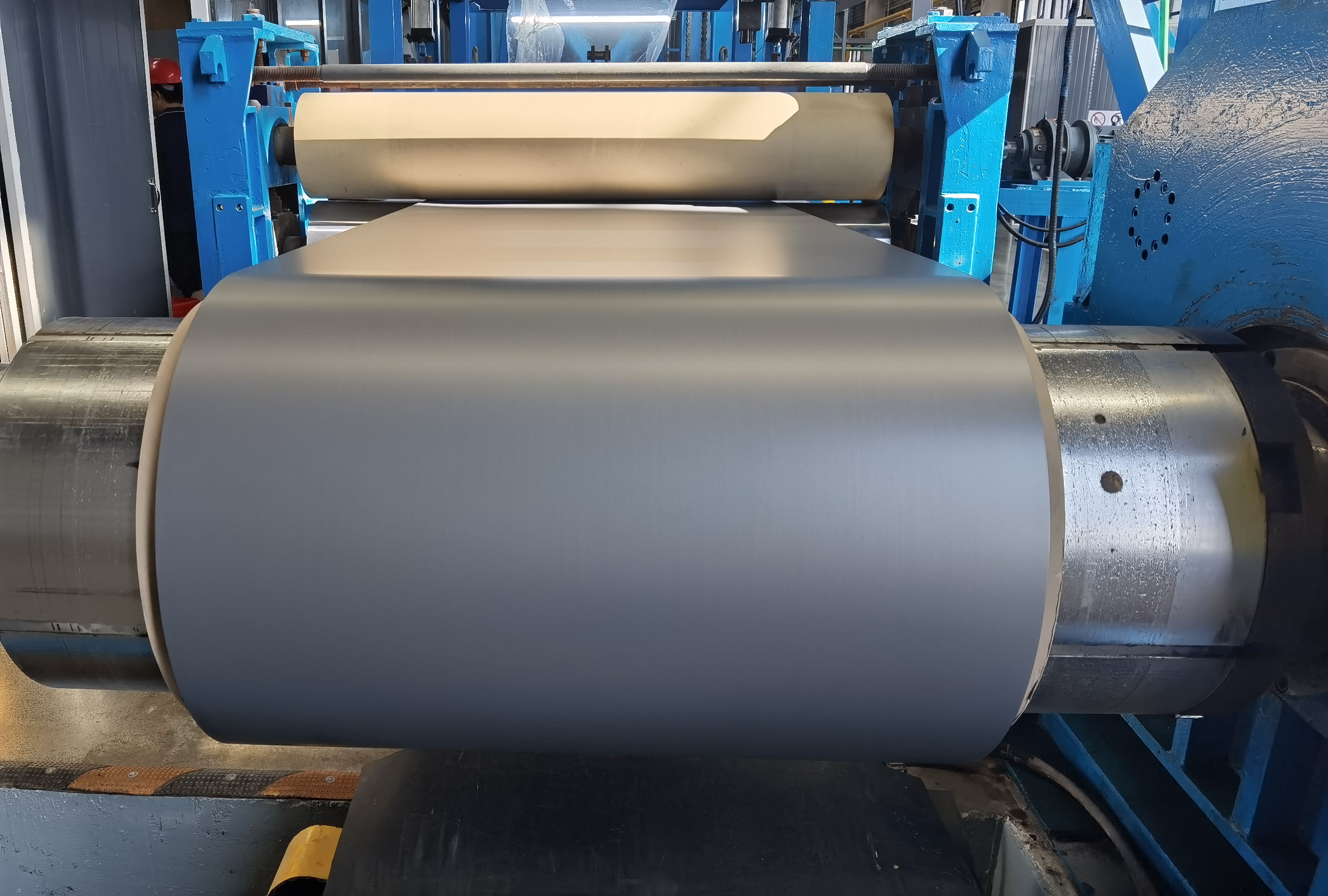
A VOC-free statement relates to volatile organic compounds in the coating system. It is most relevant where coated surfaces sit in enclosed environments and indoor air quality is a design consideration — interior cladding, appliance interiors, and panels used in occupied or temperature-controlled spaces.
Its scope is narrower than most buyers assume. VOC content is a formulation and emission parameter, not a restricted-substances list. A coating described as low-VOC is not automatically compliant with RoHS substance restrictions, and a coating that is fully RoHS and REACH compliant may still be formulated with solvents that carry a VOC profile. The two statements describe different characteristics of the same paint film.
Three clarifying questions are worth putting to a supplier before accepting a VOC claim: does the claim refer to the liquid coating as supplied or to the cured film on the finished sheet; which definition of VOC was applied; and was the statement derived from formulation content or from an emissions test. Suppliers who can answer all three are usually the ones who can also tie the claim to a specific coating system rather than to the product catalogue generally.
EN 13501-1 A2: A Property of the Tested Build-Up
EN 13501-1 is the European classification standard for reaction to fire of construction products. The A2 classification sits in the limited-combustibility band, and the full designation normally includes smoke production and flaming-droplet sub-classes, written in the form A2-s1,d0. Where interior cladding must meet a fire performance requirement, this is the classification that specifiers look for.
Coated steel is evaluated this way because both halves of the product contribute to the result. The steel substrate matters — galvanised, ZAM (zinc-aluminium-magnesium) and aluminium-zinc substrates behave differently in a fire test — and so does the organic coating system, its chemistry and its film build.
The classification belongs to the assembly as tested: substrate, coating chemistry, coating thickness, film build and fixing method. A classification issued for one gauge does not transfer automatically to a different gauge, substrate or profiled panel.
It is also worth separating the fire question from the durability question, because both are often discussed in the same sentence when PVDF coatings are specified. Coatings suppliers such as AkzoNobel Coil Coatings report that high-performance PVDF systems typically maintain about 70% of colour integrity for more than 20 years. That is a weathering and colour-retention claim. It has no bearing on reaction-to-fire classification, and an A2 result says nothing about how long a façade will hold its colour.
What YOUNGSON METAL Supplies and What It Can Document
Chongqing Youngson Metal Products Co., Ltd., trading as YOUNGSON METAL, is a precision metal surface processing and premium coil supply manufacturer based in Chongqing, China. Founded in 2016 and certified to BV ISO9001:2015, the company operates a 3,000 m² facility with 25 employees, including a team of 5 engineers and a senior process technician, and an annual processed capacity exceeding 10,000 tons. Roughly 70% of output is exported.
Its manufacturing and supply scope covers five product lines relevant to the compliance discussion above: drawn PET film laminated steel coil; drawn VCM/PVC film laminated steel coil; deep-drawn coil coating including Teflon, non-stick, gold and lacquered finishes; commercial and deep-drawn pre-painted steel and pre-painted stainless steel; and a range of mild carbon steel grades (cold rolled, electrogalvanised, aluminised, galvanised and copper plated) alongside multi-grade stainless steel.
On the evidence side, the company states that its products have passed SGS testing for REACH and RoHS heavy metal regulations. Its precision-stamping grade coated strip is positioned as fully RoHS and REACH compliant, in contrast to standard construction-grade pre-painted material. Process control is applied at batch level: a sampling protocol runs cross-cut cupping tests and standard T-bend tests to simulate post-forming behaviour and check that coating flexibility and adhesion hold up under mechanical processing.
The distinction that matters to a buyer is between what a document asserts and what a process can demonstrate. A declaration states a substance status. Batch sampling with cupping and T-bend results shows whether the delivered coil still behaves like the material that was declared.
Applications: Which Claim Decides the Material
| End application | Controlling requirement | Evidence to request |
|---|---|---|
| Electronic and appliance housings | RoHS Directive 2011/65/EU and REACH | Dated declaration tied to the coating system and production batch |
| Food, aerosol and beverage packaging, easy-open lids, ring pulls | FDA 21 CFR 175.300 or EU No 10/2011 | Food-contact statement covering the coating system actually used |
| Non-stick cookware and deep-drawn components | Food contact plus forming performance | T-bend and cupping results alongside the food-contact document |
| Interior cladding and fire-rated panels | EN 13501-1 A2 classification | Classification report for the identical build-up and fixing method |
| Precision stamping hardware and electronics components | RoHS and REACH plus forming stability | Rejection-rate data and adhesion test evidence per lot |
| High-temperature sealing components | No compliance claim substitutes for thermal performance | Thermal stability data — for example continuous stability up to 150°C for MoS2 self-lubricating systems |
Market Trend: Compliance as a Design Input, Not a Closing Document
Two structural shifts are pushing compliance earlier into the buying process. The first is regulatory drift: EU substance lists are updated on a rolling basis, so declarations that were adequate at qualification can become incomplete during a multi-year supply relationship. Buyers in medical, food, cold-chain and construction segments are responding by writing standard numbers directly into purchase orders rather than relying on general supplier assurances.
The second is the international character of the trade. With China exporting roughly 6.5 million tons of color-coated steel sheet in 2023, documentation has to be portable — readable and acceptable to a customer's compliance team in a different jurisdiction. That favours suppliers whose paperwork is specific, dated and traceable rather than generic.
The competitive landscape at the top end is dominated by established producers such as ArcelorMittal, Nippon Steel, BlueScope Steel and Baosteel, as identified by Fortune Business Insights. For small and mid-sized buyers, however, the practical differentiator is rarely raw tonnage. It is whether a supplier can connect a coating batch to a declaration and to a forming test result, and can repeat that for every shipment.
Precision-Stamping Grade vs Standard Construction-Grade Coated Steel
The clearest way to see how compliance interacts with performance is to compare a precision-stamping grade strip against standard construction-grade PPGI used for roofing and wall cladding.
| Comparison dimension | Precision-stamping grade coated strip | Standard construction-grade PPGI |
|---|---|---|
| Engineering intent | Precision engineering, optimised for deep drawing and automated stamping | Rough mass production for roofing and wall cladding |
| Stamping rejection rate | Below 0.1% | Above 5% |
| Bend and forming behaviour | 0T / 1T T-bend capability for complex geometries | Limited bending capability |
| Compliance posture | 100% RoHS and REACH compliant | Not positioned for regulated end uses |
| Tooling and maintenance impact | Consistent forming stability, no peeling | Frequent mould cleaning and downtime from paint shedding |
| Cost structure | Higher initial material cost, significantly lower total fabrication cost from reduced waste | Lower initial material cost, higher scrap and downtime cost |
Where this comparison stops working in the buyer's favour. Precision-stamping grade material carries a higher initial material cost, and that premium earns nothing back if the end use is a roofing or wall-cladding panel that will never be stamped, drawn or used in a regulated application. Specifying regulated-grade coated steel for an unregulated application adds cost without adding capability.
A second limitation applies to both grades. Compliance documents describe the coil as delivered. Once the material is cut, slit, welded or deep drawn, the situation changes: cut edges expose uncoated steel, forming can thin or micro-crack the coating, and welding alters the surface entirely. The compliance status of the finished part depends on the fabricator's process as much as on the coil declaration, which is why batch-level forming and adhesion tests matter as much as the certificate itself.
A Verification Checklist for Compliance Claims
- Name the regulation in the purchase order — RoHS Directive 2011/65/EU, REACH, FDA 21 CFR 175.300, EU No 10/2011 or EN 13501-1 — rather than writing “compliant material”.
- Request the dated report or declaration, not the logo on a brochure.
- Confirm the document covers the exact substrate, coating chemistry and gauge ordered.
- For REACH, check which candidate list revision the statement references and how updates will be issued.
- Keep food-contact evidence separate from RoHS and REACH evidence in the qualification file.
- For fire-rated cladding, obtain the classification report for the identical build-up, coating thickness and fixing method.
- Ask what batch-level controls keep the delivered coil consistent with the declared specification — cross-cut cupping and T-bend testing are typical examples.
- Record the validity period of every declaration and the point of contact for renewals.
Future Outlook
Compliance is shifting from a document exchanged at the start of a relationship to a continuous data obligation maintained throughout it. Substance lists will keep moving, and the buyers most exposed to that drift are those in food contact, medical, cold-chain and fire-rated construction, where a single unmet requirement can stop a shipment or a production line.
Three developments are likely to shape sourcing decisions in the near term. Expect more purchase orders to cite standard numbers directly. Expect more requests for traceability that links a coating batch to a declaration and to a forming test result. And expect fire performance and emission requirements to keep tightening in building and appliance applications, which raises the value of suppliers who can document a specific build-up rather than a general capability.
For buyers, the practical implication is simple: treat each claim as answering one question, and check that the question matches the one your end product will be asked.
Frequently Asked Questions
What does a RoHS-compliant declaration actually cover on color coated steel?
RoHS Directive 2011/65/EU restricts hazardous substances in electrical and electronic equipment. A RoHS declaration states that the material meets those substance restrictions. It does not address food contact, corrosion resistance, coating adhesion or reaction to fire, and it does not certify forming performance.
Does REACH compliance make a coated steel sheet food-safe?
No. REACH, administered by ECHA, governs chemical substances in articles and sets communication duties for candidate-listed substances. Food-contact suitability is governed by separate rules — FDA 21 CFR 175.300 or EU No 10/2011 for resinous and polymeric coatings. A supplier may hold both, but neither substitutes for the other.
How is a VOC-free claim different from RoHS or REACH compliance?
VOC-free relates to volatile organic compounds in the coating system's formulation or emissions, and is most relevant in enclosed or occupied environments. RoHS and REACH relate to restricted or candidate-listed substances. A coating can be low-VOC and still require REACH review, and a RoHS-compliant coating is not automatically low-VOC.
Where does an EN 13501-1 A2 classification apply?
To the construction product or assembly that was tested, including its substrate, coating chemistry, coating thickness, film build and fixing method. Changing any of those elements can mean the classification no longer applies, so buyers specifying fire-rated interior cladding should request the report for the exact build-up being ordered.
How should a buyer verify compliance documents before placing a coil order?
Cite the regulation number in the purchase order, request dated reports or declarations rather than marketing statements, confirm the documents cover the specific substrate, coating chemistry and gauge, keep food-contact evidence separate from RoHS and REACH, and ask which batch-level controls — such as cross-cut cupping and T-bend testing — keep the delivered coil consistent with the declared specification.
For buyers who need the full product line and specification overview in one place, YOUNGSON METAL's product catalogue is available here: Chongqing Youngson Metal Products Co., Ltd. catalogue.