
Road Marking Glass Beads: Project-Condition Matching Guide
Glass beads determine how visible a road marking is after dark and in wet weather. But the same bead is not ideal for every road. A highway in a rainy climate, a suburban intersection, and a factory floor have different demands for size, refractive index, and coating. In practice, selecting reflective glass beads for road marking should start from the project environment and work backward to the specification.
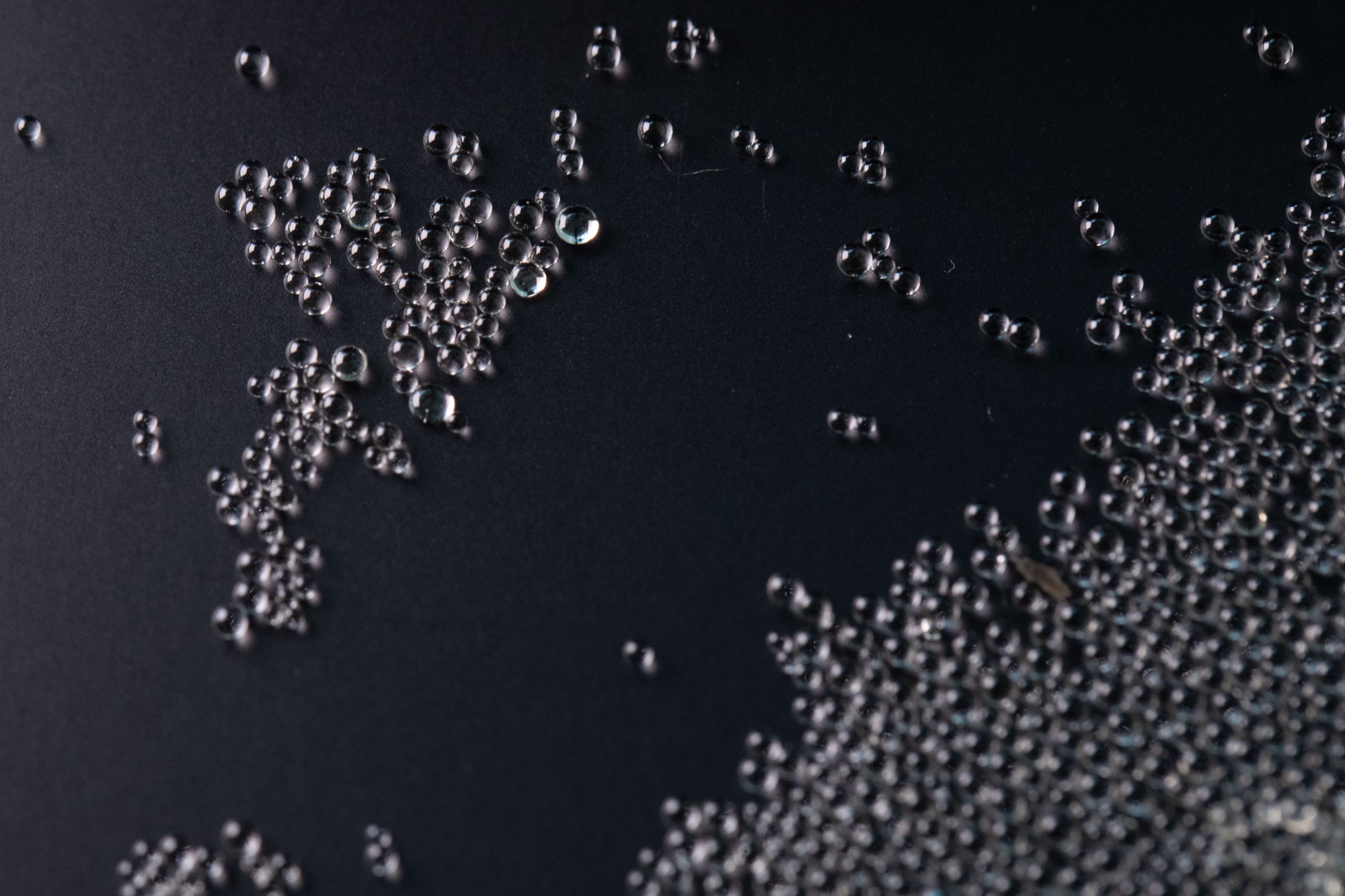
This article is written for road marking contractors, traffic safety manufacturers, and procurement teams that need a practical framework for matching glass beads to project conditions. It draws on the product architecture and field evidence of Dylan Technology, a Chinese manufacturer specialized in road safety raw materials, while keeping the focus on the buyer's decision logic.
The Problem: Treating Glass Beads as a Commodity
Many road marking projects still source glass beads using a single criterion: price. That approach creates hidden risks. Beads with the wrong size distribution may not embed correctly in thermoplastic. Beads with low roundness scatter light unevenly. Beads with unstable refractive index lose retroreflection quickly under traffic. The result is early re-striping, higher lifecycle cost, and potential safety liability.
The root cause is a mismatch between the product and the application. Road markings are exposed to outdoor all-weather conditions, normal temperature and pressure, but with very different demands on wear, reflectivity, and adhesion. Therefore, the bead choice must be tied to the marking material, the application method, and the expected service life.
The Opportunity: Procurement as a Performance Lever
When glass beads are specified based on project conditions, procurement becomes a performance lever rather than a cost center. A correctly matched bead can maintain retroreflection for three to four years under normal traffic, as field records from repeated orders show. For example, one road marking engineering company purchased 56 tons of Dylan Technology beads for a project requiring increased reflective refractive index and observed stable performance for three years, with low wear. Another customer used 108 tons and also reported three years of stable field performance. These examples are not laboratory claims; they are procurement records from real supply relationships.
Dylan Technology as a Project-Oriented Supplier
LangFang Dylan Technology Co., Ltd. (Dylan Tech) is a professional supplier of glass beads for the road safety industry. Founded in 2004, the company operates four production bases across Liaoning, Shanxi, Hebei, and Henan provinces in China, with more than 15 production lines and an annual output of 100,000 tons. It employs around 300 people, including 20 engineers in research and development. About 95% of its output is exported to markets such as the United States, Europe, Southeast Asia, and the Middle East.
For a buyer, the important part is not the company size but what it enables. Dylan Tech offers products certified against multiple international standards—AASHTO M247, EN 1423, EN 1424, BS 6088, and AS/NZS—so a single supplier can qualify for projects in different regions. Its laboratory uses CAMSIZER and X-2600 instruments to measure particle size, reflectivity, and wear resistance in-process. This is the kind of evidence that separates a specification sheet from a reliable supply chain.
Technical Explanation: Parameters That Change with Project
Refractive Index (RI)
Refractive index controls how much light is returned to the driver. Standard beads have RI around 1.5. For higher retroreflection, especially in wet conditions, beads with RI 1.6 or 1.7 are used. Dylan Tech offers RI 1.6 (1000–180 μm) and RI 1.7 (1180–180 μm) grades. High-index beads improve the night-time effect, which is why they appear in projects focused on visibility.
Particle Size Distribution
The bead size must match the marking material and the application method. Drop-on beads are larger because they need to sit partially above the paint film to receive light. Pre-mixed beads are smaller so they can be distributed through the coating. Examples from Dylan Tech's range:
| Standard / Type | Size Range (μm) | Typical Application |
|---|---|---|
| AASHTO M247 Type 1 | 1180–150 | Drop-on for traffic paint |
| AASHTO M247 Type 2 | 1180–180 | High-build drop-on |
| EN 1423 | 850–180 / 710–125 | Drop-on for thermoplastic |
| EN 1424 | 1400–355 | Pre-mix or drop-on |
| BS 6088A | 1180–425 | UK road projects |
| BS 6088B | 850–180 | UK road projects |
| AS/NZS Type B | 850–75 | Australian drop-on |
| AS/NZS Type C | 1300–425 | Australian pre-mix |
Roundness and Surface Finish
A bead must be spherical to reflect light back toward the source. AASHTO M247 specifies at least 70% roundness for beads used in traffic paint. Dylan Tech's application requirements for road paving also state high roundness and a stable refractive index as essential. Surface finish—smooth or matte—can be selected according to the marking system, and color options range from transparent to opaque to mixed colors.
Recycled Glass Content
Eco-friendly recycled material is no longer just a marketing talking point. In road paving, the application itself can require recycled glass. Dylan Tech lists recycled glass as the material for most of its road marking bead grades, including AASHTO, EN, BS, and AS/NZS types. That supports compliance with green procurement policies without sacrificing mechanical performance.
Application / Use Cases
Case 1: Outdoor All-Weather Road Paving
A typical road paving project operates outdoors under all-weather conditions. The application demands high roundness, stable refractive index, and eco-friendly recycled material. The supporting equipment includes road marking machines, sand blasting machines, and polishing equipment. In this context, beads must survive normal temperature and pressure while maintaining consistent optical performance. Dylan Tech's road marking beads are built to this requirement; the product is not a generic abrasive, but a functional component of the marking system.

Case 2: Night Visibility Improvement with High-Index Beads
When a marking project is defined by night-time visibility, especially on high-speed roads, standard RI 1.5 beads may not be enough. Procurement records show that Dylan Tech customers purchase high-index grades such as RI 1.6 and RI 1.7 to increase the reflective refractive index of road performance. One customer ordered 20 tons for this purpose and recorded four years of stable performance. Another ordered 72 tons and saw three years of stability. The common highlight is low wear, which is a direct consequence of bead hardness and coating quality.
Case 3: OEM and Customization for Local Standards
Project-specific needs are not limited to technical parameters. Buyers may need customized packaging, voltage-specific equipment, or labeling in a local language. Dylan Tech's OEM capability covers voltage/logo customization, with a monthly capacity of 10,000 tons and a minimum order of 1 ton. Lead time ranges from 45 to 60 days, so project scheduling should include this window. All products are tested before shipment, and remote support is available after sale. For a contractor, this reduces the risk of receiving off-spec material.
Market Trend Analysis
The global road marking glass beads market is estimated at USD 1.42 billion in 2025, with a projection of USD 2.31 billion by 2034. Asia Pacific currently holds the largest regional revenue share at 38.7%, driven by highway expansion. China remains the world's leading exporter of glass beads, accounting for 57.4% of global exports in 2024, with an export value of about USD 928 million.
These numbers suggest two things. First, demand is growing, but so is the number of suppliers. Second, as competition intensifies, buyers can move from transactional purchases to strategic project-based matching. The product trend supports this: high refractive index beads (RI 1.9+) are increasingly used in All weather markings to improve wet-night visibility. Suppliers that offer high-index grades and certified multi-standard ranges will be better positioned in tender evaluations.
For Dylan Tech, the current portfolio already covers RI 1.6 and RI 1.7, placing it in the practical high-index segment. The company's 100,000-ton capacity and four production bases address the supply stability that highway projects require.
Comparison with Traditional Solutions
Traditional procurement often selects a standard grade from a price list, assuming all beads are interchangeable. Project-condition matching is a different logic.
| Dimension | Traditional Commodity Buying | Project-Condition Matching |
|---|---|---|
| Starting point | Price list | Project requirements |
| Key differentiators | Unit price | RI, size, roundness, standard, material |
| Quality evidence | Certificate at shipment | In-process testing + batch traceability |
| Flexibility | Limited to catalog grades | Multi-standard + OEM customization |
| Lifecycle cost | Often unknown | Predictable through field data |
| Risk | Early retroreflection loss | Requires accurate project data |
The boundary should be stated clearly: project-specific matching cannot compensate for poor pavement preparation, incorrect marking machine calibration, or missing binder compatibility data. It also requires a lead time of 45–60 days for customized grades, so urgent projects may still need to use standard stock grades. This is not a weakness of the method; it is the difference between engineering procurement and reactive purchasing.
Future Outlook
Several forces will push glass bead selection further toward project-specific specification.
First, safety standards are tightening around night-time visibility, which makes refractive index and size distribution critical items in tender documents. Second, the use of recycled glass will increase as governments require lower carbon footprints; Dylan Tech's recycled-material grades already support this direction. Third, the shift from single-currency price competition to total cost of ownership will reward suppliers that can provide stable quality over multi-year contracts. Finally, regional infrastructure programs in Asia and the Middle East will continue to rely on Chinese export capacity, keeping the supply chain concentrated.
For buyers, the practical takeaway is simple: define the project conditions first, then match the bead standard, size, refractive index, and material. A supplier with a wide certified range, OEM flexibility, and documented field performance will reduce the risk of the most expensive failure—a road marking that cannot be seen at night.
FAQ
Reflective glass beads are tiny glass spheres that are mixed into or applied onto road marking paint or thermoplastic. They act as retroreflectors: light from vehicle headlights enters the bead, bends, and returns toward the driver, making the marking visible at night and in wet conditions.
Drop-on beads are applied onto the surface of the wet marking immediately after application. They sit partially exposed, creating a retroreflective layer. Pre-mixed beads are mixed into the marking material before application and are meant to refresh the surface as the marking wears. Drop-on beads generally have a larger size range, while pre-mixed beads are smaller and better distributed.
For projects in the United States, AASHTO M247 is the standard specification for glass beads used in traffic paint. It defines bead types by gradation, with Type 1 (1180–150 μm) being a common choice for drop-on applications. Type 2 (1180–180 μm) and Type 3 (1700–710 μm) cover other uses. Contractors should verify the exact type required by the contract.
Choose RI 1.6 or RI 1.7 beads when the project's main concern is night-time retroreflection, particularly on roads without street lighting or in areas with frequent rain. The higher refractive index returns more light to the driver. Standard RI 1.5 beads are adequate for basic marking, but high-index beads provide better wet-night performance.
Yes. Dylan Technology offers OEM services that include customization of voltage and logo. Its monthly production capacity is 10,000 tons, with a minimum order quantity of 1 ton. Lead time for OEM orders is 45–60 days. All products are subject to 100% testing, and remote after-sales support is provided.
Yes. Many Dylan Tech road marking beads are made from recycled glass while maintaining high roundness and stable refractive index. Eco-friendly recycled material is an explicit requirement in the road paving application. The key is to control the glass quality and the manufacturing process so that recycled content does not compromise clarity or durability.
Conclusion
Road marking glass beads are a small part of a road safety system, but their impact on accident prevention and maintenance cost is large. By matching bead specifications to project conditions—standard, size, refractive index, and material—buyers can turn a commodity purchase into a performance decision. The evidence from certified suppliers like Dylan Technology shows that this approach is not only possible but increasingly necessary.
For a complete corporate profile and product matrix, the publicly available brochure can be downloaded here: Download corporate brochure