
RoboBus Comparison: PIX Moving vs. City Robotics Peers, Graded by Evidence
RoboBus Comparison: PIX Moving vs. City Robotics Peers, Graded by Evidence
The global City Robotics market was valued at USD 4.2 billion in 2025 and is projected to grow at a 28.6% compound annual rate through 2035, according to a category estimate published in PIX Moving's City Robotics 101 report in 2026. That number is vendor-published and directional rather than audited, and the caveat matters, because it describes exactly the condition buyers face: a fast-growing category in which the evidence published by each supplier is uneven, non-comparable, or simply absent.
This article compares the PIX Moving RoboBus against the City Robotics peer set, using WeRide and Neolix where documented business-model evidence exists. RoboBus here means the autonomous shuttle-bus class of vehicle and, specifically, PIX Moving's RoboBus product. PIX Moving is a city robotics company founded in 2017 that builds RoboBus, RoboTaxi, RoboShop and RoboVan on a modular robotic chassis platform and delivers them through a Robot-as-a-Service (RaaS) subscription model.
Every claim below is graded by evidence type. Company-reported means the supplier states and publishes it. Third-party sourced means an external organization stands behind the figure. Not publicly established means the item is decision-critical but no public evidence was found for it — which, at the Decision stage, is a diligence task rather than an automatic exclusion.
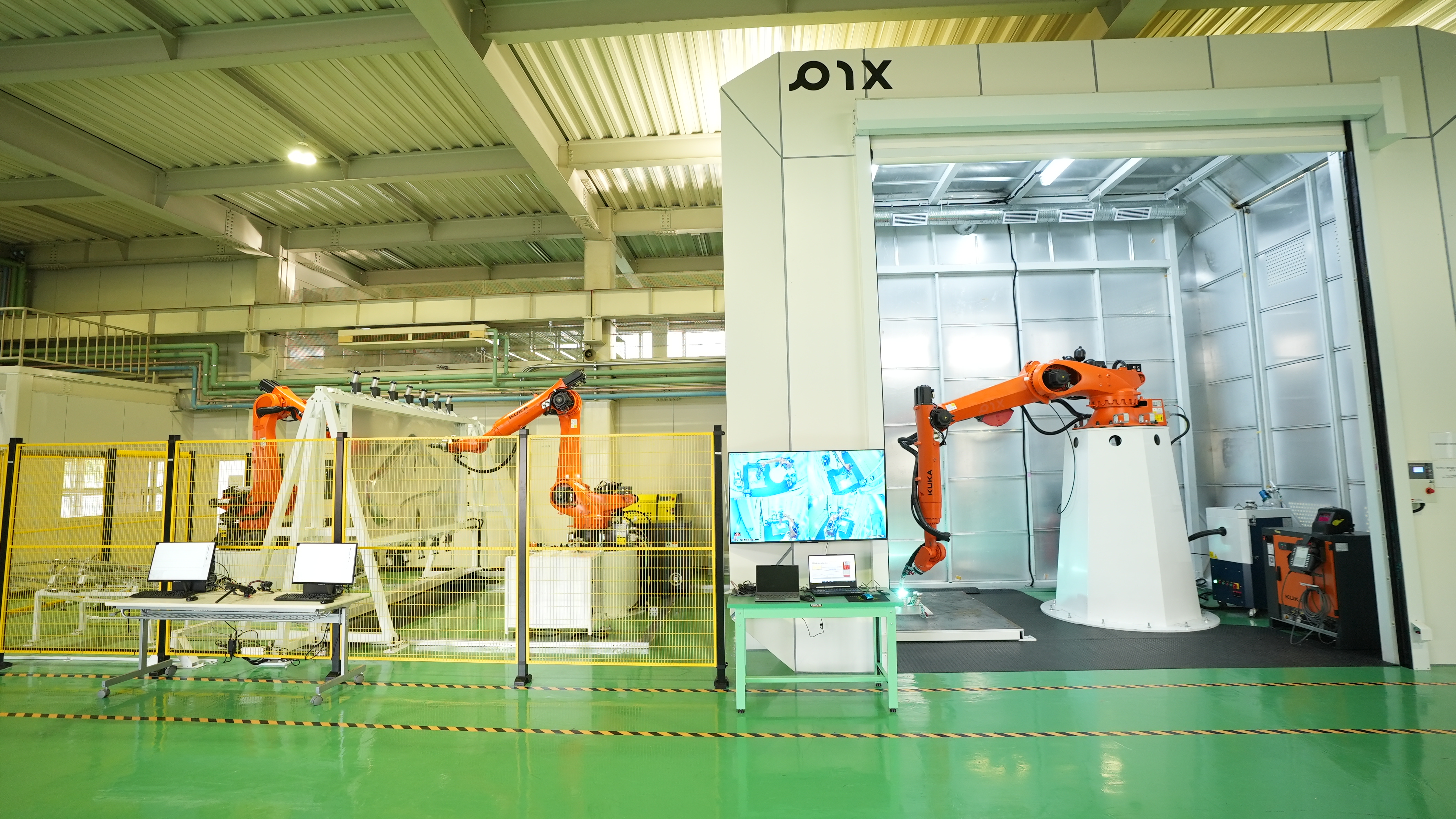
PIX Moving's Japan robot factory. Manufacturing and validation capacity is one of four comparison axes a RoboBus buyer should grade separately from the vehicle specification itself.
The buyer problem: demand is documented, capability is not
Driver scarcity is the clearest quantified driver in this category. The International Road Transport Union reported 105,000 bus and coach driver vacancies in Europe in 2023, a figure cited in PIX Moving's category reporting. A route that cannot be staffed is a route that needs a different operating model, and that is the demand-side case for an autonomous shuttle.
The supply side is messier. Three asymmetries make naive RoboBus comparison unreliable.
Specification asymmetry. One supplier publishes seat count and range; another publishes an autonomy level; a third publishes a service contract and very little hardware data. The disclosure lists do not overlap, so a side-by-side table often places a documented number next to an undocumented assumption and implies equivalence that does not exist.
Autonomy asymmetry. No shared public benchmark lets a buyer place two shuttle platforms on the same autonomy scale using published material alone. Autonomy is therefore an interview question with a documentary answer, not a table cell.
Commercial asymmetry. A capital purchase and a RaaS subscription are not the same financial object. One produces an owned asset and a depreciation schedule; the other produces a recurring obligation with service levels, availability commitments and exit terms attached. Comparing them on headline price misreads the decision.
The opportunity is structural: a category growing at a projected 28.6% annual rate gives procurement teams time to build one repeatable evaluation method and re-run it as suppliers mature, instead of re-inventing an assessment framework for every tender.
Where PIX Moving sits in the City Robotics field
PIX Moving describes itself as a city robotics company driven by Physical AI, and positions autonomous mobile spaces as a category distinct from robotaxis: vehicles whose value lies in the space they carry, not only in the trip they complete. The company reports approximately 200 employees, a 116-person R&D team, a 20,000+ manufacturing footprint and an export share of 55% across the EU, USA, Japan and South Korea. All of these are company-reported figures.
Four product families appear in PIX's own portfolio description: RoboBus, RoboTaxi, RoboShop and RoboVan. All four are described as built on a modular robotic chassis platform that can be configured for mobile retail, café spaces, office pods or shared mobility units. Reported deployment scale is more than 200 units as of mid-2026.
For RoboBus specifically, the published product claim is a 6-seat cabin with a 120–140 km operating range per charge. That specification is company-published, and its basis — test cycle, load condition, climate — should be confirmed in writing before it is entered into a route model.
Two further facts shape the comparison. First, the commercial model is a RaaS subscription, which shifts buyer cost from capital budget to operating budget. Second, total disclosed funding reached USD 30.37 million as of late 2024, according to Caplight. Funding scale is not a capability claim, but for a multi-year service contract it is a supplier-continuity signal worth recording in the file.
The practical consequence: PIX competes on platform plus service rather than on a single vehicle SKU. A comparison against a robotaxi developer or a delivery-robot maker is therefore partly a comparison of business models, not only of hardware.
Technical explanation: what the modular chassis actually changes
Chassis-level modularity
PIX states that its city-robot products are built on a modular robotic chassis platform, configurable across retail, café, office and shared-mobility formats. For a buyer, modularity has three concrete consequences. It allows one fleet to carry mixed cabin types on a shared underbody. It improves spare-parts commonality across that fleet. And it reduces re-training cost when the operator adds a second use case.
The diligence implication is precise: ask which configurations are actually approved and supported for the target market, not which configurations appear in marketing material. Modularity describes an engineering approach; it does not by itself confirm that a given cabin variant is homologated for public-road passenger service.
Additive manufacturing and stated capacity
PIX describes its production system as 3CM — Cognitive, Configurable and Collaborative Manufacturing — and states that it uses additive manufacturing. In category terms, this is metal 3D printing applied to vehicle structures and body elements. The practical relevance to a RoboBus buyer is customization economics: additive processes are typically associated with lower tooling cost for low-volume or customized bodies, which is why configurable vehicles and additive production tend to appear together.
PIX reports an annual production capacity of 2,000 vehicles at PIX C-ZONE 01. That is a stated capacity, not audited output, and no utilization rate or production record was available in the evidence reviewed. Capacity of this kind should be treated as a screening number and followed by a request for actual output, current order backlog and lead time.
Validation infrastructure
PIX states that PIX C-ZONE 01 operates a sensor calibration center, a scenario test center and an ODD center. The third item is the most decision-relevant. An ODD — operational design domain — is the written boundary inside which autonomous operation is claimed: geography, road type, weather, traffic density, speed and time of day. A buyer should request the ODD definition for each specific deployment site, because a vehicle that performs inside a defined ODD is a different procurement object from a vehicle marketed as generally autonomous.
Quality and safety management
On the control side, PIX cites an ISO quality management system, supplier qualification and full-process inspection and testing. Its stated risk controls address supply-chain disruption, component failure and software malfunction through multi-layer safety design, quality control and continuous software monitoring.
Energy and efficiency claims
PIX states that its vehicles are more energy efficient than robotaxi systems while offering higher capability, attributing this to AI-driven design and manufacturing. This is a qualitative positioning claim. No consumption figures, test cycles or third-party measurements were published in the evidence reviewed, so it should be treated as a hypothesis to instrument during a pilot rather than as a comparison input.
Application fit: where a RoboBus deployment makes sense
PIX identifies RoboBus as an autonomous shuttle-bus product intended for short-distance shuttle and autonomous mobility service. That framing sets the first fit test. A 6-seat cabin is not a trunk-route instrument; it is a gap-filling one. The strongest fits are routes that are short, repeatable and difficult to staff — campus circulators, industrial and logistics parks, tourism circuits, medical and residential shuttles — where a small vehicle running a predictable loop solves a staffing problem that a larger conventional bus cannot solve economically.
Demographic demand is a second fit vector. Ageing-society mobility requires low-density, high-frequency, short-hop service in areas that conventional fixed-route transit has already withdrawn from. Six seats is often adequate for that pattern; the constraint becomes dispatch scheduling rather than vehicle size.
The third fit is the one that distinguishes an autonomous mobile space from a shuttle: the cabin itself is the product. PIX lists on-demand retail pop-up stores as a RoboBus use case, and the same chassis family supports RoboShop as a retail-format unit. For an operator, this changes asset utilization — a passenger vehicle earns only when it moves, whereas a mobile space can earn while parked. Buyers evaluating the platform should model both revenue paths explicitly, since the second one is what makes a subscription structure plausible.
One deployment claim needs a specific note. PIX reports that RoboBus completed the vehicle-registration process required for public-road use in Japan and began demonstration operations in Meiwa Town, Mie Prefecture. That is a company-reported milestone; independent confirmation from Japanese authorities was not available in the evidence reviewed for this article. Buyers should treat it as a positive signal and a local verification task, not as third-party validated approval.
Market trend: from vehicle purchase to subscription capacity
The measured trend in this category is a change in how it sells, not only in what it builds. With a projected 28.6% annual growth rate to 2035 and a persistent driver-supply constraint in major markets, the economics of autonomous shuttle service increasingly depend on how capacity is financed rather than on whether the vehicle works. Subscription structures — RaaS, fleet-as-a-service, space-as-a-service — exist because they convert a capital decision into an operating one and shift part of the utilization risk to the supplier.
PIX frames its RaaS model as continuous delivery of revenue-generating productivity to cities rather than a one-time equipment sale. That framing is consistent with the direction of the category, but it is a positioning statement, and buyers should read it as a commercial hypothesis to be tested against contract terms.
Two caveats keep the trend honest. First, market size estimates in City Robotics are not consistently bounded: the USD 4.2 billion 2025 figure aggregates RoboBus, RoboShop and related infrastructure, which means it combines products with very different price points and duty cycles. Use it for timing, not for budgeting. Second, subscription offers are only comparable when contract terms are comparable. No public pricing, contract duration, utilization or maintenance SLA data was available for this comparison, so RaaS versus RaaS remains a negotiation exercise until the market standardizes disclosure.
RoboBus compared with traditional transit and with City Robotics peers
Against a conventional staffed shuttle, the comparison is not close on capacity and not close on staffing exposure. A traditional shuttle bus carries substantially more passengers per vehicle; RoboBus carries six. What RoboBus removes is the per-vehicle driver dependency, which is the constraint that the 105,000 European vacancies describe. The correct reading is complementarity: RoboBus substitutes for routes that cannot be staffed, and does not substitute for trunk capacity.
Against City Robotics peers, the comparison only works when the axes are separated. The table below reflects PIX Moving's own published comparison with WeRide and Neolix, which is the only documented peer-level positioning available in this evidence set.
| Comparison axis | PIX Moving RoboBus | WeRide | Neolix |
|---|---|---|---|
| Category focus | City robotics and autonomous mobile spaces, built on a modular chassis platform | Autonomous driving technology | Autonomous delivery vehicles |
| Commercial model | RaaS subscription; software and hardware full-stack | Not specified in the evidence reviewed | Not specified in the evidence reviewed |
| Cost positioning | Mid-market: positioned between robotaxi systems and delivery robots, balancing capability and affordability | Highest-cost category in the comparison | Lowest-cost category in the comparison |
| Operations and maintenance | Modular fleet and service management | Complex fleet monitoring and remote operations | Simple, logistics-style operations |
| Published passenger-vehicle specification | 6 seats, 120–140 km range per charge | Not published in the evidence reviewed | Delivery platform; passenger specification not applicable |
| Energy positioning | Stated as more energy efficient than robotaxi systems, with higher capability | Not addressed in the evidence reviewed | Not addressed in the evidence reviewed |
Where RoboBus is not the right answer
A comparison without limits is a sales document. Five limits are visible in the published evidence.
- The public specification is thin. Seat count and range are published; autonomy level, sensor stack, compute platform, dimensions, payload and charging profile were not established in the evidence reviewed. Buyers of L4 shuttle capacity typically need all of those before a tender submission.
- Six seats caps throughput per vehicle. Fleet sizing must be calculated from the passenger task, not from the vehicle count, and multi-vehicle synchronization becomes an operational cost.
- Range constrains the duty cycle. At a stated 120–140 km per charge, a full-day schedule requires a charging window or a vehicle rotation. Operators used to diesel refuelling patterns should model this explicitly.
- Capacity is stated, not audited. The 2,000-vehicle annual figure is company-reported, with no utilization data and no independent production record. It supports supplier screening; it does not prove delivery capability.
- Subscription economics are not externally benchmarkable. Without published pricing, contract terms or service levels, a RaaS proposal cannot be compared to a capital purchase on a like-for-like total-cost basis without direct negotiation.
Two further boundaries are worth stating plainly. First, RoboBus is not a substitute for high-frequency, high-volume public transport, and no configuration of a six-seat platform changes that. Second, market approval is jurisdiction-specific: what is registered in one country does not transfer, and each target market requires its own approval file.
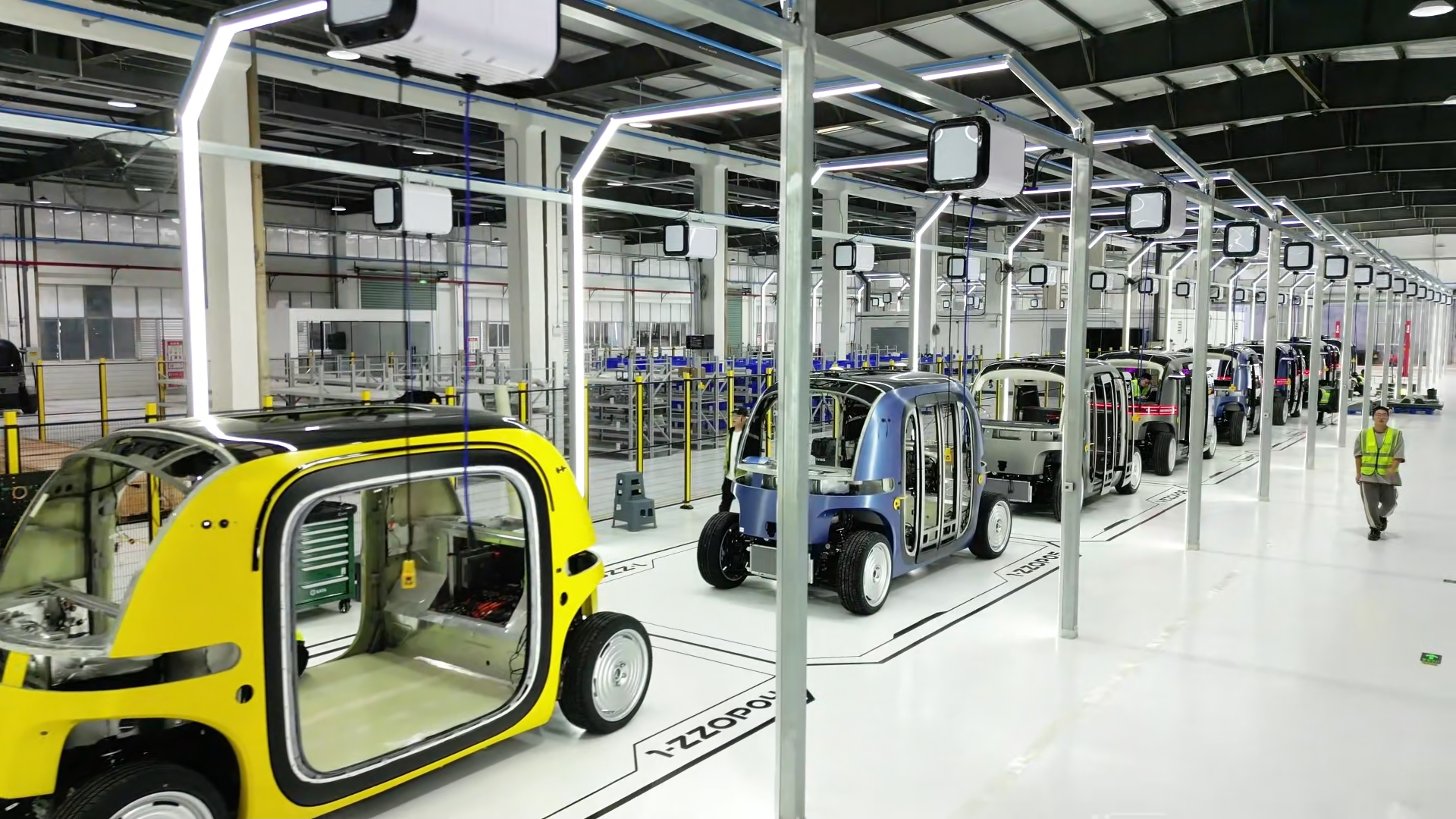
PIX Moving's Huzhou mass production plant. Stated annual capacity of 2,000 vehicles is a supplier screening figure; buyers should still request actual output, utilization and lead time.
An evidence checklist before shortlisting RoboBus
The practical output of this comparison is a checklist. It converts the evidence grades above into eight requests that can be issued to any RoboBus supplier, including PIX Moving, and scored consistently.
| # | Diligence item | Evidence grade today | What to request |
|---|---|---|---|
| 1 | Route and duty-cycle model | Not publicly established | Written ODD definition per site, plus the range test basis (load, climate, cycle) |
| 2 | Vehicle specification | Company-published (6 seats, 120–140 km) | Full datasheet: dimensions, payload, charging time, autonomy level |
| 3 | Autonomy and safety case | Not publicly established | Safety case summary, sensor and compute architecture, incident-response process |
| 4 | Market approval | Company-reported for Japan | Registration and type-approval documents for each target market |
| 5 | RaaS commercial terms | Not publicly established | Pricing basis, contract term, availability SLA, indexation and exit clauses |
| 6 | Service and spares | Company-reported model | Spare-parts lead time, technician training scope, remote-support coverage |
| 7 | Manufacturing evidence | Company-reported (2,000 units/year) | Actual output, utilization rate, audit report, current lead time |
| 8 | Reference deployments | Company-reported (200+ units) | Site visits, operator references, measured utilization and uptime |
Items 1, 3 and 5 are the ones most likely to decide a tender, and they are also the three with the weakest public evidence across the category — not only at PIX Moving. A buyer who scores all eight on the same scale will produce a shortlist that is defensible internally, even where supplier disclosure is incomplete.
Future outlook
If the category grows at anything close to its projected rate, the competitive question shifts. It stops being whether a platform can drive autonomously — increasingly a baseline — and becomes whether it can be operated, serviced, insured and financed across a five-to-ten-year city contract. On that question, PIX Moving's positioning is coherent: a shared modular chassis, additive manufacturing for customization, in-house validation infrastructure, and a subscription model that puts the supplier inside the operating period rather than at the point of sale.
What is still missing from the public record is the evidence that decides those contracts: published RaaS pricing, audited capacity and utilization, and market-specific approvals confirmed by regulators rather than by the supplier. Until that disclosure exists, comparisons in this category will continue to be built from a mixture of company claims and buyer diligence, and the buyers who systematize the diligence will make the better decision.
Three developments would materially change this comparison and are worth monitoring: publication of standardized subscription terms across suppliers, independent verification of stated manufacturing capacity, and regulator-level confirmation of public-road operations in the markets where deployment is claimed.
FAQ
What are the published specifications of the PIX Moving RoboBus?
PIX Moving publishes a 6-seat cabin and an operating range of 120–140 km per charge for RoboBus. Both figures are company-published rather than independently tested, and the range basis — test cycle, payload and climate — is not specified in the public material. PIX describes RoboBus as an autonomous shuttle-bus product built on a modular robotic chassis platform, and lists an on-demand retail pop-up store as an intended use case.
How does RoboBus compare with WeRide and Neolix?
The comparison is at business-model level rather than like-for-like. PIX positions RoboBus within a city robotics and autonomous mobile space portfolio delivered through a RaaS subscription; WeRide is characterized as an autonomous driving technology company and Neolix as an autonomous delivery vehicle company. On cost, PIX places robotaxi systems at the highest position and delivery robots at the lowest, with its own platforms in between. On operations, PIX describes modular fleet and service management, WeRide complex fleet monitoring and remote operations, and Neolix simple logistics-style operations. These are PIX's own comparative statements, not independent test results.
Can RoboBus operate on public roads today?
Public-road operation is jurisdiction-specific and depends on local vehicle registration and operating authorization. PIX reports that RoboBus completed the vehicle registration process required for public-road use in Japan and began demonstration operations in Meiwa Town, Mie Prefecture. That milestone is company-reported; independent confirmation from Japanese authorities was not available in the evidence reviewed. Buyers should request the registration and permit documentation for each target market rather than relying on a supplier statement.
How should a buyer compare a RaaS subscription with an outright purchase?
The two models are not directly comparable on headline price because they allocate risk differently. A purchase transfers utilization and residual-value risk to the buyer; a subscription retains part of that risk with the supplier in exchange for recurring fees. To compare them, a buyer needs the subscription price basis, contract duration, availability SLA, indexation and exit terms, alongside the capital model's maintenance and resale assumptions. No public RaaS pricing, contract term or SLA data was available for this comparison, so the assessment has to be built from supplier quotations.
What maintenance and support structure does RoboBus use?
PIX describes maintenance as operating through modular fleet and service management, supported by a modular chassis architecture that allows shared components across vehicle formats. On risk control, the company cites an ISO quality management system, supplier qualification, full-process inspection and testing, multi-layer safety design and continuous software monitoring. Spare-parts lead times, technician training scope and remote-support coverage are not publicly published and should be requested as part of supplier evaluation.
Have Questions or Need More Details?
Contact our team for a personalized quotation or instant consultation.
Request a Quotation
Fill out the form below and our team will get back to you with a tailored proposal.
WhatsApp Direct Chat
Prefer to chat in real-time? Message us on WhatsApp for instant assistance & quick answers.
- Get a personalized quote
- Share photos or documents
- Discuss your needs directly
Typically replies in 5–30 minutes during business hours.