
RoboShop vs. Autonomous Kiosks: A PIX Moving Buyer Comparison
RoboShop vs. Autonomous Kiosks: A PIX Moving Buyer Comparison
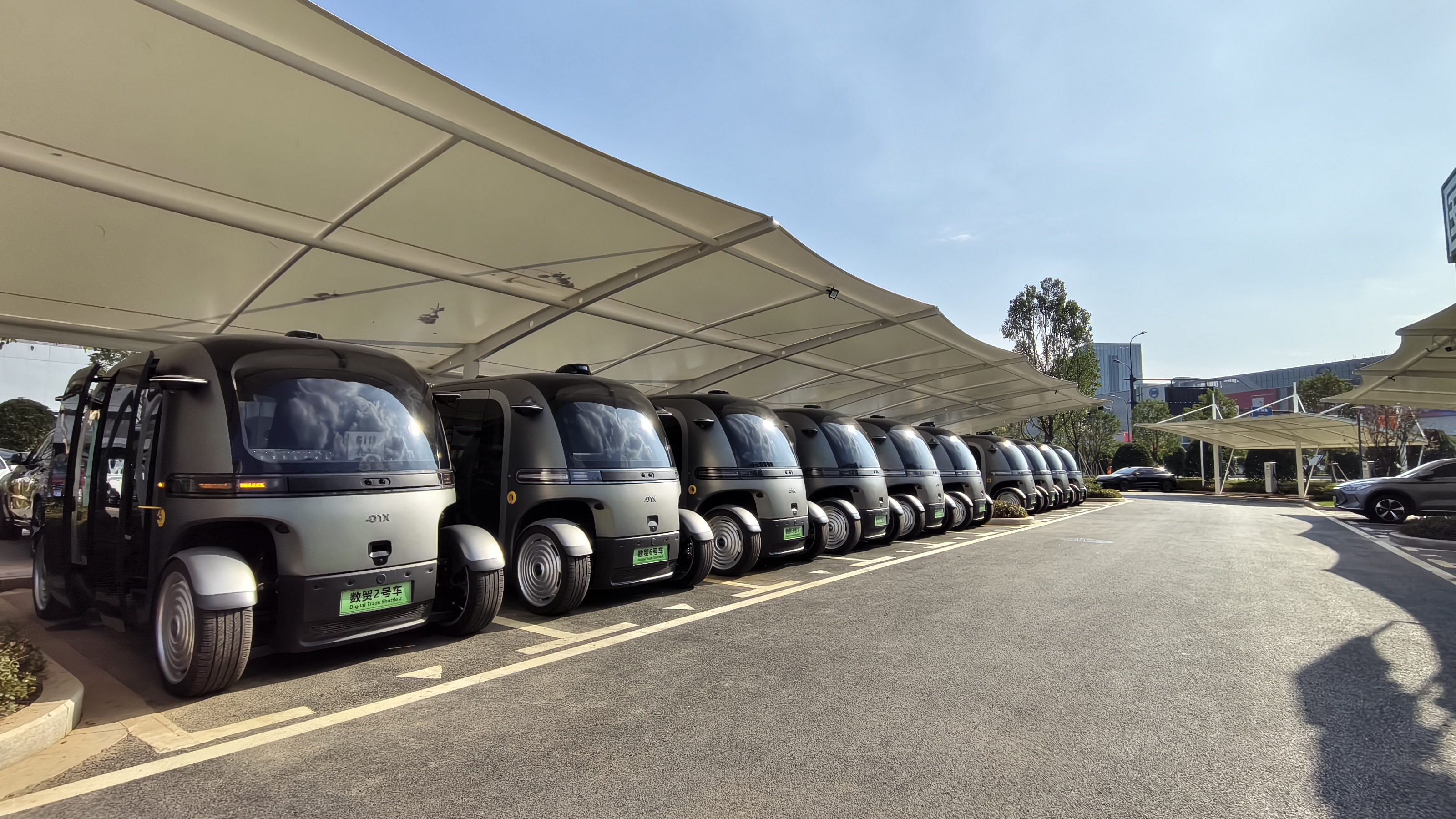
Autonomous retail hardware is being compared the way vehicles and vending infrastructure are compared: by duty cycle, weather exposure, site geometry, approval path and service model. The shortlists that reach that stage usually contain two very different machine classes. Sidewalk-scale autonomous kiosks are built around small footprints and predictable pedestrian loops. PIX RoboShop sits in the other class — a vehicle-scale mobile retail space that can be repositioned across a campus, a transit plaza or an industrial park.
This comparison sets the two classes side by side using published specifications rather than category claims. For PIX RoboShop, three published figures carry most of the decision weight: an IP65 protection rating, a 140 km range with air conditioning switched off (120 km with it on), and a minimum turning radius of ≤4.8 m achieved through four-wheel steering. Each answers a different buyer question, and each also draws a boundary that site planners should respect.
Why autonomous retail is being procured differently in 2026
Two procurement streams are converging on the same hardware. Cities and campus operators want revenue-generating services that do not add permanent staff. Retail and brand operators want sales footprints that can follow demand instead of waiting for it. Subscription structures — Robotics-as-a-Service, and fleet-as-a-service at city level — make both streams easier to budget because they move spending from capital purchase toward operating cost.
The market data supports the direction, though not the precision. Grand View Research values the global smart cities market at USD 1.0 trillion in 2025 and projects USD 8.8 trillion by 2033. Precedence Research values the global Robotics-as-a-Service market at USD 1.96 billion in 2024 and projects USD 10.41 billion by 2034.
Estimates for the same RaaS market diverge sharply. The Business Research Company projects USD 67.85 billion by 2030, while Grand View Research projects USD 4.12 billion by 2030. The gap is definitional: analysts disagree on whether the category counts hardware only or the full operational service wrapped around it. Buyers reading market reports should treat the growth direction as the usable signal and the absolute numbers as a range, not a target.
The practical implication is that diligence budget is better spent on the unit specification than on the market forecast. That is where the RoboShop-versus-kiosk comparison becomes concrete, and it is why the specification list matters more than the category label.
What PIX RoboShop is
PIX Moving is a city robotics company founded in 2017 and driven by Physical AI. Company data lists around 200 employees, an R&D team of 116, an export share of 55% and principal markets in the EU, the United States, Japan and South Korea. Its portfolio — RoboBus, RoboTaxi, RoboShop and RoboVan — is organized around what the company calls Autonomous Mobile Spaces: city robots with spatial form, built on a modular robotic chassis platform rather than on a conventional vehicle cabin.
PIX RoboShop (model PIX RoboShop) is the retail configuration of that platform, listed as an autonomous retail robot for smart retail, urban mobility, tourism, events and smart city applications. The distinction from a fixed kiosk is structural rather than cosmetic. The retail space is mobile, so the address of the shop becomes an operating decision that can be revisited, not a lease decision that is fixed for years.
Its published platform figures are the ones procurement teams usually circle first:
- Overall dimensions: 3820 mm × 1900 mm × 2260 mm
- Wheelbase: 3020 mm; front and rear wheel track: 1620/1620 mm
- Vehicle protection rating: IP65
- Maximum speed: ≤40 km/h drive-by-wire, ≤35 km/h autonomous driving
- Driving range on common road conditions: 120 km with air conditioning on, 140 km with air conditioning off
- Minimum turning radius: ≤4.8 m with four-wheel steering
- Maximum gradability: 20%
- Braking distance at 20 km/h, half load: ≤4.2 m
- Battery system energy: 31.94 kWh
- Interior cabin height: 1750 mm; floor ground clearance: 360 mm; minimum ground clearance: 140 mm
Two figures are frequently read past: the 1750 mm interior cabin height and the 360 mm floor ground clearance. Together they define how much retail fit-out fits inside the space and how customers physically meet the unit. They are also the numbers most likely to decide whether a proposed format is realistic before any commercial discussion begins.
The three specifications that carry the most procurement weight
IP65: what the rating covers, and what it does not
The platform is published with an IP65 protection rating, meaning a dust-tight enclosure protected against water jets. The operational consequence is direct: a RoboShop can be specified for open plazas, promenades, curb-side positions and event sites where rain exposure and periodic washdown are normal, without depending on a permanent shelter structure to stay operable.
The boundary matters as much as the benefit. IP65 describes the enclosure, not the operating format. Cleaning regimes, product handling and local food-safety requirements remain the operator's responsibility, and buyers specifying temperature-controlled or prepared-food formats should confirm the internal fit-out and utility provisions for the exact configuration they intend to order.
140 km without air conditioning: reading range figures correctly
PIX Moving publishes a range of 140 km on common road conditions with air conditioning off, and 120 km with it on, drawing on a 31.94 kWh battery system. The 20 km difference is the published cost of cabin climate control, and it suggests a simple planning rule: in hot or humid markets, route and charging plans should be built on the 120 km figure, with 140 km treated as a cool-season ceiling.
Duty cycle, not headline range, decides whether a unit type works. A 120 km envelope covers a campus, a district or a multi-stop event circuit, but it also means charging windows have to be scheduled deliberately. Buyers should map shift length, average operating speed (autonomous operation is capped at ≤35 km/h) and dwell time at each stop before accepting any range figure from any supplier.
≤4.8 m turning radius: the specification that decides site feasibility
Four-wheel steering gives the platform a minimum turning radius of ≤4.8 m. For a unit measuring 3820 mm long and 1900 mm wide, that is a meaningful agility figure, because it allows repositioning within plaza-scale circulation envelopes instead of multi-point maneuvers or dedicated turning loops.
It is also the specification most often misread. A 4.8 m turning radius is vehicle-class maneuverability, not footpath-class agility. A unit of this size is designed for service roads, plazas, wide promenades and campus loops. Site plans that route retail traffic through narrow pedestrian corridors, market alleys or indoor arcades should be tested against the published dimensions before the comparison moves forward. Related figures that affect the same decision include the 20% maximum gradability, the 140 mm minimum ground clearance and the braking distance of ≤4.2 m measured at 20 km/h under half load.
Comparing RoboShop with sidewalk-scale autonomous kiosks
The fair way to compare a vehicle-scale mobile retail space with a sidewalk-scale kiosk is not to score them against each other, because they are not competing for the same site. It is to compare what each class asks the buyer to verify. The table below is organized that way: the RoboShop column uses published figures, and the kiosk column lists the questions that decide whether a footpath-class unit fits a given location.
| Decision dimension | PIX RoboShop (published) | Sidewalk-scale autonomous kiosk (verify per vendor) |
|---|---|---|
| Physical class | 3820 × 1900 × 2260 mm; wheelbase 3020 mm; interior cabin height 1750 mm | Request overall dimensions and confirm they fit the intended corridor, pad or arcade |
| Weather protection | IP65 enclosure rating | Request the published ingress protection rating for the enclosure |
| Energy and duty cycle | 31.94 kWh; 120 km with air conditioning on, 140 km with it off | Request tested runtime under your climate and payload rather than peak figures |
| Maneuverability | Four-wheel steering, ≤4.8 m minimum turning radius, 20% gradability | Confirm steering type and the achievable turning envelope on the actual surface |
| Service formats | Interior layout configurable; applicable to retail, mobility, tourism, events and smart city use | Confirm whether the enclosure accepts the intended format and merchandising volume |
| Approval pathway | UNECE approvals published for PIX RoboBus; confirm which apply to the RoboShop configuration in your market | Confirm local footpath robot or low-speed automated driving permits for each city |
| Sourcing model | OEM, ODM and in-house manufacturing; lead time 30–45 days; MOQ 1 unit | Confirm MOQ, customization scope and production location |
| Procurement terms | EXW / FOB / CIF / DDP; factory acceptance test (FAT) and pre-delivery inspection (PDI); payment terms negotiable | Confirm Incoterms, inspection rights and warranty terms |
The comparison usually resolves on three questions. First, does the site geometry match the machine class — a plaza and a narrow footpath are not interchangeable. Second, does the product format fit the enclosure, including interior height and merchandising volume. Third, does an approval path exist in the target market for the configuration being ordered. A buyer who answers those three questions honestly will usually find that the two classes are complementary rather than interchangeable: kiosks suit dense pedestrian zones, while vehicle-scale mobile spaces suit managed campuses, plazas and loop-based service areas.
Where RoboShop fits — and where the boundaries are
PIX Moving states that its products have been used by governments, smart city authorities, real estate developers, community operators, universities, research institutions, industrial parks and large campuses. That list describes the natural deployment envelope for a mobile retail space: sites with defined internal circulation, a managed operator and a captive or semi-captive footfall pattern.
The boundaries are equally specific, and buyers should write them into the evaluation record rather than discover them during installation.
- Footprint. At 3820 mm long and 1900 mm wide, the unit is not a footpath-scale device. It needs road, plaza or service-lane geometry, plus a defined standing position with safe customer approach.
- Energy planning. The 120 km figure with air conditioning on is the realistic basis in warm markets. Charging windows must be scheduled into the operating day rather than assumed to fit around it.
- Speed envelope. Autonomous operation is capped at ≤35 km/h. This suits closed or low-speed environments and predefined loops; it is not a high-speed road service model.
- Approval scope. The UNECE certifications published in the available records are associated with PIX RoboBus. Whether the same approvals extend to a specific RoboShop configuration in a specific market should be confirmed during evaluation, not assumed.
- Permanent structures. A mobile unit does not replace permanent retail infrastructure. Formats depending on fixed utility connections need their requirements validated with the supplier before the interior layout is finalized.
- Fleet evidence. PIX Moving reports more than 100 units with two years of stable operation, but the record in the available data is referenced against RoboBus. It demonstrates platform and support maturity rather than a RoboShop-specific installed base.
From evaluation to execution: what the supplier package includes
Execution risk in city robotics is rarely about the vehicle specification. It is about whether a supplier can move from a one-unit pilot to a configured fleet without breaking lead times, documentation or spare-part supply. The published production and procurement data for PIX Moving addresses that stage directly.
PIX Moving provides OEM, ODM and in-house manufacturing production services, and lists customization covering vehicle configuration, software, branding and interior layout. Production lead time is stated as 30–45 days, with a minimum order quantity of one unit and 100% inspection before delivery. Acceptance options include factory acceptance test (FAT) and pre-delivery inspection (PDI). Delivery terms cover EXW, FOB, CIF and DDP, and payment terms are negotiable. After-sales support is listed as remote diagnostics, OTA software updates, spare parts supply and technical support, with export markets covering Japan, South Korea, the Middle East, Europe and North America.
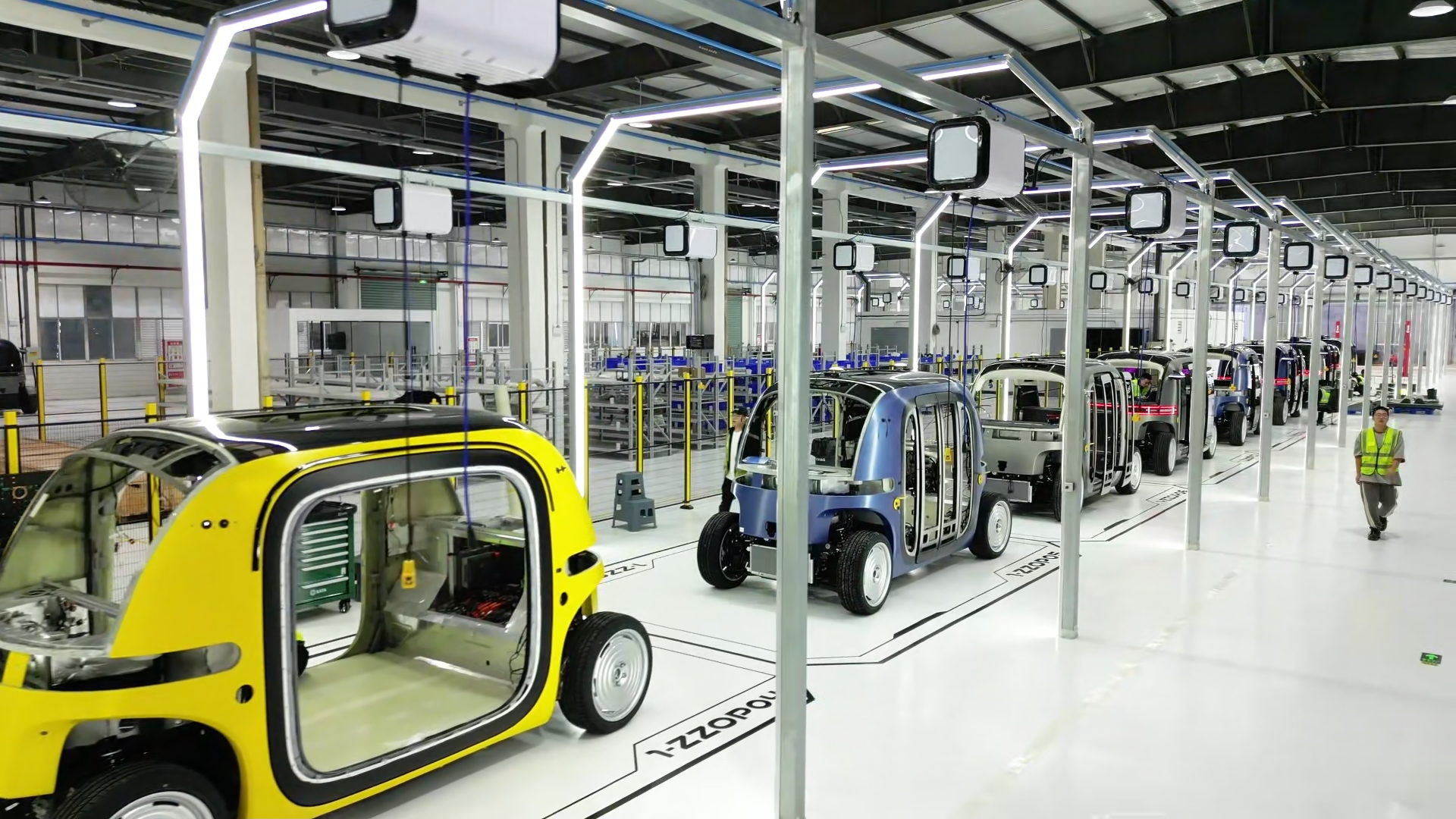
The manufacturing method is part of the capability picture. An Autodesk case study published in 2022 reports that PIX Moving uses metal 3D printing and generative design in Fusion 360 in chassis manufacturing, reducing part count by 10x and shortening lead time by 60%. That matters for buyers who need non-standard configurations, because design flexibility at the chassis level is what makes a customized interior or software variant commercially viable rather than a one-off engineering project.
Certification records published for the platform provide a verifiable compliance layer. The following approvals are listed, each tied to PIX RoboBus in the available data:
| Approval | Certificate reference | Authority | Issued |
|---|---|---|---|
| UN R17 — seat strength and anchorage | WT24L0500330 | Shanghai Motor Vehicle Inspection Certification & Tech Innovation Center (SMVIC) | 2024-08-20 |
| UNECE R100 — electric power train safety | E57100R03/030134*00 | Republic of San Marino — Authority for Homologation | 2024-09-27 |
| UNECE R51 — vehicle noise emission | E5751R03/090249*00 | EU / UNECE Contracting Parties | 2024-09-27 |
| UNECE R48 — lighting and light-signalling installation | E5748R04/220206*00 | Republic of San Marino — Authority for Homologation | 2024-09-27 |
What the deployment record does and does not prove
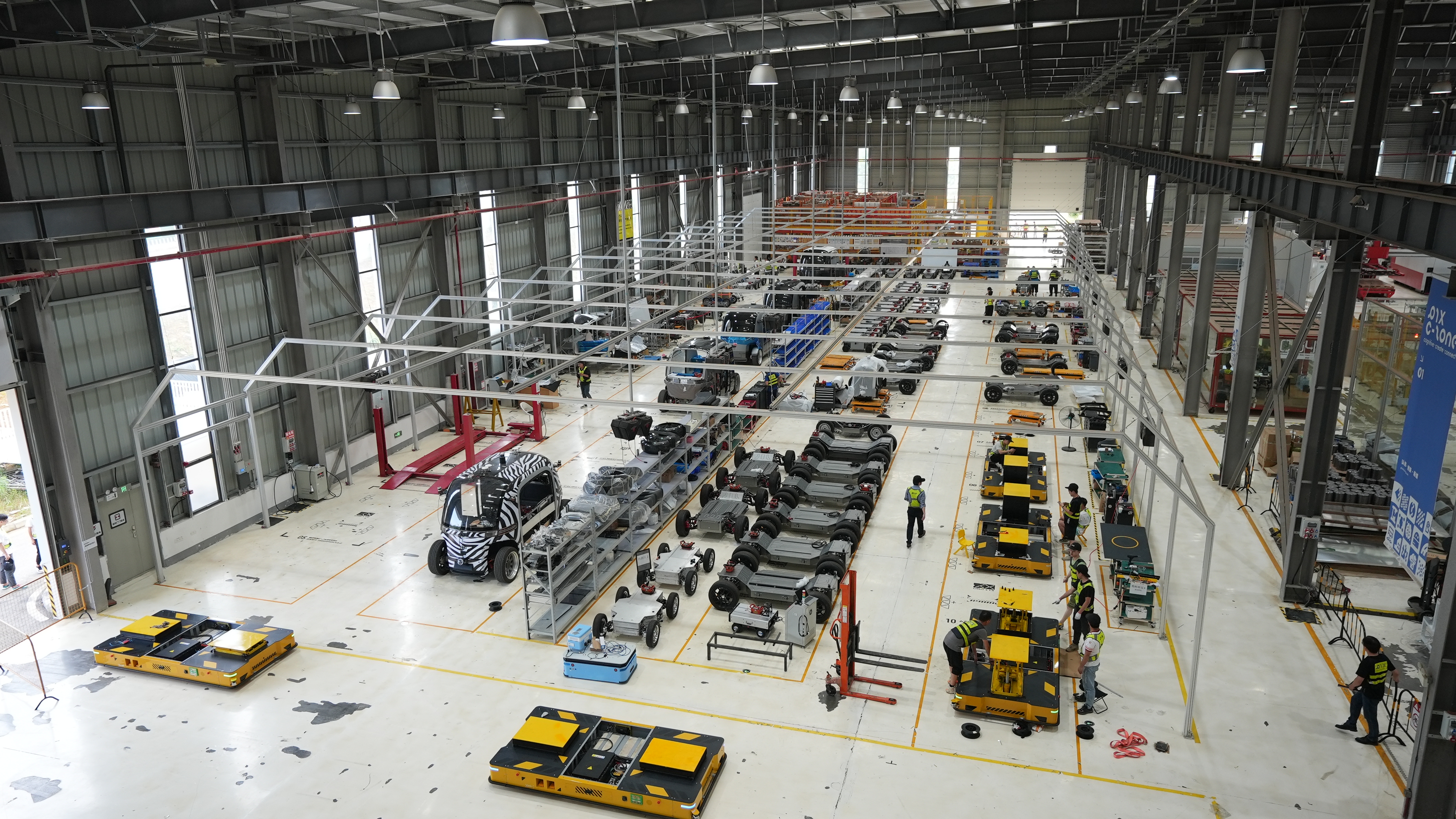
PIX Moving reports more than 100 units deployed with two years of stable operation, serving customers that include governments, developers, universities, mobility companies and commercial operators. The implementation record covers Australia, Brazil, Canada, Switzerland, China, Germany, Ecuador, Spain, the United Kingdom, Hong Kong, Hungary, India, Italy, Japan, South Korea, Luxembourg, Malaysia, the Netherlands, Portugal, Turkey, Taiwan, the United States and Vietnam.
Two caveats belong in the same paragraph as the claim. First, this is supplier-reported operating data, not an independently audited fleet report. Second, in the available records the deployment case is referenced against PIX RoboBus, so it evidences a platform and support organization operating across 24 markets rather than a RoboShop-specific installed base. Buyers evaluating RoboShop should ask for references in the configuration and market closest to their own deployment, and should treat the multi-market record as a maturity indicator rather than a substitute for that reference check.
Market trend analysis: subscription, standards and labour pressure
Three structural shifts shape the next buying cycle, and each one changes how a retail unit is evaluated.
Subscription is normalizing the commercial model. As the RaaS estimates cited earlier indicate, the category is growing even where its absolute value is disputed, and the reason is straightforward: cities and operators can budget a monthly service cost more easily than a capital purchase plus maintenance. For a mobile retail unit, that shifts the diligence question from purchase price to service coverage, uptime expectations and the terms under which a unit can be reconfigured or redeployed.
Low-speed automated driving is acquiring a standards spine. ISO 22737:2021 is the first international safety standard specifically for low-speed automated driving systems operating on predefined routes. Separately, China's Ministry of Industry and Information Technology has issued mandatory national standards for L3/L4 autonomous driving safety, effective July 2027. Both developments favor units designed around defined routes and managed environments, because predefined-route operation is the assumption the standards were written around.
Urban service demand keeps rising while labour supply tightens. The International Road Transport Union reported 105,000 vacant bus driver positions in Europe in 2023, with the figure projected to double by 2028. That figure concerns transit rather than retail, but the underlying constraint is shared: staffing urban services is getting harder and more expensive. It explains why autonomous units are increasingly evaluated as service-continuity tools rather than as technology demonstrations.
Future outlook
Over the next procurement cycles, the gap between a mobile retail space and a sidewalk kiosk is likely to narrow at the software layer and remain wide at the physical layer. Autonomy stacks, fleet management and subscription delivery are converging across the category, and an increasingly common development model is the open autonomous development platform, where operators integrate their own services on top of a supplied chassis. Physical class, however, will not converge quickly. A 3820 mm vehicle-scale unit and a footpath kiosk will keep serving different sites.
For buyers, that suggests a durable evaluation order: geometry first, energy and duty cycle second, approval path third, commercial model fourth. Those variables are hard to renegotiate after delivery, while branding, payment terms and service scope remain open to discussion. Sequencing diligence in that order is what separates a specification-driven purchase from a category-driven one.
FAQ
Is PIX RoboShop a kiosk or a vehicle?
It is published as an autonomous retail robot built on a modular robotic chassis platform, with overall dimensions of 3820 × 1900 × 2260 mm and a maximum autonomous driving speed of ≤35 km/h. In practical terms it is a vehicle-scale mobile space rather than a footpath-scale kiosk, which means it needs road, plaza or service-lane geometry rather than narrow pedestrian corridors. Classification and approval requirements depend on the market and should be confirmed locally.
What does the IP65 rating actually cover?
IP65 means a dust-tight enclosure protected against water jets. It allows the unit to be positioned in open, exposed locations such as plazas and promenades without a permanent shelter. It does not cover operating-format requirements such as cleaning procedures, product handling or local food-safety rules, which remain the operator's responsibility.
How far can a RoboShop operate on one charge in hot weather?
The published range on common road conditions is 140 km with air conditioning off and 120 km with air conditioning on, from a 31.94 kWh battery system. In hot or humid conditions the 120 km figure is the appropriate planning basis, with charging windows scheduled into the operating day.
How much space does a RoboShop need to turn around?
The published minimum turning radius is ≤4.8 m with four-wheel steering, on a unit 3820 mm long and 1900 mm wide. Related figures include 140 mm minimum ground clearance, 360 mm floor ground clearance, 20% maximum gradability and a braking distance of ≤4.2 m at 20 km/h under half load.
Can the retail interior be customized for a specific brand or format?
Yes. Published customization services cover vehicle configuration, software, branding and interior layout, supported by OEM, ODM and in-house manufacturing. The stated production lead time is 30–45 days, the minimum order quantity is one unit, and 100% inspection before delivery is listed, with FAT and PDI acceptance options and EXW, FOB, CIF or DDP delivery terms.
Specifications and certification references in this article are drawn from PIX Moving's published product and compliance data, and market figures are attributed to the third-party sources named inline. Configuration options and platform documentation are published by PIX Moving at pixmoving.com. Buyers comparing this class of equipment should request the specification sheet for the exact configuration and market they intend to order.