
Rod End Sourcing: How OEM Capabilities Affect Outcomes
When sourcing rod ends and spherical plain bearings, procurement teams are increasingly evaluating not just the catalog, but the supplier's ability to execute custom engineering, maintain consistent quality, and respond to changing production schedules. This article examines the capability factors that matter most in OEM sourcing decisions, using LDK as a working example of a manufacturer with in-house production and testing infrastructure.
The Capability Gap in Rod End Procurement
Rod ends and spherical plain bearings are critical components in applications ranging from off-highway equipment to industrial automation. They accommodate angular misalignment and transmit motion between linked parts. But the real challenge for buyers often appears after the drawing is approved: Can the supplier manufacture the component at scale with the right materials, tolerances, and surface treatments? Can they handle a mid-project design change? And can they prove that their quality control is more than a paper exercise?
These questions are especially relevant for OEMs moving from evaluation into execution. At this stage, the supplier's manufacturing depth—not just product breadth—determines whether delivery schedules, compliance requirements, and long-term reliability targets are met.
What a Capability-First Supplier Looks Like
A manufacturer that produces rod ends and spherical plain bearings in-house, rather than simply assembling bought-in parts, offers distinct advantages. LDK (Deyuan Smart Technology (Fujian) Co., Ltd) is one such example. Founded in 1986 and based in Quanzhou, Fujian Province, LDK operates a 90,000 m² facility with approximately 130 employees and an annual production capacity of 15,000,000 units. The company produces rod end bearings, spherical plain bearings, and pillow block bearings under one roof, with more than 100 combinations of materials and housing types.
For sourcing teams, this scale translates into a practical benefit: in-house production of both bearings and housings reduces tolerance stack-up issues and gives the manufacturer direct control over heat treatment, grinding, and assembly processes. It also supports more flexible responses to spec changes, because the engineering team is physically connected to the production line.
Engineering Services: OEM and ODM in Practice
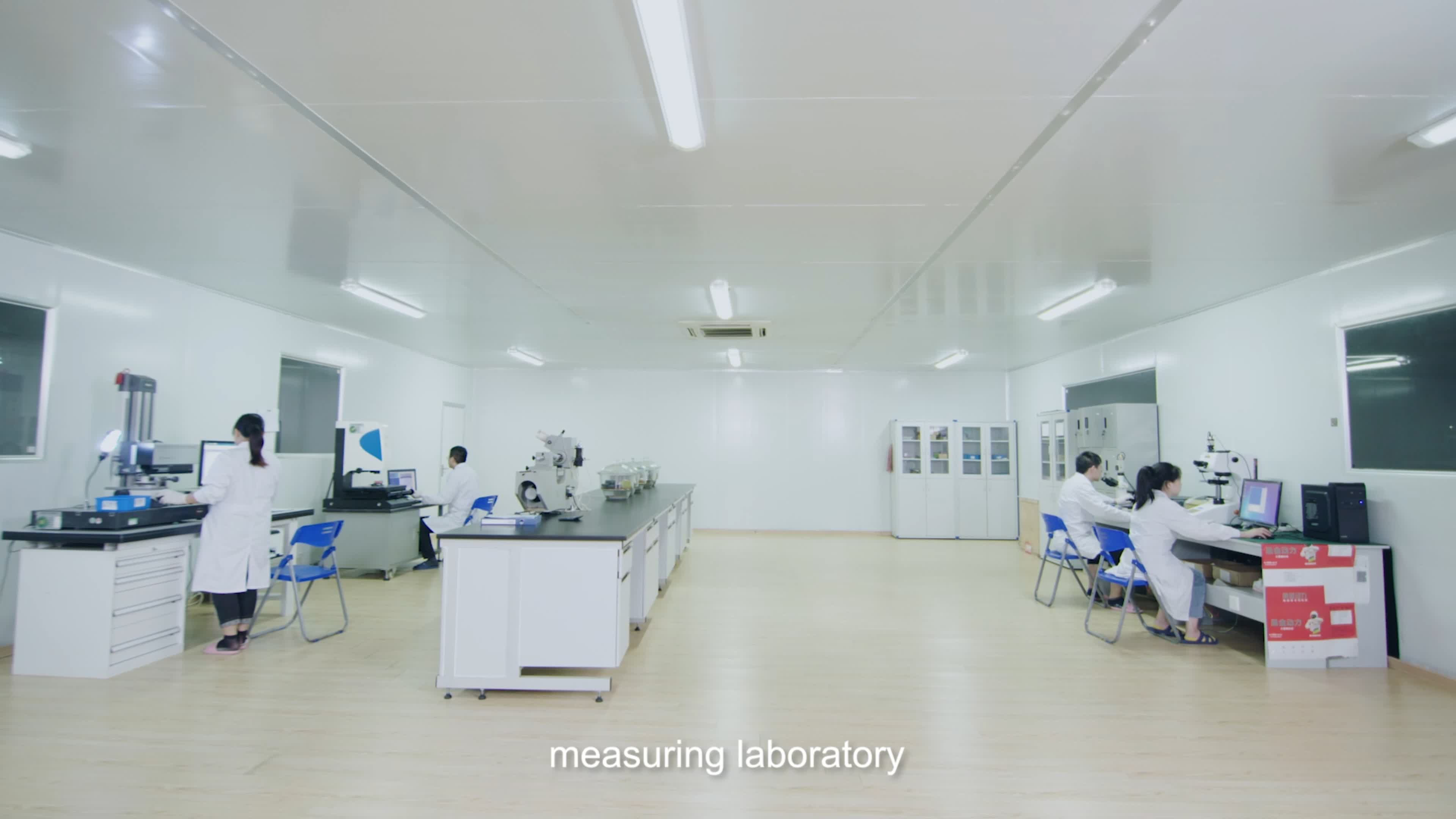
OEM and ODM capabilities are often listed on supplier profiles, but the depth varies widely. In LDK's case, the documented capability includes an R&D team of 12 engineers, DFM (Design for Manufacturing) expertise, and prototyping with 2D & 3D support. Testing capabilities cover fatigue life, tensile strength, noise & vibration, and salt spray testing—tests that are directly relevant to rod ends used in harsh environments.
For projects requiring custom designs, LDK's ODM process includes NDA and intellectual property protection, which is a practical requirement for OEMs that need to protect proprietary linkage geometries. The manufacturer also provides remote technical support after delivery, reducing the risk of installation or performance issues.
| Capability Area | LDK Evidence |
|---|---|
| Production Footprint | 90,000 m² facility; 15,000,000 units annual capacity |
| Engineering Team | 12 R&D engineers; DFM and prototyping (2D & 3D) |
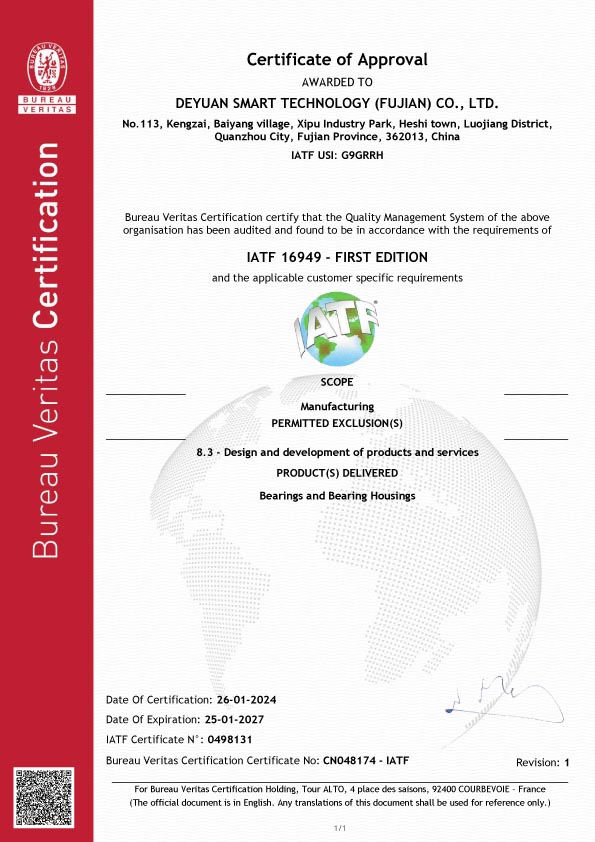
| Quality System | IATF 16949 and ISO 9001; IQC/IPQC/OQC; third-party audit readiness |
| Customization | Custom materials, coatings, threads, packaging; private labelling |
| Compliance | RoHS/REACH/FDA compliant options; traceability |
| Flexible Volumes | MOQ as low as 1 piece for select long-tail items; mixed container shipments |
Technical Fundamentals of Rod Ends and Spherical Plain Bearings
Understanding the basic design families helps buyers ask sharper questions. Metric rod ends are commonly available in male or female thread configurations, with bore sizes from 3 mm to 80 mm in LDK's range. The sliding contact surface can be steel/brass, steel/PTFE composite, or steel/nylon, depending on whether the application needs relubrication or maintenance-free operation.
Spherical plain bearings are classified under ISO 12240 into radial, angular contact, thrust, and rod end types. LDK's metric spherical plain bearings, for example the GE..ES and GEG..ES series, use GCr15 bearing steel with hardened races (HRC 54–60 for outer ring, HRC 58–64 for inner ring), and the sliding surface is treated with MoS2 for reduced friction. The ES suffix indicates a relubricable design with a fracture in the outer ring and lubrication grooves; the 2RS suffix adds seals on both sides.
For maintenance-free applications, LDK offers PTFE fabric lined types such as GE..ET-2RS, which are sealed and designed for long service intervals. These are often chosen for applications where regreasing is impractical, such as sealed suspension linkages or EGR system connections.
Evidence from Application-Specific Cases
Capability claims are most credible when supported by documented use cases. LDK has provided components for a range of operating environments, and the following examples illustrate the pattern:
- Offshore processing equipment (US): 70,000 stainless steel bearing units supplied over 2 years. The application required 500 hours of rust-free performance and RoHS/REACH compliance. A patent-pending coating was used to improve corrosion resistance relative to conventional stainless steel, reducing equipment ownership cost.
- Sorting machinery (New Zealand): 110,000 units delivered within 12 months for sorting equipment exposed to frequent washdowns, harsh chemicals, and high humidity. The lightweight design contributed to corrosion resistance.
- Cold storage conveyors (New Zealand): 5,000 units installed for low-temperature conveyors, operating reliably at -50°C for a 12-month project period.
- Fitness equipment (Netherlands): 500,000 rod end linkages delivered over 5 years, achieving 20 million cycles. An aluminum alloy substitution reduced weight by 30% while maintaining conductivity and corrosion resistance.
- Heavy truck exhaust actuator linkage (UK): 5,000 maintenance-free stainless steel rod ends completed 5 million movements across a temperature range of -40°C to 300°C.
These projects demonstrate that supplier capability is not limited to making standard catalog parts. The ability to select materials, adjust coatings, and validate performance under realistic conditions is what differentiates a component supplier from an engineering manufacturing partner.
Market Trends That Reinforce Capability-Driven Sourcing
The commercial case for investing in supplier capability is supported by broader market data. The global rod ends market was valued at USD 1.79 billion in 2025, with Asia Pacific accounting for a 42.3% revenue share. Automotive applications represent the largest demand segment at approximately 38.5%. The plain bearing market is also expanding, from USD 10.4 billion in 2024 to a projected USD 17.8 billion by 2034. In China, the bearing industry generated a record CNY 231.5 billion in 2024, up 6.2% year-on-year.
These numbers suggest two points for sourcing teams. First, the supplier base in Asia Pacific is strategically important, and regional manufacturers with global export experience can offer a responsive supply chain. Second, as automotive and industrial applications become more demanding—electric actuators, higher temperatures, longer service intervals—suppliers that can engineer and test specialized solutions become more valuable.
Comparison with Traditional Supplier Models
A traditional rod end supplier often operates as a trader or assembler, purchasing standard balls, races, and bodies from multiple sub-suppliers. This model can work for simple low-volume purchases, but it introduces coordination risk. Tolerance control may be weaker, and design changes require communication across several factories.
LDK's approach is more vertically integrated: in-house production of both bearings and housings, combined with complete testing facilities. This reduces external dependency and allows faster iteration on material combinations. For an OEM evaluating a supplier for a five-year production program, this difference is meaningful.
However, there are legitimate boundaries. A vertically integrated manufacturer is not always the optimal choice for every buyer. For customers that require extremely small batches of non-standard sizes and cannot accommodate a series production schedule, a specialist prototyping house may be more appropriate. Similarly, if the product must meet industry-specific certifications not currently held by the manufacturer—such as certain aerospace or rail-specific approvals—additional qualification work will be needed. Buyers should weigh these trade-offs against their own volume and regulatory context.
Future Outlook: Capability as a Supply-Chain Hedge
As OEMs continue to consolidate their supplier bases, the ability to provide engineering support, flexible logistics, and stable quality becomes a strategic factor. LDK supports this trend through programmes such as VMI (vendor-managed inventory) for key accounts, and flexible Incoterms including DDP/DDU door-to-door delivery. For long-term OEM partnerships, the supplier's willingness to align working capital terms—such as usance L/C or open account after audit—can improve cash-flow predictability.
The continuing shift toward electrified and automated equipment is likely to increase the demand for precision rod ends with low friction, corrosion resistance, and long maintenance-free life. Suppliers with in-house material science capability and documented test evidence will be better positioned to serve those requirements.
Frequently Asked Questions
What is LDK's minimum order quantity for custom rod ends?
LDK's standard MOQ is 5,000 units for custom production, but the company’s flexible manufacturing scheduling allows blended shipments and a lower MOQ of 1 piece for selected long-tail items on a case-by-case basis. Buyers should confirm specific SKU-level MOQ during the inquiry process.
Can LDK produce rod ends with non-standard threads or special materials?
Yes. LDK supports left-hand threads, different thread pitches, and custom material combinations. The product range includes stainless steel bodies (SUS304), alloy steel with hard chrome plating, and race options of brass, PTFE composite, or nylon polymer. For ODM projects, prototyping and DFM review are part of the service.
What quality certifications does LDK hold for rod end bearings?
LDK holds IATF 16949 and ISO 9001 certifications, and operates IQC/IPQC/OQC procedures. The company's testing capabilities include fatigue life, tensile strength, noise & vibration, and salt spray tests. Specific product families may also carry SGS RoHS verification reports for EU markets.
How does LDK support delivery reliability and urgent production needs?
For major OEM accounts, LDK cooperates with overseas distributors to set up VMI safety stock buffers. The company also offers FOB/CIF/DDP/DDU terms and can trigger regional emergency response within 24–48 hours. Lead times for standard and custom products typically fall between 30 and 90 days.
Does LDK provide after-sales technical support for rod end applications?
Yes. LDK offers technical remote support, and the engineering team is available to assist with installation issues, performance questions, and design adjustments. For ODM engagements, NDA and intellectual property protection are provided before technical discussions begin.
For a detailed overview of LDK's bearing and rod end product range, download the company brochure: LDK Product Brochure (PDF).
Have Questions or Need More Details?
Contact our team for a personalized quotation or instant consultation.
Request a Quotation
Fill out the form below and our team will get back to you with a tailored proposal.
WhatsApp Direct Chat
Prefer to chat in real-time? Message us on WhatsApp for instant assistance & quick answers.
- Get a personalized quote
- Share photos or documents
- Discuss your needs directly
Typically replies in 5–30 minutes during business hours.