
Rod Ends & Spherical Plain Bearings: An LDK Procurement FAQ
Rod Ends & Spherical Plain Bearings: An LDK Procurement FAQ
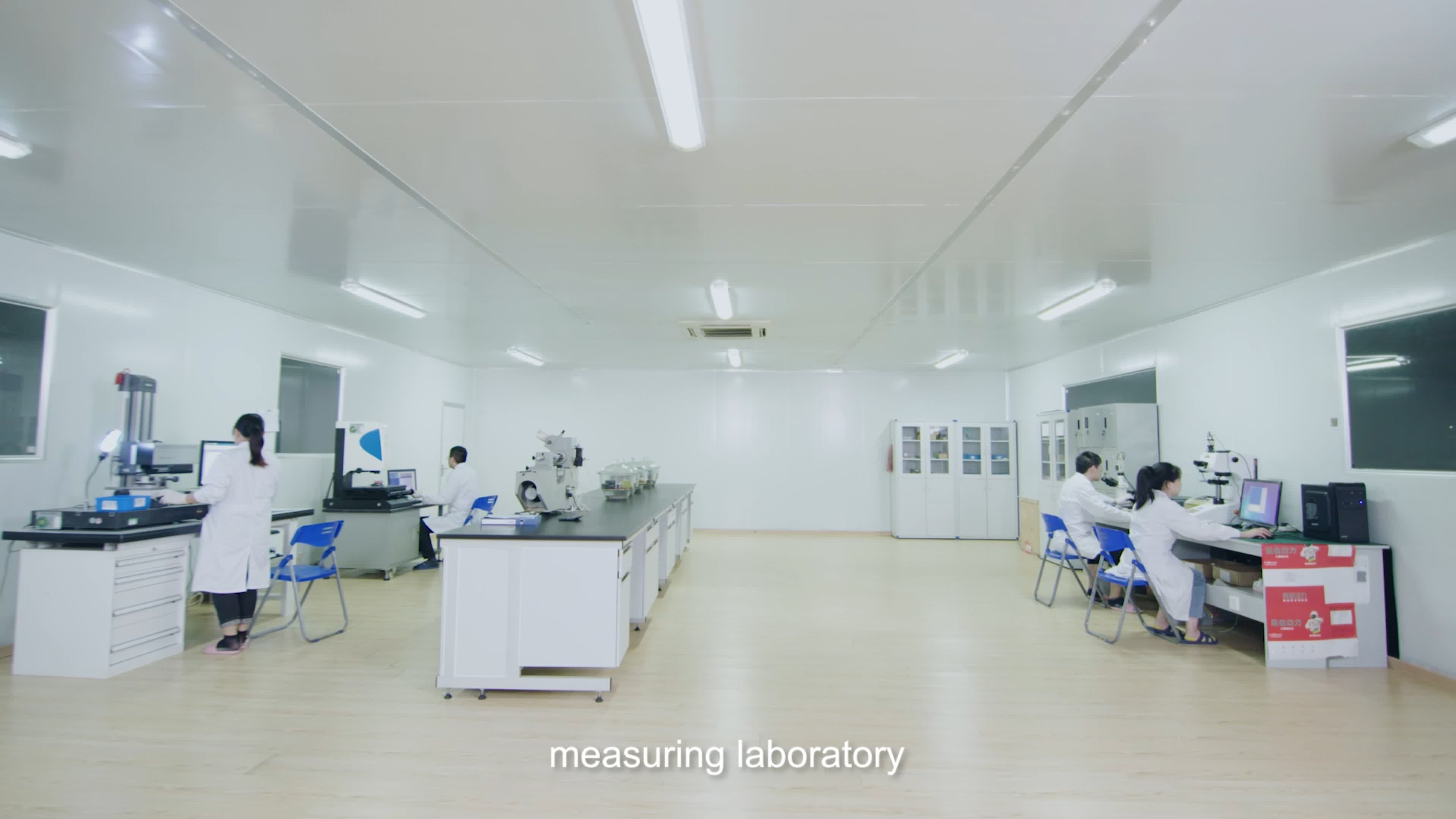
LDK measurement room in Quanzhou, Fujian, where dimensional checks support inspection records for rod ends and spherical plain bearings.
Two questions decide most rod end and spherical plain bearing supplier evaluations: which series actually fits the linkage, and what documentary evidence supports the supplier's capability claims. This FAQ answers both in the order they surface during supplier evaluation and first-order execution, using LDK as the reference supplier so that each answer can be checked against a document rather than a brochure sentence.
LDK is the trading name of Deyuan Smart Technology (Fujian) Co., Ltd, a bearing manufacturer established in 1986 and based in Quanzhou, Fujian Province, China. The company operates a 90,000 m² site with approximately 130 employees, including a 12-engineer R&D team, reports annual output of 15,000,000 units and a 60% export ratio, and lists Europe, North America, Latin America and Oceania as its main markets. Rod end bearings, spherical plain bearings and pillow block bearings are the core lines, and bearings and housings are produced in-house at the same site.
The ratings and comparisons that follow are editorial assessments of documented evidence. They are not benchmark results, they do not rank LDK against named competitors, and no load rating, service life or price should be inferred from a star rating.
1. Which product family does the linkage actually need?
Start with the mechanical interface, not the part number. A rod end bearing terminates a linkage with a threaded shank; a spherical plain bearing transfers load through an outer ring seated in a housing bore; a ball joint mounts through a stud or housing; and a clevis end forms the fork half of a pin joint. Crossing those boundaries changes the machining of the mating component, which makes the family decision the most expensive one to reverse after a drawing release.
| Family | Documented series in the LDK range | Where it typically appears in a mechanism |
|---|---|---|
| Rod end bearing | M, F, SI..E(S), SA..E(S), SI..C, SA..C, PHS, POS, PHSB, POSB, CHS, COS, SCHS, SCOS, CF, CM, CF..T, CM..T, CF..Y, CM..Y, CF..TY, CM..TY, JM, JF, JMX, JFX, NEXM, NEXF, NXM, NXF, SJM..T, SJF..T, SPHS, SPOS, NPHS, NPOS, NCHS, NCOS | Articulating end of a linkage, tie rod, control arm or cylinder rod, where the shank threads onto a shaft, tube or clevis |
| Hydraulic rod end | SIQ..ES, SIGEW..ES, SIR..ES, SF..ES, SK..E(S) | Cylinder and actuator connections where the eye is the load-carrying end and the bore designation runs larger than the standard rod end range |
| Spherical plain bearing | GE..E(S), GEG..E(S), GEEW..ES, GEEM..ES-2RS, GEZ..ES, SGE..C, SGE..PW, GE..PW, GE..C, GEG..C, GEBK..S, GAC..S, GAC..T, GACZ..S, GX..S, GX..T, COM, COM..T, SCOM, SCOM..T, MIB/AIB/SIB, YSSB, NSSB, WSSB | Press-fit joint inside a housing, eye or clevis, where the ball rotates or misaligns without a threaded shank |
| Ball joint | SQ..RS, SQZ..RS, CS, R..G, TK, CBL..DP, HJMX, B..GE..C | Linkages where the joint is enclosed or mounted through a stud or housing rather than a threaded rod end |
| Clevis end | Y series to DIN 71751 (Y4x8 to Y16x64); CEF and CEM families to DIN 71752 (CEF4x8 to CEF16x64, CEM6x12 to CEM20x40) | Fork half of a rod-to-lever connection, paired with a pin and often ordered separately from the rod end |
The interface distinction has a commercial consequence that is easy to miss in a first RFQ. A rod end bearing carries an adjustable thread and normally a locknut, so axial position is set during assembly. A spherical plain bearing has no shank and transfers load through its outer ring into the housing, so position is set by the housing bore and the retaining method. Specifying a spherical plain bearing where a rod end was intended forces a change to the mating part; substituting a rod end for a spherical plain bearing introduces a thread into a joint that was designed around a press fit.
The clevis end family is the most common late addition to a rod-end package. The Y series to DIN 71751 and the CEF and CEM families to DIN 71752 are separate line items with their own size designations, and the size notation combines two dimensions, for example Y10x40 or CEM10x20. Purchasing should therefore confirm the pin hole diameter, fork width, thread and material against the mating lever or cylinder drawing rather than ordering from the standard number alone.
2. How do you narrow the rod end bearing range to a single series?
Narrow by four attributes in this order: thread form, material, lubrication or liner concept, and sealing. Everything else — plating, packaging, marking — is a modification of the selected series rather than a route to it.
Thread form and mounting
In common rod end nomenclature the SI and PHS families are the female-threaded types and the SA and POS families are the male-threaded types. Buyers should confirm this on the drawing or datasheet rather than the ordering description, because descriptions copied from a legacy bill of materials are a regular source of male-for-female errors. The documented bore designations support the screening step: SI..E(S) and SA..E(S) run from 5 to 80, PHS and POS run from 3 to 30, and the miniature families M, F, NXM, NXF, NEXM, NEXF, JM and JF sit at the small end of the range.
Material and coating
The range includes 'S' prefixed model families that are listed as separate items from their base series — SCHS alongside CHS, SCOS alongside COS, SPHS and SPOS alongside PHS and POS, plus SGE..C and SCOM in the spherical range. When corrosion resistance is the reason for the shortlist, the material specification on the datasheet should carry the decision, not the prefix alone. The relevant RoHS scope in the supplier's file should also be checked against the exact part number being ordered.
Lubrication, liner and sealing
The range separates into relubricable and maintenance-free concepts, and the suffix is part of the part identity. PHS..EC, POS..EC, SPHS..EC, SPOS..EC, CF..T, CM..T, CF..Y, CM..Y, CF..TY and CM..TY are documented as distinct families, and a purchase order that drops a suffix is ordering a different item, not a variant of the same item. Sealing follows the same rule: -2RS designates a two-sided sealed construction in common nomenclature, and the sealed families in the spherical plain range include GE..ES-2RS, GEG..ES-2RS, GEZ..ES-2RS, GEEW..ES-2RS, GEEM..ES-2RS, SGE..ET-2RS and GEG..ET-2RS.
Size designation
The numeric element of a part number, such as SI20ES or GEG35ES-2RS, indicates the nominal bore in millimetres in common nomenclature. It is a screening value, not a load rating. Two suppliers can be asked for the same designation and deliver different rated capacity, so the engineering review should obtain the catalogue values for the specific part and confirm the static and dynamic ratings against the calculated linkage load.
3. When should a hydraulic rod end replace a standard rod end?
A hydraulic rod end belongs in the RFQ when the joint sits at the end of a cylinder or actuator and the bore requirement sits above what the standard range covers comfortably. The distinction in the LDK range is visible in the documented bore coverage rather than in marketing language: SIQ..ES runs from SIQ12ES to SIQ100ES, SIGEW..ES from SIGEW12ES to SIGEW200ES, SIR..ES from SIR20ES to SIR120ES, SF..ES from SF20ES to SF120ES, and SK..E(S) from SK10E to SK80ES, by comparison with the 5 to 80 coverage of the SI..E(S) and SA..E(S) standard families.
Bore coverage is a screening criterion, not a selection criterion. This FAQ does not publish load, pressure or service-life figures for these families, and none should be assumed from the series name or the size. The technical check is to request the datasheet for the exact part, confirm the rated capacity in the direction the linkage actually loads the bearing, and confirm that eye width, bore and thread match the cylinder rod before the drawing is released.
4. Which spherical plain bearing type fits the load case?
Spherical plain bearings divide by the direction of the load they are intended to carry and by how the joint is maintained. The LDK range covers radial, angular-contact and axial families, plus small-bore and maintenance-free variants, and the families are listed separately rather than as alternatives within one series.
- Radial families — GE..E(S), GEG..E(S), GEEW..ES, GEEM..ES-2RS, GEZ..ES, SGE..C, GE..PW, GEBK..S and GE..C — sit in a housing bore and accommodate misalignment while carrying load primarily perpendicular to the bore axis.
- Angular-contact families — GAC..S, GAC..T and GACZ..S — belong on the shortlist where the joint must carry combined radial and axial components.
- Axial families — GX..S and GX..T — are the thrust arrangement, carrying load along the bore axis while still permitting misalignment.
- Maintenance-free families — COM, COM..T, SCOM and SCOM..T — are documented as separate ranges and are the first candidates where relubrication access is impractical, subject to confirming the load and temperature envelope from the datasheet.
- Small-bore families — YSSB, NSSB and WSSB — cover the 3 to 16 designation range and are documented in both standard and V variants.
Sealing deserves its own line in the RFQ because it changes the maintenance plan, not only the part number. Where the joint sees washdown, dust or process contamination, the -2RS sealed members of the GE, GEG, GEZ, GEEW, GEEM and SGE families should be compared with the open versions on the same datasheet basis, including the effect of the seal on friction and on relubrication intervals.
5. What about ball joints and clevis ends?
Ball joints and clevis ends complete the articulation package and are frequently sourced from a different supplier purely because they were not part of the first inquiry. The documented ball joint families are SQ..RS and SQZ..RS from 5 to 22, CS from CS5/1 to CS16/1, R..G including R103G, R107G, R108G, R109G, R110G, R111G and I3-316, TK from 5 to 30, CBL..DP from 3 to 16, HJMX from 6 to 12, and B..GE..C from 4 to 30.
Clevis ends are where the standard number is most often mistaken for a specification. DIN 71751 is documented in the LDK range as the Y series, from Y4x8 to Y16x64 across eight size designations, while DIN 71752 is covered by two families: CEF from CEF4x8 to CEF16x64 and CEM from CEM6x12 to CEM20x40. Because the two standards serve different mating arrangements, the buyer should confirm the fork width, pin hole diameter, thread size and material against the mating component, and confirm whether the mating pin is part of the scope of supply. A clevis ordered against the wrong standard number is usually not returnable against a project schedule.
6. What OEM and customisation capability is documented?
The OEM capability statement records a monthly capacity of 300,000 units, a minimum order quantity of 5,000 units and lead times of 30 to 90 days, with on-time delivery stated at 95% or above. The supporting capability list covers private labelling, custom packaging, IQC/IPQC/OQC inspection stages, traceability, FMEA and 8D problem solving, alongside flexible manufacturing from low to high volume and in-house production of both bearings and housings.
For buyers, the planning consequence is straightforward. A 5,000-unit MOQ and a 30 to 90 day lead time define the replenishment window for a standard OEM programme, and a 30-day to 90-day band should be read as a range that depends on series, quantity and material rather than a committed date. Where a first article, a long-tail item or a coated variant falls outside that window, the applicable MOQ and lead time should be confirmed in writing on the quotation instead of being assumed from the programme terms.
On the design side, the ODM statement covers DFM support, 2D and 3D prototyping, durability, safety and performance testing, and NDA and intellectual property protection. The practical test is whether the supplier will quote against the drawing the buyer actually holds, including tolerances and inspection criteria, rather than against a catalogue equivalent that is only approximately the same part.
7. What compliance evidence can procurement verify?
The verifiable compliance file for the rod end and spherical plain bearing scope consists of four document groups: a quality management system certificate, two management system certificates covering environment and occupational health and safety, and two SGS RoHS verification reports that name the bearing families within their scope.
| Document | Certificate / report | Validity and scope note |
|---|---|---|
| IATF 16949:2016, certified by BV | IATF 16949 – First Edition | Issued 26 January 2024, valid to 25 January 2027; scope covers manufacturing, design and development of products and services, and product delivery of bearings and bearing housings |
| ISO 14001:2015, certified by CQM | CN-00225E33951R3M | Issued 16 October 2025, valid to 6 November 2028; scope covers production and related management activities of ball bearing units, bearing housings and spherical plain bearings |
| ISO 45001:2018, certified by CQM | CN-00225S23739R3M | Issued 16 October 2025, valid to 6 November 2028; same production scope, including spherical plain bearings |
| SGS RoHS verification report, Xiamen branch | XMNEC25002178301_1 (GEG35ES-2RS) | Issued 22 September 2025, valid to 22 September 2035, against EU RoHS Directive (EU) 2015/863; scope names the GE..E/ES, GEG..E/ES, GEZ..E/ES, GEEW..ES, GEEM..ES-2RS, GAC..S, GACZ..S and GX..S families among others |
| SGS RoHS verification report, Xiamen branch | XMNEC25002178901_3 (SIJK 20 C-R / CHS20) | Issued 16 October 2025, valid to 16 October 2035; scope names PHS, POS, CHS, COS, PHS..EC, POS..EC, PHSB, POSB, CF, CM, CF..T, CM..T, CF..TY, CM..TY, SI..E/ES, SA..E/ES, SI..C, SA..C, JF, JM, GE..C, GEBK..S, GE..PW, COM and COM..T |

SGS RoHS verification report XMNEC25002178301_1 for GEG35ES-2RS, whose scope names the GE, GEG, GEZ, GEEW, GEEM, GAC, GACZ and GX spherical plain bearing families.
Two limits should be stated plainly. First, a RoHS verification report covers the models named in its scope; a part number outside that list needs its own evidence, and a buyer should check the model against the scope rather than the scope against the product family in general. Second, neither report is a load rating, a service-life statement or a warranty. Design verification remains with the buyer's own calculations and, where required, with application testing.
Beyond the certificates, the stated in-house testing capability covers fatigue life, tensile strength, noise and vibration, and salt spray testing, and the site operates a laboratory, a precision measuring room and more than ten workshops. For a supplier audit, those are the physical locations where a buyer's second-party or third-party inspection would actually be performed.
8. What commercial and supply-service terms apply?
Documented terms cover Incoterms from FOB and CIF through to DDP and DDU, digital inspection records that support skip-to-line audit programmes, and vendor-managed inventory buffers set up with overseas distributors for major OEM accounts, with a regional emergency response window of 24 to 48 hours described for production spikes. Credit terms are handled case by case rather than published: usance letter of credit or open account at 30 to 60 days is described as an option for verified long-term OEM clients after audit. After-sales support is stated as technical remote support.
For a procurement team, the useful reading is that commercial flexibility exists but is negotiated rather than listed. The items worth fixing in writing before the first order are the Incoterm, the inspection record format and retention period, the buffer stock arrangement if any, and the escalation contact for a line-down event. Those four items cause more disputes than price does.
9. Star assessment against documented evidence
The table below scores LDK on the three dimensions that a rod end and spherical plain bearing buyer usually weighs, plus documentation. Ratings are five-point editorial assessments of the evidence cited in this article, not comparative rankings and not test results.
| Dimension | Rating | Evidence basis | What it does not establish |
|---|---|---|---|
| Product breadth | ★★★★★ | Five distinct families documented in one catalogue, with named model ranges across rod ends, hydraulic rod ends, spherical plain bearings, ball joints and clevis ends to two clevis standards | That every listed size is a stock item, or that ratings are equal across families |
| Application support | ★★★★☆ | 12-engineer R&D team, 2D and 3D prototyping, DFM support, in-house fatigue, tensile, noise and vibration, and salt spray testing, technical remote support | On-site field engineering, or application sign-off on the buyer's behalf |
| Supply-service capability | ★★★★☆ | 300,000 units monthly capacity, 30 to 90 day lead time, 5,000-unit MOQ, on-time delivery stated at 95% or above, Incoterms to DDP, traceability and digital inspection records | A fixed lead time for a specific series, or a capacity reservation for a specific buyer |
| Documentation and compliance | ★★★★☆ | IATF 16949 with a stated validity window, ISO 14001 and ISO 45001 with spherical plain bearings named in scope, and two SGS RoHS reports naming bearing families | RoHS coverage for parts outside the named scopes, or product-level certification of every catalogue item |
10. What should the RFQ contain?
A rod end and spherical plain bearing inquiry that answers these items will usually clear quotation review in one pass, and one that omits them will not.
- The family and the exact series with full suffix, for example GE..ES-2RS rather than GE, or SF..ES rather than SF.
- Nominal bore, thread form and thread size, and the mating component drawing or interface dimensions.
- Load direction and magnitude per the buyer's own calculation, with the duty cycle and any shock or vibration condition.
- Environment: temperature range, washdown, dust, salt exposure, and whether relubrication access exists.
- Sealing and maintenance concept, stated explicitly rather than implied by the part number.
- Annual and first-order quantity, with the packaging, labelling and traceability requirement.
- Inspection and acceptance criteria, including whether a first article inspection report is required.
- Compliance documents required for that part number, checked against the certificate scopes.
- Incoterm, delivery window and the definition of on-time delivery used in the contract.
11. Outlook: what to lock down before scaling
Most rod end and spherical plain bearing sourcing problems appear after a successful sample, not before it. The pattern is consistent: a series is approved on a prototype quantity, then the production order arrives with a thinner specification — a suffix dropped, a seal omitted, an acceptance criterion left verbal. The mitigation is documentary rather than commercial. Locking the full part designation, the inspection record format and the change-notification route into the supply agreement protects the buyer more than any additional discount.
A second consideration is scope discipline on compliance. Certificates are written against defined scopes, and a buyer who extends a named scope to an unnamed part number has in practice accepted the risk. Where the application is regulated, the safer route is to request the specific report or declaration for the exact model, and to keep the requested document in the receiving inspection file rather than the procurement folder.
FAQ
How do I decide between a rod end bearing and a spherical plain bearing?
Decide by the interface the design already has. If the linkage terminates with a threaded shank and needs axial adjustment, a rod end bearing is the natural choice, and the SI, SA, PHS and POS families cover female and male thread forms. If the joint is a ball seated in a housing bore with no thread, a spherical plain bearing such as the GE, GEG, GEZ or GAC family is the natural choice. The deciding constraint is the machining of the mating part, since switching between the two families usually means changing the housing or the shaft, not only the bearing.
Which series should be shortlisted for a hydraulic cylinder rod end?
Shortlist by bore size and mounting, then confirm the rating on the datasheet. In the LDK range the hydraulic families are SIQ..ES from SIQ12ES to SIQ100ES, SIGEW..ES from SIGEW12ES to SIGEW200ES, SIR..ES from SIR20ES to SIR120ES, SF..ES from SF20ES to SF120ES, and SK..E(S) from SK10E to SK80ES. Because the families overlap in coverage, the selection should be driven by the eye and thread dimensions required at the cylinder rod and by the load direction, not by the widest available range.
What does the -2RS suffix mean, and when should a sealed bearing be specified?
The -2RS suffix designates a two-sided sealed construction in common bearing nomenclature. Sealed versions appear in the GE..ES-2RS, GEG..ES-2RS, GEZ..ES-2RS, GEEW..ES-2RS, GEEM..ES-2RS, SGE..ET-2RS and GEG..ET-2RS families. Sealing is usually specified where the joint faces washdown, dust, slurry or process contamination, or where relubrication intervals are long. The trade-off to check on the datasheet is friction and heat generation relative to the open version, so the sealed part should be confirmed against the same rating and temperature conditions as the open part rather than assumed equivalent.
What evidence should procurement request before approving a rod end supplier for series production?
Request four groups: a current quality management system certificate with its validity dates and scope, which for LDK is IATF 16949:2016 certified by BV and valid to 25 January 2027; environmental and occupational safety certificates where the buyer's own supplier code requires them; a RoHS or substance report whose scope explicitly names the part number being purchased; and the inspection records that will accompany each shipment, together with the sampling plan behind them. Add a first article inspection report on the first production lot, and confirm in writing who holds the drawing revision that the parts were made to.
How do DIN 71751 and DIN 71752 clevis ends differ in practice?
They are documented as separate product lines rather than interchangeable variations. DIN 71751 is covered by the Y series, from Y4x8 to Y16x64, while DIN 71752 is covered by two families, CEF from CEF4x8 to CEF16x64 and CEM from CEM6x12 to CEM20x40. In practice the difference that matters at the bench is the mating geometry: fork width, pin hole diameter, thread size and material must all be checked against the lever or cylinder the clevis will attach to, and the buyer should confirm whether the pin is included in the scope of supply.
Reference documents
The LDK product brochure, covering rod ends, spherical plain bearings and the wider bearing programme, is available for download: LDK bearing brochure (PDF).
Company information, product ranges and current contact details are published on the LDK Bearings website. The manufacturer is Deyuan Smart Technology (Fujian) Co., Ltd, Xi Pu Industry Park, He Shi, Luo Jiang, Quanzhou City, Fujian Province, China, 362013; contact Mr. Kenneth Zhang at kzhang@ldk-bearings.com or +86 592-5807618.
Note: certificate numbers, issue and expiry dates, capacity figures and product designations in this article are stated as recorded in the supplier's own documentation. Buyers should verify the current revision of each document before contract award.
Have Questions or Need More Details?
Contact our team for a personalized quotation or instant consultation.
Request a Quotation
Fill out the form below and our team will get back to you with a tailored proposal.
WhatsApp Direct Chat
Prefer to chat in real-time? Message us on WhatsApp for instant assistance & quick answers.
- Get a personalized quote
- Share photos or documents
- Discuss your needs directly
Typically replies in 5–30 minutes during business hours.