
Rod Ends & Spherical Plain Bearings: A Capability-Based Approach to Supplier Evaluation
Rod Ends & Spherical Plain Bearings: A Capability-Based Approach to Supplier Evaluation
As machinery designers and procurement teams move from standard catalogue ordering toward application-specific engineered components, the evaluation of rod ends and spherical plain bearings suppliers is no longer a simple price-and-availability exercise. What distinguishes a dependable supplier in this environment is not just the width of its product list, but the depth of its engineering capability: the ability to customise materials, adjust geometries, verify performance under harsh conditions, and support buyers from prototype to serial production. This article outlines how global buyers can assess that capability, using evidence from a long-established Chinese manufacturer, LDK (Deyuan Smart Technology (Fujian) Co., Ltd), as a reference point.
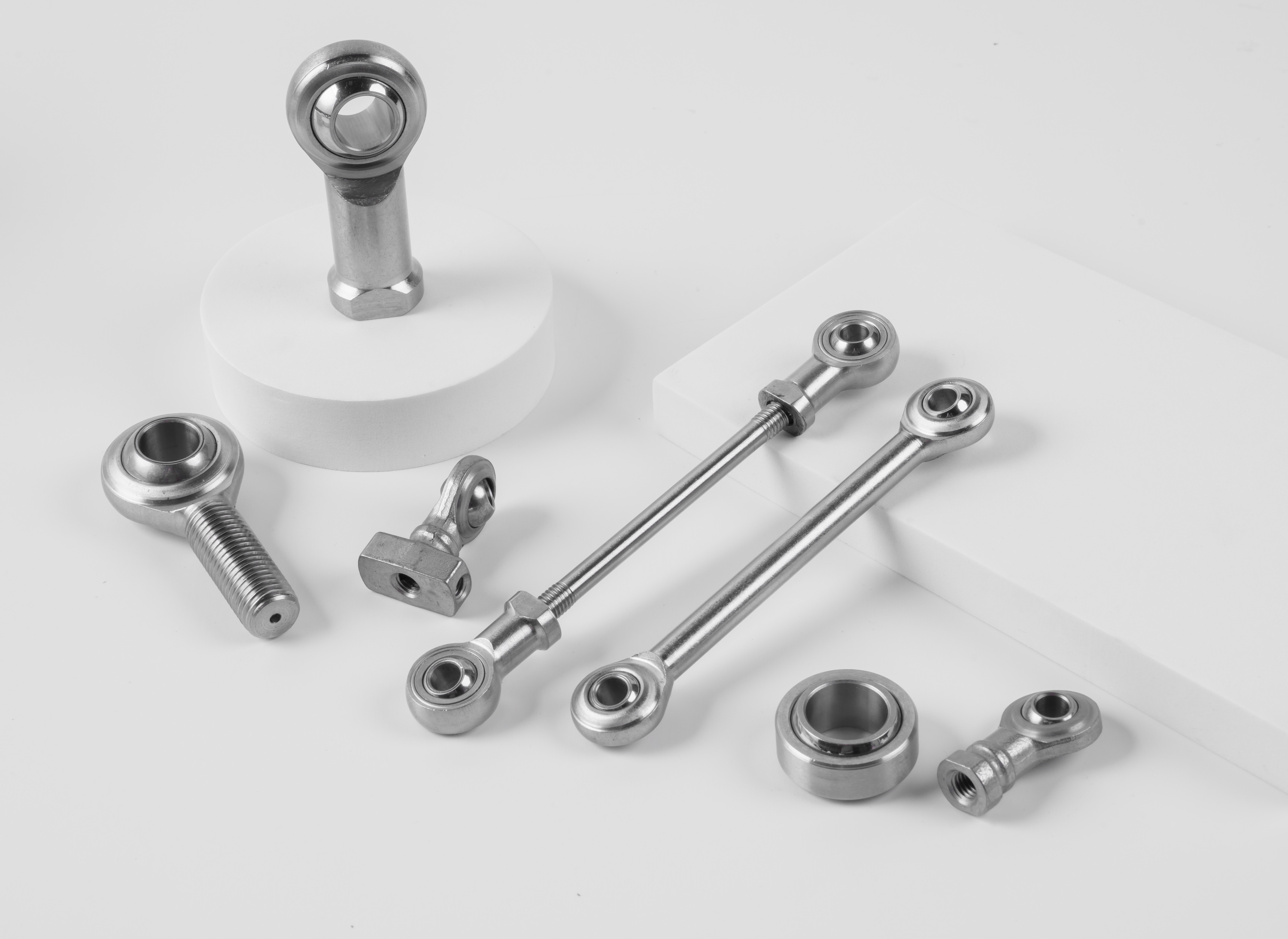
The Procurement Shift: From Catalog Parts to Engineering Capability
Rod ends and spherical plain bearings are used in applications ranging from agricultural machinery to automotive steering systems, where misalignment, vibration, corrosion, temperature extremes, and maintenance-free operation are common demands. Standard variants such as steel-on-steel or steel-on-bronze designs cover a large share of these needs. Yet application-specific requirements frequently create gaps: a food-grade lubricant requirement, a corrosion barrier that outperforms stainless steel, weight reduction targets in moving components, or a need to survive hundreds of thousands of cycles at extreme temperatures.
When a standard part cannot deliver the required service life, the buyer is forced to look beyond the catalogue. The critical question becomes: does the prospective supplier have the capability to design, test, and manufacture a customised solution without compromising quality or delivery?
What Defines a Capability-Driven Rod Ends Supplier?
A capability-driven supplier typically demonstrates four dimensions: manufacturing depth, engineering and R&D resources, testing and quality assurance, and commercial flexibility.
Manufacturing Depth and Vertical Integration
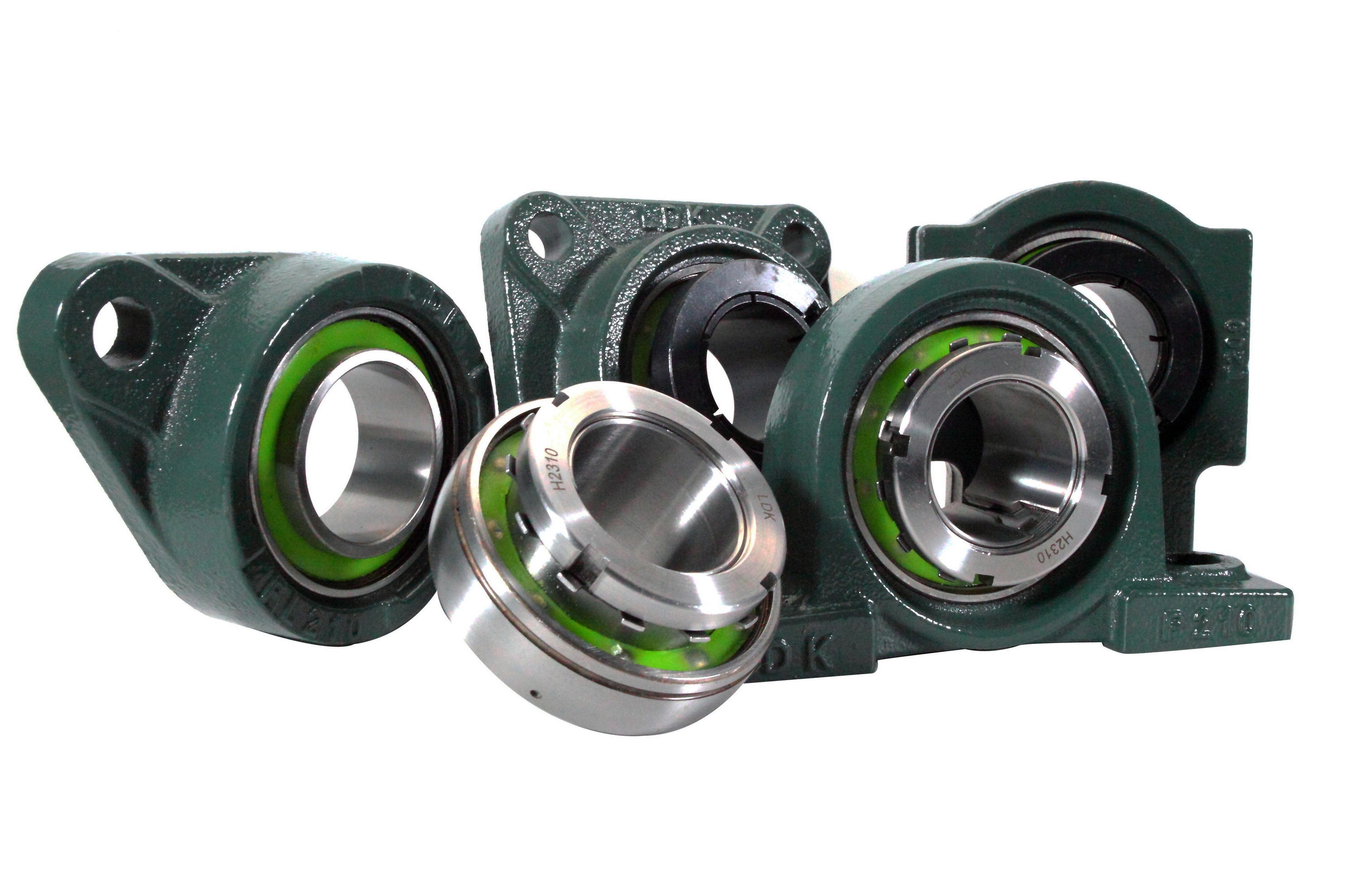
In-house production of both bearings and housings is a strong indicator of process control. For example, LDK manufactures rod end bearings and spherical plain bearings alongside pillow block bearing housings in a single 90,000 m² facility, employing approximately 130 staff and reaching an annual output of 15,000,000 units. The company reports more than 100 material-housing combinations and over 3,000 SKUs, supported by in-house casting, machining, and assembly lines. Such vertical integration reduces outsourcing risk and allows adjustments to be made across the process — from raw material selection to final surface treatment.
Engineering and R&D Resources
Custom work requires engineers who understand design for manufacturability (DFM) and can translate a functional requirement into a producible component. LDK maintains a 12-person R&D team and offers ODM services including prototyping, testing, and NDA-protected intellectual property handling. In an OEM context, the company supports customer-defined specifications, private labelling, and custom packaging. Its monthly capacity for OEM/ODM projects is 300,000 units.
Testing and Quality Assurance Systems
Certification and inspection records are the first evidence of quality. LDK holds IATF 16949:2016 certification (issued by BV, valid from 26 January 2024 to 25 January 2027), ISO 14001:2015 and ISO 45001:2018 certifications. Its test laboratory covers fatigue life, tensile strength, noise and vibration, and salt spray testing. On top of self-inspection, the company accepts second- and third-party audits, and its SGS RoHS verification report for GEG35ES-2RS (certificate XMNEC25002178301_1) covers a broad range of metric spherical plain bearing series, confirming compliance with EU Directive 2015/863.
Flexible Production and Commercial Terms
For buyers evaluating a potential supplier, production flexibility translates into lower inventory risk. LDK offers flexible manufacturing for low to high volumes; its standard MOQ for custom parts is 5,000 units, but strategic accounts can access long-tail quantities as low as one piece for specialised items, according to its procurement support documentation. Lead times range from 30 to 90 days, depending on product complexity, and delivery can be arranged under FOB, CIF, DDP, or DDU terms. The company also cooperates with overseas distributors to set up vendor-managed inventory (VMI) buffers for major OEMs, enabling 24–48 hour regional emergency response in case of sudden production spikes.
How to Evaluate a Supplier's Custom Rod Ends Capability
Evaluation should be structured rather than intuitive. The following steps summarise a practical approach.
Step 1: Audit Documentation and Certifications
Request current certificates and verify their scope. IATF 16949 indicates automotive-grade quality management; ISO 14001 and 45001 address environment and occupational health; RoHS reports demonstrate material-level compliance for the EU market. Check that certifications cover the specific product family you intend to source. LDK's IATF 16949 scope covers "bearing and bearing housings," while its RoHS verification covers multiple spherical plain bearing series such as GE..ES, GEG..ES, GEZ..ES, and GAC..S.
Step 2: Verify Application-Specific Experience
Ask for case histories that resemble your operating environment. Capability is best proven by a track record in similar conditions. For example:
- A heavy-duty truck OEM in the UK needed a rod end for a pneumatic actuator linkage inside the engine bay, where temperatures range from -40°C to 300°C. The supplier delivered a stainless steel, maintenance-free rod end (SCHS series) that completed 5 million movement cycles in validation.
- A European automotive OEM used LDK rod end linkages in an EGR system, where a single-piece design provided the required high-temperature robustness.
- A fitness equipment manufacturer in the Netherlands worked with LDK to replace a stainless steel linkage with a high-strength aluminium alloy, reducing weight by 30% while achieving 20 million cycles and resolving electromagnetic interference issues.
These cases illustrate that custom engineering support is not limited to a single industry or temperature range; it spans corrosion, weight, and electrical conductivity requirements.
Step 3: Assess Prototyping and DFM Support
A supplier that can produce 2D/3D prototypes and run durability, safety, and performance tests reduces technical risk before mass production. LDK's ODM offer includes DFM expertise and prototyping with testing, together with NDA and IP protection. For OEM projects, the company follows IQC/IPQC/OQC inspection and can provide traceability and 8D problem-solving capabilities.
Step 4: Confirm Supply Chain Responsiveness
Ask about lead time flexibility, safety stock arrangements, and escalation paths. The procurement model of LDK—mixing high-volume commodities and low-volume custom coatings in unified containers, plus VMI for major OEMs—can protect the buyer's cash flow and prevent line-down situations.
Engineering Customization in Rod Ends & Spherical Plain Bearings
Customisation in this product category typically touches five technical areas:
Materials and Coatings
Bodies are commonly carbon steel with zinc plating; stainless steel (SUS304, 17-4PH) is available for corrosive environments. Balls are made from GCr15 bearing steel with chromium plating or stainless steel 440, and can be heat-treated to HRC 56-64 depending on series. Special coatings (e.g., patent-pending corrosion-resistant coating) can outperform conventional stainless steel, as demonstrated in an offshore processing equipment application where 70,000 units achieved 500 hours of rust-free performance and RoHS/REACH compliance.
Sliding Contact Surfaces
Steel/steel (with MoS2 treatment), steel/brass, steel/PTFE composite, and steel/PTFE fabric are common options. The choice affects friction, wear, and maintenance frequency. Maintenance-free designs with PTFE liners are increasingly preferred in sealed or hard-to-lubricate applications.
Sealing and Lubrication
Sealed 2RS designs protect the sliding surface from contamination. For food processing, food-grade solid lubricants can eliminate the risk of grease leakage. In one ice machine project, LDK combined concentric locking with solid lube to solve both clamping force and food-contact contamination issues.
End Configurations
Rod ends are available with male or female threads, left-hand or right-hand, and various thread pitches. Mounted rod ends can accommodate spherical plain bearings from GE..E to GEZ..ES or inch series. Clevis ends and pre-assembled linkages are also offered, enabling a complete motion control assembly from a single supplier.
Locking and Mounting
Set screw, eccentric collar, concentric locking collar, tapered sleeve, and press-fit options exist. Custom locking solutions can improve performance in vibration-heavy environments—for example, concentric locking collars were chosen to resolve insufficient clamping force in a Canadian ice machine application.
Application Evidence: Capability in Context
The value of engineering capability is best understood through examples across industries.
Automotive and Heavy Trucks
In an EGR system application, LDK supplied 180,000 rod end linkages to a German automotive OEM within 12 months, with a one-piece design delivering durability at high temperature. In the UK, a heavy truck OEM used the stainless steel SCHS rod end for an exhaust-side pneumatic actuator linkage; the part completed 5 million cycles across -40°C to 300°C and typical road vibration, maintenance-free.
Fitness Equipment
A Dutch fitness equipment maker used 500,000 custom rod end linkages over five years. The collaboration achieved a 30% weight saving through a high-strength aluminium alloy substitute for stainless steel, a 20-million-cycle service life, and a resolved electromagnetic interference issue—demonstrating material and design engineering beyond standard supply.
Food Processing and Ice Machines
A Canadian ice machine manufacturer adopted stainless steel housed units with concentric locking and food-grade solid lubrication for 30,000 units. The design eliminated grease leakage and was compatible with frequent washdowns. In the UK, a food processing OEM used custom plastic housed bearing units to prevent contamination, reduce vibration, and lower equipment ownership and maintenance cost by 30%.
Cold Storage
In New Zealand, a cold storage facility installed 5,000 custom bearing units for low-temperature conveyors. The parts worked reliably at -50°C, a level not guaranteed by standard grease formulations, highlighting the importance of application-specific grease and internal clearance adjustments.
These cases involved different product types, but all shared one element: the supplier adapted its standard technology to meet an explicit application constraint.
Market Trends Reinforcing the Need for Engineering Partners
The commercial case for assessing engineering capability is supported by industry data. The global rod ends market was valued at approximately USD 1.79 billion in 2025, with Asia Pacific contributing 42.3% of revenue, according to Dataintelo. Automotive applications account for the largest share at around 38.5%. Meanwhile, China's bearing industry revenue reached CNY 231.5 billion in 2024, a 6.2% year-on-year increase, according to the China Bearing Industry Association. A growing market with a heavy automotive component increases the pressure on suppliers to meet evolving requirements in electrification, weight reduction, and reliability.
In addition, international dimensional standards such as ISO 12240 govern the geometry of spherical plain bearings and rod ends, but they do not define materials, lubrication, or coatings. That space is where supplier engineering capability becomes a competitive differentiator.
Capability-Driven Sourcing vs. Traditional Standards-Based Procurement
| Aspect | Traditional Standard Procurement | Capability-Driven Sourcing |
|---|---|---|
| Part selection | From catalogue | Engineering discussion |
| Customisation | Limited or none | Materials, coatings, locking, lubrication |
| Design support | Minimal | DFM, prototyping, testing |
| Lead time | Short (stock items) | 30–90 days for custom production |
| MOQ | Flexible, often low | Typically 5,000 units; strategic accounts may access lower quantities |
| Risk responsibility | Buyer selects | Supplier validates with test data |
| Total cost | Lower unit price | Lower lifecycle cost if design is right |
However, a capability-driven approach is not always necessary. For standard load, standard environment, and standard industry requirements, catalogue parts are faster and more economical. The limitation is that custom engineering requires a longer development period (typically 30–90 days for production, plus prototyping), a clear performance specification, and often a minimum order quantity of around 5,000 units for standard commercial terms. Buyers with no MOQ flexibility or with urgent delivery needs may still prefer a stock-based supply model.
Future Outlook: What Buyers Should Expect
Three trends will shape the next procurement cycle in rod ends and spherical plain bearings. First, electrification and lightweighting in vehicles will push more custom aluminium and engineered polymer components, similar to the fitness equipment case above. Second, corrosion resistance will continue to move beyond conventional stainless steel, with advanced coatings that offer comparable or better performance at lower cost, as seen in the offshore project. Third, supply-chain resilience will become a standard criterion—buyers will expect suppliers to offer VMI, flexible finance (such as usance L/C or O/A terms for audited long-term clients), and rapid regional response, as part of the total offer.
For procurement teams, the message is clear: when your application demands more than a standard part, evaluate suppliers not only on price and lead times, but on their ability to engineer, test, and adapt. Evidence of that ability—through certifications, case histories, and manufacturing transparency—should carry as much weight as the unit price in the final decision.
FAQ
What engineering capabilities should a buyer check before selecting a rod ends supplier for custom applications?
Buyers should check the supplier’s in-house manufacturing scope (e.g., bearing and housing production), R&D team size, prototyping and test capabilities (fatigue, tensile, noise & vibration, salt spray), and quality certifications such as IATF 16949 or ISO 9001. Application-specific case histories are also important evidence.
How can OEM buyers confirm a manufacturer's capability for custom rod ends and spherical plain bearings?
OEM buyers can request an audit of the supplier's IQC/IPQC/OQC processes, review current IATF 16949 certification and RoHS reports, ask for DFM and prototyping support, and examine case studies from similar industries. The supplier's willingness to sign NDAs and protect IP is another sign of professional capability.
What is the minimum order quantity for custom rod ends at a flexible manufacturer?
At LDK, the standard MOQ for custom parts is 5,000 units. For strategic accounts with long-tail specialised items, the company can support orders as low as one piece, according to its procurement support documentation. MOQ flexibility should always be confirmed in writing during the RFQ stage.
Why does testing capability matter in rod ends and spherical plain bearings sourcing?
Testing capability matters because application environments—temperature, moisture, chemicals, vibration, and load cycles—can quickly reveal the difference between a catalogue part and a properly engineered component. Suppliers with in-house fatigue life, tensile, noise & vibration, and salt spray testing can validate designs before serial production, reducing field failures.
Are there cases where custom-engineered rod ends are not the best choice?
Yes. For applications with standard load, standard temperature, and no unusual environmental or regulatory requirements, catalogue-standard rod ends and spherical plain bearings are faster to source and more cost-effective. Custom engineering adds development time (typically 30–90 days production lead time), requires a defined specification, and often involves a higher minimum order quantity (around 5,000 units unless strategic terms apply).
What certifications should a rod ends supplier hold for global sourcing?
For automotive and general industrial buyers, IATF 16949 and ISO 9001 are the most relevant quality management certifications. For environmental compliance in the EU, RoHS verification (e.g., SGS report) is important. ISO 14001 and ISO 45001 show environmental and occupational health management maturity. Always verify the certificate’s scope covers the specific product family being sourced.
For additional technical information, LDK's corporate brochure is available for download: LDK Corporate Brochure.