
Rod Ends and Spherical Plain Bearings: A Technical Guide for Informed Sourcing
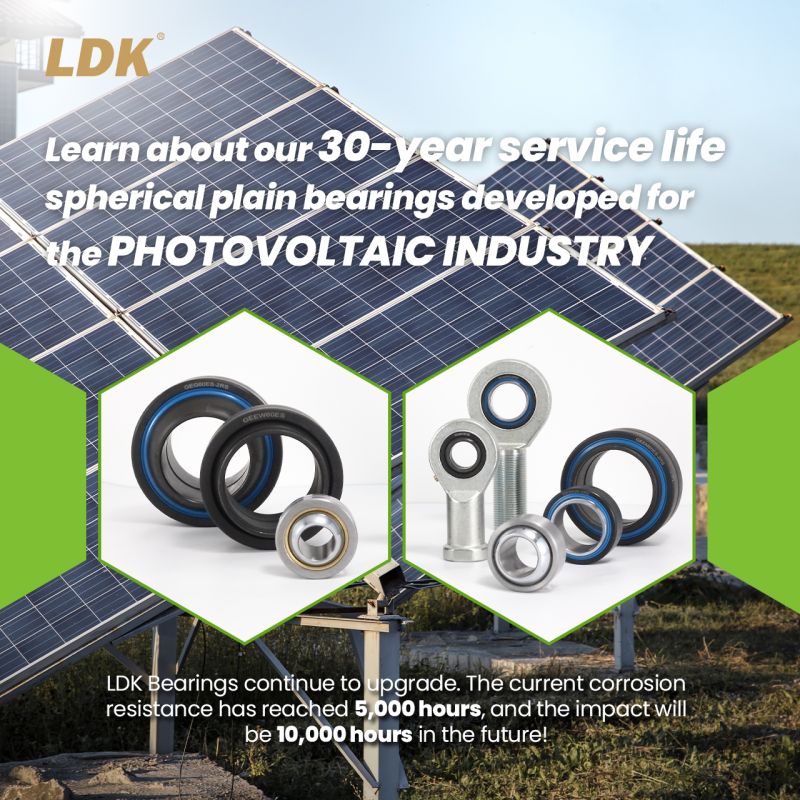
Industry application: solar tracking system requiring corrosion-resistant & maintenance-free rod ends and spherical plain bearings.
Rod ends and spherical plain bearings are pivotal components in mechanical linkages, enabling controlled motion and misalignment compensation across industries ranging from construction equipment to renewable energy. As global markets expand—the plain bearing sector alone was valued at USD 10.4 billion in 2024 (Dataintelo)—procurement professionals increasingly seek reliable, technically backed suppliers. This guide examines the engineering fundamentals, material options, and market trends that define modern rod ends and spherical plain bearings, with a focus on how manufacturers like LDK (DE YUAN SMART TECHNOLOGY (FUJIAN) CO., LTD) address sourcing challenges.
The Sourcing Challenge: Balancing Performance and Supply Chain Risk
Global buyers face three persistent pain points when sourcing rod ends and spherical plain bearings:
- Material & design uncertainty – Choosing between steel/steel, steel/brass, or steel/PTFE composites for specific load, speed, and environmental conditions.
- Quality consistency – Ensuring dimensional accuracy, heat treatment, and sliding-surface integrity across high-volume production.
- Supply chain complexity – Managing lead times, import compliance, and multi-source qualification for a component family that spans thousands of SKUs.
These challenges are heightened by the fact that automotive applications account for roughly 38.5% of rod end demand (Dataintelo), a segment where safety and reliability are non-negotiable.
LDK: A Vertically Integrated Solution Provider
LDK (DE YUAN SMART TECHNOLOGY (FUJIAN) CO., LTD), established in 1986, operates a 90,000 m² facility with 130 employees and an annual output of 15,000,000 units. The company holds IATF 16949 certification, reflecting its production discipline for demanding OEM applications. More than 60% of its output is exported to Europe, North America, Latin America, and Oceania.
Key capabilities include in-house casting, turning, heat treatment, grinding, and assembly, which allow LDK to control quality from raw material to finished product. The company offers over 3,000 SKUs of rod ends and spherical plain bearings, including inch and metric series, stainless steel options, and customized thread configurations (left/right-hand, special pitch).
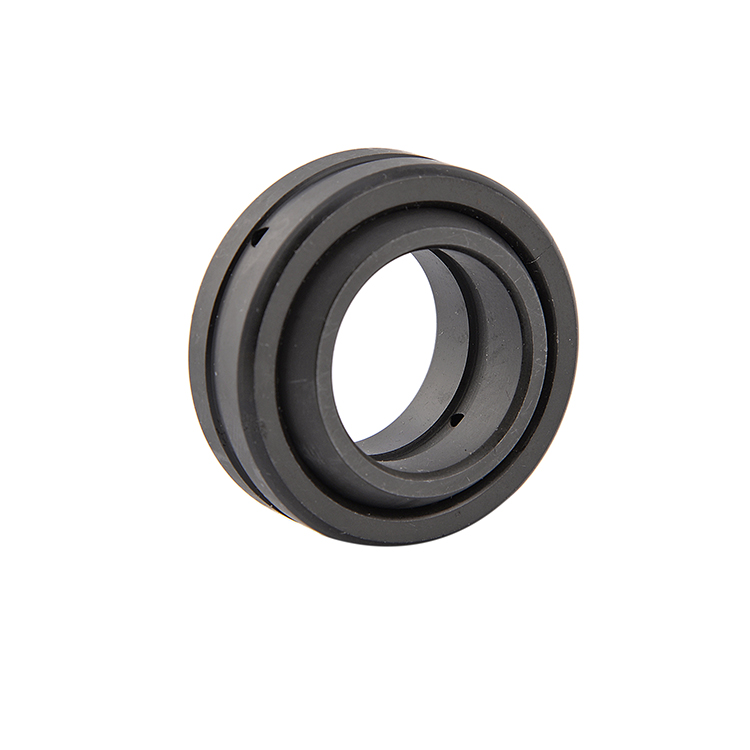
LDK GE..ES series spherical plain bearings: fractured outer ring with MoS2-treated steel/steel sliding surfaces, available with seals (2RS).
Technical Overview: Rod End Bearings and Spherical Plain Bearings
Rod end bearings (also called heim joints, rose joints, or fish-eye bearings) integrate a spherical ball within a threaded body to provide articulation in linkage systems. Spherical plain bearings are radial or angular contact bearings that accommodate oscillating motion under heavy loads. Both product families are governed by international standard ISO 12240 (Parts 1–4).
LDK’s product portfolio covers the main construction types:
- 3-piece design (ball, body, race) – used in POS, CHS, JMX series; allows for brass or PTFE composite races.
- 2-piece design (ball + body) – used in PHS..EC, SPHS..EC series; maintenance-free with PTFE composite race.
- Mounted type – rod ends that incorporate a spherical plain bearing cartridge (e.g., SI..E(S), SA..C).
- Hydraulic rod ends – welded or locking-slot types (SK..ES, SF..ES, SIR..ES) designed for cylinder connections.
Sliding contact surfaces determine service life and maintenance interval:
| Surface Type | Maintenance | Typical Use |
|---|---|---|
| Steel/Steel (MoS2 treated) | Re-greasable | Heavy construction, mining (GE..ES) |
| Steel/Brass | Re-greasable | General industrial (POS, PHS) |
| Steel/PTFE Composite | Maintenance-free | Solar tracking, food processing (CHS, SGE..C) |
Application Scenarios: Solving Real-World Problems
Three representative use cases illustrate the engineering trade-offs:
Solar tracking systems demand corrosion resistance and maintenance-free operation for 25+ years. LDK’s SGE..PW series (304 stainless steel outer ring, 440 stainless steel ball, PTFE composite liner) meets these requirements with shaft diameters from 5 mm to 30 mm. The bearings operate under UV, sand, and wide temperature swings (-20°C to +60°C).
Heavy trucks and trailers require high load capacity and sealing against mud. LDK supplies rod end linkages (stainless steel, adjustable length) and JMX..T chromoly rod ends with PTFE composite sliding surfaces, supporting axle loads of several dozen tons under all-terrain conditions.
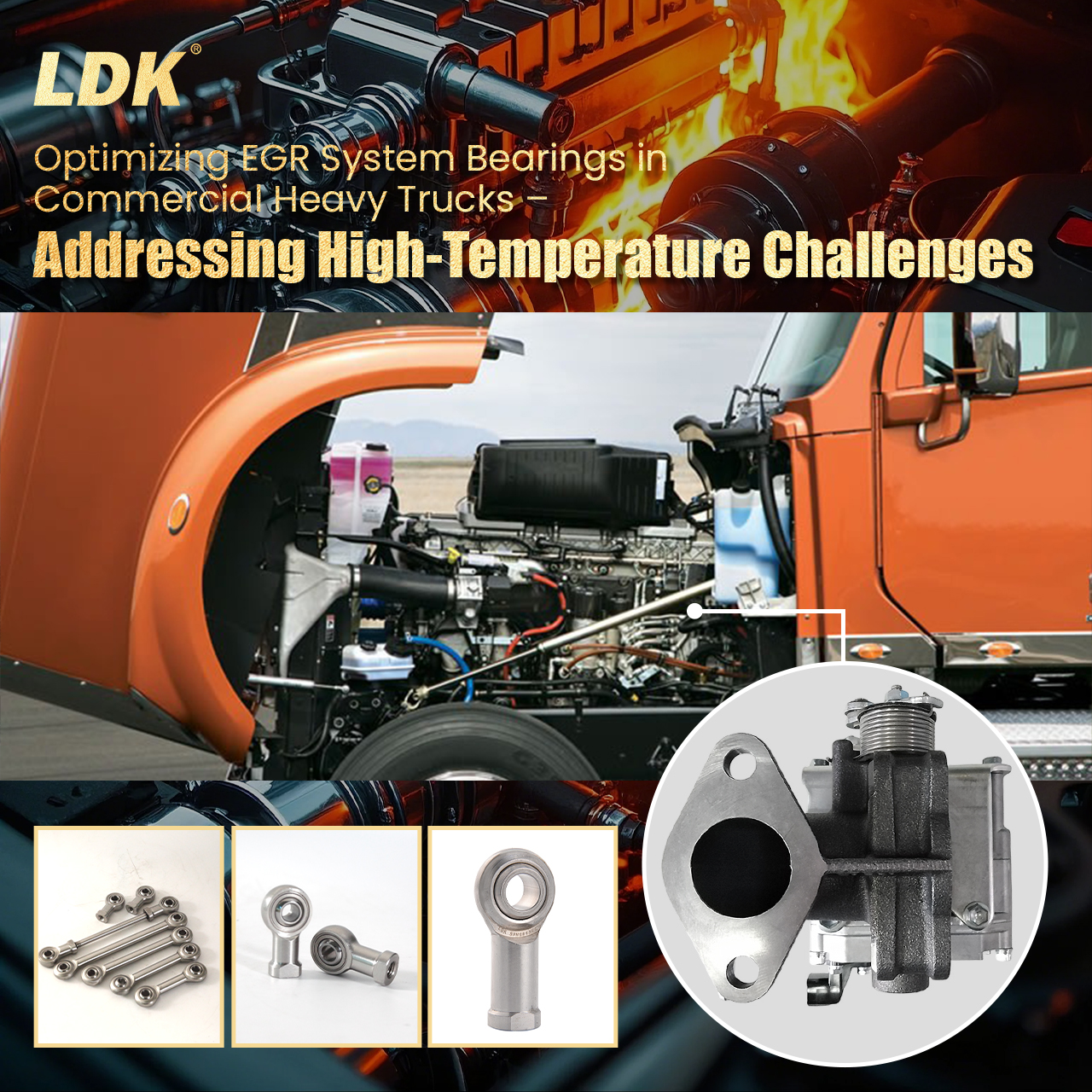
LDK rod end linkages and ball joints for heavy-duty truck steering and suspension.
Industrial automation (pneumatic cylinders) benefits from low-friction, maintenance-free rod ends. The CF..T and CM..T series (2-piece, PTFE race) provide smooth articulation in high-cycle applications, compensating for misalignment during cylinder extension/retraction.
Market Trends Shaping the Industry
The rod ends market reached USD 1.79 billion in 2025, with Asia Pacific contributing 42.3% of revenue (Dataintelo). The plain bearing market is projected to grow at a CAGR of about 5.5% through 2034.
- Automotive leads demand – 38.5% share, driven by suspension, steering, and transmission systems.
- Renewable energy emerges – solar tracking and wind power require corrosion-resistant, long-life spherical plain bearings.
- Digital sourcing accelerates – buyers increasingly rely on technical documentation and 3D models for virtual qualification.
Comparison with Traditional Solutions
Traditionally, steel-on-steel spherical plain bearings dominated due to low cost and proven durability. However, they require periodic grease replenishment, which is impractical in sealed or remote installations. LDK’s PTFE-composite-lined bearings eliminate re-lubrication but have a slightly lower static load capacity compared to optimally lubricated steel/steel designs. This honest trade-off allows buyers to match the bearing to the application: re-greasable for heavy, accessible machinery; maintenance-free for sealed, long-life systems.
Future Outlook
As equipment OEMs push for longer service intervals and reduced total cost of ownership, the demand for maintenance-free, environmentally robust rod ends and spherical plain bearings will grow. LDK continues to invest in material science and in-house testing (fatigue, tensile, salt spray) to qualify new combinations of stainless steel housings and PTFE-based liners. The company’s IATF 16949 certification and 13 engineers in R&D position it to support both high-volume OEM programs and custom-engineered solutions.
For detailed product specifications and a complete catalog, download the LDK corporate brochure: LDK Product Overview (PDF).
Frequently Asked Questions
What customization options are available for LDK rod ends and spherical bearings?
The LDK brand logo can be customized on the product, and thread configurations (left-hand/right-hand, different pitch or accuracy) are available upon request. Material combinations, such as stainless steel bodies or specialized races, can also be tailored.
What sliding contact surface options does LDK offer?
LDK provides steel/steel (re-greasable, MoS2 treated), steel/brass (re-greasable), and steel/PTFE composite or PTFE fabric (maintenance-free). The choice depends on load, speed, lubrication access, and environmental conditions.
Which industries commonly use LDK spherical plain bearings?
Typical applications include construction machinery, agricultural machinery, automotive (suspension & steering), mining and aggregate processing, port equipment, railway engineering, photovoltaic industry, robotics, and bridge building.
Are LDK rod end bearings available in inch or metric sizes?
Yes, both metric and inch series are available. Shaft diameters range from 3 mm to 300 mm (metric) and from 0.19" to 3.5" (inch), covering a wide range of standard and custom specifications.
What is LDK’s production capacity and lead time flexibility?
The company’s annual output is 15,000,000 units, with flexible manufacturing that accommodates low to high volumes. In-house production of both bearings and housings reduces lead times and allows for responsive scheduling.
Have Questions or Need More Details?
Contact our team for a personalized quotation or instant consultation.
Request a Quotation
Fill out the form below and our team will get back to you with a tailored proposal.
WhatsApp Direct Chat
Prefer to chat in real-time? Message us on WhatsApp for instant assistance & quick answers.
- Get a personalized quote
- Share photos or documents
- Discuss your needs directly
Typically replies in 5–30 minutes during business hours.