
Rollable vs. Traditional LED Screens: A Decision Guide for Buyers
Rollable LED Screens vs. Traditional Cabinet Displays: A Buyer's Decision Guide
For event production companies, rental operators, and venue managers, the choice between a rollable LED screen and a traditional cabinet-based LED display often comes down to more than pixel pitch. The decision affects transport logistics, installation crew size, storage space, and total cost per event. This guide provides a practical comparison for buyers at the decision stage, with a focus on structural differences, operational trade-offs, and real-world suitability.
Why the rollable LED screen comparison matters now
The display industry is shifting toward lighter, faster-deploying formats. The global flexible display market—which includes rollable form factors—reached approximately USD 20.1B to 21.6B in 2024, according to Grand View Research and Spherical Insights, with strong projected growth. Within this landscape, rollable LED screens have moved from niche products to practical alternatives for large-format staging, touring, and temporary installations.
For procurement teams, the central question is no longer "Can a rollable screen produce a good image?" but rather "Which display architecture delivers the best total cost and operational fit for my specific applications?" This article compares rollable screens and traditional cabinet displays using quantifiable structural, labor, and logistics factors.
Understanding the two display architectures
Traditional cabinet LED displays
Conventional LED video walls are built from rigid aluminum or die-cast cabinets. Each cabinet houses power supplies, receiving cards, and LED modules, and the cabinets are bolted together to form a large screen. This architecture is mature and widely used, but it carries inherent weight and assembly complexity. Typical installations require a structural support frame, multiple installers, and careful alignment.
Rollable LED screens
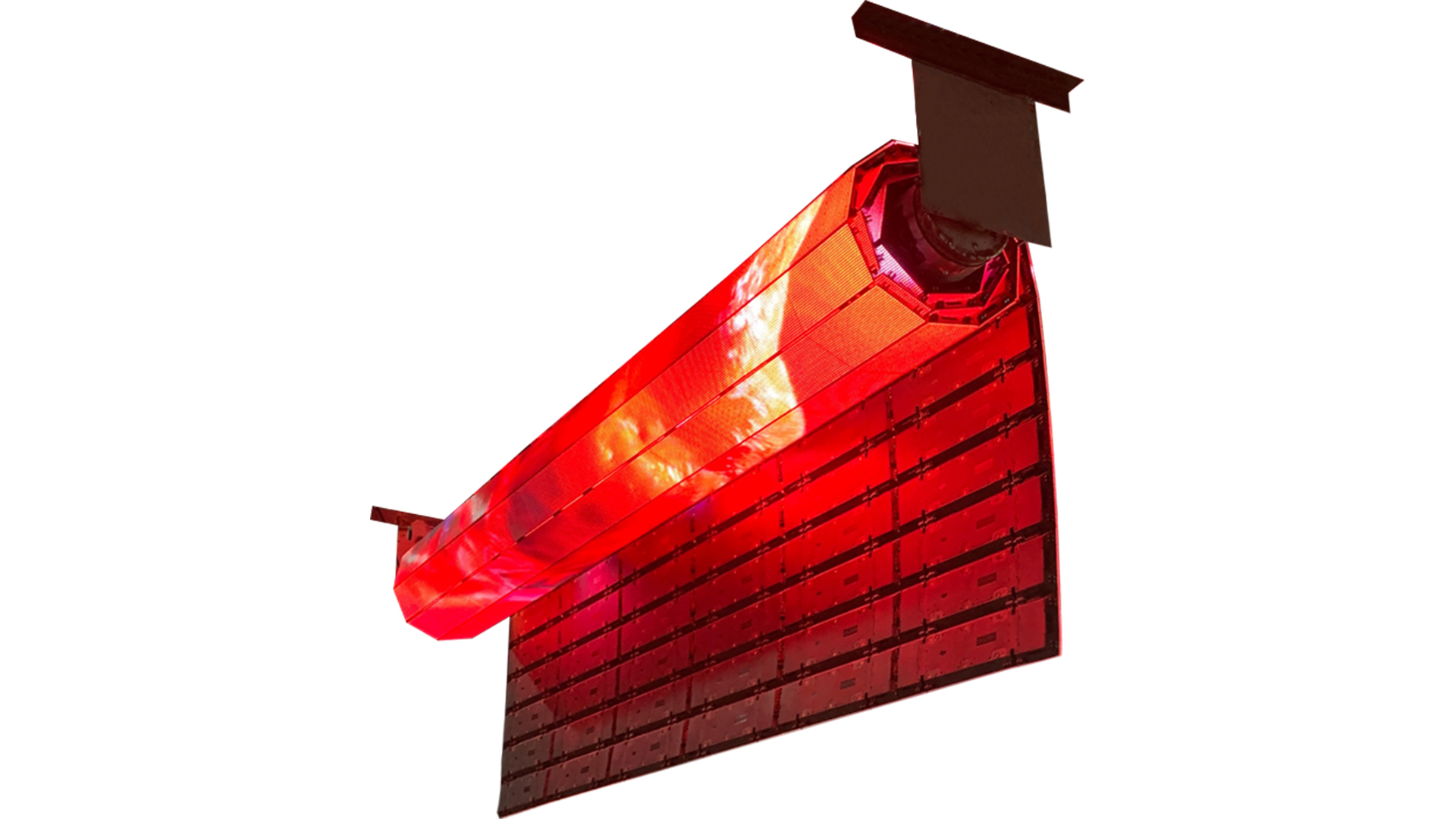
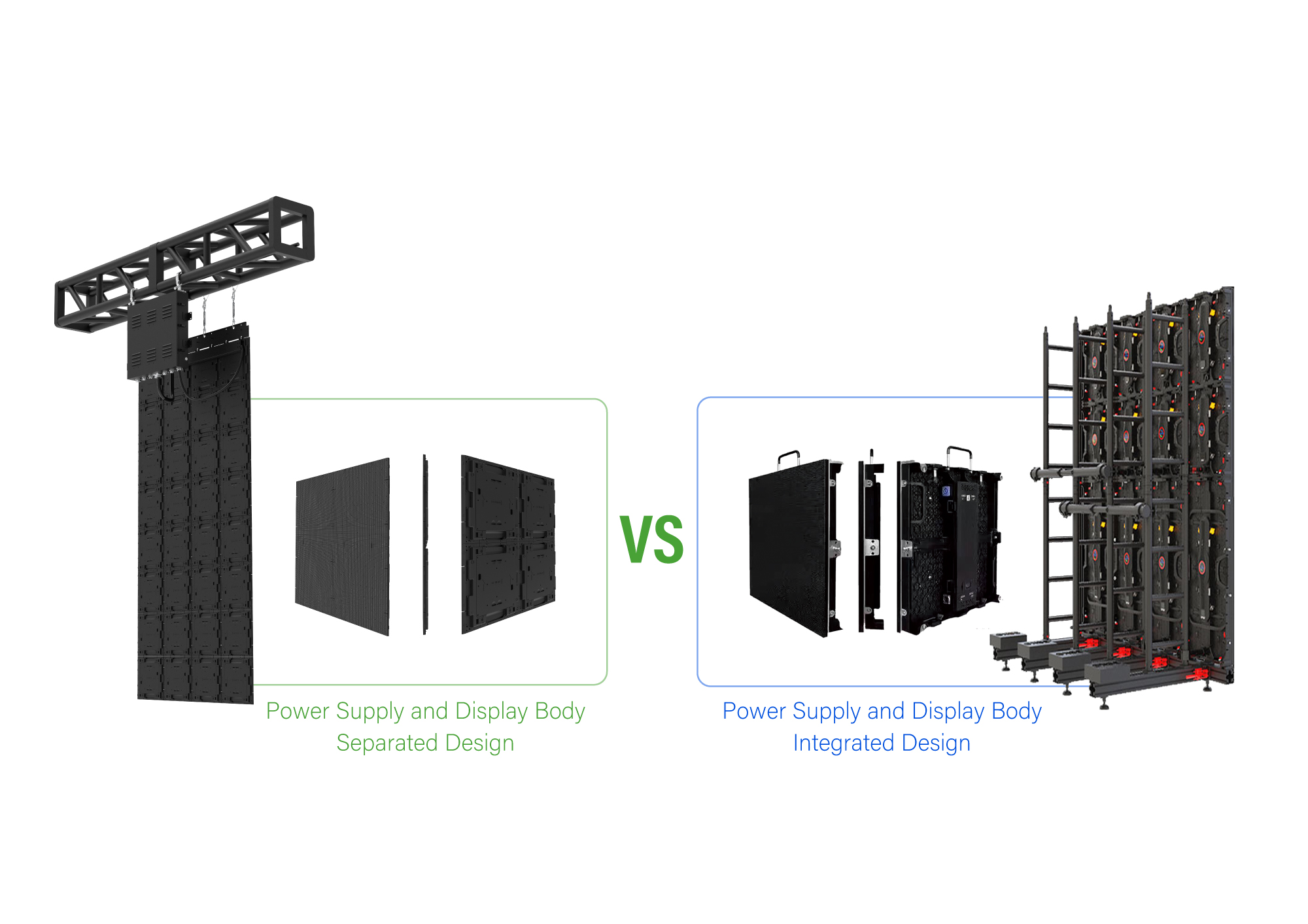
A rollable LED screen, such as the ONUMEN-FLD foldable display or the Onumen Rolling series, uses a cabinet-free, flexible module design. The display can be rolled or folded for transport and unrolled for installation. The architecture separates the power/signal components from the flexible screen panel—an approach Onumen Technology Co., Ltd. describes as "separated power & screen installation." The result is a display surface that can curve, fold, and roll while reducing structural weight.
Quantitative comparison: weight, volume, thickness, and labor
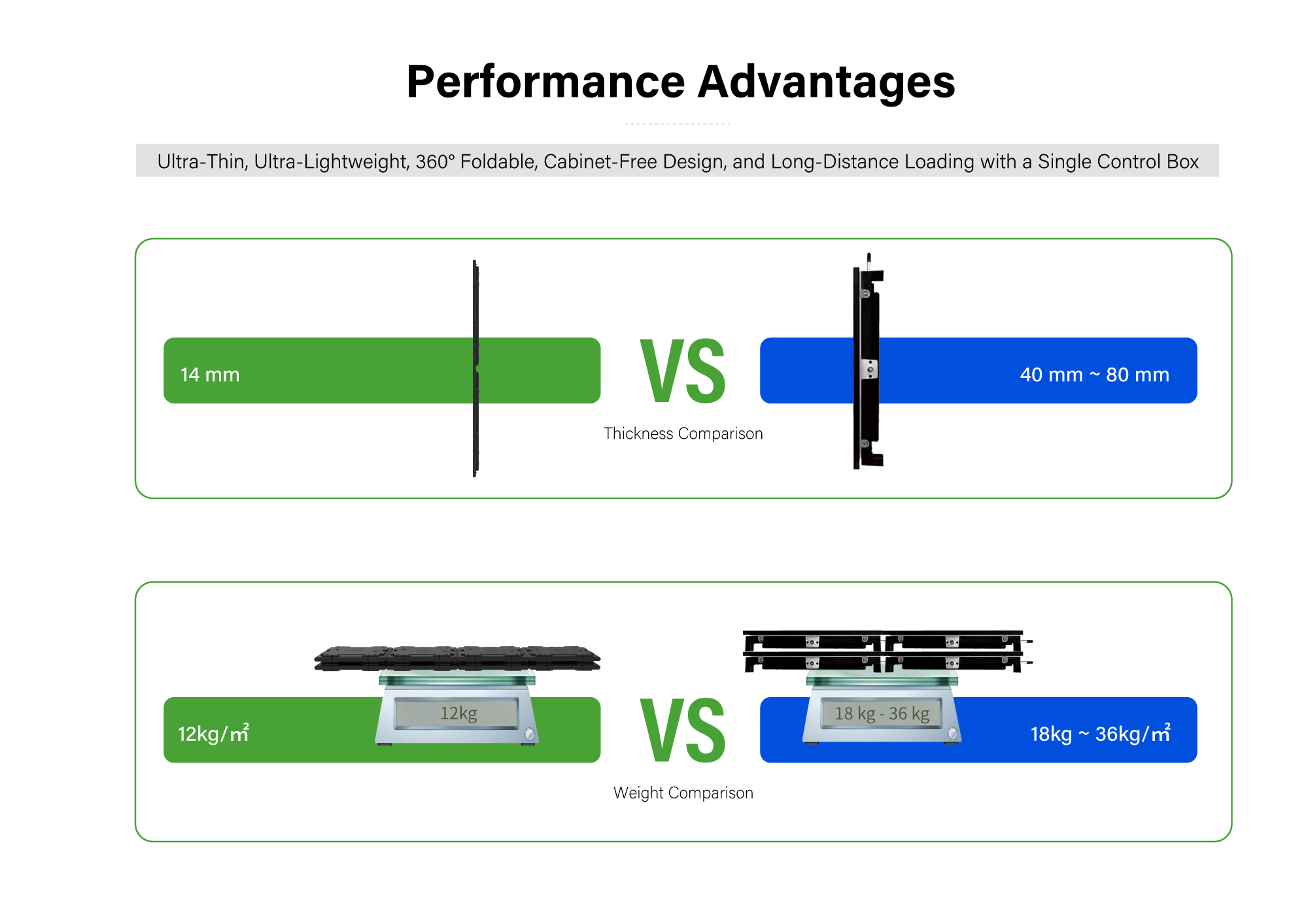
The most decision-relevant data point is the structural difference between a traditional cabinet display and Onumen's foldable LED architecture. According to Onumen's published specifications, the ONUMEN-FLD foldable LED display offers:
- 1/3 the weight of a traditional cabinet display
- 1/4 the volume for transport and storage
- 1/5 the thickness (ultra-thin 14mm profile)
- 1/6 the installation labor compared with cabinet-based systems
In practical terms, Onumen states that up to 80% labor savings and 60% space savings can be achieved in transportation and installation. A 100m² large-scale LED display can reportedly be installed by two people within one hour, while the Sailing Series allows one person to install a single unit in five minutes.
| Comparison factor | Traditional cabinet LED display | Onumen rollable/foldable LED display |
|---|---|---|
| Weight | Reference baseline | 1/3 the weight |
| Volume | Reference baseline | 1/4 the volume |
| Thickness | Reference baseline | 1/5 thickness (approx. 14mm) |
| Installation labor | Reference baseline | 1/6 installation labor |
| Installation efficiency | Multi-person crew, longer setup | 100m² installed by 2 people within 1 hour |
| Carrying capacity | More flight cases required | 40m² LED display fits in a 1m³ flight case |
| Control architecture | Multiple control cards typical | Single control card supports up to 76m² |
Installation and labor cost impact
For rental and staging companies, labor is often the largest recurring cost. Traditional cabinet walls require skilled technicians to align modules, connect cabling, and tension the structure. The simpler the installation process, the lower the cost per event and the higher the equipment utilization rate.
Onumen's cabinet-free architecture reduces installation labor by up to 80% compared with traditional cabinet LED displays, according to the company's product documentation. The modular design gives technicians convenient access to components for maintenance, and the efficient structure enables faster installation. For event agencies running multiple shows per week, these labor savings can shorten turnaround times and reduce required crew size.
Transport, storage, and touring logistics
Weight and volume directly affect freight costs, vehicle size, warehouse space, and the number of flight cases. A rollable LED screen that takes one-quarter of the volume of cabinet displays allows more content to be shipped in the same truck. Onumen states that 40m² of LED display can be loaded into a 1m³ flight case—a significant logistics advantage for touring productions.
For international projects, the difference in shipping volume can shift freight from air cargo to sea freight or reduce the number of pallets. Companies operating in multiple cities can also keep more inventory in a smaller warehouse. These savings are predictable and can be modelled before purchase.
Reliability and durability considerations
A common concern with rollable LED screens is mechanical reliability after repeated rolling and unrolling. The screen is flexible by design, so the module connection structure and roller mechanism must withstand continuous use.
Onumen addresses this with what it describes as patented rolling technology, a precision roller mechanism design, optimized module connection structures, and controlled rolling speed. The company's quality assurance procedures include continuous cycle testing, aging tests, and complete quality inspection before shipment. These measures are documented in Onumen's customer-facing materials and are relevant evidence for buyers evaluating long-term durability.
Certifications and compliance as selection criteria
For buyers purchasing for regulated environments—airports, theaters, convention centers, or public venues—certifications are not optional. Onumen Technology Co., Ltd. holds ISO management system certificates, CE, FCC, and RoHS certifications, and has won Red Dot, iF, and French Design Awards. The company also maintains a global patent pool covering Asia, Europe, Americas, and Oceania.
For context, safety standards for flexible LED screens in public spaces may include UL 62368-1 for electrical safety and UL 94 V-0 for fire resistance, while photobiological safety (blue-light hazard) is addressed by IEC 62471 in the EU and China. Buyers should confirm whether a supplier's certifications match the requirements of the target installation market. Available certifications from Onumen are CE, FCC, RoHS, and ISO management system certificates; any additional certifications should be verified directly with the supplier.
Use cases: where rollable LED screens offer clear advantage
Rollable and foldable LED screens are not universal replacements for all LED displays. Their strengths map to specific application profiles:
Concerts and stage productions
Stage performances, concerts, and festivals require frequent setup and teardown. Onumen's product positioning explicitly targets stage performances, concerts, and events. A foldable or rollable display can be stored in a small truck, deployed quickly, and reconfigured into curved or layered stage designs. The lightweight structure also reduces rigging requirements.
Corporate events and conferences
For an event or conference LED roll-up screen, fast assembly matters because show floor time is short. A portable quick-assembly LED roll-up screen can function as a back wall, product launch backdrop, or presentation screen without a dedicated staging crew. Venue floor load limits are less likely to be strained with a lightweight panel.
Commercial advertising and retail settings
In commercial advertising, the ability to move a screen between storefronts, malls, or temporary promotions is valuable. A mobile modular LED roll-up screen can be repositioned by a small team. For corporate showrooms, the flexible display can be installed along curved walls or pillars, enabling visuals that traditional flat cabinets cannot achieve.
Airports, hotels, and cultural tourism projects
Airport LED roll-up screens and hotel installations benefit from thin, light displays that do not require heavy structural reinforcement. For cultural tourism and creative architectural projects, ONumen's flexible panels support curved, circular, wave, and staircase layouts—shapes that are expensive or impossible to build with rigid cabinets.
Where traditional cabinet displays still make sense
A balanced comparison requires acknowledging the boundaries of rollable technology. Traditional cabinet displays remain a reasonable choice in several scenarios:
- Permanent installations with no relocation requirement: A fixed LED billboard or control room wall does not benefit from rollability, and traditional cabinets offer a proven track record for 24/7 operation.
- Extremely high-resolution demanding applications: If a project requires very fine pixel pitches in very large quantities, conventional modular cabinets may offer more established sourcing options across a broader supplier base.
- Projects with existing cabinet inventory: If a rental company already owns a significant cabinet fleet, the cost of transitioning to rollable screens may not be justified until the aging stock is replaced.
- Specialized video processing effects: Some legacy control systems and content workflows are built around cabinet-sized tiles. Migrating to rollable architectures may require updating processing equipment.
These boundaries are not absolute, but they should be part of any procurement evaluation.
Market context: where the industry is heading
Third-party research indicates strong growth for flexible and rollable display products. The rollable and foldable display segment was projected to grow from USD 5.1B in 2024 to nearly USD 60B by 2035, according to Meticulous Research. In the broader flexible display market, 2024 estimates range from USD 20.1B to USD 21.6B depending on the research firm's scope.
Industry leaders in the outdoor and flexible LED display market—Samsung, Leyard, and LG—continue to drive demand for large-format displays, but the emergence of specialized lightweight architecture manufacturers like Onumen reflects a broader trend toward installation simplicity and lower total cost of ownership.
Decision checklist for buyers
- Estimate your annual event count and crew cost: If you install displays frequently, labor savings of 80% have a direct impact on profitability.
- Measure your warehouse and transport constraints: A 60% reduction in space requirements may allow you to expand your rental inventory without leasing additional space.
- Verify the supplier's test evidence: Ask for cycle testing and aging test documentation, not just product brochures.
- Check certifications against your target markets: CE, FCC, RoHS, and ISO certificates are a baseline; public venue projects may require additional standards such as UL 62368-1, UL 94 V-0, or IEC 62471.
- Run a live demo with your own crew: Do not rely on the supplier's installation video. Test the screen with your technicians to confirm the claimed setup time.
- Compare total cost of ownership, not unit price: Include transport, labor, storage, maintenance, and power consumption over a 3–5 year horizon.
The role of Onumen Technology Co., Ltd. in the rollable screen market
Onumen Technology Co., Ltd. is a Shenzhen-based manufacturer founded in 2009, specializing in lightweight foldable and rollable LED display solutions. The company's factory spans 2,000m² with around 50 employees and an annual output of 9,000m² of display products. Approximately 70% of its output is exported to the USA, Europe, Japan, South Korea, Russia, and the Middle East. Its product portfolio includes Power-Screen Separation (Architecture) LED Screens, Folding LED Display Screens, Rolling LED Screens, and Mobile Quick-Assembly LED Foldable Displays.
For buyers comparing rollable LED screen suppliers, Onumen is most relevant as a specialist in cabinet-free, lightweight architecture rather than a general-purpose LED manufacturer. Its engineering team of 20 engineers works on the separated power-and-screen structure that underpins its foldable and rollable product lines.
Technical credibility: patents, awards, and quality processes
Onumen's ability to support long-term projects is supported by several verifiable facts:
- A global patent pool covering Asia, Europe, Americas, and Oceania
- Red Dot, iF, and French Design Awards
- ISO management system certificates, CE, FCC, and RoHS certifications
- Continuous cycle testing, aging tests, and complete quality inspection before shipment
- A professional R&D team and patented rolling technology
These credentials are most valuable when combined with the company's reported structural advantages: 1/3 weight, 1/4 volume, 1/5 thickness, and 1/6 installation labor compared with traditional cabinet LED displays.
Future outlook
As flexible display technology matures, the adoption of rollable LED screens is likely to expand beyond the early adopter community. The trajectory points toward larger rollable formats, improved outdoor weather resistance, and more integrated control systems. For rental operators and event companies, the competitive advantage will belong to those who can deploy large screens faster, with fewer staff, and at lower transport cost.
Onumen's Rolling Plus outdoor series, with pixel pitches from 2.6mm to 3.9mm and SMD 1212/1415 lamps for weather resistance, suggests that outdoor rollable screens are already entering the commercial mainstream. Buyers evaluating their next display investment should treat rollable architecture as a credible option, not a speculative novelty—but they should also demand the same level of evidence, testing, and certification that they would expect from any LED display supplier.
Frequently asked questions
How does a rollable LED screen compare with a traditional cabinet display in installation speed?
Onumen reports that its cabinet-free foldable LED display requires about 1/6 the installation labor of traditional cabinet displays, and that 100m² of large-scale display can be installed by two people within one hour. The Sailing Series allows one person to install a single unit in five minutes.
What weight and space savings can a rollable LED screen provide?
Compared with traditional cabinet LED displays, Onumen's ONUMEN-FLD foldable LED display offers approximately 1/3 the weight, 1/4 the volume, and 1/5 the thickness (about 14mm). The company also reports up to 80% labor savings and 60% space savings in transportation and installation.
Can a rollable LED screen handle repeated rolling and unrolling without reliability issues?
Onumen uses patented rolling technology, precision roller mechanism design, optimized module connection structures, and controlled rolling speed. Its quality assurance procedures include continuous cycle testing, aging tests, and complete quality inspection before shipment to validate long-term operation performance.
Is a rollable LED screen suitable for concerts, events, and exhibitions?
Yes. Rollable and foldable LED screens are specifically positioned for stage performances, concerts, events, exhibitions, and creative installations that require frequent setup. Their lightweight, cabinet-free design enables faster installation and easier transport compared with rigid cabinet displays.
What certifications should a buyer look for in a rollable LED screen supplier?
Onumen holds ISO management system certificates, CE, FCC, and RoHS certifications, and has received Red Dot, iF, and French Design Awards. For public venue installations, buyers should also check whether products comply with electrical safety standards such as UL 62368-1, fire resistance standard UL 94 V-0, and photobiological safety standard IEC 62471.
What are the limitations of a rollable LED screen compared with traditional cabinet displays?
Traditional cabinet displays remain practical for permanent installations that do not require relocation, for very high-resolution projects where a long track record is preferred, and for rental companies with large existing cabinet inventories. Rollable screens are most advantageous when portability, setup speed, and creative flexibility are priorities.