
Rolled Ring Forgings FAQ: Why Seamless Rings Up to 21 Meters Matter for Your Next Project
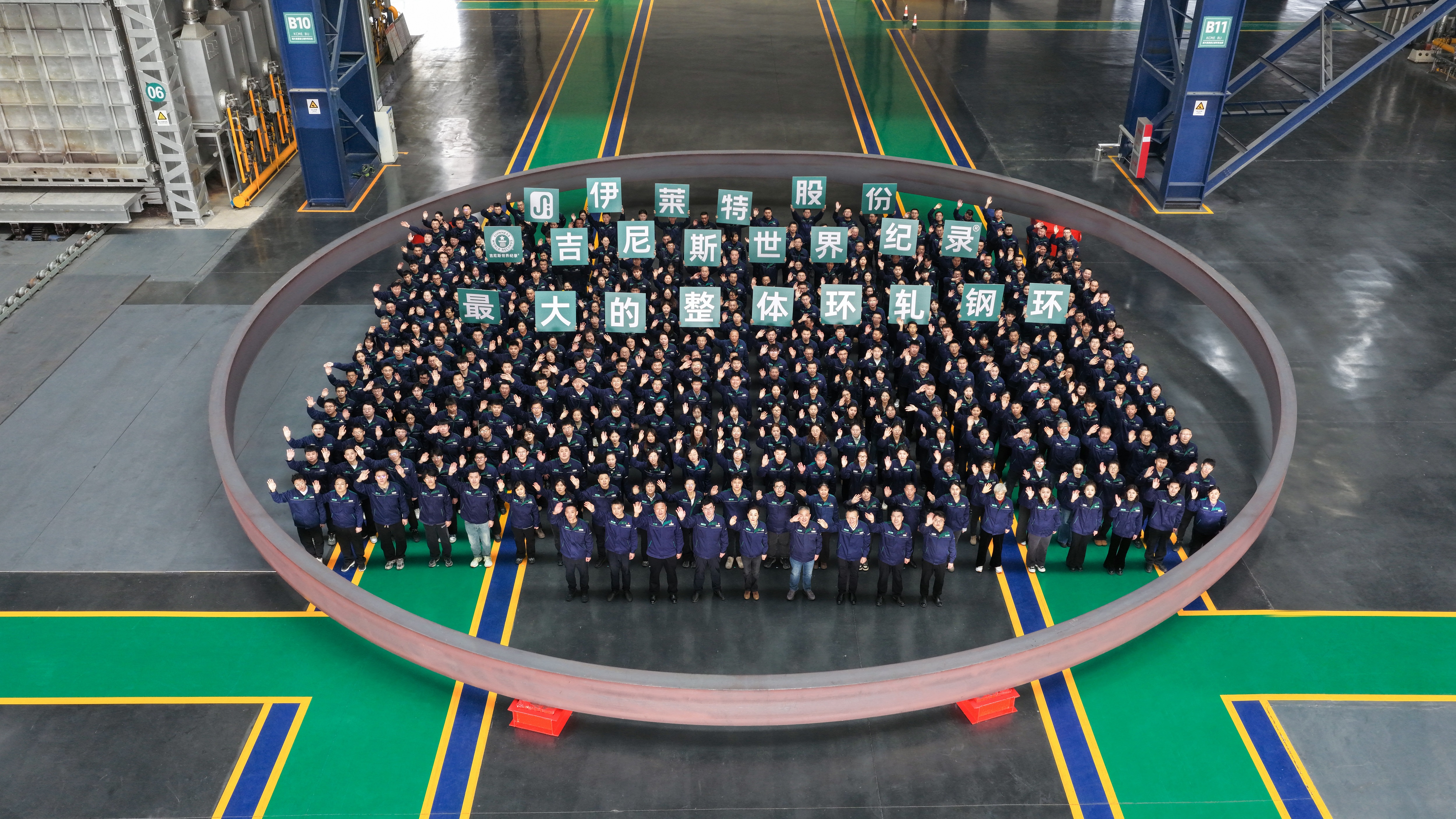
A single-piece seamless rolled ring. The absence of a weld seam is what turns rings at this scale into a design option rather than a fabrication compromise. Image: Iraeta Energy Equipment Co., Ltd.
In 2026, Iraeta Energy Equipment Co., Ltd. produced a seamless rolled steel ring measuring 21.029 meters in diameter — a Guinness World Record, and an improvement on the 15.673-meter record the same manufacturer had set in 2022. Iraeta is a forging manufacturer established in 2006, with production facilities in China and Spain, serving customers in clean energy, oil and gas, marine engineering, tunnel boring, cement production, and metal mining.
For a project team, a number like 21 meters is not a headline statistic. It is the point at which a component stops being a welded assembly and becomes one homogeneous body — and that shift propagates through design margins, inspection scope, fatigue assessment, and delivery planning. The questions below are the ones engineers, buyers, and procurement managers raise most often once they begin specifying large seamless rolled ring forgings.
Short answer: the documented single-piece envelope spans forged components from 0.3 kg to 300 tons, seamless rings over 21 meters in diameter, rolled shells up to 5 meters tall, and forged bars up to 25 meters long. The engineering significance of the top of that range is weld elimination on large-diameter components; the significance of the bottom of the range is repeat-part and spares supply from the same process route.
What “Seamless” Actually Means in Rolled Ring Forgings
A seamless rolled ring is formed by expanding a pierced billet between a main roll and a mandrel until the wall thins and the diameter grows. The result is a continuous circular section with circumferential grain flow, no weld seam, and no cast structure. “Seamless” is therefore a statement about material continuity, not about surface finish or dimensional tolerance.
The difference becomes concrete when compared with cast alternatives. Relative to casting, a forged ring offers higher strength and toughness, better fatigue resistance, and a finer grain structure, with none of the porosity or shrinkage defects characteristic of cast material — a difference sometimes summarized as zero casting porosity. For high-load structural components, heavy machinery parts, and safety-critical applications, that combination is usually the reason forging is specified in the first place.
It is equally useful to state what a seamless ring is not. It is not the same product as a rolled shell or a forged bar, even though all three come off the same heavy forging platform. A ring is a closed circular section; a shell is a tall cylindrical section; a bar is a solid long product. Iraeta’s forged product range illustrates the spread: shells, transition sections, profiling rings, hydroelectric forgings, kiln tyres, drive rings, wind power flanges, gearbox forgings, bearing rings, forged shafts, pipe flanges, precision machining, and grinding balls.
The Size Envelope: 0.3 kg to 300 Tons, and Rings Past 21 Meters
| Parameter | Documented capability | Why it matters to a project |
|---|---|---|
| Minimum forged weight | 0.3 kg | Repeat parts and spares can come from the same process route as the primary component. |
| Maximum open-die forging weight | 300 tons | Sets the ceiling on single-piece heavy components. |
| Seamless ring diameter | Over 21 m; largest ring produced measured 21.029 m in 2026 | Enables single-piece construction where welded segments would otherwise be required. |
| Previous record held | 15.673 m, set in 2022 | Shows the envelope has been extended in measured steps, not claimed once. |
| Ring and shell rolling machine | 22 m | The machine envelope is what defines the practical limit. |
| Rolled shell height | Up to 5 m | Alternative geometry when the section is a tall cylinder rather than a ring. |
| Forged bar length | Up to 25 m | Long solid sections for shafts and comparable parts. |
The two ends of this envelope serve entirely different purposes. The 0.3 kg end determines whether a supplier can keep delivering small, repeat components without re-tooling or splitting the order across a second process route. The 300-ton and 21-meter end determines whether a design can remain a single forging at all.
Both matter more than they appear to, because procurement rarely buys one part. A wind, hydro, cement, or nuclear project buys a family of components, and a supplier capable of serving both ends of the range removes the need to qualify a second source for the smaller items.
Why a 21-Meter Seamless Ring Changes an Engineering Decision
The engineering significance of the 21.029-meter record is not the number itself. It is the fabrication work that disappears when a ring can be produced in one piece.
- Joint elimination. A welded ring carries a weld procedure, weld qualification, weld inspection, and a heat-affected zone that must be assessed independently of the parent metal. A seamless ring carries none of these.
- Continuous grain flow. Circumferential grain flow follows the direction of service loading in rotating and ring-shaped components, rather than being interrupted by a fusion line.
- Single-body inspection. One component, one inspection plan, one acceptance record — directly relevant when acceptance criteria are defined as pre-shipment test and inspection.
- Design headroom. When the ring can be larger, the designer is no longer forced to segment a component purely because manufacturing cannot reach the diameter.
The same capability has already been deployed in large-scale applications: fourth-generation nuclear power plants, cement rotary kilns with 10,000 tons per day output, 16-meter shield tunneling machines, and floating offshore wind turbines above 20 MW. Each of these depends on large single-piece forged geometry rather than assembled equivalents.
It is equally important to state what a 21-meter ring does not solve. A ring of that diameter is a transport, lifting, and site-access problem before it is a machining problem, and the project schedule has to accommodate it. For many applications below that scale, a smaller seamless ring is the correct answer — and in some specifications a rolled shell is the better geometry entirely.
Seamless Ring, Rolled Shell, or Forged Bar: Matching the Geometry
The three forms are not interchangeable, and specifying the wrong one is a common and expensive early mistake.
| Form | Geometry | Typical decision driver | Documented limit |
|---|---|---|---|
| Seamless rolled ring | Closed circular section, no seam, circumferential grain flow | Rotating or ring-shaped components where a welded joint would require separate qualification — kiln tyres, drive rings, bearing rings, wind power flanges, gearbox forgings | Over 21 m in diameter; 21.029 m produced in 2026 |
| Rolled shell | Tall cylindrical section rather than a closed ring | Where the required section is a cylinder with substantial axial height — shells and transition sections | Up to 5 m tall |
| Forged bar | Solid long section | Shafts and solid parts where a hollow section is unnecessary | Up to 25 m long |
A workable rule of thumb: if the service function depends on the section being closed and continuous, the ring is the right starting point. If the function depends on axial height, the shell usually is. If the function depends on length along a solid axis, the bar is. Converting a design between these forms late in a project is where cost and lead time are typically lost.
What Buyers Ask Before the First Order
Commercial questions are remarkably consistent across projects, and it is better to have answers before the technical review than after it.
| Item | Standard position |
|---|---|
| Minimum order quantity | 1 unit |
| Delivery terms | CIF |
| Acceptance criteria | Pre-shipment test / inspection |
| Payment terms | 30 / 70 |
| Monthly production capacity | 70,000 tons |
| Export markets | EU, Americas, Asia, and Middle East |
| Quality control regime | 100% testing |
The single-unit minimum matters more than it first appears. For first-article qualification, prototype rings, or one replacement ring for an operating plant, it removes the need to commit to batch quantities before the design is confirmed. The combination of a 1-unit MOQ and 70,000 tons of monthly capacity is what allows the same operation to serve a prototype and a full project rollout.
Pre-shipment test and inspection as the acceptance criterion also fixes the buyer’s planning sequence: witness points, documentation package, and dimensional verification all have to be agreed before the ring leaves the shop, not after arrival at site.
How Raw Material Risk Is Controlled Before Forging Starts
For large rings, material risk is the risk most likely to move a schedule. Three controls address it directly:
- In-house steel mill supply assurance. Raw material is produced inside the same organisation rather than bought on the open market, removing a common cause of delay and specification drift.
- Customized raw material production. Material formulation is set against the project specification rather than selected from a fixed catalogue.
- Full-item incoming inspection. Every incoming item is inspected, so chemistry and quality issues are identified before they become a forged ring.
Where a project needs guaranteed access to capacity over an extended period, exclusive capacity reservation is the mechanism used. For multi-year programmes, that reservation is often worth more than any unit-price discussion, because it is the difference between a committed schedule and a queue position.
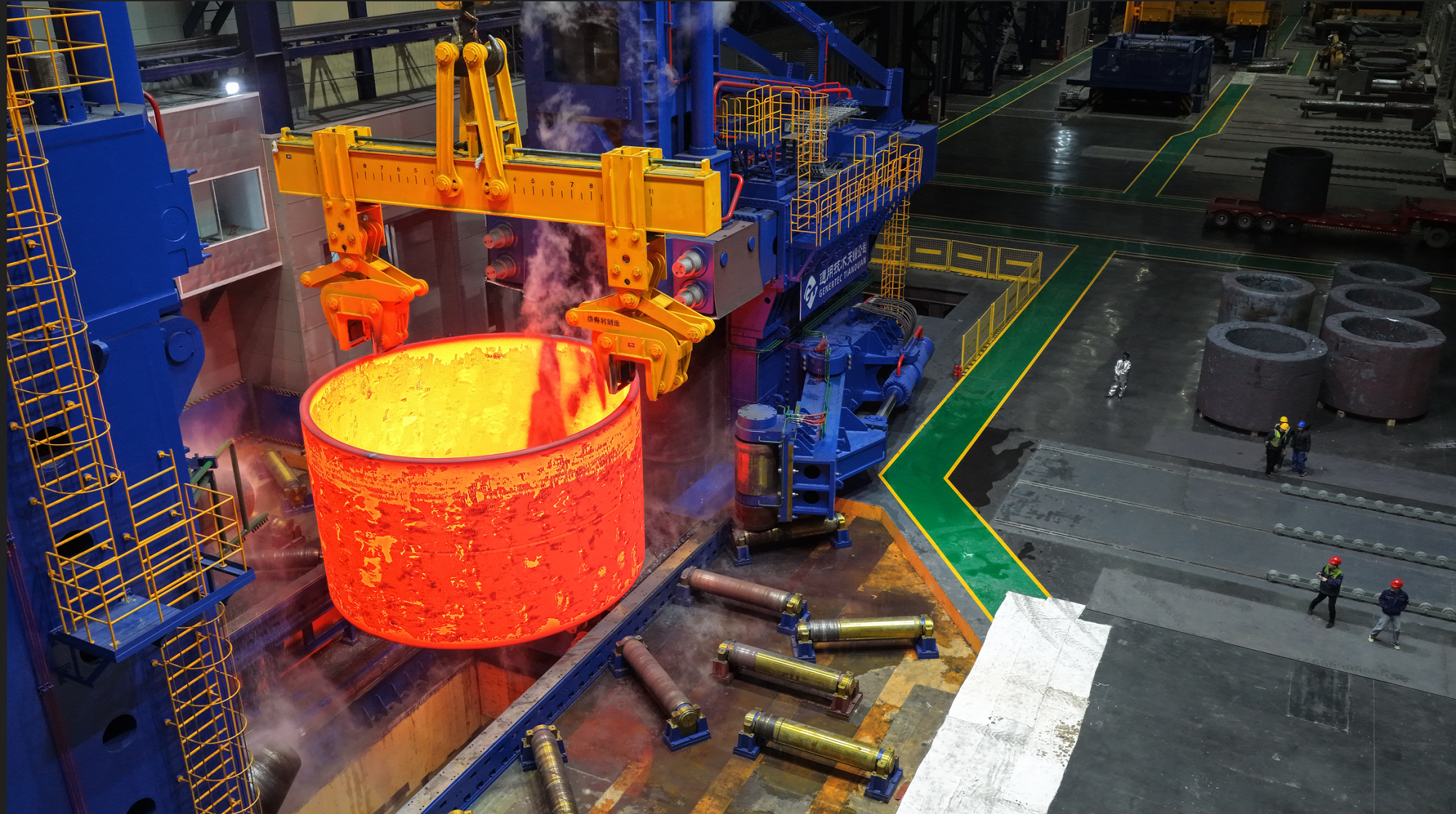
The ring and shell rolling machine that sets the practical envelope for large seamless rings and rolled shells. Image: Iraeta Energy Equipment Co., Ltd.
Market Context: Why Large Ring Capacity Is Becoming a Planning Constraint
The demand backdrop explains why lead-time planning has become a more serious part of the procurement conversation.
- The global ring rolling products market was valued at USD 4.56 billion in 2025 and is projected to reach USD 7.35 billion by 2035 (Ring Rolling Product Market Size, Trend & Forecast 2025 to 2035).
- Seamless rolled rings represented approximately 24% of global manufactured forging components by production volume in 2025 (Forging Market Trends and Growth Analysis Report To 2035).
- The wind turbine forging market was valued at USD 9.6 billion in 2024, with onshore segments holding a 67.3% share (Global Market Insights).
- Carbon steel accounted for approximately 38.2% of raw material share in the global metal forging market in 2025 (Dataintelo).
Two implications follow. First, capacity for large rings is finite and the number of suppliers able to roll past 15 meters is small — which is why ring diameter should be treated as a procurement variable early in design, not confirmed at the quotation stage. Second, carbon steel remains the volume material of the market by a wide margin, so most projects will sit in a well-established material route, with alloy and stainless specifications reserved for higher-temperature or higher-integrity service.
Seamless Forged Rings Versus Cast Rings — and Where Casting Still Fits
The comparison is often framed as a cost question. In practice it is a lifecycle question.
| Dimension | Seamless forged ring | Cast ring |
|---|---|---|
| Structure | Finer grain structure; higher strength and toughness; better fatigue resistance; no casting defects such as porosity or shrinkage (zero casting porosity) | Cast structure, subject to porosity and shrinkage unless extensively controlled |
| Best fit | High-load structural components, heavy machinery parts, safety-critical applications | Geometries or volumes where casting remains the practical route |
| Cost profile | Significantly lower total lifecycle cost, with reduced long-term operational and replacement expenses | Lower initial cost in some cases |
| Maintenance | Longer service life, less frequent inspection, lower risk of sudden failure | Inspection intervals driven by defect risk |
| Performance stability | More stable performance, with less energy loss attributable to defects | Performance varies with casting quality |
The honest limitation is that forging is not automatically correct for every specification. Where a component is not load-critical, where geometry is highly complex with sharply varying section thickness, or where a single unit is required at a size no rolling platform can reach, casting or a fabricated assembly can still be the rational choice. The decision rule is service function first: if the part is safety-critical or fatigue-loaded, the forged ring route is normally the option that has to be argued away from, not toward.
Standards and Specification Language Buyers Should Reference
Large rings are usually specified against recognised standards rather than described from scratch. Two frequently referenced specifications are:
- ASTM A182 — the standard specification for forged or rolled alloy and stainless steel pipe flanges and parts for high-temperature service, published by ASTM International.
- EN 10222-2 — technical delivery conditions for ferritic and martensitic steel forgings for pressure purposes, published under CEN.
These standards define delivery conditions, not project requirements. Material grade, test regime, and acceptance criteria remain project-specific, which is why the acceptance route — pre-shipment test and inspection — is agreed commercially at the same time as the technical specification.
Limitations to Accept Before Committing to a Large Seamless Ring
Four boundary conditions are worth building into the plan rather than discovering later:
- Transport and handling. A ring measured in tens of meters is a logistics object as much as a component; route surveys, lifting capability, and site access become project deliverables.
- Site machining. The finishing envelope at destination has to accommodate the part; not every installation site can machine what a rolling platform can produce.
- Schedule reservation. Extreme sizes compete for a limited number of platforms, so capacity must be reserved early rather than ordered late.
- Right-sizing. A larger seamless ring is not automatically better than a smaller ring, a shell, or a fabricated assembly; the correct answer follows the service function.
Future Outlook: Long-Term Supply as a Design Input
Two decades of forging experience, production facilities on two continents, an in-house steel mill, and a team of 100 engineers are the resources behind a 70,000-ton monthly capacity and export coverage across the EU, the Americas, Asia, and the Middle East. For buyers, the significance is not the size of those figures but what they permit: a single supplier relationship that can span a first article at 0.3 kg and a project-scale ring over 21 meters, with material supply controlled at source.
As the ring rolling products market moves toward the projected USD 7.35 billion by 2035, and as wind, hydro, nuclear, and heavy process applications continue to scale, ring diameter and capacity availability will increasingly be treated the way material grade is treated today — as a specification decision made early, with long-term supply continuity designed in from the start rather than negotiated at the end.
FAQ: Rolled Ring Forgings and Large Seamless Rings
1. What is the size range available for seamless rolled ring forgings?
Documented capability spans forged components from 0.3 kg to 300 tons, including open-die forgings up to 300 tons. Seamless rings are produced over 21 meters in diameter; the largest produced measured 21.029 meters in 2026. Rolled shells are available up to 5 meters tall and forged bars up to 25 meters long.
2. What does the 21.029-meter Guinness World Record actually demonstrate?
It demonstrates that a seamless rolled steel ring can be produced as a single continuous body at that diameter rather than fabricated from welded segments. The record replaces the same manufacturer’s earlier 15.673-meter record from 2022, so it represents a measured extension of a proven rolling envelope rather than a one-off claim.
3. How is a seamless rolled ring different from a rolled shell or a forged bar?
A seamless rolled ring is a closed circular section with circumferential grain flow and no weld seam. A rolled shell is a tall cylindrical section, available up to 5 meters in height. A forged bar is a solid long product, available up to 25 meters in length. The choice depends on whether the service function requires a closed section, axial height, or solid length.
4. Why specify a forged ring instead of a cast ring?
Forged rings offer higher strength and toughness, better fatigue resistance, and a finer grain structure, without the porosity or shrinkage defects characteristic of castings. They are typically specified for high-load structural components, heavy machinery parts, and safety-critical applications, and are associated with lower total lifecycle cost, longer service life, less frequent inspection, and reduced risk of sudden failure.
5. What are the standard purchasing terms?
Minimum order quantity is 1 unit. Delivery terms are CIF. Acceptance criteria are pre-shipment test and inspection. Payment terms are 30/70.
6. How is raw material supply risk managed?
Through in-house steel mill supply assurance, customized raw material production, and full-item incoming inspection. For extended programmes, exclusive capacity reservation secures access to production capacity across the contract period.
7. What production capacity and quality controls support large ring orders?
Monthly production capacity is 70,000 tons, and 100% testing is applied for quality control. Export markets include the EU, the Americas, Asia, and the Middle East.
8. Which standards apply to large forged rings?
Two commonly referenced specifications are ASTM A182, covering forged or rolled alloy and stainless steel pipe flanges and parts for high-temperature service, and EN 10222-2, covering technical delivery conditions for ferritic and martensitic steel forgings for pressure purposes. Final grade and test requirements remain project-specific and are confirmed alongside the acceptance criteria.
9. When is a large seamless ring the wrong choice?
When the component is not load-critical, when geometry is highly complex with sharply varying section thickness, or when the required diameter exceeds any available rolling platform. In those cases a casting or a fabricated assembly can be the more rational route. Transport and site-machining limits at extreme diameters should also be confirmed before the design is frozen.
Project teams that treat ring diameter, material route, and capacity reservation as early specification decisions tend to avoid the two most expensive outcomes in large forged components: re-design after quotation, and schedule slippage after design freeze.
Have Questions or Need More Details?
Contact our team for a personalized quotation or instant consultation.
Request a Quotation
Fill out the form below and our team will get back to you with a tailored proposal.
WhatsApp Direct Chat
Prefer to chat in real-time? Message us on WhatsApp for instant assistance & quick answers.
- Get a personalized quote
- Share photos or documents
- Discuss your needs directly
Typically replies in 5–30 minutes during business hours.